LATEST

Hamas and the Muslim Brotherhood

Key background
  • Hamas is an Islamist Palestinian nationalist movement which currently governs the Gaza Strip. It is proscribed by the UK and in the majority of western countries.
  • Its primary state backers are Iran, Turkey, and Qatar. It is also active in the West Bank, East Jerusalem, Syria, and Lebanon.
  • Since seizing control of the Gaza Strip in 2007, it has continuously launched attacks against Israel and weaponised civilian infrastructure by embedding itself into schools, mosques, and hospitals.
  • Hamas’s 7th October attacks on southern Israel killed 1200, and over 250 hostages were subsequently taken to the Gaza Strip.
Former hostage Ohad Ben Ami speaks during a rally calling for the release of Israelis held hostage by Hamas terrorists in Gaza, at "Hostage Square" in Tel Aviv
Former hostage Ohad Ben Ami speaks during a rally calling for the release of Israelis held hostage by Hamas terrorists in Gaza, at "Hostage Square" in Tel Aviv, marking 600 days of the hostages captivity, May 28, 2025. Photo by Avshalom Sassoni/Flash90 *** Local Caption *** 600 יום אוהד בן עמי מלחמה חטופים משפחות תל אביב חרבות עצרת ברזל מלחמה

Updated May 29, 2025

US to present new ceasefire proposal

What’s happened: US envoy Steve Witkoff appeared poised to unveil a revised ceasefire proposal amid optimistic leaks, mainly from American sources, of closing gaps between the positions of Hamas and Israel. 

  • According to reports, the new ceasefire would include:
    • An immediate release of nine or ten living hostages, plus the remains of 18 deceased hostages. Hamas holds 58 Israeli hostages, of whom twenty are presumed to be alive.
    • In return Israel is to release 125 heavyweight terrorists with blood on their hands, all of whom are life-term prisoners. Israel will also release 1,111 terrorists from the Gaza Strip who were arrested after October 7, 2023. Israel will also be required to release the remains of 180 dead terrorists.
    • The proposed ceasefire would last 60 days, during which negotiations would continue for a permanent end to the war and a release of all remaining hostages. Hamas is insisting on stronger American guarantees that the ceasefire would lead to a permanent end to fighting.
    • The US appear confident they have found the wording to reassure Israel that if no agreements are reached by the end of that period, Israel will be able either to renew the fighting or to engage in further negotiations in exchange for the release of additional hostages.
  • President Trump publicly confirmed that he had asked Prime Minister Netanyahu not to attack Iran while nuclear negotiations were ongoing. The public statement followed days of speculation about a reportedly tense phone call between the two leaders and American assessments that Israel might be preparing an attack.
  • The Gaza Humanitarian Foundation continued expanding its aid distribution amid an astonishing media campaign waged against it by Hamas, the UN, and sundry international NGO’s. Its operations were once more suspended briefly due to crowds and disorder, with no injuries reported.
  • According to Israeli officials another 121 trucks belonging to the UN entered into Gaza on Wednesday, delivering flour and other food.  
  • Elsewhere in the Gaza Strip, a UN food warehouse operated by the UN World Food Program was broken into and looted. At least four people were reported killed; two were trampled and two were killed by gunfire. Media reports were unclear whether the shooting was from Hamas gunmen or criminal gangs. In a statement, the World Food Program refrained from identifying the source of gunfire, while describing the supplies in the warehouse as “pre-positioned for distribution.” In recent weeks, the WFP had consistently reported that it had run out of food stocks entirely due to Israel’s blockade. 

Context: The Trump administration’s public pronouncements and diplomatic maneuvers on both Iran and Gaza in the past week have repeatedly and pointedly indicated small but significant differences of opinion and priorities that exist in Jerusalem and Washington. 

  • Writing in Yediot Ahronot, Ronen Bergman described it as a “gradually increasing friction with the United States over a series of issues that pertain to the hostages and the war in Gaza.” The administration has been keen to emphasise these differences, either as a form of pressure on Netanyahu or as a negotiating tactic — or both.
  • In Israel, concern is high that the administration might agree to a deal with Iran that leaves Israel exposed to long-term Iranian nuclear ambitions while removing any threat of American action. Particularly concerning for Israel is the prospect of an interim deal being announced that is vague on details giving Iran instant sanctions relief while negotiations on a detailed accord drag on inconclusively.
  • The issue of the hostages continues to roil internal Israeli politics, with hostage families expressing frustration at the prospect of another partial deal, as opposed to an agreement that might liberate all the remaining hostages. The twenty living hostages are widely assumed to all be in poor physical and mental state after 600 days in captivity in tunnels, without adequate light, food, water, and medical care.
  • At a rally yesterday in Hostages Square in Tel Aviv, Ohad Ben Ami, who survived Hamas captivity and was released in an earlier ceasefire, said, “Of the 58 hostages still held in Gaza, five of them were with me – in the same tunnel, through the same cold nights, living with the same daily terror. All of them are still alive. In the recent videos that were released, I saw them. Eyes dimmed, gaunt, exhausted. The fear I saw in their eyes haunts me. Their physical condition is terrible. Their mental state is even worse. I’m deeply worried about them. I know exactly what they’re going through – I was there. The six of us were imprisoned together in a tunnel 30 meters underground, in inhuman conditions: no light, no air, no medical care, not a single moment of privacy or true quiet. We survived on scraps – both physically and emotionally.”
  • Another former hostage Omer Shem Tov was interviewed on CNN, where he described being intentionally starved by Hamas during his 505 days in captivity, forced to survive in the tunnels on merely a biscuit and a few sips of salty water each day, whilst his captors were well fed. He said, “I remember walking by another room in the tunnel, seeing a big amount of food…huge amounts. So, I was being starved. There’s no question about it.”

Looking ahead: A third humanitarian aid distribution centre will be opened today in the Gaza Strip. The new distribution centre will be established in central Gaza, south of the Netzarim Corridor. The first two centres established are both further south.  

  • Like the others, the new centre will also be capable of providing food to 300,000 Palestinian residents of Gaza every week. It is primarily supposed to serve Palestinian residents of the central Gaza Strip. 
  • Senior officials in the ultra-Orthodox Shas party are due to meet next week to decide whether to remain in the coalition. Both Shas and the other major ultra-Orthodox party, United Torah Judaism, have been boycotting votes in parliament in order to pressure the government to proceed with legislations enshrining draft exemptions for the ultra-Orthodox public into law. Such legislation is deeply unpopular with the Israeli public at large, including with large parts of the right-wing coalition now in power. On the other hand, if the ultra-Orthodox parties follow through with their threats, the result would be an early election.


May 28, 2025

58 hostages remain held in Hamas captivity for 600 days

Relatives of Israeli hostages and supporters protest for their release at the beach in Tel Aviv
Relatives of Israeli hostages and supporters protest for their release at the beach in Tel Aviv, marking 600 days of the hostages captivity, May 28, 2025. Photo by Erik Marmor/Flash90 *** Local Caption *** 600 יום מלחמה תל אביב חרבות ברזל חוף ים הפגנה

What’s happened: Today, Israel marks 600 days since the invasion and massacre of October 7, 600 days of combat on multiple fronts, and 600 days of captivity for the 58 hostages still in Gaza (at least 20 of whom are assessed by Israel to still be alive). 

  • Marking the occasion with a speech in Beer Sheva, President Herzog said that “On that accursed day – the result of a terrible blindness, one of the greatest failures we have ever known – murderous, inhuman terrorists, human monsters, armed to their teeth, invaded our homes, our towns, our communities, rampaged and slaughtered us.” 
  • In the same speech, Herzog called for the establishment of a state commission of inquiry to investigate the failures of that day, something which the Government of Prime Minister Netanyahu has thus far blocked.
  • He also explicitly placed the liberation of the remaining hostages as a first priority for the war effort, calling on the state’s political leadership “to act with full force and take every necessary step to bring the hostages home. I call here upon the decision-makers: this is a critical moment in our history as a people. This is the moment to initiate, to dare, to take step after step, to act in every possible way to bring them home, every last one of them.”
  • Relatives of Israeli hostages and their supporters gathered across Israel at commemorative events. For example, on the beach in Tel Aviv, they formed a human chain to send a powerful message, as seen in the picture above.

May 28, 2025

First steps of Gaza Humanitarian Foundation’s aid rollout

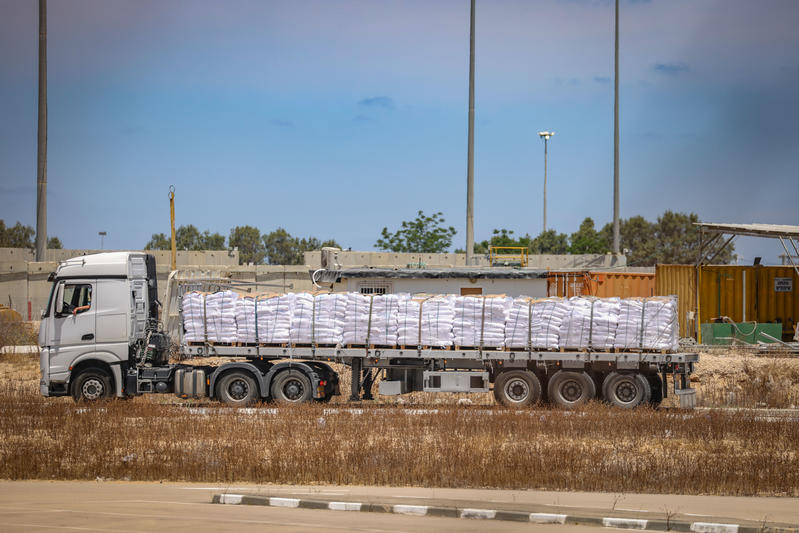
Trucks loaded with humanitarian aid seen before entering the Gaza Strip
Trucks loaded with humanitarian aid seen before entering the Gaza Strip, on the Israeli side of the border with the Gaza Strip, May 20, 2025. Photo by Jamal Awad/Flash90 *** Local Caption *** הומניטרי סיוע חרבות ברזל סיוע עזה

What’s happened: The new aid mechanism for Gaza backed by the US and Israel was launched yesterday.

  • The Gaza Humanitarian Foundation reported opening of two distribution sites in the southern Gaza Strip, one in Tel al-Sultan and one in the Morag Corridor. The GHF reported distributing 8000 aid packages on the first day of operation. Each package contains 20 kilograms of basic foodstuffs and can feed, according to the Foundation, “5.5 people for 3.5 days.” In total 462,000 meals were distributed.
  • The GHF did not provide a breakdown by site, and media reports were all from the Tel al-Sultan site. 
  • At that site, there was a brief breakdown of order around 4:30 pm. The incident ended quickly with no reported injuries. Security at the site is provided by a private American contractor. Although precise events are unclear, it is thought that a mob (possibly affiliated to Hamas) was able to break into the compound. Reportedly, the Americans fired warning shots into the air in order to disperse the crowd. After about 10 minutes, control was gradually restored. Roughly 1,000 food packages were stolen.
  • No Israeli forces are at the site, and Gaza civilians who came for aid packages did not need to show any identification to the security contractors and did not come into contact with any Israeli soldiers.

Context: The new aid mechanism is supposed to eventually operate at four sites, all in areas that have been cleared by IDF operations. 

  • Its purpose is to get aid directly to civilians so that it cannot be siphoned off to Hamas forces, or confiscated by Hamas for resale in order to finance Hamas operations, as has happened with previous shipments of aid. Israel estimates that Hamas has stolen more than $1 billion worth of aid in the last 18 months of warfare.
  • It comes more than two months after since Israel began blocking aid convoys into Gaza at the end of the previous ceasefire. During the ceasefire, which lasted from January 19 to March 18 of this year, hundreds of truckloads of aid entered Gaza. In the last fortnight, as Israeli officials began to assess that the humanitarian situation inside Gaza might reach a critical level, some aid deliveries were  allowed in.
  • International aid agencies and many governments have strongly criticised the new aid mechanism and nearly all refusing to work with GHF. They charge that it violates neutrality and that pushes people to relocate.
  • The alleged violation of neutrality is an odd charge to make by organisations such as UNRWA and others, who have operated within a Hamas-led regime hand in glove.
  • Ensuring civilians can get crucial aid outside a combat zone is normal practice in warfare, including in large-scale operations by Allied forces in Mosul and Raqaa during the battles against ISIS in the last decade.
  • The UN wasn’t alone in trying to ground the GHF aid effort. Hamas reportedly set up roadblocks in territory still under its control to block people from reaching aid distribution sites. It publicly threatened citizens who receive aid from the GHF. And it spread rumours that Palestinians arriving to claim aid were being arrested by Israeli forces.

Exposure of Hamas funding from the UK: A recent report by NGO Monitor reveals that UK taxpayer funds were knowingly channelled through a Gaza-based programme with direct links to Hamas.

  • The programme in question was part of a broader £13 million UK aid initiative aimed at supporting humanitarian efforts in Gaza.
  • The document suggests that UK officials were aware of the Hamas-affiliated nature of the programme but proceeded with funding without implementing adequate safeguards.
  • This revelation has sparked significant controversy and calls for accountability within the UK government regarding its aid distribution practices.

Context: Hamas has a well-documented history of exploiting humanitarian aid for its own purposes, including diverting funds meant for civilians to support its militant activities.

  • The UK government has previously imposed sanctions on individuals and entities linked to Hamas’s financial networks, aiming to disrupt its funding sources. 
  • Despite these efforts, the recent exposure of the Gaza aid programme suggests lapses in oversight and due diligence in aid distribution processes.
  • The UK’s involvement in funding a Hamas-linked programme raises questions about the effectiveness of its current mechanisms to prevent such occurrences.
  • This situation underscores the challenges faced by donor countries in ensuring that aid reaches its intended recipients without being diverted by terrorist groups.
  • In response to the controversy, the UK may consider implementing more stringent vetting processes for aid recipients and enhancing cooperation with international partners to monitor aid flows more effectively.

Looking Ahead: Hostage families and their supporters will be holding rallies across Israel today.  

  • The UK government is likely to face increased scrutiny and pressure to review and strengthen its aid distribution policies and oversight mechanisms.
  • There may be calls for greater transparency and accountability in the allocation and monitoring of foreign aid to prevent future misappropriations.
  • The exposure of this incident could lead to a re-evaluation of partnerships with organisations operating in conflict zones, particularly those with potential links to designated terrorist groups.
  • The US is pressing ahead with its proposed ceasefire and hostage deal. Earlier this week, Hamas reported “accepting” a deal that was not what the US had proposed. Referring to the actual deal on the table, US envoy Steve Witkoff said, “What I have seen from Hamas is disappointing and completely unacceptable. [The] deal is on the table. Hamas should take it.”

May 27, 2025

New Foundation begins to distribute aid into Gaza

Trucks delivering humanitarian aid.
Trucks delivering humanitarian aid. Photo credit: IDF/COGAT

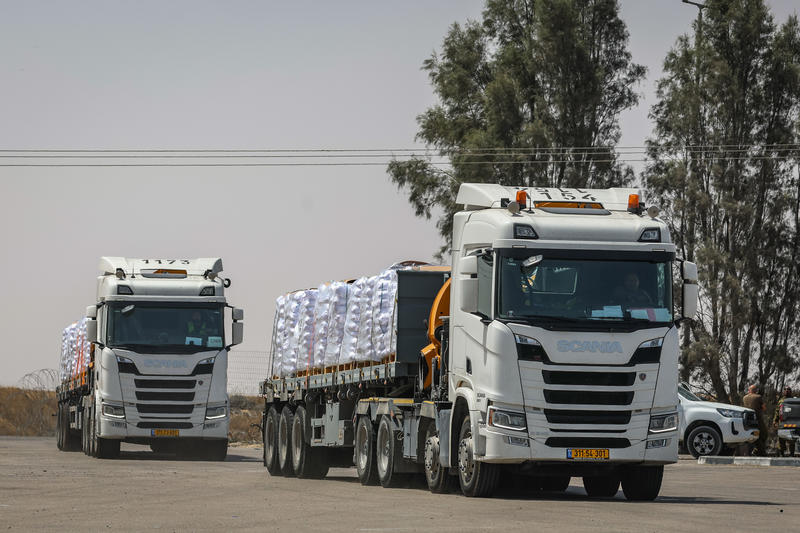
What’s happened: On Monday, 170 aid trucks entered Gaza via the Kerem Shalom crossing, bringing the total to 495 over the past week.

  • Today, the first distribution centre operated by the Gaza Humanitarian Foundation (GHF) has opened.  
  • The GHF is a newly formed body backed by both the US and Israel, which has now assumed control of coordinating aid into Gaza. 
  • The aim of this new model is to prevent Hamas from looting the supplies and profiting from the aid, by ensuring that the aid is distributed directly and free of charge to Palestinian civilians.
  • The GHF’s operational model involves establishing four secure distribution hubs, which are guarded by the IDF, with oversight provided by an American contractors. The hubs aim to deliver aid to over 1.2 million people by the end of this week, with trucks transporting essentials such as food, medical supplies, and water. 
  • GHF’s distribution system includes a weekly packaged meal system, where essential food supplies are distributed directly to Palestinian families in Gaza. These meal kits are delivered through secure routes that have been cleared by the IDF, with the hope that this will ensure Hamas will be unable to seize or divert the aid.
  • Despite the scale-up in aid volumes, GHF has faced internal challenges. Its executive director, Jake Wood, resigned after expressing concerns that the aid effort could be compromised due to the operational environment in Gaza, where the ongoing military campaign poses serious risks to their neutrality. Wood said he was proud of the work he oversaw, “including developing a pragmatic plan that could feed hungry people, address security concerns about diversion, and complement the work of longstanding NGOs in Gaza…However, it is clear that it is not possible to implement this plan while also strictly adhering to the humanitarian principles of humanity, neutrality, impartiality, and independence, which I will not abandon.”
  • Following Wood’s resignation, GHF announced that John Acree has been named its interim executive director. It described him as a “senior humanitarian practitioner with more than two decades of global field experience in disaster response, stabilisation programming, and civil-military coordination.”

Context: Israel faces the dual challenge of facilitating humanitarian relief while maintaining military pressure on Hamas. 

  • The renewal and expansion of aid is partly in response to the IDF’s own assessments on the ground coupled with heavy diplomatic pressure and international concern, including from the US, UK and EU.
  • In parallel to the redistribution of aid, the IDF has continued to operate across the Gaza Strip as part of ‘Operation Gideon’s Chariots.’ According to the IDF, in the course of the operation it has attacked 2,900 targets and has eliminated more than 800 terrorists, including ten battalion commanders and deputy commanders, 18 company commanders and another 12 high-ranking Hamas officials. 
  • IDF officials said that its attacks on senior and mid-level Hamas commanders have severely debilitated the organisation, and that many terrorists have abandoned the combat zones to blend in with the local population.
  • The IDF has also suggested that there are recent signs Hamas’s ability to govern is beginning to crack, as well as signs of a sharp drop in the Gazan public’s confidence in the organisation. However, the IDF have made similar assessments in the past with Hamas proving more resilient than anticipated.    
  • Following the targeted strike on Muhammad Sinwar, it remains unclear the level of coordination and communication between Hamas’s military wing in Gaza and its political leadership in Qatar, which in turn has created a power vacuum and uncertainty about who holds negotiating authority. Compounding this are reports that Hamas’s military wing has not paid its operatives for three months, weakening morale and operational capacity.
  • The IDF has also continued to investigate reports about the death of nine children of two doctors from Nasser Hospital, which Hamas alleges was the result of an Israeli strike. IDF officials said there is no indication that an incident of that kind occurred. Four terrorists who had been inside a nearby building were attacked, but the strike was precise, no civilians had been in the vicinity and no children’s bodies were removed from the building. 
  • Separately, the Air Force has changed the nature of its attacks in Gaza, and is now carrying out fewer air strikes and is more focused on supporting the manoeuvring ground forces with drones and helicopter gunships.
  • The current operational doctrine emphasises maintaining momentum without allowing Hamas to regroup or fortify remaining positions. However, the Israeli leadership faces increasing domestic pressure amid fears of strategic drift without a clear political endgame.
  • The GHF’s distribution hubs aim to create secure zones where aid can be delivered directly to civilians without Hamas interference. The IDF is tasked with securing access roads to prevent Hamas from establishing checkpoints that could lead to confiscation or diversion of aid. The planned hubs will provide aid to:
    • The northern Gaza Strip where around 110,000 people remain, despite numerous efforts by the IDF for them to leave.
    • The area around Gaza City which currently has around 900,000 people.
    • Central Gaza, Nuseirat area with around 350,000 people.    
    • Khan Younis and the Al-Mawasi humanitarian enclave, with around 850,000 people.
  • US mediation efforts continue to reach a new ceasefire and hostage deal. However, negotiations remain deadlocked, mainly due to Hamas’s refusal to disarm.

Looking Ahead: Three more GHF aid delivery centres are expected to be operational in the next few days.

  • Prime Minister Netanyahu has insinuated that a new hostage deal could be days away, without any specifics the comments have caused further despair among the families of the remaining hostages.
  • Tomorrow will be the 600th day since October 7th 2023, significant protests are expected across Isreal supporting the families of the 58 hostages that remain in Hamas captivity.      
  • IDF officials said they anticipate the fighting in Gaza to continue for another two months. Five divisions are currently operating in the Strip with the goal of controlling roughly 75 per cent of the Strip.

May 22, 2025

Benyamin Netanyahu held first press conference in five months

Israeli prime minister Benjamin Netanyahu holds a press conference at the Prime Minister's office in Jerusalem
Israeli prime minister Benjamin Netanyahu holds a press conference at the Prime Minister's office in Jerusalem on December 9, 2024. Photo by Alex Kolomoisky/POOL ***POOL PICTURE, EDITORIAL USE ONLY/NO SALES, PLEASE CREDIT THE PHOTOGRAPHER AS WRITTEN - ALEX KOLOMOISKY/POOL*** *** Local Caption *** ירושלים ביבי ראש הממשלה בנימין נתניהו מסיבת עיתונאים

What’s happened: Last night, Prime Minister Netanyahu also held his first press conference in five months where he addressed a range of issues including the current direction of military operations in the Gaza Strip, as well as the threat posed by Iran.

  • While indicating an openness to agree to a “temporary ceasefire to return additional hostages”, Netanyahu also reiterated that the war’s first priority was to “defeat Hamas”, and ensure that “Gaza never again constitutes a threat to Israel”, as well as securing the return of all hostages.
  • Netanyahu indicated his commitment to “fully achieving” these objectives and advised that “the work is not yet finished.” While taking personal credit for the collapse of Hezbollah in Lebanon and the Assad regime in Syria, he dodged taking responsibility for the failures leading up to the 7th October attacks.
  • Netanyahu also emphasised that Hamas “has looted a considerable part of the aid, and it sells the rest at inflated prices in order to finance its terrorist army.” This is the source of the money for financing the recruitment of the terrorists. He added that in order to prevent this, Israel and the US “have developed a different framework for the allocation of basic food to the civilians and the children, which will not reach Hamas.” 
  • This is divided into three stages:
    1. The bringing in of basic food to Gaza – in order to prevent a humanitarian crisis, and in order to allow the fighting to continue.
    2. The opening of food distribution points by American companies, and which will be secured by the IDF.
    3. The creation of a sterile zone in the southern Strip to which the civilian population will be evacuated from the combat areas, for the purpose of defending it. In this zone, which will be Hamas-free, the residents of Gaza will receive full humanitarian assistance.
  • Netanyahu also mentioned Israel’s strikes on the Houthis in Yemen, saying “we still have not had the last word.” (full speech)
  • Later that evening, a missile launched from Yemen was intercepted, and caused sirens to sound across central Israel but did not cause any injuries or damage. Another siren was sounded in Israel at Thursday noon. This was the tenth and eleventh Houthi missile launched at Israel since the start of May.
  • Leader of the Opposition Lapid attacked Netanyahu saying the implication of his remarks “is Gaza’s occupation for many years. Our children in the coming years will roam about in the streets of Khan Yunis and Rafah, and every morning we will wake up to the words ‘it can now be reported.’” Lapid added: “Netanyahu lied this evening when he said he was fully coordinated with the American administration. There is no such coordination. He lost Trump’s support and he lost his ear.”
  • The speech comes as the Israeli High Court ruled that Netanyahu’s dismissal of Ronen Bar as Shin Bet’s Director was unlawful, predominantly due to his own conflict of interests in doing so given the ongoing Qatargate investigation. However, given how Bar ultimately decided to resign, the court also deemed that the various petitions had now been rendered moot and there was no need to issue further rulings on the matter.
  • During his speech, Netanyahu said that he “didn’t know anything” about his aides allegedly getting money from Qatar to boost the Gulf nation’s image, and that he “still doesn’t know” what happened.

Looking ahead: Another round of Omani-brokered US-Iranian nuclear negotiations are due to take place in Rome over the tomorrow. However, significant gaps must still be bridged, most notably Iran’s ability to enrich uranium.

  • The US is seeking both a reduction in scale of Iran’s nuclear programme, as well as stopping it from enriching uranium altogether. However, Ayatollah Khamenei has claimed that Iran does not need American permission to continue the enrichment.
  • The US has confirmed that uranium enrichment is a red line, and if it so desires Iran can import already enriched uranium to operate nuclear reactors for domestic energy usage.
  • This week, it was also reported that Israel is preparing to conduct air strikes on Iran’s nuclear facilities in the event that negotiations with the US fail. A US source told Axios that Washington is concerned that Israeli strikes may be unilateral, and conducted without prior approval from President Trump.

May 21, 2025

UK escalates criticism of Israel

Trucks loaded with humanitarian aid seen before entering the Gaza Strip, on the Israeli side of the border with the Gaza Strip, May 20, 2025.
Trucks loaded with humanitarian aid seen before entering the Gaza Strip, on the Israeli side of the border with the Gaza Strip, May 20, 2025. Photo by Flash90 *** Local Caption *** הומניטרי סיוע חרבות ברזל סיוע עזה

What’s happened: The British Prime Minister and Foreign Secretary have made highly critical statements of the Israeli government’s policy in Gaza.

  • Speaking in parliament, Keir Starmer said, “We’re horrified by the escalation from Israel. We repeat our demand for a ceasefire as the only way to free the hostages.”
  • David Lammy meanwhile accused the current Israeli government of “isolating Israel from its friends and partners around the world” in what is arguably the UK’s strongest recent condemnation of Israel.
  • Lammy specifically referenced and condemned recent comments from Israel’s Finance Minister, Bezalel Smotrich, who “even spoke of Israeli forces cleansing Gaza, destroying what’s left of residents, Palestinians being relocated, he said, to third countries.” 
  • Lammy branded these comments as dangerous extremism, adding that he condemned it “in the strongest possible terms”.
  • The British government also announced that it was suspending free trade negotiations with Israel, effective immediately, and that planned cooperation under the 2020 Bilateral Roadmap would be reviewed.
  • Writing on X (formerly known as Twitter), Minister for the Middle East and North Africa Falconer said he had summoned Israel’s Ambassador and “made clear the UK’s opposition to expanded military operations in Gaza and rising violence & intimidation by Israeli settlers against Palestinian communities in the West Bank. The UK will not stand by as this happens.”
  • The Israeli Foreign Ministry accused the British government of not advancing the free trade negotiations at all event prior to the announcement and suggested that “If, due to anti-Israel obsession and domestic political considerations, the British government is willing to harm the British economy — that is its own prerogative.” 
  • The statement also argued that the sanctions were unjustified and regrettable, especially as they came days after an Israeli woman was murdered in a recent West Bank shooting attack.
  • Conservative Shadow Trade Minister Greg Smith condemned the UK government’s decision, telling The Telegraph: “It is an absurdity that the UK Government have taken a new stance which has won the support of Hamas – an organisation we proscribe as a terrorist organisation – and is the aggressor in the war with Israel.”
  • Several EU Foreign Ministers, including those of France and the Netherlands, have demanded a review of the EU-Israel Association Agreement, the treaty governing Israel-EU relations which has been in effect for 25 years. Yesterday EU High Representative for Foreign Affairs and Security Policy Kaja Kallas said that EU has decided to review the EU-Israel Association Agreement. 
  • A total of 93 trucks entered the Gaza Strip yesterday through the Kerem Shalom crossing. They transported flour, baby food, medical equipment and medicine.

Context: Starmer and Lammy’s comments followed Monday’s joint statement by the British, French, and Canadian governments opposing Israel’s renewed military operations in Gaza.

  • That statement called for increased aid provision, and condemned settlement in expansion in the West Bank. It also ominously stated that “will not hesitate to take further action, including targeted sanctions.” It also referred to the current Israeli government’s actions as “egregious”, and claimed that its “escalation is wholly disproportionate.”
  • Hamas praised the joint statement, saying that it reflected a “principled stance” and was a “significant step in the right direction”.
  • Media reports throughout the day yesterday were dominated by the claim by UN humanitarian chief on BBC Radio 4 that “there are 14,000 babies that will die in the next 48 hours unless we can reach them.” This headline featured prominently next to media reports of the joint UK-France-Canada announcement as well as Lammy and Starmer’s comments. 
  • This claim about 14,000 babies facing imminent death appeared to originate in an IPC report estimating that by March 2026 14,000 children under the age of 6 could be facing malnutrition. It is worth noting that even the IPC estimates of imminent famine in Gaza, which Fletcher’s claim grossly exaggerated, have been consistently wrong over the entire year and a half of the current war
  • It is notable that while the joint statement calls on Hamas “to release immediately the remaining hostages they have so cruelly held since 7 October 2023,” Starmer’s statement in parliament regarding the hostages employed an entirely different formulation: “We’re horrified by the escalation from Israel. We repeat our demand for a ceasefire as the only way to free the hostages.”
  • The joint statement criticised Israel directly and repeatedly. It singled out for praise (in the same sentence) the United States, Egypt, and Qatar. It described ending Hamas control of Gaza as a long-term goal, but did not offer any method of achieving that goal. 
  • Any change in the EU-Israel Association Agreement is unlikely due to an anticipated veto by Hungary and the Czech Republic.
  • With US backing, Israel has endeavoured to establish the Gaza Humanitarian Foundation, a mechanism for the distribution of humanitarian aid to Gazan civilians that would ensure that aid does not fall into Hamas hands. The Foundation is directed by the American social entrepreneur with a record of humanitarian work in conflict zones named Jake Wood.
  • Major international aid agencies have largely refused to work with the Gaza Humanitarian Foundation, insisting that aid can only come through the same channels that were used before, and which have been repeatedly commandeered and exploited by Hamas.
  • The emergency aid which Israel let through this week was not directed by the Foundation.
  • The sanctions announced targeted three settler leaders, two outposts in the West Bank, and two organisations the FCDO alleges supports violence against local Palestinian communities. One of these settler leaders is Daniella Weiss, who the British government says “has been involved in threatening, perpetrating, promoting and supporting, acts of aggression and violence against Palestinian individuals”. Weiss is often known as the “Godmother” of the settler movement, and has been a leading figure in post-October 7 attempts by an extreme fringe of Israelis to resettle the Gaza Strip.

Looking Ahead: Negotiations are still ongoing in Qatar for a ceasefire that would include a release of hostages.

  • Despite some optimism over the past week, reports from the past two days indicate an impasse, and Israel has recalled its high-level negotiators, leaving behind more junior representatives with a narrower mandate to negotiate.
  • Talks had earlier focused on versions of the Witkoff initiative, which would have seen the release of up to ten of the twenty living hostages and a ceasefire of roughly two months.
  • There were also reports of newer initiatives involving a full hostage release and end to the war, but the gaps between the sides on the conditions for an end to the war — on issues like reconstruction, Hamas disarmament, and future governance of the Strip — are even larger.

May 20, 2025

Netanyahu pushes back on international criticism, as aid enters Gaza

Trucks with loaded with humanitarian aid seen before entering the Gaza Strip, on the Israeli side of the border with the Gaza Strip, May 19, 2025.
Trucks with loaded with humanitarian aid seen before entering the Gaza Strip, on the Israeli side of the border with the Gaza Strip, May 19, 2025. Photo by Flash90 *** Local Caption *** äåîðéèøé ñéåò çøáåú áøæì ñéåò òæä

What’s happened: Prime Minister Netanyahu has responded to a joint statement from the UK, France, and Canada condemning Israeli conduct in the West Bank and Gaza Strip which also threatened sanctions in the event of settlement growth.

  • In a statement released last night, Netanyahu said “By asking Israel to end a defensive war for our survival before Hamas terrorists on our border are destroyed and by demanding a Palestinian state, the leaders in London, Ottawa and Paris are offering a huge prize for the genocidal attack on Israel on October 7 while inviting more such atrocities.”
  • Netanyahu also reiterated that “Israel accepts President Trump’s vision and urges all European leaders to do the same”, and that in the event of Hamas releasing the remaining hostages, its leaders being exiled, and Gaza demilitarising, the war could “end tomorrow.”
  • The joint British, French, and Canadian statement opened by condemning Israel’s expansion of operations in the Gaza Strip, branded the recently announced aid provision expansion as “wholly inadequate”, and threatened “further concrete actions in response” unless Israel ceased its military options and lifted restrictions on humanitarian aid.
  • West Bank settlement expansion was specifically highlighted as another area of concern, which the statement said “undermined…the security of both Israelis and Palestinians” while threatening “targeted sanctions.”
  • The statement also condemned Hamas’s  October 7 attacks against Israel while branding its response as “wholly disproportionate” and “egregious”, reiterating support for an immediate ceasefire and eventual implementation of a two-state solution, and a commitment to “work with the Palestinian Authority, regional partners, Israel and the United States to finalise consensus on arrangements for Gaza’s future, building on the Arab plan.”

Context: The UK, France, and Canada’s statement almost immediately followed Israel increasing its aid provision based on the US-led plan. 

  • Yesterday, the first aid entered the Gaza Strip in eleven weeks, amounting to a total of five UN food lorries. This follows Prime Minister Netanyahu agreeing to allow a “minimal” amount of food into the coastal enclave to prevent famine.
  • While the UN’s humanitarian chief, Tom Fletcher, welcomed this development, he also described it as a “drop in the ocean” and said that “significantly more aid must be allowed into Gaza, starting tomorrow morning”.
  • Israel emphasises that it monitors the level of essential goods in Gaza daily via COGAT and that aid is to supplied based on actual need.
  • Previously, during a 42-day ceasefire starting in January, Israel facilitated 25,000 aid trucks into Gaza — creating a surplus of food and goods.
  • There is renewed concern in Israel that while the aid delivery mechanism remains unchanged the trucks will be susceptible to being taken over by Hamas.     
  • Concurrently, Israeli negotiators were also instructed to remain in Doha despite the apparent lack of a breakthrough which could lead to a ceasefire and the release of the remaining 58 hostages, held in brutal captivity now for 592 days.   
  • Adam Boehler, the US special envoy for hostage response, also said that “we’re closer than we ever were” to reaching an agreement without providing further details.
  • Some in Israel have criticised the government’s current policy. In Yediot Ahronot, Nadav Eyal writes that “Had the government presented a realistic plan for Gaza’s future, and had it genuinely engaged in dialogue with Canada, France, Britain…. Israel might have been able to exert the necessary pressure on Hamas.” He adds that such pressure “without doubt, is very justified. For real security to prevail, Hamas has to truly give up power and disarm, to make way for an alternative administration. But for Israel to have a functioning society that is able to fight, we have to recover our hostages from the burning agonies of the fire in Gaza.”
  • The IDF is continuing its operations across the Gaza Strip as part of Operation Gideon’s Chariots, striking over 160 targets and dismantling a tunnel previously used to attack Israeli troops in the southern Gaza Strip.
  • There are also unconfirmed reports that an undercover Israeli special forces unit infiltrated Khan Yunis and eliminated Ahmad Sarhan, a senior member of the Popular Resistance Committees. The PRC is a small but aggressive group which is best known for abducting Gilad Shalit in 2006. The Israeli government has not commented on this story, but the PRC have announced Sarhan’s death, referring to him as a “special operations officer.”
  • The IDF has also confirmed that it conducted an air strike in Lebanon yesterday, targeting and killing a member of Hezbollah’s special operations Radwan Force in the Houla area.

Looking ahead: It is expected that US and Israel supported aid distribution hubs operated by US security contractors will open in the southern Gaza Strip next week. This will be a new mechanism, aimed at delivering aid more efficiently to the civilian population and circumventing Hamas. However, the UN and other  agencies have indicated they will not co-operate with these plans, arguing they contradict fundamental humanitarian principles of impartiality, independence, and neutrality.

  • The Houthis have claimed that they will now enforce a naval blockade on the northern Israeli port city of Haifa, and that ships heading there would be targeted. 
  • The UN has also set a date for a French and Saudi sponsored conference on the two state solution which is due to take place from June 17 to 20 at the UN headquarters in New York. Its intentions is to set the conditions for more states to formally recognise Palestine.

May 19, 2025

Israel renews humanitarian aid into Gaza

Palestinians near Khan Yunis, in the southern Gaza Strip
Palestinians near Khan Yunis, in the southern Gaza Strip, May 18, 2025. Photo by Ali Hassan/Flash90 *** Local Caption *** אוהלים מפונה מפונים חרבות ברזל עזה עקורים פלסטינאים

What’s happened: The security cabinet met on Sunday evening and decided to immediately resume the delivery of humanitarian aid to the Gaza Strip. 

  • The decision was made at the prime minister’s initiative. No vote was held. 
  • The Prime Minister’s Office issued a statement, “On the recommendation of the IDF and based on the operational need to enable the expansion of the military operation to defeat Hamas, Israel will allow a basic quantity of food to be brought in for the population in order to make certain that no starvation crisis develops in the Gaza Strip. Such a crisis would endanger the continuation of Operation ‘Gideon’s Chariots’ to defeat Hamas. Israel will act to deny Hamas’s ability to take control of the distribution of humanitarian assistance in order to ensure that the assistance does not reach the Hamas terrorists.”
  • The decision prompted harsh criticism from right wing coalition partners. National Security Minister Ben Gvir claimed the decision, “will fuel Hamas and give it oxygen, while our hostages are languishing in the tunnels. The prime minister is making a grave mistake, and he doesn’t even have a majority. Hamas must be crushed, not simultaneously supplied with oxygen to survive.”
  • There was also criticism from within Netanyahu’s own Likud party, with MK Moshe Saada writing on X: “On one hand, we’re sending five IDF divisions into combat to destroy the enemy; on the other hand, we’re providing that very same enemy with the food and supplies that help it survive and recruit more terrorists. This is an incorrect and immoral decision.”

Context: The decision to renew aid coincides with the launching of its latest, high-intensity military campaign against Hamas, Operation Gideon’s Chariots. 

  • In parallel, Israeli negotiators have extended their stay in Doha in an effort to reach a new hostage deal and ceasefire.  
  • Israel is hoping that a combination of the military campaign and diplomatic pressure applied by the US will lead to a new hostage agreement. 
  • According to reports there has been progress but no breakthrough, with negotiations focused on what appears to be the latest iteration of the Witkoff proposal:
    • On the first day half (ten) of the hostages still alive will be released, along with twenty bodies.
    • In return Israel will release Palestinian terrorists held in prison. It is unclear if they have reached an agreed ratio. Channel 12 News suggested that Israel has offered over 100 prisoners serving life sentences in exchange for the 10 living hostages, whilst they are prepared to release over 1000 Palestinians arrested since October 7 for the return of twenty bodies held by Hamas. 
    • The temporary ceasefire will last between 45 and 60 days, but the IDF will remain deployed on the Philadelphi and Netzarim corridors. 
    • On the tenth day Israel will expect to receive a status report on the condition of the remaining hostages. 
    • At the end of the ceasefire the remaining hostages (dead and alive) will be released in a similar exchange of prisoners.
    • If all the hostages are released, Israel will consent to ending the war on three conditions:
      • Hamas fighters disarm.
      • Gaza will be demilitarised.
      • Hamas leadership surrenders and leaves the Strip.
  • Arab media report that, following last week’s Israeli air strike, the body of Mohammad Sinwar was found in a tunnel in Khan Yunis, alongside the bodies of ten other commanders, including Mohammad Shabana, commander of Hamas’s Rafah Brigade.
  • The IDF is keeping the plans of Operation Gideon’s Chariots deliberately vague in its announcement’s so as to not aid the enemy, but the assessment is that the operation includes up to 5 additional divisions including a combination of infantry, armoured corps and special forces all supported by artillery and air strikes, operating simultaneously across various areas of the Strip, including areas that until now, the IDF has not entered.
  • On Sunday night IDF Spokesperson Brig Gen Effie Defrin outlined three core principles:
    • “Achieving operational control in the areas where we operate, clearing those areas of enemy presence and striking terror infrastructure both above and below ground.
    • “Distancing the civilian population for its safety from the areas in which we are operating, while weakening Hamas’ control.
    • “Targeting Hamas’ command and control system, striking its commanders and remaining capabilities, until its military and governmental collapse.”
  • So far the US has continued to give Israel support for its military operations, which may help incentivise Hamas to reach a deal. At the same time, the US is not expected to give Israel open ended backing, so it’s also in Israel’s interest to reach an agreement.   
  • Despite all this, two rockets were launched out of Gaza on Sunday. One was intercepted with the other landing in an open area.   
  • The Houthis also continued to fire ballistic missiles towards Israel over the weekend, and have threatened to again target Ben Gurion Airport.    

Looking ahead: The IDF is expected to begin the supply of aid today. They will prioritise medical supplies, baby formula and flour. 

  • The volume of aid is expected to increase in the days ahead. 
  • It will take a week or so to set up aid distribution centres that will provide aid directly to the civilian population and circumvent Hamas.

May 14, 2025

Israeli air strikes target Hamas leader in Gaza

Israel Air Force fighter jet F-15
Israel Air Force fighter jet F-15, at the Tel Nor airforce base. January 01, 2024. Photo by Moshe Shai/FLASH90 *** Local Caption *** îèåñ ÷øá F 15 çéì àåéø

What’s happened: Israeli Air Force (IAF) dropped six bunker-busting bombs on a target in Khan Yunis. 

  • According to media reports, the target was Mohammed Sinwar, de facto leader of Hamas in the Gaza Strip, and brother of Yihya Sinwar, the mastermind of the October 7th massacre, who himself was killed in October 2024.
  • Israeli sources allege that Sinwar and other Hamas commanders were operating from a bunker below the European Hospital in Khan Yunis, something that has not been denied by the Palestinians.
  • There has been no confirmation from either Israeli or Palestinian sources that Sinwar was there or any report of his condition following the bombing. Nor has there been any credible report yet as to who else was in the bunker.
  • Later in the day, the IAF also struck targets in Jabalya in the northern Gaza Strip, following rocket launches on southern Israel, including one targeting the Israeli city of Ashkelon. The IDF issued an evacuation order from sites where the rockets were launched from earlier in the day. Palestinian sources report 29 killed in subsequent Israeli strikes.
  • The strikes coincided with President Trump’s visit to the Gulf. In Riyadh yesterday, Trump announced a series of large business deals with the Saudis, including a massive $142 billion agreement for Saudi weapons purchases from the US. The Saudis also announced a $20 billion investment in American AI and energy infrastructure.
  • More dramatically, Trump made a surprise announcement on the lifting of US sanctions on Syria. 
  • In Tel Aviv yesterday, US envoy Steve Witkoff met with released hostage Edan Alexander. Witkoff visited Alexander in the hospital, where he gave him a necklace with a Star of David which had been worn by his son, Andrew Witkoff, who died in 2011 at the age of 22. 
  • Witkoff also met families of hostages still held by Hamas in Gaza in Tel Aviv’s Hostage Square. He told them that Alexander’s release could pave the way for further hostage deals. He also shared with them that the US had been working behind the scenes for nine weeks to secure Alexander’s release.

Context: The timing of the Israeli airstrike in Khan Yunis, just as Trump was giving a speech in Riyadh, was unusual in its sensitivity.

  • Israeli officials emphasised that the order was given quickly as a rare opportunity to strike key Hamas leaders presented itself. 
  • It also serves, intentionally or not, to remind both the US and its Gulf allies that Israel, though not present as the US makes strikes major deals regarding Yemen, Iran, and Syria, is still a party to the ongoing regional shakeup and will have to have a say in it.
  • Sinwar was seen by international mediators as having been the chief opponent inside Hamas to any hostage deal, consistently taking a harder line than Hamas’ political leadership outside Gaza and even than his subordinates and associates within Hamas’ military ranks inside the Strip.
  • Sinwar was one of the Hamas militants who abducted Gilad Shalit in 2006 and held him hostage for five years. In the negotiations that eventually led to Shalit’s release from captivity in 2011, Sinwar insisted on the inclusion of his brother Yihya Sinwar. The two brothers, famed for their fanaticism even by the standards of Hamas, were the key masterminds of the Hamas operation on October 7th.
  • Over the course of the war, Sinwar served as a commander of forces in the Khan Yunis sector. Following the killing of both his brother, who had served as a political head of Hamas in Gaza, and Mohammed Deif, who until his assassination in July 2024 had served as a military commander for Hamas in Gaza, Sinwar consolidated his power as the de facto military and civilian chief for what was left of Hamas in the Gaza Strip. His elimination would be a major blow for Hamas, especially coming in the days before Israel appears ready to launch a major military offensive.
  • Trump’s decision on Syria is widely seen as a vote of confidence in the new regime which replaced Assad six months ago, and a gesture long sought by two of the regime’s US-allied backers, Saudi Arabia and Turkey. Israeli officials made no public comments on the lifting of sanctions.
  • Notably, nothing in the US announcement referenced Israeli military positions in southwestern Syria, held since the Assad regime collapse last December, or ongoing Israeli operations. The US has made no public demands of Israel on this issue and given no private indication of opposing Israeli moves.
  • Since Trump embarked on his trip to the Gulf, the Houthis have launched three separate rocket attacks on Israel, including one this morning. All three were intercepted. The Trump administration surprised Israel last week with a deal to end its campaign of airstrikes against the Houthis in exchange for a Houthi promise not to target American shipping in the Red Sea. The deal did not stipulate any changes in Houthi actions targeting Israel.
  • Israel continues to prepare for a major military offensive in Gaza. If no deal is reached for a new ceasefire and hostage release, this is expected to get underway shortly after Trump’s visit to the Persian Gulf ends.

Looking ahead: Today, President Trump will attend a Gulf Cooperation Council summit, where he will meet leaders of Saudi Arabia, UAE, Qatar, Bahrain, Kuwait, and Oman.

  • President Trump is also expected to meet with President Ahmed al-Shara of Syria before the GCC summit.
  • Trump will then head to Doha, where the Qataris have promised him a $400 million airplane as a personal gift. 
  • Israeli negotiators are also in Doha in an effort to reach a new hostage deal, before the IDF launches their wider operation into Gaza.  
  • Similar to the late Hamas commander Deif it could be weeks before there is confirmation if Mohammed Sinwar was killed.     

May 13, 2025

Edan Alexander reunited with his family

Israelis await the release of Israeli/US hostage Edan Alexander, whom Hamas is expected to release from captivity today, at Hostage Square in Tel Aviv May 12, 2025. Photo by Chaim Goldberg/Flash90

What’s happened: The kidnapped soldier was released yesterday evening after 584 days in captivity. 

  • He is now recovering in hospital in Tel Aviv, having been reunited with his parents and siblings at an IDF base in the Gaza envelope. 
  • Dr. Hagar Mizrahi, the director of the Health Ministry’s General Medicine Division, told Kan News, “Edan appears to be all right and is able to stand on his own two feet. He will need to be put through extensive tests to determine his true physical and emotional condition.”  Mizrachi added that, “He’s independent, is speaking and appears to all of us to be okay. Having said that, we know  that a lot of things can remain hidden behind that ‘okay.’”
  • Upon his release Prime Minister Netanyahu said, “This was achieved thanks to our military pressure, and the political pressure that was exerted by President Trump. That is a winning combination.” 
  • Netanyahu added, that he had spoken with President Trump who expressed his commitment to Israel and “continuing to work with you in close cooperation in order to achieve all of our war objectives. To free all of the hostages and to defeat Hamas. They go together; they are intertwined with one another.”
  • Later last night the IDF announced that it attacked a number of prominent Hamas terrorists in a command and control compound that Hamas had established in Nasser Hospital in Khan Yunis.

Context: Though every hostage released is seen as a blessing, 58 hostages remain in captivity. Thirty five are understood to be dead. Twenty are alive, whilst the status of three is unclear.    

  • Edan Alexander’s release was unlike all the others that have taken place until now, as this was a US led initiative that circumvented Israel. 
  • Unlike in the past, Hamas held no release ceremony (reportedly at Trump’s specific demand) and nothing was given in exchange. 
  • Also unlike the past, it was Steve Witkoff, the US Special Envoy (rather than an Israeli official) who was the person to receive the call from Alexander once Hamas handed him over to Red Cross officials.
  • Israel’s role was limited to agreeing to pause aerial intelligence gathering over Gaza and the facilitation of an access corridor in the Khan Yunis area to allow the Red Cross in and out. 
  • There is speculation over the motives of Hamas to agree to this release without receiving something in return. Was it simply a good will gesture to curry favour with Trump during future talks, or was it part of a wider Qatari strategy (which along with the gift of a $400m luxury plane) meant to secure US support for ending the war on their terms. 
  • This release is the first one since January 22nd, and there is renewed hope that this will reinvigorate efforts to reach a new deal. Israel had already given their consent to Witkoff’s most recent proposal that reportedly includes the release of around half of the living hostages over a 40-day ceasefire, during which time intensive negotiations will look to release all the remaining captives and end the war.
  • Israel has continued to insist that Hamas cannot remain in power in Gaza on the day after the war, whist Qatar, perceived as Hamas’s main backer, have a vested interest in them remaining in situ.
  • Concerns remain over humanitarian conditions inside the Strip, although Israeli officials continuing to insist there are currently still enough supplies.
  • In parallel, the US is working on a new mechanism to allow aid to reach the Gazan civilian population whilst circumventing Hamas. Israel is keen to support any initiative that will deprive Hamas of its governing capabilities. 
  • Born to Israeli parents, Alexander grew up in the US, moved to Israel after high school and joined the Golani infantry brigade.  
  • Israeli media reported that upon his release, he described to his family being outnumbered 30 – 1 when he was captured on his Kissufim base on the Gaza border on October 7th
  • The fact that Trump was able to extract him – due to his dual nationality – has caused some disquiet in Israel and among other hostage families that have sadly concluded that holding US citizenship is worth more than just being Israeli.     

Looking ahead: There is speculation as to whether Alexander might fly to Doha and meet President Trump. Although his medical condition is stable, he is likely to remain in hospital and not travel at this point. 

  • Israeli negotiators led by the former Shin Bet deputy, and including the Coordinator for the Hostages and the Missing Persons Gal Hirsch, the prime minister’s foreign policy adviser, Ophir Falk, and Mossad and IDF Military Intelligence Directorate representatives, will travel to Doha today and are expected to remain there at least until Thursday to see if a new deal can be reached. 
  • Meanwhile, the IDF has continued to prepare for a potential large-scale ground manoeuvre.

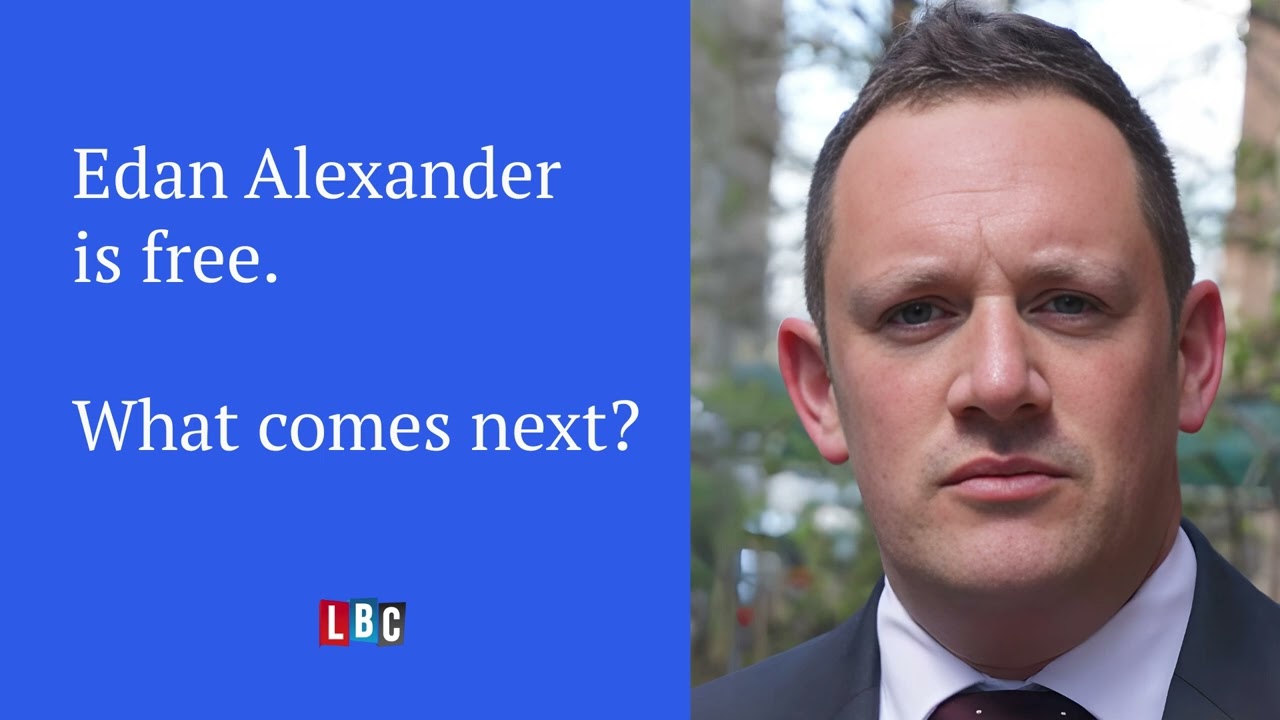
Edan Alexander is free. What comes next? Richard Pater, Director of BICOM, spoke with LBC on 12 May 2025 about the release of Edan and President Trump’s upcoming trip to the Middle East.

Newsletter sign-up

Please enter your information below to subscribe to our daily newsletter and stay updated and informed.

Donate to BICOM

At BICOM, we rely on the generosity of people like you to keep our website and services running. Your donation, no matter the size, makes a real difference. Please consider supporting us today. For further information please email: [email protected]