What’s happened: Police have opened an investigation into Iranian links to a series of arson attacks on Jewish targets in London.
- On Saturday night, Kenton United Synagogue was targeted in an arson attack; two teenagers were arrested.
- Chief Rabbi Sir Ephraim Mirvis said the Kenton fire, which did not cause any significant damage, was the third “cowardly” attack on Jewish sites in London in less than a week.
- Posting on X Mirvis said, “A sustained campaign of violence and intimidation against the Jewish community of the UK is gathering momentum…Thank God, no lives have been lost, but we cannot, and must not, wait for that to change before we understand just how dangerous this moment is for all of our society.”
- On Friday night, there was another attempted arson attack on a building with links to the Jewish community, while last week, police arrested two suspects over an attempted arson attack on another synagogue in the capital.
- Prime Minister Starmer said, “This is abhorrent, and it will not be tolerated. Attacks on our Jewish community are attacks on Britain.”
- The Pro-Iranian group Harakat Ashab al-Yamin al-Islamia (HAYI) or Movement of the Companions of the Right Hand of Islam, has said it is responsible, and posted a video purporting to show the attack on the Kenton synagogue on social media.
Context: Harakat Ashab al-Yamin al-Islamia (HAYI) are a recently established Iranian proxy group. They have only been active since Israel and the US began their military campaign against Iran on 28th February 2026, and are likely part of Tehran’s retaliation strategy against Israel.
- HAYI’s activities are assessed as almost certainly being part of a broader Iranian intelligence service-led psychological warfare campaign against Israel using diaspora Jewish communities as a proxy target.
- HAYI represent a low-cost and low-risk asset which is almost certainly easy to operate with a degree of deniability, yet able to achieve significant cognitive effects on an adversary target audience, as well as divert responding local security agency resources.
- Often described as a cut-out, they primarily exist on Telegram and are not believed to have members in a traditional sense. They are assessed as likely being controlled and directed by an Iranian intelligence service, i.e. the IRGC.
- HAYI target Jewish and Zionist organisations with relatively unsophisticated arson attacks. Rather than attempting spectacular attacks to maximise casualties, HAYI tends to use or claims to have used incendiary devices or drones against these organisations, then creates videos of the attacks which are uploaded onto Iranian-linked Telegram channels.
- HAYI’s claimed attacks include:
- An explosion at a synagogue in Liege, Belgium on 9th March.
- A claimed attack on an unspecified site in Greece on 11th March. No evidence of any such attack has been found.
- An arson attack on a synagogue in Rotterdam, the Netherlands, on 13th March.
- An explosion at a Jewish school in Amsterdam, the Netherlands on 14th March.
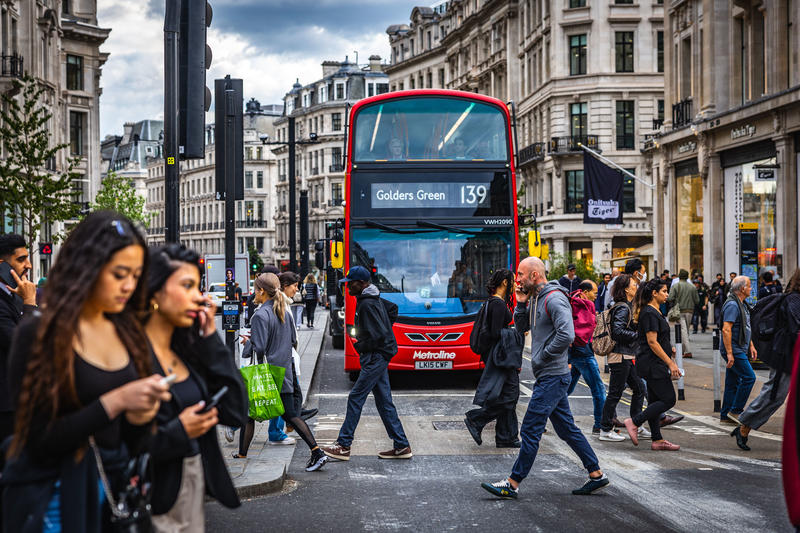
- An arson attack on ambulances belonging to the Hatzolo charity in Golders Green, London on 23rd March. HAYI claimed that the adjacent synagogue was targeted.
- An attack against the Bank of America in Paris was foiled by French authorities in on 29th March. The bank had been named as a potential target on HAYI’s Telegram channel.
- A failed arson attack at a synagogue in Finchley, London, on 15th April.
- An arson attack at Iran International’s parent company’s studios in Park Royal, London on 15th April
- A claimed radioactive drone attack against the Israeli Embassy in Kensington, London, on 16th April. The Metropolitan Police and Israeli MFA have since confirmed that the Embassy was not attacked.
- A failed arson attack at a Jewish charity (Jewish Futures) with links to Israel’s former offices in Hendon, London on 17th April.
- A failed arson attack at a synagogue in Kenton, London on 18th April.
- While investigations have been led or supported by Counter Terrorism Policing, they are being treated as antisemitic hate crimes rather than terrorist attacks.
- The Metropolitan Police have said that the arson attack on Jewish Futures was “not being linked to other incidents in the northwest London area over the last week or last month’s arson in Golders Green”.
- This is likely due to a level of distance between HAYI and its assessed Iranian intelligence service sponsors, as well as the fact that the group has not yet been proscribed. If HAYI were to be proscribed then acts linked to them would likely be investigated by Counter Terrorism Policing by default. It could also make sharing their videos an offence under Section 12 of the Terrorism Act 2000.
- HAYI’s Telegram channel was deactivated shortly after March’s Golders Green attack. It peaked with approximately 200 followers. Footage of its attacks are now distributed on other major Iranian regime-linked channels including Sabereen News and Almihwar News.
- HAYI’s agents are assessed as highly likely to be recruited online with promises of payment after providing evidence of following their handlers’ instructions, primarily using encrypted messaging apps such as Signal or Telegram to communicate.
- In line with other examples of Russian and Iranian-sponsored espionage and terrorist activities against the UK and Israel, recruits typically lack a particular religious or ideological affinity for those they act on behalf of, and are motivated by money.
- For example, both the Wagner Group and Iranian intelligence services have contracted local or European criminals to act on their behalf in the UK, i.e. to attack and burn down Ukrainian-owned businesses or conduct surveillance on Iran International’s studios.
Looking ahead: President Trump’s two week deadline for negotiations with Iran expires on Wednesday.
- Whilst significant gaps remain between the US and Iranian position, it remains unclear if they will reach an agreement or the deadline will be extended or there will be a resumption of hostilities.