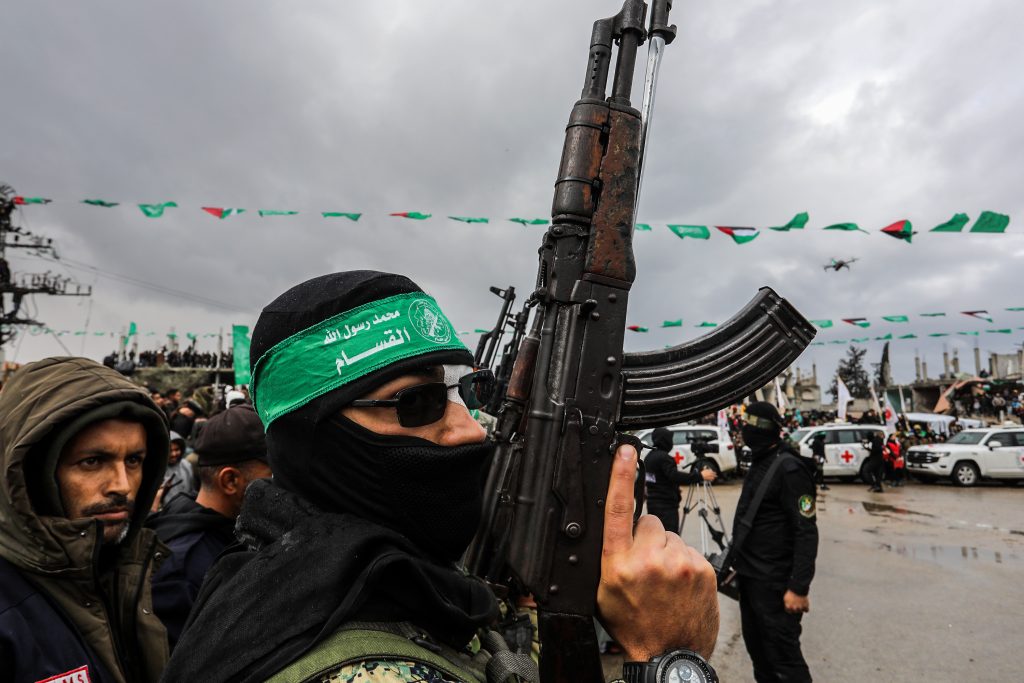
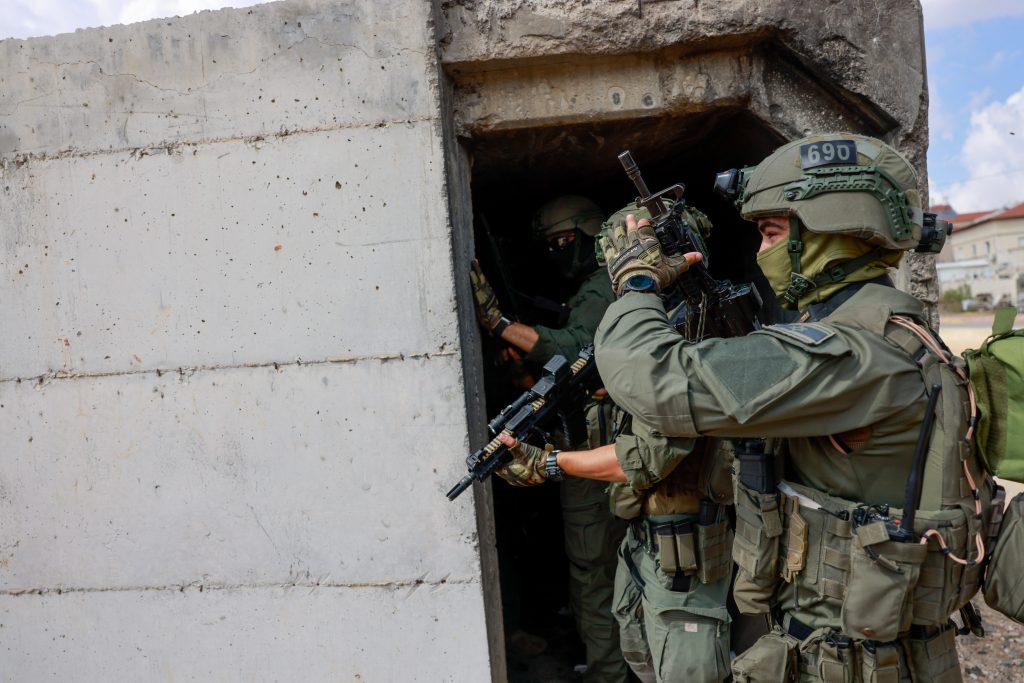
What’s happened: Israeli forces operating inside a Gaza refugee camp deep in Hamas-controlled territory successfully detained Muein al-Arabid, the head of Hamas’ internal security service (equivalent to MI5) on Tuesday.
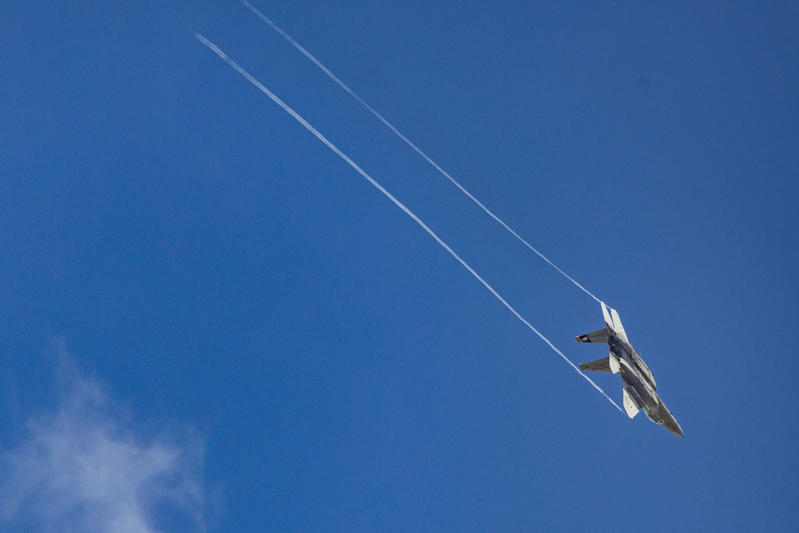
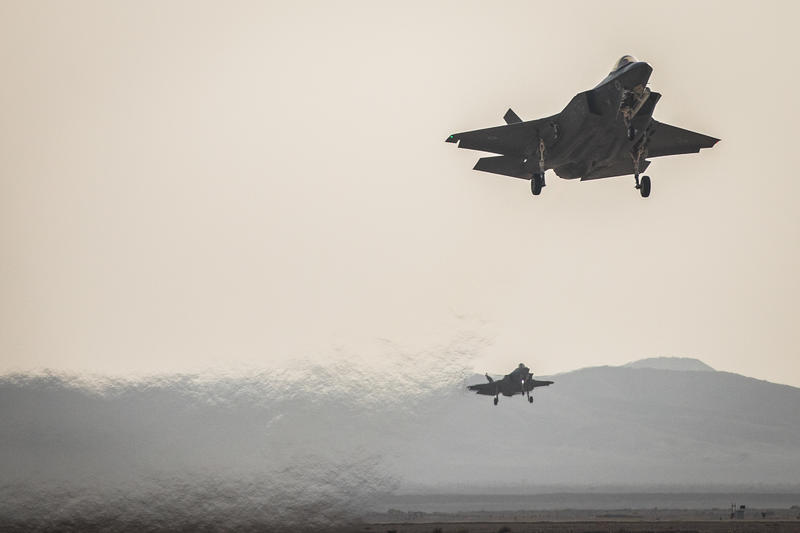
- The dramatic operation in the Shati refugee camp was preceded by coordinated airstrikes by the IDF. According to reports in various Arab media outlets, local militias opposed to Hamas also fired on Hamas targets to create a diversion during the abduction. These reports were denied by Israeli officials.
- The operation followed a relative lull in Israeli operations in Gaza, in line with American requests to Israel. Most of the recent Israeli offensive actions in Gaza were focussed on killing terrorists directly involved in the October 7 massacre or in the holding of Israeli hostages kidnapped.
- The capture of al-Arabid was widely seen in Israel as an operational and intelligence coup. It indicated to Hamas that Israel could operate anywhere in Gaza and on either side of the Yellow Line. His capture alive signalled to them that information that Hamas considers protected will likely soon be known to the Israelis, including operational plans, hideouts, financing mechanisms, and more. And it added pressure on Hamas in the ongoing impasse with the Board of Peace on disarmament.
- It was to this impasse that Defence Minister Yisrael Katz alluded when he spoke of the operation, saying, “We won’t budge from Gaza until the Strip is demilitarized, Hamas is disarmed and all the terrorist tunnels are destroyed. And even then, the IDF will remain in Gaza along defensive lines and will ensure the security of the western Negev communities.”
- The IDF also confirmed yesterday that another operation earlier in the week resulted in the killing of two wanted Hamas terrorists, including Talal Mustafa Saleh Badawi, a commander in the Military Security Department of Hamas’ Gaza City Brigade, who was likely the target of the operation.
- In a separate update, the IDF confirmed that it had destroyed or otherwise rendered inoperable some 26 kilometres of tunnels in Hamas’ expansive Gaza tunnel network.
- Prime Minister Netanyahu visited troops operating inside Gaza yesterday, accompanied by Chief of General Staff Eyal Zamir and other senior officers following the successful raid in Shati. Following a briefing by officers in theatre, he told soldiers in an IDF outpost in Gaza, “We control 60% of the Strip and there is more to come because we’re killing the terrorists who threaten us. We’ve done that frequently. We nabbed the head of Hamas’s internal security service. I’m sure we’ll learn a few things. There’s more work that still needs to be completed, and we’ll complete it.”
Context: The significance of al-Arabid’s detention goes beyond mere intelligence gathering. As head of internal security, he would have been the person responsible for protecting other senior Hamas figures, who will now have to take extra measures for their own safety and more strictly avoid meeting each other. This alone will presumably make any Hamas operations in the Strip harder to carry out.
- If any Hamas operations were in mature planning stages, they will either need to be carried out immediately without a clear chain of command and in an aborted state of readiness or risk being entirely known to Israeli interrogators. In such a situation, the Hamas regime’s ability to continue its internal repression will also take a hit, something which it is hoped in Israel (and presumably in the Board of Peace too) will bring Hamas positions on disarmament closer to those of the other parties to the ceasefire agreement.
- In addition, it is presumed al-Arabid’s had knowledge of additional details of the planning and execution of the October 7 invasion and massacre. Any information he passes on to Israel regarding these will be useful hunting down and prosecuting terrorists who participated in the massacre.
- Looming over the various operations in Gaza is the impasse over the Board of Peace’s 15-point “Gaza Roadmap,” published on July 30. Israel has publicly rejected the plan as written, and has sought clarifications on several points from the Americans and the Board’s Director-General Nickolay Mladenov. Hamas publicly accepted the plan, but pledged itself to an implementation of several of the points that was explicitly in violation of the written text.
- Israeli objections focussed primarily on the sequencing, with Israel concerned that it would be forced to carry out withdrawals before Hamas weapons are decommissioned. Publicly, senior Israeli political officials have committed Israel to a position of no withdrawals until complete decommissioning, though in subsequent talks during the month of August with the US, there appeared to be some agreement to limited phased withdraws following significant decommissioning subject to international verification.
- Hamas, for its part, has insisted that storing weapons without disabling them could count as “decommissioning.” It has also sought to distinguish between “heavy weapons” that could be used for military operations against Israel and “light weapons” that could are used to maintain its rule and influence in the territory, with a preference for holding onto some of the latter. Mladenov has emphasised in talks and in public statements that decommissioning covers all weapons, makes no distinction among them, and would not just be a storage mechanism. The text of the Roadmap explicitly commits the sides to reaching a “One Authority, One Law, One Weapon” status in Gaza under the NCAG, the technocratic committee which is supposed to govern Gaza in the interim period following the decommissioning of Hamas.
- Hamas also insists that decommissioning cover the weapons of other militias operating in the Strip, including various armed gangs suspected of operating with Israeli consent.
- Regarding so-called “light weapons,” the Board of Peace insists that the Roadmap actually covers police weapons in the earliest stage of the sequenced decommissioning.
- The IDF also released an update on the aid situation in Gaza since the ceasefire went into effect eleven months ago. According to official figures, the volume of aid entering Gaza “significantly exceeds the humanitarian needs as defined by UN agencies, international organisations, and assessments conducted throughout the war.”
- 2 million tons of food have entered the Strip since the ceasefire began, with roughly 600 trucks entering each day. Food prices have declined by 72% since major combat operations stopped last October.
- Four water pipelines are now operational in Gaza, including three providing water directly from desalination plants in Israel. An additional desalination facility in Gaza is powered by electricity provided by Israel.
- 21,000 tons of medical supplies have entered Gaza since the ceasefire began, as have 74,000 tons of hygiene and sanitation supplies.
- Eight permanent hospitals, four field hospitals, and four medical centres are currently operating in the northern Gaza Strip. Two permanent hospitals and eight field hospitals are currently operating in the southern Gaza Strip.
- All this occurs despite repeated attempts by Hamas to intercept humanitarian supplies and use humanitarian deliveries to smuggle prohibited items into Gaza.
Looking ahead: Despite American-led talks in August closing many gaps on the measures laid out in the Roadmap document, it is not expected that any major steps will be taken by either side before the upcoming elections in Israel on October 27 or even in the US the week after.
- In the meantime Israel is expected to continue carrying out occasional operations inside Gaza, despite the ceasefire and beyond the Yellow Line. Israeli officials speaking to foreign counterparts tend to emphasise the preventive or pre-emptive nature of these operations, taken to deal with imminent threats to the IDF or Israeli civilians. Speaking to domestic audiences, officials tend to emphasise IDF operations that result in killing terrorists known to have taken part in the October 7 massacre.