LATEST

Israel, the UK and the world

Key background
  • The UK and Israel share a strong relationship, built on historical, economic, and diplomatic ties. Both nations collaborate closely in trade, science, technology, and defence, with the UK being a key partner to Israel. The UK supports Israel’s right to exist as a Jewish state. Scientific progress, academic partnerships, and shared values of democracy further strengthen the bond.
  • Israel maintains diplomatic ties with 165 of the other 192 UN member states.
  • Israel maintains full diplomatic relations with two of its Arab neighbours, Egypt and Jordan, after signing peace treaties with the former in 1979, and the latter, 1994.
  • In 2020, supported by the US, Israel signed the Abraham Accords agreements establishing diplomatic relations with Bahrain, the UAE and Morocco.
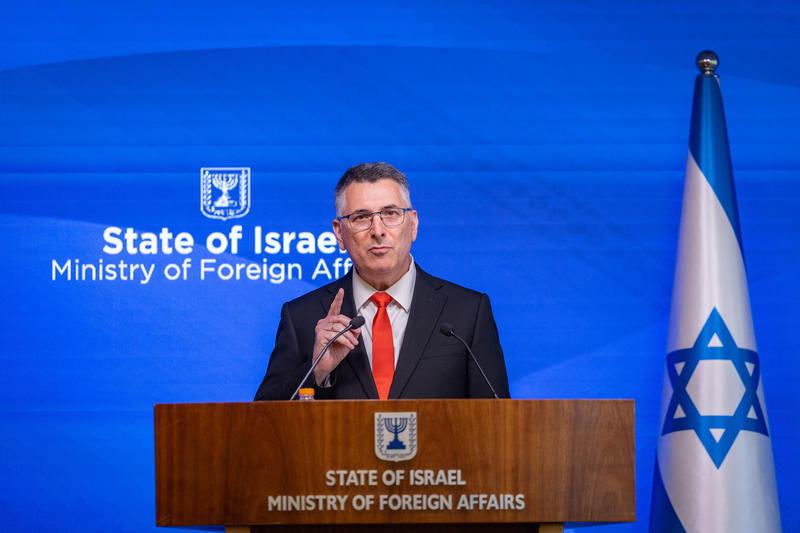
Israeli Minister of foreign affairs Gideon Saar hold a press conference at the Ministry of foreign affairs in Jerusalem, September 8, 2026.
Israeli Minister of foreign affairs Gideon Saar hold a press conference at the Ministry of foreign affairs in Jerusalem, September 8, 2026. Photo by Chaim Goldberg/Flash90

Updated September 9, 2026

UK–Israel rift deepens as Israel responds to UK sanctions

What’s happened: Following Foreign Secretary Miliband’s announcement that the UK was introducing a raft of measures centered on banning the sale of settlement goods, Israel has now provided its own response.

  • In a speech made yesterday afternoon, Foreign Minister Saar announced four decisions:
    • The closure of the British Consulate in Jerusalem.
    • The removal of British representatives from the International Gaza Support Centre in Kiryat Gat.
    • The termination of British activities to train Palestinian Authority (PA) forces under the “British Support Team in Ramallah.”
    • The denial of entry to Israel to 12 British elected representatives and other British nationals involved in antisemitic and anti-Israel activity, as well as those who deny the very existence of the State of Israel.
  • Saar described Miliband’s comments as “outrageous lies,” but also added, “we have nothing against the British people. We know that we have many friends in Britain.”
  • He continued, “Unfortunately, a hostile Labour Government is in office, systematically acting against the State of Israel, and it has left us with no choice but to finally respond to its hostile actions.”
  • “The British move is morally distorted and constitutes blatant interference in the affairs of a sovereign state and in its electoral process.”
  • “The attempt by the British Labour Government to impose measures in the style of the “White Paper” carries echoes of the antisemitic words of British Lieutenant-General Barker, commander of British forces in the Land of Israel during the Mandate, who said: “punish the Jews by striking at their pockets.”
  • Saar termed UK reasoning that the timing was based on the E1 tenders as “false claims,” adding, “no new decisions have been made regarding development in E1.”
  • Saar stressed that the E1 decision was taken more than a year ago, and the tender process has been underway for many months, adding that the claims regarding the severing of potential Palestinian territorial contiguity were also baseless. “The decision of the Government of Israel, taken more than a year ago, stipulated that two roads would be built: the first, Road 80, which will serve as a major transportation route from the Bethlehem area to the Ramallah area; the second, known as the ‘Fabric of Life’ Road, between a-Za’im and al-Ezariya. The claim of harm to ‘Palestinian territorial contiguity’ sounds particularly ridiculous coming from those who insist on defining Judea and Samaria and the Gaza Strip as ‘one territorial unit.’”
  • Saar continued, “The decision of the Labour Government also constitutes a gross interference in the electoral process of a sovereign state. This is a blatant and completely unacceptable attempt by a foreign government to exert external influence in the midst of an election campaign.”
  • He also listed a series of unilateral measures taken against Israel since the Labour Government took office in July 2024.
    • “Recognition of a virtual “Palestinian state” in September 2025.”
    • “The resumption of funding for UNRWA, even though its employees were actively involved in the October 7 massacre.
    • “The suspension of licenses for defence exports to Israel
    • “Sanctions on Israeli ministers; sanctions on Israeli individuals and entities;
    • “The suspension of negotiations on a free trade agreement;
    • “Restrictions on Israel’s official participation in the international defence and security equipment exhibition in Britain;
    • “The freezing of military dialogue and security cooperation;
    • “Preventing IDF officers from participating in training at the Royal College of Defence Studies.
  • He connected all these moves with, “biased and one-sided anti-Israel rhetoric,” which he said “have already contributed significantly to the unprecedented rise in antisemitic attacks, including violent attacks against British Jews.”

Context: The UK measures and the Israeli response plunge bilateral relations to their lowest ebb in decades. The timing appears politically motivated on both sides.

  • For the British government it was convenient to make this announcement ahead of Labour Party Conference where this will appeal to the grassroots and left wing of the party, and counter their competition from the Green Party and pro Gaza independents.    
  • For Saar and Netanyahu, this was an opportunity for them to show strength in the context of their re-election campaign.      
  • Israeli officials had been anticipating this initiative from the UK government but were surprised by the harsh tone of Miliband’s speech and coordinated aspect with the other 11 countries.
  • Following the UK, the Foreign Ministers of Canada, Denmark, Finland, France, Iceland, Ireland, Norway, Poland, Portugal, Spain, and Sweden all confirmed, “their intention to introduce national and/or support European restrictions on trade in goods with settlements which are illegal under international law, or that they are actively considering these and other measures.”
  • The response against the UK was particularly harsh as Israel identified their leadership on this matter.      
  • Meanwhile, US Secretary of State Rubio was emphatic, saying that the US “obviously” wouldn’t be following the UK, while suggesting that the move could have “implications on our ability to make progress in Gaza with the 20-point plan and the Board of Peace, which we’re very committed to.”
  • It is understood Prime Minister Burnham has not spoken to Netanyahu since taking office. Underlining partisan support, Saar said he had a “great conversation” last night with the Leader of the Opposition Kemi Badenoch and Shadow Foreign Secretary Tom Tugendhat. According to his post on X he, “thanked them for their firm opposition to the hostile Labour Government’s announcement,” adding, “I welcomed their support for the friendship with Israel and their commitment for the future relations between our countries. We know that we have many friends in the UK, but unfortunately we are faced with the ongoing hostility of the current Labour government.”
  • Outgoing Israeli Leader of the Opposition and former Prime Minister Yair Lapid reportedly held a lengthy, tense conversation with top British leadership, telling them, “You are helping Smotrich.” During the call, a senior British official expressed surprise that the Israeli government had done nothing meaningful to prevent the sanctions in advance. Lapid’s response was sharp: “Of course, because they knew it was good for them politically.”
  • In a separate statement, Lapid referred to the UK decision as a, “grave mistake… a flawed and dangerous policy, at the wrong time and for the wrong reasons,” which would strengthen extremist voices in Israel and serve as a “shot in the arm for Hamas and terror organisations.”
  • According to Israel’s Ministry of Economy, total Israeli exports to the whole world in 2025 stood at around $165 billion, while trade with the UK accounted for $4.4 billion, with exports from the West Bank making up only around 1 per cent, primarily dates from the Jordan Valley.
  • However economists are concerned of a knock on effect, where doing business with Israel becomes too complicated with most Brits not knowing the contours of the Green Line.
  • Since the UK’s unilateral recognition of Palestinian statehood in 2025, its consulate in East Jerusalem has functioned as its de-facto embassy to Palestine. Its closure could now lead to the establishment of an embassy in Ramallah.
  • The termination of British Support Team in Ramallah is significant. This was the most senior international interface with the Palestinian security forces, that despite the ongoing tension on the ground, kept discreet coordination with the IDF.  
  • None of those banned are senior members of the Labour Party who were involved in drafting yesterday’s policy announcement, instead representing the party’s hard-left anti-Israel wing, the Green Party, or in Jeremy Corbyn’s case Your Party.
  • Those banned have broadly responded positively. Taking to Twitter, Zarah Sultana MP described Israel’s measures as a “badge of honour” she would happily wear, while the Green Party responded by saying that it “will not be bullied into silence.”
  • Mainstream Anglo-Jewish leaders have strongly condemned the new policies. The Chief Rabbi, Sir Efraim Mirvis, accused the British government of overlooking communal concerns, saying that “Gesture politics of this kind feeds into an increasingly hostile discourse about Israel, and the cumulative effect of such punitive policies is to further embolden those, at home and abroad, who use hatred as a weapon against Jews.”
  • The Jewish Leadership Council said that “the government’s increasingly punitive and unbalanced approach towards Israel does nothing to advance peace, risks harming Jewish life in Britain, and damages the UK’s relationship with a vital ally”, and that “A ban on trade with goods from settlements also risks becoming a de facto boycott of Israel, giving legitimacy to those who reject Israel’s very existence.”
  • Whilst many have raised concerns about the timing of the announcement, it has also been noted that if the UK government were truly concerned about the situation in the West Bank and Gaza, they would expedite the proposed six to nine months’ timeframe announced in Parliament.  Supporting the claim that this policy is performative and will have little impact in these territories.

Looking ahead: From the UK’s perspective, the announcement was a declaration of intent rather than an immediate move. Miliband plans to advance new legislation that will take effect only in six to nine months.

  • However according to Saar the removal of the British representatives (listed above) will take place in the next week.
September 8, 2026

BICOM statement on UK sanctions against Israeli settlements

BICOM Statement
BICOM Statement

“It is deeply disappointing that the UK government has chosen performative actions to suit its own domestic needs over responsible diplomacy, especially during the sensitive period in the lead up to an Israeli election. The UK’s sanctions risk emboldening the most radical elements in Israeli politics. While the government claims that a two-state solution is its aim, these sanctions directly hinder progress towards that goal.

“The sanctions are harming not just innocent Israelis but the estimated 20,000 Palestinians currently working in various Israeli businesses in the West Bank, and their livelihoods are threatened by the UK’s actions.

“The new government policy also weakens the UK’s influence in the region and undermines its ability to serve as an honest broker in any potential peace process between Israel and the Palestinians.

“In this light, the UK’s latest policy towards Israel is an act of political posturing against a critical trade and security partner, disregarding our own national interests. Where previously issued, such sanctions had no moderating effect on the Israeli individuals or businesses concerned. It is highly unlikely that those just announced will have the desired effects.”

– Richard Pater, BICOM Chief Executive

September 8, 2026

UK imposes sanctions on Israeli settlements

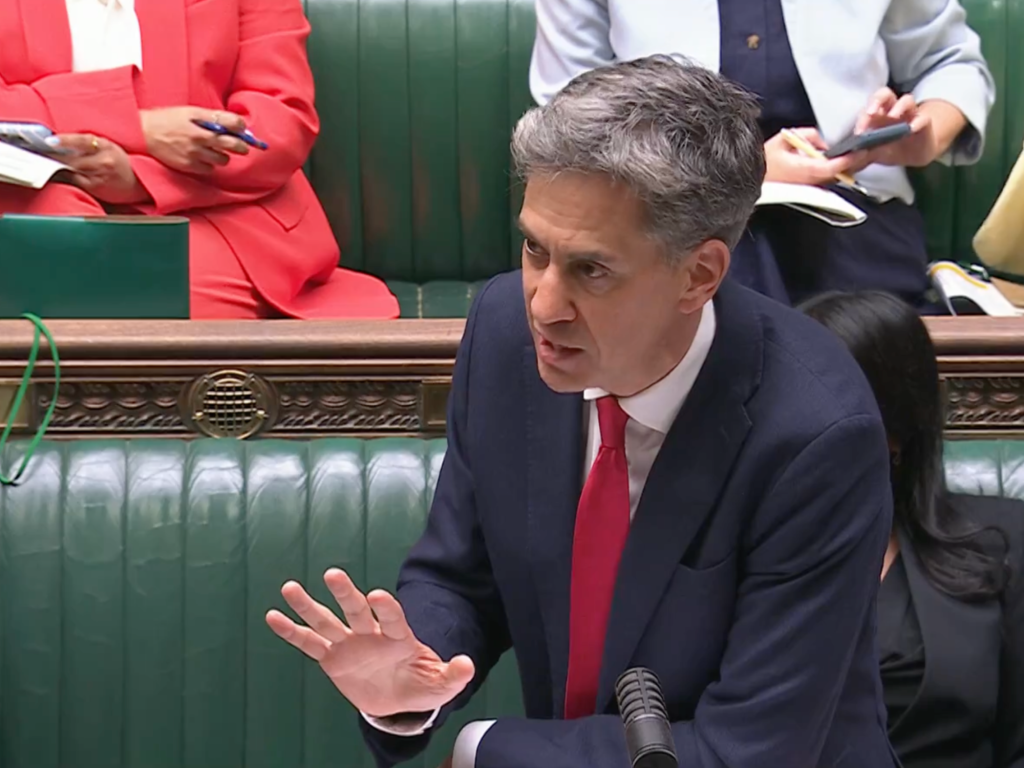
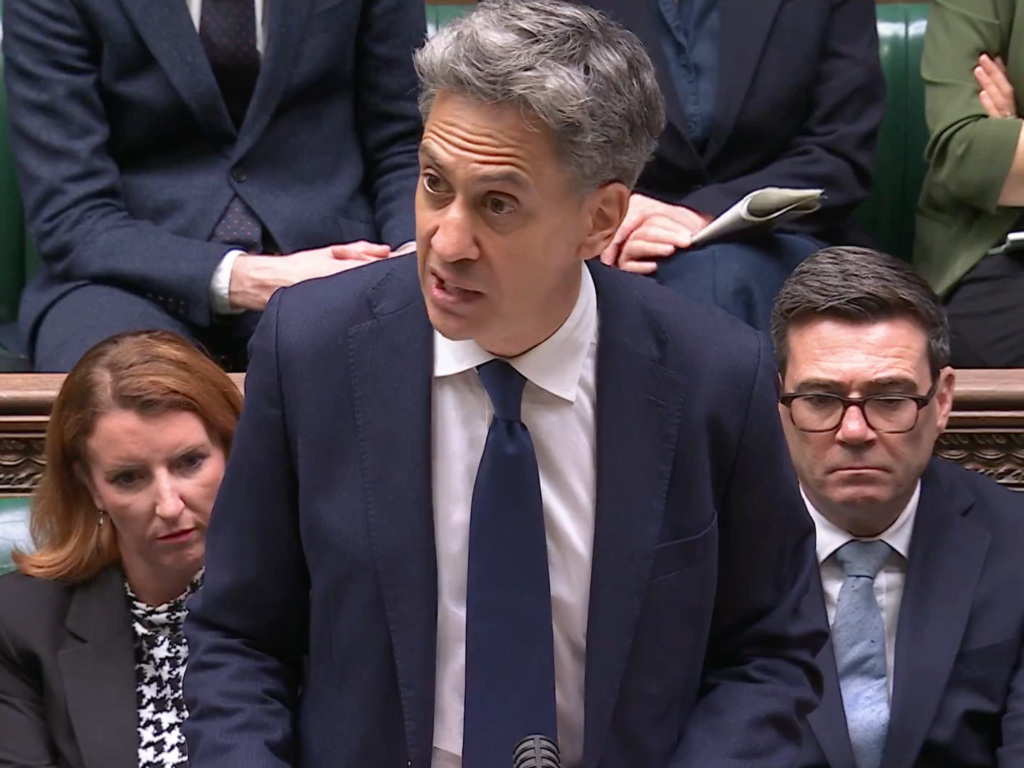
Foreign Secretary Ed Milliband announcing sanctions on Israeli settlements in the House of Commons, September 8, 2026.
Foreign Secretary Ed Milliband announcing sanctions on Israeli settlements in the House of Commons, September 8, 2026. Photo credit: Parliamentlive.tv licensed under Open Parliament Licence v3.0.

What’s happened: Foreign Secretary Ed Milliband announced a package of measures targeting Israel.

  • The measures specifically target trade with Israeli settlements in the West Bank and, by extension, with Israel in general.
  • Miliband’s announcement follows calls from Labour activists, including more than 140 Labour MPs, to ban trade with Israeli settlements, with campaigners preparing a motion to be tabled at the Labour Party Conference later this month.
  • At the same time, Miliband’s policy faced opposition from Labour Friends of Israel, which warned that the measures risk becoming a “de facto boycott” of Israel.
  • Similar point was raised by Conservative Friends of Israel, whose Parliamentary Chair Greg Smith marked today “a dark day in the history of British foreign policy” and warned that “this will only pour petrol on the fires of anti-Jewish hatred which have spread at such an alarming rate in recent years.”
  • According to president Isaac Herzog, the UK policy is “a grave miscalculation, a decision that will fall on the wrong side of history.” Herzog also pointed out that sanctions will negatively impact Palestinians themselves: “It will directly harm – unfortunately – Palestinians, robbing them of business and employment.”
  • Currently, around 20,000 Palestinians work in various Israeli businesses in the West Bank, and sanctions will directly affect their livelihoods.
  • Today’s sanctions mark the eighth time that the UK has announced punitive measures5(11.1%) against Israel since the war began with Hamas’s invasion and massacre on 7 October 2023. No comparable measures have been taken by the UK against the Palestinians during the same period. With this one-sided approach, Britain undermines its ability to serve as an honest broker in any potential peace process between Israel and the Palestinians.

Context: In the days before being elected Labour leader in July, Burnham made a public “apology” for the Labour government (of which he was not a member) having “got it wrong” on Gaza in its initial response to the Hamas massacre of October 7.

  • Burnham criticised the outgoing Starmer government for not putting more pressure on Israel in the initial days of the war to accept a ceasefire.
  • The two issues that precipitated public disputes between London and Jerusalem were the E1 construction tenders and the humanitarian situation in Gaza.
    • On E1, the UK, together with many allied governments, has claimed that the settlement would effectively cut the West Bank in two and irreversibly prevent the establishment of a contiguous Palestinian state, neither of which is an empirically sustainable claim. E1 is west of Maaleh Adumim, which has been included in Israeli territory in all proposed peace plans in the past three decades, and the remaining corridor of land is roughly 25 km wide. For comparison, the inclusion of Tulkarem in a future Palestinian state, which all proposed peace plans also stipulate, leaves central Israel a corridor of barely 15km without anyone claiming that it cuts the state in two or prevents territorial contiguity. Secondly, every single proposal since and including the 1947 UN Partition Plan has envisaged a Palestinian state with non-contiguous territory, with the Gaza Strip as its exclave.
    • Data on the humanitarian situation in Gaza just from the last weeks has shown definitively that there is no shortage of food or medical supplies. Claims made in a social media video by Foreign Secretary Milliband earlier this week where he describes learning in a meeting with NGOs about restrictions on medical supplies were refuted by Israeli authorities who noted that there has been no restriction of any kind on medical supplies since the ceasefire came into force a year ago, and in fact the UK is an active member in the CMCC mechanism which oversees the transfer of these supplies.
  • Beyond these two issues, the larger motivation for the new UK policy reset is the ostensible need to preserve the two-state solution and act against parties working against it.
    • The acceleration of so-called “outposts” in the West Bank, particularly since the October 7 massacre, do seem intended to make future Israeli withdrawals from the territory more onerous. But it’s not entirely clear how, if a peace treaty were reached, they could actually fulfil that purpose. Israel has withdrawn from much bigger and more populated settlements in the past, both in Sinai and Gaza, as well as in the northern West Bank in 2005. And in final status talks at the end of the Oslo process, it offered to withdraw from much larger settlements to achieve a two-state peace accord, but these withdrawals never came to pass not because of settler opposition but because of Palestinian rejection.
    • The argument that settlements must be boycotted because any claim that Jews should live in the West Bank imperils the prospect of two states is substantially weakened by the insistence on funding UNRWA, the UN-backed Palestinian agency that treats Palestinians living in the West Bank or Gaza as “refugees” from what is today Israel. And yet, support for UNRWA has become a central plank of this government’s position on the conflict since 2024.
    • Rather than address the actual reason a two-state solution has not been effected — namely, that at each opportunity to establish their state, the Palestinians have rejected peace and sought violent confrontation instead — the reset seeks to take a tough stand against an imagined cause for this impasse. And in so doing, whether intentionally or not, the government is effectively rewarding rejectionism and implicitly awarding a prize for the October 7 attack.
  • Israeli commentators have tended to see the announced British move as a boon to the right and far-right in Israel’s heated election campaign, leading up to the first general election since the October 7 massacre in seven weeks time. The actual impact on the election will probably be limited.
  • But it will burnish two major right-wing arguments, and at a rather awkward time for domestic Israeli opponents of the settlement enterprise.
    • The issue of settler violence in the West Bank had begun to capture headlines in Israel in recent weeks and had put the settlers on the wrong side of public opinion. The UK moves against all settlements — and especially the likely inclusion of East Jerusalem in the trade ban — effectively undo that. To the extent the issue of the settlements is one of armed gangs harassing Palestinian shepherds (and interfering with IDF operations in the West Bank), it becomes an issue where the vast centre of Israeli politics is opposed. If the issue is Israelis living in what as seen as sovereign Israeli territory in Israel’s capital city or doing business with firms that operate both in pre-1967 Israel and settlements on the Green Line that are to be annexed to Israel in any proposed peace plan, that same broad centre lands on the other side.
    • The connection between settlements and two states or settlements and the war which was launched on October 7 doesn’t play out domestically in Israel the way it appears to in Whitehall. The invasion of Israel and the worst massacre of the Jewish people since the Holocaust didn’t occur from a contested land dotted with settlements. It came from Gaza, where there was no Israeli military presence and not a single settlement or settler since 2005. The unavoidable empirical connection made by Israelis is that where settlers and the IDF stayed, no such massacre and invasion was mounted, and where they left, two decades of rocket fire ensued culminating in the October 7 massacre and long war since.
  • In response to UK sanctions, the UK will almost certainly be removed from the International Gaza Support Centre (still generally referred to by its old name the CMCC), the multinational body based in Kiryat Gat, Israel, which coordinations stabilisation and relief efforts in Gaza in line with the October 2025 ceasefire.
    • The CMCC is the International organisation overseeing the provision of humanitarian aid into Gaza, and its staff include civilian and military personnel from multiple countries, including Switzerland, Japan, Australia, Canada, Egypt, Jordan, the UAE, Denmark, Cyprus, Greece, New Zealand, and others.
    • Israel has previously expelled personnel from Spain and the Netherlands for diplomatic moves that were less extreme than those being announced in London today, so it is unlikely that Israel will continue to host the UK at the facility.
    • Israeli anger at the UK on the specific issue of CMCC participation was already piqued earlier in the week when Foreign Secretary Miliband made false claims about Israel blocking medical supplies to Gaza, despite the UK’s active participation in the relevant CMCC working groups that oversee the provision of medical supplies.
  • Other direct responses from Israel are under consideration in Jerusalem. These include shutting down the UK consulate in East Jerusalem which functions as a de facto embassy to the Palestinian Authority, despite being located outside any territory governed by the PA. For comparison, the UK does not have an embassy to Israel anywhere in Jerusalem, but rather in Tel Aviv.
  • Israel may also suspend the export of certain weapons systems to the UK. The UK today purchases from Israel Trophy Active Protection System for its Challenger 3 tank, missile defence systems, electronic warfare technology, and a variety of unmanned and autonomous devices.
  • Both the UK and Israel are major participants in the multinational program developing the F-35 fighter jet, and even in previous steps the UK has taken against Israel, action on this specific form of defence cooperation has been limited. It is rumoured that Israel might ask the US to find Britain in breach of its commitments to the program due to the limited export license removals for F-35 parts, though it is not clear the US would be inclined to agree with this.
  • More extreme proposals included a call by Otzma Yehudit leader Itamar Ben-Gvir to respond by recognising Argentine sovereignty over the Falkland Islands. This hard-line rhetoric is highly unlikely to be adopted by decision-makers in Jerusalem.
  • On the other hand, domestic American law places limitations on the doing business with firms that cooperate with boycotts of Israel. These vary state-by-state, but any broad to ban trade with Israeli firms that have business in the settlements (which is most Israeli firms, especially if East Jerusalem is considered a “settlement”) could have far-reaching implications on British business in the US, particularly in the two large states of Florida and Texas.

Looking ahead: It is virtually impossible to distinguish goods made in Israel from those made in settlements, however these are defined, as supply chains normally involve actors from both. Making the distinction with regard to services too is even more difficult. A policy that is more than symbolic will inevitably lead to a rollback of trade with Israel as a whole, and many British firms seeking to avoid legal difficulties will protect themselves by stopping business with Israel.

  • If the announcement is purely symbolic and will ultimately have no effect on trade relations with Israel at all, it will only serve to heighten the rhetoric against Israel and further the demonisation of Israel’s self-defence as criminal. It is precisely this rhetoric, and the extended permission structure that attends it, that has accompanied the dramatic uptick in antisemitic violence and harassment faced by the British Jewish community in the last three years.
  • This move might be more dramatic than some of the other announcements of the past three years, but it continues a consistent direction of UK policy since war erupted on October 7 — a direction that has sought to limit Israel’s capacity to self-defence and use the violence of the last three years to entrench real political gains for the Palestinians. It is unlikely that any future Israeli government will see a major role for Britain in any future peace process, should one ever get underway.
  • This early pronouncement and the new reset, a month before the Holborn & St Pancras by-election, where a Labour seat is at risk from a Greens who have made criticising Israel a focal point of their campaign, are an indication of how the new Government seeks to make strong stands against Israel a part of its domestic posture rather than risk bleeding more constituencies to independent or Green candidates.

September 2, 2026

Miliband’s Israel ‘reset’ risks damaging UK influence and bilateral ties

Foreign Secretary Ed Milliband announcing reset with Israel in the House of Commons, September 1, 2026.
Foreign Secretary Ed Milliband announcing reset with Israel in the House of Commons, September 1, 2026. Photo credit: Parliamentlive.tv licensed under Open Parliament Licence v3.0.

What’s happened: Foreign Secretary Ed Miliband told Parliament yesterday that he would carry out a “comprehensive reset” of Britain’s policy to Israel that would include as yet unspecified measures against Israel.

  • Miliband specifically addressed the issuing of construction tenders for the controversial E1 settlement located between Jerusalem and the Israeli town of Maaleh Adumim. In his remarks, he said, “we do not want British companies financing, constructing, or advertising new settlements. The work we are now undertaking is how we can stop that. And as I say, I’ll have more to say soon.”
  • Stephen Doughty, the Middle East Minister, went further than Miliband and suggested that the UK Government was considering a ban on trade with settlements.
  • Israel’s Foreign Minister Gidon Saar reacted  to Milliband’s remarks, saying that “if Britain acts against the state of Israel, the state of Israel will act against Britain. We have the tools. The period is over when people act against the state of Israel and the state of Israel doesn’t respond.”
  • Yesterday’s announcement marks the eighth time that the UK has announced punitive measures taken to reduce violence and promote peace in the Israeli-Palestinian conflict since the war which began with Hamas’ invasion and massacre on October 7, 2023. All eight announcements have included punitive measures against Israel and none against the Palestinians.
    • Twice in 2024, Britain announced sanctions against settlers in the West Bank and once in the same year it suspended 30 defence export licences.
    • In 2025, the UK suspended negotiations on a UK-Israel free trade agreement, sanctioned two far-right ministers in the Israeli government, and recognised a Palestinian state.
    • Earlier this year, it expanded the measures against settlers and a settlement related financial entity as well as issued a warning to British businesses against activity in Israeli settlements.
  • The only comparable measure in the other direction was a pause in funding for UNRWA in early 2024 that was reversed when the Labour government came into power in July that same year. Support for UNRWA, which considers Palestinians born and living in Palestinian territory under Palestinian governments to be “refugees” from Israel, would seem to undermine the prospect of a two-state solution at least as much as settlement construction (and empirically much more) without igniting the same passions in Westminster.  
  • If the proposed measures are indeed focused only on the E1 tenders and the issue of settler violence, they are likely to upset bilateral ties without irreversibly scarring them. A trade ban on all settlements, on the other hand, will have far-reaching consequences for the relationship between the two countries that will not be easy to walk back even if, as polls suggest, a more moderate government is elected in Israel in October that cracks down on settler violence.
  • It is nearly impossible to separate Israeli companies that have business in settlements from those that don’t, especially if the UK government insists on treating East Jerusalem, which Israel considers part of its sovereign territory, as housing “settlers.” Of some 770,000 Israelis living beyond the Green Line, 245,000 are in East Jerusalem, and 362,000 are in the major settlement blocs hugging the line that have been included in proposed land swaps in all the major proposed peace deals of the last 30 years.
  • A finding by the Government that bans trade with Israeli companies in settlements, if it includes Jerusalem and the blocs, could be used by activists to effectively boycott almost any Israeli business. It would also be an opening for legal and social harassment of large numbers of British Jews.
  • It is unclear what measures Israel might take in response. Recently Israel ejected Dutch officials from the CMCC, the coordinating mechanism set up for implementing the Gaza ceasefire. Britain is one of the largest participants in the CMCC after the United States. Israel could restrict access of British officials to other internationally sponsored missions in Gaza and the West Bank.
  • Israel could also scale back its intelligence sharing and defence exports to Britain. And it could take measures against the British diplomatic mission operating a consulate in East Jerusalem.

Context: For both countries the rhetorical escalation is not just a matter of foreign policy, but rather deeply embedded in domestic politics. British political and media discourse has been plagued since the October 7 massacre by voices that excuse the massacre and condemn Israel’s response to it in terms that have inspired harassment, social exclusion, and physical attacks against British Jews. Demonisation of Israel has also proved electorally crucial, and the new Burnham government is keen for a performative act to demonstrate its bona fides to constituencies that sent independent, Gaza-focused, MPs to Westminster from former Labour strongholds.

  • The announcement meets Israel in the heat of an emotional electoral campaign as well, its first since the October 7 massacre. Polls overwhelmingly show the current right-wing and religious coalition going down to defeat. Announcing sanctions now can only serve to shore up  support for the pro-settlement parties of Smotrich and Ben Gvir.
  • The issue of E1, which has united western governments in opposition to Israel, is a peculiar one for a number of reasons.
    • The claim that E1 cuts the West Bank in two, repeated yesterday by the Foreign Secretary, is simply wrong. Even without E1 — even without Maaleh Adumim, which sits to its east — a future Palestinian state in the West Bank is still wider at its narrowest point than Israel without the West Bank is at its narrowest point, near Netanya. No one seriously claims that Israel is cut in two, or that an Israeli traveling around the West Bank to get from Jerusalem to Tiberias or Beersheva is somehow unduly impeded.
    • In all the major peace proposals of the past generation, whether at Camp David in 2000 or Taba in 2001 or in the Annapolis talks in 2007 or the Olmert proposal to Abbas in 2008 or even the bridging proposal tabled by John Kerry in 2014, E1 was in the territory that was to be included in Israel. The claim that a dramatic line is being crossed simply doesn’t hold up against the historical record or basic geography.
    • And if it were the case that E1 is such a damaging move to Palestinian statehood, it would stand to reason that its proposed construction would be an impetus for the Palestinians to make peace with Israel sooner rather than later. But there is no expectation of that in Miliband’s statement or in UK policy in general, which not only doesn’t envision measures to persuade the Palestinians to make peace with Israel and end their century-long struggle against the existence of a Jewish state, but doesn’t actually recognise that there has been such a rejection or that there should be consequences for it. The peace proposals all mentioned above (especially those in 2001, 2008, and 2014) didn’t go into effect for one simple reason: while the Israelis accepted them, the Palestinians explicitly rejected them and chose violent struggle instead.
  • UK policy that improves the terms for the side of the conflict pushing rejection and violence can only serve to incentivise more rejection and violence.
  • The two other issues cited as reasons for the “comprehensive reset” are the war in Gaza and the increasing acts of violence by radical settlers in the West Bank.
    • The war in Gaza began with the Hamas invasion nearly three years ago and has been in a ceasefire for more than ten months. Many countries are seeking an active role in the ceasefire implementation and especially with any future reconstruction projects. There is much to be sceptical about in Gaza, but if reconstruction succeeds, it will be the basis of any future diplomatic progress on the Israeli-Palestinian front. For Britain to manoeuvre itself out of a role there would be net loss for British influence and diplomacy in the region. At any rate, progress has been stuck in recent weeks due to Hamas’ refusal to carry out the disarmament it agreed to in the ceasefire last year. Punitive measures against Israel will only reward it.
    • The issue of settler violence has been the focus of much media attention and public discussion,  especially the ongoing crisis in Qusra. Despite widespread condemnation, including from Prime Minister Netanyahu, the opposition and even within the mainstream settler movement, not enough action has been taken to root out the phenomenon.  However, the proposed UK measures, especially if they affect a broad range of Israeli businesses, take the focus off the violent extremists and make the pro-settlement’s movement argument for it.

Looking ahead: The UK’s unilateral recognition of a Palestinian state, without conditions, alongside the persistent focus on Israel in UK political and media discourse, and the rise in antisemitism in the UK, has led many Israelis to view the UK as hostile to their legitimate security concerns.

  • Britain is seen as taking measures to address a moralising view of the conflict for domestic consumption that often have little to do with the actual conflict. Railing against settlements as a deep cause of Palestinian violence  might be cathartic, but there were no settlements in Gaza when Hamas launched its attack on October 7 as these had all been dismantled in 2005.
  • Recognising a Palestinian state to register displeasure with Israeli policy might make sense if a Palestinian state were waiting in the offing but Israeli opposition was what was stymying it, but in reality there were two different governments operating in two Palestinian territories and a state had not come into existence in any of the peace processes because the Palestinians rejected establishing one in parallel to making peace with a Jewish state next door.
  • Further steps, even if couched in language about settlements, risk inviting boycotts (formal or informal) against all Israel businesses and eventually those of British Jews as well. They won’t just be open for abuse by anti-Israel activists in Britain; they will empower far-right elements in Israel just as these appear to be headed for electoral defeat. And they risk leading to Britain’s exclusion from the emerging diplomatic arrangements that could begin in postwar Gaza and, if successful, eventually include a broader Israeli-Palestinian peace process in the West Bank as well.

July 28, 2026

Netanyahu to meet Trump at the White House

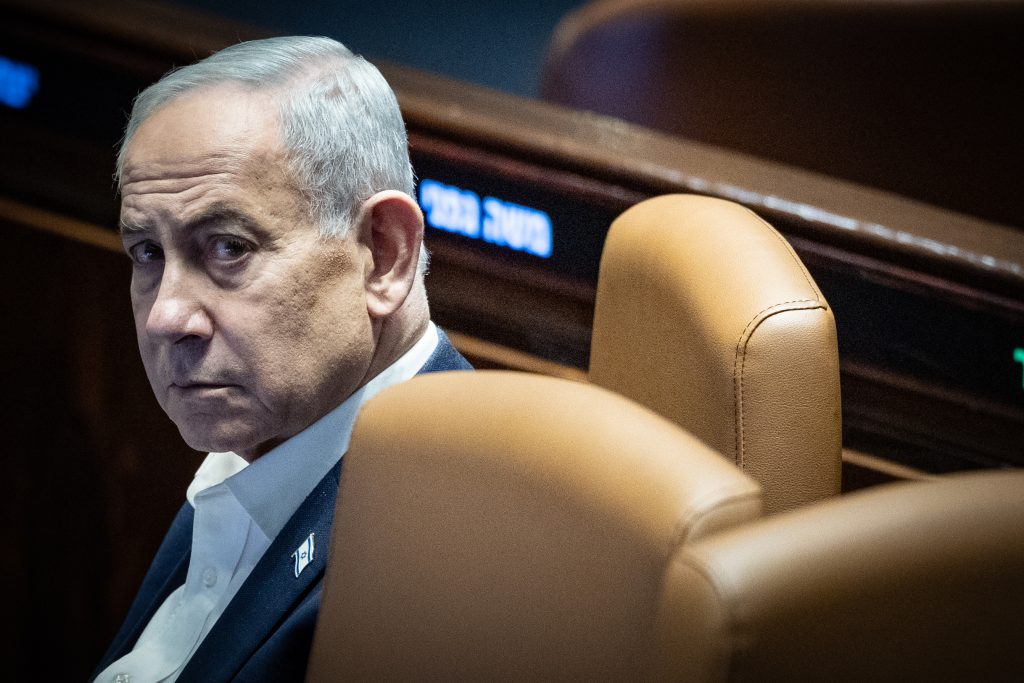
Israeli Prime Minister Benjamin Netanyahu attends a vote at the plenum hall of the Knesset, the Israeli parliament in Jerusalem, on July 16, 2026. Photo by Yonatan Sindel/Flash90 *** Local Caption *** חוק התקשורת כנסת מליאה ראש הממשלה בנימין נתניהו

What’s Happened: Netanyahu to meet Trump at the White House

  • Israeli Prime Minister Netanyahu is due to meet with US President Trump at approximately 11:00 (local time) in Washington DC.
  • Netanyahu will also attend the funeral ceremony for the late US Senator Lindsey Graham, who died on 11 July, at the Capitol alongside other US and world leaders.
  • After leaving Israel, Netanyahu’s office issued a video in which he said that he was embarking on the trip with “one clear objective: to ensure the security, strength and future of our beloved State of Israel.”
  • “In these complex times,” Netanyahu said, “one has to act with great determination and great wisdom. We will discuss all the issues on the agenda, first and foremost Iran. Of course, our goal is to ensure our security while also expanding the circle of peace around us.”
  • When asked by journalists on board his plane whether he and Netanyahu were in agreement on the Iranian issue, Trump said, “We have a little difference but pretty close, yeah. You know, Iran took a beating over the last 14 days and they asked us very nicely, ‘Please, stop. Let’s meet.’ And that’s where we are right now. We’ll see what happens. If we don’t make a deal we go back to the same thing.”
  • Trump said he had decided to suspend strikes against Iran so as to give negotiations another opportunity but stressed that if diplomacy failed, he could order military operations to resume and expand. “We are in very deep talks with Iran. If they don’t work out, we will go back to very strong military action.”
  • When asked about Netanyahu’s objections to the sale of F-35s to Turkey, Trump said, “Nobody tells me what we should be selling.”

Context: Trump’s meeting with Netanyahu follows a series of meetings in recent days with regional leaders, including Turkish President Erdoğan, Syrian President al-Sharaa, and Lebanese President Aoun.

  • Trump has also spoken with the leaders of Saudi Arabia, Qatar and Bahrain and is meeting Ukrainian President Zelensky before Netanyahu.
  • This trip comes amid pressure domestically for both Trump and Netanyahu due to the protracted nature of the conflicts in Iran, Lebanon, and Gaza. Their first meeting since the Iran war began in February will likely include the announcement of a potential US-Saudi nuclear deal, developments in Gaza, Lebanon and Syria, and obviously the situation with Iran itself.
  • The goals of the ongoing war with Iran have remained broad and unclear, with many of the original goals – potential regime change, dismantling parts of Tehran’s proxy network, preventing Iran from rebuilding its nuclear programme, and maintaining safe passage in the Strait of Hormuz – still largely unachieved.
  • Netanyahu will reportedly share intelligence indicating that Iran is building nuclear facilities at Pickaxe Mountain, which shows that the Islamic Republic is lying about its desire to continue to negotiate and that it is not negotiating in good faith. His goal is to present the severity of the threat but not to be perceived in Washington as a war monger trying to (once again) draw the US into a direct military conflagration.
  • The US administration believes that it is gradually wearing down Iran and that this will allow a greater achievement than a single, powerful military strike. Israeli officials suspect that American talks with Iran are unlikely to yield results the Americans want regarding freedom of movement in the Strait of Hormuz (and certainly not on the nuclear issue). This might create a dilemma for Trump as to whether to escalate further against Iran – perhaps hitting regime infrastructure – which he has so far preferred not to do.
  • Israeli officials believe that President Trump will bring up Syria and Lebanon and may push for an Israeli withdrawal from those two countries. On Sunday, al-Sharaa said that his country is working toward a security agreement with Israel, which he said could eventually pave the way for comprehensive peace between the two states. Last week meanwhile, during a meeting with President Aoun, Trump promised that the US would “help” Lebanon “a lot.”
  • Israeli sources claimed that, following consultations with Ambassador Leiter and some of Trump’s closest aides, Netanyahu made progress on the Gaza issue in order not to come to Washington empty handed. Israel’s security cabinet meeting discussed and approved the International Stabilisation Force’s (ISF) entry into the Gaza Strip, despite the fact that Hamas has failed to meet its commitment to disarm.
  • The Security Cabinet initially approved the entry of the ISF into Gaza, as a part of Trump’s 20-point plan. The goal at the beginning is to launch a pilot programme based in Rafah in southern Gaza within the coming months. This first phase hopes to involve infrastructure work for temporary housing.
  • The Israeli Cabinet also approved granting immunity to the ISF and to launch the Board of Peace (BoP) pilot phase for the restoration of basic services and humanitarian assistance outside of Hamas control in Gaza. Despite this, Israel will maintain IDF presence along the Yellow Line, and will not withdraw as long as Hamas maintains arms and power.

Looking Ahead: The Prime Minister’s Office is awaiting the American administration’s decision on whether Vice President JD Vance and Secretary of State Marco Rubio will join the meeting and/or whether they will meet with Netanyahu separately.

  • In Gaza, preparations are due to advance to welcome the ISF and the Board of Peace, and talks in Cairo will likely point towards more concrete next steps.
  • US CENTCOM commander Admiral Brad Cooper is expected to travel to Beirut this week to closely monitor developments and to discuss expanding demilitarized zones following IDF withdrawals.
  • The next round of US-brokered talks between Israel and Lebanon is due to take place in Rome, with technical teams meeting between August 4 to 6. The State Department said that discussions would include “expanding the pilot zone process, resolving all outstanding border issues, and working on a comprehensive peace and security agreement.”

July 22, 2026

US advances Saudi nuclear deal as Trump weighs next move on Iran

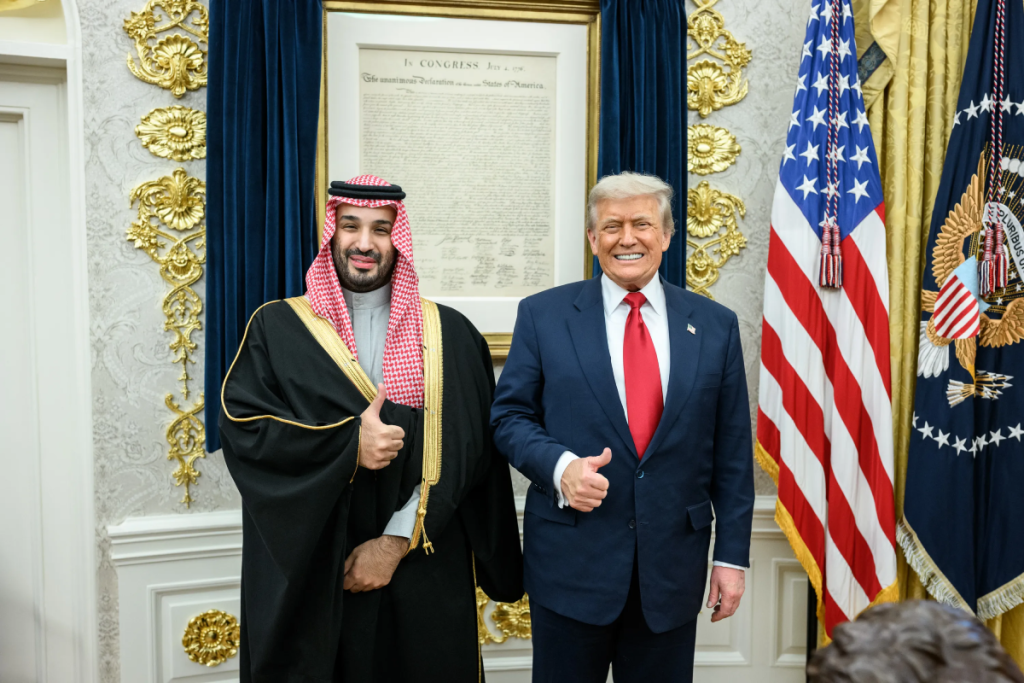
President Donald Trump with Crown Prince Mohammed bin Salman of Saudi Arabia in the White House.
President Donald Trump with Crown Prince Mohammed bin Salman of Saudi Arabia in the White House. Photo credit: The White House

What’s happened: The Trump administration announced that it is moving forward on a nuclear deal with Saudi Arabia which will provide for American companies to develop nuclear infrastructure in Saudi Arabia, possibly even including enrichment capabilities. The agreement must be approved in Congress, where it could face serious opposition.

  • The US completed its eleventh consecutive night of airstrikes on Iran overnight.
  • According to CENTCOM, targets included aircraft hangars, drone storage facilities, and operational military infrastructure. The choice of targets would appear to indicate that for now the US is focused on degrading Iran’s capacity to threaten shipping in the Strait of Hormuz, rather than hitting any symbolic or strategic target that would indicate an escalation.
  • Iranian fire overnight was more limited than in previous nights earlier in the week. The Iranians reported employing anti-aircraft fire (without apparently hitting anything) in various regions, including around Tehran. There were no reports of ballistic missile launches overnight. Earlier in the week, the Iranians launched ballistic missiles at targets in Jordan, Kuwait, and Bahrain. In one incident in Jordan, an Iranian missile killed three American servicemen.
  • The deadly attack in Jordan was Iran’s fourth attack on the kingdom (and at a target so close to the border with Israel that shrapnel from missile defence fell inside Israeli territory) in five days. It was carried out with Iran’s medium-range Kheibar Shekan missile system. These are buried deep underground in facilities that were hit by US bombs during the war earlier this year, but which the Iranians managed to excavate during the ceasefire in place since April.
  • President Joseph Aoun of Lebanon met with President Trump in the Oval Office yesterday, where he reportedly presented a detailed Lebanese plan for the full implementation of the US-brokered June 26 framework for a long-term settlement in southern Lebanon.
  • The Aoun plan calls for staged withdrawals of the IDF from southern Lebanon, with the Lebanese Armed Forces (LAF) progressively taking over territory vacated by the IDF. It also envisions Hezbollah’s military capabilities being completely dismantled or placed under the authority of the Lebanese state.
  • President Trump praised Aoun and announced the resumption of direct commercial flights from the US to Lebanon, ending a ban that has been in place since 1985.
  • Aoun too praised his American counterpart, calling him a “great president.”
  • In comments that garnered wide attention in Israel, Aoun also raised the “ultimate objective of ending the state of hostility between Lebanon and Israel forever,” a wording that falls short of a call for a full peace treaty and normalised relations, but still goes well beyond what any Lebanese leader has been willing to say since the ill-fated peace agreement between Israel and Lebanon in 1983.
  • In recent days, three “pilot zones” of formal LAF responsibly in southern Lebanon have been established. All three are north of the so-called Yellow Line demarcating the areas under formal IDF control since a tenuous ceasefire went into effect in April. Yesterday, the IDF pulled out of the town of Zoutar al-Gharbiyeh and handed it over directly to the LAF.

Context: The looming Saudi-US nuclear agreement would be a dramatic shift in the regional alliance structure and overall geostrategic landscape of the Middle East.

  • The agreement grants US companies nearly exclusive rights to develop civilian nuclear infrastructure in Saudi Arabia. At their discretion, non-US firms could be allowed to act as secondary suppliers.
  • The agreement does not rule out developing enrichment capabilities in Saudi Arabia, nor does it guarantee it. Instead it calls for the two sides to jointly conduct a two-year long study of the viability of domestic enrichment.
  • If the conclusion of the study is that there is an economic viability to enriching uranium on Saudi soil, a facility would be constructed under a so-called “blackbox” arrangement, where the facility would be built and managed by Americans without any sensitive technology being transferred to the Saudis themselves. In the event the study ends without a US agreement for a “blackbox” facility, the Saudis would be banned from pursuing an enrichment arrangement of their own — but only for ten years, after which they would be allowed to seek other non-US partners.
  • This part of the agreement constitutes a marked departure from the agreement the US previously signed in 2009 with another regional partner, the UAE, which included a pledge from the Emiratis not to enrich uranium or reprocess spent fuel. Instead they rely on partnerships with foreign (mostly American, but also South Korean) firms for these processes.
  • The Non-Proliferation Treaty does not explicitly ban uranium enrichment for non-nuclear powers, but very few countries have pursued these capabilities, and the ones that have are almost all US allies and, importantly, had achieved the capability before acceding to the treaty.
  • Previous attempts to reach a nuclear agreement with Saudi Arabia were pursued by the Biden administration, which had conditioned any agreement on Riyadh concluding a full peace treaty with Israel and normalising relations with the Jewish state. These negotiations reportedly came very close to fruition in the autumn of 2023, but were cast aside in the aftermath of the October 7 massacre and the subsequent war in Gaza.
  • The US interest in a nuclear agreement with Saudi Arabia is twofold. It serves both as a check on Iranian regional ambitions and firmly locks the door on what was seen in Washington as a possible encroachment of China on a strategically important region where the US maintained for decades the only real superpower presence.
  • For Israel, there are long-term concerns about any nuclear capabilities in an Arab country whose regime can change orientation from one day to the next by succession or coup. When a potential deal was the price for normalising relations with a large and influential Arab state that is home to Islam’s two most sacred shrines, it was seen more favourably. Without that upside, it is looked upon rather more cautiously.
  • The wider regional implications are a cause for concern as well. Other medium powers, such as Egypt and Turkey, can be expected to pursue their own nuclear capabilities — still well below anything needed to build weapons — in light of the Saudis’ progress on this front.

Looking ahead: Reports from Washington indicate that the Trump administration is expected to make a fateful decision on the Iran conflict in the next few days. Either it escalates dramatically, or it moves to a new ceasefire.

  • On the table right now is a proposed ten-day ceasefire, during which the US and Iran would negotiate exclusively on the issue of reopening the Strait of Hormuz. This was supposed to have been covered by the more comprehensive MOU the two sides agreed to on June 17, but differing interpretations of the ambiguous wording led to conflict early on, and since the recent escalation the Strait has once more been closed entirely.
  • A significant escalation remains on the table too. President Trump has openly spoken of his preference for attacking a specific target, the deep underground facility at Pickaxe Mountain, where the Iranians are believed to be hiding centrifuges and other nuclear equipment more than 100 metres underground. The facility, notably, has not been attacked yet by Israeli or US forces.
  • The Israeli assessment is that the probability of an escalation remains high. Israeli officials have been widely quoted, by name and anonymously, saying that they prefer not to be involved in the present round of US-Iran fighting.

July 14, 2026

UK designates IRGC under new hostile states powers

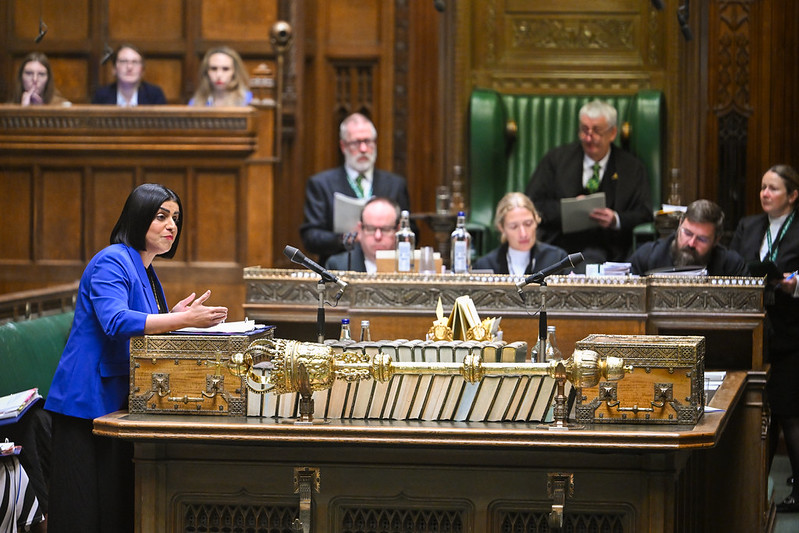
Shabana Mahmood speaking in the House of Commons. September 10, 2024.
Shabana Mahmood speaking in the House of Commons. September 10, 2024. Photo credit: House of Commons

What’s happened: The British government has announced that it will designate the Iranian Revolutionary Guards Corps (IRGC) under new powers to crack down on foreign state-backed activity.

  • This development was announced by the Home Secretary, Shabana Mahmood, in the House of Commons on Monday. Ms Mahmood confirmed that the draft legislation would be laid down this week and voted on by Wednesday or Thursday, formally coming into law by Friday.
  • The group Harakat Ashab al-Yamin al-Islamia (HAYI, also known as Islamic Movement of Companions of the Right, IMRC), the virtual proxy which claimed responsibility for attacks on the Jewish community this past spring, has also been designated, as has the main intelligence directorate of the general staff of the armed forces of the Russian Federation Volunteer Corps, or GRU VC.
  • This criminalises expressing support, assisting, or gaining material benefit from these groups with a maximum punishment of 14 years imprisonment.
  • In a written statement, Dame Angela Eagle, Minister of State for Security said that the IRGC “is a central component of the Iranian state’s security apparatus, answerable directly to Iran’s Supreme Leader. Its role extends far beyond that of a conventional military force. It encompasses intelligence activity, the use of proxy actors, and the projection of influence designed to advance Iranian state objectives.”
  • She also specifically cited an attempted IRGC-directed assassination plot against Iran International controlled by the Quds Force’s Unit 840, and attempts by IRGC-linked cyber proxy actors targeting the UK as examples of the threat levels emanating from Tehran.
  • The Conservatives have cautiously welcomed this development, with the Shadow Foreign Secretary, Dame Priti Patel stating that the decision was “long overdue”, and that “the Government must urgently explain how this designation will be enforced, and on what timetable.”
  • Alongside IRGC and HAYI designation, the  government also announced £250 million over the next 3 years to boost security of the Jewish communities. 
  • The funding will be split across policing priorities to tackle antisemitism including:
    • A further £86 million to the Metropolitan Police which will fund around 300 additional officers to increase police presence in Jewish communities.
    • Over £22 million to Greater Manchester Police to sustain the increase in policing presence following the tragic attack in Heaton Park last year,
    • Around £43 million to be distributed across 7 other force areas with significant Jewish communities: Hertfordshire, Essex, Northumbria, Sussex, Thames Valley, West Midlands and West Yorkshire,
    • £41 million for national policing coordination and increased antisemitism capabilities. This will fund antisemitism training for all officers in England and Wales, strengthen investigations and ensure surge resources are available to all forces.
    • £59 million to Counter-Terrorism Police to bolster protective security and counter state threats.

Context: This follows the Home Secretary being granted new powers under the National Security (State Threats) Act 2026 to use proscription-like powers to designate groups working at the behest of, or in the interests of, foreign states to carry out acts which threaten the UK’s security and the safety of communities across the country.

  • Jewish communal groups have for years called for IRGC proscription. Despite Conservative pledges that proscription would be forthcoming in 2023, successive Prime Ministers and Home Secretaries failed to do so.
  • Proscription was expected to take place by 2024, but the Foreign, Commonwealth & Development Office (FCDO) instead issued a raft of sanctions against the IRGC Quds Force’s Unit 840, Quds Force officers, and other individuals implicated in the killing of dissidents in Turkey.
  • It is also understood that while the Home Office was amenable to and supported proscription, the FCDO blocked the proposals out of concern that Iran might retaliate by severing diplomatic relations between London and Tehran.
  • The National Security Act which criminalised assisting foreign intelligence services received Royal Assent in 2023 and was subsequently used to charge, prosecute, and convict agents working on behalf of Iran and Russia. However, belonging to or supporting the IRGC did not automatically become a criminal offence.
  • Prosecutions relating to Iran have seldom referenced which specific agency or service was sponsoring the alleged plot, instead using “Iranian intelligence services” as a more generic catch-all phrase. Apart from the National Security Act, prosecutions also used Terrorism Act 2000 and Official Secrets Act 1911.
  • In May 2025, Jonathan Hall KC, the Independent Reviewer of Terrorism Legislation, argued that the Terrorism Act 2000 was designed to disrupt the influence non-state actors, and should not be used to proscribe state actors. Instead, he suggested that new proscription-like legislation should be drafted.
  • While Labour had committed to “take the approach used for dealing with non-state terrorism and adapt it to deal with state-based domestic security threats” in its 2024 general election manifesto, it only committed to take firm action in the aftermath of spring 2026’s HAYI-claimed attacks against the Jewish community.
  • Additional resources towards Jewish comunnities’ safety comes  following a series of attacks and the raising of the UK’s national terror threat level from substantial to severe.

Looking ahead: Now the IRGC has been designated, the relevant legislation must be properly enforced, both by Home Office police forces and the Crown Prosecution Service (CPS).

  • In the aftermath of Hamas’s 7th October attacks, the CPS have shown a distinct reluctance to enforce Section 12 of the Terrorism Act 2000 which criminalises supporting, inviting support for, and expressing an opinion or belief that is supportive of a proscribed organisation.
  • In one case, the CPS initially twice refused to charge an individual who was alleged to have chanted “I love the 7th of October” and “I like an organisation that starts with H” during a pro-Palestinian protest. Charges were only approved on the police’s third approach to the CPS.
  • Given past precedent and systemic resourcing challenges, it is a realistic possibility that inviting support for, or expressing an opinion or belief that is supportive of a designated body when done so for a prohibited purpose may not be fully enforced.

July 9, 2026

UK strengthens law against hostile state proxies

UK Home Office.
UK Home Office. Photo credit: GOV.UK

What’s happened: The National Security (Hostile States) Bill has received Royal Assent, officially passing into law.

  • This grants the Home Secretary new counter-terrorism style powers to designate and target groups that are, according to a government press release, “working at the behest of, or in the interests of, foreign states in order to carry out acts which threaten the UK’s security and the safety of communities across the country.”
  • Designation is equivalent to proscription as stipulated in the Terrorism Act 2000, but also applies to hostile state actors and their proxies.
  • The new legislation criminalises assisting a designated body and obtaining material benefits from a designated body. It also includes supporting a designated body (where a person invites support for, or expresses an opinion or belief that is supportive of a designated body, and does so for a prohibited purpose).
  • An individual convicted of these offences may be punished with a maximum sentence of fourteen years and a fine.
  • The Home Secretary’s criteria for designation a group is if they “reasonably believe a body is, or has been, involved in foreign power threat activity and considers that designating the body is necessary to protect the safety or interests of the UK.”
  • Commenting on the new law, the Home Secretary, Shabhana Mahmood said, “Under these new powers, we’re going further to dismantle and deter hostile activity. This act gives the police and intelligence agencies the tools they need to pursue foreign powers and their proxies, and better protect our communities, institutions, and democratic values.”
  • Sir Ken McCallum, the Director General of MI5 said, “Building on the important powers in the National Security Act 2023, which are already being heavily used, this legislation introduces new measures which will help us tackle the growing threat from proxy organisations, which are being increasingly used by states attempting to deniably target the UK.”

Context: MI5 acknowledged a 35 per cent increase in 2025 from the previous year, and over 20 potentially lethal Iranian-backed plots were identified.

  • The passage of The National Security (Hostile States) Bill follows a 2025 report by Jonathan Hall KC which highlighted the weaknesses in pre-existing legislation of The National Security Act 2023.
  • That law had been used to charge, prosecute, and convict agents working for Iran, Russia, and China. However Hall argued it was “less effective at disrupting proxies than foreign intelligence services.” This conclusion led to Hall’s recommendation to introduce “State Threats Proscription-like Power”.
  • The Bill was introduced in May’s King’s Speech. This followed a pledge by the Labour Party to take decisive action after waves of allegedly Iranian state-sponsored terrorism against the Jewish community in March and April. These attacks were claimed by Harakat Ashab al-Yamin al-Islamiyya (HAYI).
  • Although some suspects were arrested shortly after the attacks took place, they were charged for arson and being reckless as to whether life would be endangered rather than through the Terrorism Act 2000 or National Security Act 2023. If found guilty, sentencing would therefore be significantly shorter and less severe, despite allegations of hostile state (specifically Iranian) direction.
  • This had the effect of identifying a legal gap for hostile state activity by proxy, as was the case with HAYI. While HAYI had a presence on Telegram, it was widely described as being a “virtual” Iranian proxy group, as much as that it seemingly did not exist off social media, and was being remotely controlled and directed from the Middle East.
  • Jewish community and Iranian dissident groups have consistently lobbied the government for IRGC proscription.
  • The Conservatives pledged to proscribe the IRGC in 2023, but they ultimately U-turned and instead issued a new wave of sanctions against IRGC commanders.
  • While in opposition, Labour had indicated it would be willing to proscribe the IRGC, and its 2024 manifesto made specific reference to taking “the approach used for dealing with non-state terrorism and adapt it to deal with state based domestic security threats.”
  • After the recent wave of attacks in the spring, Labour reintroduced this policy with a renewed sense of urgency. While visiting the recently firebombed Kenton United Synagogue, Prime Minister Starmer pledged to table legislation allowing the UK to ban the IRGC in the upcoming parliamentary session.

Looking ahead: While the National Security (Hostile States) Bill never specifically mentioned the IRGC, it is highly likely to be the first group designated by Home Secretary.

  • Given recent convictions of Russian and Chinese agents, it is also a realistic possibility that Moscow and Beijing’s security services – such as the SVR, GRU, FSB, and MSS – may also be designated.

July 8, 2026

Israel cautions against F-35s for Turkey

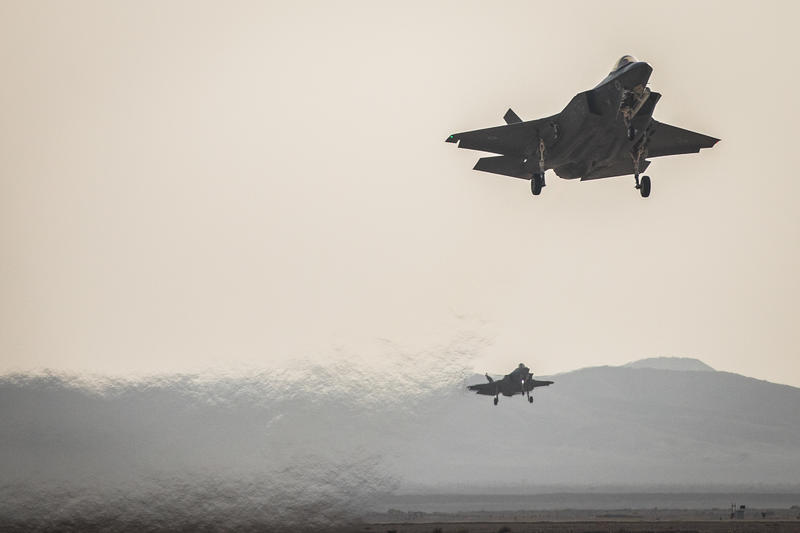
The "Adir" (F-35I) fighter jet during the "Blue Flag", an international aerial training exercise at the Ovda air force base, Southern Israel, November 11, 2019.
The "Adir" (F-35I) fighter jet during the "Blue Flag", an international aerial training exercise at the Ovda air force base, Southern Israel, November 11, 2019. Photo by Yonatan Sindel/Flash90

What’s happened: Prime Minister Netanyahu has advised President Trump not to supply Turkey with F-35 stealth fighter jets.

  • In an interview on CNN Tuesday evening, Netanyahu warned that, “notwithstanding the personal friendship that President Trump has with Erdoğan, it doesn’t make Turkey a friendly or a friendly state to the United States.”
  • “To the contrary,” Netanyahu continued, Turkey is “a regime that’s infected with the Muslim Brotherhood, which hates the United States.”
  • Referring to Erdoğan, Netanyahu said that “he harbours Hamas… He supports them. He finances them…He’s thrown his opponents in jail, all of them. He throws more journalists in jail than anyone can understand. So he’s not exactly a model ally of the United States. But even worse than that, he threatens Greece, a NATO ally. … And the most important thing, and I put it right on the table, he threatens to destroy my country, the one and only Jewish state.”
  • Netanyahu’s interview took place as President Trump arrived in Turkey for the NATO summit.  As part of Trump’s visit he could announce that the US will advance the sale of F-35s to Turkey. When asked if was going to sell the F-35’s, the President said “Turkey has been in many ways much more loyal than other countries that we think would be loyal…so it is something we definitely would consider.”
  • Israeli Ambassador to the US Yechiel Leiter said that Israel does not believe Turkey should possess F-35 aircraft but stressed that “Israel understands that the US administration has a broader set of strategic considerations it must take into account when making the decision. We oppose the sale of F-35 stealth fighter jets to Turkey, but will respect any American decision.”
  • Meanwhile, the US reportedly struck 80 targets in Iran.  US CENTCOM confirmed they have begun “launching a series of powerful strikes against Iran to impose heavy costs for targeting and attacking commercial shipping.”
  • The statement stressed that the strikes were in response “to Iranian attacks on three commercial vessels that were transiting the Strait of Hormuz. Iran’s demonstrated aggression was unwarranted, dangerous, and a clear violation of the ceasefire.”
  • The US Treasury announced that they revoked the temporary waivers that were issued as part of the MOU with Iran, that had allowed Iran to sell oil. US officials have tied the decision to Iranian behaviour, insisting that that the commitments within the MOU are “performance based.”    

Context: The F-35 programme was established in 2001, eight countries – including the UK – participated in the system development and demonstration phase of the F-35. Turkey joined the programme in 2002 and became a Level 3 Partner alongside Canada, Australia, Denmark and Norway.

  • In addition to Israel, the F-35 has subsequently been sold to several countries such as Japan, South Korea, Singapore and a range of European states.
  • Israel has long term objections to Turkey buying the F-35’s. It would challenge Israel’s long held Qualitative Military Edge (QME) which has been a fundamental US doctrine (bound into US law). It is intended to ensure Israel’s military forces can defeat any credible conventional threat from state or non-state actors. For over 50 years it has guaranteed Israel’s tactical and technological superiority.
  • Israel is also concerned that it would disrupt the power balance in the region, particularly regarding their posture in the eastern Mediterranean and with regards to Greece and Cyprus.
  • Compounding this, Turkey already possesses advanced Russian made S-400 air defence system. US officials have long argued that it is incompatible for Turkey to operate the S-400 alongside the F-35. This could allow Russia to gain technological insights into the aircraft’s radar signature and electronic systems, which could potentially compromise the stealth capabilities of the entire F-35 fleet.
  • Israel is troubled by the outsized influence of US Ambassador to Turkey Tom Barrack who is perceived as representing Erdoğan’s interests. The ambassador is very closely connected to the Turkish government, as well as possessing close connections in Lebanon, Syria and Iraq.
  • Trump sees Turkey as a NATO partner with a strong military and recently commended the country for not joining the “other side” during the war with Iran. Trump sees Turkey as a potential asset to help stabilise the region, rein in Russian influence, and keep Ankara in the West’s camp.
  • For Israel meanwhile, Erdoğan’s Turkey has become a regional adversary. It is part of the Muslim Brotherhood camp (along with Qatar), hosts Hamas officials, and supports Hamas politically and financially. For over a decade – and particularly since October 7 – it has regularly issued harsh and inciteful rhetoric against Israel.    
  • Their rivalry in the eastern Mediterranean relates to Israel’s growing alliances with Greece and Cyprus and their shared interests over trade routes and energy infrastructure. This includes exploration for natural gas, and the project to connect Israel to the European electric grid via an underground cable.
  • It is no coincidence that on the same day that Trump arrived in Turkey, Netanyahu visited the Haifa Naval Base, where he emphasised the goal of the Navy, “to ensure the shipping lanes and the freedom of maritime trade, which are so vital to the State of Israel.”
  • According to Anna Barsky in Maariv, “It was a deliberate signal. Israel sought to clarify that it does not view Turkey exclusively as a future aerial threat, but as a broader strategic threat that might impact freedom of maritime traffic, energy infrastructure and the increasingly close cooperation with Greece and Cyprus. Officials in Athens and Nicosia have also been closely tracking the developments. From their perspective, the question isn’t just how many planes Turkey is given, but the renewed legitimacy that Washington might confer to Ankara’s regional policies.”
  • A sale of F35’s to Turkey would not just signal a military achievement for Erdoğan but also a political victory. Thanks to his relationship with Trump, Turkey will have consolidated its status as a regional power.    

Looking ahead: Donald Trump announced this morning that the Iran ceasefire is over.

  • This announcement coincides with US Secretary of War Hegseth cancelling his scheduled trip to Israel. Hegseth was expected to discuss the potential sale of F-35s to Turkey.
  • The NATO summit is due to conclude later today. 
  • Due to Turkish deployment of the S-400, significant legal and political obstacles remain to a deal within US Congress.  
  • Brig. Gen. (res.) Mike Herzog, the former Israeli ambassador to the US, said in an interview on Army Radio this morning, “I’m not sure that it will really be possible to stop the deal. But I still think that Israel has a range of actions it can take in Congress. It can postpone by some years the delivery of the planes to Turkey.”

July 1, 2026

Israel secures AI and defence gains amid European tensions

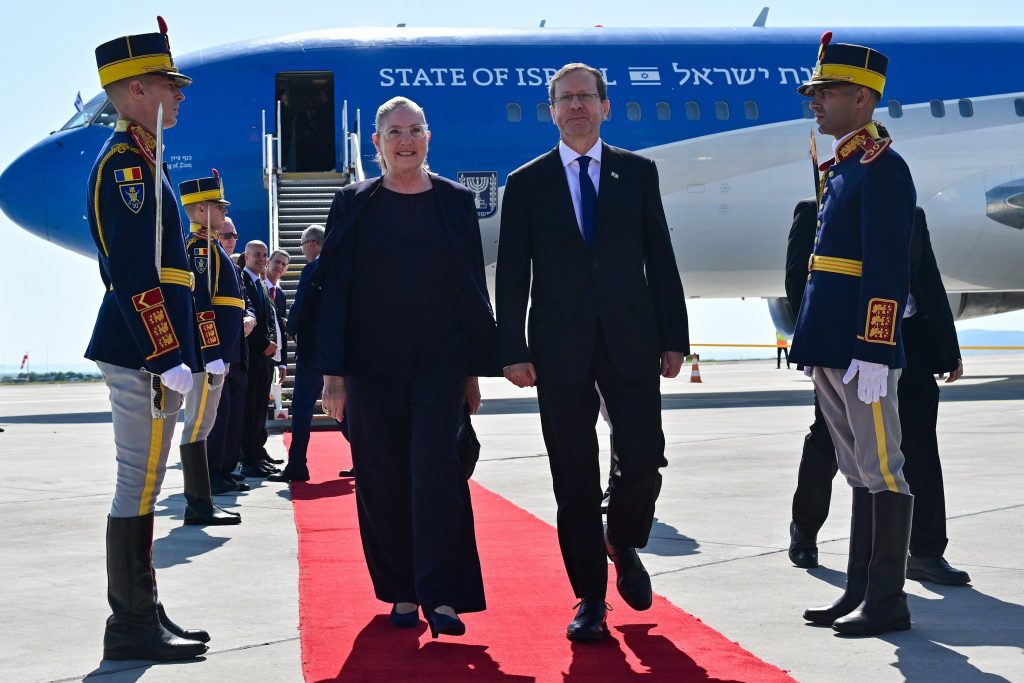
President Isaac Herzog and First Lady Michal Herzog arrived to Romania, June 28, 2026.
President Isaac Herzog and First Lady Michal Herzog arrived to Romania, June 28, 2026. Photo credit: Kobi Gideon / GPO

What’s happened: Alongside a historic peace framework agreement with Lebanon, Israel has achieved other significant progress in building international alliances.

  • At a Pax Silica Summit, Israel signed together with the United States, the United Kingdom, and 22 other nations Joint Statement on AI Opportunity.
  • Other signatories include countries from across the world such as Argentina, Sweden, and Japan, as well as Turkiye, the United Arab Emirates, and Qatar from the Middle East.
  • The signatories pledged to embrace AI opportunities, promote pro-innovative regulation, strengthen their cooperation and mobilise the private sector to drive the AI revolution.
  • New Pax Silica Artificial Intelligence Assistance Project for Panama was announced with an aim to strengthen global AI supply chain security by developing an AI supply chain credentialing and provenance platform that expedites the shipping of semiconductors, AI infrastructure, critical minerals, and related products through the Panama Canal.
  • Elsewhere this week, one of the of the top three Israeli defence companies, Rafael Advanced Defense Systems, announced a £1.7bn deal to sell its Spyder air defence systems to Romania.
  • Rafael won the Romanian Ministry of Defence’s tender for air-defence systems capable of intercepting drones, cruise missiles, guided munitions, airplanes and helicopters.
  • The deal was announced during President Isaac Herzog’s state visit to Romania, and includes the supply of launchers, interceptors, radar systems, training programmes and logistical support.
  • Another country investing in Israeli air defence technology, could be Greece. According to media reports, Athens is looking to acquire a £2.6bn package for its “Achilles’ Shield” defence umbrella.
  • This programme could include Rafael’s Spyder All-in-One and David’s Sling systems, as well as the Barak MX system developed by Israel Aerospace Industries (IAI), according to Greek sources.
  • On the other side of the Balkans, in Slovenia, the returning veteran Prime Minister Janez Janša announced that the Slovenian embassy would be relocated from Tel Aviv to Israel’s capital, Jerusalem.
  • Janša also pledged to reverse the previous Slovenian government’s decision to recognise a Palestinian state.
  • The move comes at a critical juncture, amid a growing campaign within EU institutions for the bloc to sanction Israel, a move opposed by Israel’s long-standing ally, Czechia. Czech Foreign Minister Macinka has, according to Bloomberg, told his EU counterparts: “Don’t even try, otherwise we’ll veto it.” According to Czech News Agency, the sanctions are opposed as well by Germany and Hungary.

Context: The Pax Silica is US initiative on AI and supply chain security focusing on critical minerals, energy inputs, advanced manufacturing, semiconductors, AI and technology infrastructure.

  • The 2026 Pax Silica Summit also saw ten new nations, such as Germany, Greece and EU as a whole, joining the initiative, which has arrived at 24 signatories so far, including Israel and the United Kingdom.
  • Rafael’s success in the Romanian tender for air defence system underscores the reputation of Israeli technology in this field, that has been proven during the years of conflict with Iran and their proxies.
  • This has been evidenced by a successful deployment of Israeli air defence systems, including the Iron Dome, in protecting the UAE, Saudi Arabia and Qatar during the War with Iran.
  • The above-mentioned Greek contract would be another milestone in Israel’s relations with the Hellenic Republic and another piece in the jigsaw puzzle of the strengthening cooperation between Israel, Greece, Cyprus, and India, as they seek to increase their defence capabilities and to establish the India–Middle East–Europe Economic Corridor (IMEC) to bolster trade routes between Europe and India. This was underscored by a recent series of high-level meetings between Israeli officials and the Chief of the Hellenic Navy, as well as military top brass in India.
  • Prime Minister Janša seeks to repair ties between Ljubljana and Jerusalem after four years of centre-left government in Slovenia, which embraced strongly anti-Israel stances including pushing for suspension of the EU-Israel Association Agreement.
  • Anti-Israel sentiment within EU has been recently fuelled by renewed Gaza flotilla activity. The participation of European citizens has helped keep the issue high on the EU’s political agenda, increasing pressure on governments and EU institutions to adopt a tougher line towards Israel.
  • Speaking to Israel Hayom Janša stressed the need for closer cooperation between the EU and Israel: “Instead of distancing themselves from one another, they must increase cooperation. Israel is not Europe’s problem; it is one of its most important allies.”
  • Israel has long-standing ties with Central European countries, rooted in shared history and defence, cultural, and economic cooperation. Its relationship with Czechia is especially deep, dating back to 1948, when Czechoslovakia played a crucial role in supplying the newly established State of Israel with weapons, including fighter aircraft, and training IDF pilots during the Israel’s War of Independence.

Looking ahead: A joint Foreign Ministry-IDF delegation to Venezuela is due to assist recovery efforts after powerful earthquakes there killed more than 1,700 people and left thousands homeless.

  • Israel is sending its delegation despite not having formal relations with Venezuela for 17 years. The team includes engineering experts from the Home Front Command and Foreign Ministry representatives.
  • Additional specialists from the Home Front Command and the National Emergency Management Authority are expected to join later. There are already Israeli volunteers on site helping with rescue efforts.
  • The EU Foreign Affairs Council is due to convene on July 13 and may discuss issues related to Israel. However, any anti-Israel resolutions appear unlikely, at least for now.

Newsletter sign-up

Please enter your information below to subscribe to our daily newsletter and stay updated and informed.

Donate to BICOM

At BICOM, we rely on the generosity of people like you to keep our website and services running. Your donation, no matter the size, makes a real difference. Please consider supporting us today. For further information please email: [email protected]