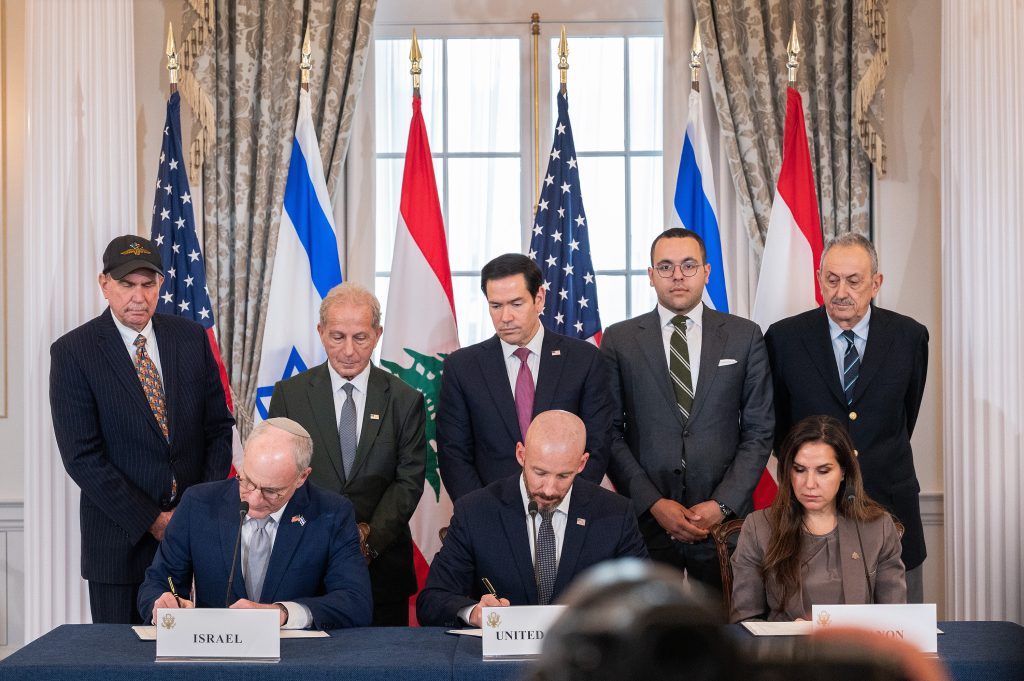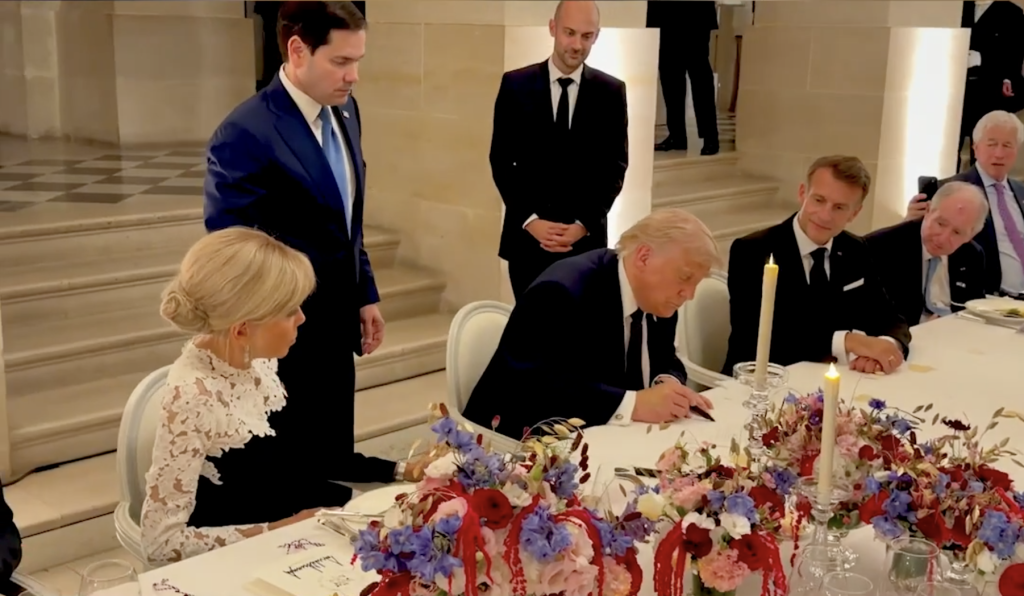
What’s happened: Israel and Lebanon have signed a framework agreement for a cessation of fighting and roadmap to peace.
- Among the 14 points, the agreement calls for:
- Mutual recognition between Israel and Lebanon.
- Restoring Lebanon’s sovereignty over all its territory, including by disarming Hezbollah and dismantling its infrastructure.
- Direct, immediate dialogue will begin between Lebanon and Israel through designated channels.
- Lebanon, “explicitly commits to prevent reconstruction funds from flowing to non-state armed groups and connected entities.”
- The parties to cease acting against each other in the international political and legal arenas.
- Work to locate the remains of missing persons (possibly a reference to IDF serviceman Ron Arad) and the release of prisoners.
- Defence Minister Katz called the signing of the document a “historic event and an important diplomatic and security achievement for Israel.”
- Katz emphasised that, “Israel is not withdrawing from Lebanon and is maintaining the security zone, including Beaufort. Israel will not redeploy in Lebanon and will not withdraw as long as Hezbollah is not disarmed throughout Lebanon and the safety of the northern residents is not ensured….If Iran tries to attack Israel in order to prevent the implementation of the agreement—we will act against it with great force.”
- The agreement also received backing in Lebanon. The prominent Sunni leader, Lebanese parliament member Fouad Makhzoumi, wrote, “For the first time in Lebanon’s history, Lebanon and Israel have signed an official trilateral framework.” He termed it “a historic milestone and a decisive step on the path to achieving a just and sustainable peace with Israel, to resolving longstanding issues through diplomacy, to strengthening the authority of the Lebanese state, to ensuring the state’s exclusive right to bear arms, and to ending the existence of Hezbollah’s weapons and those of all militias, thus creating the necessary conditions for security, stability, and prosperity.”
- Meanwhile, Hezbollah Secretary-General Naim Qassem announced that the government in Beirut had “stabbed the resistance in the back,” and that the agreement “is null and void.” Hezbollah member of the Lebanese parliament, Hussein al-Hajj Hassan, said, “This is not an agreement. This is a surrender. We do not recognise the agreement. It will not be implemented.”
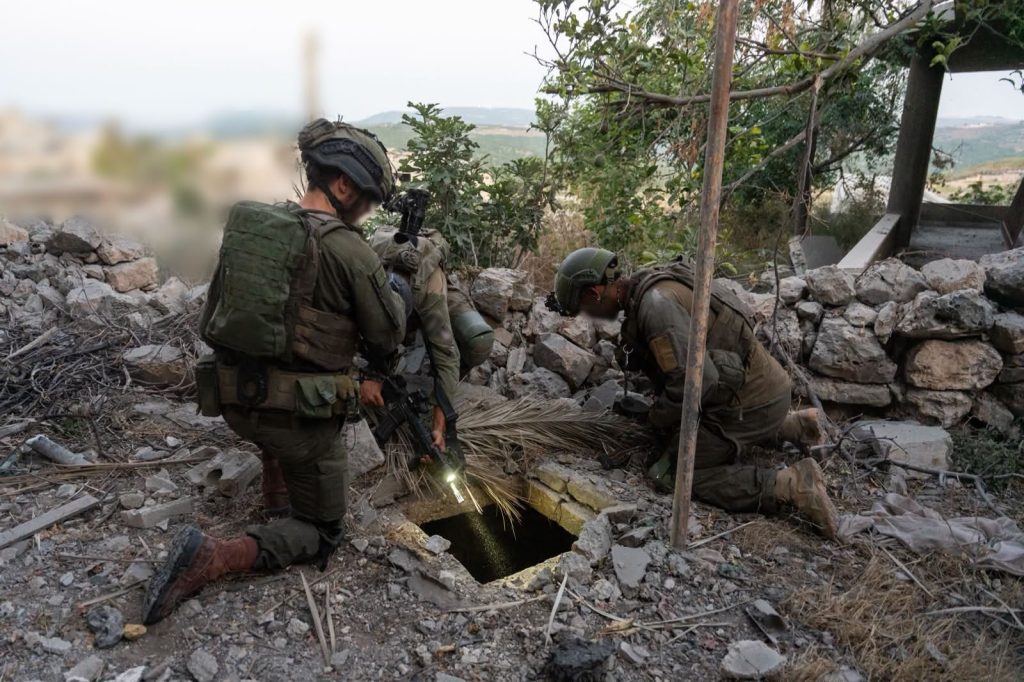
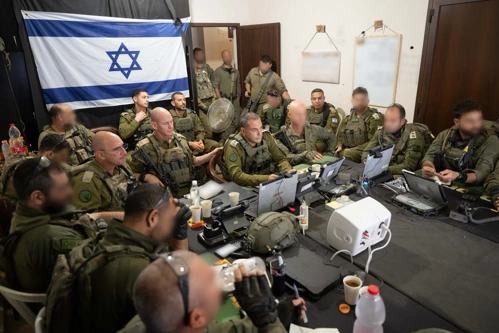
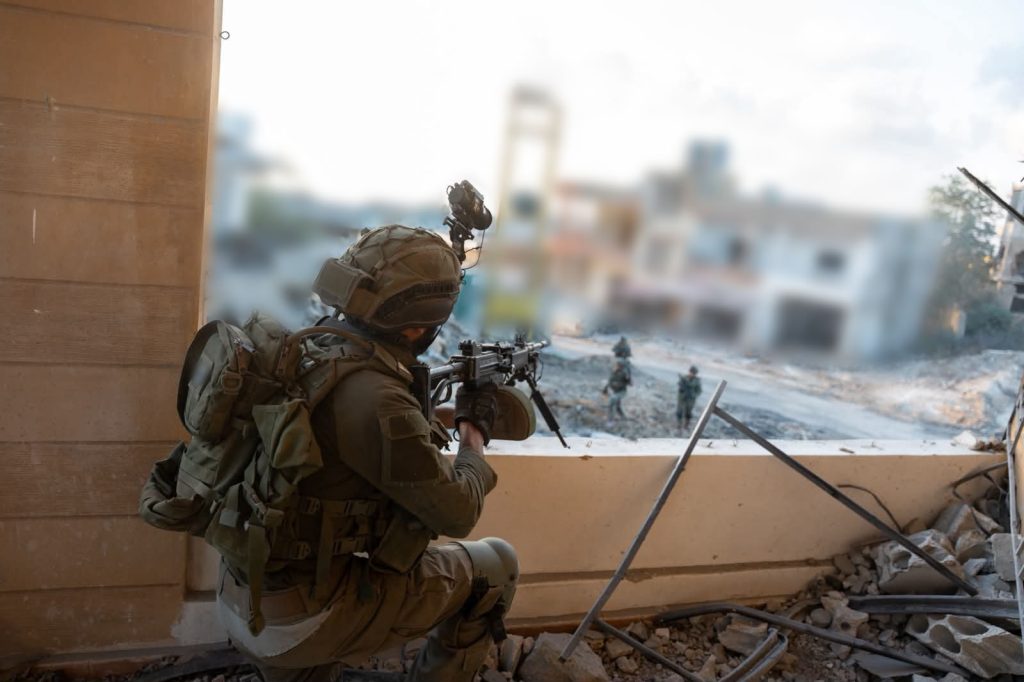
- In parallel to the diplomatic agreement, IDF operations in southern Lebanon continue. On Sunday evening the Prime Minister and Defence Minister announced that the IDF had destroyed underground terrorist infrastructure in the area of the village of Majdal Zoun in southern Lebanon. The tunnel was over 200 metres long and more than 25 metres deep, contained hundreds of weapons and several launch silos intended to target the territory of the State of Israel and its citizens.
- Netanyahu and Katz added that Israel updated the United States and the US representative in Lebanon in advance regarding the destruction of the infrastructure.
- Discussing the war in general at a press conference after the signing, Netanyahu said, “Hezbollah had 150,000 missiles and rockets, and we eliminated about 90 percent of this vast arsenal. We astonished them with the pagers, we eliminated Nasrallah, and we eliminated the commanders of the Radwan Force. In the last two weeks alone, we eliminated over 200 terrorists, and since the beginning of the war, over 9,000 Hezbollah terrorists.”
Context: The agreement enshrines popular sentiments held by the majority of both Israelis and Lebanese, such as the necessity of guaranteeing the safety of the residents of northern Israel, and southern Lebanon and their shared aspirations for a peaceful border.
- Israel is hoping that the provisions in this new agreement override the components relating to Lebanon that appeared in the US-Iran MOU. Unlike the MOU, Iran is not party to this deal, and neither is Hezbollah a signatory.
- At the very least, this agreement should serve to counterbalance the Lebanon component of the Iranian-US MOU and may neutralise the influence of the Iranian, Qatari, Pakistani monitoring cell over the ceasefire, even rendering it redundant.
- Another positive sign is the angry reactions among Hezbollah supporters. Hezbollah would prefer the implementation of the US-Iran MOU instead.
- The agreement does not call for an immediate IDF redeployment and in fact sets no time limit. Instead it places the burden of proof on the LAF to effectively show they can take over locations when the IDF withdraws and ensure Hezbollah does not return.
- Analysts have noted that this agreement is structured in a similar pattern to the US brokered agreement for Gaza (and Iran). Similar to that deal which is stuck translating the necessity to disarm Hamas, so too, have the LAF in the past promised to root out Hezbollah but have so far failed to deliver.
- The agreement makes no mention of the Palestinian issue. Traditionally, Lebanese governments conditioned a peace deal with Israel on progress toward the two-state solution in the context of the 2002 Saudi peace initiative.
Looking ahead: As in any agreement, the test will come in translating the principles on paper to implementation on the ground. Several previous agreements, going back to 2006, have spoken about the need to remove Hezbollah, weapons, fighters and infrastructure from southern Lebanon and empower the LAF, so far with only limited results.
- According to the agreement, “the two countries will work to establish working groups to draft the full comprehensive peace and security agreement.”
- Prime Minister Netanyahu noted, “Israel and Lebanon have agreed on two adjacent areas near the Yellow Line, recommended by the IDF, where there will be a pilot programme for disarming Hezbollah and transferring the territory to the control of the Lebanese army.”
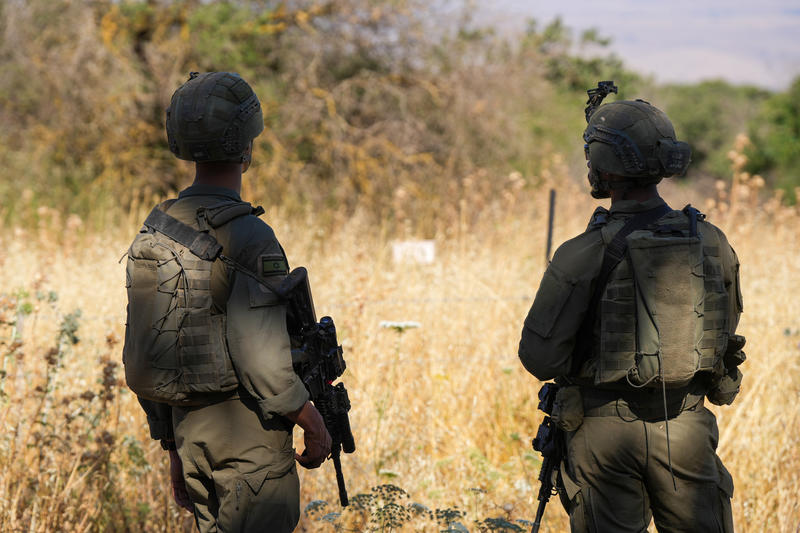
- However, in other areas, the PM pledged “IDF commanders and fighters will remain in the security zone in southern Lebanon and will continue to destroy terrorist infrastructure, remove threats to northern communities, and safeguard the security of Israel’s citizens.”
- Israel remains coordinated with the US over the Iranian threat. Over the weekend, Admiral Brad Cooper, Commander of US CENTCOM once more visited Israel and held talks with IDF Chief of Staff Zamir. The two military leaders discussed plans to be implemented should fighting with Iran resume.