LATEST

The West Bank and Settlements

Key background
  • Israel took control of the West Bank from Jordan during the Six Day War of 1967. The West Bank refers to the west bank of the Jordan River, is also called by its biblical and geographic names of Judea and Samaria, or beyond the ‘Green Line’ that marked the boundary prior to 1967.
  • For Israel its significance is both religious and strategic. Often referred to as ‘the cradle of Jewish civilisation’, it is where the majority of biblical stories took place. It is also important strategically. Topographically, the mountain ridge overlooks Israel’s coastal plane. It also provides an element of strategic depth, without the West Bank Israel would be just 9 miles wide at its narrowest point.
  • Israeli settlements were first built in 1967 and gradually expanded across the West Bank with significant blocs east and south of Jerusalem. The population of the West Bank is estimated at just under 3 million, made up of around 500,000 Jews and 2.5million Palestinians.
  • According to the Oslo Accords of 1993 which were intended to act as the basis of a road map to a comprehensive peace between Israel and the Palestinians, the West Bank was divided into Areas A, B, and C. Area A is under full Palestinian security and civil rule, Area B is under joint Israeli security and Palestinian civil rule, and Area C is under full Israeli security and civil rule.
  • Israeli settlements are only present in Area C, and the major Palestinian cities (Nablus, Jenin, Tulkarem, Qalqilya, Ramallah, Bethlehem, Jericho and 80 percent of Hebron) as well as their surrounding areas fall under Area A which Israelis are forbidden to enter without special authorisation.
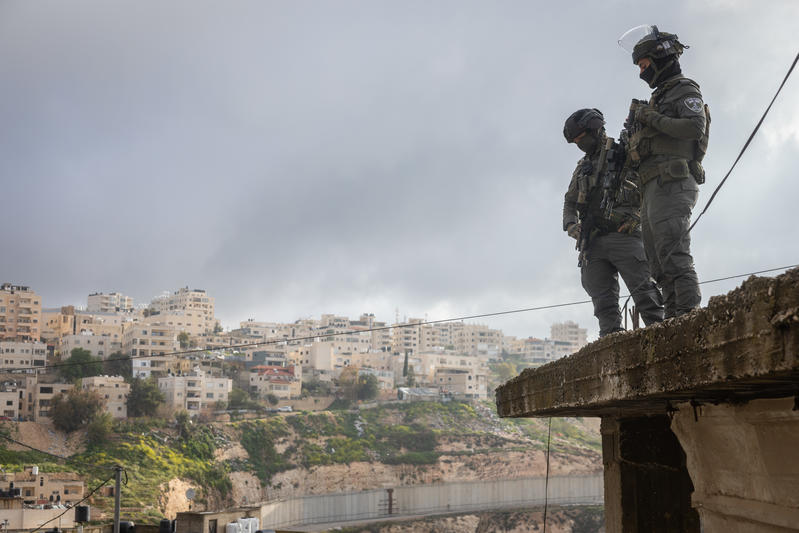
Israeli Border Police officers operate in a Palestinian town near the West Bank barrier, not far from Jerusalem, March 30, 2026.
Israeli Border Police officers operate in a Palestinian town near the West Bank barrier, not far from Jerusalem, March 30, 2026. Photo by Chaim Goldberg/Flash90

Updated March 31, 2026

IDF confronts settler violence

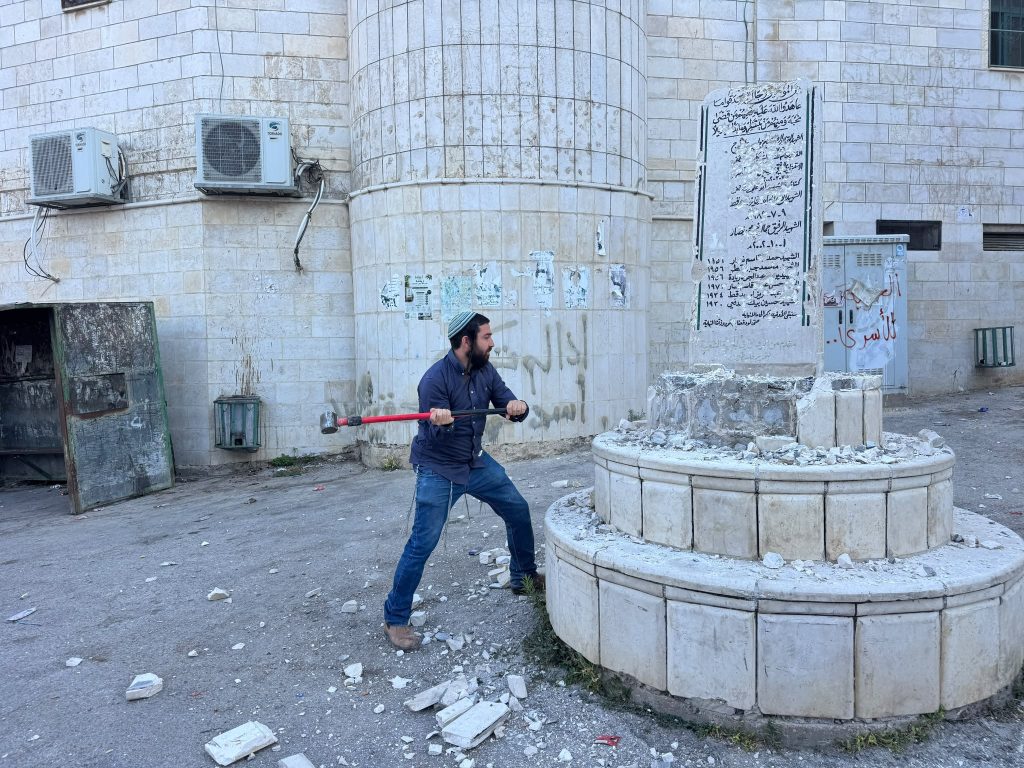
What’s happened: Violence by groups of West Bank settlers continues to roil internal Israeli politics and draw broad criticism of Israel internationally including from some of its closest allies.

  • Two recent incidents drew particular attention. Last week, an Israeli settler was killed when his all-terrain vehicle was hit by a Palestinian car. There has been no definitive determination as of yet whether the collision was an accident or a ramming attack — ramming attacks have been a common tactic of Palestinian attacks on Israelis, particularly in the West Bank, but also inside pre-1967 Israel.
  • Nevertheless, rumours quickly spread among the most militant activists of nearby hilltop settlements and outposts, and settlers from those outposts descended on nearby Palestinian communities, setting fire to buildings and vehicles in two nearby villages and pepper-spraying Palestinians they encountered. The rampage was preceded by inflammatory social media posts from far-right politicians, including Finance Minister Smotrich.
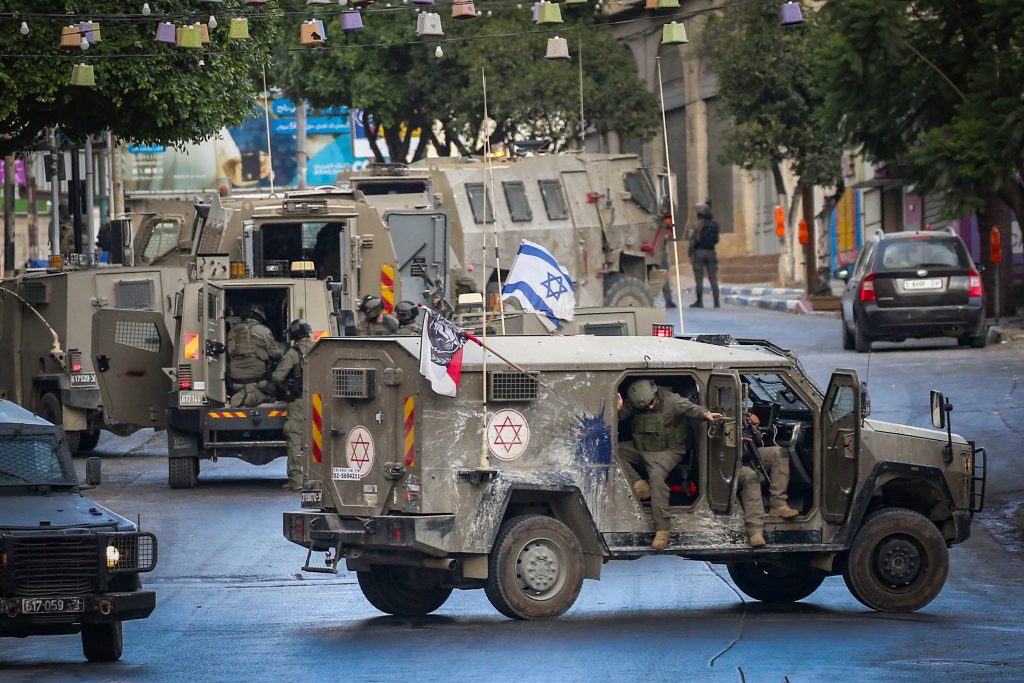
  • In a second incident, a CNN crew was detained after filming an attack by settlers on a Palestinian village in the West Bank. The soldiers, reservists from the Netzach Yisrael battalion, originally set up to ease recruitment for ultra-Orthodox Israeli men but largely staffed by religious nationalists aligned with the settler movement, openly share that they are there to defend an illegal outpost and that they endorse violence against Palestinians as “revenge” for the collision last week which killed a young Israeli on an ATV. In an unprecedented response, the IDF removed the entire battalion out of the West Bank.
  • Many of the soldiers from this battalion identify with the cause of the settler movement, and sometimes of its most radical factions.
  • Compounding the challenge of settler violence, the IDF itself is not authorised to arrest Israeli citizens. This task is up to the Israel Police, which since the 1990s has operated a special command in the West Bank for dealing with crime committed by Israeli citizens. Last week, the IDF was forced to divert soldiers from Lebanon, to the West Bank to deal with disorder and hopefully prevent it from spiralling into the kind of high intensity violence that characterised the early 2000s and required a massive IDF presence to contain.
  • Nevertheless, senior army commanders have endeavoured in recent weeks to take a harder stand against settler violence. Chief of General Staff Zamir told soldiers this week that “it is unacceptable that during a multi-front war the IDF is forced to confront a threatening minority from within. These are rioters who do not represent the wider population. On the contrary, they endanger civilians, security, stability, and our values as a people and as a state. I call on all authorities in the country to act against this phenomenon and stop it before it is too late. Anyone who believes these actions contribute to security is mistaken—they are morally and ethically unacceptable and cause extraordinary strategic damage to the efforts of the IDF.”
  • Major General Bluth, who oversees all IDF forces in the West Bank, issued an open letter to local council leaders of all West Bank settlements in which he described violent settlers as “marauders” and “scofflaws” acting “against the laws of the country, the values of the Jewish people.” Though he praise the majority of settlers as “law-abiding, idealistic and patriotic,” he lamented that some of the violence, though carried out by a tiny minority, was egged on by a “public tailwind.”
  • Israel’s ambassador to the United States Yechiel Leiter, himself a West Bank settler, spoke forcefully against the outbreak of violence from others in the settler movement, condemning it both on moral grounds and as something which hurts the settler movement as a whole and does grave damage to Israel’s image in the United States and elsewhere. “They are not only staining the settlement enterprise,” he said in an interview with Yediot Ahronot. “They are staining the entire State of Israel. They feed the narrative of violent occupiers, and it is forbidden to remain silent about it. It is indeed a small handful. I want to stress this, but the vast majority must cry out against the phenomenon.”
  • A letter addressed to President Herzog signed by over 1000 diaspora Jews and organised by the London Initiative, a liberal Zionist network in the UK, not only condemned the extremist settlers carrying out the violence but also the Israeli government itself, alleging that “based on events and on the statements of the most extreme coalition partners, it can be concluded that the violence now engulfing the West Bank is not only condoned by the government but is in fact policy.”
  • Herzog responded to the letter with his own letter which largely agreed with the claims of the London Initiative. Describing the violence of Jewish extremists in the West Bank, he wrote that “these grave offences against innocent people undermine the rule of law and tarnish the moral foundations sacred to the State of Israel.” Promising action against those involved, he further wrote that the violence “plays directly into the hands of Israel’s detractors, fuelling hatred that weakens us as a nation and jeopardises Jews everywhere.”

December 10, 2025

Search for remains of last hostage on hold as storm hits coast

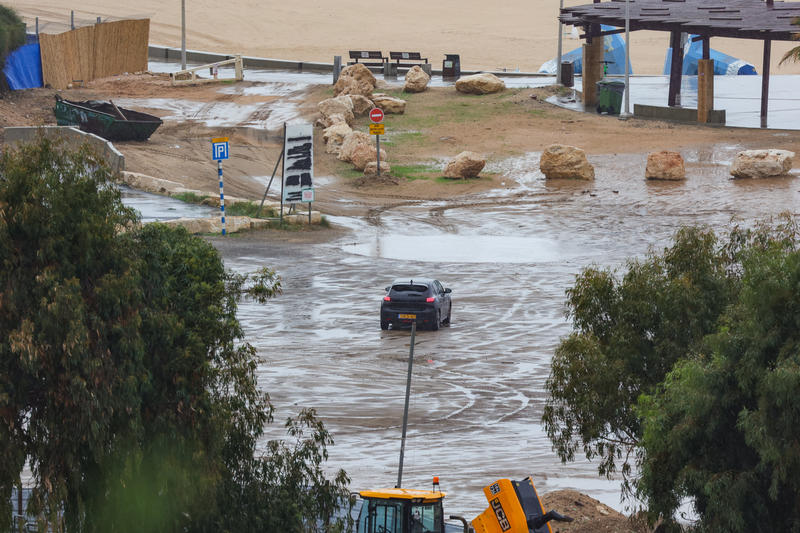
Heavy winds and rain at the beach in the southern Israeli city of Ashdod, December 10, 2025.
Heavy winds and rain at the beach in the southern Israeli city of Ashdod, December 10, 2025. Photo by Flash90 *** Local Caption *** רוח חוף ים סערה סופה גשם חורף מזג אוויר

What’s happened: The ongoing search for the body of Ran Gvili, the last remaining hostage from the October 7 massacre not repatriated to Israel for burial, has been temporarily called off due to an impending large storm.

  • Storm Byron, named by the new Southeast Mediterranean convention instituted by Greece, Israel, and Cyprus five years ago, is expected to bring harsh weather to Israel and the Palestinian territories.
  • In preparation, COGAT has confirmed that almost 270,000 tents and tarpaulins have entered Gaza in recent weeks along with fuel, 5,600 tons of medical supplies and over 1,500 trucks of blankets and winter clothes.
  • In addition, since the ceasefire went into effect, over 18,000 food trucks have entered Gaza, with about 20% of those coming from the UN. According to the most updated figures, between 600 and 800 trucks carrying humanitarian goods enter every day.
  • The New York Post reported yesterday on a video that had surfaced on social media from the summer showing several tons of baby formula and nutritional shakes meant for kids being hidden in an underground Hamas facility. According to the report, the video was taken during the late summer weeks when global headlines were dominated by an alleged famine in Gaza. The video was distributed by a Ahmed Fouad Alkhatib, a Gaza native and anti-Hamas activist, who accused Hamas of attempting to starve its own populace in an attempt to put pressure on Israel.
  • Yesterday at Ben Gurion Airport, a small ceremony was held to mark the repatriation of the body of Sudthisak Rinthalak, a citizen of Thailand who was abducted and murdered in the October 7 attack and whose body was returned to Israel last week.
  • Israel is set to reopen the Allenby Crossing today. The crossing is one of only three crossings between territory under Israeli control and Jordan, and the only one connecting the West Bank to Jordan. Israel closed the crossing in September following a deadly attack in which a Jordanian citizen driving a truck with aid for Gaza opened fire on Israelis, killing two security personnel. Shortly after the incident, Israel had the crossing reopened for passenger traffic, but it has been closed for  trucks for the past three months.

Context: President Trump has indicated that he would like to announce the conclusion of Phase One of the ceasefire and the beginning of Phase Two.

  • Israeli officials are hesitant to accede to this without first achieving the return of the last hostage to Israel. There is fear in Israel that even a small compromise on this very clear and very measurable ceasefire condition will be a repeat of the mistakes made in previous ceasefires in Gaza and Lebanon, where global pressure on Israel not to insist on full implementation ended up allowing terrorist organisations to build up and thrive on its borders.
  • Israeli officials have speculated that Hamas is deliberately delaying the repatriation of Gvili’s body in order to drag out the first stage of the ceasefire, which has allowed Hamas to reestablish and consolidate its hold on half of the Gaza Strip, and avoid entering the second stage, which could see it forced to disarm.
  • Both the US and Israel would like to see a forceful mandate for the International Stabilisation Force, yet to be formed, which will enforce Phase Two of the ceasefire agreement. It remains unclear whether the mandate will fall under Chapter VI or VII of the UN Charter. Both Israel and the US are keen on the latter which provides the legitimate use of force for enforcement purposes. Israel is wary of repeating the failure of UNIFIL in Lebanon that is only mandated to carry arms for self defence under Chapter VI. Chapter VII is crucial if the mission is to include disarming Hamas. In any event there are still no countries prepared to send troops for such a mission, apart from Turkey that has been vetoed by Israel.
  • Parallel to that, Israel has acceded to a US request to map out several “green zones” inside the part of the Gaza Strip held by the IDF as places for temporary housing for Gazans. Preliminary infrastructure work has been done in these zones so that trailer homes and schools can be connected to water and sewage lines. Only families vetted to ensure that they have no arms and no connection to Hamas will be allowed to enter the green zones, and this will only begin once the second phase of the ceasefire has formally begun.
  • Israel Hayom reports that the Israeli Government, contrary to its publicly stated position, conveyed to the Palestinian Authority a limited willingness to accept the “pathway to a Palestinian state” mooted in Trump’s 20-point plan which was the basis of the Gaza ceasefire, but only if the Palestinian Authority accepted two conditions: a definitive end to the pay-for-slay programme for terrorists in Israeli prisons and an end to UNRWA activity in both the West Bank and Gaza. The Palestinians, according to the report, rejected both conditions.
  • Former head of the Shin Bet Ronen Bar has spoken publicly for the first time since leaving his role. He called once more for the formation of a State Commission of Inquiry to investigate the failures leading up to the October 7 attack. He made the statement, widely interpreted in Israeli media as a swipe at Prime Minister Netanyahu’s attempt to craft a bespoke inquiry outside the framework of the Commission of Inquiries Law. He noted, fifteen State Commissions of Inquiry have been convened under the rubric of this law, and they have investigated matters including Israel’s failure to prepare for the Yom Kippur War, the massacre of Palestinians in two Lebanese Refugee Camps during the First Lebanon War, the assassination of Prime Minister Rabin, and the October 2000 riots.
  • Prime Minister Netanyahu has sought to sidestep a State Commission of Inquiry by appointing a ministerial committee to convene a special governmental commission of inquiry, whose mandate would include investigating the role of the Supreme Court, the media, and anti-government protesters in the lead-up to the October 7 massacre.

Looking ahead: The US administration is determined to see diplomatic progress on Gaza, as well as with Syria and Egypt, and may be willing to apply moderate pressure to achieve this.

  • President Trump appears eager to announce some kind of positive development on at least one at his scheduled meeting with Prime Minister Netanyahu on December 29, and ideally all three.

November 19, 2025

West Bank stabbing leaves one dead and three injured

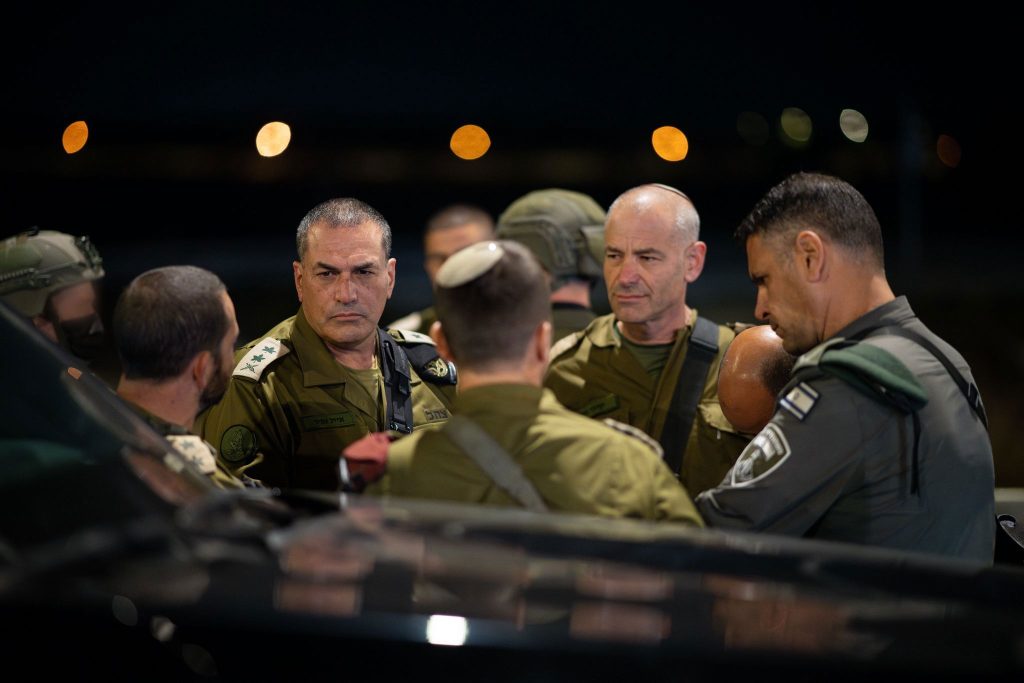
Chief of Staff, Lt. Col. Eyal Zamir, conducted an initial investigation at the scene of the attack at the Gush Etzion junction
Chief of Staff, Lt. Col. Eyal Zamir, conducted an initial investigation at the scene of the attack at the Gush Etzion junction, Tuesday, November 18, 2025. Photo credit: IDF

West Bank attack: A 71 year old man, Aharon Cohen was killed, with three more injured in a stabbing attack at the Gush Etzion Junction.

  • A 40-year-old woman is reportedly in serious condition, whilst a 30-year-old man and 15-year-old boy are in moderate condition.
  • The attack was carried by two 18 year old terrorists, one from Hebron and the other from the village of Beit Ummar. Both were killed at the scene.
  • According to the IDF, “Several explosive materials were found in the vehicle used by the terrorists.”
  • IDF Chief of Staff Zamir conducted an initial investigation at the scene of the attack and praised the reservist soldiers for their quick response. He instructed the troops to reinforce the defence along the routes and within the communities, and to continue offensive activity, including mapping and dismantling of the residences of the involved terrorists in Beit Ummar and Hebron.
  • There is also concern over possible revenge attacks and violent raids by extremist Jews against Palestinian villages following the attack.
  • Earlier in the week Prime Minister Netanyahu addressed the phenomena of settler violence, saying, “I view with great severity the violent disturbances and the attempt to take the law into their own hands by a small, extremist group that does not represent the residents of Judea and Samaria. I call on the law enforcement authorities to deal with the rioters to the fullest extent of the law. I intend to deal with this personally, and convene the relevant ministers as soon as possible to address this serious phenomenon. I stand by the IDF and the security forces, which will continue to act resolutely and without fear to maintain order.”

November 13, 2025

Ceasefires in Gaza and Lebanon under pressure

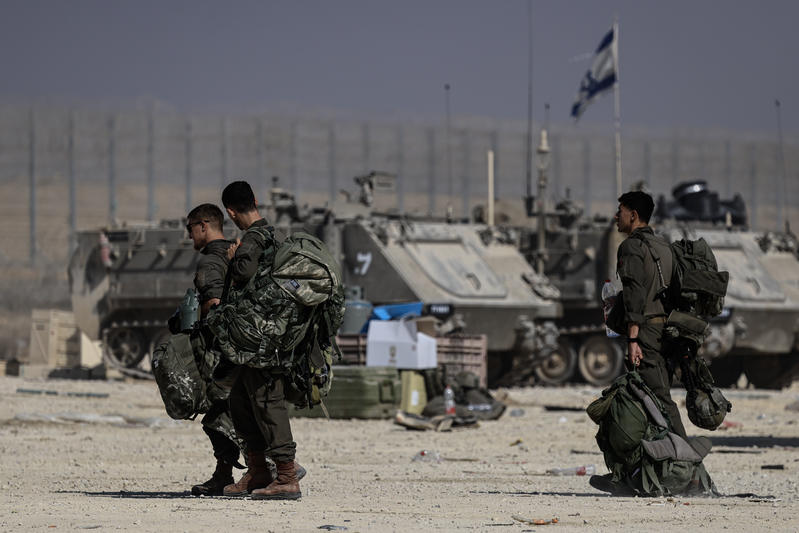
Israeli soldiers seen near the Israeli border with the Gaza Strip
Israeli soldiers seen near the Israeli border with the Gaza Strip, November 10, 2025. Photo by Tsafrir Abayov/Flash90 *** Local Caption *** עזה ישראל חמאס צבא גבול מלחמה חרבות ברזל

What’s happened: At a meeting yesterday of the so-called “Mechanism,” the multilateral monitoring committee for the implementation of the November 2024 ceasefire which ended the Israel-Hezbollah war, no agreement was reached on further weapons decommissioning.

  • The Lebanese newspaper Al-Akhbar, generally aligned with Hezbollah, reports that the meeting was “not positive” and that the Lebanese Armed Forces (LAF) refused a demand to carry out inspections in private homes, where Hezbollah is believed to be storing weapons.
  • Reports in Palestinian media this morning indicated that the IDF carried out limited strikes at targets in Khan Yunis and Beit Lahia in the Gaza Strip. Since the ceasefire went into effect in October 10, the IDF has occasionally carried out such strikes against Hamas ceasefire violations.
  • At a meeting of foreign ministers in Canada, the G7 nations reiterated their “strong support” for President Trump’s Comprehensive Plan for Gaza. The statement also called on Iran to “resume full cooperation with the International Atomic Energy Agency, including enabling inspections of all nuclear facilities and materials.”
  • A spate of violence by radical West Bank settlers captured the attention of Israeli and foreign media. Settlers were filmed setting fire to a factory and olive grove, as well as attacking IDF soldiers. Secretary of State Marco Rubio was asked at the G7 meeting if the outbreak of settler violence in the West Bank could endanger the ceasefire in Gaza. “We’ll do everything we can to make sure it doesn’t happen,” he told reporters.
  • A new corruption scandal burst into public consciousness in Israel yesterday. A senior police official was briefly detained yesterday for interrogation under suspicions that he had intervened in a very sensitive corruption investigation in order to benefit an associate of his. A court injunction prevents the publication of the identity of the police officer in question (though his rank of Deputy Commissioner is known) or any other details regarding the investigation. Last week the Israel Police announced the completion of a two-year undercover investigation into corruption at Israel’s largest trade union. The Police force is also involved in the unfolding scandal around the former military Advocate General.
  • At the same time, the Israel Police and the Minister responsible for the police force, Itamar Ben-Gvir, had a public spat over Ben Gvir’s efforts to block the promotion of a high-ranking police superintendent, allegedly, as a punishment for her involvement in the investigations which led to indictments against Prime Minister Netanyahu.
  • Netanyahu’s ongoing trial was thrown into a turmoil yesterday by the very public intervention of President Trump, who released a letter he sent to Israeli President Isaac Herzog asking him to pardon the Prime Minister.

Context: The “Mechanism” meeting in Lebanon comes against a backdrop of major diplomatic initiatives from the United States to stabilise the post-Assad regional order. Ambassador Tom Barrack, the Trump administration official most closely associated with these efforts, issued a long statement yesterday summarising US positions and hailing some of the recent developments. “This was a week to remember,” Barrack wrote.

  • In the statement, he praised the Syrian President’s decision to join the US-led coalition against ISIS. “Damascus will now actively assist us in confronting and dismantling the remnants of ISIS, the IRGC, Hamas, Hezbollah, and other terrorist networks, and will stand as a committed partner in the global effort to secure peace.”
  • Called on Congress to repeal the Caesar Act, the 2019 law that placed severe sanctions on Syria. Last week, the administration announced a suspension of some of the Act’s provisions.
  • Referenced efforts at “redefining Turkish-Syrian-Israeli relations and advancing the alignment that underpins the Israel-Hamas ceasefire, as well as various Lebanese border issues.”
  • Praised the roles of Qatar and Saudi Arabia, but was particularly effusive in his praise of Turkey.
  • Described President’s Trump’s regional strategy as “security first, prosperity next.”
  • The violence in the West Bank was criticised by both President Herzog and Major General Bluth, who currently heads the Central Command that covers the West Bank. 
  • Herzog called the events severe, shocking and serious. “Such violence against civilians and against IDF soldiers crosses a red line, and I strongly condemn it. All state authorities must act decisively to eradicate this phenomenon and to strengthen the IDF soldiers and security forces who guard us day and night.”
  • Bluth criticised the “reality in which anarchist fringe youth act violently against innocent civilians and against security forces” adding that it must be “dealt with firmly” which requires “the combined efforts of all branches of the State of Israel: education, welfare, law enforcement, and disciplinary measures.” He added that the directive to IDF soldiers is clear: “do not stand idly by, and do everything in your power to prevent any act of nationalist crime.”

Looking ahead: Israel Hayom reports that both the US and Israel are making preparations for a “Plan B” for Gaza should the ceasefire plan fail and not progress to the second stage. These are different plans addressing different problems.

  • The American effort, led by Jared Kushner, seeks a diplomatic alternative to the implementation of the second stage of the ceasefire.
    • The second stage calls for Hamas disarmament, an Israeli withdrawal, and an International Stabilisation Force (ISF). But so far Hamas has not disarmed, and no country has expressed any willingness to join an ISF that might be tasked with disarming it.
    • In practice, this means that the first phase of the ceasefire, with Gaza partitioned into a zone under Israeli control and a zone under Hamas control, could last much longer than originally intended in the ceasefire agreement.
    • According to the report in Israel Hayom, Kushner is keen to advance some reconstruction efforts even in a situation in which the two sides are stuck in the first phase.
  • On the Israeli side, the discussion of a “Plan B” is focused on military efforts.
    • Chief of General Staff Eyal Zamir reportedly told the cabinet that the IDF is preparing a contingency plan if the ceasefire fails.
    • Presumably this comprises both a plan of action if the first phase lasts longer than intended as well as a plan for the resumption of combat should the ceasefire fall apart entirely.

October 28, 2025

Israel considers next steps after Hamas breaches hostage deal

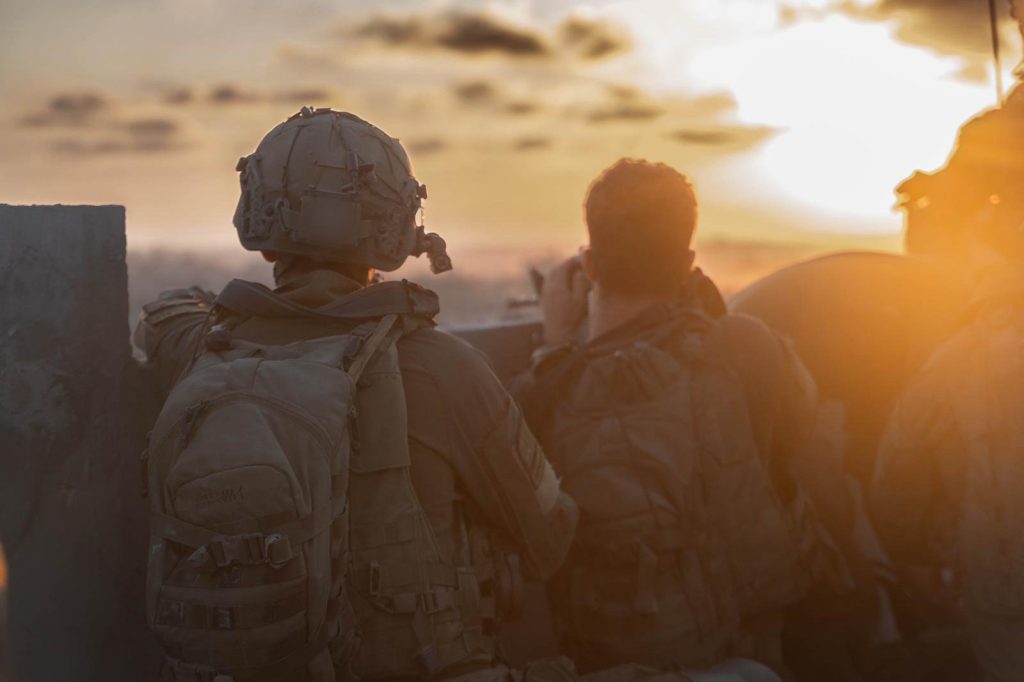
IDF in the Gaza Strip.
IDF in the Gaza Strip. Photo credit: IDF

What’s happened: It has been confirmed that the remains handed over by Hamas to Israel last night belonged to a deceased hostage who had already been returned to Israel for burial, and not to one of the 13 deceased hostages whose bodies have yet to be returned.

  • Israeli officials are currently deliberating how to respond to this flagrant violation by Hamas. Prime Minister Netanyahu will meet with security officials to discuss options, but will also coordinate their response with the US.
  • Israeli frustration with the slow pace of handovers is growing. Israel has allowed unarmed Hamas members, accompanied by Egyptian and Red Cross officials, into Israeli controlled areas east of the Yellow Line to help locate bodies of Israelis abducted by Hamas. The latest assessment  suggests Hamas has exact locations of the bodies of at least five (and up to ten) of the remaining hostages, but that it is deliberately holding back on their return.
  • President Trump’s ultimatum to Hamas to release all hostages by midnight last night passed, so far without consequence.
  • Despite the ceasefire, Hamas and Islamic Jihad operatives attempted an attack on Israeli forces in Gaza yesterday from a tunnel in the Israeli-controlled sector of the Strip. IDF soldiers on the ground spotted the terrorists and opened fire. Hamas officially claimed that the squad involved in that attempted attack was not in contact with its central command and was not obeying orders, but Israeli officials expressed doubt that this was the case.
  • A joint operation of the National Counter-Terrorism Unit of the Israeli Border Police and the Israeli Air Force yesterday took place near Jenin in the West Bank yesterday. Three terrorists were killed by snipers as they emerged from a cave. The cave itself, with all the terrorist infrastructure, was subsequently destroyed by an air strike. Air strikes in the West Bank are exceedingly rare. According to Israeli authorities, the operation foiled an attempt by the terrorists to carry out an imminent attack.

September 21, 2025

Statement on the UK’s unilateral recognition of a Palestinian state

BICOM Statement
BICOM Statement

In response to the Prime Minister’s statement on the UK unilateral recognition of a Palestinian state, BICOM questions how this performative gesture truly serves the interest of peace.

Not only does it reward and embolden Hamas, it uses recognition as a punishment on Israel, a first in international affairs.

This symbolic gesture does nothing to advance the UK’s stated objective of realising a two-state solution. This moves changes nothing the ground, but inadvertently weakens peace camps on both sides, and raises the bar of expectations, that when not met could lead to further violence.

The move weakens UK influence as an honest broker in the region and punishes a democratic ally with whom UK has many shared interests and values, not least security, intelligence and trade relations. There are some fundamental questions that remain unanswered:

  • What exactly is being recognised?
  • How will this contribute to ending the war?
  • Has it compelled Hamas to release the hostages, or has it emboldened them?
  • Has it improved the safety and security of both Israelis and Palestinians?
  • Has it disarmed Hamas, to prevent their violent suppression of its own people and their explicitly stated plans for the next October 7 massacre?

With little consideration for these fundamentals, it’s highly unlikely that a Palestinian state will be realised any time soon. Ironically, premature recognition is likely to lead to the prolonging of the war in Gaza, as Hamas have proven that terrorism is rewarded by the west.

Richard Pater, Director of BICOM

September 19, 2025

Israel mourns the loss of six soldiers, on two fronts

Family and friends attend the funeral of Lt. Col. (res.) Yitzhak Harush, 68, at Mt Herzl cemetery in Jerusalem. Harush was killed yesterday in an attack at the Allenby border crossing with Jordan. September 19, 2025.
Family and friends attend the funeral of Lt. Col. (res.) Yitzhak Harush, 68, at Mt Herzl cemetery in Jerusalem. Harush was killed yesterday in an attack at the Allenby border crossing with Jordan. September 19, 2025. Photo by Yonatan Sindel/Flash90 *** Local Caption *** הלוויה הר הרצל אלנבי פיגוע יצחק הרוש

What’s happened: Four soldiers were killed in southern Gaza on Thursday, whilst two were killed in a shooting attack on the Jordanian border. 

  • Reflecting on the loses, Prime Minister Netanyahu sent condolences to the families describing it as a “difficult evening,” before adding, “In the spirit of their heroism and in the strength of the souls of our fighters, we will continue to strike our enemies forcefully until we complete our war objectives.” 
  • The four soldiers killed in Gaza, were all young officers in their early twenties. According to IDF Spokesperson Brig. Gen. Defrin, “The soldiers were hit by a bomb that exploded during offensive activity in the neighbourhood of Jenina in Rafah. IDF troops are operating in Jenina and destroying terrorist infrastructure. The area  has still subterranean infrastructure that has not yet been destroyed. The troops are working to demolish it.”
  • In the attack at Allenby Crossing on the Jordanian border, a Jordanian citizen who was driving a humanitarian aid truck to the Gaza Strip, shot and killed two IDF soldiers; Lt. Col. (res.) Yitzhak Harosh a 68 year old and Sgt. Oran Hershko aged 20.
  • The gunman was later identified as Abd al-Taleb al-Qaisi a 57 year old Jordanian who had started working as a humanitarian aid truck driver three months ago. After the shooting, he pulled out a knife and stabbed them. The security team at the border crossing opened fire and killed him. 

Context: Amid these loses, the IDF are continuing to expanded their operations in Gaza City with the declared aim of placing additional pressure on Hamas in order to dismantle their control and create more favourable conditions to secure the release of the hostages. Of the 48 still held in captivity 20 are still thought to be alive, and now held for 714 days.

  • According to the IDF Spokesperson, “Since the start of the second phase of Operation Gideon’s Chariots II, we have already struck more than 1,200 terrorist targets.” 
  • Emphasis continues to be placed on encouraging civilians to evacuate the war zone, they estimate that more than 450,000 of the city’s residents have now moved southward.
  • Part of the Israeli planners’ thinking is that the movement of the population from Gaza City creates considerable pressure on Hamas. Gaza City had been both a symbol of Hamas rule and one of the last vestiges of its governance. There is hope that the flight of more than half a million people might prove to be a breaking point for Hamas. This is also why Hamas has placed physical blockades and pressure on the civilian population to prevent them from moving south.
  • Beyond Gaza, the IDF remain engaged in a multi-front confrontation. This week the IDF:
    • Once more struck the Port of Hodeidah in Yemen, which the IDF perceive as a strategic asset for the Houthi terrorist regime.
    • Also struck Hezbollah weapons storage facilities of Hezbollah’s elite Radwan forces in southern Lebanon.  Since the ground operation in Lebanon ended one year ago Israel has carried out around 200 targeted strikes against Hezbollah attempts to reconstitute itself in southern Lebanon, all within the provisions of the ceasefire agreement and the understanding reached with the US.
    • Continued counter-terror operations in the West Bank.
  • The initial investigation of the attack at the Allenby Crossing found that Jordanian citizens who enter Israel as part of the mechanism to send humanitarian aid to Gaza do not undergo security inspection by Israel after the Jordanian army sends their names to the IDF. It appears that the IDF trusted the Jordanian army to perform the required inspections as part of the bilateral strategic security cooperation. There was a similar shooting by a Jordanian at the same crossing almost exactly a year ago.

Looking ahead: As a result of the attack at the crossing, humanitarian aid from Jordan may now be suspended until the investigation is completed and the regulations for inspecting the Jordanian drivers are changed. 

  • Ahead of the Jewish High Holidays that begin next week there is growing concern over the potential increase in terror attacks emanating from the West Bank. 
  • In parallel, the UK is expected to declare its unilateral recognition of a Palestinian state that could also exasperate tension in the Palestinian arena.         
  • Israel is still calibrating its response to any declarations, and punitive measures for example closing down Palestinian facing consulates in Jerusalem. Others on the right are pushing for some element of annexation in response. These scenarios were reportedly discussed during US Secretary of State Rubio’s meeting with Netanyahu, amid concerns that this could rupture relations with the UAE. Israel is also wary that any extension of sovereignty risks jeopardising the wider Abraham Accords, which are part of Trump’s legacy.

September 18, 2025

Questioning unilateral recognition of a Palestinian state

Palestinians in Ein Hajla, in the Jordan Valley near the West Bank city of Jericho
Palestinians in Ein Hajla, in the Jordan Valley near the West Bank city of Jericho, on January 31, 2014. Photo by Hadas Parush/Flash90

New Research: With the UK’s recognition of a Palestinian statehood imminent, BICOM’s report:

  1. Assesses the Montevideo standards for recognition, examining how the Palestinian Authority does or does not meet them. And consider both cases lacking international recognition (e.g. Taiwan, Northern Cyprus, Somaliland) and cases of newly recognised states by the UK (South Sudan, East Timor, Kosovo).
  2. Demonstrates how premature recognition undermines peace efforts. Recognition can pressure both Israelis and Palestinians into actions that make a peaceful settlement harder, not easier. Recognition will not create a Palestinian state nor advance the creation of one; rather, it will be the most significant diplomatic gain for the Palestinian cause in decades, universally understood as having been made possible by the October 7 massacre.
  3. Analyses British policy on the two-state solution. If the two-state solution is indeed the desired goal, then policies must encourage conditions that make this outcome more likely and discourage those that make it less likely. Recognition at this stage, or interventions which halt the war before Hamas is defeated, protect and strengthen Hamas and are therefore counterproductive.
  4. Highlights the diplomatic consequences. Recognition would take place in the context of already worsening UK–Israel relations and would further deteriorate ties between two countries that until recently considered themselves strategic partners.

September 4, 2025

Annexation removed from agenda

Israel's prime minister Benjamin Netanyahu at the opening ceremony of the new Knesset museum
Israel's prime minister Benjamin Netanyahu at the opening ceremony of the new Knesset museum, in Jerusalem on August 11, 2025. Photo by Yonatan Sindel/Flash90 *** Local Caption *** אירוע פתיחה כנסת משכן הכנסת ביבי ראש הממשלה בנימין נתניהו

Exploring extending sovereignty: Prime Minister Netanyahu decided to remove the issue of extending Israeli sovereignty to parts of Judea and Samaria (West Bank) from the agenda of a meeting scheduled for later today. 

  • The meeting had been called to discuss responses to the French, British and numerous other countries impending announcements to recognise a Palestinian state. 
  • The meeting is now expected to focus on the security threats. There is concern that following unilateral recognition of a Palestinian state at the UN General Assembly (UNGA) later this month there will be an eruption of violence in the West Bank.
  • This is partly anticipated due to the large discrepancy between symbolic diplomatic statements and the harsh reality on the ground that nothing has changed. Adding to this concern is the timing of UNGA coinciding with the Jewish High Holidays.
  • Security officials have continued to warn the political echelon of the weakness of the Palestinian Authority (PA), partly due to the economic measures taken by Israel.
  • Despite this, Palestinian sources reported that the PA’s security forces defused several roadside bombs in the Jenin area that had been placed in order to kill IDF troops.
  • As with all Israeli policy the position of the US administration is key. Their current posture is not against the principle of extending Israeli sovereignty, but over the timing. The Trump administration see this as part of their wider regional vision and as part of the day after once the Gaza war comes to an end. It is currently unclear to what extent the US will eventually back extending sovereignty.  
  • The US currently supports Israel through backchannel diplomatic efforts to soften the French initiative. They are also preventing senior PA officials from  attending the UNGA in New York. 
  • A second crucial actor is the UAE. Emirati special envoy Lana Nusseibeh told the Times of Israel,  “Annexation would be a red line for my government, and that means there can be no lasting peace. It would foreclose the idea of regional integration and be the death knell of the two-state solution.” The announcement of the Abraham Accords five years ago was predicated on Israel dropping its plans of annexation.   
  • Inside Israel there are also a range of views over the extent that sovereignty should be extended. Some argue for a limited change, for example annexing the Etzion Bloc south of Jerusalem, which sits broadly as part of the Israeli consensus. Or the sparsely populated Jordan Valley, with important security ramifications. 
  • With a more maximalist stance Finance Minister Smotrich declared in a press conference on Wednesday, “No to partial sovereignty. That will leave territory for the enemy and will allow it to establish a terrorist state—the 23rd Arab state that they want to establish here.” Adding, “The population in Judea and Samaria supports Hamas and the October 7 atrocities, with the aspiration to destroy the State of Israel. We have no desire to apply sovereignty over enemies. The principle in sovereignty is maximum territory and minimum population. Israeli sovereignty will be applied to 82 per cent of the territory.” Whilst the Palestinians in Area A will continue to administer themselves. 
  • In an interview to a Belgian newspaper Foreign Minister Saar, spoke out against international recognition saying, “We have no intention of establishing a Palestinian state, that would clearly be a terrorist state. We already tried, by the way, 20 years ago, when we completely withdrew from the Gaza Strip, dismantling all our settlements, dismantling all our military bases, even the graves in the cemeteries. Afterwards, it clearly became the emergence of the most dangerous terrorist kingdom in the world. We will not do it again, we have learned the lesson.”

Latest Hamas statement dismissed as spin: On Wednesday Hamas released a statement saying, “We are ready to make a comprehensive deal, in the framework of which all of Israel’s hostages will be released in exchange for an agreed-upon number of Palestinian prisoners.” 

  • Hamas conditions that demand a complete withdrawal of IDF troops from the Gaza Strip, the opening all the crossings and the start of reconstruction, are unacceptable to Israel.
  • At the same time Hamas did consent to “establish an independent national technocratic administration to run all the Gaza Strip’s affairs and to take immediate responsibility in all fields.”
  • Prime Minister Netanyahu said in response, “Unfortunately, this is more spin by Hamas and there’s nothing new about it. The war can end immediately under the terms set by the security cabinet.”
  • Those conditions are for all hostages to be released, Hamas is disarmed, the Strip is demilitarised, with Israel maintaining security control. Finally, “an alternative civil administration is established that does not educate for terrorism, dispatch terrorists or threaten Israel.”
  • Some Israeli analysts are interpreting the Hamas statement as a reflection of the pressure it is facing ahead of the IDF operation into Gaza City. However others have expressed concern that even the takeover over the capital city, however symbolic will not change the Hamas calculus.    
  • There is also concern within the military that with the takeover of Gaza City the IDF that will have to take responsibility for civilian life.
  • The IDF continues to encourage Gazan civilians to leave the city for the humanitarian zone in the south, whilst Hamas continue to threaten and block their path. So far an estimated 80,000 people have left.
  • Humanitarian efforts continue, on Wednesday COGAT announced over 300 aid trucks entered Gaza. Additionally 380 were collected and distributed by the UN and international organisations.
  • In parallel families of hostages and activists have continued to protest the perceived reluctance of the Israeli government to pursue a deal. They have been calling to end the war and to bring back the 48 hostages who are still in Hamas captivity, twenty of whom are still thought to be alive. 
  • The protest activity escalated significantly on Wednesday when a vehicle was torched in the heart of the upscale neighbourhood of Rehavia in Jerusalem.
  • Prime Minister Netanyahu issued a statement harshly condemning the protests, asserting that the demonstrators were paid and that they were threatening to murder him.

Houthis attacks persist: In the early hours of Thursday morning the Houthis launched another missile from Yemen. The missile fell in an uninhabited area outside Israeli territory. 

  • On Wednesday, three missiles that were fired from Yemen, which were all intercepted. One of them carried multiple warheads. 
  • Eight missiles have been fired from Yemen since Israel eliminated the Houthi prime minister and several of his cabinet ministers. Five of the missiles disintegrated en route and the rest were intercepted.

July 22, 2025

US Ambassador calls joint statement by foreign ministers ‘disgusting’

US and Israeli flags

What’s happened: Foreign Ministers of 29 countries, including the UK, issued a joint statement yesterday on the situation in Gaza and the West Bank calling for an immediate end to the war and castigating Israel for the humanitarian situation in Gaza as well as for settlement activity in the West Bank.

  • Also yesterday, Foreign Secretary David Lammy spoke to Parliament about the situation in the Middle East, emphasising many of the same points made in the joint statement. In his comments, he referenced signing the statement with “31 Foreign Ministers,” a possible indication that some countries might have backed out at the last minute.
  • Lammy’s statement began with a short update on the situation in Syria, which condemned the violence in as-Suwayda this past week but studiously avoided taking sides.
  • The rest of his comments were devoted to the Israeli-Palestinian situation. Regarding the war in Gaza, Lammy’s position was clear: “The war in Gaza must end now. There is no military solution. Negotiations will secure the hostages. Further bloodshed serves no purpose. Hamas and Israel must both commit to a ceasefire now, and the next ceasefire must be the last ceasefire.”
  • The comments ended with a summary of actions taken by the Government on the Israeli-Palestinian conflict in its year in office. Whether deliberately or not, the list of actions was decidedly unbalanced: restored UNRWA funding, suspended arms licences for Israel, humanitarian assistance for the Palestinians, sanctions packages on settlers, suspended trade negotiations with Israel, sanctions on far-right Israeli ministers, defences of international courts prosecuting Israel and Israeli leaders, and a “landmark agreement with the Palestinian Authority.”
  • Israel’s Ministry of Foreign Affairs issued a statement rejecting the joint statement, not just for its content but also for “sending the wrong message to Hamas” that international pressure on Israel could yield the benefits Hamas seeks more effectively than agreeing to release hostages. The joint statement, according to the Israeli MFA, “fails to focus the pressure on Hamas and fails to recognise Hamas’s role and responsibility for the situation. Hamas is the sole party responsible for the continuation of the war and the suffering on both sides.”
  • US Ambassador to Israel reacted to the joint statement on X stating: “Disgusting! 25 nations put pressure on Israel instead of savages of Hamas! Gaza suffers for 1 reason: Hamas rejects EVERY proposal. Blaming Israel is irrational.”

Context: Lammy told Parliament that “we are striving to keep open the prospects of a two-state solution,” and two sentences later boasted of restoring funding to UNRWA, seemingly without noticing the contradiction between the two positions. UNRWA is the agency that maintains the “refugee” status of Palestinians born in Palestinian territory living under Palestinian government.

  • Funding UNRWA doesn’t open the prospect of a two-state solution; it entrenches the Palestinian fantasy that justice can only be served when Palestinians can “return” to Israel and undo the existence of a Jewish state. The Palestinian demand for “return,” and not any Israeli insistence on settlements, was what torpedoed final status talks in all three rounds of negotiations that were held (2000-1, 2007-8, 2013-4).
  • Indeed, the gaps between the Israeli and Palestinian positions on which settlement areas would be evacuated and which annexed to Israel in territorial swaps were comparatively tiny and inconsequential to negotiations. But nothing in the joint statement nor in Lammy’s comments to Parliament yesterday addresses why there wasn’t a Palestinian state created in 2000 or 2008 (or for that matter 1948).
  • The claims about the controversial construction plan known as E1 are equally incoherent. The joint statement says that “the E1 settlement plan, if implemented, would divide a Palestinian state in two,” which is bad math and bad geography. A potential Palestinian state is already divided into two non-contiguous territories (Gaza Strip and West Bank).
  • Lammy’s statement is a bit clearer on the math, but just as muddled on the geography, claiming that E1 “would separate the West Bank’s north from its south,” but a glance at a map shows that this is entirely untrue, with the entire Jericho corridor still open (and the existing Israeli settlement of Maaleh Adumim still the easternmost area of Israeli settlement in the Jerusalem area).
  • If it were true that E1 could prevent the establishment of a Palestinian state, then it would behove supporters of such a state to press the Palestinians to act now and do what they refused to do in each previous round of negotiations, namely make peace with Israel. Nothing in either the joint statement or Lammy’s comments reckons with Palestinian decision making or preferences or even treats the Palestinian side of the conflict as an actor making decisions and shaping events.
  • Nowhere is this more apparent than in the discussion of the hostages. Both the joint statement and Lammy’s speech to Parliament address the continued captivity of Israelis abducted during the massacre of October 7 as something that can only be addressed by “negotiations,” a stark contrast to their claims regarding Israel’s supposed obligations on aid or territory.
  • “A negotiated ceasefire offers the best hope of bringing them home and ending the agony of their families,” is the way the joint statement addresses the issue, implying that Israel’s failure to meet the ransom demands of their captors is true moral failure, and not the abduction itself. Lammy goes even further in blaming Israel’s leader for the hostages’ plight: “This offensive puts them in grave danger, but still Netanyahu persists.”
  • In contrast, nothing in both statements implies that “negotiations” could secure aid for Gazans or stop Israel’s military offensive. These are presented as things that simply must happen without conditions and which the UK and other countries are prepared to take affirmative action to pressure Israel on.
  • If there is any action which the UK Government or Foreign Secretary Lammy have taken to put pressure on the hostage takers or the allied countries who host Hamas leaders, it went unmentioned in both statements. On the contrary, Qatar is singled out for praise in both statements, and Turkey is never referenced at all.
  • Another point that is missed in the calls for “negotiations” as the only means for liberating hostages is that negotiations are ongoing and have been ongoing for quite some time. As the Israeli Ministry of Foreign Affairs response to the joint statement notes, “there is a concrete proposal for a ceasefire deal, and Israel has repeatedly said yes to this proposal, while Hamas stubbornly refuses to accept it.”
  • In every version of a proposed agreement, Israel has been willing to pay an exorbitant ransom — in released terrorists, territorial withdrawals, and more — for even partial hostage releases. And despite the implication of both statements that Israel’s position hasn’t allowed for an agreement, it is the Israeli position, not Hamas’, that has considerably moderated in recent weeks along several key points of dispute.
  • The statement also criticises the allegedly “dangerous” mechanism for aid delivery. However the work of the Gaza Humanitarian Foundation is designed to circumvent Hamas expropriation of aid, that further perpetuates its control of the Strip. Earlier this week the GHF announced that it delivers around two million meals a day, and 82 million since it began.

Looking ahead: Lammy’s statement yesterday reaffirmed the UK’s commitment to a two-state solution  without any reckoning with why that solution has not yet been effected on the ground. Moreover, it pledged the UK Government to a number of policies which make the establishment of Palestinian state next to Israel almost impossible.

  • “Hamas and Israel must both commit to a ceasefire now, and the next ceasefire must be the last ceasefire,” according to Lammy. This is a demand to end the war with Hamas still in control of the Gaza Strip. No path to statehood exists with the Palestinian Territories governed by two competing governments, one of them a jihadist terrorist organisation. And no path to peace exists with Hamas still standing, newly legitimised by the international community, and regrouping and mobilising for the next October 7.
  • Funding for UNRWA is not funding for a Palestinian state, but rather funding against one. An investment in the refugee status of Palestinians in Palestinian territory does nothing for the upbuilding of a future state; it only ensures another generation of irredentism, rejectionism, and war.

Newsletter sign-up

Please enter your information below to subscribe to our daily newsletter and stay updated and informed.

Donate to BICOM

At BICOM, we rely on the generosity of people like you to keep our website and services running. Your donation, no matter the size, makes a real difference. Please consider supporting us today. For further information please email: [email protected]