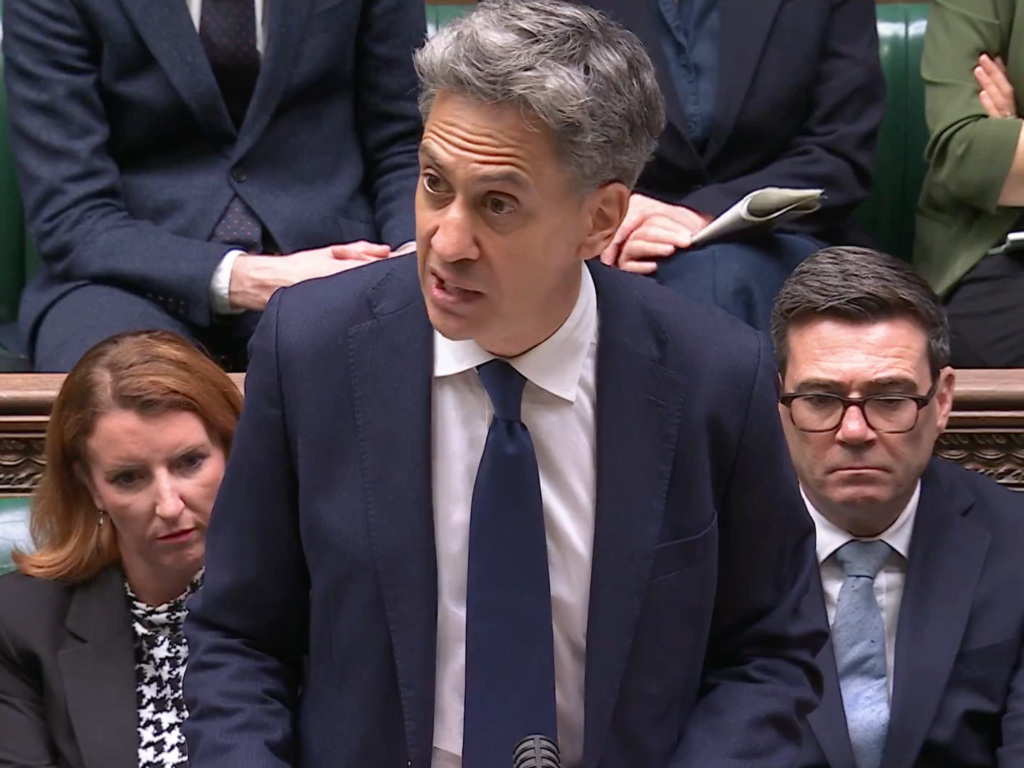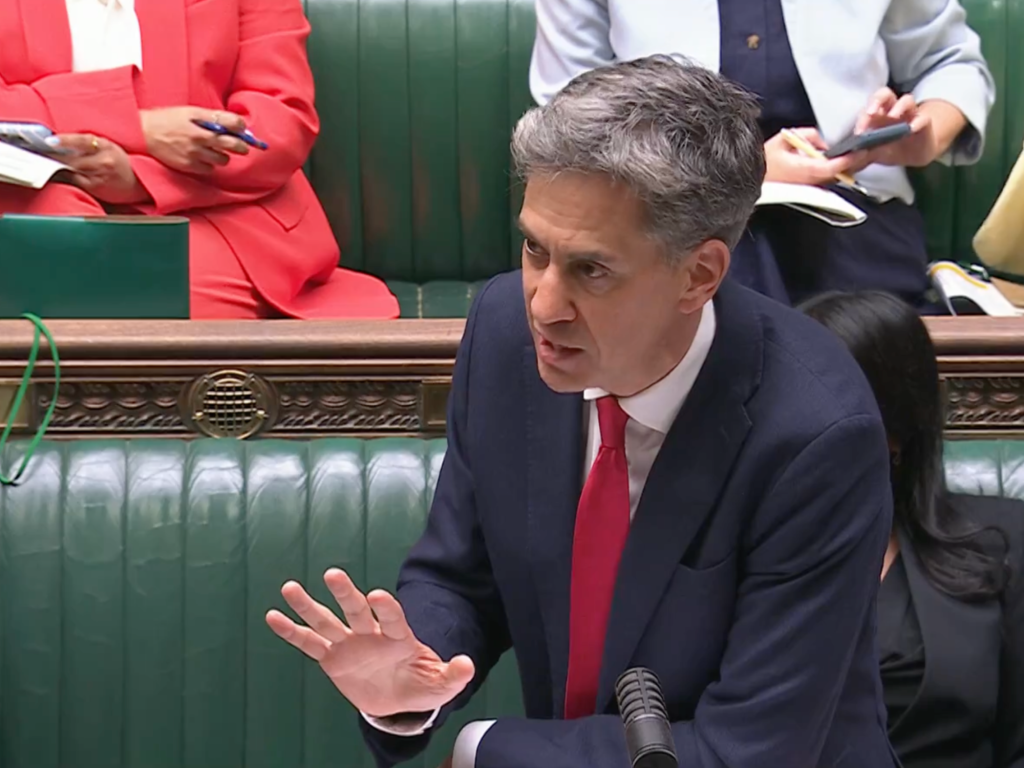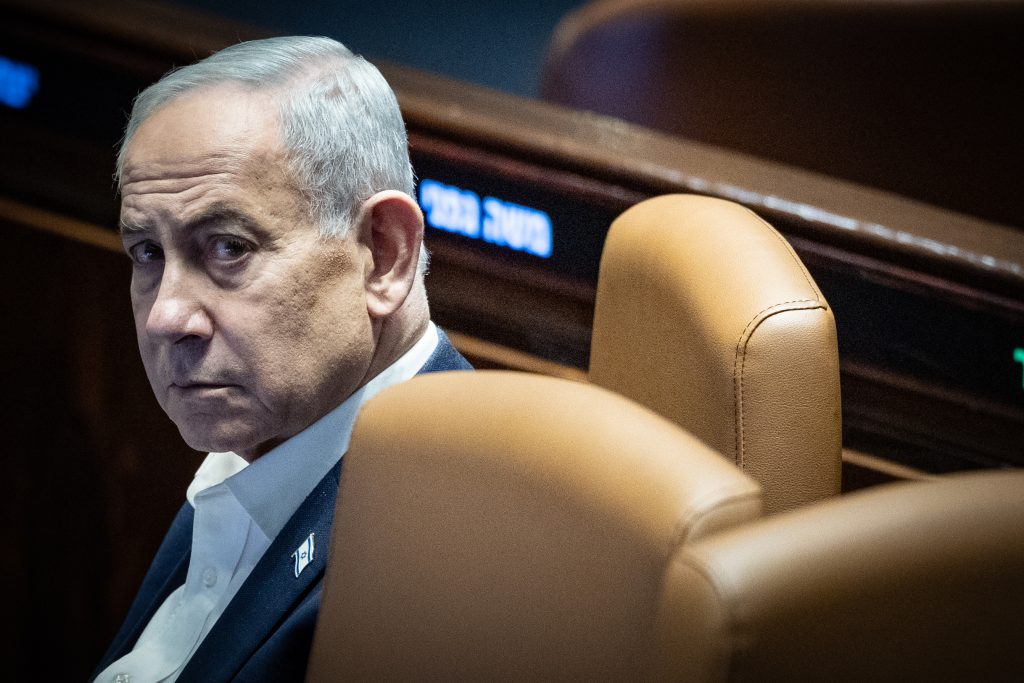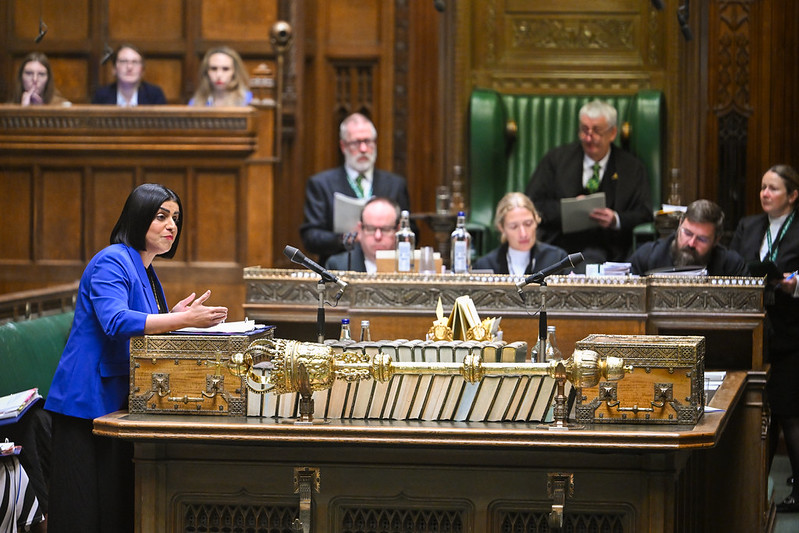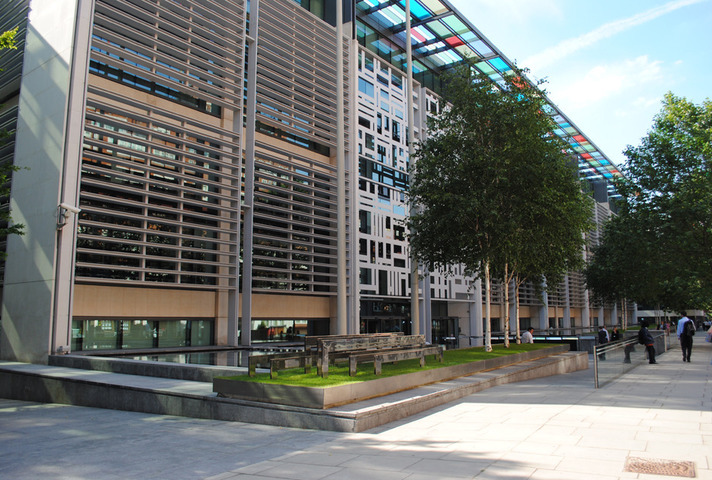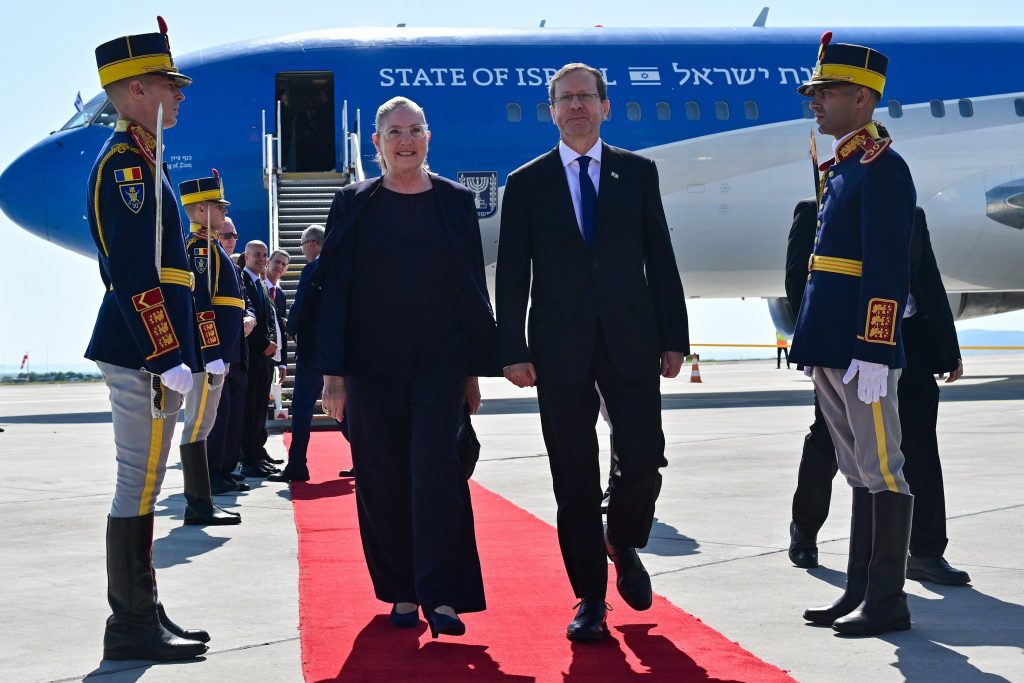
What’s happened: Following Foreign Secretary Miliband’s announcement that the UK was introducing a raft of measures centered on banning the sale of settlement goods, Israel has now provided its own response.
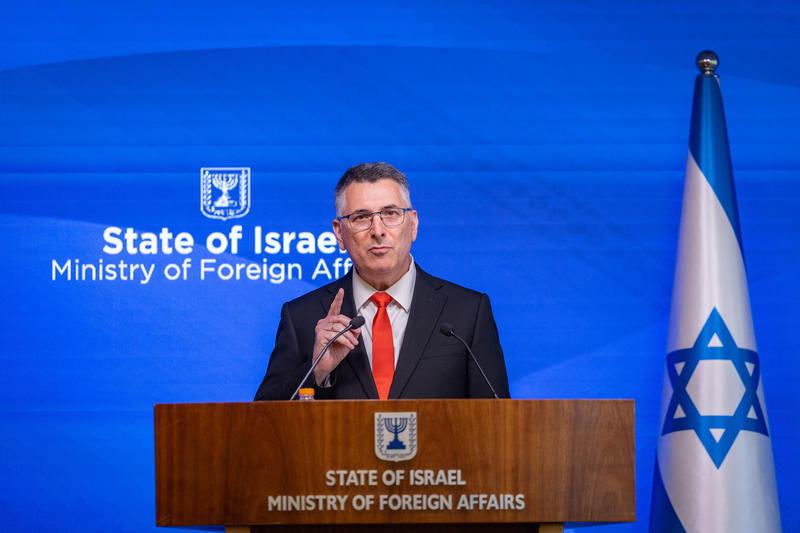
- In a speech made yesterday afternoon, Foreign Minister Saar announced four decisions:
- The closure of the British Consulate in Jerusalem.
- The removal of British representatives from the International Gaza Support Centre in Kiryat Gat.
- The termination of British activities to train Palestinian Authority (PA) forces under the “British Support Team in Ramallah.”
- The denial of entry to Israel to 12 British elected representatives and other British nationals involved in antisemitic and anti-Israel activity, as well as those who deny the very existence of the State of Israel.
- Saar described Miliband’s comments as “outrageous lies,” but also added, “we have nothing against the British people. We know that we have many friends in Britain.”
- He continued, “Unfortunately, a hostile Labour Government is in office, systematically acting against the State of Israel, and it has left us with no choice but to finally respond to its hostile actions.”
- “The British move is morally distorted and constitutes blatant interference in the affairs of a sovereign state and in its electoral process.”
- “The attempt by the British Labour Government to impose measures in the style of the “White Paper” carries echoes of the antisemitic words of British Lieutenant-General Barker, commander of British forces in the Land of Israel during the Mandate, who said: “punish the Jews by striking at their pockets.”
- Saar termed UK reasoning that the timing was based on the E1 tenders as “false claims,” adding, “no new decisions have been made regarding development in E1.”
- Saar stressed that the E1 decision was taken more than a year ago, and the tender process has been underway for many months, adding that the claims regarding the severing of potential Palestinian territorial contiguity were also baseless. “The decision of the Government of Israel, taken more than a year ago, stipulated that two roads would be built: the first, Road 80, which will serve as a major transportation route from the Bethlehem area to the Ramallah area; the second, known as the ‘Fabric of Life’ Road, between a-Za’im and al-Ezariya. The claim of harm to ‘Palestinian territorial contiguity’ sounds particularly ridiculous coming from those who insist on defining Judea and Samaria and the Gaza Strip as ‘one territorial unit.’”
- Saar continued, “The decision of the Labour Government also constitutes a gross interference in the electoral process of a sovereign state. This is a blatant and completely unacceptable attempt by a foreign government to exert external influence in the midst of an election campaign.”
- He also listed a series of unilateral measures taken against Israel since the Labour Government took office in July 2024.
- “Recognition of a virtual “Palestinian state” in September 2025.”
- “The resumption of funding for UNRWA, even though its employees were actively involved in the October 7 massacre.
- “The suspension of licenses for defence exports to Israel
- “Sanctions on Israeli ministers; sanctions on Israeli individuals and entities;
- “The suspension of negotiations on a free trade agreement;
- “Restrictions on Israel’s official participation in the international defence and security equipment exhibition in Britain;
- “The freezing of military dialogue and security cooperation;
- “Preventing IDF officers from participating in training at the Royal College of Defence Studies.
- He connected all these moves with, “biased and one-sided anti-Israel rhetoric,” which he said “have already contributed significantly to the unprecedented rise in antisemitic attacks, including violent attacks against British Jews.”
Context: The UK measures and the Israeli response plunge bilateral relations to their lowest ebb in decades. The timing appears politically motivated on both sides.
- For the British government it was convenient to make this announcement ahead of Labour Party Conference where this will appeal to the grassroots and left wing of the party, and counter their competition from the Green Party and pro Gaza independents.
- For Saar and Netanyahu, this was an opportunity for them to show strength in the context of their re-election campaign.
- Israeli officials had been anticipating this initiative from the UK government but were surprised by the harsh tone of Miliband’s speech and coordinated aspect with the other 11 countries.
- Following the UK, the Foreign Ministers of Canada, Denmark, Finland, France, Iceland, Ireland, Norway, Poland, Portugal, Spain, and Sweden all confirmed, “their intention to introduce national and/or support European restrictions on trade in goods with settlements which are illegal under international law, or that they are actively considering these and other measures.”
- The response against the UK was particularly harsh as Israel identified their leadership on this matter.
- Meanwhile, US Secretary of State Rubio was emphatic, saying that the US “obviously” wouldn’t be following the UK, while suggesting that the move could have “implications on our ability to make progress in Gaza with the 20-point plan and the Board of Peace, which we’re very committed to.”
- It is understood Prime Minister Burnham has not spoken to Netanyahu since taking office. Underlining partisan support, Saar said he had a “great conversation” last night with the Leader of the Opposition Kemi Badenoch and Shadow Foreign Secretary Tom Tugendhat. According to his post on X he, “thanked them for their firm opposition to the hostile Labour Government’s announcement,” adding, “I welcomed their support for the friendship with Israel and their commitment for the future relations between our countries. We know that we have many friends in the UK, but unfortunately we are faced with the ongoing hostility of the current Labour government.”
- Outgoing Israeli Leader of the Opposition and former Prime Minister Yair Lapid reportedly held a lengthy, tense conversation with top British leadership, telling them, “You are helping Smotrich.” During the call, a senior British official expressed surprise that the Israeli government had done nothing meaningful to prevent the sanctions in advance. Lapid’s response was sharp: “Of course, because they knew it was good for them politically.”
- In a separate statement, Lapid referred to the UK decision as a, “grave mistake… a flawed and dangerous policy, at the wrong time and for the wrong reasons,” which would strengthen extremist voices in Israel and serve as a “shot in the arm for Hamas and terror organisations.”
- According to Israel’s Ministry of Economy, total Israeli exports to the whole world in 2025 stood at around $165 billion, while trade with the UK accounted for $4.4 billion, with exports from the West Bank making up only around 1 per cent, primarily dates from the Jordan Valley.
- However economists are concerned of a knock on effect, where doing business with Israel becomes too complicated with most Brits not knowing the contours of the Green Line.
- Since the UK’s unilateral recognition of Palestinian statehood in 2025, its consulate in East Jerusalem has functioned as its de-facto embassy to Palestine. Its closure could now lead to the establishment of an embassy in Ramallah.
- The termination of British Support Team in Ramallah is significant. This was the most senior international interface with the Palestinian security forces, that despite the ongoing tension on the ground, kept discreet coordination with the IDF.
- None of those banned are senior members of the Labour Party who were involved in drafting yesterday’s policy announcement, instead representing the party’s hard-left anti-Israel wing, the Green Party, or in Jeremy Corbyn’s case Your Party.
- Those banned have broadly responded positively. Taking to Twitter, Zarah Sultana MP described Israel’s measures as a “badge of honour” she would happily wear, while the Green Party responded by saying that it “will not be bullied into silence.”
- Mainstream Anglo-Jewish leaders have strongly condemned the new policies. The Chief Rabbi, Sir Efraim Mirvis, accused the British government of overlooking communal concerns, saying that “Gesture politics of this kind feeds into an increasingly hostile discourse about Israel, and the cumulative effect of such punitive policies is to further embolden those, at home and abroad, who use hatred as a weapon against Jews.”
- The Jewish Leadership Council said that “the government’s increasingly punitive and unbalanced approach towards Israel does nothing to advance peace, risks harming Jewish life in Britain, and damages the UK’s relationship with a vital ally”, and that “A ban on trade with goods from settlements also risks becoming a de facto boycott of Israel, giving legitimacy to those who reject Israel’s very existence.”
- Whilst many have raised concerns about the timing of the announcement, it has also been noted that if the UK government were truly concerned about the situation in the West Bank and Gaza, they would expedite the proposed six to nine months’ timeframe announced in Parliament. Supporting the claim that this policy is performative and will have little impact in these territories.
Looking ahead: From the UK’s perspective, the announcement was a declaration of intent rather than an immediate move. Miliband plans to advance new legislation that will take effect only in six to nine months.
- However according to Saar the removal of the British representatives (listed above) will take place in the next week.