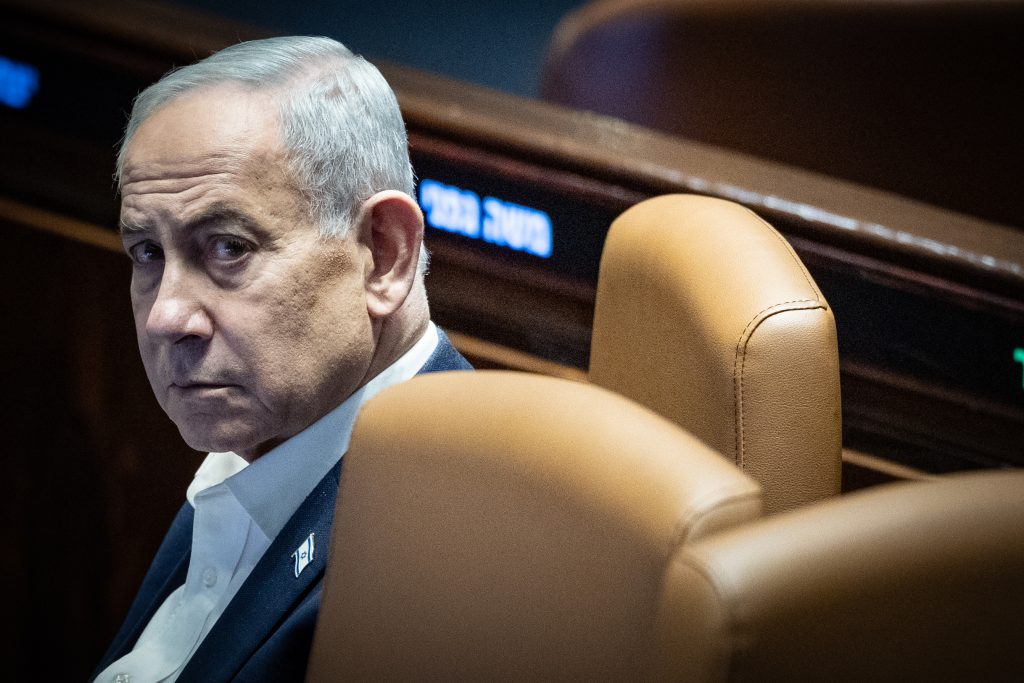
What’s happened: Prime Minister Netanyahu has responded to French President Macron after he said that “Hamas has never operated in the West Bank.”
- Netanyahu called Macron’s statement “grotesque absurdity” and “staggering.” He continued, “On Sunday, the eve of Yom Kippur, just two days ago, Netanel Shukrun – a FRENCH CITIZEN and father of six – was murdered in his car by a Hamas terrorist in Judea and Samaria. With his final breath, he told his son to run. Hamas terrorists carry out attacks against Jews almost every day. They have murdered countless Israeli civilians in Judea and Samaria. Ignorance is NO EXCUSE for erasing their blood.”
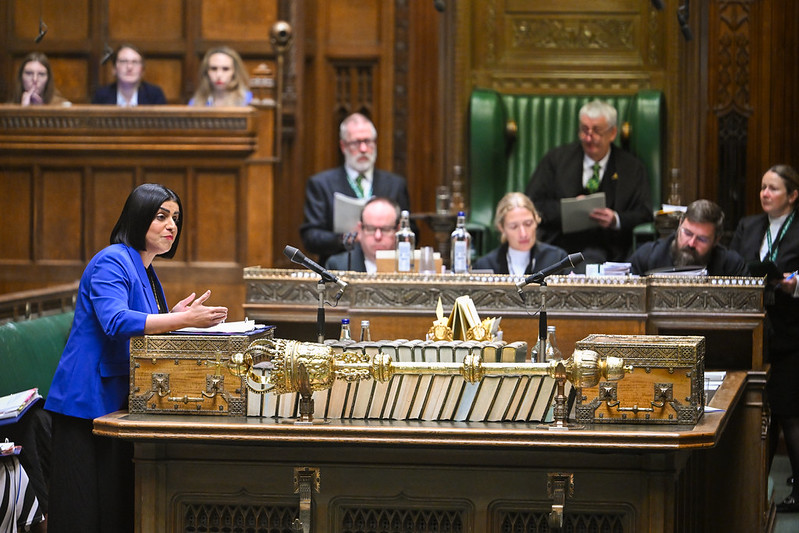
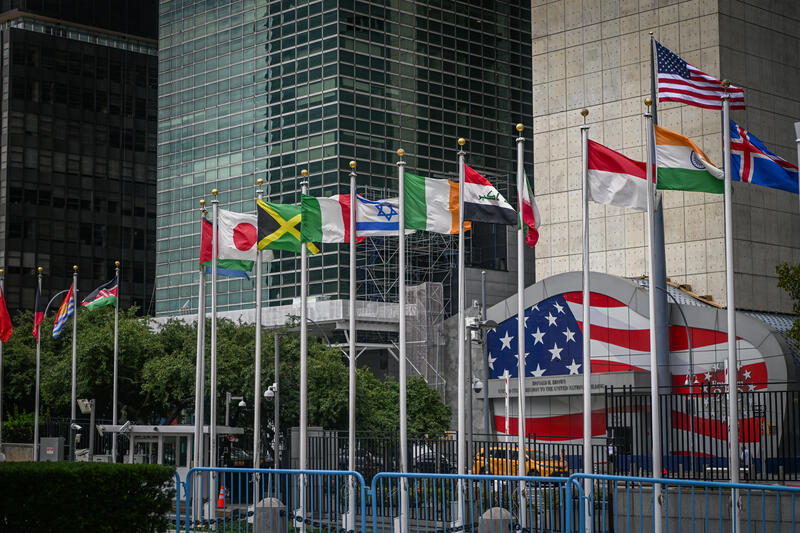
- Also addressing the UN, Prime Minister Burnham called for immediate action to resolve the Israeli-Palestinian conflict, a solution that would allow both peoples to live alongside one another in peace and security. Burnham said, “We stand with Israel in the face of the ongoing threats, including from Iran against Israel and Jewish people around the world. But this does not justify the Israel government’s actions in Gaza or the West Bank.”
- Other country leaders added further criticism of Israel including Israel’s neighbour King Abdullah of Jordan. Despite Israel and Jordan being at peace and their covert security cooperation, he devoted his entire speech to attacking Israel for its actions in Gaza, West Bank, and Syria.
- Turkish President Erdoğan, known for his bellicose anti-Israel rhetoric referred to Gaza as a “concentration camp.”
- Another source of Israeli ire came from UN Secretary-General Guterres who said, “I have never seen killing and destruction like Gaza in all my years as Secretary-General.”
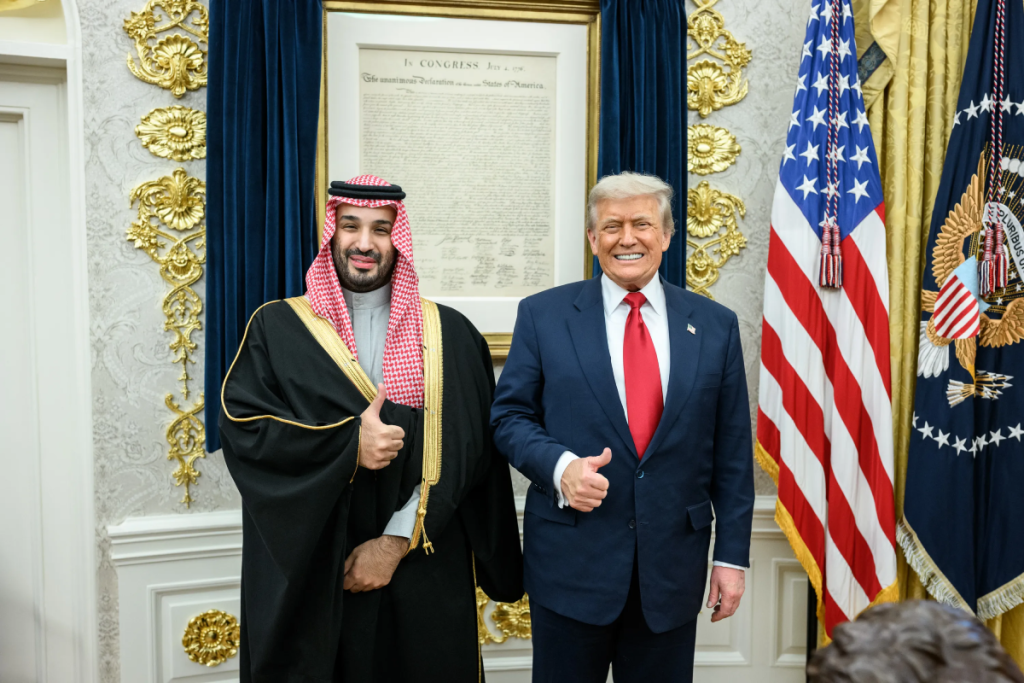
- President Trump took the opportunity to remind the UN that it would soon be three years since the October 7 attack, where he said, “terrorists funded by Iran tortured, maimed, and murdered 1,200 innocent civilians, including dozens of Americans.” Trump added that “Iran’s Supreme Leader celebrated this massacre and called it “a service to humanity.”
- On the Iranian threat, Trump said, “They developed a missile capable of striking Europe, and were very proud of it. I hope the Europeans understand this. Iran’s goal was to complete the development of its nuclear bomb under the cover of this conventional ballistic missile array…. The Iranian regime slaughtered more than 72,000 of its own citizens this year. Just imagine such a vile regime, capable of carrying out large-scale terror attacks while protected by a nuclear umbrella.”
- Meanwhile, on the sidelines of the assembly, Trump’s leading envoys, Kushner and Witkoff met with members of the Iranian delegation.
- Trump also took the opportunity to call for all countries to leave the International Criminal Court (ICC). According to Trump, the US, “opposes the institution that has gotten out of control…We will never allow American soldiers, or any other person, to be investigated or to stand trial in a show trial before an anti-American court that has no jurisdiction over us.”
Context: Israeli leaders banked the international legitimacy bestowed by the UN when Israel was founded, and its leaders have subsequently used the platform of the UNGA to present their position to the world. At the same time, Israel is the only member not accepted within its regional grouping, it suffers from a built-in Arab, Muslim and non-aligned majority that disproportionally criticises Israel way beyond any other country.
- French diplomats have subsequently sought to clarify Macron’s comments, explaining he was saying that Hamas had never ruled the West Bank.
- Over the decades, hundreds of Hamas operations emanating from the West Bank have resulted in over 550 Israelis killed in bombings, shooting, stabbing and car ramming attacks and over 3,000 injured.
- According to Israel’s Foreign Ministry, in a ten year period 2015 -2025 the UNGA adopted 109 resolutions against Israel, compared with 83 against all other countries combined.
- Relating to King Abdullah’s speech the ministry noted, “In July 1988, on the orders of his father, King Hussein, Jordan collectively and unilaterally revoked the citizenship and rights of Palestinians living in Judea and Samaria – in complete violation of international law. Overnight, Palestinians in Judea and Samaria lost the right to vote or run for the Jordanian parliament, work in the Jordanian civil service, or receive funding from the Hashemite Kingdom. Their Jordanian passports were confiscated or not renewed. They were classified as foreign nationals. Their entry into Jordan and their ability to remain there were restricted.”
- Responding to Guterres, leader of the Opposition Lapid said, “According to even the most critical reports, Guterres, 70,000 people were killed in the war in Gaza, a large proportion of them Hamas terrorists. During your years as Secretary-General: more than 600,000 people were massacred or starved to death in Ethiopia. 377,000 died in Yemen — that figure appears in reports issued by your own organisation. 150,000 were killed in Sudan and 12 million were displaced. Hundreds of thousands have been buried in Ukraine. You didn’t see it? They died before your eyes. You simply looked the other way, because the Jews couldn’t be blamed.”
- In the lead up to the General Assembly New York Mayor Mamdani repeated his attack on Netanyahu, calling him a war criminal, but admitted that he did not have the authority to arrest him, as he had threatened in the past. Israeli Ambassador to the UN Danny Danon commented on Mamdani in an interview saying, “The mayor, with all due respect—and I have no respect for him—does not have any authority over planes that land in various places. He creates headlines, he incites, he heats tempers but, in practice, has no influence over anything.”
Looking ahead: Prime Minister Netanyahu is scheduled to arrive in New York tomorrow. Unlike in the past this will be an exceptionally short trip, with Netanyahu not even staying overnight.
- Netanyahu is expected to address the UN at around 7pm UK time, after which he will immediately board his plane and return to Israel.
- Prime Minister Netanyahu had hoped to include a meeting with President Trump, but the President will have left New York by the time that Netanyahu arrives. It is still possible that Netanyahu will meet Secretary of State Rubio. He had also tentatively planned a stop in Texas to meet Elon Musk, but the meeting was cancelled.
- During a meeting with leaders of Arab and Muslim countries President Trump warned that the US might attack Pickaxe Mountain in Iran. Trump said, “Their sites have been blown up. We may have to blow up another one, Pickaxe Mountain. We’re not seeing a lot of activity there but, if we do, we’ll blow it up immediately.”