LATEST

The West Bank and Settlements

Key background
  • Israel took control of the West Bank from Jordan during the Six Day War of 1967. The West Bank refers to the west bank of the Jordan River, is also called by its biblical and geographic names of Judea and Samaria, or beyond the ‘Green Line’ that marked the boundary prior to 1967.
  • For Israel its significance is both religious and strategic. Often referred to as ‘the cradle of Jewish civilisation’, it is where the majority of biblical stories took place. It is also important strategically. Topographically, the mountain ridge overlooks Israel’s coastal plane. It also provides an element of strategic depth, without the West Bank Israel would be just 9 miles wide at its narrowest point.
  • Israeli settlements were first built in 1967 and gradually expanded across the West Bank with significant blocs east and south of Jerusalem. The population of the West Bank is estimated at just under 3 million, made up of around 500,000 Jews and 2.5million Palestinians.
  • According to the Oslo Accords of 1993 which were intended to act as the basis of a road map to a comprehensive peace between Israel and the Palestinians, the West Bank was divided into Areas A, B, and C. Area A is under full Palestinian security and civil rule, Area B is under joint Israeli security and Palestinian civil rule, and Area C is under full Israeli security and civil rule.
  • Israeli settlements are only present in Area C, and the major Palestinian cities (Nablus, Jenin, Tulkarem, Qalqilya, Ramallah, Bethlehem, Jericho and 80 percent of Hebron) as well as their surrounding areas fall under Area A which Israelis are forbidden to enter without special authorisation.
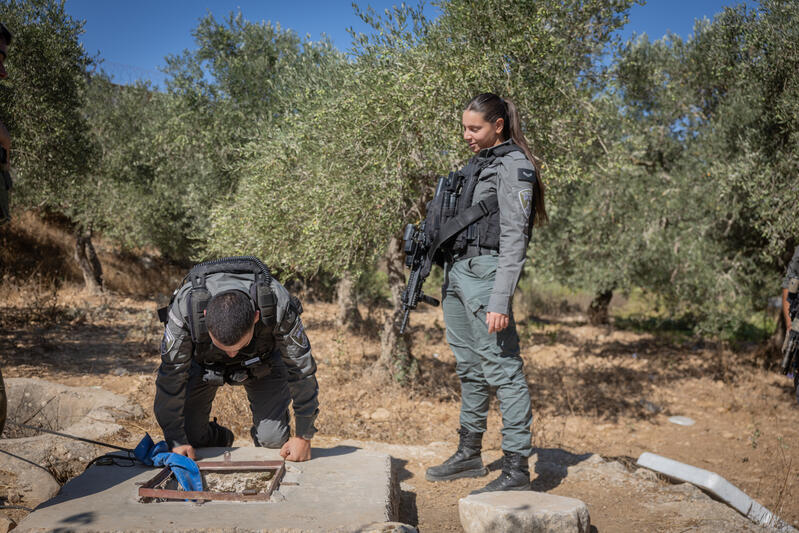
Israeli Border Police forces from the Jerusalem Envelope unit uncover a tunnel that Palestinians allegedly attempted to dig beneath the separation barrier near the village of Al-Jib, West Bank, September 9, 2026.
Israeli Border Police forces from the Jerusalem Envelope unit uncover a tunnel that Palestinians allegedly attempted to dig beneath the separation barrier near the village of Al-Jib, West Bank, September 9, 2026. Photo by Chaim Goldberg/Flash90

Updated September 24, 2026

Police uncover West Bank terror tunnel

What’s happened: A 25 metre deep tunnel was uncovered in the Palestinian town of Qalqilya on Wednesday during an operation by Israel Police and Border Police.

  • According to the police they also found combat equipment “including an M16 rifle, a sniper rifle, ammunition, magazines, phones, fertilizer (material used to prepare explosives) and a DVR (digital video recorder) device.”
  • The police added that another tunnel in the early stages of excavation was discovered and four suspects were arrested. The raid was based on prior intelligence that directed them to the site.
  • In a separate operation in the West Bank, security forces arrested a wanted man affiliated to Fatah in the village of Qalil, who is suspected of advancing terrorist activity. Security forces entered the village in disguise, surrounded the building and implemented the “pressure cooker” procedure, at the end of which the wanted man came out and surrendered. According to Palestinian sources, the arrested man was Majdi Amer, an officer in the Palestinian Authority security apparatus with a rank equivalent to colonel.
  • Wednesday also saw another terror attack, this time a car ramming at a checkpoint in the Benjamin district of the West Bank. One reservist soldier was severely injured and evacuated to hospital. The assailant was killed at the scene.
  • It was later revealed that the soldier, Neria Leiter, is the son of Israel’s Ambassador to the US  Yechiel Leiter. The Ambassador lost another son, Major Moshe Leiter, who fell in combat in Gaza in November 2023.
  • This morning head of the Trauma Unit at Shaare Zedek Hospital Dr. Alon Schwartz told Israel media that “Neria arrived unconscious after the vehicular attack, with a very serious head injury. He underwent initial resuscitative action in the trauma room, and he had imaging tests. From there, he was sent for an urgent surgery that has actually lasted almost up to this very moment. Now he’s in the final stages of the surgery. His condition stabilized, but his life is still in danger. It cannot be said that his life is out of danger.” The Ambassador is on his way back to Israel.

Context: Israelis residing close to the West Bank have long-standing concerns about a potential terror infiltration, either through or over the security barrier or by tunnelling underneath.

  • Terror tunnels have long been a feature of Hamas warfare in Gaza, ever since 2001, when they dug underneath an IDF outpost and detonated an explosive device. Famously, a tunnel was used in 2006 to kill soldiers and kidnap Gilad Shalit. In 2014, Israel exposed 32 attack tunnels, 14 of which extended into Israeli territory. The UN later confirmed this too.
  • Adjacent to the West Bank, these concerns existed in central Israel even prior to October 7 with residents claiming they could hear mechanical digging underground. The police and army had investigated these claims, but this is the first concrete evidence of such a plan.
  • Qalqilya, similar to Tulkarm further to the north, sits on the most western point of the West Bank, referred to as the Seam Line. In some points it is metres away from the security barrier, with Israeli communities inside Israel close by on the other side.
  • This discovery and the second terror attack of the week (following the deadly shooting of father-of-six Netanel Shukrun on Sunday) along with additional intelligence, has led the IDF to raise the alert in the area to its highest level.
  • In practical terms the IDF has decided to redeploy the 98th Division from Lebanon to the West Bank. Prior to this decision there was a single division (controlling six brigades) responsible for the sector. Now the 98th Division will be in charge of the southern part, which will allow the Judea and Samaria Division commander to focus on the northern part.
  • This move should enhance the IDF’s defensive posture both against Palestinian terror and vigilante settler violence.
  • There is always concern that a terror attack, whether it be the shooting or ramming, will increase motivation for copycat attacks. As such the IDF has substantially reinforced its troop deployments along the main roads and increased security around the settlements.
  • Despite high motivation from Hamas and other terror organisations to carry out attacks, public support among Palestinians for terror attacks is very low.

Looking ahead: The highest state of alert coincides with the beginning of the festival of Succot that begins on Friday night and is followed by Simchat Torah a week later.

  • The Jewish holiday includes a full week, next week of intermediate days that often sees increased visits of domestic tourism to Jewish heritage sites, including in the West Bank.
  • Simchat Torah marks the Jewish calendar’s third anniversary of the October 7 massacre, and a year since the last hostages were released.
September 23, 2026

Netanyahu rebukes Macron’s comments at the UN

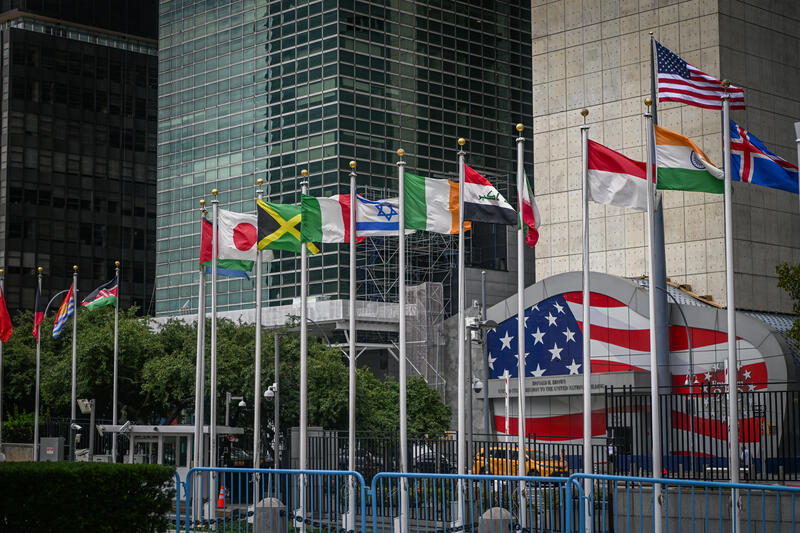
Flags of United Nations member states are seen at the entrance to the United Nations Headquarters in New York City, USA, August 20, 2026.
Flags of United Nations member states are seen at the entrance to the United Nations Headquarters in New York City, USA, August 20, 2026. Photo by Arie Leib Abrams/Flash90

What’s happened: Prime Minister Netanyahu has responded to French President Macron after he said that “Hamas has never operated in the West Bank.”

  • Netanyahu called Macron’s statement “grotesque absurdity” and “staggering.” He continued, “On Sunday, the eve of Yom Kippur, just two days ago, Netanel Shukrun – a FRENCH CITIZEN and father of six – was murdered in his car by a Hamas terrorist in Judea and Samaria. With his final breath, he told his son to run. Hamas terrorists carry out attacks against Jews almost every day. They have murdered countless Israeli civilians in Judea and Samaria. Ignorance is NO EXCUSE for erasing their blood.”
  • Also addressing the UN, Prime Minister Burnham called for immediate action to resolve the Israeli-Palestinian conflict, a solution that would allow both peoples to live alongside one another in peace and security. Burnham said, “We stand with Israel in the face of the ongoing threats, including from Iran against Israel and Jewish people around the world. But this does not justify the Israel government’s actions in Gaza or the West Bank.”
  • Other country leaders added further criticism of Israel including Israel’s neighbour King Abdullah of Jordan. Despite Israel and Jordan being at peace and their covert security cooperation, he devoted his entire speech to attacking Israel for its actions in Gaza, West Bank, and Syria.
  • Turkish President Erdoğan, known for his bellicose anti-Israel rhetoric referred to Gaza as a “concentration camp.”
  • Another source of Israeli ire came from UN Secretary-General Guterres who said, “I have never seen killing and destruction like Gaza in all my years as Secretary-General.”
  • President Trump took the opportunity to remind the UN that it would soon be three years since the October 7 attack, where he said, “terrorists funded by Iran tortured, maimed, and murdered 1,200 innocent civilians, including dozens of Americans.” Trump added that “Iran’s Supreme Leader celebrated this massacre and called it “a service to humanity.”
  • On the Iranian threat, Trump said, “They developed a missile capable of striking Europe, and were very proud of it. I hope the Europeans understand this. Iran’s goal was to complete the development of its nuclear bomb under the cover of this conventional ballistic missile array…. The Iranian regime slaughtered more than 72,000 of its own citizens this year. Just imagine such a vile regime, capable of carrying out large-scale terror attacks while protected by a nuclear umbrella.”
  • Meanwhile, on the sidelines of the assembly, Trump’s leading envoys, Kushner and Witkoff met with members of the Iranian delegation.
  • Trump also took the opportunity to call for all countries to leave the International Criminal Court (ICC). According to Trump, the US, “opposes the institution that has gotten out of control…We will never allow American soldiers, or any other person, to be investigated or to stand trial in a show trial before an anti-American court that has no jurisdiction over us.”

Context: Israeli leaders banked the international legitimacy bestowed by the UN when Israel was founded, and its leaders have subsequently used the platform of the UNGA to present their position to the world. At the same time, Israel is the only member not accepted within its regional grouping, it suffers from a built-in Arab, Muslim and non-aligned majority that disproportionally criticises Israel way beyond any other country.

  • French diplomats have subsequently sought to clarify Macron’s comments, explaining he was saying that Hamas had never ruled the West Bank.
  • Over the decades, hundreds of Hamas operations emanating from the West Bank have resulted in over 550 Israelis killed in bombings, shooting, stabbing and car ramming attacks and over 3,000 injured.        
  • According to Israel’s Foreign Ministry, in a ten year period 2015 -2025 the UNGA adopted 109 resolutions against Israel, compared with 83 against all other countries combined.        
  • Relating to King Abdullah’s speech the ministry noted, “In July 1988, on the orders of his father, King Hussein, Jordan collectively and unilaterally revoked the citizenship and rights of Palestinians living in Judea and Samaria – in complete violation of international law. Overnight, Palestinians in Judea and Samaria lost the right to vote or run for the Jordanian parliament, work in the Jordanian civil service, or receive funding from the Hashemite Kingdom. Their Jordanian passports were confiscated or not renewed. They were classified as foreign nationals. Their entry into Jordan and their ability to remain there were restricted.”
  • Responding to Guterres, leader of the Opposition Lapid said, “According to even the most critical reports, Guterres, 70,000 people were killed in the war in Gaza, a large proportion of them Hamas terrorists. During your years as Secretary-General: more than 600,000 people were massacred or starved to death in Ethiopia. 377,000 died in Yemen — that figure appears in reports issued by your own organisation. 150,000 were killed in Sudan and 12 million were displaced. Hundreds of thousands have been buried in Ukraine. You didn’t see it? They died before your eyes. You simply looked the other way, because the Jews couldn’t be blamed.”
  • In the lead up to the General Assembly New York Mayor Mamdani repeated his attack on Netanyahu, calling him a war criminal, but admitted that he did not have the authority to arrest him, as he had threatened in the past.  Israeli Ambassador to the UN Danny Danon commented on Mamdani in an interview saying, “The mayor, with all due respect—and I have no respect for him—does not have any authority over planes that land in various places. He creates headlines, he incites, he heats tempers but, in practice, has no influence over anything.”

Looking ahead: Prime Minister Netanyahu is scheduled to arrive in New York tomorrow. Unlike in the past this will be an exceptionally short trip, with Netanyahu not even staying overnight.

  • Netanyahu is expected to address the UN at around 7pm UK time, after which he will immediately board his plane and return to Israel.
  • Prime Minister Netanyahu had hoped to include a meeting with President Trump, but the President will have left New York by the time that Netanyahu arrives. It is still possible that Netanyahu will meet Secretary of State Rubio. He had also tentatively planned a stop in Texas to meet Elon Musk, but the meeting was cancelled.
  • During a meeting with leaders of Arab and Muslim countries President Trump warned that the US might attack Pickaxe Mountain in Iran. Trump said, “Their sites have been blown up. We may have to blow up another one, Pickaxe Mountain. We’re not seeing a lot of activity there but, if we do, we’ll blow it up immediately.”

September 22, 2026

Israeli killed in West Bank terror attack as tensions over Yemen escalate

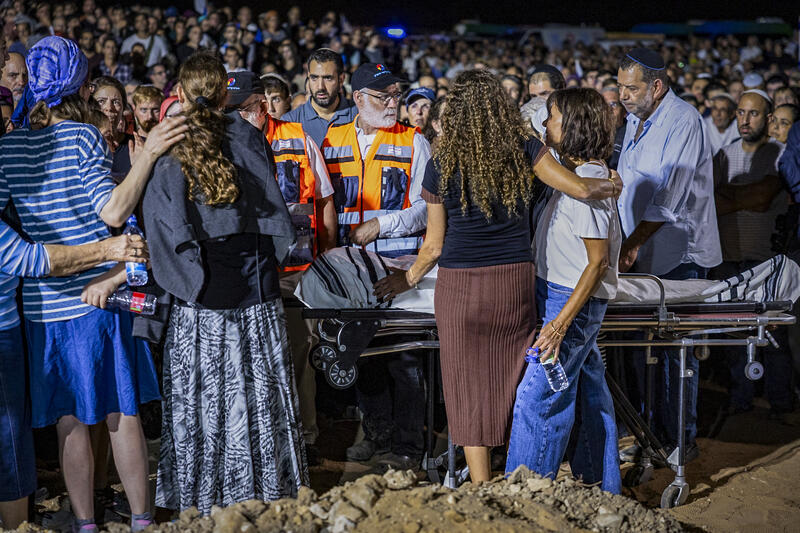
Family and friends attend the funeral of Netanel Shakron, who was murdered in a shooting attack at the Ein Raya spring near Neve Tzuf in the West Bank, at the cemetery in his community of Alei Zahav, September 21, 2026.
Family and friends attend the funeral of Netanel Shakron, who was murdered in a shooting attack at the Ein Raya spring near Neve Tzuf in the West Bank, at the cemetery in his community of Alei Zahav, September 21, 2026. Photo by Hilel Ben Or/Flash90

What’s happened: A Palestinian gunman murdered an Israeli father of six in a shooting attack at a spring in the northern West Bank hours before the Yom Kippur fast began on Sunday. Netanel Shukrum, a resident of the nearby settlement Neve Tzuf (also known as Halamish) was 48 years old. His family immigrated to Israel following an attack on a synagogue in Algeria in which his grandfather, Rabbi Yaakov Shukrun, was murdered.

  • The suspected gunman in the attack was apprehended in a hospital in Ramallah, amid calls from settler leaders and other right-wing figures for a broad military offensive in the West Bank. Itamar Ben-Gvir, the Minister for National Security, demanded the death penalty be used in accordance with the new law which he pushed for in the outgoing Knesset.
  • In Gaza, an improvised explosive device (IED) was found beneath an IDF vehicle on the Israeli side of the Yellow Line. The IDF responded by striking Hamas infrastructure in the Strip.
  • The IDF also reported elimination of three  terrorists wanted for their involvement in the October 7 invasion and massacre.
  • The Lebanese front remained remarkably quiet in recent days following the IDF’s redeployment away from the Ali Taher Ridge, where an enormous Hezbollah underground facility, built with Iranian backing, was destroyed last week by the IDF.
  • Lebanese Prime Minister Nawaf Salam met yesterday in New York with UN Secretary General António Guterres and reiterated his call for maintaining an international presence in southern Lebanon. Negotiations over “pilot zones” and other security measures in Lebanon have largely bypassed UNIFIL, the “interim” UN peacekeeping force in place in southern Lebanon since 1978.
  • The low intensity grind in Gaza, the West Bank, and Lebanon came on a backdrop of heightened tension in and attention on the conflict in Yemen.
  • The Houthis fired a ballistic missile on the Saudi capital Riyadh. It was successfully intercepted, but still seen as a marked escalation which the Saudis are expected to respond to in some way. The Houthis claimed to have successfully hit a number of “sensitive targets” in Saudi Arabia, including an Aramco refinery.
  • Houthi fighters continued to seize more strategic highlands around Taiz and Lahij in Yemen. At least 700 were reported killed in the fighting there, and 130,000 Yemenis were counted as displaced.
  • According to American media, the US was on the verge of launching a new round of air strikes against Houthi targets, at the urging of the Saudis who have been fighting them mostly alone for the last three weeks. On Sunday, after bombs had been loaded on aircraft about to take off from US carriers to carry out the strikes, President cancelled the planned operation.
  • The UK too has had a role in the current round of Saudi-Houthi fighting. Prime Minister Burnham agreed to provide air-to-air refuelling assistance to Saudi fighter aircraft on “defensive missions” using one RAF Voyager tanker aircraft based in Cyprus.

Context: The renewed fighting in and around Yemen threatens to upend the entire regional strategic picture while calling into question many, if not all, of the various overlapping ceasefires of the past year.

  • Despite the US-Iran ceasefire, the Strait of Hormuz is still effectively closed to maritime traffic. Seventeen commercial vessels transited through the Strait over the weekend — a much higher traffic than during the war and full Iranian blockade, but still far less than the prewar daily average of 125 vessels.
  • Both the UAE and Oman have access to the Persian Gulf beyond the Hormuz Strait; Qatar and Bahrain do not. The Saudis have a major port on their west coast with access to the Red Sea. Effectively, most (but not all) of America’s major Gulf allies have found workarounds to the Hormuz passage. But a Houthi blockade of the Bab al-Mandab Strait would cancel much of that workaround and leave the Saudis behind two Iranian-backed blockades on two crucial chokepoints.
  • According to some reports, the Saudis have actually increased their Hormuz shipping transits as disruptions to their Red Sea exports, not least because of the Houthi attacks on a major Saudi oil pipeline, have made the alternative route more perilous in the recent weeks of fighting. Yesterday, two Saudi tankers were reportedly struck by “projectiles” while transiting through the Strait. There were no confirmed damage reports, though at least two people were injured.
  • The aborted US strike on the Houthis placed in high relief the dilemmas US policy makers face against Iran and its proxies amid the current stalemate.
  • Even a limited action aimed just at the Red Sea theatre (or just at the Persian Gulf one) risks an unwanted escalation in the other.
  • Media reports, unconfirmed by official sources, consistently point to shortages in missile defence. These come along an ongoing flood of rumours regarding aggressive intentions against US allies by both Russia and China.
  • Any escalation will almost certainly disrupt energy markets in the final weeks before the US midterm elections, where President Trump’s Republican Party is already faring poorly in opinion polls.
  • Ceasefires on fronts that were central in the first two years after October 7 — Israel-Gaza and Israel-Lebanon — would likely be in peril if a larger regional war broke out between some combination of Iran and its allies against the United States and its regional allies.
  • Israeli officials, speaking anonymously to Israeli media, continue to marvel at the apparent lack of support from Saudi Arabia’s newfound allies in Islamabad and Ankara. For Israel, the Saudi turn to Pakistan and Turkey was seen as a deliberate snub of Israel and a rejection of progress toward a normalisation agreement of the kind that was nearly concluded before the October 7 massacre three years ago.

Looking ahead: Israeli media speculate that a widened conflict in Yemen could see the renewal of Houthi missile fire on Israel. The Houthis fired a total of 86 ballistic missiles and  36 drones at Israel over a two-year period, beginning on October 19, 2023, in the immediate aftermath of the October 7 massacre, and ending on October 8, 2025, with the onset of the ceasefire which ended the war in Gaza. The Houthis did not resume firing on Israel even during the war in Iran earlier this year or the various rounds of fighting in southern Lebanon.

  • Israeli officials are also concerned that Israel could become a target in the event of renewed fighting between the US and Iran. Israeli media reported that there is also concern about a preemptive Iranian strike on Israel or an Iranian-backed terrorist attack on Jewish targets abroad.

September 9, 2026

UK–Israel rift deepens as Israel responds to UK sanctions

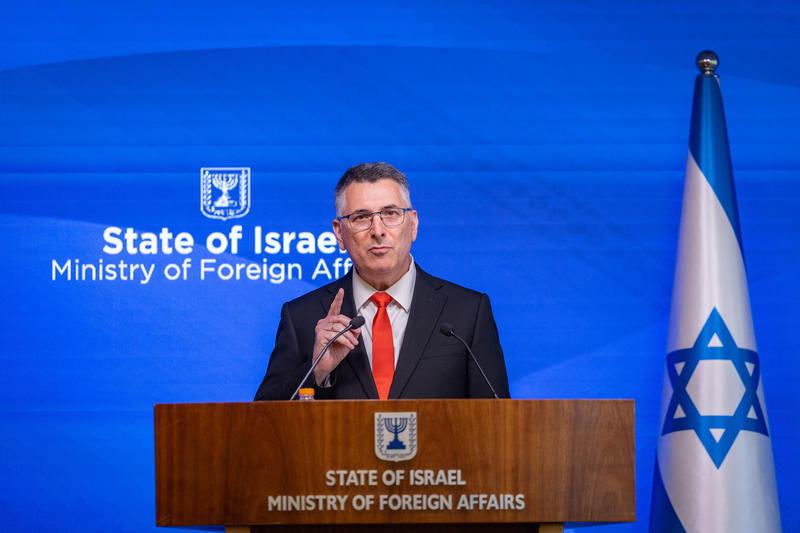
Israeli Minister of foreign affairs Gideon Saar hold a press conference at the Ministry of foreign affairs in Jerusalem, September 8, 2026.
Israeli Minister of foreign affairs Gideon Saar hold a press conference at the Ministry of foreign affairs in Jerusalem, September 8, 2026. Photo by Chaim Goldberg/Flash90

What’s happened: Following Foreign Secretary Miliband’s announcement that the UK was introducing a raft of measures centered on banning the sale of settlement goods, Israel has now provided its own response.

  • In a speech made yesterday afternoon, Foreign Minister Saar announced four decisions:
    • The closure of the British Consulate in Jerusalem.
    • The removal of British representatives from the International Gaza Support Centre in Kiryat Gat.
    • The termination of British activities to train Palestinian Authority (PA) forces under the “British Support Team in Ramallah.”
    • The denial of entry to Israel to 12 British elected representatives and other British nationals involved in antisemitic and anti-Israel activity, as well as those who deny the very existence of the State of Israel.
  • Saar described Miliband’s comments as “outrageous lies,” but also added, “we have nothing against the British people. We know that we have many friends in Britain.”
  • He continued, “Unfortunately, a hostile Labour Government is in office, systematically acting against the State of Israel, and it has left us with no choice but to finally respond to its hostile actions.”
  • “The British move is morally distorted and constitutes blatant interference in the affairs of a sovereign state and in its electoral process.”
  • “The attempt by the British Labour Government to impose measures in the style of the “White Paper” carries echoes of the antisemitic words of British Lieutenant-General Barker, commander of British forces in the Land of Israel during the Mandate, who said: “punish the Jews by striking at their pockets.”
  • Saar termed UK reasoning that the timing was based on the E1 tenders as “false claims,” adding, “no new decisions have been made regarding development in E1.”
  • Saar stressed that the E1 decision was taken more than a year ago, and the tender process has been underway for many months, adding that the claims regarding the severing of potential Palestinian territorial contiguity were also baseless. “The decision of the Government of Israel, taken more than a year ago, stipulated that two roads would be built: the first, Road 80, which will serve as a major transportation route from the Bethlehem area to the Ramallah area; the second, known as the ‘Fabric of Life’ Road, between a-Za’im and al-Ezariya. The claim of harm to ‘Palestinian territorial contiguity’ sounds particularly ridiculous coming from those who insist on defining Judea and Samaria and the Gaza Strip as ‘one territorial unit.’”
  • Saar continued, “The decision of the Labour Government also constitutes a gross interference in the electoral process of a sovereign state. This is a blatant and completely unacceptable attempt by a foreign government to exert external influence in the midst of an election campaign.”
  • He also listed a series of unilateral measures taken against Israel since the Labour Government took office in July 2024.
    • “Recognition of a virtual “Palestinian state” in September 2025.”
    • “The resumption of funding for UNRWA, even though its employees were actively involved in the October 7 massacre.
    • “The suspension of licenses for defence exports to Israel
    • “Sanctions on Israeli ministers; sanctions on Israeli individuals and entities;
    • “The suspension of negotiations on a free trade agreement;
    • “Restrictions on Israel’s official participation in the international defence and security equipment exhibition in Britain;
    • “The freezing of military dialogue and security cooperation;
    • “Preventing IDF officers from participating in training at the Royal College of Defence Studies.
  • He connected all these moves with, “biased and one-sided anti-Israel rhetoric,” which he said “have already contributed significantly to the unprecedented rise in antisemitic attacks, including violent attacks against British Jews.”

Context: The UK measures and the Israeli response plunge bilateral relations to their lowest ebb in decades. The timing appears politically motivated on both sides.

  • For the British government it was convenient to make this announcement ahead of Labour Party Conference where this will appeal to the grassroots and left wing of the party, and counter their competition from the Green Party and pro Gaza independents.    
  • For Saar and Netanyahu, this was an opportunity for them to show strength in the context of their re-election campaign.      
  • Israeli officials had been anticipating this initiative from the UK government but were surprised by the harsh tone of Miliband’s speech and coordinated aspect with the other 11 countries.
  • Following the UK, the Foreign Ministers of Canada, Denmark, Finland, France, Iceland, Ireland, Norway, Poland, Portugal, Spain, and Sweden all confirmed, “their intention to introduce national and/or support European restrictions on trade in goods with settlements which are illegal under international law, or that they are actively considering these and other measures.”
  • The response against the UK was particularly harsh as Israel identified their leadership on this matter.      
  • Meanwhile, US Secretary of State Rubio was emphatic, saying that the US “obviously” wouldn’t be following the UK, while suggesting that the move could have “implications on our ability to make progress in Gaza with the 20-point plan and the Board of Peace, which we’re very committed to.”
  • It is understood Prime Minister Burnham has not spoken to Netanyahu since taking office. Underlining partisan support, Saar said he had a “great conversation” last night with the Leader of the Opposition Kemi Badenoch and Shadow Foreign Secretary Tom Tugendhat. According to his post on X he, “thanked them for their firm opposition to the hostile Labour Government’s announcement,” adding, “I welcomed their support for the friendship with Israel and their commitment for the future relations between our countries. We know that we have many friends in the UK, but unfortunately we are faced with the ongoing hostility of the current Labour government.”
  • Outgoing Israeli Leader of the Opposition and former Prime Minister Yair Lapid reportedly held a lengthy, tense conversation with top British leadership, telling them, “You are helping Smotrich.” During the call, a senior British official expressed surprise that the Israeli government had done nothing meaningful to prevent the sanctions in advance. Lapid’s response was sharp: “Of course, because they knew it was good for them politically.”
  • In a separate statement, Lapid referred to the UK decision as a, “grave mistake… a flawed and dangerous policy, at the wrong time and for the wrong reasons,” which would strengthen extremist voices in Israel and serve as a “shot in the arm for Hamas and terror organisations.”
  • According to Israel’s Ministry of Economy, total Israeli exports to the whole world in 2025 stood at around $165 billion, while trade with the UK accounted for $4.4 billion, with exports from the West Bank making up only around 1 per cent, primarily dates from the Jordan Valley.
  • However economists are concerned of a knock on effect, where doing business with Israel becomes too complicated with most Brits not knowing the contours of the Green Line.
  • Since the UK’s unilateral recognition of Palestinian statehood in 2025, its consulate in East Jerusalem has functioned as its de-facto embassy to Palestine. Its closure could now lead to the establishment of an embassy in Ramallah.
  • The termination of British Support Team in Ramallah is significant. This was the most senior international interface with the Palestinian security forces, that despite the ongoing tension on the ground, kept discreet coordination with the IDF.  
  • None of those banned are senior members of the Labour Party who were involved in drafting yesterday’s policy announcement, instead representing the party’s hard-left anti-Israel wing, the Green Party, or in Jeremy Corbyn’s case Your Party.
  • Those banned have broadly responded positively. Taking to Twitter, Zarah Sultana MP described Israel’s measures as a “badge of honour” she would happily wear, while the Green Party responded by saying that it “will not be bullied into silence.”
  • Mainstream Anglo-Jewish leaders have strongly condemned the new policies. The Chief Rabbi, Sir Efraim Mirvis, accused the British government of overlooking communal concerns, saying that “Gesture politics of this kind feeds into an increasingly hostile discourse about Israel, and the cumulative effect of such punitive policies is to further embolden those, at home and abroad, who use hatred as a weapon against Jews.”
  • The Jewish Leadership Council said that “the government’s increasingly punitive and unbalanced approach towards Israel does nothing to advance peace, risks harming Jewish life in Britain, and damages the UK’s relationship with a vital ally”, and that “A ban on trade with goods from settlements also risks becoming a de facto boycott of Israel, giving legitimacy to those who reject Israel’s very existence.”
  • Whilst many have raised concerns about the timing of the announcement, it has also been noted that if the UK government were truly concerned about the situation in the West Bank and Gaza, they would expedite the proposed six to nine months’ timeframe announced in Parliament.  Supporting the claim that this policy is performative and will have little impact in these territories.

Looking ahead: From the UK’s perspective, the announcement was a declaration of intent rather than an immediate move. Miliband plans to advance new legislation that will take effect only in six to nine months.

  • However according to Saar the removal of the British representatives (listed above) will take place in the next week.

September 8, 2026

BICOM statement on UK sanctions against Israeli settlements

BICOM Statement
BICOM Statement

“It is deeply disappointing that the UK government has chosen performative actions to suit its own domestic needs over responsible diplomacy, especially during the sensitive period in the lead up to an Israeli election. The UK’s sanctions risk emboldening the most radical elements in Israeli politics. While the government claims that a two-state solution is its aim, these sanctions directly hinder progress towards that goal.

“The sanctions are harming not just innocent Israelis but the estimated 20,000 Palestinians currently working in various Israeli businesses in the West Bank, and their livelihoods are threatened by the UK’s actions.

“The new government policy also weakens the UK’s influence in the region and undermines its ability to serve as an honest broker in any potential peace process between Israel and the Palestinians.

“In this light, the UK’s latest policy towards Israel is an act of political posturing against a critical trade and security partner, disregarding our own national interests. Where previously issued, such sanctions had no moderating effect on the Israeli individuals or businesses concerned. It is highly unlikely that those just announced will have the desired effects.”

– Richard Pater, BICOM Chief Executive

September 8, 2026

UK imposes sanctions on Israeli settlements

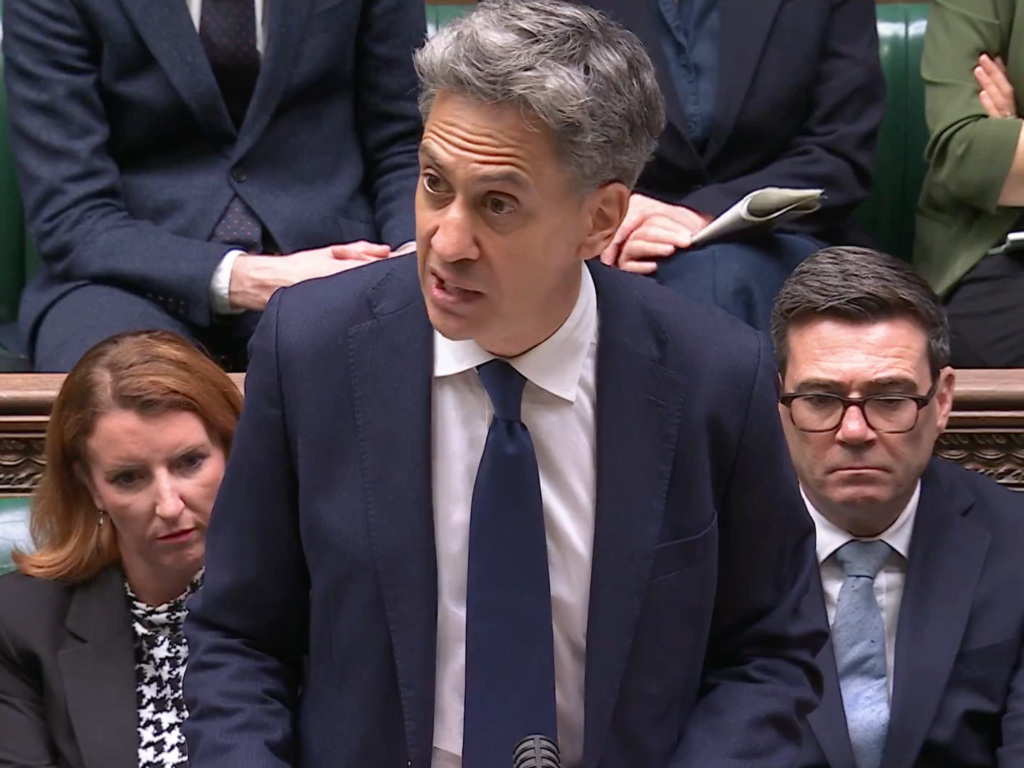
Foreign Secretary Ed Milliband announcing sanctions on Israeli settlements in the House of Commons, September 8, 2026.
Foreign Secretary Ed Milliband announcing sanctions on Israeli settlements in the House of Commons, September 8, 2026. Photo credit: Parliamentlive.tv licensed under Open Parliament Licence v3.0.

What’s happened: Foreign Secretary Ed Milliband announced a package of measures targeting Israel.

  • The measures specifically target trade with Israeli settlements in the West Bank and, by extension, with Israel in general.
  • Miliband’s announcement follows calls from Labour activists, including more than 140 Labour MPs, to ban trade with Israeli settlements, with campaigners preparing a motion to be tabled at the Labour Party Conference later this month.
  • At the same time, Miliband’s policy faced opposition from Labour Friends of Israel, which warned that the measures risk becoming a “de facto boycott” of Israel.
  • Similar point was raised by Conservative Friends of Israel, whose Parliamentary Chair Greg Smith marked today “a dark day in the history of British foreign policy” and warned that “this will only pour petrol on the fires of anti-Jewish hatred which have spread at such an alarming rate in recent years.”
  • According to president Isaac Herzog, the UK policy is “a grave miscalculation, a decision that will fall on the wrong side of history.” Herzog also pointed out that sanctions will negatively impact Palestinians themselves: “It will directly harm – unfortunately – Palestinians, robbing them of business and employment.”
  • Currently, around 20,000 Palestinians work in various Israeli businesses in the West Bank, and sanctions will directly affect their livelihoods.
  • Today’s sanctions mark the eighth time that the UK has announced punitive measures5(11.1%) against Israel since the war began with Hamas’s invasion and massacre on 7 October 2023. No comparable measures have been taken by the UK against the Palestinians during the same period. With this one-sided approach, Britain undermines its ability to serve as an honest broker in any potential peace process between Israel and the Palestinians.

Context: In the days before being elected Labour leader in July, Burnham made a public “apology” for the Labour government (of which he was not a member) having “got it wrong” on Gaza in its initial response to the Hamas massacre of October 7.

  • Burnham criticised the outgoing Starmer government for not putting more pressure on Israel in the initial days of the war to accept a ceasefire.
  • The two issues that precipitated public disputes between London and Jerusalem were the E1 construction tenders and the humanitarian situation in Gaza.
    • On E1, the UK, together with many allied governments, has claimed that the settlement would effectively cut the West Bank in two and irreversibly prevent the establishment of a contiguous Palestinian state, neither of which is an empirically sustainable claim. E1 is west of Maaleh Adumim, which has been included in Israeli territory in all proposed peace plans in the past three decades, and the remaining corridor of land is roughly 25 km wide. For comparison, the inclusion of Tulkarem in a future Palestinian state, which all proposed peace plans also stipulate, leaves central Israel a corridor of barely 15km without anyone claiming that it cuts the state in two or prevents territorial contiguity. Secondly, every single proposal since and including the 1947 UN Partition Plan has envisaged a Palestinian state with non-contiguous territory, with the Gaza Strip as its exclave.
    • Data on the humanitarian situation in Gaza just from the last weeks has shown definitively that there is no shortage of food or medical supplies. Claims made in a social media video by Foreign Secretary Milliband earlier this week where he describes learning in a meeting with NGOs about restrictions on medical supplies were refuted by Israeli authorities who noted that there has been no restriction of any kind on medical supplies since the ceasefire came into force a year ago, and in fact the UK is an active member in the CMCC mechanism which oversees the transfer of these supplies.
  • Beyond these two issues, the larger motivation for the new UK policy reset is the ostensible need to preserve the two-state solution and act against parties working against it.
    • The acceleration of so-called “outposts” in the West Bank, particularly since the October 7 massacre, do seem intended to make future Israeli withdrawals from the territory more onerous. But it’s not entirely clear how, if a peace treaty were reached, they could actually fulfil that purpose. Israel has withdrawn from much bigger and more populated settlements in the past, both in Sinai and Gaza, as well as in the northern West Bank in 2005. And in final status talks at the end of the Oslo process, it offered to withdraw from much larger settlements to achieve a two-state peace accord, but these withdrawals never came to pass not because of settler opposition but because of Palestinian rejection.
    • The argument that settlements must be boycotted because any claim that Jews should live in the West Bank imperils the prospect of two states is substantially weakened by the insistence on funding UNRWA, the UN-backed Palestinian agency that treats Palestinians living in the West Bank or Gaza as “refugees” from what is today Israel. And yet, support for UNRWA has become a central plank of this government’s position on the conflict since 2024.
    • Rather than address the actual reason a two-state solution has not been effected — namely, that at each opportunity to establish their state, the Palestinians have rejected peace and sought violent confrontation instead — the reset seeks to take a tough stand against an imagined cause for this impasse. And in so doing, whether intentionally or not, the government is effectively rewarding rejectionism and implicitly awarding a prize for the October 7 attack.
  • Israeli commentators have tended to see the announced British move as a boon to the right and far-right in Israel’s heated election campaign, leading up to the first general election since the October 7 massacre in seven weeks time. The actual impact on the election will probably be limited.
  • But it will burnish two major right-wing arguments, and at a rather awkward time for domestic Israeli opponents of the settlement enterprise.
    • The issue of settler violence in the West Bank had begun to capture headlines in Israel in recent weeks and had put the settlers on the wrong side of public opinion. The UK moves against all settlements — and especially the likely inclusion of East Jerusalem in the trade ban — effectively undo that. To the extent the issue of the settlements is one of armed gangs harassing Palestinian shepherds (and interfering with IDF operations in the West Bank), it becomes an issue where the vast centre of Israeli politics is opposed. If the issue is Israelis living in what as seen as sovereign Israeli territory in Israel’s capital city or doing business with firms that operate both in pre-1967 Israel and settlements on the Green Line that are to be annexed to Israel in any proposed peace plan, that same broad centre lands on the other side.
    • The connection between settlements and two states or settlements and the war which was launched on October 7 doesn’t play out domestically in Israel the way it appears to in Whitehall. The invasion of Israel and the worst massacre of the Jewish people since the Holocaust didn’t occur from a contested land dotted with settlements. It came from Gaza, where there was no Israeli military presence and not a single settlement or settler since 2005. The unavoidable empirical connection made by Israelis is that where settlers and the IDF stayed, no such massacre and invasion was mounted, and where they left, two decades of rocket fire ensued culminating in the October 7 massacre and long war since.
  • In response to UK sanctions, the UK will almost certainly be removed from the International Gaza Support Centre (still generally referred to by its old name the CMCC), the multinational body based in Kiryat Gat, Israel, which coordinations stabilisation and relief efforts in Gaza in line with the October 2025 ceasefire.
    • The CMCC is the International organisation overseeing the provision of humanitarian aid into Gaza, and its staff include civilian and military personnel from multiple countries, including Switzerland, Japan, Australia, Canada, Egypt, Jordan, the UAE, Denmark, Cyprus, Greece, New Zealand, and others.
    • Israel has previously expelled personnel from Spain and the Netherlands for diplomatic moves that were less extreme than those being announced in London today, so it is unlikely that Israel will continue to host the UK at the facility.
    • Israeli anger at the UK on the specific issue of CMCC participation was already piqued earlier in the week when Foreign Secretary Miliband made false claims about Israel blocking medical supplies to Gaza, despite the UK’s active participation in the relevant CMCC working groups that oversee the provision of medical supplies.
  • Other direct responses from Israel are under consideration in Jerusalem. These include shutting down the UK consulate in East Jerusalem which functions as a de facto embassy to the Palestinian Authority, despite being located outside any territory governed by the PA. For comparison, the UK does not have an embassy to Israel anywhere in Jerusalem, but rather in Tel Aviv.
  • Israel may also suspend the export of certain weapons systems to the UK. The UK today purchases from Israel Trophy Active Protection System for its Challenger 3 tank, missile defence systems, electronic warfare technology, and a variety of unmanned and autonomous devices.
  • Both the UK and Israel are major participants in the multinational program developing the F-35 fighter jet, and even in previous steps the UK has taken against Israel, action on this specific form of defence cooperation has been limited. It is rumoured that Israel might ask the US to find Britain in breach of its commitments to the program due to the limited export license removals for F-35 parts, though it is not clear the US would be inclined to agree with this.
  • More extreme proposals included a call by Otzma Yehudit leader Itamar Ben-Gvir to respond by recognising Argentine sovereignty over the Falkland Islands. This hard-line rhetoric is highly unlikely to be adopted by decision-makers in Jerusalem.
  • On the other hand, domestic American law places limitations on the doing business with firms that cooperate with boycotts of Israel. These vary state-by-state, but any broad to ban trade with Israeli firms that have business in the settlements (which is most Israeli firms, especially if East Jerusalem is considered a “settlement”) could have far-reaching implications on British business in the US, particularly in the two large states of Florida and Texas.

Looking ahead: It is virtually impossible to distinguish goods made in Israel from those made in settlements, however these are defined, as supply chains normally involve actors from both. Making the distinction with regard to services too is even more difficult. A policy that is more than symbolic will inevitably lead to a rollback of trade with Israel as a whole, and many British firms seeking to avoid legal difficulties will protect themselves by stopping business with Israel.

  • If the announcement is purely symbolic and will ultimately have no effect on trade relations with Israel at all, it will only serve to heighten the rhetoric against Israel and further the demonisation of Israel’s self-defence as criminal. It is precisely this rhetoric, and the extended permission structure that attends it, that has accompanied the dramatic uptick in antisemitic violence and harassment faced by the British Jewish community in the last three years.
  • This move might be more dramatic than some of the other announcements of the past three years, but it continues a consistent direction of UK policy since war erupted on October 7 — a direction that has sought to limit Israel’s capacity to self-defence and use the violence of the last three years to entrench real political gains for the Palestinians. It is unlikely that any future Israeli government will see a major role for Britain in any future peace process, should one ever get underway.
  • This early pronouncement and the new reset, a month before the Holborn & St Pancras by-election, where a Labour seat is at risk from a Greens who have made criticising Israel a focal point of their campaign, are an indication of how the new Government seeks to make strong stands against Israel a part of its domestic posture rather than risk bleeding more constituencies to independent or Green candidates.

August 26, 2026

Far-right MK’s stunt heightens concerns over West Bank escalation

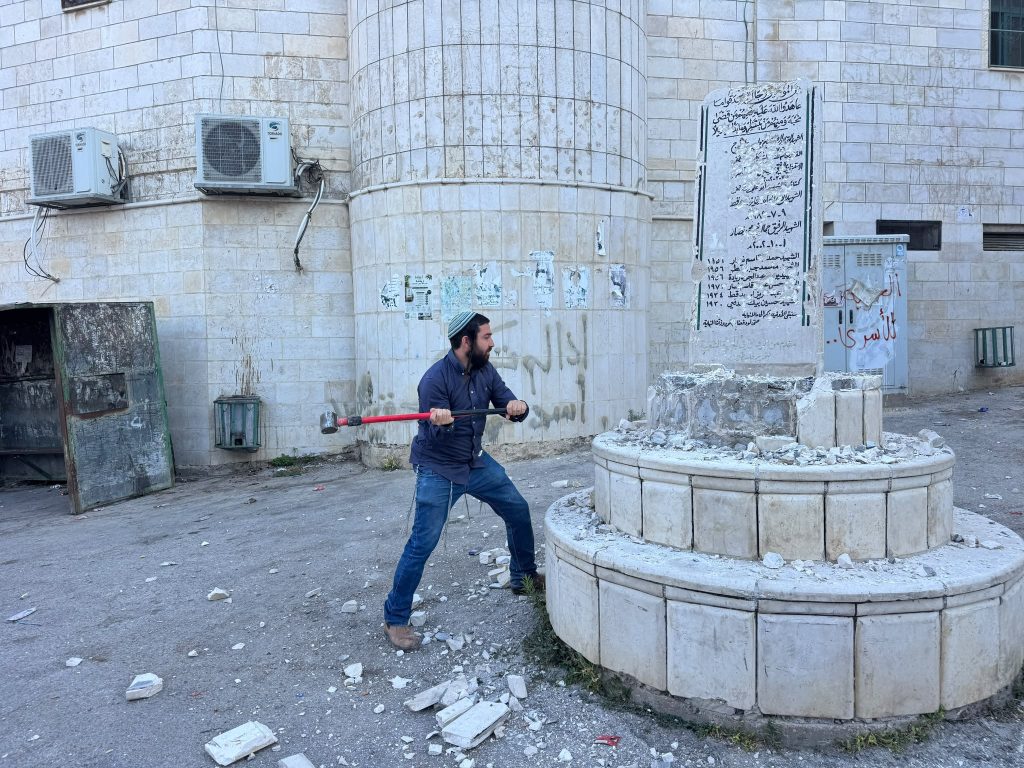
Tzvi Sukkot, MK from the Religious Zionism Party led by Bezalel Smotrich, taking a sledgehammer to a monument erected in Madama to commemorate “martyrs” in the Palestinian fight against Israel, August 25, 2026.
Tzvi Sukkot, MK from the Religious Zionism Party led by Bezalel Smotrich, taking a sledgehammer to a monument erected in Madama to commemorate “martyrs” in the Palestinian fight against Israel, August 25, 2026. Photo credit: Zvi Sukkot's office

What’s happened: A publicity stunt by a far-right Member of Knesset in a West Bank village sparked outrage across the Israeli political spectrum.

  • Tzvi Sukkot, MK from the Religious Zionism Party led by Bezalel Smotrich, entered the Palestinian village of Madama in the northern West Bank early yesterday morning and filmed himself taking a sledgehammer to a monument erected in the town to commemorate “martyrs” in the Palestinian fight against Israel.
  • Israeli media reported that the monument commemorated two Palestinians killed in the Second Intifada, including one who died carrying out a suicide bombing. Arab media reported that the monument also listed names of Palestinians killed in battles with Israel going as far back as the Battle of Karameh in Jordan in 1968.
  • Condemnation of Sukkot’s act was particularly sharp from the IDF itself, which claimed that it had been misled by the MK as to the intentions of his tour in the northern West Bank, which it had agreed to secure.
  • Opposition figures condemned Sukkot’s act as a needless provocation in an already tense West Bank and as a cynical election ploy.
  • “The chaos government is damaging Israeli security and Israel’s standing in the world in order to get a few views on TikTok,” said Together Party chairman and former Prime Minister Naftali Bennet. “Terrorism needs to be fought with action, not with cheap provocations. Smotrich and Sukkot weren’t satisfied with being the architects of the draft-dodging bill and abandoning IDF soldiers on their own beneath the stretcher. Now they are also undermining their missions and endangering their lives for election videos.”
  • Yashar Party chair Gadi Eisenkott called Sukkot’s actions “a disgrace for someone who presumes to represent a public and to be a leader,” adding that he “lied and deceived the IDF and its commanders, damaged security and stained the entire State of Israel.”
  • Prime Minister Netanyahu also criticised Sukkot in a statement yesterday, saying that “taking the law into one’s own hands, particularly by public figures, is unacceptable and hinders the IDF from focusing on its missions of combating terror and incitement.”

Context: Much of the condemnation of Sukkot in Israel alluded to the negative attention his actions were garnering abroad, though in reality the international media took little note of the event.

  • At the same time, and more ominously, Sukkot’s destruction of a monument inside a Palestinian village comes on a backdrop of extremely high tensions in the West Bank, with senior figures in the IDF and the Shin Bet warning both the government, and in anonymous leaks, the public in general, of an explosive situation brewing in the West Bank.
  • A briefing for the Government by IDF Chief of General Staff Eyal Zamir about the situation in the West Bank has been at the centre of competing leaks from political and military figures in Israel.
    • At the briefing, the army reportedly warned the Government that provocative actions by leading MK’s of the two far-right parties in the coalition were seen as “agitating the Palestinians to spark a third intifada before the election,” according to a media report based on leaks from senior military figures.
    • The IDF’s presentation to the Government included data pointing to a drop in Palestinian terrorism in the West Bank and a parallel rise in “Jewish nationalist crime,” according to the same media report.
    • The challenge to stem Jewish extremism is hampered by the lack of tools available. As a rule, the military does not collect intelligence against its own citizens. Defence Minister Katz removed their ability to apply administrative detention against known provocateurs, whilst the army itself is stretched across numerous fronts with the better trained soldiers serving elsewhere. All this compounded by the overall limit of available manpower.
    • The IDF has recently moved a combat brigade from Gaza to the West Bank in an effort to clamp down the violence there, and it may soon need to move forces from southern Lebanon into the West Bank too. This is happening as Israel is preparing for the High Holidays, a time when soldiers normally expect to spend time at home rather than increasing the burden of service in the last three years.
  • A high-ranking delegation of US officials visiting Israel last week raised the issue repeatedly with their Israeli counterparts as well. The US officials, all quoted anonymously, expressed frustration regarding acts of violence by settlers in the West Bank, noting that the constant drumbeat of such acts was costing Israel support in the US.
  • Beyond that issue, however, was a mounting concern that regardless of the intentions of the Israeli Government or the Palestinian Authority, an act of violence from one side or the other could spark a major escalation that would look more like the violent years of the Second Intifada and less like the strained containment of the last five years, which has somehow managed to keep the West Bank from exploding, even in the aftermath of the October 7 massacre and the deadly war in Gaza.
  • On October 7 itself, Hamas hoped to ignite violence in the West Bank, and one of its thwarted goals on that deadly day were for its Nukhba forces invading Israel from Gaza to link up with its much less well-armed cells in the West Bank.
  • Hamas’s infrastructure in the West Bank has never recovered from the damage it sustained in the massive IDF offensives in 2002 following a deadly wave of suicide bombings in Israel cities.  Since that time, the IDF has operated freely even in areas under the control of the Palestinian Authority. In recent years, it has even done so with the cooperation of the Palestinian Authority itself as it has sought to avoid being violently deposed by Hamas, as happened to it in Gaza in 2007.
  • The brewing storm in the West Bank is also at the heart of a new initiative due to be announced UK Prime Minister Andy Burnham in the coming days. The Times is reporting this morning that Burnham’s Government will soon announce “robust” measures against Israel including sanctions on individuals connected with settler violence and a possible ban on trade with Israeli settlements.
  • The announced measures come as various European and other Western countries coordinate responses to the Israeli building tenders in E1, a settlement project linking Jerusalem to Maaleh Adumim that is widely, though falsely, criticised as threatening the territorial contiguity of a future Palestinian state (despite such a state already recognised as existing according to official UK Government policy).
  • It is not clear how such a trade ban could be implemented without harming trade with Israeli businesses in general. While that may be the intention of some of the Labour Party activists pushing for such a move, it is not clear if that is really in line with Government policy or UK national interest.
  • Other critics, including inside the Labour Party, point out that the rumoured announcement, coming as Israel is in the middle of an election campaign, can only serve to strengthen rightist and far-right parties as they face an otherwise tough domestic political environment.
  • Sukkot’s Religious Zionism Party teeters above the electoral threshold in its competition with the more adroit attention-grabbing antics of the other far-right party in the running, Itamar Ben-Gvir’s Otzma Yehudit.
  • The Battle of Karameh was an unsuccessful Israeli incursion into Jordan in 1968 targeting the nascent Fatah movement (and the PLO more broadly) which ended with substantial losses for the IDF (28 killed), the PLO (156 killed), and the Jordanian forces (84 killed) who intervened to block the IDF advance.

Looking ahead: An explosion of violence in the West Bank has been the dog that didn’t bark of the past four years in the Israeli-Palestinian arena.

  • In the three years before October 7, and even more so in the three years since, observers from all sides and with various underlying positions on the conflict have been sure that it was about to explode. So far, these predictions have not come to pass, but that is not guarantee for future performance.

July 27, 2026

Growing concerns over West Bank violence

What’s happened: There was further violence in the West Bank over the weekend, following the attacks last Thursday and Friday.

  • On Saturday night security forces arrested a Palestinian man in Yatta suspected of attacking a soldier with a rock and stealing his gun near Susiya in the southern Hebron hills.
  • The IDF said that the manhunt for other suspects in that attack remains ongoing.
  • On Sunday evening Palestinian sources reported an attack on the West Bank village of Beita, south of Nablus.
  • These incidents followed the grave attack on Friday and another two attacks on Thursday:
    • On Thursday near Elon Moreh, Itamar Cohen, 51, was stabbed after arriving at the scene of a fire at a farm in order to extinguish it; he was listed in serious condition. The two terrorists (aged 16 and 19) were killed on the spot.
    • A few hours later, another incident was recorded in the northern West Bank, in which a soldier was stabbed in the leg; he was hospitalised in light-to-moderate condition. The terrorist was killed by IDF forces.
    • On Friday two Israelis, Maj. Yuval Ezra and Benayahu Melet, a member of Havat Gilad’s security squad, were killed along with four Palestinians. Melet and Ezra arrived at the scene after a group of settlers who were on a ‘hike,’ were attacked close to the Palestinian village of Tell, which led to a violent clash. During the altercation, one of the Palestinians grabbed Melet’s gun, opened fire and killed the pair.
  • Since then the IDF have launched extensive arrest operations in villages, towns, and cities across the region.
  • A few hours after the attack on Friday, troops raided a hospital in the heart of Nablus in broad daylight, capturing two terrorists who participated in the attack near the village of Tell.
  • Over the weekend over 70 Palestinian suspects were arrested.
  • In parallel, IDF troops were called to a large number of Palestinian villages and towns after right-wing activists tried to take revenge by carrying out so-called “price-tag” operations. A group of about 20 settlers entered the Palestinian village of Tell on Saturday.
  • At several locations, right-wing activists set fires and vandalised property, including fields and vehicles. The IDF stated that the rapid response of troops across all incidents prevented further escalation. Forces distanced the right-wing activists from Palestinian villages and towns. According to the Palestinian Ministry of Health, three Palestinians were injured as a result.
  • At Sunday’s Cabinet meeting Prime Minister related to events in the West Bank saying, “The directives we gave were to enter the villages, sweep them, seize weapons, and make arrests. These things have been done and are being done at this very moment.”

Context: The IDF faces a dual challenge: along with conventional counter (Palestinian) terror operations, they also recognise the need to combat (Israeli) nationalist crime, which the army condemns.    

  • Compounding the challenge of settler violence, the IDF itself is not authorised to arrest Israeli citizens. This task is up to the Israel Police, which since the 1990s has operated a special command in the West Bank for dealing with crime committed by Israeli citizens.
  • The IDF have since augmented forces in the West Bank, even redeploying soldiers from other fronts to deal with disorder and hopefully prevent it from spiralling into the kind of high intensity violence that characterised the early 2000s and required a massive IDF presence to contain.
  • The IDF’s aim is to calm tempers on both sides and serve as a buffer between the populations in the settlements and villages in an effort to prevent further attacks and escalating violence.
  • Senior IDF officials have spoken out against the phenomena of settler violence. Earlier this year Chief of Staff Zamir told soldiers that “it is unacceptable that during a multi-front war the IDF is forced to confront a threatening minority from within. These are rioters who do not represent the wider population. On the contrary, they endanger civilians, security, stability, and our values as a people and as a state. I call on all authorities in the country to act against this phenomenon and stop it before it is too late. Anyone who believes these actions contribute to security is mistaken—they are morally and ethically unacceptable and cause extraordinary strategic damage to the efforts of the IDF.”
  • In parallel Major General Bluth, who oversees all IDF forces in the West Bank, issued an open letter to local council leaders of all West Bank settlements in which he described violent settlers as “marauders” acting “against the laws of the country, the values of the Jewish people.” Though he praised the majority of settlers as “law-abiding, idealistic and patriotic,” he lamented that some of the violence, though carried out by a tiny minority, was egged on by a “public tailwind.”
  • Israel’s ambassador to the United States Yechiel Leiter, himself a West Bank settler, spoke forcefully against the outbreak of violence from others in the settler movement, condemning it both on moral grounds and as something which hurts the settler movement as a whole and does grave damage to Israel’s image in the United States and elsewhere. “They are not only a stain on the settlement enterprise,” he said in an interview back in March with Yediot Ahronot “but on the entire State of Israel. They feed the narrative of violent occupiers, and it is forbidden to remain silent about it. It is indeed a small handful. I want to stress this, but the vast majority must cry out against the phenomenon.”
  • Relating to this weekend’s events, veteran Arab Affairs commentator (and co-creator of the TV hit Fauda) Avi Issacharoff wrote in Yediot Ahronot, “The painful truth about the incident in Tell is that it should never have happened. Period. The blood that was shed there is on the hands of the terrorist who snatched a gun. But it is also on the hands of the government, which has knowingly allowed unchecked Jewish violence and terrorism. It is also on the hands of the Israel Police, which has fully backed a group of serial law-breakers, as well as on the hands of the IDF and the GSS, which have been either ignoring or leery of confronting this group of provocateurs. There is no justification for violence. To the contrary, this was a painful and awful incident that could have been prevented.”
  • Despite the four attacks over the weekend, IDF data suggests there has been a significant decrease in the scope of Palestinian terror incidents. In 2023, there were approximately 580 incidents; in 2024, about 260; and in 2025, approximately 60 incidents. Since the beginning of 2026, IDF forces have arrested more than 2,000 wanted suspects, including arms dealers and possessors, terrorists planning to carry out imminent attacks, terrorist operatives, inciters, as well as people who threw stones and firebombs.
  • In the past two months, 219 incidents defined as nationalist crime were recorded, five of which were committed on Saturday night, including arson attacks targeting mosques.
  • Ahead of the election, various politicians are expected to speak out on the issue. Leader of the Democrats Yair Golan said, “Netanyahu and the minister of draft-dodging, Katz, have been deliberately turning Judea and Samaria on the eve of an election into a violent theatre that endangers human life and endangers the State of Israel’s security. The blood of our soldiers that was shed and which regrettably will continue to be shed is on their hands.”
  • The Prime Minister will be less quick to criticise any settlers as he views them as key partners in his hope to form the next government.

Looking ahead: The IDF is preparing to expand operational activity in the West Bank, though at this stage, no additional details have been provided regarding its scope or the areas in which it will be focused.

  • The houses of the two terrorists suspected of committing Friday’s shooting attack have been sealed ahead of their demolition.
  • Defence officials have warned about a possible widespread escalation in violence following the weekend’s events. One Defence official said the “barrier of fear” among Palestinians has been broken.

March 31, 2026

IDF confronts settler violence

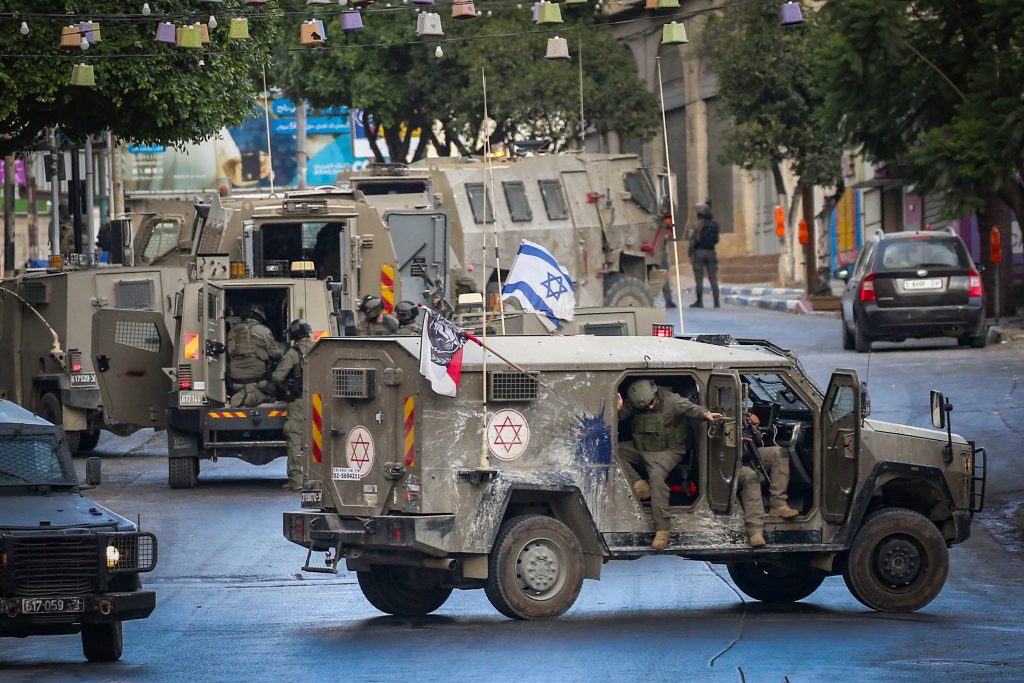
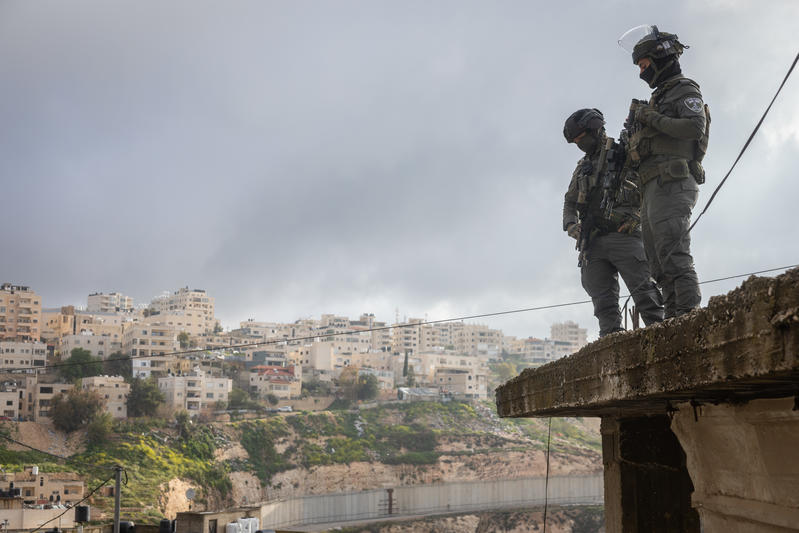
Israeli Border Police officers operate in a Palestinian town near the West Bank barrier, not far from Jerusalem, March 30, 2026.
Israeli Border Police officers operate in a Palestinian town near the West Bank barrier, not far from Jerusalem, March 30, 2026. Photo by Chaim Goldberg/Flash90

What’s happened: Violence by groups of West Bank settlers continues to roil internal Israeli politics and draw broad criticism of Israel internationally including from some of its closest allies.

  • Two recent incidents drew particular attention. Last week, an Israeli settler was killed when his all-terrain vehicle was hit by a Palestinian car. There has been no definitive determination as of yet whether the collision was an accident or a ramming attack — ramming attacks have been a common tactic of Palestinian attacks on Israelis, particularly in the West Bank, but also inside pre-1967 Israel.
  • Nevertheless, rumours quickly spread among the most militant activists of nearby hilltop settlements and outposts, and settlers from those outposts descended on nearby Palestinian communities, setting fire to buildings and vehicles in two nearby villages and pepper-spraying Palestinians they encountered. The rampage was preceded by inflammatory social media posts from far-right politicians, including Finance Minister Smotrich.
  • In a second incident, a CNN crew was detained after filming an attack by settlers on a Palestinian village in the West Bank. The soldiers, reservists from the Netzach Yisrael battalion, originally set up to ease recruitment for ultra-Orthodox Israeli men but largely staffed by religious nationalists aligned with the settler movement, openly share that they are there to defend an illegal outpost and that they endorse violence against Palestinians as “revenge” for the collision last week which killed a young Israeli on an ATV. In an unprecedented response, the IDF removed the entire battalion out of the West Bank.
  • Many of the soldiers from this battalion identify with the cause of the settler movement, and sometimes of its most radical factions.
  • Compounding the challenge of settler violence, the IDF itself is not authorised to arrest Israeli citizens. This task is up to the Israel Police, which since the 1990s has operated a special command in the West Bank for dealing with crime committed by Israeli citizens. Last week, the IDF was forced to divert soldiers from Lebanon, to the West Bank to deal with disorder and hopefully prevent it from spiralling into the kind of high intensity violence that characterised the early 2000s and required a massive IDF presence to contain.
  • Nevertheless, senior army commanders have endeavoured in recent weeks to take a harder stand against settler violence. Chief of General Staff Zamir told soldiers this week that “it is unacceptable that during a multi-front war the IDF is forced to confront a threatening minority from within. These are rioters who do not represent the wider population. On the contrary, they endanger civilians, security, stability, and our values as a people and as a state. I call on all authorities in the country to act against this phenomenon and stop it before it is too late. Anyone who believes these actions contribute to security is mistaken—they are morally and ethically unacceptable and cause extraordinary strategic damage to the efforts of the IDF.”
  • Major General Bluth, who oversees all IDF forces in the West Bank, issued an open letter to local council leaders of all West Bank settlements in which he described violent settlers as “marauders” and “scofflaws” acting “against the laws of the country, the values of the Jewish people.” Though he praise the majority of settlers as “law-abiding, idealistic and patriotic,” he lamented that some of the violence, though carried out by a tiny minority, was egged on by a “public tailwind.”
  • Israel’s ambassador to the United States Yechiel Leiter, himself a West Bank settler, spoke forcefully against the outbreak of violence from others in the settler movement, condemning it both on moral grounds and as something which hurts the settler movement as a whole and does grave damage to Israel’s image in the United States and elsewhere. “They are not only staining the settlement enterprise,” he said in an interview with Yediot Ahronot. “They are staining the entire State of Israel. They feed the narrative of violent occupiers, and it is forbidden to remain silent about it. It is indeed a small handful. I want to stress this, but the vast majority must cry out against the phenomenon.”
  • A letter addressed to President Herzog signed by over 1000 diaspora Jews and organised by the London Initiative, a liberal Zionist network in the UK, not only condemned the extremist settlers carrying out the violence but also the Israeli government itself, alleging that “based on events and on the statements of the most extreme coalition partners, it can be concluded that the violence now engulfing the West Bank is not only condoned by the government but is in fact policy.”
  • Herzog responded to the letter with his own letter which largely agreed with the claims of the London Initiative. Describing the violence of Jewish extremists in the West Bank, he wrote that “these grave offences against innocent people undermine the rule of law and tarnish the moral foundations sacred to the State of Israel.” Promising action against those involved, he further wrote that the violence “plays directly into the hands of Israel’s detractors, fuelling hatred that weakens us as a nation and jeopardises Jews everywhere.”

December 10, 2025

Search for remains of last hostage on hold as storm hits coast

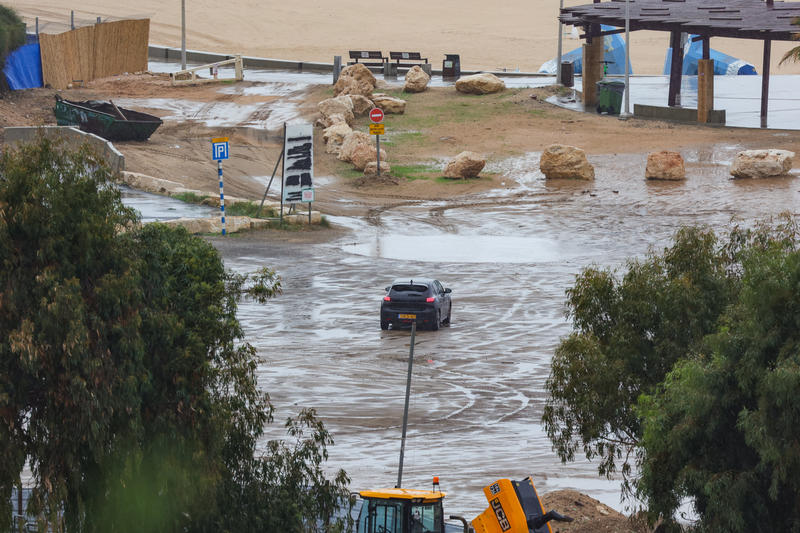
Heavy winds and rain at the beach in the southern Israeli city of Ashdod, December 10, 2025.
Heavy winds and rain at the beach in the southern Israeli city of Ashdod, December 10, 2025. Photo by Flash90 *** Local Caption *** רוח חוף ים סערה סופה גשם חורף מזג אוויר

What’s happened: The ongoing search for the body of Ran Gvili, the last remaining hostage from the October 7 massacre not repatriated to Israel for burial, has been temporarily called off due to an impending large storm.

  • Storm Byron, named by the new Southeast Mediterranean convention instituted by Greece, Israel, and Cyprus five years ago, is expected to bring harsh weather to Israel and the Palestinian territories.
  • In preparation, COGAT has confirmed that almost 270,000 tents and tarpaulins have entered Gaza in recent weeks along with fuel, 5,600 tons of medical supplies and over 1,500 trucks of blankets and winter clothes.
  • In addition, since the ceasefire went into effect, over 18,000 food trucks have entered Gaza, with about 20% of those coming from the UN. According to the most updated figures, between 600 and 800 trucks carrying humanitarian goods enter every day.
  • The New York Post reported yesterday on a video that had surfaced on social media from the summer showing several tons of baby formula and nutritional shakes meant for kids being hidden in an underground Hamas facility. According to the report, the video was taken during the late summer weeks when global headlines were dominated by an alleged famine in Gaza. The video was distributed by a Ahmed Fouad Alkhatib, a Gaza native and anti-Hamas activist, who accused Hamas of attempting to starve its own populace in an attempt to put pressure on Israel.
  • Yesterday at Ben Gurion Airport, a small ceremony was held to mark the repatriation of the body of Sudthisak Rinthalak, a citizen of Thailand who was abducted and murdered in the October 7 attack and whose body was returned to Israel last week.
  • Israel is set to reopen the Allenby Crossing today. The crossing is one of only three crossings between territory under Israeli control and Jordan, and the only one connecting the West Bank to Jordan. Israel closed the crossing in September following a deadly attack in which a Jordanian citizen driving a truck with aid for Gaza opened fire on Israelis, killing two security personnel. Shortly after the incident, Israel had the crossing reopened for passenger traffic, but it has been closed for  trucks for the past three months.

Context: President Trump has indicated that he would like to announce the conclusion of Phase One of the ceasefire and the beginning of Phase Two.

  • Israeli officials are hesitant to accede to this without first achieving the return of the last hostage to Israel. There is fear in Israel that even a small compromise on this very clear and very measurable ceasefire condition will be a repeat of the mistakes made in previous ceasefires in Gaza and Lebanon, where global pressure on Israel not to insist on full implementation ended up allowing terrorist organisations to build up and thrive on its borders.
  • Israeli officials have speculated that Hamas is deliberately delaying the repatriation of Gvili’s body in order to drag out the first stage of the ceasefire, which has allowed Hamas to reestablish and consolidate its hold on half of the Gaza Strip, and avoid entering the second stage, which could see it forced to disarm.
  • Both the US and Israel would like to see a forceful mandate for the International Stabilisation Force, yet to be formed, which will enforce Phase Two of the ceasefire agreement. It remains unclear whether the mandate will fall under Chapter VI or VII of the UN Charter. Both Israel and the US are keen on the latter which provides the legitimate use of force for enforcement purposes. Israel is wary of repeating the failure of UNIFIL in Lebanon that is only mandated to carry arms for self defence under Chapter VI. Chapter VII is crucial if the mission is to include disarming Hamas. In any event there are still no countries prepared to send troops for such a mission, apart from Turkey that has been vetoed by Israel.
  • Parallel to that, Israel has acceded to a US request to map out several “green zones” inside the part of the Gaza Strip held by the IDF as places for temporary housing for Gazans. Preliminary infrastructure work has been done in these zones so that trailer homes and schools can be connected to water and sewage lines. Only families vetted to ensure that they have no arms and no connection to Hamas will be allowed to enter the green zones, and this will only begin once the second phase of the ceasefire has formally begun.
  • Israel Hayom reports that the Israeli Government, contrary to its publicly stated position, conveyed to the Palestinian Authority a limited willingness to accept the “pathway to a Palestinian state” mooted in Trump’s 20-point plan which was the basis of the Gaza ceasefire, but only if the Palestinian Authority accepted two conditions: a definitive end to the pay-for-slay programme for terrorists in Israeli prisons and an end to UNRWA activity in both the West Bank and Gaza. The Palestinians, according to the report, rejected both conditions.
  • Former head of the Shin Bet Ronen Bar has spoken publicly for the first time since leaving his role. He called once more for the formation of a State Commission of Inquiry to investigate the failures leading up to the October 7 attack. He made the statement, widely interpreted in Israeli media as a swipe at Prime Minister Netanyahu’s attempt to craft a bespoke inquiry outside the framework of the Commission of Inquiries Law. He noted, fifteen State Commissions of Inquiry have been convened under the rubric of this law, and they have investigated matters including Israel’s failure to prepare for the Yom Kippur War, the massacre of Palestinians in two Lebanese Refugee Camps during the First Lebanon War, the assassination of Prime Minister Rabin, and the October 2000 riots.
  • Prime Minister Netanyahu has sought to sidestep a State Commission of Inquiry by appointing a ministerial committee to convene a special governmental commission of inquiry, whose mandate would include investigating the role of the Supreme Court, the media, and anti-government protesters in the lead-up to the October 7 massacre.

Looking ahead: The US administration is determined to see diplomatic progress on Gaza, as well as with Syria and Egypt, and may be willing to apply moderate pressure to achieve this.

  • President Trump appears eager to announce some kind of positive development on at least one at his scheduled meeting with Prime Minister Netanyahu on December 29, and ideally all three.

Newsletter sign-up

Please enter your information below to subscribe to our daily newsletter and stay updated and informed.

Donate to BICOM

At BICOM, we rely on the generosity of people like you to keep our website and services running. Your donation, no matter the size, makes a real difference. Please consider supporting us today. For further information please email: [email protected]