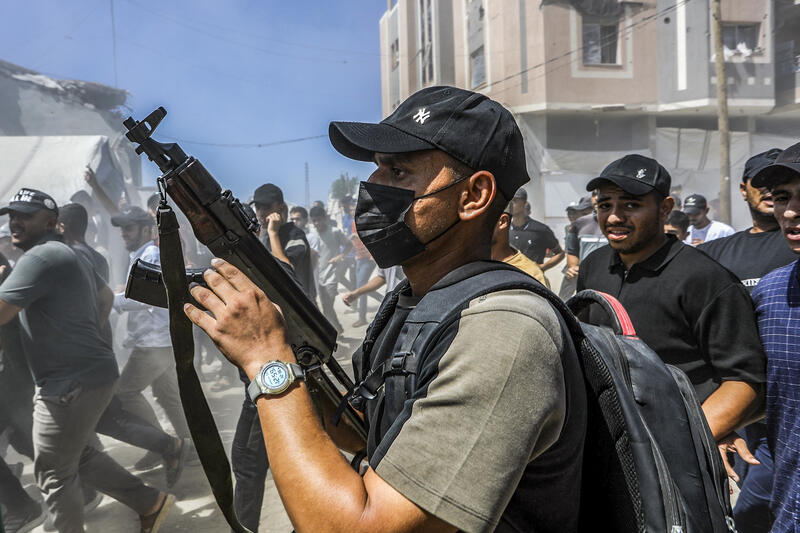
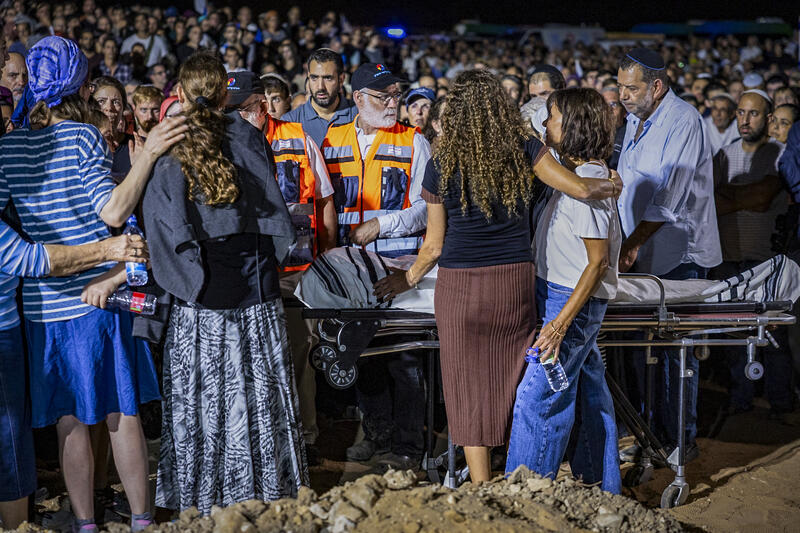
What’s happened: A Palestinian gunman murdered an Israeli father of six in a shooting attack at a spring in the northern West Bank hours before the Yom Kippur fast began on Sunday. Netanel Shukrum, a resident of the nearby settlement Neve Tzuf (also known as Halamish) was 48 years old. His family immigrated to Israel following an attack on a synagogue in Algeria in which his grandfather, Rabbi Yaakov Shukrun, was murdered.
- The suspected gunman in the attack was apprehended in a hospital in Ramallah, amid calls from settler leaders and other right-wing figures for a broad military offensive in the West Bank. Itamar Ben-Gvir, the Minister for National Security, demanded the death penalty be used in accordance with the new law which he pushed for in the outgoing Knesset.
- In Gaza, an improvised explosive device (IED) was found beneath an IDF vehicle on the Israeli side of the Yellow Line. The IDF responded by striking Hamas infrastructure in the Strip.
- The IDF also reported elimination of three terrorists wanted for their involvement in the October 7 invasion and massacre.
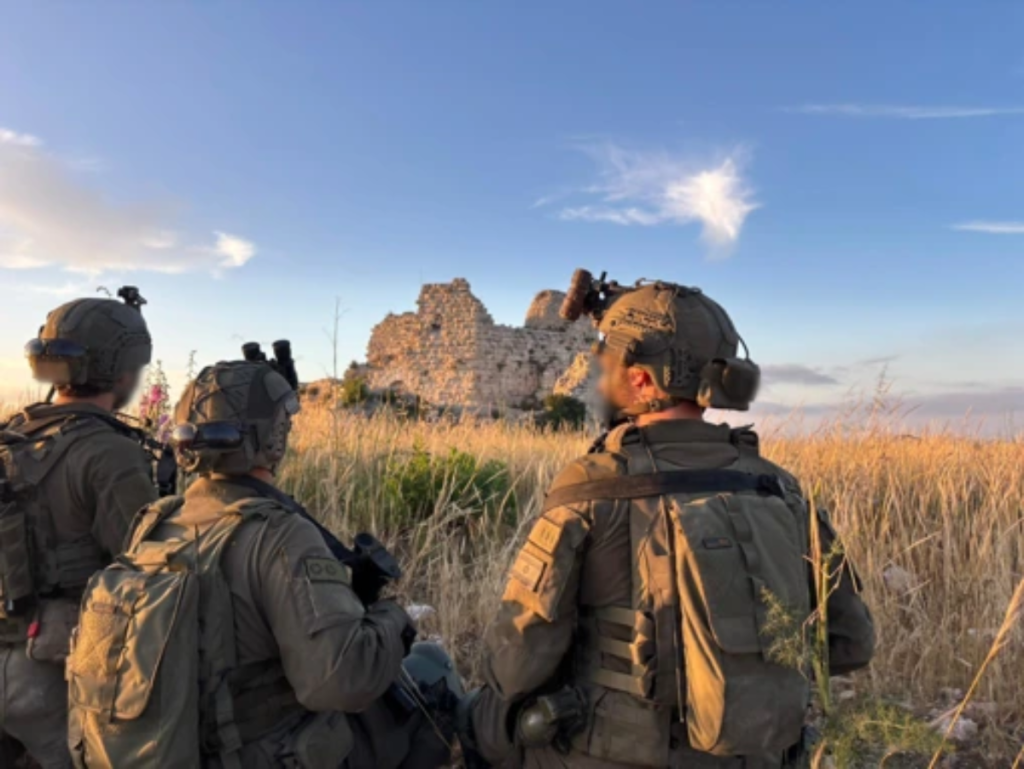
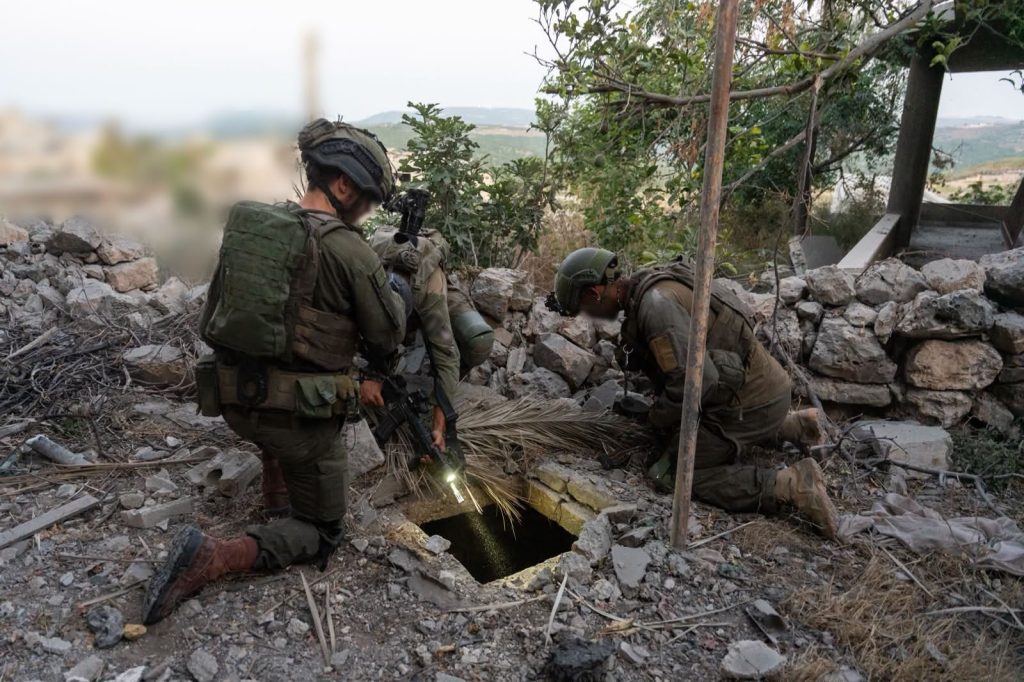
- The Lebanese front remained remarkably quiet in recent days following the IDF’s redeployment away from the Ali Taher Ridge, where an enormous Hezbollah underground facility, built with Iranian backing, was destroyed last week by the IDF.
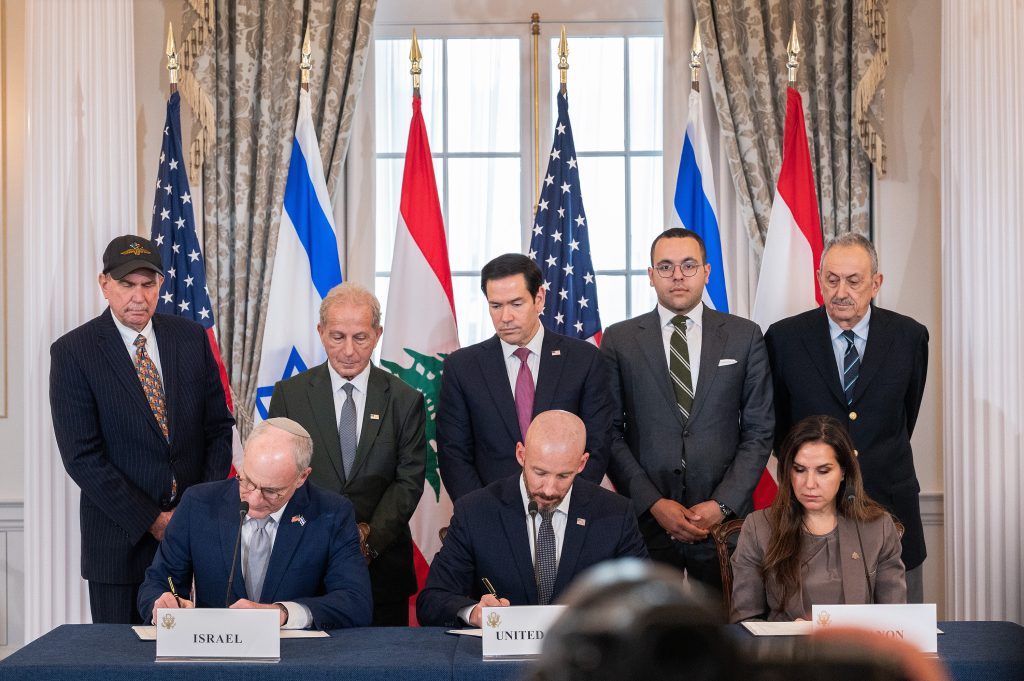
- Lebanese Prime Minister Nawaf Salam met yesterday in New York with UN Secretary General António Guterres and reiterated his call for maintaining an international presence in southern Lebanon. Negotiations over “pilot zones” and other security measures in Lebanon have largely bypassed UNIFIL, the “interim” UN peacekeeping force in place in southern Lebanon since 1978.
- The low intensity grind in Gaza, the West Bank, and Lebanon came on a backdrop of heightened tension in and attention on the conflict in Yemen.
- The Houthis fired a ballistic missile on the Saudi capital Riyadh. It was successfully intercepted, but still seen as a marked escalation which the Saudis are expected to respond to in some way. The Houthis claimed to have successfully hit a number of “sensitive targets” in Saudi Arabia, including an Aramco refinery.
- Houthi fighters continued to seize more strategic highlands around Taiz and Lahij in Yemen. At least 700 were reported killed in the fighting there, and 130,000 Yemenis were counted as displaced.
- According to American media, the US was on the verge of launching a new round of air strikes against Houthi targets, at the urging of the Saudis who have been fighting them mostly alone for the last three weeks. On Sunday, after bombs had been loaded on aircraft about to take off from US carriers to carry out the strikes, President cancelled the planned operation.
- The UK too has had a role in the current round of Saudi-Houthi fighting. Prime Minister Burnham agreed to provide air-to-air refuelling assistance to Saudi fighter aircraft on “defensive missions” using one RAF Voyager tanker aircraft based in Cyprus.
Context: The renewed fighting in and around Yemen threatens to upend the entire regional strategic picture while calling into question many, if not all, of the various overlapping ceasefires of the past year.
- Despite the US-Iran ceasefire, the Strait of Hormuz is still effectively closed to maritime traffic. Seventeen commercial vessels transited through the Strait over the weekend — a much higher traffic than during the war and full Iranian blockade, but still far less than the prewar daily average of 125 vessels.
- Both the UAE and Oman have access to the Persian Gulf beyond the Hormuz Strait; Qatar and Bahrain do not. The Saudis have a major port on their west coast with access to the Red Sea. Effectively, most (but not all) of America’s major Gulf allies have found workarounds to the Hormuz passage. But a Houthi blockade of the Bab al-Mandab Strait would cancel much of that workaround and leave the Saudis behind two Iranian-backed blockades on two crucial chokepoints.
- According to some reports, the Saudis have actually increased their Hormuz shipping transits as disruptions to their Red Sea exports, not least because of the Houthi attacks on a major Saudi oil pipeline, have made the alternative route more perilous in the recent weeks of fighting. Yesterday, two Saudi tankers were reportedly struck by “projectiles” while transiting through the Strait. There were no confirmed damage reports, though at least two people were injured.
- The aborted US strike on the Houthis placed in high relief the dilemmas US policy makers face against Iran and its proxies amid the current stalemate.
- Even a limited action aimed just at the Red Sea theatre (or just at the Persian Gulf one) risks an unwanted escalation in the other.
- Media reports, unconfirmed by official sources, consistently point to shortages in missile defence. These come along an ongoing flood of rumours regarding aggressive intentions against US allies by both Russia and China.
- Any escalation will almost certainly disrupt energy markets in the final weeks before the US midterm elections, where President Trump’s Republican Party is already faring poorly in opinion polls.
- Ceasefires on fronts that were central in the first two years after October 7 — Israel-Gaza and Israel-Lebanon — would likely be in peril if a larger regional war broke out between some combination of Iran and its allies against the United States and its regional allies.
- Israeli officials, speaking anonymously to Israeli media, continue to marvel at the apparent lack of support from Saudi Arabia’s newfound allies in Islamabad and Ankara. For Israel, the Saudi turn to Pakistan and Turkey was seen as a deliberate snub of Israel and a rejection of progress toward a normalisation agreement of the kind that was nearly concluded before the October 7 massacre three years ago.
Looking ahead: Israeli media speculate that a widened conflict in Yemen could see the renewal of Houthi missile fire on Israel. The Houthis fired a total of 86 ballistic missiles and 36 drones at Israel over a two-year period, beginning on October 19, 2023, in the immediate aftermath of the October 7 massacre, and ending on October 8, 2025, with the onset of the ceasefire which ended the war in Gaza. The Houthis did not resume firing on Israel even during the war in Iran earlier this year or the various rounds of fighting in southern Lebanon.
- Israeli officials are also concerned that Israel could become a target in the event of renewed fighting between the US and Iran. Israeli media reported that there is also concern about a preemptive Iranian strike on Israel or an Iranian-backed terrorist attack on Jewish targets abroad.