LATEST

Hamas and the Muslim Brotherhood

Key background
  • Hamas is an Islamist Palestinian nationalist movement which currently governs the Gaza Strip. It is proscribed by the UK and in the majority of western countries.
  • Its primary state backers are Iran, Turkey, and Qatar. It is also active in the West Bank, East Jerusalem, Syria, and Lebanon.
  • Since seizing control of the Gaza Strip in 2007, it has continuously launched attacks against Israel and weaponised civilian infrastructure by embedding itself into schools, mosques, and hospitals.
  • Hamas’s 7th October attacks on southern Israel killed 1200, and over 250 hostages were subsequently taken to the Gaza Strip.

Updated August 4, 2025

Shocking new videos show emaciated Israeli hostages

What’s happened: Israel is reeling with anger and disgust at the latest brutal propaganda videos released by Hamas over the weekend.

  • Hamas released two videos featuring 24 year old hostage Evyatar David. The first video did not include any statements, but his physical condition, severely emaciated, appeared grim with his bones jutting out of his body.
  • The second video, showed David digging his own grave on orders from his captors. “I don’t eat. There’s barely any water,” said David, which he said was recorded on July 27. “This tin is for two days so that I don’t die,” he said, showing a small tin of food to the camera.
  • In a script presumably dictated by his captors he says, “I have no idea whether there’s going to be food, I haven’t the faintest idea. I haven’t eaten in I don’t know how many days in a row, and I’ve been here in very-very bad shape for a very long time already.”
  • In a third video, Palestinian Islamic Jihad released footage of the 21-year-old hostage, Rom Braslavski, who appeared to be gaunt and wept in the recording. Rom said, “Just give us food, if not for the Gaza Strip, then for the hostages.”
  • The videos followed the visit of US envoy Witkoff who toured Gaza on Friday to personally witness the aid delivery system and later met with hostage families and consultations with senior Israeli officials. It now appears that the “Witkoff outline” is no longer on the table. Witkoff told the families they would now work on a comprehensive deal in which all of the hostages are to be released and the war ended. 
  • In Beit Hanoun, in northern Gaza, the last of the Hamas fighters surrendered to troops from the Givati Brigade.
  • Following questioning, the terrorists gave information about munitions warehouses adjacent to the tunnel shaft where they exited, leading troops to the warehouses. Large quantities of arms and materiel were found, including vests, rifle magazines, rifles, grenades and more. Supplies for an extended stay underground were also found in the tunnel, including food, water and hygiene supplies.
  • Also over the weekend, the IDF demolished the main tunnel linking Beit Hanoun with Jabalya, Beit Lahiya and the northern reaches of Gaza City. It is estimated that dozens of Hamas terrorists were trapped in the tunnel.
  • The military also said more than 130 targets were attacked around Gaza over the weekend.
  • The IDF also said it had killed the terrorist Salah al-Din Za’ara, who served as the deputy commander of the Hamas Al-Furqan Battalion.
  • In southern Gaza, forces killed terrorists and destroying terrorist infrastructure, including underground and buildings where terrorists operated and weapons were stored.
  • Amid the ongoing fighting in Gaza, the Houthis continued to fire ballistic missiles at Israel. Sirens sounded on Friday evening in and around Jerusalem, and the Dead Sea area after a missile was fired from Yemen. The missile was intercepted by the Arrow 3 system. On Sunday the IDF intercepted a drone close to the Israeli – Egyptian border that was also launched from Yemen.

Context: Although hostage negotiations have not formally broken down, the sense in Israel is that there is currently no deal on the horizon, after Hamas hardened their negotiating positions coinciding with the British government and others increasing their pressure on Israel.          

  • It is now understood that Prime Minister Netanyahu is working with President Trump and his team to draft a comprehensive new proposal that includes a deal to release all the remaining hostages and presumably end the war.
  • The new proposal reportedly includes demands for the release of all remaining hostages in a single group and for Hamas to disarm. On the day after in Gaza, a US-led international administration is to be established in the Gaza Strip.
  • If Hamas do not agree the US is expected to give Israel a free hand to operate militarily in the Gaza Strip.
  • The horrific video footage of Evyatar David and Rom Braslavski is seen as proof that Hamas is deliberately starving the hostages in order to ratchet up pressure on Israel.   
  • Israel now believes the dire humanitarian situation in the Strip actually helps Hamas, and has allowed a surge in the flow of humanitarian aid.
  • According to the latest data from COGAT, in the past week over 23,000 tons of humanitarian entered Gaza and 1,200 trucks were successfully collected by the UN and international organisations.
  • In addition, hundreds of pallets of humanitarian supplies were airdropped by international partners to help address urgent needs on the ground. In cooperation with Israel, the UAE, Jordan, Egypt, France, Germany, and Belgium facilitated 136 aid packages, containing food airdropped into Gaza.
  • Addressing Hamas’s campaign of starvation, IDF Chief of Staff Zamir, said “The current campaign of false accusations of intentional starvation is a deliberate, timed, and deceitful attempt to accuse the IDF, a moral army, of war crimes. The ones responsible for the killing and suffering of the residents in the Gaza Strip is Hamas. IDF soldiers and commanders act with integrity and morality, in accordance with the IDF’s values and international law.”
  • Separately, a group of countries including Saudi Arabia, Egypt, Jordan and Qatar presented a document to the UN demanding that Hamas be disarmed and excluded from future governance of the Gaza Strip. The document represents welcome pressure now being applied on Hamas, including a condemnation of the attack on Israeli civilians on October 7. It also endorses the Palestinian Authority (PA) to take over future responsibility for security and civilian affairs.
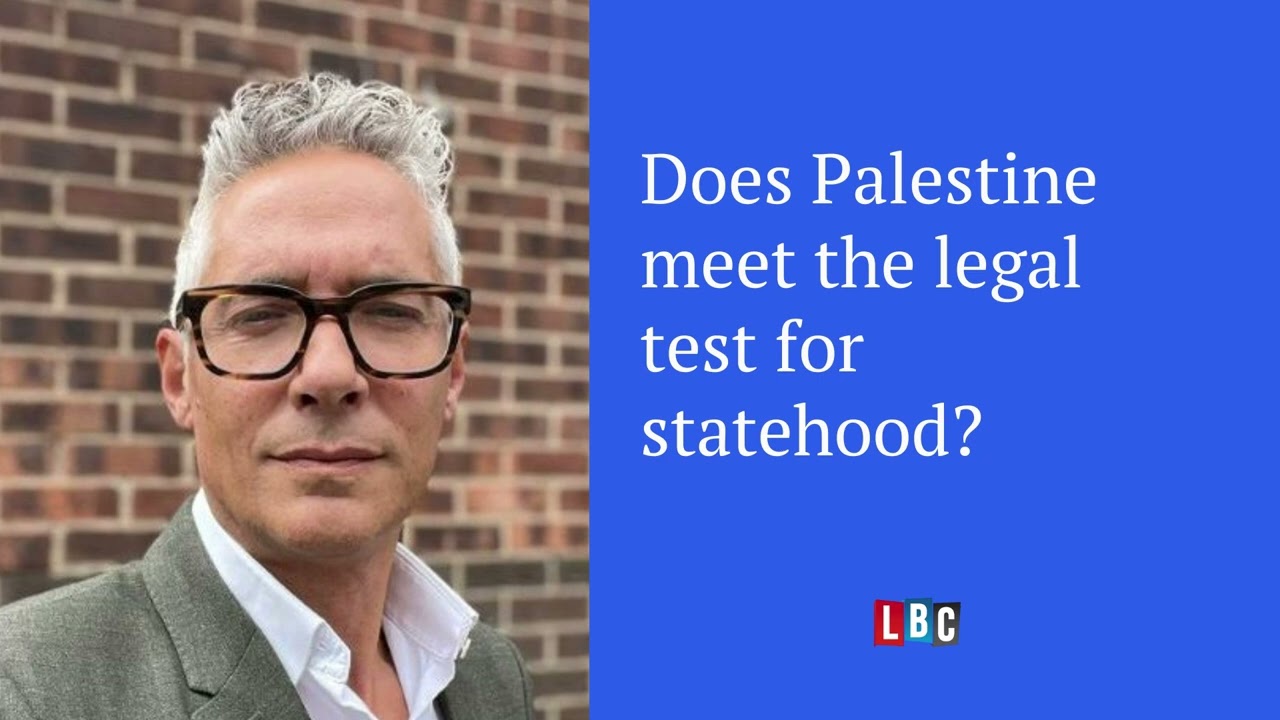
  • Relating to the British Government’s announced on unilaterally recognising the State of Palestine, Malcolm Shaw KC presented a series of arguments against unilateral recognition He argued:
    • Palestine doesn’t meet key Montevideo Convention standards, specifically lacking effective governance and a defined territory, due to internal division between PA and Hamas, and lack of territorial control.
    • Widespread recognition by states is politically significant but legally insufficient without UN Security Council approval or clear factual statehood.
    • Palestinians have the right to self-determination, but that alone doesn’t override legal thresholds for statehood.
    • Allowing declarations of statehood outside accepted criteria and procedures, even under self-determination undermines international legal order.

Looking ahead: The change to now focus on a comprehensive ceasefire plan – rather than a partial deal – will take time, as it requires resolving several difficult issues. These include the ratio and identity of Palestinian terrorists in Israeli jails to be released, the nature and geographical redeployment of the IDF, and the demilitarisation of the Strip. 

  • The latter is understood to be part of a growing consensus that Hamas must agree to stop repairing / digging new tunnels, to stop the manufacture of missiles and explosives and to stop smuggling weapons under the Philadelphi Corridor from Egypt.      
  • In light of the failure of the talks, the inner security cabinet will meet later this week to discuss next steps. The IDF has reduced its troop deployment and has long supported a deal. But if the government decides to continue fighting, Chief of Staff Zamir has recommended increasing operations and raids in parts of the Strip where the IDF has not operated so far, such as Gaza City and the refugee camps in the central Gaza Strip. These raids will be evaluated to avoid harming the remaining hostages.
  • Defence officials anticipate that Hamas will release more videos of the hostages in captivity in an effort to ratchet up pressure on Israel.

July 31, 2025

Witkoff due in Israel to discuss hostage negotiations

Witkoff visiting Hostage Square
United States Special Envoy to the Middle East Steve Witkoff visits at Hostage square in Tel Aviv, January 30, 2025. Photo by Yonatan Sindel/Flash90 *** Local Caption *** חרבות ברזל מלחמה שחרור סטיב ויטקוף משפחות חטופים עסקה

What’s happened: US Envoy Steve Witkoff is due to arrive in Israel today to discuss hostage negotiations.

  • Canadian Prime Minister Mark Carney announced that Canada will also recognise a Palestinian state in September subject to a short list of conditions. “This intention is predicated on the Palestinian Authority’s commitment to much-needed reforms, including the commitments by Palestinian Authority President Abbas to fundamentally reform its governance, to hold general elections in 2026 in which Hamas can play no part, and to demilitarise the Palestinian state.”
  • In announcing the move, Carney said, “Canada has long been committed to a two-state solution—an independent, viable, and sovereign Palestinian state living side by side with the State of Israel in peace and security.” He added, “Canada condemns the fact that the Israeli government has allowed a catastrophe to unfold in Gaza.”
  • President Trump struck a much harsher tone, in public at least, in response to Canada’s declaration than he did to Britain’s or France’s. “Wow! Canada has just announced that it is backing statehood for Palestine,” he posted on social media. “That will make it very hard for us to make a Trade Deal with them. Oh’ Canada!!!”
  • Israeli Foreign Minister Gidon Saar said of the mounting international campaign of the past week that, “establishing a Palestinian state today is establishing a Hamas state. A jihadist state. It ain’t gonna happen.”
  • At the United Nations, the International Conference on the Peaceful Settlement of the Question of Palestine and the Implementation of the Two State Solution” concluded with a seven-page text agreed to by the countries involved, including France, the UK, Saudi Arabia, Qatar, Turkey, Egypt, and Jordan.
  • The document condemned the October 7 attack on Israel — the first time the entire Arab League did such a thing — and called for an end to Hamas rule in Gaza. It also called for a transitional regime in Gaza under the auspices of the Palestinian Authority, and the eventual establishment of an independent Palestinian state. It spoke of regional integration, but made no mention of diplomatic normalisation between Israel and Arab states, and it included vague references to the Palestinian “right of return” as well as a demand for Israel to reverse its measures against UNRWA.
  • Qatar’s Al Araby TV announced that Israel delivered a revised response to Hamas regarding the group’s rejection of a proposed hostage release framework. The updated proposal reportedly addresses troop redeployment from Gaza, while insisting on maintaining a presence along the Philadelphi Corridor, and rejecting Hamas’ demand to exchange bodies of hostages for Palestinian terrorists.

Context:

  • Witkoff’s first visit to Israel since the release of Israeli American hostage Edan Alexander in mid-May follows a meeting earlier this week in the United States with Strategic Affairs Minister Ron Dermer and National Security Council Director Tzahi Hanegbi.
  • Carney’s formulation differed from that of Prime Minister Keir Starmer in that it was the Palestinians who had to meet the conditions in order to have their state recognised, whereas Starmer presented recognition as a punishment for Israel if Israel didn’t conclude a ceasefire with Hamas.
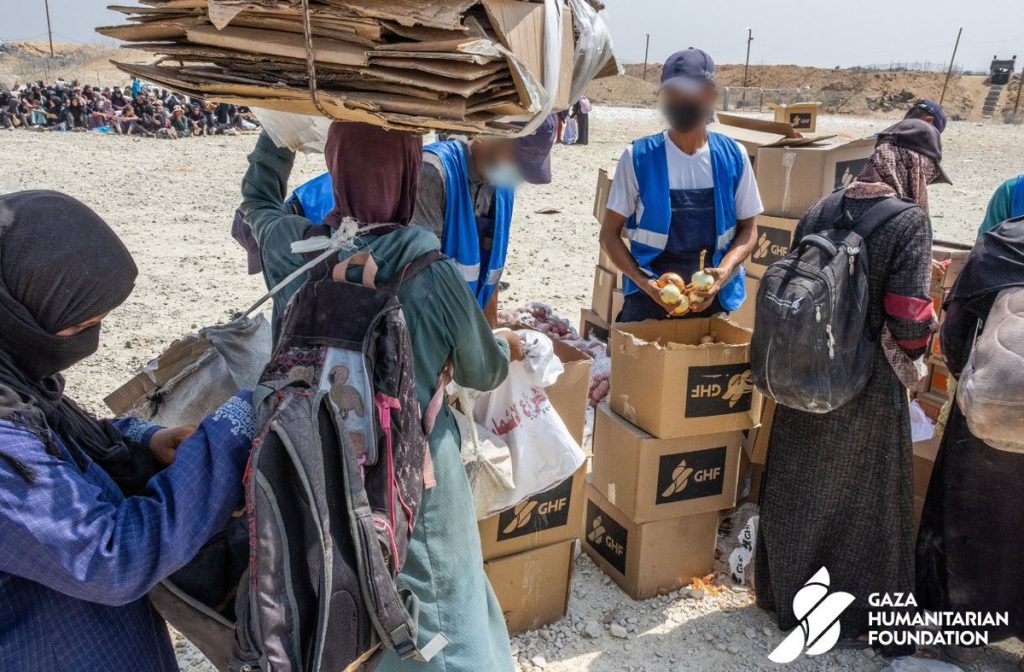
  • Ynet reported on Israel’s humanitarian efforts since the launch of the latest offensive two months ago, citing an unnamed senior defence official: “More than 5,000 aid trucks have entered the Gaza Strip since Operation Gideon’s Chariots began on May 19, providing more than 1.5 million packages of food that were distributed to families by the GHF, and 3,000 tons of baby formula. Israel has also operated a healthcare support system, including blood donations, rotating medical teams, fuel for hospitals and ongoing situation assessments. He said that water infrastructure has also been maintained, reporting that three active water pipelines deliver water to the Gaza Strip, and a new power line was activated recently to provide electricity to the central desalination plant that provides water to roughly 900,000 residents.”
  • Israel interprets Hamas’s latest demands – an even more lopsided prisoners-to-hostages ratio, including living Palestinian prisoners in exchange for the bodies of Israeli hostages killed in Hamas captivity, an IDF withdrawal from the Philadelphi Corridor, and the opening of the Rafah Crossing with Egypt – as signaling a lack of desire from Hamas to reach a deal. This is especially the case in light of the growing international pressure on Israel in the last week which has only strengthened Hamas’ position and reduced whatever urgency it might have felt regarding a ceasefire and even a partial hostage release.
  • As hostage talks flounder, rumours swirl in the Israeli media that the Government is considering partial annexations of territory occupied in Gaza, with some focusing on a narrow area of the northern Gaza Strip and others on parts of the buffer zone the IDF has created in the Strip along the border with Israel. Writing in Yedioth Ahronoth, Avi Issacharoff argues that “the threat of annexation won’t stress Hamas, perhaps even the opposite. It will only cause the State of Israel to be perceived even more negatively in the world, and it will only ratchet up international pressure to end the war. While it’s true that it will help Netanyahu’s coalition to hang on just a little bit longer, the hostages will not return home. Hamas is not impressed by Israeli statements about annexation, but a decision to annex will certainly pave the way to building new settlements in Gaza.”

Looking Ahead:

  • Witkoff is expected to tour humanitarian aid distribution centres in Gaza, which are operated by Gaza Humanitarian Foundation.
  • Other governments have indicated that they will join the wave of recognitions of a Palestinian state, with an Australian minister telling local TV that “It’s a matter of when, not if, Australia recognises a Palestinian state … but I don’t want to put a time frame on it.”

July 30, 2025

UK to reward Hamas with recognition of Palestinian state

Prime Minister Sir Keir Starmer delivering his speech on Gaza, Downing Street Press Briefing Room. July 29, 2025.
Prime Minister Sir Keir Starmer delivering his speech on Gaza, Downing Street Press Briefing Room. July 29, 2025. Photo credit: Photo credit: Screengrab from Keir Starmer / X

What’s happened: The UK Government announced that it will recognise a Palestinian state at the UN General Assembly in September unless Israel fulfils a list of conditions to ameliorate the situation in Gaza. Malta joined the UK announcement, and several other states, including Australia and New Zealand, indicated they might be inclined to join the initiative.

  • Speaking from Downing Street, Prime Minister Starmer said, “We are determined to protect the viability of the two-state solution, and so we will recognise the state of Palestine in September before UNGA; unless the Israeli government takes substantive steps to end the appalling situation in Gaza and commits to a long term sustainable peace, including through allowing the UN to restart without delay the supply of humanitarian support to the people of Gaza to end starvation, agreeing to a ceasefire, and making clear there will be no annexations in the West Bank. We will make an assessment ahead of UNGA on how far the parties have met these steps. No one side will have a veto on recognition through their actions or inactions.”
  • At the United Nations, Foreign Secretary Lammy echoed the Prime Minister’s statement, including the conditions: “We will do it unless the Israeli government acts to end the appalling situation in Gaza, ends its military campaign and commits to a long-term sustainable peace based on a two-state solution.”
  • Both Starmer and Lammy demanded that Hamas release hostages, cease fire, and have no role in the future governance of Gaza, but neither made acceding to these demands a condition for recognition or, for that matter, any British policy move.
  • French Foreign Minister Jean-Noël Barrot praised the British announcement, saying “Together, through this momentous decision and our joint efforts, we are ending the infinite cycle of violence and re-opening the prospect of peace in the region.” It remains to be seen if indeed this decision has in fact ended the cycle of violence.
  • The Israeli Ministry of Foreign Affairs said the decision “constitutes a reward for Hamas and harms efforts to achieve a ceasefire in Gaza and a framework for the release of the hostages.” Prime Minister Netanyahu posted on social media that “Starmer rewards Hamas’s monstrous terrorism & punishes its victims,” adding that “A jihadist state on Israel’s border TODAY will threaten Britain TOMORROW.” 
  • Opposition Leader Yair Lapid was more concerned with the lack of seriousness in the French and British recognition declarations. Recognising a Palestine state, he said, “won’t make it come into existence. The problem is that they don’t ask themselves the fundamental questions: Within what borders? What is its capital? What leadership does it have? What system of government? Is it a democracy? Does it support the right of return? Does it have the means to deal with an attempt by Hamas to take over right after it is established?”
  • President Trump, for his part, said of the British decision, “If you do that, you really are rewarding Hamas, and I don’t think they should be rewarded.”
  • The British announcement follows the French government’s pledge to recognise a Palestinian state at the UNGA in September, and a host of European initiatives designed to pressure Israel to halt the war in Gaza — even with Hamas still in power and the Israeli hostages still languishing in its tunnels. These include a possible move by the EU to suspend Israel from the Horizon Europe program, a large and generously funded development program for scientific and industrial research. 
  • Yedioth Ahronot reported that Israel and Germany are conducting intensive negotiations for a compromise that would see the Germans blocking such initiatives in exchange for Israel agreeing to an EU task force that would oversee compliance with EU demands regarding humanitarian aid into Gaza. Such a task force would determine if Israel has, as apparently agreed, doubled the entry of aid into Gaza or not, and if the task force is satisfied that it has, the various sanctions bruited would be suspended.

Context: Despite protestations from both the Prime Minister and the Foreign Secretary that “no one side will have a veto on recognition through their actions or inactions,” the stipulation that unless a ceasefire is agreed to the recognition will go forward grants just such a veto. All Hamas needs to do to ensure Britain recognises a Palestinian state is refuse to release any hostages. In fact, if Starmer and Lammy are taken at their word, any Hamas agreement now to even a partial hostage release and ceasefire would actually stymie the recognition effort. 

  • This isn’t just a theoretical argument, but a recapitulation writ large of the diplomatic developments of the last fortnight. On July 23, Hamas and Israel were to finally sign off on a ceasefire agreement which would have liberated ten of the twenty living Israeli hostages after months of painstaking negotiations. But on July 21, Lammy and 28 other Foreign Ministers issued a combative statement against Israel’s war effort essentially granting all of Hamas’ demands for free. Unsurprisingly, Hamas immediately scuppered the ceasefire talks, raising new demands on July 22, and the ceasefire and hostage release never came to pass.
  • The recognition announcement follows weeks of intense pressure inside the Government and in Parliament for such a move, in both cases motivated more by anger at Israel than by any real assessment of the meaning of recognition or the dynamics of the conflict. States are normally recognised after they are founded. This recognition would be of a state that all acknowledge does not presently exist, even if many would very much like to see it come into being. For those so inclined, there is no reckoning with why exactly there isn’t a Palestinian state. Such a state could have been established at the end of the British Mandate following the UN partition resolution in 1947 or at any time during the Arab occupation of the West Bank and Gaza Strip between 1948 and 1967, but was not. It could have been established as a result of peace talks in 2000, 2001, 2008, 2014, but on each those occasions it was the Palestinians who rejected statehood because it could only be effected by a full reconciliation with a Jewish state next door.
  • The Foreign Secretary’s statement at the UN yesterday included the sentence “Hamas must never be rewarded for its monstrous attack on October 7,” but there is no way of understanding the British policy as anything but such a reward, and indeed it was publicly welcomed by Hamas. What the Palestinians refused to accept in peace negotiations, the UK is endeavouring to grant them without peace and following the worst massacre of Jews since the Holocaust.

Looking ahead: Israel has not made any announcement of steps it might take in response to the French and British moves.

  • Bezalel Smotrich, Finance Minister and leader of a far-right party in the Knesset pushed for a partial annexation of territory in Gaza. Even outside far-right and pro-settler circles in Israeli politics there have been voices calling for territorial losses to be used a lever to pressure Hamas.
  • The thinking behind this is that Hamas is not moved by the difficult conditions of Gaza civilians — on the contrary, it sees only political gains when the humanitarian situation worsens — but that Hamas would be loath to loss territory.
  • Sources in the Government poured cold water on the idea, with Shas leader Aryeh Deri reportedly saying in Cabinet yesterday that “We have nothing to look for in Gaza,” and another unnamed Minister telling Israeli media that the annexation idea is “not really on the table,” but rather just a threat to pressure Hamas.

July 29, 2025

Humanitarian pauses begin

Humanitarian aid awaiting to be delivered and distributed.
Humanitarian aid awaiting to be delivered and distributed. Photo credit: COGAT / X

What happened: Yesterday was the first day of Israel’s “humanitarian pause” in Gaza, in which military activity ceases from 10:00am to 8:00pm in designated areas where most civilians are located.

  • The security cabinet met last night to discuss Israel’s options as the current military offensive, Operation Gideon’s Chariot, winds down without a ceasefire deal in place.
  • Negotiations for a ceasefire and hostage release continued in both Doha and Sardinia, with more revelations in media reports about the breakdown in talks last week, largely following new demands from Hamas that surprised and frustrated the mediators from Qatar, Egypt, and the United States.
  • Egyptian and Jordanian aid trucks entered Gaza, and the IDF began airdropping aid into the Gaza Strip as well. According to COGAT:
    • Over 200 trucks were collected and distributed yesterday by the UN and international organisations with additional 260 trucks in Gaza awaiting collection and distribution, along with hundreds of others still queued for UN pickup.
    • Four tankers of UN fuel entered for the operation of essential humanitarian systems.
    • 20 pallets of aid were airdropped in cooperation with the UAE and Jordan.
  • Prime Minister Netanyahu conceded that the humanitarian situation in Gaza was “difficult,” but accused Hamas of “stealing aid… many times by shooting Palestinians.”
  • The US too sharpened its tone on the humanitarian situation while still laying the blame at Hamas’ doorstep. In an interview yesterday, State Department Spokesperson Tammy Bruce said, “People have got to get fed, but in the meantime Hamas refuses to put down its weapons, refuses to release the hostages, which could stop all of this in a moment. But that won’t stop us from easing the pain.” 
  • Yesterday, during their meeting in Scotland, Donald Trump and Keir Starmer discussed the situation in Gaza:
    • While Starmer recognised the need to free the hostages, he marked the situation on the ground in Gaza as “absolutely intolerable” as Trump emphasised that there’s “a lot of starving people”.
    • Starmer called for stepping up the humanitarian efforts in Gaza saying “There needs to be much more [aid], we need to galvanise other countries in support of getting that aid in. And yes that does involve putting pressure on Israel, because this is a humanitarian catastrophe now.”
    • Trump later announced that he intends to work with European allies to “set up food centres” in Gaza.
    • On the issue of recognising Palestinian statehood – and the ongoing debate over whether Starmer will follow Macron’s lead – Donald Trump indicated that he doesn’t mind if the UK recognises a Palestinian state. The recognition was rejected by the Leader of the Opposition, Kemi Badenoch, on Sunday.
  • A three-day rescheduled UN confab sponsored by France and Saudi Arabia – and co-chaired by 16 other countries and delegations, including the United Kingdom – opened yesterday.  The French Foreign Minister said “Only a political, two-state solution will help respond to the legitimate aspirations of Israelis and Palestinians to live in peace and security,” while Saudi foreign minister, said that the kingdom was seeking World Bank approval to transfer $300m to Gaza and the West Bank to counter the dire humanitarian crisis in the territories. 
  • The US State Department said the conference was “unproductive and ill-timed” adding that it was “a publicity stunt that comes in the middle of delicate diplomatic efforts to end the conflict.” “Far from promoting peace, the conference will prolong the war, embolden Hamas, and reward its obstruction and undermine real-world efforts to achieve peace.”

Context: With the IDF in control of at least two thirds of the territory, Israeli decision makers are due to find themselves at a critical juncture in the coming days with the current military offensive reaching its natural endpoint. 

  • Talks for an agreement that would have led to a ceasefire and a hostage release – which seemed to be reaching an agreement last week – fell apart with the publication of the (mostly European) Foreign Ministers’ Statement and the media furore over starvation in Gaza which put Hamas in a position where it could receive for free what it would have had to pay for in released hostages beforehand. 
  • Moreover, the Prime Minister and his Government have three months of relative quiet as a parliamentary recess means the coalition can lumber on without the threat of early elections being called.
  • Channel 12 news reported that Israel’s cabinet is considering fully occupying Gaza, alongside a tightened siege on certain areas within the Strip. If carried out, the plan would mean that IDF troops would operate in areas where hostages are believed to be held – a move largely avoided by Israel until now. 
  • Perched around Gaza City, and the camps of the central Strip — Nuseirat, al-Bureij and Deir al-Balah — the IDF awaits orders from the Government. An offensive into the camps, largely untouched since the war began, risks losing the hostages forever. The belief that Israel could recover the hostages alive via an agreement with had stayed Israel’s hand until now. 
  • Gaza City was also avoided in the current ground offensive. A decision to move in would need to be carefully considered. Yedioth Ahronot’s military affairs correspondent Yossi Yehoshua writes about Gaza City, “Roughly a million civilians are currently concentrated in Gaza City alone. The Gaza City Brigade, Hamas’ last remaining brigade, has formed under their protection. To where can the IDF evacuate the civilians, when most of the Strip has been destroyed and does not allow for further absorption? How can effective fighting be conducted under such conditions? And the biggest question of all: how do you fight in an area where there might be hostages?”
  • While US officials, especially President Trump, have expressed extreme scepticism about the prospect of reaching a hostage deal with Hamas, Israeli negotiators briefing local media anonymously continue to project optimism. A new channel of talks opened up in Sardinia, where the Qatari Prime Minister was vacationing earlier this summer.
  • Ronen Bergman, also writing in Yedioth Ahronoth, published new revelations about the impasse in the talks earlier this month. The talks focused largely on the chronological steps of the ceasefire and the maps of the Israeli withdrawals. Only after these issues were resolved on July 23, did Hamas suddenly dramatically raise its demands regarding the ratio of prisoners to be released for each Israeli hostage. “That is when the mediating countries and Hamas clashed behind the scenes. The mediating countries accused Hamas of having played them in the negotiations, and Hamas accused them of not doing enough on behalf of the Palestinian people.” Though Bergman doesn’t draw the connection in his article, this was 48 hours after the Foreign Ministers’ Statement, agreed to by 28 countries including the UK, which threatened Israel with diplomatic consequences unless it adhered to a series of conditions that otherwise would have been included in the ceasefire deal.

Looking ahead: Strategic Affairs Minister Ron Dermer and National Security Adviser Tzachi Hanegbi are due to arrive in Florida today where they are reportedly set to meet US Envoy Steve Witkoff. Witkoff was due to arrive in Doha to wrap up talks on a ceasefire deal last week, but cancelled after new Hamas demands ended the talks.

  • The EU is set to decide tomorrow whether to partially suspend Israel from the European Research Council’s prestigious Horizon Europe grant program. Israeli scientists report a dramatic drop in grants since the October 7 war began, even absent any official decision. The decision would need the backing of a qualified majority of member states.
  • Sir Keir Starmer recalled his Cabinet from summer break to discuss the crisis in Gaza. Under mounting internal pressure to join Macron’s recognition of a Palestinian state, he is expected to unveil a comprehensive British proposal for resolving the crisis sometime in the coming days.

July 28, 2025

Israel announces aid relief measures for Gaza

A plane drops humanitarian aid loaded with food supplies to displaced Palestinians in the northern Gaza Strip
A plane drops humanitarian aid loaded with food supplies to displaced Palestinians in the northern Gaza Strip, July 27, 2025. Photo by Ali Hassan/Flash90 *** Local Caption *** מלחמה חרבות ברזל עזה מטוס אוכל עזרה סיוע

What’s happened: Over the weekend, Israel carried out airdrops of aid into the Gaza Strip, which it said were part of a “series of actions aimed at improving the humanitarian response in the Gaza Strip.”

  • The airdrop included seven packages of aid containing flour, sugar, and canned food. The IDF stressed that it would “continue to work in order to improve the humanitarian response in the Gaza Strip, along with the international community, while refuting the false claims of deliberate starvation in Gaza.”
  • Aircraft from the UAE and Jordan also carried out an airdrop, with the delivery of 28 packages of aid in the northern and southern Gaza Strip.
  • Those airdrops were part of a series of measures announced in order to alleviate the humanitarian situation in Gaza. Other steps include:
    • A pause in military activity for humanitarian purposes. The IDF said the decision was coordinated with the UN and international organisations and will begin in areas where the IDF is not operating: Al-Mawasi, Deir al-Balah, and Gaza City, every day until further notice.
    • Designation of secure routes put in place permanently from 06:00 to 23:00 to “enable the safe passage of UN and humanitarian aid organisation convoys delivering and distributing food and medicine to the population across the Gaza Strip.”
  • In related news, Egyptian media reported that trucks carrying humanitarian aid began entering the Gaza Strip yesterday through the Kerem Shalom crossing. This is the first time Egypt has delivered aid to Gaza since Israel took control over the Rafah Crossing in May 2024.
  • United Nations aid chief Tom Fletcher said some movement restrictions appear to have been eased in Gaza, after Israel decided to“support a one-week scale-up of aid.” Fletcher said that initial reports indicate that more than 100 truckloads of aid were collected from crossings to be transported into Gaza. “This is progress, but vast amounts of aid are needed to stave off famine and a catastrophic health crisis.”
  • The World Food Program said that it “welcomed the news that Israel is prepared to implement humanitarian pauses, and that designated humanitarian corridors will be created, to facilitate the safe movement of UN convoys delivering emergency food supplies and other aid to people in Gaza.” It added that WFP has enough food in – or on its way to – the region to feed the entire population of 2.1 million people for almost three months.”
  • WFP warned though that the only way for humanitarian assistance to reach the entire civilian population in Gaza with critical food supplies in a consistent, predictable, orderly and safe manner is via a ceasefire.
  • In a speech yesterday, PM Netanyahu hit back at claims that Israel was starving Palestinians. He said that “there is no policy of starvation in Gaza, and there is no starvation in Gaza.” Netanyahu argued that Israel had “enabled the amount required by international law” to enter Gaza and that the country enabled “humanitarian aid throughout the duration of the war…Otherwise, there would be no Gazans.” Netanyahu blamed Hamas for taking over the aid and “accusing Israel of not supplying it.”
  • Discussing the new safe corridors, PM Netanyahu called on the UN to be more effective in collecting and delivering aid. “There are safe corridors, and the UN has no excuses left. Stop lying… Stop accusing Israel deliberately of this egregious falsehood,” he said.
  • President Trump responded to a reporter’s question about images of starving children in Gaza were “terrible.” Trump added that, “They’re stealing the food,” he said, likely referring to Hamas.
  • Foreign Secretary Lammy said that Israel’s announcement of humanitarian steps was “essential but long overdue,” and that access to aid must now be urgently accelerated over the coming hours and days. “This announcement alone cannot alleviate the needs of those desperately suffering in Gaza,” Lammy added. “We need a ceasefire that can end the war, for hostages to be released and aid to enter Gaza by land unhindered.”
  • In a phone call with Netanyahu, German Chancellor Merz“ expressed his deep concern about the catastrophic humanitarian situation inGaza,” and called on Netanyahu “to do everything in his power to achieve an immediate ceasefire.”
  • In other news, two IDF soldiers were killed over the weekend by an explosive device in southern Gaza. The soldiers were named as Cpt. Amir Saad, 22 from Yanuh-Jat and Sgt. Inon Nuriel Vana, 20, from Kiryat Tiv’on.
  • The Foreign Ministry announced that the Israeli Navy took control of a flotilla making its way from Italy to Gaza. All passengers onboard the Handala were reported to be safe.

Context: Israel’s decisions to expand aid come in the context of increased global criticism about the humanitarian situation in Gaza, as well as discussions in European capitals about recognising a Palestinian state and potential sanctions on Israel.

  • British PM Starmer is reportedly planning to recall his cabinet from their summer break to discuss the situation in Gaza. That move was reportedly decided after Starmer said on Friday the British government would only recognise a Palestinian state as part of a negotiated peace deal.
  • The major challenge for Israel – and attempts to end the war – is that diplomatic pressure has converged with greater maximalist demands by Hamas – likely encouraged by accusations of famine in Gaza – over terms of a ceasefire.
  • Arab diplomatic officials said over the weekend that talks over a ceasefire are ongoing despite the Israeli and American delegations returning home. They add that it will take more time until an agreement is reached due to the complexity of several issues at the heart of the talks.
  • One reason negotiations were suspended was new Hamas demands for Israel to release Palestinian prisoners in exchange for the remains of deceased hostages, and also to release a larger number of Palestinian prisoners than previously agreed in return for ten living hostages. Hamas is now demanding the release of a higher number of the worst category of terrorists – those serving life sentences or lengthy prison sentences due to their involvement in the October 7 attack – in exchange for ten of the hostages.
  • Relating to the breakdown in negotiations – and Hamas’ more maximalist demands – US President Trump said “Israel will have to make a decision” on Gaza, adding “I know what I would do, but I don’t think it’s appropriate to say it,” Trump said.
  • At the same time there has been criticism in Israel over the government’s policy in Gaza. Writing in Maariv, Ben Caspit excoriates the government’s policy that has led to diplomatic isolation. “Israel is the only country in the world that can deliver huge quantities of humanitarian aid to its enemy in a time of war and still not receive any credit for doing that. To the contrary, it has not only spent hundreds of millions to pay for that, but has also been excoriated by the entire world and finds itself on the brink of sanctions. That’s what happens when you place the country’s national security in the hands of a group of incompetent wretches whose first most prominent trait is extremism and whose second most prominent trait is prattling.”
  • People in the inner circles of far-right politicians Ben Gvir and Smotrich’s said they believed that Netanyahu announced the humanitarian pauses in fighting only after the Knesset had adjourned for its summer recess so as to neutralise their ability to pressure him during the next three months.    

Looking ahead: A Downing Street spokesperson says, UK Prime Minister Keir Starmer will press Donald Trump on ending “the unspeakable suffering” in Gaza when they meet today at the US president’s golf resort in Scotland. Starmer is expected to “welcome the president’s administration working with partners in Qatar and Egypt to bring about a ceasefire in Gaza.”

  • “He will discuss further with him what more can be done to secure the ceasefire urgently, bring an end to the unspeakable suffering and starvation in Gaza and free the hostages who have been held so cruelly for so long,” the spokesperson added.

July 25, 2025

Hamas derails ceasefire talks

Palestinians walk through the streets with bags of flour after humanitarian aid trucks arrived
Palestinians walk through the streets with bags of flour after humanitarian aid trucks arrived via the Israeli-controlled Kerem Shalom crossing into southern Gaza, in Khan Yunis, July 24, 2025. Photo by Abed Rahim Khatib/Flash90 *** Local Caption *** שקי קמח נקודת חלוקה אוכל עקורים פליטים ילדים חרבות ברזל אוכל הרצועה

What’s happened: Hamas response causes Israel and American teams to leave Doha negotiations.

  • Hamas is understood to have maintained a series of maximalist demands.
  • An initial Hamas response earlier this week had been deemed so unreasonable that Qatari and Egyptian mediators refused to share them with the resident Israeli delegation. They reportedly included: the Gaza Humanitarian Foundation ceasing all aid distribution, a significantly narrower buffer zone between the Gaza and Israel border, the release of higher numbers of terrorists than had previously been expected, and Gazans being able to return to the Strip via the Rafah crossing.
  • The ostensibly ‘softened’ Hamas response demanded – for the first time – the release of commandos from Hamas’s Nukhba force who participated in the 7th October 2023 attacks on southern Israel.
  • The new Hamas demands prompted the US and Israeli delegations to withdraw from Doha and return home. Special Envoy Witkoff branded Hamas as “selfish” and suggested that the group “does not appear to be coordinated or acting in good faith”, specifically citing their “lack of desire to reach a ceasefire in Gaza” as a reason to recall the US negotiating delegation.
  • Israeli officials have denied suggestions that this phase of negotiations has collapsed, and stated that while progress has been made gaps must still be closed before reaching the closing stage ahead of a potential deal.
  • In related news, French President, Emmanuel Macron, has announced that France will recognise Palestinian statehood in September at the UN’s General Assembly making it the first G7 country to do so.
  • In a post shared on X, Macron said “The urgent need today is for the war in Gaza to end and for the civilian population to be rescued. Peace is possible. We need an immediate ceasefire, the release of all hostages, and massive humanitarian aid to the people of Gaza.”
  • It follows a symbolic, non-binding Knesset resolution that recognised the West Bank is “an inseparable part of the Land of Israel.
  • While praised by Arab leaders, the US and Israel have condemned Macron’s announcement. Secretary of State Rubio branded it as “reckless”, while Prime Minister Netanyahu wrote that “A Palestinian state in these conditions would be a launch pad to annihilate Israel – not to live in peace beside it. Let’s be clear: the Palestinians do not seek a state alongside Israel; they seek a state instead of Israel.”
  • Hamas praised France’s decision, referring to it as a “positive step in the right direction”.
  • Prime Minister Starmer has again come under pressure to immediately recognise Palestinian statehood, this time following a report to that effect published by the Foreign Affairs Select Committee.
  • All six voting Labour MPs who sat on the committee endorsed the relevant sections of the record along with two Liberal Democrats. The two Conservative members, Aphra Brandreth and Sir John Whittingdale, took a slightly different approach arguing that the UK should only back the move as part of a wider two-state solution to the Israel-Palestinian conflict.
  • Yesterday, Shabana Mahmood, the British Justice Secretary said that recognition would bring “multiple benefits” and “send a strong message to the Israeli government”. It is understood that several Cabinet ministers are now urging the Prime Minister to action and immediately recognise Palestinian statehood amongst increasing anger against Israel, especially over Gaza’s humanitarian situation. 
  • Also yesterday, Starmer issued an unusually strong statement condemning the “unspeakable and indefensible” humanitarian conditions in Gaza which he branded as a “catastrophe” that had “reached new depths”.

Context: Hamas’ demands in Doha followed optimism of a breakthrough and an Israeli compromise on withdrawing troops from the Morag Corridor bisecting Rafah and Khan Yunis in the southern Gaza Strip.

  • Israel believes that the diplomatic international pressure on Israel – particularly over the humanitarian situation in Gaza – makes Hamas less likely to agree to a ceasefire arrangement.
  • Opposition MK Benny Gantz pointed out that “International pressure on Israel, particularly by distorted claims of purposeful starvation or ‘genocide,’ is perceived, intentionally orchestrated, and peddled by Hamas as negotiation leverage. It significantly hampers the prospects of a ceasefire deal that would bring the hostages home & restore stability to Gaza. The world must stand united in demanding maximum pressure on the terrorists that initiated this war on Oct. 7. Misplaced pressure on Israel rather than Hamas only serves to embolden the group, and undermine efforts to end the conflict in Gaza.”
  • Israel has blamed the UN for failing to cooperate effectively on aid provision within the Strip, and maintains that Hamas is confecting and exacerbating the humanitarian crisis to leverage famine claims during ceasefire negotiations.
  • While the Gaza Humanitarian Fund has distributed an excess of 80 million meals since May, its existence and operations directly contradict Hamas’s interests, namely allowing starvation to take root and further delegitimising Israel. Israel claims that Hamas has continuously attacked GHF aid distribution centres and workers, yesterday launching a rocket at one of its sites which fell short in the Morag Corridor in the southern Gaza Strip.
  • Hamas’s positive response to Macron’s announcement underscores the risks of recognising Palestinian statehood in a manner which effectively rewards Hamas and diminishes its incentives for agreeing to a ceasefire and releasing Israeli hostages.
  • Unilateral recognition is seen by Israel as undercutting the prospect of future direct negotiations. It front loads the benefits and removes incentives for the Palestinians to one day return to the diplomatic track. It rewards their intransigence, raising expectations but changes nothing on the ground.

Looking ahead: PM Starmer is due to hold an “emergency call” on Gaza with France and Germany later today where they “will discuss what we can do urgently to stop the killing and get people the food they desperately need while pulling together all the steps necessary to build a lasting peace”.

  • Special Envoy Witkoff, Israeli Minister of Strategic Affairs Dermer, and Qatari Prime Minister Mohammed bin Abdulrahman Al-Thani are also expected to meet in Sardinia to discuss ways to reach a ceasefire and hostage deal with Hamas, despite last night’s setbacks.
  • Yesterday, Israeli and Syrian ministers also met for the first time since 2000 in Paris with American mediation from Special Envoy and Ambassador to Turkey, Tom Barrack. These talks are understood to have focused on de-escalating tensions in southern Syria.

July 23, 2025

Hostage talks accelerate with Witkoff heading to Rome

Armed Palestinians sit on trucks carrying humanitarian aid near the Zikim border crossing
Armed Palestinians sit on trucks carrying humanitarian aid near the Zikim border crossing between Israel and Beit Lahia in the northern Gaza Strip, June 25, 2025. Photo by Ali Qariqa/Flash90 *** Local Caption *** נשק שמירה חמושים משאיות חרבות ברזל עזה פלסטינאים מלחמה מרכז הרצועה יום יום אוכל סיוע רחוב המונים

What’s happened: Media reports indicate that a ceasefire deal is close to completion. White House Middle East envoy Steve Witkoff plans to travel to Rome and meet senior Qatari and Israeli officials on Thursday. If more progress is made, Witkoff will continue on to Doha towards the end of the week.

  • Israeli officials expect Hamas to respond to the latest proposal sometime today.
  • Amidst ongoing reports of hunger in Gaza, governments and aid agencies took an increasingly harsh tone against Israel yesterday. The EU High Representative for Foreign Affairs and Security Policy, Kaja Kallas, spoke with Israeli Foreign Minister Gideon Saar by phone yesterday, and then posted on social media that “all options remain on the table if Israel doesn’t deliver on its pledges.” This followed reports from the Hamas-controlled Healthy Ministry of at least 20 deaths from malnutrition. 
  • While aid organisations condemned Israel for “blocking” aid, Israeli officials released video of 950 trucks of aid that Israel had let cross into Gaza at Kerem Shalom and Zikim for distribution by aid agencies (not the GHF) which had not been collected. “These trucks are just waiting there,” according to the official Israeli update, which again castigated the aid agencies for failing to distribute aid, for allowing aid to be siphoned off for the benefit of Hamas, and for lying about Israeli actions.
  • Israeli military officials have said that, “There are diseases in the Gaza Strip, including among children, but not in the context of malnutrition. There may be problems with food accessibility, and we need to expand the aid operations to solve them.” According to the Coordinator of Government Activities in the Territories, (COGAT), an average of 71 trucks transporting fuel, food, baby formula and medical equipment enter the Gaza Strip daily. Some 2,500 tons of baby formula have been delivered in the past number of weeks, and 1.5 million food packages have been distributed to the Gazan public. IDF officials said, “Roughly 950 trucks are waiting to enter at the crossings, but the international organizations have delayed the  process and have contributed to the problem of food security in Gaza. Hamas has been sowing chaos around the aid distribution centers, firing in the area and attacking aid distribution truck drivers.”
  • Greece was the site of two incidents involving Israeli tourists and anti-Israel activists. On the Greek island of Syros an Israeli cruise ship was prevented from docking by a pro-Palestinian demonstration. And last night in Rhodes, a group of Israeli tourists were violently attacked by an anti-Israel mob.
  • A report in the New York Times suggests that a series of mysterious fires and explosions at strategic sites in Iran over the last two weeks are coordinated acts of sabotage, with both Iranian officials and some European diplomats in Iran quoted anonymously as believing Israel is responsible. Publicly, the Iranians have downplayed the incidents, referring to one as “controlled burning of weeds” and to others as “gas leaks.”
  • The Islamic Jihad terrorist group claimed yesterday that it had lost contact with the captors of Israeli hostage Rom Braslavski. This followed an incursion of Israeli ground forces into Deir el-Balah, a town in central Gaza largely untouched by Israeli military action that is believed to be where most of the living hostages are being held.

Context: The deal currently on the table calls for eight living hostages to be released on the first day of the ceasefire and two more on the fiftieth day. Eighteen bodies of deceased hostages are to be releaesed in three tranches over the sixty days of the ceasefire. On the tenth day, a full medical accounting of all living hostages is to be passed over to the Israelis.

  • According to a report this morning in Ynet, remaining gaps between the sides are minor. For example, Israel proposed withdrawing up to 1000 to 1200 metres from the Philadelphi Corridor, while Hamas demands the withdrawal be to 800 metres; and the number of terrorists with life sentences to be released by Israel stands at 100 in the Israeli proposal and 150 in the Hamas one.
  • Witkoff has previously emphasised that he will only travel to Doha if negotiations are close to coming to fruition.
  • Since May, Israel has allowed aid into Gaza by two means: through the US-backed Gaza Humanitarian Foundation, mostly in the southern Gaza Strip, and through the UN-backed aid agencies that Israel has criticised for collaborating with Hamas, mostly in the north of the Strip. Official Hamas statistics report at least 1000 Palestinians killed in violence near aid distribution sites in this period, with 288 near the UN-backed facilities and 766 near GHF facilities. These numbers have not been independently verified.

Looking ahead: The Knesset will begin its summer recess this week which should lighten the pressure on the governing coalition.

  • Netanyahu currently leads a minority Government following the departure of two ultra-orthodox parties from his government in the last two weeks.

July 22, 2025

US Ambassador calls joint statement by foreign ministers ‘disgusting’

US and Israeli flags

What’s happened: Foreign Ministers of 29 countries, including the UK, issued a joint statement yesterday on the situation in Gaza and the West Bank calling for an immediate end to the war and castigating Israel for the humanitarian situation in Gaza as well as for settlement activity in the West Bank.

  • Also yesterday, Foreign Secretary David Lammy spoke to Parliament about the situation in the Middle East, emphasising many of the same points made in the joint statement. In his comments, he referenced signing the statement with “31 Foreign Ministers,” a possible indication that some countries might have backed out at the last minute.
  • Lammy’s statement began with a short update on the situation in Syria, which condemned the violence in as-Suwayda this past week but studiously avoided taking sides.
  • The rest of his comments were devoted to the Israeli-Palestinian situation. Regarding the war in Gaza, Lammy’s position was clear: “The war in Gaza must end now. There is no military solution. Negotiations will secure the hostages. Further bloodshed serves no purpose. Hamas and Israel must both commit to a ceasefire now, and the next ceasefire must be the last ceasefire.”
  • The comments ended with a summary of actions taken by the Government on the Israeli-Palestinian conflict in its year in office. Whether deliberately or not, the list of actions was decidedly unbalanced: restored UNRWA funding, suspended arms licences for Israel, humanitarian assistance for the Palestinians, sanctions packages on settlers, suspended trade negotiations with Israel, sanctions on far-right Israeli ministers, defences of international courts prosecuting Israel and Israeli leaders, and a “landmark agreement with the Palestinian Authority.”
  • Israel’s Ministry of Foreign Affairs issued a statement rejecting the joint statement, not just for its content but also for “sending the wrong message to Hamas” that international pressure on Israel could yield the benefits Hamas seeks more effectively than agreeing to release hostages. The joint statement, according to the Israeli MFA, “fails to focus the pressure on Hamas and fails to recognise Hamas’s role and responsibility for the situation. Hamas is the sole party responsible for the continuation of the war and the suffering on both sides.”
  • US Ambassador to Israel reacted to the joint statement on X stating: “Disgusting! 25 nations put pressure on Israel instead of savages of Hamas! Gaza suffers for 1 reason: Hamas rejects EVERY proposal. Blaming Israel is irrational.”

Context: Lammy told Parliament that “we are striving to keep open the prospects of a two-state solution,” and two sentences later boasted of restoring funding to UNRWA, seemingly without noticing the contradiction between the two positions. UNRWA is the agency that maintains the “refugee” status of Palestinians born in Palestinian territory living under Palestinian government.

  • Funding UNRWA doesn’t open the prospect of a two-state solution; it entrenches the Palestinian fantasy that justice can only be served when Palestinians can “return” to Israel and undo the existence of a Jewish state. The Palestinian demand for “return,” and not any Israeli insistence on settlements, was what torpedoed final status talks in all three rounds of negotiations that were held (2000-1, 2007-8, 2013-4).
  • Indeed, the gaps between the Israeli and Palestinian positions on which settlement areas would be evacuated and which annexed to Israel in territorial swaps were comparatively tiny and inconsequential to negotiations. But nothing in the joint statement nor in Lammy’s comments to Parliament yesterday addresses why there wasn’t a Palestinian state created in 2000 or 2008 (or for that matter 1948).
  • The claims about the controversial construction plan known as E1 are equally incoherent. The joint statement says that “the E1 settlement plan, if implemented, would divide a Palestinian state in two,” which is bad math and bad geography. A potential Palestinian state is already divided into two non-contiguous territories (Gaza Strip and West Bank).
  • Lammy’s statement is a bit clearer on the math, but just as muddled on the geography, claiming that E1 “would separate the West Bank’s north from its south,” but a glance at a map shows that this is entirely untrue, with the entire Jericho corridor still open (and the existing Israeli settlement of Maaleh Adumim still the easternmost area of Israeli settlement in the Jerusalem area).
  • If it were true that E1 could prevent the establishment of a Palestinian state, then it would behove supporters of such a state to press the Palestinians to act now and do what they refused to do in each previous round of negotiations, namely make peace with Israel. Nothing in either the joint statement or Lammy’s comments reckons with Palestinian decision making or preferences or even treats the Palestinian side of the conflict as an actor making decisions and shaping events.
  • Nowhere is this more apparent than in the discussion of the hostages. Both the joint statement and Lammy’s speech to Parliament address the continued captivity of Israelis abducted during the massacre of October 7 as something that can only be addressed by “negotiations,” a stark contrast to their claims regarding Israel’s supposed obligations on aid or territory.
  • “A negotiated ceasefire offers the best hope of bringing them home and ending the agony of their families,” is the way the joint statement addresses the issue, implying that Israel’s failure to meet the ransom demands of their captors is true moral failure, and not the abduction itself. Lammy goes even further in blaming Israel’s leader for the hostages’ plight: “This offensive puts them in grave danger, but still Netanyahu persists.”
  • In contrast, nothing in both statements implies that “negotiations” could secure aid for Gazans or stop Israel’s military offensive. These are presented as things that simply must happen without conditions and which the UK and other countries are prepared to take affirmative action to pressure Israel on.
  • If there is any action which the UK Government or Foreign Secretary Lammy have taken to put pressure on the hostage takers or the allied countries who host Hamas leaders, it went unmentioned in both statements. On the contrary, Qatar is singled out for praise in both statements, and Turkey is never referenced at all.
  • Another point that is missed in the calls for “negotiations” as the only means for liberating hostages is that negotiations are ongoing and have been ongoing for quite some time. As the Israeli Ministry of Foreign Affairs response to the joint statement notes, “there is a concrete proposal for a ceasefire deal, and Israel has repeatedly said yes to this proposal, while Hamas stubbornly refuses to accept it.”
  • In every version of a proposed agreement, Israel has been willing to pay an exorbitant ransom — in released terrorists, territorial withdrawals, and more — for even partial hostage releases. And despite the implication of both statements that Israel’s position hasn’t allowed for an agreement, it is the Israeli position, not Hamas’, that has considerably moderated in recent weeks along several key points of dispute.
  • The statement also criticises the allegedly “dangerous” mechanism for aid delivery. However the work of the Gaza Humanitarian Foundation is designed to circumvent Hamas expropriation of aid, that further perpetuates its control of the Strip. Earlier this week the GHF announced that it delivers around two million meals a day, and 82 million since it began.

Looking ahead: Lammy’s statement yesterday reaffirmed the UK’s commitment to a two-state solution  without any reckoning with why that solution has not yet been effected on the ground. Moreover, it pledged the UK Government to a number of policies which make the establishment of Palestinian state next to Israel almost impossible.

  • “Hamas and Israel must both commit to a ceasefire now, and the next ceasefire must be the last ceasefire,” according to Lammy. This is a demand to end the war with Hamas still in control of the Gaza Strip. No path to statehood exists with the Palestinian Territories governed by two competing governments, one of them a jihadist terrorist organisation. And no path to peace exists with Hamas still standing, newly legitimised by the international community, and regrouping and mobilising for the next October 7.
  • Funding for UNRWA is not funding for a Palestinian state, but rather funding against one. An investment in the refugee status of Palestinians in Palestinian territory does nothing for the upbuilding of a future state; it only ensures another generation of irredentism, rejectionism, and war.

July 21, 2025

IDF pushes to central Gaza as talks continue in Qatar

Humanitarian aid is distributed to Palestinians in Gaza City
Humanitarian aid is distributed to Palestinians in Gaza City, July 12, 2025. Photo by Ali Hassan/Flash90 *** Local Caption *** çøáåú áøæì òæä ôìñèéðàéí îìçîä îøëæ äøöåòä éåí éåí àåëì ñéåò øçåá äîåðéí

War with Hamas: For the first time since the war began, on Sunday the IDF called on residents of southern Deir al-Balah to evacuate and move south to Al-Mawasi. 

  • Deir al-Balah, located in central Gaza, is one of the only areas in which the IDF has not operated at any stage of the war, primarily due to the assessment that hostages were being held there.
  • In response to the move, the Hostage and Missing Families Forum issued a statement saying, “The hostages’ families were filled with dread and were rattled by reports that the IDF intends to operate in areas in central Gaza in which it has not yet operated. Can anyone promise us that that decision won’t cost the price of the loss of our loved ones? We expect the prime minister, the defence minister and top IDF officials to urgently explain to the citizens of Israel and the families what the combat plan is and how exactly it protects the hostages who are still in Gaza.”
  • The Gaza Humanitarian Foundation announced on Sunday that an additional two million meals were delivered yesterday. According to GHF Interim Executive Director, John Acree, “We’ve now delivered over 82 million meals in Gaza, a reflection of our team’s extraordinary commitment under tremendous pressure. But no milestone will ever be enough until every family in Gaza has reliable access to food. That’s why we continue to adapt our approach, improve communication about site openings, and prioritise safety at every distribution for civilians and our staff and partners. While all other aid groups have stopped delivering food reliably into Gaza, we continue to feed people. I once again call on the UN to work with us to deliver their stockpiles of aid sitting inside Gaza to those in need. We will do all we can to support their efforts.” 
  • In parallel, there is a degree of optimism in negotiations in Doha and Israel expects Hamas to respond positively to the new proposal for the IDF’s redeployment in the Gaza Strip. 
  • The ongoing talks are currently focused on reaching an agreement over the ratio of Palestinian prisoners to be released in exchange for the hostages.  
  • In an interview on CNN US Envoy for Hostages Adam Boehler said he was “more optimistic” than he had been, and added that “there’s a new sense of ability to get something done.” Boehler added, “I really want to see Hamas take action. And if they don’t, I will tell you something, Israel’s going to have to take some kinetic action.”

Looking ahead: Several Israeli media outlets are reporting that there could be a breakthrough in the hostage talks in the next few days. 

  • Everyone is still waiting for news that US Special Envoy Witkoff intends to travel to Doha, which should indicate an agreement is to be finalised. Similarly Israel is ready to send a senior delegation to Doha to expedite the talks.
  • The hostage families reject a partial deal, and insist on securing the release of all the hostages dead and alive. Nevertheless the current deal seems focused on the release of ten living hostages and the remains of 18 deceased hostages in exchange for a ceasefire and the release of Palestinian prisoners.

July 17, 2025

Renewed optimism in Doha

BICOM News
BICOM News

What’s happened: In Doha, persistent gaps in the negotiations for a deal on hostages and a ceasefire appear to have closed slightly yesterday, with Israel agreeing to a much smaller territorial presence in Gaza during the ceasefire than what it had been demanding until now.

  • The new Israeli proposal for a withdrawal during the ceasefire left Israel with a much smaller perimeter inside the Strip than previous proposals. This proposal apparently came following pressure on the Israeli delegation from US envoy Steve Witkoff. Multiple media reports indicate that Hamas accepted the new Israeli map.
  • Regarding the negotiations, President Trump said yesterday, “We have some good news on Gaza and good news on a couple of things that we’re working on at a very high level.” Final details remain to be ironed out on the exact numbers of prisoners to be released in exchange for the Israeli hostages, as well as on the provisions of aid during the ceasefire. A senior Israeli official was quoted as saying that a deal now was “more likely than not.”
  • The apparent breakthrough in hostage negotiations came after Israel submitted a new proposed map of its redeployment in a ceasefire. 
  • In the updated map, Israel had dropped its demand to hold on to the so-called Morag Corridor. The importance of the Morag Corridor was in that it would leave the whole Rafah area in IDF hands. This was essential to any Israeli plan for a “humanitarian city” in Rafah.
  • This plan, touted by Defence Minister Katz, was vociferously opposed internationally, and in recent days senior officials in Israel both inside the army and elsewhere raised doubts about its legality and feasibility. If it is the case that the plan has been dropped — no such announcement has been made — than an insistence on the Morag Corridor made no sense. And indeed, Israel has apparently dropped this insistence.
  • This was not the only reported compromise to emerge from Doha. According to a report on Channel 12 News, Hamas will make do with an assurance from the Trump administration that he will do everything in his power to end the war, rather than a guarantee from Israel that the 60-day ceasefire will conclude the war entirely.

Context: The ultra-Orthodox Shas party announced that its ministers would be resigning from the Government over the Government’s failure to conclude legislation on draft exemptions for the Haredi public.

  • Earlier this week, the other ultra-Orthodox party in the Knesset, United Torah Judaism, also quit the Government. UTJ, however, left the coalition entirely, including committee chairs in Parliament, while Shas is only withdrawing its ministers from Government.
  • Neither move on its own can force early elections, but both are indication that the coalition in power since the last election in November 2022 may not make it all the way to the next scheduled election in October 2026. The Knesset will go into recess on July 27 and is unlikely to dissolve itself or move on early elections beforehand. It will reconvene on October 19.

Newsletter sign-up

Please enter your information below to subscribe to our daily newsletter and stay updated and informed.

Donate to BICOM

At BICOM, we rely on the generosity of people like you to keep our website and services running. Your donation, no matter the size, makes a real difference. Please consider supporting us today. For further information please email: [email protected]