LATEST

Iran and their Proxies

Key background
  • The Islamic Revolutionary Guard Corps is a branch of the Iranian Armed Forces with a constitutional mandate for guaranteeing the Islamic Republic’s integrity and projecting its influence abroad. In practice, this manifests as supporting Iranian allies and proxies with funds, weapons, and training.
  • Many of its allies and proxies are terrorist groups and human rights abusers including: Hamas, PIJ, Hezbollah, the Islamic Resistance in Iraq, the Houthis, Syrian Arab Republic, and Russia.
  • Iran is the world’s leading enabler and facilitator of terrorism, especially targeting the US and its allies. It has also targeted diplomatic missions and diaspora Jews.
BICOM Analysis
BICOM Analysis

Updated June 19, 2026

Critique of the US-Iran MOU

The MOU appears to grant Iran significant economic concessions at the outset, while deferring the most important nuclear, regional, and enforcement questions to a later agreement.

  • Immediately upon signature, the United States commits to begin lifting the blockade of Iranian ports and to waive sanctions necessary to allow Iran to resume oil exports. At current prices, it is estimated that this could provide the Iranian regime with over $5 billion a month in additional revenue.

Iranian nuclear programme

  • The nuclear language in the MOU is limited. Iran reaffirms that it “shall not procure or develop nuclear weapons”, but similar commitments were already made under the Non-Proliferation Treaty and the JCPOA. The MOU establishes a 60-day period to negotiate a full nuclear agreement and says that any final deal must resolve the disposition of Iran’s stockpiled enriched material, with down-blending on site under IAEA supervision.
  • However, the MOU does not require all enriched uranium to be removed from Iran. Nor does it make clear whether Iran would have to dismantle its nuclear infrastructure, whether it would be permitted to retain enrichment capacity, or whether inspectors would have the “anytime, anywhere” access necessary to verify compliance.

Lebanon

  • The MOU also contains language with direct implications for Israel’s freedom of action. It states that the US, Iran, and “their allies in the current war” declare the “immediate and permanent termination of military operations on all fronts, including in Lebanon.” This formulation appears to seek to bind Israel to an end to operations against Hezbollah, despite Israel not being a party to the MOU and despite ongoing threats from Hezbollah.
  • This could also complicate the US-backed Israel-Lebanon ceasefire reached in early June, which stated that any cessation of hostilities must be agreed directly between Israel and Lebanon, and not through a separate track.
  • It is also incredibly worrying that the US appears to have acceded to Iranian demands to link between the Islamic Republic in Iran and its proxy undermining sovereignty in Lebanon. For decades it has been a long established US position through consecutive administrations of both Democrats and Republicans that Hezbollah is a proscribed terrorist organisation responsible for the deaths of US citizens.

Financial and sanctions relief

  • The MOU also states that, “upon the implementation” of the agreement, the US will make fully available for use frozen or restricted Iranian funds and assets, potentially worth up to $100 billion. However, the text does not specify what concrete steps Iran must take before gaining access to these funds.
  • The agreement also allows released funds to be paid to any beneficiary designated by the Central Bank of Iran. This is significant because it appears broad enough to permit payments to entities linked to the IRGC, the Iranian military, or suppliers connected to Iran’s weapons procurement networks.
  • The MOU also envisages the development, together with regional partners, of a reconstruction and economic development plan for Iran worth at least $300 billion, to be implemented under a final agreement. Given the IRGC’s extensive role in the Iranian economy, including in construction and infrastructure, it is difficult to see how such a package could avoid materially benefiting an organisation designated by the US as a terrorist group.
  • Under a final agreement, the MOU calls for the complete elimination of sanctions on Iran, including UN Security Council sanctions and US primary and secondary sanctions. It does not appear to include a clear snapback mechanism should Iran violate the terms of the deal. This is especially significant because many US primary sanctions on Iran were originally imposed in response to terrorism, not only the nuclear programme. The agreement therefore appears to envisage the lifting of terrorism-related sanctions without requiring Iran to end its support for terrorist organisations.

Terrorism & proxies

  • The agreement does not address Iran’s support for terrorism, nor its missile and drone programmes. This omission is particularly important because sanctions relief could give Iran the resources to rebuild its conventional military capabilities and increase funding and other support to their proxies such as Hezbollah and newly established HAYI terrorist network that operates across Europe including in the UK.

Human rights

  • Finally, the MOU requires the US not to interfere in Iran’s internal affairs. This provision could be read as limiting American support for Iranian democracy, human rights, internet freedom, and broadcasting efforts. It would also mark a significant political concession to the regime at a time when Tehran continues to face domestic opposition and international criticism over its repression of protesters.

Conclusion

  • Taken together, the MOU appears to front-load economic relief for Iran, postpone the hardest nuclear questions, leave Iran’s regional proxy network untouched, and risk constraining Israeli action against Hezbollah. For Israel and other regional actors concerned by Iranian power, the central question is whether the 60-day negotiating period produces a more palatable agreement.

June 19, 2026

Iran MOU fallout grows as Hezbollah attacks ​IDF

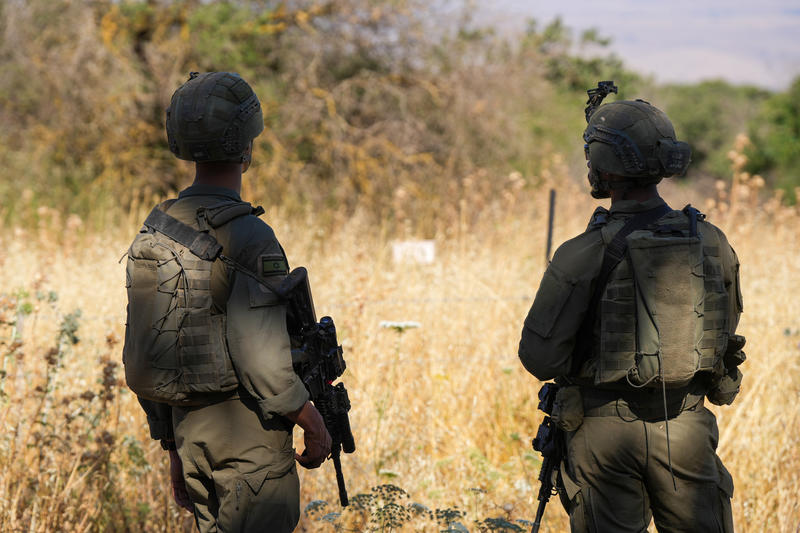
Israeli soldiers man a roadblock along the Ramim Ridge area in northern Israel following suspected militant infiltration incident along the Israel-Lebanon border. June 09, 2026.
Israeli soldiers man a roadblock along the Ramim Ridge area in northern Israel following suspected militant infiltration incident along the Israel-Lebanon border. June 09, 2026. Photo by Ayal Margolin/FLASH90

What’s happened: Four IDF soldiers were killed Thursday night when a Hezbollah drone exploded on troops near the village of Kfartebnit in southern Lebanon.

  • Among those killed was Lt. Col. Dor Gedalia Ben Simhon, 32, of Kibbutz Beit Hashita, commander of the 52nd Battalion of the 401st Armoured Brigade.
  • In response to Hezbollah’s ongoing  violations of the ceasefire, the IDF struck more than 80 command centres, terrorists, launch positions, and additional terrorist infrastructure sites in the area of Nabatieh and additional areas in southern Lebanon.
  • Meanwhile, Iran’s negotiating delegation has suspended its trip to Switzerland due to continued Israeli operations against Hezbollah in southern Lebanon, despite the recent signing of the MOU between the US and Iran.
  • US Vice President Vance delivered a speech featuring unusually harsh criticisms of Israel. Vance warned that Israel should not “attack” the only powerful ally they have in the world, and that Trump was “the only head of state in the entire world who is sympathetic to the nation of Israel at this moment in time.”
  • Furthermore, Vance stated that Israel was built with American money, in reference to the defensive ammunition used in Israel which is made in the US. Vance did, however, make clear that Israel has the right to defend itself in reference to the ceasefire with Lebanon. Vance also called out critics of the MOU, stating that the deal that was signed forces Iran to change its behaviour before receiving any benefits.
  • The Speaker of the Lebanese Parliament also stated that Lebanon is committed to the ceasefire in place with Israel, and Hezbollah will adhere to it as long as Israel does as well. This comes as Hezbollah attacks continued on Thursday, in which another IDF soldier Master Sergeant (res.) Alexander Filin was killed along with 6 more injured.

Context: Israel has stated that they reject the provision in the agreement requiring an immediate and permanent end to hostilities in Lebanon. Prime Minister Netanyahu expressed to President Trump that Israel does not consider itself bound by the MOU.

  • An IDF official has clarified that IDF forces will remain in the buffer zone 10km into southern Lebanon as long as the security situation warrants it. Israel won’t want to directly contradict and certainly not antagonise the US government, but as any self-respecting sovereign country – they will do all they need to do to protect their civilians and defend their national interests.
  • Israelis remain puzzled by the agreement that appears to consolidate the linkage and influence that Iran has over Lebanon. It has been a long-standing US foreign policy objective to decouple Iran’s stranglehold over Lebanon and its support for Hezbollah, a proscribed terrorist organisation.
  • Tensions between Israel and the US are likely to remain heightened, as the prevailing thought is that the US administration has moved from touting regime change, to now promising hundreds of billions to prop up a fundamentalist regime that has murdered tens of thousands of its own citizens.
  • The Lebanese president has blamed Hezbollah for beginning the latest round of fighting, and for importing a foreign conflict at Iran’s behest, which is against the interests of the Lebanese people.

Looking ahead: Efforts to reach a separate deal Israel and Lebanon are expected to continue, parallel to any agreement with Iran and the US.

  • There is heavy scepticism that the allotted 60-day period is a realistic timeframe to reach full agreement based on the MOU, and even if extended, if it can be implemented at all.

June 18, 2026

Israel reels from Trump’s Iran MOU

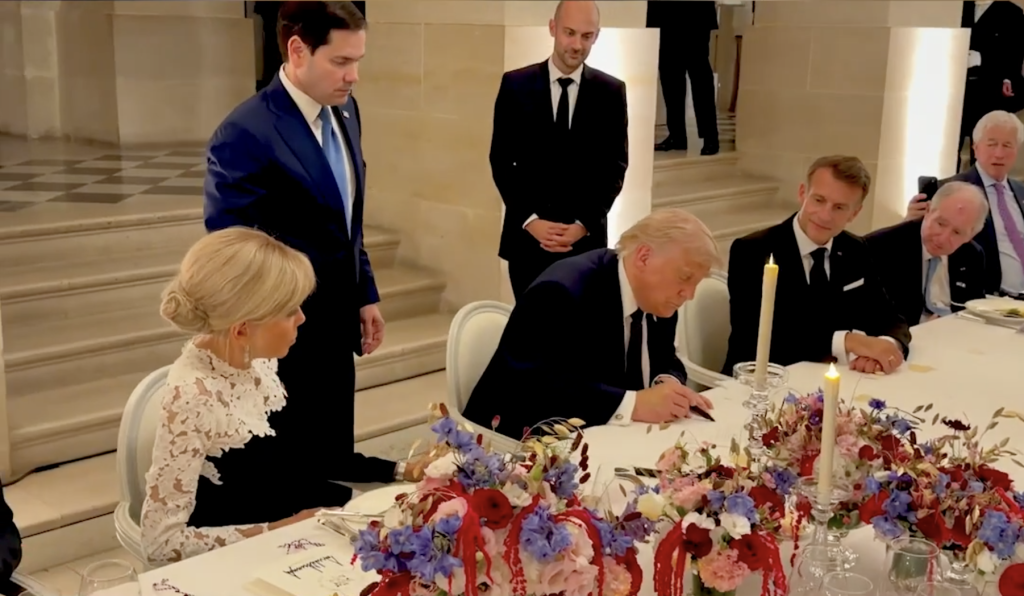
President Donald J. Trump signing the Iran Memorandum of Understanding at Versailles in France. June 17, 2026.
President Donald J. Trump signing the Iran Memorandum of Understanding at Versailles in France. June 17, 2026. Photo Credit: The White House / x

What’s happened: Yesterday in Versailles, President Trump signed the Memorandum of Understanding (MOU) negotiated with Iran which will reopen the Strait of Hormuz and launch a sixty-day period of negotiations for a comprehensive agreement on Iran’s nuclear programme and the lifting of US sanctions on Iran.

  • The MOU comprises 14 points in total.
  • The first point declares “the immediate and permanent termination of military operations on all fronts, including in Lebanon.” Lebanon, in fact, is mentioned three times in the first point, which includes a clause committing the US and Iran to “ensuring the territorial integrity and sovereignty of Lebanon,” which presumably applies both to America’s ally Israel and to Iran’s proxy force Hezbollah.
  • The MOU establishes a sixty-day period for the two sides to negotiate a comprehensive agreement on Iran’s nuclear programme, extendable by mutual agreement. At the outset, the Iranians commit not to “procure or develop nuclear weapons.” Also, the US commits itself to terminating all sanctions on Iran when a final deal is agreed upon. When a final deal is agreed upon, it shall be endorsed by a binding resolution of the UN Security Council.
  • The US will end its blockade of Iran within 30 days, but otherwise maintains its status quo posture for the duration of the negotiation period. Once a final deal is reached, it will make a substantial withdrawal of its forces within 30 days after the comprehensive deal is signed.
  • Iran will reopen the Straits of Hormuz for commercial shipping traffic immediately, though it is given 30 days to complete the removal of mines and other obstacles. The MOU commits Iran to keep the Strait open and toll-free for sixty days, the same period as the negotiation period for the final deal, but curiously does not link the two, leaving it open to interpretation what the status of this aspect of the agreement would be if, as expected, the negotiations taking longer than sixty days and the period is extended by mutual consent.
  • A clause in the MOU committing both sides not to interfere in each other’s internal affairs would seem to be an official American abandonment of regime change in Iran as a political goal.
  • The White House also released the full text of the MOU, something it had refused to do in recent days after it had already agreed to it but before the President signed it.
  • The official text resembled the purported versions circulated by Iranian officials in the media over the past few days in most aspects, but with a few differences. The agreed text does not explicitly call for an Israeli withdrawal from Lebanon and does not allow (for now) Iran to charge tolls for the passage of commercial vessels through the Strait, despite rumours and Iranian claims to the contrary over the past week.
  • Trump’s speech last night at the G7 was full of criticisms of Israel, its war in Lebanon, and Prime Minister Netanyahu. In this it continued a theme Trump has warmed to repeatedly in recent days.
  • The President once more criticised Israel’s use of force in Lebanon, saying, “You don’t have to knock down a building every time somebody walks into it that’s from Hezbollah.”
  • He unsubtly referred to Israel as “a very small partner,” though in this he was quoting something Prime Minister Netanyahu said to him.
  • He also dug up an incident from the distant past, when, according to him, the US and Israel endeavoured to eliminate Qassem Soleimani in a joint operation in 2020, but at the last minute Prime Minister Netanyahu opted out of any Israeli involvement. Ultimately, the US successfully eliminated Soleimani on its own. Few in Israel regretted the elimiation and few regretted that Israel wasn’t directly involved.
  • Though the diplomatic drama has put the war in Lebanon mostly on pause, it has not stopped it entirely. IDF soldiers moving on foot near the Litani River were hit by a Hezbollah IED yesterday. The device killed Master Sgt. Alexander Filin, a 29-year-old reservist from Haifa, and injured six others, including a female soldier and a deputy commander. Filin made aliyah from Ukraine as a teenager. In 2018, on the occasion of Israel’s 70th Independence Day, he was the recipient of the President’s Citation for Outstanding Soldiers for his courage in an incident where he successfully stopped a terrorist trying to carry out a stabbing attack.

Context: The agreement has almost universally been seen in Israel as a diplomatic and military catastrophe.

  • Israel media commentary was scathing in its assessment of the agreement and of Prime Minister Netanyahu’s management of the war effort.
  • Writing on the online news site Walla, Idan Kweller calls the agreement a “formative moment” in US-Israel relations. “This wasn’t Israel’s abandonment, but it definitely was a stern warning to Netanyahu. American support exists under the Trump administration, as long as Israel doesn’t stand in the way of clinching the larger deal.”
  • In Haaretz, Amos Harel argues that “The Iran affair is emerging as the second worst fiasco in Prime Minister Benjamin Netanyahu’s long history, following Hamas’ massacre in southern Israel on October 7, 2023.”
  • Avner Vilan, in a posted commentary on N12, wrote, “At best, we’ve bought ourselves an insanely expensive nuclear agreement, without missiles and without proxies [being included] and with endless Iranian immunity. At worst, we’ve given Iran a lifeline, while it has barely given anything at all in return. In both cases, the same question remains: Why did we start this to begin with?”
  • Most Israeli analysts doubt that Iran and the US can actually come to a final agreement within 60 days — or at all, even with the deadline being extended. In such a scenario, Iran would not be able to enjoy significant sanctions relief and would probably not be able to see the promised relief fund of some $300 billion get off the ground, but it would begin recovering frozen assets and it would start selling oil, even if only to countries outside the direct US orbit. This would allow it to rapidly rebuild the defence facilities that it lost in the war and to reflate its economy, removing the main source of domestic pressure on the regime.
  • Even if negotiations did seem to be making serious progress, Iran could presumably threaten to close the Straits once more or attempt to reach an arrangement with the Omanis about “service fees,” as long as that was after 60 days — a deadline no one believes can be met anyway.

Looking ahead: US-led efforts to reach an agreement between Lebanon and Israel continue apace.

  • President Trump’s remarks earlier this week about having Syria, under its post-Assad regime, take responsibility for fighting Hezbollah rattled Israelis, Lebanese, and for that matter, Syrians too. Israeli media reported that the new Mossad head Roman Gofman suggested to the Cabinet taking the proposal seriously, but was overruled by Prime Minister Netanyahu.
  • Meanwhile, a quiet effort is underway to arrange a public meeting between Prime Minister Netanyahu and Lebanese President Joseph Aoun in Washington, possibly with the participation of President Trump too.

June 15, 2026

US-Iran agreement leaves key nuclear questions unresolved

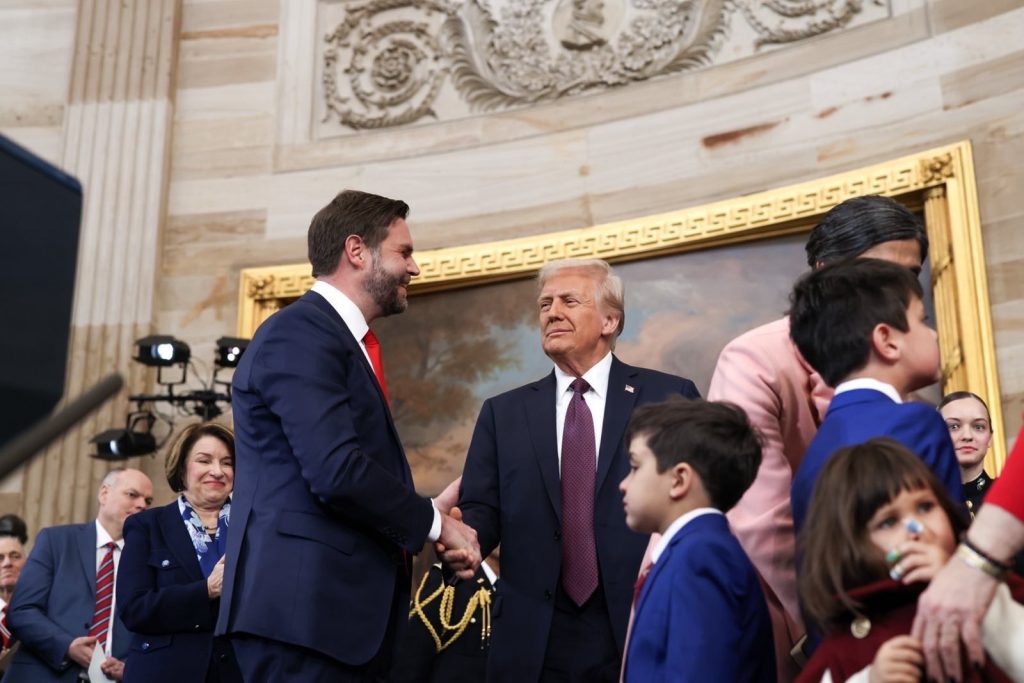
JD Vance and Donald Trump shaking hands
JD Vance and Donald Trump, June 14, 2026. Photo credit: JD Vance / X

What’s happened: The US and Iran have reached a framework agreement to end the war that began nearly four months ago on February 28. The deal is to be signed this Friday.

  • The deal was announced by Pakistani Prime Minister Shehbaz Sharif, who had served as a lead mediator between the sides, and was quickly confirmed by Iranian and US officials, including President Trump.
  • The text of the deal has not yet been made public. However, media reports are in general agreement about several of the key points in the agreement.
  • It is widely believed that the deal will stipulate a sixty-day period for the United States and Iran to come an agreement on Iran’s nuclear programme. At the beginning of this period, the Strait of Hormuz will be reopened to shipping, and the US’s blockade of Iranian ports will also be lifted.
  • The Pakistani statement on the agreement said that it included a commitment to a full ceasefire in Lebanon too, something which was not confirmed by US officials.
  • The issues that are addressed upfront in the deal include:
    • An Iranian commitment not to develop nuclear weapons and to abide by the Treaty on the Non-Proliferation of Nuclear Weapons (NPT).
    • An immediate opening of the Strait of Hormuz to commercial shipping.
    • An end to the US blockade of Iranian ports.
    • A cessation of armed hostilities for the duration of the negotiation period.
  • The issues that are to be addressed in the sixty-day negotiation period include:
    • Iran’s nuclear facilities.
    • Limitations on Iranian enrichment capacities. Earlier US demands were for a 20-year moratorium on all enrichment followed by a permanent cap on enrichment no higher than 3.67 per cent, a level usable for energy but not weapons. In an interview with The New York Times yesterday, Trump hinted he might be willing to accept a 15-year moratorium, but would still insist on the permanent cap.
    • The fate of Iran’s stockpile of enriched uranium, including not just the highly enriched uranium currently believed to be buried under the ruins of a nuclear facility bombed by the United States in June 2025.
    • Sanctions relief, which the United States has made no provision for in the interim agreement and will only consider as part of the larger comprehensive agreement, if one is reached.
  • Issues that might overlap or for which there are conflicting reports include:
    • Billions of dollars of frozen Iranian assets, which the Iranians claimed may be, at least in part, unfrozen already during the sixty-day ceasefire period. US officials deny this, though they have in the past been keen to separate the issue of frozen assets from sanctions relief, on which they have been decidedly more insistent about not treating until after a full nuclear agreement is in place.
    • Tolls on maritime traffic through the Strait of Hormuz, about which there are entirely contradictory claims from both Washington and Tehran that are difficult to assess in the absence of any publication of an agreed text.
    • Iran’s ballistic missile programme, its support for regional proxies, and its internal repression are not treated in the interim agreement, and it is not clear which if any of these will be included in the negotiations during the sixty days of ceasefire.

Context: The announcement of an agreement came against the backdrop of a very tense day on the Israel-Lebanon front. Hezbollah launched three attack drones on Israeli communities in the north, sending residents into shelters, but ultimately causing no casualties on the Israeli side. Israel responded with a significant air strike in Beirut, eliminating three Hezbollah terrorists, including one wanted by the US for the killing of five Americans.

  • The air strike was followed by an Iranian threat to launch missiles against Israel in response. Israel’s Home Front Command raised alert levels and cancelled large public gatherings.
  • Ultimately, no Iranian missiles were launched. Significant US pressure on Iran not to do anything which would unravel the almost completed agreement, coupled with a vocal American condemnation of the Israeli operation in Beirut, brought the escalation to an end.
  • For the US, it was a significant diplomatic test, as well as a dilemma. For most of the last two months, the US has been insisting that any Israeli response to Hezbollah fire be contained to southern Lebanon, or at the very least, be outside of Beirut. The fact that one of the Hezbollah terrorists targeted yesterday was wanted by the US itself only heightened the dilemma faced by the Trump administration.
  • For Israel, it was an even more delicate and trying test. Israel does want to appear to ratify the new Iranian “equation” by which any Israeli attack in Lebanon leads to a counterattack on Israeli cities from Iran. In Jerusalem, it was understood that the Hezbollah drone attack was deliberately meant to set a diplomatic trap for Israel. If it failed to respond to the Hezbollah attack out of fear of Iranian retaliation, it was leaving itself open to an unlimited war of attrition on its north which it could not respond to. If it responded, it risked both US condemnation and a renewal of the war with Iran. Ultimately, Israel chose not accept the “equation,” and at the last minute, it was Iran that blinked.

Reactions: Vice President JD Vance, who is expected to sign the agreement this week in Switzerland on behalf of the United States, said that it would “fundamentally transform the Middle East for the next 50 years.”

  • Prime Minister Starmer welcomed the agreement and offered UK support for mine clearing in the reopened Strait of Hormuz. A statement from Number 10 added that, “We are clear that toll-free freedom of navigation must now be restored in the Strait of Hormuz, to begin easing the severe economic impacts that have been felt for several months – on families here in the UK and around the world.”
  • Official reactions in Israel have been muted thus far, with government officials stressing Israel’s independent authority to act both in Lebanon and in response to any Iranian attack on Israel.
  • Opposition politicians condemned Netanyahu for fumbling, in their eyes, Israel’s diplomacy.
  • Opposition Leader Yair Lapid tweeted that the deal “doesn’t achieve any of Israel’s war goals – the regime survives, the missile program is intact, and Iran can rebuild the nuclear programme,” and added that it was “total failure” by Netanyahu that turns Israel into a “protectorate that receives instructions regarding its national security.”
  • Yair Golan, leader of the left-wing Democrats, described the US-Iran agreement as “made over the heads” of Israel’s leaders. “With one signature, tremendous military achievements achieved with the courage of our pilots and the blood of our fighters were erased, while Netanyahu stood by – weak, sick, isolated and ineffective,” he posted on social media.
  • Also critical were ministers in the Government associated with the far-right. Finance Minister Smotrich called the agreement “bad for Israel and the entire free world.”
  • The announcement of the Iran framework agreement coincided with a pompous celebration of Donald Trump’s birthday in the White House Gardens.

Looking ahead: The allowed sixty days for negotiating a comprehensive agreement would take the US past the World Cup and well into the midterm election season, also an election period in Israel. Trump, in multiple interviews over the past two days, has threatened that he would not hesitate to use force again if an agreement is not reached.

  • Despite this, there is some scepticism about whether the US would really be able to mount a costly military operation at the end of summer as an election campaign is underway. This scepticism will surely weaken the American bargaining position in the talks.
  • In an interview with The Wall Street Journal, Trump dropped an interesting hint about how he weighs his potential lever in a situation where talks do break down after sixty days. He claimed that the American naval blockade on Iranian ports had ultimately proved more successful at pushing the Iranians closer to US positions than any kinetic military action. Despite getting less attention than American or Israeli air strikes and the Iranian closure of the Straits of Hormuz, the blockade, according to Trump, was “more powerful than the hits.”  
  • Beyond the concerns that Israeli officials expressed about the nuclear programme or even the ballistic missile programme or Iran’s regional proxies, there is a real apprehension that even a good agreement, accompanied by sanctions relief, could end up extending a financial lifeline to the Islamist regime only months after it appeared on the verge of collapse.
  • Donald Trump is due to attend the G7 Summit in France, which starts today and runs until Wednesday. This will be the first opportunity for US G7 partners, including the UK, to be briefed on the details of the Iranian deal at the highest level.

June 11, 2026

US and Iran escalate exchange of strikes

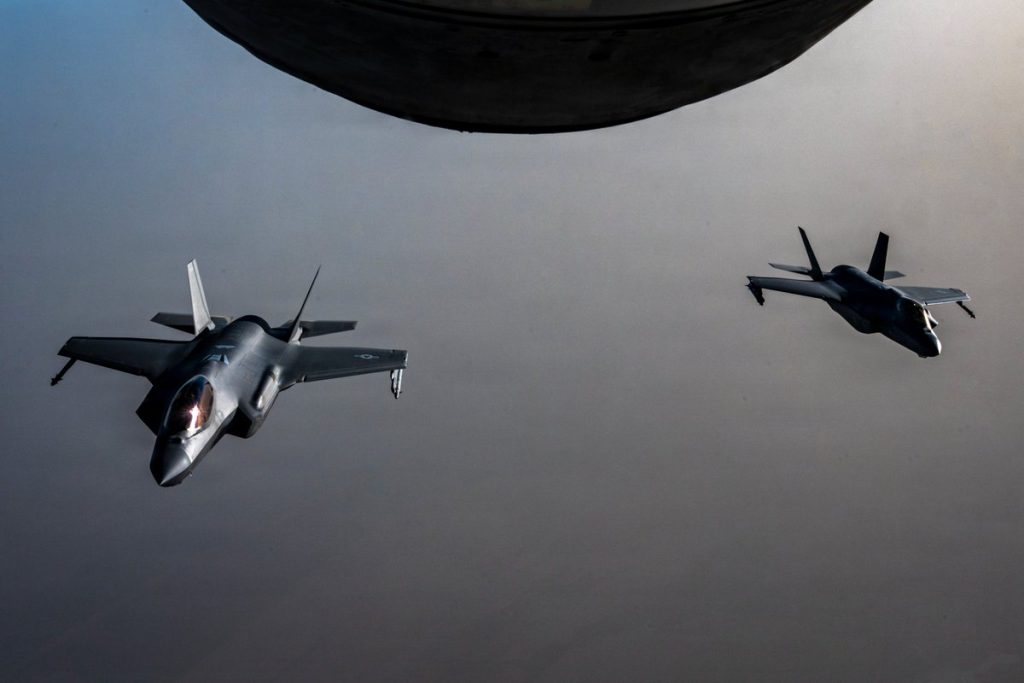
Two US Air Force F-35A stealth fighter jets fly over the Middle East during a patrol. June 6, 2026.
Two US Air Force F-35A stealth fighter jets fly over the Middle East during a patrol. June 6, 2026. Photo credit: US Central Command / X

What’s happened: The US and Iran engaged in a fresh exchange of missile fire and air strikes yesterday and overnight.

  • The US launched what CENTCOM characterised as “self-defence strikes” against multiple targets in Iran, including in the southern port city of Bandar Abbas. The term “self-defence strikes” is the preferred term to describe American operations that are intended to be seen as pointed responses and not signal the end of the ceasefire in effect since April 8.
  • US media reported that this wave of strikes included not just ordnance fired from aircraft but also 49 Tomahawk missiles. Among the targets reportedly hit was a large water facility on the Iranian coast of the Strait of Hormuz. The Iranians reported that water service in the region was cut off for 20,000 people. The water facility is adjacent to an underground Iranian air force base. Other targets by US forces included IRGC service units, coastal posts, and police command sites.
  • Iran announced this morning that it had launched 18 attacks on US military facilities in Kuwait and Bahrain. This morning’s attacks, unlike yesterday, did not apparently include targets in Jordan.
  • In the hours since this morning’s Iranian attacks, a US reprisal attack has apparently been underway, with a broader geographical range than the operations on Tuesday or Wednesday. CENTCOM reported targeting Iranian military surveillance capabilities, communication systems and air defence sites across southern Iran. An explosion was reported in Karaj, outside of Tehran, site of a major Iranian base and missile factory. There were conflicting reports of an attack on the South Pars gas facility.

Rhetoric: While previous rounds of mutual limited attacks between the US and Iran since the ceasefire went into effect have been accompanied by statements from both sides that sought to portray the operations as not signalling the imminent end of the ceasefire, today’s exchange of fire was accompanied by more bellicose statements.

  • The commander of the IRGC Aerospace Force, General Majid Mousavi was quoted in Iranian state media as saying, ““You are making the holy Strait of Hormuz unsafe? We will turn the entire region into hell from across Iran. This is the response to America’s aggression in the region.”
  • President Trump, too, signalled that he is running out of patience with the ceasefire and the negotiations that have not yet led to any agreement, telling US media that if an agreement was not reached soon, he would “bomb the shit out of Iran.”

Context: The possibility that the ceasefire with Iran could unravel has brought about a change in the IDF’s priorities too. The IDF has begun scaling back its operations in Lebanon to free up air forces for a potential renewal of hostilities in Iran.

  • The IDF also brought home forces that were operating for 30 days in Lebanese territory north of the Litani River.
  • With the soldiers safely back at base, the IDF shared with media for the first time some of the details of its operations in this sector, including the capture of a massive weapons facility, hastily abandoned by Hezbollah fighters whose units have been collapsing in the face of the Israeli onslaught. At the facility were launchers with missiles ready to be launched at Israel’s northern communities, as well as drones, anti-tank missiles, rifles, and vests, presumably for use in an October 7-style invasion of northern Israel.

Gaza: Talks continue in Egypt to reach an agreement on Hamas disarmament, in line with the comprehensive plan which ended two years of war in Gaza last October. Israel is not a participant in the talks, which are also mediated by Qatar and Turkey, along with Egypt.

  • According to Arab sources, Hamas has shown some willingness to give up its “heavy weapons,” but not its “light weapons. The former category includes the missiles and rockets it uses to attack Israel. The latter category includes the rifles and other munitions it needs to maintain its domestic control of Gaza.
  • The Israeli assessment is that Hamas has almost no heavy weapons left anyway, so this is at most a symbolic concession. Though Israel is not a party to the talks, it is unlikely to permit the entry into the Gaza Strip from Egypt of the so-called “technocratic committee” which is supposed to handle governance of Gaza unless there is an agreed disarmament that meets Israel’s minimal conditions.
  • Without disarmament, the progress of the comprehensive agreement is stalled, and the renewal of combat becomes more likely. This is especially the case as the major international actors involved have been laying the blame for the failure on Hamas and not on Israel, and as Israel will not, in any renewed hostilities, need to avoid operating in the Hamas redoubts of the refugee camps in the centre of the Strip for fear of harming Israeli hostages — because Hamas no longer holds any.

June 10, 2026

US strikes Iran as Israel intensifies operations in Lebanon

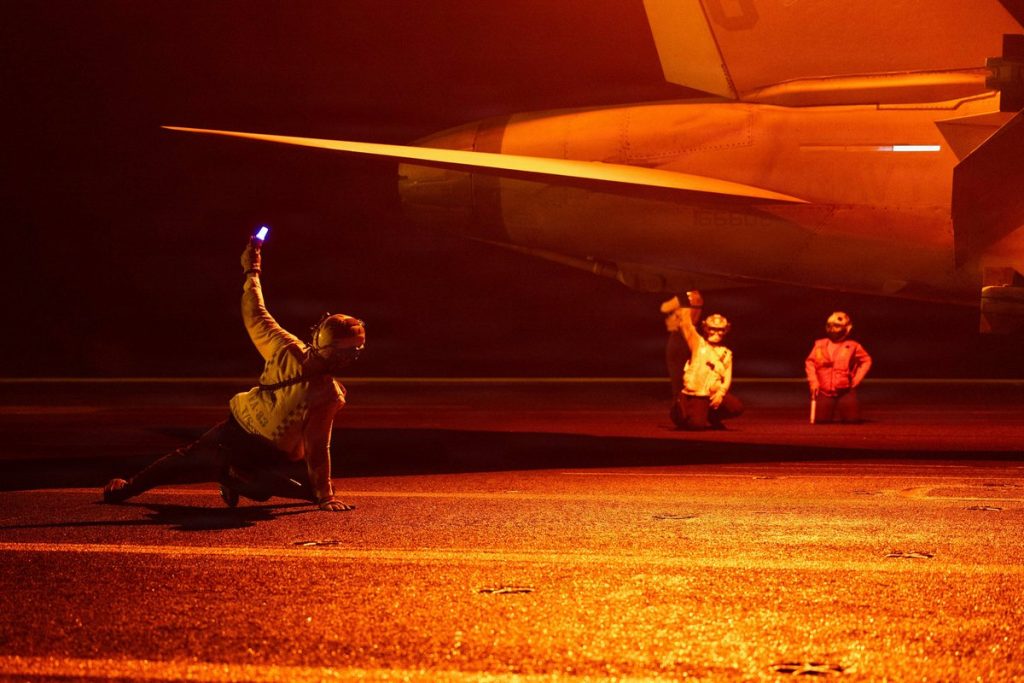
Sailors aboard USS George H.W. Bush (CVN 77) conduct night flight operations. June 7, 2026.
Sailors aboard USS George H.W. Bush (CVN 77) conduct night flight operations. June 7, 2026. Photo credit: US Central Command / X

What’s happened: A US Apache helicopter went down near the Strait of Hormuz yesterday. Both crew members were rescued alive by an unmanned sea drone. According to CENTCOM, this is the first such rescue successfully carried out by an autonomous surface vessel.

  • Official Iranian media claimed that Iranian forces had not engaged in any aerial activities near the Strait, and for hours after the incident it was unclear what exactly had transpired. Then President Trump announced that the helicopter had been shot down by Iranian fire, with US officials confirming that an Iranian one-way Shahed drone had brought the helicopter down.
  • In response, US forces launched a limited air strike against Iranian air defence, radar, and ground control stations near the Strait of Hormuz. An official CENTCOM statement referred to the US operation as “self-defence strikes,” the preferred term of US officials for operations that are not intended to signal an end to the US-Iran ceasefire in effect since April 8.
  • The Iranians responded this morning with what they claimed were attacks on 21 US bases in the region. Iran also claimed to have shot down a US MQ-9 Reaper drone over Iranian territory.
  • US officials denied that Iran had struck 21 or even fired at 21 sites. US and regional officials described successful interceptions of Iranian missiles over Kuwait, Bahrain, and Jordan, where the target appears to have been a large US air base at Al Azraq.
  • The ceasefire that was effectively imposed by the Trump administration on Iran and Israel after one day of mutual fire on Monday held. The Iranian attempt to leverage missile launches on Israel to bail out its proxy in Lebanon failed to stop Israeli action in Lebanon, however. The IDF this morning announced further evacuation orders in southern Lebanon ahead of anticipated Israeli military strikes. Earlier today, the IDF carried out a large strike against Hezbollah targets in the Lebanese city of Tyre.
  • The Israeli operations in Lebanon, including fire beyond the Litani River, carry significance on two levels. They constitute offensive action against Hezbollah, which had been attacking northern Israel in the week before, and they demonstrate definitively that the Iranian attempt this week to create a new “equation” by which Iran could fire at Israeli cities if Israel operated in Lebanon, failed to produce the result desired by Tehran.
  • Also yesterday, an armed man in a military uniform crossed into Israel from Lebanon. When he was discovered by the IDF, he opened fire, but was eliminated by IDF fire.
  • The UK Government is advancing legislation in Parliament that would designate the IRGC as a “threat to national security,” potentially closing a loophole that made it difficult to apply existing anti-terrorism provisions to a state-run intelligence service, rather than a non-state actor, even one backed a sovereign state, as existing legislation permits. This follows the discovery of at least 20 suspected plots to carry out attacks in the UK, especially against Jewish targets.
  • This move occurs on the same day that the UK announced a raft of sanctions against six firms it alleges are complicit in enabling settler violence in the West Bank. The six associations are small fundraisers, none of which are known to have assets or activities in the UK. This announcement was accompanied by an announcement of £10 million in aid for the Palestinian Authority, that was, notably, not conditioned on any reform or an end to the Authority’s policy of paying families of convicted terrorists.

Context: The low-scale flare-up between US and Iranian forces in the Gulf, like the one day of fighting between Israel and Iran earlier this week, all occur on the backdrop of a feverish US effort to reach an agreement with Iran on its nuclear programme.

  • US officials have begun leaking to American media some of the areas of agreement between the two sides in negotiations thus far. These include:
    • An Iranian commitment to suspend uranium enrichment for an extended period. The Iranians have apparently offered to suspend enrichment for ten years, while the US has demanded twenty. There was speculation the sides might agree on fifteen, though public pronouncements by President Trump indicate that the US will insist on twenty to reach an agreement.
    • Iran will “downblend” all enriched uranium. Earlier the US had insisted that Iran’s stockpile of highly enriched uranium be shipped out of the country. This stockpile is estimated at roughly 480 kg and believed to be buried in the ruins of a nuclear site destroyed by US forces in Operation Midnight Hammer last summer. If the leak is true, then none of this stockpile would leave Iran; it would, rather, be diluted (or “downblended”) in Iran with an active US role. Moreover, the agreed downblending would apply not just to the 480kg of highly enriched uranium, but to all the estimated 11 tons of uranium that has been enriched, even to much lower levels.
    • Iran would dismantle all three of its major nuclear sites in Natanz, Fordo, and Isfahan. It is unclear if Iran has actually agreed to this or whether it is still insisting on shutting down only two out of three.
    • A strict international inspections regime. Iran would have to agree to so-called “snap” inspections, which are unannounced ahead of time, by international inspectors, including at IRGC sites, where Iran had previously blocked inspectors’ access.
  • It is not known what the sides may or not have agreed to as far as the two parallel blockades imposed by the US and Iran, though it is widely believed both would be lifted quickly. It is much less likely, however, that any unfreezing of Iranian assets would happen as quickly, at least according to US sources.
  • Notably, none of the leaks about negotiations mention issues that were key points of contention in the lead-up to the war which began on February 28, including Iran’s support of regional proxy armies, its ballistic missile programme, or its violent suppression of protests in January of this year.
  • Global energy markets continue to adjust for Iran’s blockade, now more than 100 days old, on shipping traffic through the Strait of Hormuz. While the process is hardly painless and affects major US allies differently — Saudi Arabia and the UAE have alternative to the Strait while Qatar does not — the impact of the Iranian blockade has so far been much less catastrophic than initially feared. On the other hand, the US blockade or Iranian ports continues to grind down the Iranian economy with Israeli officials believing a breaking point there may be only weeks away.

Looking ahead: In Cairo, talks are underway between Palestinian factions under an Egyptian-led effort to reach an agreement on implementing the Gaza ceasefire and finding a workable formulation for Hamas disarmament, a key provision of the ceasefire. A successful agreement could pave the way for the “technocratic” committee to enter Gaza and bring the comprehensive agreement, which ended the war in October 2025, to the next stage.

  • Israeli officials are markedly pessimistic about any real mechanism for Hamas disarmament. According to Israeli analysts, Hamas has managed to retrench and rebuild its military and governing capacities in the roughly 40% of the Gaza Strip which it still controls.
  • Failure to implement the disarmament clause of the comprehensive agreement increases the likelihood that at some point the IDF will enter the rest of Gaza and forcibly disarm Hamas itself. In the war which began on October 7, 2023 and ended two years later with the comprehensive agreement, Israeli forces refrained from entering Hamas redoubts in central Gaza’s refugee camps for fear of harming Israeli hostages who were largely held in, and under, those densely populated areas. These hostages are all now home.

June 9, 2026

Schools in Israel reopen

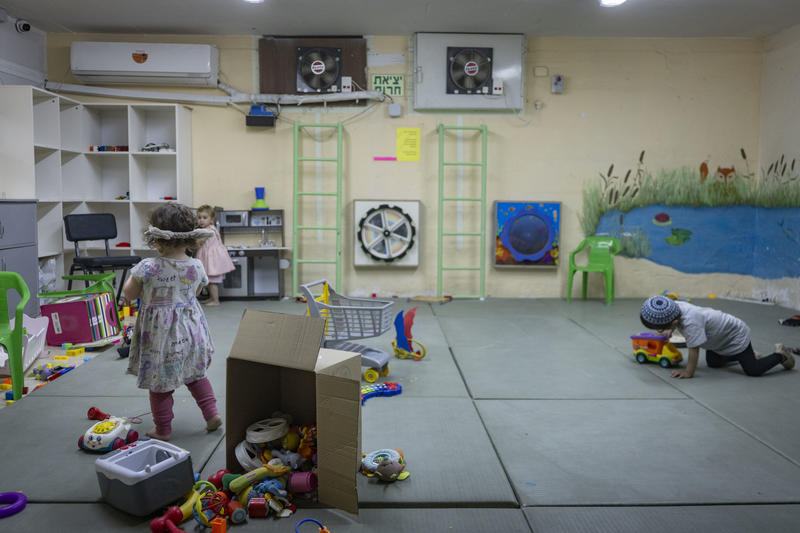
Children play in a public bomb shelter in the Nahlaot neighborhood of central Jerusalem, June 8, 2026.
Children play in a public bomb shelter in the Nahlaot neighborhood of central Jerusalem, June 8, 2026. Photo by Chaim Goldberg/Flash90

What’s happened: Home Front Command restrictions have been lifted nationwide, including schools that have reopened this morning.

  • The only exception is in communities along the Lebanese border where a “partial activity tier” was declared in towns on and near the confrontation line. People in these areas can work and hold classes only in structures or places from which they can access suitable protected areas.
  • Confrontation Line Communities Forum Chairman Moshe Davidovich shared the frustration felt by the area’s residents following the policy update. Davidovich told Kan News, “Again, we’re back to colours: Red, orange, green. Our children aren’t traffic lights. While the whole country gets back to normal, ostensibly green, we’re going back to the ongoing nightmare of war in the confrontation line communities, and we’re alone. We’re in dark conditions, darker than dark.”*
  • He was referring to the new features on the Home Front Command alert app which has new colours and sounds to distinguish warning stages: yellow for preparedness, red for entering protected spaces and green for the all-clear. The Home Front Command used the ceasefire period to introduce changes to its mobile app, making it easier to distinguish between different types of alerts.
  • Overnight two drones infiltrated into Israeli territory, one from the north and one from the south. A drone that was fired from Yemen was intercepted near Eilat after midnight. At the same time, sirens were sounded twice in towns in the western Galilee, where a drone was also intercepted.
  • At the conclusion of yesterday’s security cabinet meeting, it was decided to keep striking the Dahiya Quarter in Beirut in retaliation for every projectile launched at Israel. Prime Minister Netanyahu warned Iran against renewing its attacks on Israel. Netanyahu said: “Currently, they’re holding their fire on this front because after we hit the terrorist regime in Tehran, it ceased attacking us. If the terrorist regime makes the mistake of attacking us again, we will retaliate forcefully because Israel has the absolute right to self-defence, which we exercise as necessary.”

Context: It appears the fighting between Israel and Iran is over for now. The Iranian missile attacks and subsequent Israel response were the first direct hostilities between the two countries since April’s shaky ceasefire took effect.

  • This most recent escalation began on Sunday evening when Iran fired salvoes of missiles at northern Israel, ostensibly in response to Israeli air strikes on Hezbollah targets in Beirut. Israel retaliated with its own air strikes on aerial defence systems as well as a petrochemical facility in southwest Iran which it said was being used to manufacture raw materials used for ballistic missiles.
  • In total, Iran is estimated to have fired approximately 21 projectiles at Israel, all of which were successfully intercepted without causing any damage.
  • The Houthis in Yemen also attempted to launch two projectiles, one of which dropped short of Israel while the other was successfully intercepted. The Houthis have also renewed their threat to prevent Israeli maritime navigation in the Red Sea.
  • Responding to the escalation, President Trump stated on the Truth social media site that “Israel and Iran must stop shooting”, and is reported to have threatened that Israel may find itself alone and unsupported in the event that it further escalated conflict with Iran.
  • According to reports Trump also told Netanyahu that he would have to “use sense”, but that he was also “very close to signing a very powerful deal” details of which remain unspecified.
  • Both Israel and Iran have indicated a willingness to resume hostilities, but their shared short-term intent is for the ceasefire to hold.

Looking ahead: The IDF is still manoeuvring in southern Lebanon and expected to continue to target Hezbollah fighters and military infrastructure.

  • In parallel, talks in Washington between the Israeli and Lebanese government  representatives are also expected to continue.
  • In an interview with CNN, Lebanon’s President Aoun went as far as to accuse Iran of using his country as a “bargaining chip” in negotiations with the US, making further comments that were highly critical of Hezbollah and the IRGC.
  • President Aoun asserted that Israel should withdraw its troops from Lebanon, and that only then could Hezbollah be “dealt with” by Beirut. He also appealed for Israel to engage in peace talks, and confirmed that the current round of US-brokered negotiations were intended to reach a non-aggression pact rather than full peace deal.

June 8, 2026

Israel responds to Iranian escalation

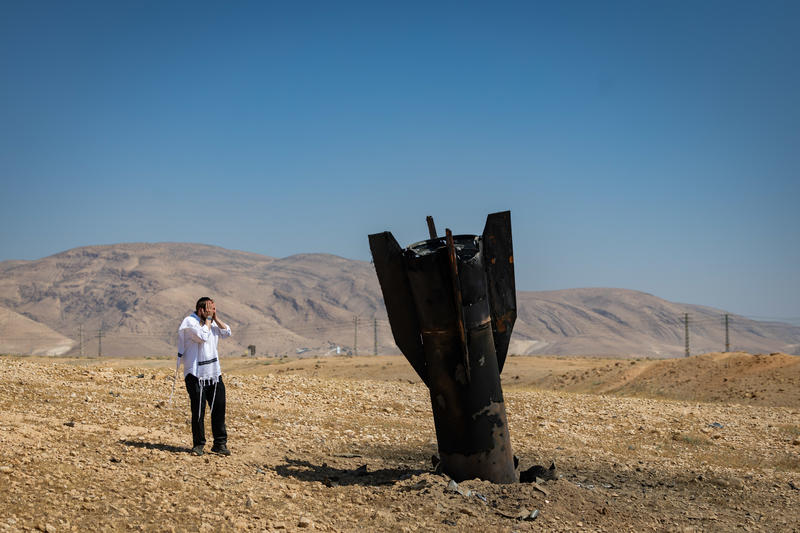
Part of an Iranian ballistic missile is seen in the desert near Vered Yeriho in the West Bank after being fired toward Israel from Iran, June 8, 2026.
Part of an Iranian ballistic missile is seen in the desert near Vered Yeriho in the West Bank after being fired toward Israel from Iran, June 8, 2026. Photo by Chaim Goldberg/Flash90

What’s happened: Iran fired ten missiles at northern Israel yesterday evening, acting on its threat to retaliate for an Israeli strike on Beirut.

  • Early this morning, the Israeli Air Force struck military and infrastructure targets across western and central Iran, including radars and anti-aircraft batteries, which will help facilitate operational freedom moving forward.
  • A single ballistic missile was fired by the Houthis in Yemen at central Israel at around 6:00 local time this morning. Iran then fired a number of missiles at central Israel roughly an hour later. All of the incoming projectiles were intercepted by IDF air-defence systems.
  • Prime Minister Netanyahu and President Trump spoke yesterday in the aftermath of Iran’s first missile barrage on northern Israel. According to Israeli media reports Trump said that he believes that Israel had “retaliated enough and should not retaliate further.”
  • Earlier Trump said in an interview to the Financial Times that Netanyahu would have no choice but to accept a deal with Iran. He stressed that he is the one who makes the decisions, not Netanyahu.
  • IDF Spokesperson Brig. Gen. Defrin said, “The regime is trying to create a new equation, when it directly fires at our territory in response to IDF attacks on the Dahiya Quarter. We will not allow this. We attacked the Dahiya Quarter following Hezbollah’s endless fire on communities in northern Israel. The IDF will continue to operate throughout Lebanon and will intensify its strikes on the Hezbollah terrorist organisation. We will not allow fire to continue at the citizens of the State of Israel.”
  • Earlier on Sunday morning, Hezbollah fired rockets at northern Israeli communities for the first time in four days. Two rockets that were fired at Ramot Naftali and Yiftah were intercepted.

Reactions: Domestically the Israeli government faced more criticism.

  • Leader of the Together Party Bennett said, “This is a test moment: is Israel a sovereign country that is capable of defending itself? Countenancing or a token response will signal to the enemy that our citizens’ blood has been made forfeit. That is why Israel must act powerfully and effectively. On this issue, all of us, all citizens of Israel, stand together.”
  • Yisrael Beiteinu leader Liberman also called for powerful Israeli retaliation: “Enough with the containment. We have to respond immediately and to strike Iran’s strategic infrastructure.”
  • The Democrats leader Golan said, “Our enemies see what everyone sees: Netanyahu is weak. Despite the military achievements, our enemies see that Netanyahu is a weak and failed leader. They see the string of failures, the political indecision and the personal politics that have been running the war—and they have concluded that Netanyahu is weak and that we can be attacked.”
  • Blue and White leader Gantz said, “The fighting in Lebanon should never have been stopped as part of the ceasefire with Iran. That strategic mistake needs to be corrected with powerful retaliation in Iran, but equally important, with ongoing attacks on the Dahiya.”

Context: There is a consensus in Israel that Iran cannot be allowed to create a new equation that Israeli action in Lebanon elicits an attack from Iran.

  • This explicit linkage did not exist before the war that began three months ago, and despite forty days of bombardment, Israel is concerned that at the current juncture Iran appears to be emboldened. This is partly explained by Trump’s apparent eagerness to do a deal that has allowed Iran to exert further demands.
  • Israel is well disposed to reach a ceasefire with Lebanon and even an eventual peace agreement, but the stranglehold that Iran maintains through Hezbollah has to be broken first. At the end of last week the US government announced an agreed ceasefire between Israel and the Lebanese government however shortly afterwards Hezbollah rejected the agreement.                  
  • For weeks Israel had restrained itself from striking Hezbollah assets in Beirut – at Trump’s request. However after the latest barrage of rockets and drones on northern Israel over the weekend and two more IDF fatalities in southern Lebanon, Israel did respond by targeting a Hezbollah command centre in Beirut.
  • In the Israeli assessment there remain over 2,000 Hezbollah fighters in southern Lebanon. Until they are removed Israel will feel compelled to continue its operations in the area.
  • Israeli attention also remains focused on the ongoing negotiations between the US and Iran, despite not being part of the process. While Israel will be sensitive to US demands, it is perturbed by the non-responses from Gulf states have had to absorb ongoing strikes from Iran. That is an unacceptable situation from Israel’s perspective.
  • Iran was possibly working on the assumption that as Trump wants a deal, he will therefore restrain Israel from resuming attacks. Israel for its part needs to mark out space from the US position, as it has a duty to defend its citizens from attack.

Looking ahead: Israel’s security cabinet will meet shortly and discuss the next operational steps.

  • The IDF remains on high alert and preparing for several days of clashes. As part of the preparation it is planning to mobilise a large number of reservists and to deploy reinforcements along all the borders.
  • A Houthi spokesperson has threatened to stop Israeli maritime traffic in the Red Sea.

June 3, 2026

US-Iran exchange fire as tense Lebanon ceasefire holds

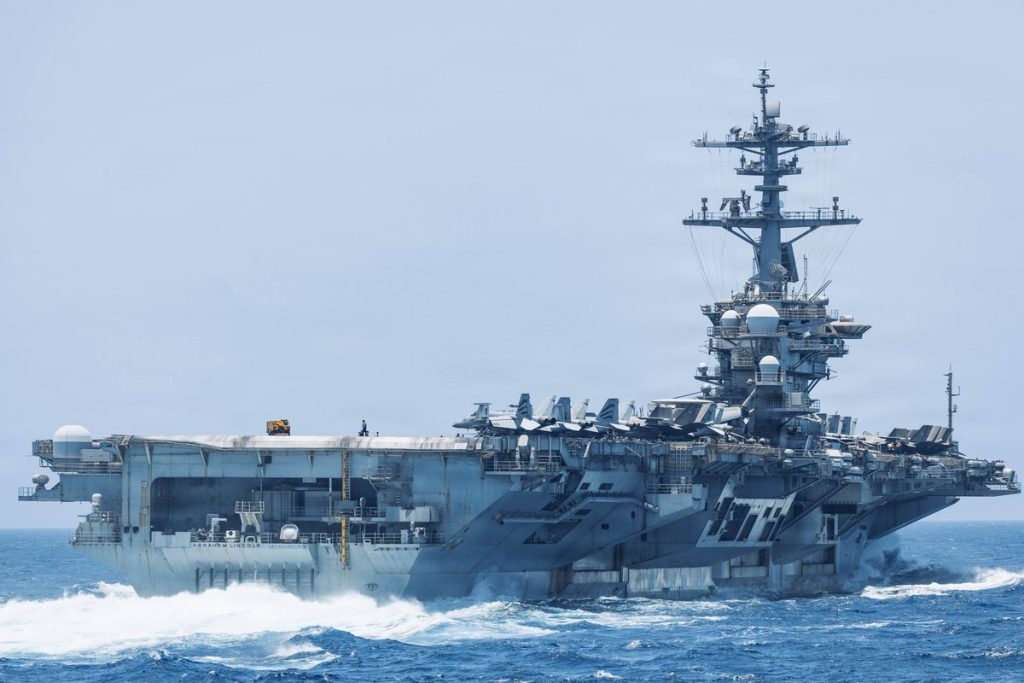
USS Abraham Lincoln (CVN 72) transits the Arabian Sea, June 2, 2026.
USS Abraham Lincoln (CVN 72) transits the Arabian Sea, June 2, 2026. Photo credit: US Central Command / X

What’s happened: On a backdrop of negotiations for a comprehensive US-Iran agreement, low intensity exchanges of fire continued in the last day.

  • US forces fired at a Botswana-flagged tanker that was heading toward Kharg Island in violation of the US-imposed blockade of Iranian ports. The tanker’s engine was disabled in the attack.
  • Following that incident, Iran launched several drones at US bases in Kuwait and Bahrain. According to American sources, the drones fired at Kuwait “fell short or broke apart” and the ones fired at Bahrain were successfully intercepted.
  • The US subsequently responded by striking an Iranian military facility on Qeshm Island.
  • There were no rocket attacks on Israel’s north overnight, as a tense ceasefire held.
  • Over recent days, Hezbollah had expanded the range of its attacks on Israel as well as keeping up a steady stream of drone attacks on IDF positions in southern Lebanon.
  • An imminent attack on a Hezbollah stronghold was reportedly called off at the last minute at the insistence of the Trump administration which pressured both sides to cease fire in the last 24 hours so as not to threaten the ongoing US-Iran talks.
  • The Israeli Government yesterday approved a plan for a massive investment in Israel’s battered northern communities. The plan would allocate 13 billion shekels (about £3.4 billion) in addition to the already approved 7 billion shekels from earlier decisions (about £1.8). The money will go to reconstruction, grants to small business owners, wage subsidies for hi-tech firms based in the north, and several headline projects in the Kiryat Shmona, including establishing an emergency medical facility there and a partial relocation of the nearby Tel Hai Academic College into the city itself.
  • Seated next to Kiryat Shemona’s mayor, Prime Minister Netanyahu spelled out the goals of the new investment plan, and said that his Government “is committed not only to the development of the North, but also to ensuring the security of the residents. There is no containment or leniency; we are acting against every threat in real-time.”
  • The new chief of Israel’s Mossad officially entered office yesterday. Roman Gofman, a major General in reserves who previously served as Prime Minister Netanyahu’s military secretary assumed his new position after the Supreme Court rejected petitions against his appointment.
  • At the ceremony yesterday, Prime Minister Netanyahu noted the Mossad’s central role in Israel’s longstanding conflict with Iran, saying that it “will continue to stand at the forefront of our struggle against Iran’s aggression. In continuation of the consistent policy we have been leading for years – we will not allow the Iranian regime to turn back the clock. We will not allow it to acquire nuclear weapons; we will not allow it to threaten our existence. This terrorist regime, which is destined to vanish from the world, and we will help it reach this goal, this regime will no longer threaten us with nuclear bombs and thousands of lethal ballistic missiles.”

Context: Though the US and Iran have not yet concluded an agreement that would definitively end the war which began on February 28 this year, both sides appear to believe an agreement is in reach. This was the main reason why an Iranian threat to quit the talks unless the US could force Israel to scale back its attacks was taken so seriously by the Trump administration.

  • The administration not only pressured Israel to back down from a planned strike agains Hezbollah targets in Beirut, it also leaked the contents of several tense phone calls between President Trump and Prime Minister Netanyahu.
  • There were conflicting reports about what the planned strike was supposed to look like and what Trump and Netanyahu had agreed to beforehand. According to one report in Israeli media, the evacuation order for the Dahiya district in Beirut, a Hezbollah stronghold, was issued in line with an agreement between the two leaders that Israel would threaten to attack the Dahiya but not actually carry out the threat, the idea being that an imminent strike would pressure Hezbollah to agree to cease its attacks.
  • At some point after the evacuation began, the Trump administration came under the impression that Israel was planning on going through with the strike and not just bluffing as had been agreed upon, and this is what led to the tense phone call between the President and the Prime Minister.
  • Israeli decision-makers are concerned that the emerging deal looks similar to the understandings that held during the 1990s, under which Israel was only allowed to respond with significant military strikes if its cities in the north were attacked, while its options for military action in response to attacks on its soldiers in southern Lebanon were extremely limited.
  • In the last seven years of the Security Zone (1993-2000), this understanding of the “rules of the game” led to many IDF casualties without the IDF having any real leverage over the Lebanese state or Hezbollah itself to stop them. It is particularly concerning now as Hezbollah has been able to use FPV drones to sustain a level of casualties on the Israeli side that is actually considerably higher than anything it did in the days of the unlamented Security Zone (1985-2000).
  • The leaked content of tense phone calls between Trump and Netanyahu reverberated in Israeli domestic politics too. Israeli politicians and media figures, not all associated with the right, criticised the Prime Minister for capitulating to the President’s demands and not following through on his threat to attack the Dahiya. Others noted that Israel has so tightly bound itself to Trump that it has lost any freedom of action.
  • It was not lost on domestic commentators that Trump explicitly invoked Netanyahu’s legal troubles as a lever of pressure on him. That he was willing to raise the topic and take credit for keeping Netanyahu out of jail (“You’d be in prison if it weren’t for me. I’m saving your ass,” Trump was reported as having said to the Prime Minster) is one thing. That someone at the White House choose to include those quotes in leaks about the phone call is even graver, both from the perspective of the Prime Minister himself and the entire political system, already wound up for an upcoming election where the question of the Prime Minister’s capacity to manage Israel’s multi-front wars while on trial for corruption is a major issue.

Looking ahead: The fourth round of talks between representatives of Israel and Lebanon are due to continue today in Washington. The US will reportedly propose a plan where the US will directly train Lebanese Armed Forces to deal with Hezbollah and carry out any disarmament agreed to in the talks.

  • Another idea to be raised in the talks is the creation of “pilot zones,” which would be designated blocks of territory where Israeli troops would withdraw and hand over the territory directly to the LAF. Assuming Hezbollah is prevented from reestablishing its presence in the pilot zones, these could be multiplied and expanded.

June 2, 2026

Trump declares Lebanon ceasefire, but fighting continues

IDF operating in southern Lebanon, June 1, 2026.
IDF operating in southern Lebanon, June 1, 2026. Photo credit: IDF

What’s happened: President Trump and Prime Minister Netanyahu spoke on Monday night, in what Trump described as a “very productive call” to discuss the latest developments in Lebanon and the region.

  • Trump continued on his Truth Social post, “there will be no Troops going to Beirut, and any Troops that are on their way, have already been turned back. Likewise, through highly placed Representatives, I had a very good call with Hezbollah, and they agreed that all shooting will stop – That Israel will not attack them, and they will not attack Israel.”
  • Following the call Prime Minister Netanyahu said, “I spoke this evening with President Trump and told him that if Hezbollah does not stop firing at our cities and citizens – Israel will strike terrorist targets in Beirut. This position of ours remain unchanged. Concurrently, the IDF will continue to operate as planned in southern Lebanon.”
  • However  it appears that Israel cancelled the strikes on Beirut, hours after Prime Minister Netanyahu and Defence Minister Katz announced that they instructed the IDF to strike Hezbollah targets in Dahiya in southern Beirut.
  • US media described their conversation as “fraught.” According to Axios, “Trump’s anger appeared to be driven by the fact that Netanyahu’s decision to escalate in Lebanon was threatening to implode his negotiations with Iran.” Trump reportedly said  to Netanyahu, “You’re fucking crazy. You’d be in prison if it weren’t for me. I’m saving your ass. Everybody hates you now. Everybody hates Israel because of this.”
  • In domestic Israeli politics the bill to dissolve the Knesset was carried in its first reading last night by a majority vote of 106 MKs. No one voted against.

Context: Despite a declared ceasefire the fighting has continued. Last night around 20 rockets were fired last out of Lebanon into northern Israel.

  • A drone that infiltrated the western Galilee exploded in a military area. No one was injured.However, once more an explosive drone targeted and killed an IDF officer inside southern Lebanon. Cpt. Dr. Ori Yosef Silvester a thirty year old doctor of the Givati Brigade. Seven IDF soldiers were wounded in the attack, which was carried out by multiple drones not far from the Beaufort Castle. Three were hospitalised in serious condition.
  • This morning the Israeli Air Force struck various Hezbollah targets in southern Lebanon.  
  • Earlier on Monday, Netanyahu had declared, “There will not be a situation in which Hezbollah attacks our cities and our citizens, and its terrorist headquarters in Beirut, in Dahiya, remains out of bounds. We are continuing to deepen our operational activity on the ground in southern Lebanon and are eliminating Hezbollah strongholds. Hezbollah is on the run. We are determined to restore security to the residents of the north, just as we did for the residents of the south.”
  • These comments elicited criticism from within the security establishment that felt the premature pronouncement served as an early warning to senior Hezbollah figures, allowing them to hide or disperse.      
  • Trump’s intervention was also the second time that the IDF turned planes around on his instruction while they were en-route to a strategic strike. Last time it was Tehran (in June 2025), this time it was Beirut.
  • Prior to the Trump – Netanyahu call, Iran threatened to attack Israel and “advised” residents of northern Israel to leave the area should Beirut be attacked.
  • The public announcements on both sides appear to play into Iran’s hands as they successfully maintain the linkage between fighting in Lebanon and their negotiations with the US.
  • Israel apparent u-turn led to criticism across the board, with politicians posting on social media:
    • Minister Ben Gvir wrote, “Mr. Prime Minister, you said that a strong prime minister says ‘yes’ to the president of the United States when possible and ‘no’ when necessary. Now is the time to tell our friend, President Trump, ‘no.’ Now is the time to do what needs and must be done to strike at Hezbollah, to unfetter our troops and to restore security to the north.”
    • Leader of the Opposition Lapid wrote, “A client state in full.”
    • Yisrael Beiteinu Chairman Liberman wrote, “This isn’t a prime minister—this is a puppet!”
    • Yashar Chairman Eisenkot, “Never has there been an Israeli prime minister who has submissively accepted a demand like this, which is patently unreasonable!   Hezbollah is an enemy in Beirut’s Dahiya and in Baalbek, we need to strike Hezbollah in every place where it is deployed, and not to tie the IDF’s hands.” Adding, “What Netanyahu, the cabinet and the security cabinet are doing today is damaging to the State of Israel’s national interests out of weakness. And don’t let them tell you stories about the connection to the United States’ negotiations with Iran. Lebanon is here, Metula is taking fire, Israeli communities are empty and that is unconscionable. And the person who is doing that is the man who preached morality to everyone about the fundamental need as prime minister to say ‘no’ to the president of the United States when the State of Israel’s interests are being damaged.”
  • Due to the Trump – Netanyahu call the ceremony for new head of Mossad was postponed to today. Earlier in the day the High Court of Justice rejected petitions calling for the cancelling of Roman Gofman’s appointment. The court determined two-to-one that although there were failures with how Gofman handled a controversial incident from 2022, he did not deliberately mislead an investigation into the affair or abandon Ori Elmakayes, the individual at the centre of the allegations against Gofman

Looking ahead: Gofman is set to replace outgoing Mossad chief Barnea in a ceremony later today.

  • The bill to disperse the Knesset now returns to the Knesset House Committee for further preparation ahead of its second and third readings. The coalition parties have agreed that the general election would be held at some point between September 8 and October 20, though no final date has been set yet. In practical  terms, only the option of holding the election on September 1 was removed from the agenda.

Newsletter sign-up

Please enter your information below to subscribe to our daily newsletter and stay updated and informed.

Donate to BICOM

At BICOM, we rely on the generosity of people like you to keep our website and services running. Your donation, no matter the size, makes a real difference. Please consider supporting us today. For further information please email: [email protected]