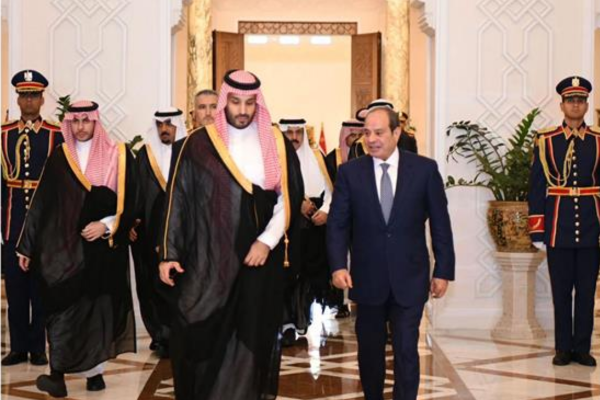
What’s happened: US Central Command (CENTCOM) Commander Adm. Brad Cooper hosted a meeting last week that included IDF Chief of Staff Zamir, along with the military chiefs of staff of Bahrain, Egypt, Jordan, Kuwait, Qatar, Saudi Arabia, and the UAE.
- The main agenda was the ongoing conflict with Iran, but following the meeting CENTCOM has also facilitated talks between Israel and Saudi Arabia specifically focused on Israel providing the Saudis with military intelligence relating to the latest Houthi offensive.
- The intelligence support is understood to focus on defending infrastructure and strategic targets in Saudi Arabia in real time. As well as their advances on the Red Sea coast the Houthis have been striking the Saudi’s oil pipeline and disabled it for several weeks.
- Despite the recent defence pact between Saudi Arabia, Turkey and Pakistan it appears that it would not be activated against the Houthis, therefore the Saudis turned to the US for support, that subsequently connected them to Israel.
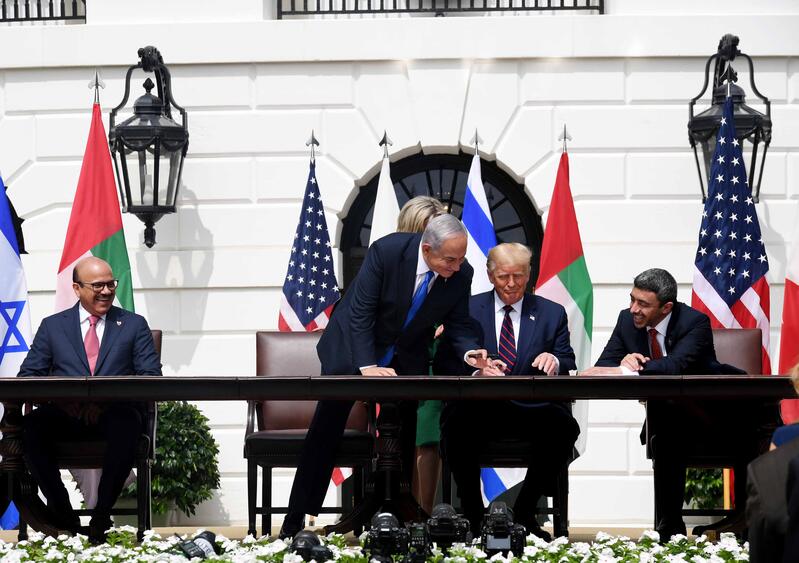
Context: This latest engagement coincides with the six-year anniversary of the Abraham Accords, the US-sponsored normalisation deals between Israel, the UAE, Bahrain, and Morocco which were signed on 15th September 2020. Kazakhstan joined later in November 2025.
- As a direct consequence of the Accords, the US was able to transfer Israel to CENTCOM’s remit (away from EUCOM) allowing significant operational integration with Arab partner forces.
- Brokered by President Trump’s special envoys, the Accords marked the culmination of years of quiet détente between Israel and Gulf Arab states threatened by Iran and its proxies. Although the UAE and Bahrain had previously overtly hosted Israeli ministers, officials, and athletes, this fell short of full normalisation. They were the first Israeli-Arab normalisation deals since Israel and Jordan made peace in 1994.
- Although Israel had maintained limited diplomatic presences in various Arab states after the signing of the Oslo Accords, these missions were closed during the Second Intifada (2000-2005).
- The UAE and Bahrain were the first two Arab signatories, and were due to be followed by Sudan after the US agreed to remove Sudan from its list of state sponsors of terrorism opening the path to comprehensive sanctions relief. Although Sudan signed an Abraham Accords Declaration in January 2021, this never progressed to fully developing relations with Israel as the country fell into a deeper civil war.
- Morocco joined the Accords in December 2020 in exchange for the US recognising its sovereignty over the disputed territory of Western Sahara.
- Despite being initiated by the Netanyahu government, Arab signatories were significantly warmer towards his successor, hosting Naftali Bennett on state visits to both Abu Dhabi and Bahrain (in 2021 and 2022). The Accords have become less visible in the Arab world under Netanyahu, seemingly indicating higher levels of reluctance to publicly engage with Israel under his leadership.
- Part of Hamas’s timing to initiate the October 7 massacre was motivated to block Saudi normalising relations with Israel. Conventional thinking suggests Israel will need to show movement towards Palestinian statehood in order to reach an agreement. However, these latest talks are a reminder that there are broader interests too. Israeli and Israeli-linked flights can fly over Saudi airspace without restrictions since 2022.
Defence cooperation: All three Arab signatories share defence and security concerns with Israel, specifically regarding the threats they face from Iran directly as well as its regional proxies including the Houthis, Bahraini opposition groups, and the Polisario Front.
- Israeli-Emirati defence cooperation is reported to have initially centred on Yemen and curtailing the influence of the Iranian-backed Houthis, but has since expanded to allow joint military exercises and facilitating aid entry into the Gaza Strip. The IDF also deployed an Iron Dome battery to the UAE earlier this year to defend against Iranian missile and drone attacks.
- Commercial partnerships include an Emirati subsidiary of Elbit, an Israeli arms company receiving a contract to manufacture air defence systems as well as sales of the SPYDER mobile air defence system.
- In September 2023, Israel and Bahrain signed CSIPA, Comprehensive Security Integration and Prosperity Agreement, with the UK joining in 2024. When Iran attacked Bahrain in March 2026, Manama invoked Article II of the agreement, triggering the mutual-concern and defence-coordination mechanism in a step viewed as directly building on the Accords and demonstrating the benefits of the security architecture implementation it facilitated.
- Israeli-Moroccan defence cooperation largely centres on the Polisario Front, a Western Saharan separatist group viewed by Rabat as terrorists which is supported by Iran, Hezbollah, and Algeria. Cooperation has included joint training exercises, intelligence sharing, and the Moroccan military using Israeli equipment. Morocco is the only Arab League country whose military has a direct memorandum of understanding with the IDF.
Trade, investment, innovation, tourism: While predominantly motivated by security concerns, the accords have also allowed significant partnerships in trade, investment, innovation, tourism, and heritage between Israel and Arab signatory countries.
- The UAE and Israel are both signatories to the Comprehensive Economic Partnership Agreement which provides a free trade framework and grants Emirati exporters greater access to Israeli markets. Bilateral investment has primarily entailed agricultural technology, artificial intelligence, water, and high-tech weapons systems.
- While trade between Israel and Arab signatories somewhat dipped in the aftermath of Hamas’s attacks on southern Israel on 7th October 2023, it has broadly recovered and continues to increase.
- Israeli-Emirati trade grew 11 per cent between 2023 and 2024, totalling $3.2 billion (excluding software and government sales deals). Between 2021 and 2024 trade in goods between Morocco and Israel reached $576 million, and $50 million with Bahrain.
- Tourism is now a major part of the Abraham Accords with direct flights able to operate between signatory countries. By 2025, the UAE was Israelis’ most favoured tourist destination with 10 per cent of all outbound flights from Ben Gurion being destined for Dubai.
- Flights between Israel and the UAE broadly remained unaffected by conflicts and tensions in the region since 7th October 2023, even while many European carriers cancelled direct flights to Tel Aviv.
- Israeli carriers have now resumed direct flights to Morocco after a post-7/10 hiatus, with an estimated 20,000 Israelis expected to visit by the end of 2026.
- Although the Israeli and Bahraini tourism ministries signed a memorandum of understanding in 2020, visitor numbers remain low. Direct flights between Tel Aviv and Manama have not resumed since October 2023.
Looking ahead: Thus far, Somaliland is one of the few states to overtly express its desire to join the Abraham Accords. It is only recognised by Israel, and would require recognition from both the US and UAE if these ambitions are to become viable.
- As diplomatic relations are already normalised with Azerbaijan, their entry to the Accords would represent an evolution to a more NATO-like security architecture rather than being as radical as the UAE and Bahrain recognising Israel.
- Speaking in March 2026, the Emirati presidential advisor, Anwar Gargash, said that “Iran’s full-throttle attack on the Gulf states will actually strengthen the Israeli role in the Gulf, will not diminish it” without specifying which countries may be willing to normalise next.
- Kuwait, Lebanon, Syria, and Indonesia have all been mentioned as potential future signatories. Syria has shown the greatest willingness to normalise relations contingent on Israel’s withdrawal to pre-December 2024 borders, but Kuwait remains one of the most rhetorically hostile countries towards Israel in the region.
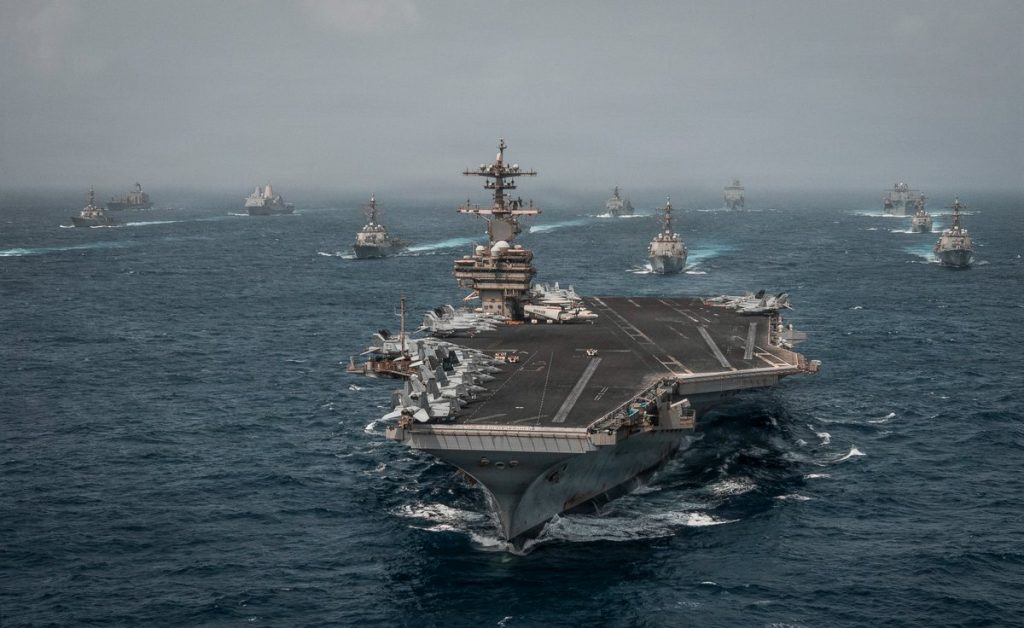
- At the meeting last week it is thought Adm. Cooper sought to reassure that the US would not withdraw forces from the region despite continued Iranian attacks on American military bases.