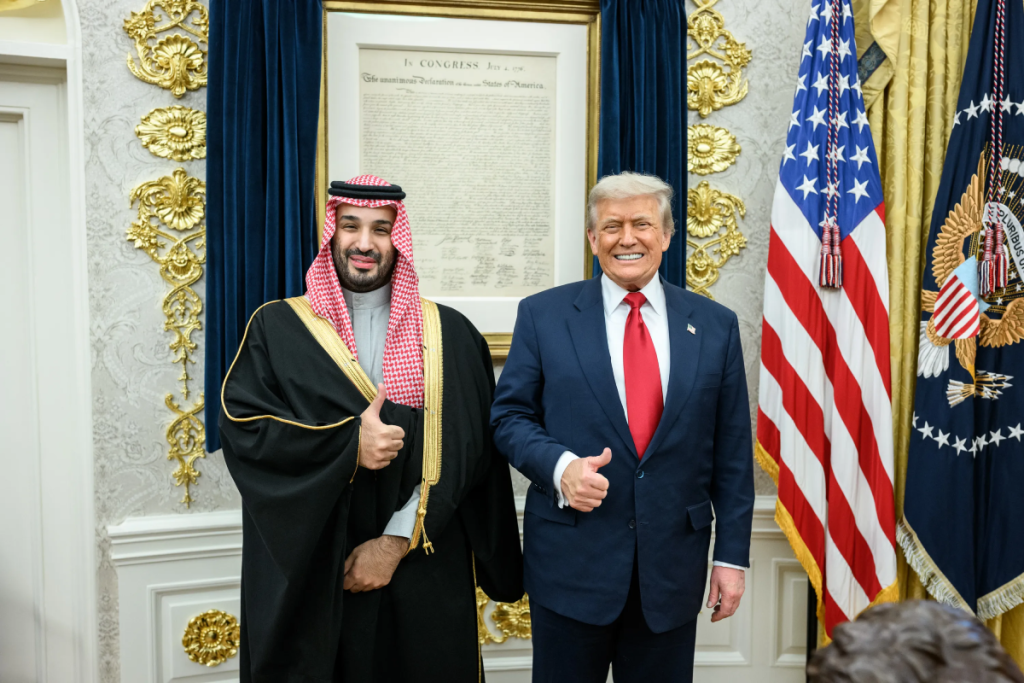
What’s happened: The Trump administration announced that it is moving forward on a nuclear deal with Saudi Arabia which will provide for American companies to develop nuclear infrastructure in Saudi Arabia, possibly even including enrichment capabilities. The agreement must be approved in Congress, where it could face serious opposition.
- The US completed its eleventh consecutive night of airstrikes on Iran overnight.
- According to CENTCOM, targets included aircraft hangars, drone storage facilities, and operational military infrastructure. The choice of targets would appear to indicate that for now the US is focused on degrading Iran’s capacity to threaten shipping in the Strait of Hormuz, rather than hitting any symbolic or strategic target that would indicate an escalation.
- Iranian fire overnight was more limited than in previous nights earlier in the week. The Iranians reported employing anti-aircraft fire (without apparently hitting anything) in various regions, including around Tehran. There were no reports of ballistic missile launches overnight. Earlier in the week, the Iranians launched ballistic missiles at targets in Jordan, Kuwait, and Bahrain. In one incident in Jordan, an Iranian missile killed three American servicemen.
- The deadly attack in Jordan was Iran’s fourth attack on the kingdom (and at a target so close to the border with Israel that shrapnel from missile defence fell inside Israeli territory) in five days. It was carried out with Iran’s medium-range Kheibar Shekan missile system. These are buried deep underground in facilities that were hit by US bombs during the war earlier this year, but which the Iranians managed to excavate during the ceasefire in place since April.
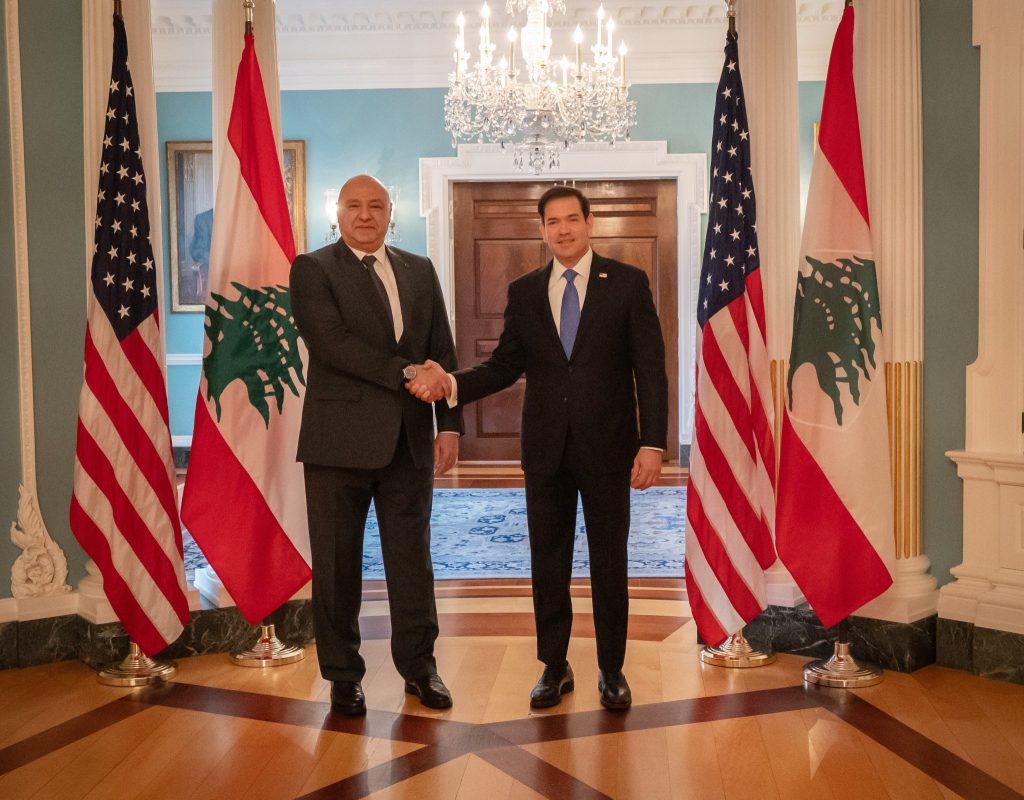
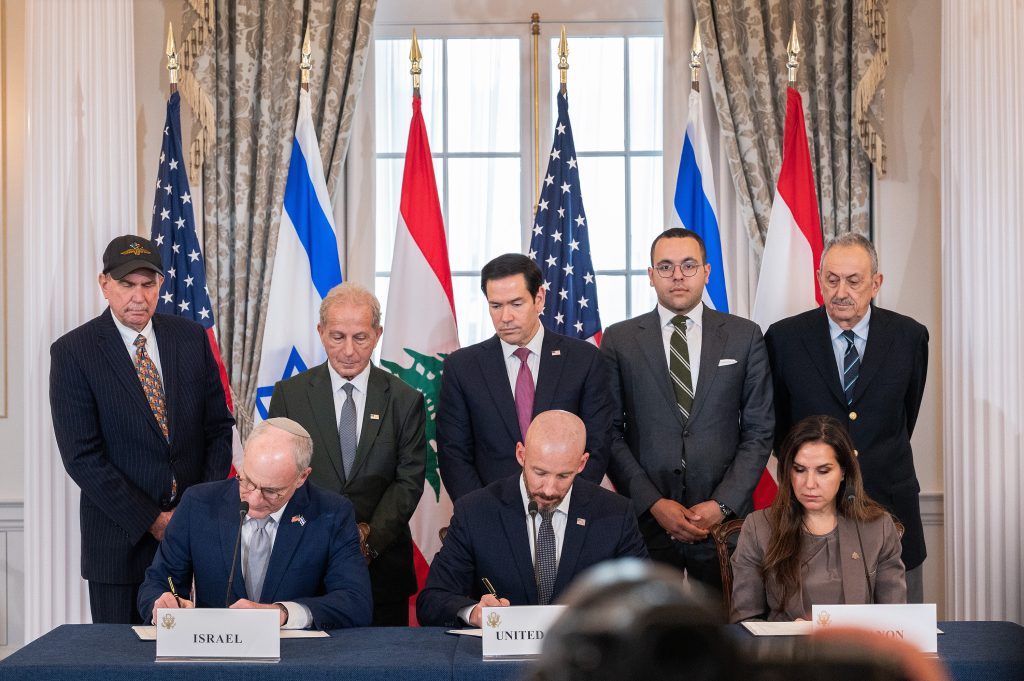
- President Joseph Aoun of Lebanon met with President Trump in the Oval Office yesterday, where he reportedly presented a detailed Lebanese plan for the full implementation of the US-brokered June 26 framework for a long-term settlement in southern Lebanon.
- The Aoun plan calls for staged withdrawals of the IDF from southern Lebanon, with the Lebanese Armed Forces (LAF) progressively taking over territory vacated by the IDF. It also envisions Hezbollah’s military capabilities being completely dismantled or placed under the authority of the Lebanese state.
- President Trump praised Aoun and announced the resumption of direct commercial flights from the US to Lebanon, ending a ban that has been in place since 1985.
- Aoun too praised his American counterpart, calling him a “great president.”
- In comments that garnered wide attention in Israel, Aoun also raised the “ultimate objective of ending the state of hostility between Lebanon and Israel forever,” a wording that falls short of a call for a full peace treaty and normalised relations, but still goes well beyond what any Lebanese leader has been willing to say since the ill-fated peace agreement between Israel and Lebanon in 1983.
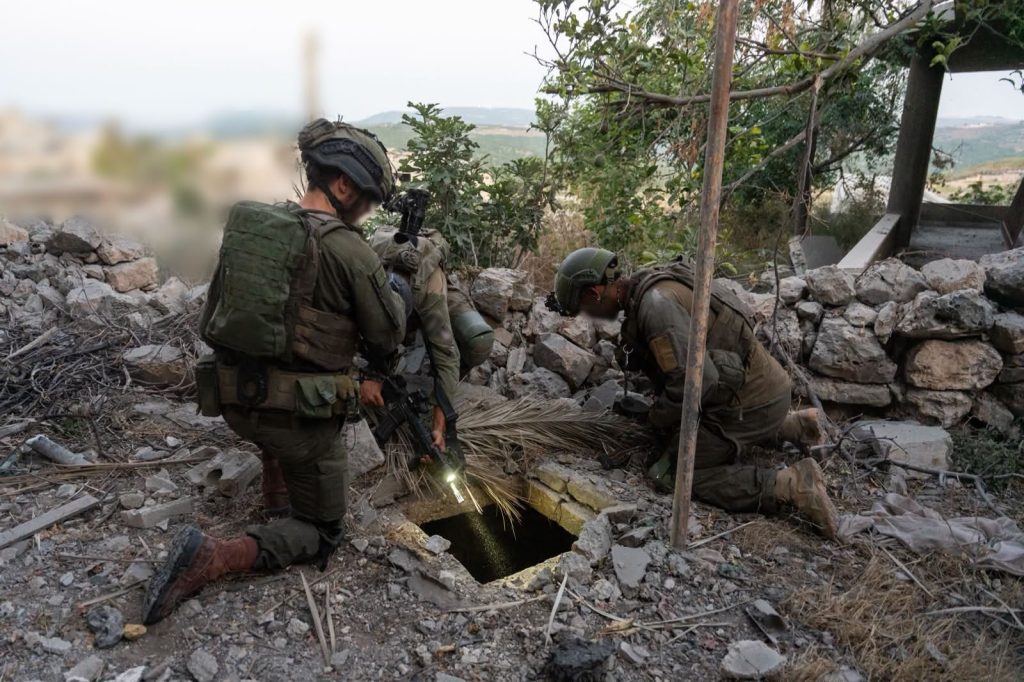
- In recent days, three “pilot zones” of formal LAF responsibly in southern Lebanon have been established. All three are north of the so-called Yellow Line demarcating the areas under formal IDF control since a tenuous ceasefire went into effect in April. Yesterday, the IDF pulled out of the town of Zoutar al-Gharbiyeh and handed it over directly to the LAF.
Context: The looming Saudi-US nuclear agreement would be a dramatic shift in the regional alliance structure and overall geostrategic landscape of the Middle East.
- The agreement grants US companies nearly exclusive rights to develop civilian nuclear infrastructure in Saudi Arabia. At their discretion, non-US firms could be allowed to act as secondary suppliers.
- The agreement does not rule out developing enrichment capabilities in Saudi Arabia, nor does it guarantee it. Instead it calls for the two sides to jointly conduct a two-year long study of the viability of domestic enrichment.
- If the conclusion of the study is that there is an economic viability to enriching uranium on Saudi soil, a facility would be constructed under a so-called “blackbox” arrangement, where the facility would be built and managed by Americans without any sensitive technology being transferred to the Saudis themselves. In the event the study ends without a US agreement for a “blackbox” facility, the Saudis would be banned from pursuing an enrichment arrangement of their own — but only for ten years, after which they would be allowed to seek other non-US partners.
- This part of the agreement constitutes a marked departure from the agreement the US previously signed in 2009 with another regional partner, the UAE, which included a pledge from the Emiratis not to enrich uranium or reprocess spent fuel. Instead they rely on partnerships with foreign (mostly American, but also South Korean) firms for these processes.
- The Non-Proliferation Treaty does not explicitly ban uranium enrichment for non-nuclear powers, but very few countries have pursued these capabilities, and the ones that have are almost all US allies and, importantly, had achieved the capability before acceding to the treaty.
- Previous attempts to reach a nuclear agreement with Saudi Arabia were pursued by the Biden administration, which had conditioned any agreement on Riyadh concluding a full peace treaty with Israel and normalising relations with the Jewish state. These negotiations reportedly came very close to fruition in the autumn of 2023, but were cast aside in the aftermath of the October 7 massacre and the subsequent war in Gaza.
- The US interest in a nuclear agreement with Saudi Arabia is twofold. It serves both as a check on Iranian regional ambitions and firmly locks the door on what was seen in Washington as a possible encroachment of China on a strategically important region where the US maintained for decades the only real superpower presence.
- For Israel, there are long-term concerns about any nuclear capabilities in an Arab country whose regime can change orientation from one day to the next by succession or coup. When a potential deal was the price for normalising relations with a large and influential Arab state that is home to Islam’s two most sacred shrines, it was seen more favourably. Without that upside, it is looked upon rather more cautiously.
- The wider regional implications are a cause for concern as well. Other medium powers, such as Egypt and Turkey, can be expected to pursue their own nuclear capabilities — still well below anything needed to build weapons — in light of the Saudis’ progress on this front.
Looking ahead: Reports from Washington indicate that the Trump administration is expected to make a fateful decision on the Iran conflict in the next few days. Either it escalates dramatically, or it moves to a new ceasefire.
- On the table right now is a proposed ten-day ceasefire, during which the US and Iran would negotiate exclusively on the issue of reopening the Strait of Hormuz. This was supposed to have been covered by the more comprehensive MOU the two sides agreed to on June 17, but differing interpretations of the ambiguous wording led to conflict early on, and since the recent escalation the Strait has once more been closed entirely.
- A significant escalation remains on the table too. President Trump has openly spoken of his preference for attacking a specific target, the deep underground facility at Pickaxe Mountain, where the Iranians are believed to be hiding centrifuges and other nuclear equipment more than 100 metres underground. The facility, notably, has not been attacked yet by Israeli or US forces.
- The Israeli assessment is that the probability of an escalation remains high. Israeli officials have been widely quoted, by name and anonymously, saying that they prefer not to be involved in the present round of US-Iran fighting.