LATEST

Iran and their Proxies

Key background
  • The Islamic Revolutionary Guard Corps is a branch of the Iranian Armed Forces with a constitutional mandate for guaranteeing the Islamic Republic’s integrity and projecting its influence abroad. In practice, this manifests as supporting Iranian allies and proxies with funds, weapons, and training.
  • Many of its allies and proxies are terrorist groups and human rights abusers including: Hamas, PIJ, Hezbollah, the Islamic Resistance in Iraq, the Houthis, Syrian Arab Republic, and Russia.
  • Iran is the world’s leading enabler and facilitator of terrorism, especially targeting the US and its allies. It has also targeted diplomatic missions and diaspora Jews.
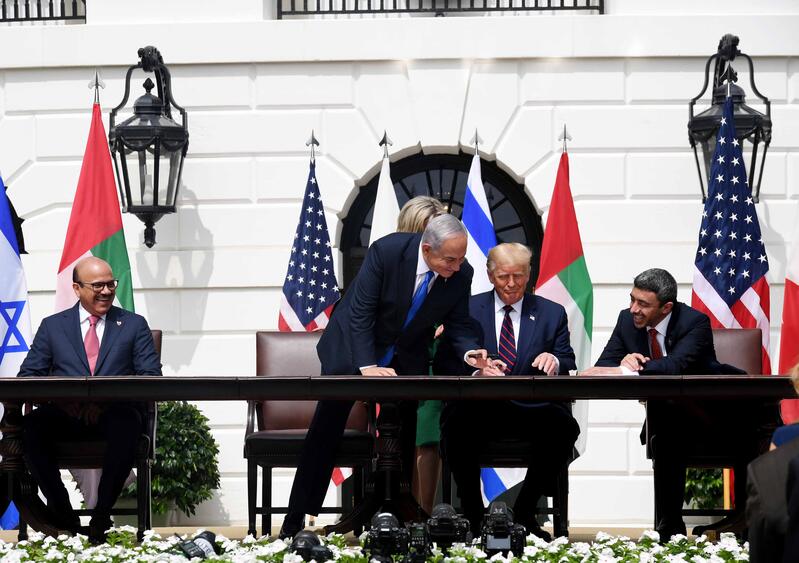
Israeli Prime Minister Benjamin Netanyahu, US President Donald Trump, Minister of Foreign Affairs and International Cooperation of the UAE Abdullah bin Zayed Al Nahyan and Abdullatif bin Rashid Al-Zayani, Minister of Foreign Affairs of Bahrain attend the Abraham Accords Signing Ceremony at the White House in Washington, USA, September 15, 2020.
Israeli Prime Minister Benjamin Netanyahu, US President Donald Trump, Minister of Foreign Affairs and International Cooperation of the UAE Abdullah bin Zayed Al Nahyan and Abdullatif bin Rashid Al-Zayani, Minister of Foreign Affairs of Bahrain attend the Abraham Accords Signing Ceremony at the White House in Washington, USA, September 15, 2020. Photo by Avi Ohayon/GPO

Updated September 16, 2026

US facilitating Israel–Saudi cooperation on 6th anniversary of Abraham Accords

What’s happened: US Central Command (CENTCOM) Commander Adm. Brad Cooper hosted a meeting last week that included IDF Chief of Staff Zamir, along with the military chiefs of staff of Bahrain, Egypt, Jordan, Kuwait, Qatar, Saudi Arabia, and the UAE.

  • The main agenda was the ongoing conflict with Iran, but following the meeting CENTCOM has also facilitated talks between Israel and Saudi Arabia specifically focused on Israel providing the Saudis with military intelligence relating to the latest Houthi offensive.
  • The intelligence support is understood to focus on defending infrastructure and strategic targets in Saudi Arabia in real time. As well as their advances on the Red Sea coast the Houthis have been striking the Saudi’s oil pipeline and disabled it for several weeks.
  • Despite the recent defence pact between Saudi Arabia, Turkey and Pakistan it appears that it would not be activated against the Houthis, therefore the Saudis turned to the US for support, that subsequently connected them to Israel.

Context: This latest engagement coincides with the six-year anniversary of the Abraham Accords, the US-sponsored normalisation deals between Israel, the UAE, Bahrain, and Morocco which were signed on 15th September 2020. Kazakhstan joined later in November 2025.

  • As a direct consequence of the Accords, the US was able to transfer Israel to CENTCOM’s remit (away from EUCOM) allowing significant operational integration with Arab partner forces.
  • Brokered by President Trump’s special envoys, the Accords marked the culmination of years of quiet détente between Israel and Gulf Arab states threatened by Iran and its proxies. Although the UAE and Bahrain had previously overtly hosted Israeli ministers, officials, and athletes, this fell short of full normalisation. They were the first Israeli-Arab normalisation deals since Israel and Jordan made peace in 1994.
  • Although Israel had maintained limited diplomatic presences in various Arab states after the signing of the Oslo Accords, these missions were closed during the Second Intifada (2000-2005).
  • The UAE and Bahrain were the first two Arab signatories, and were due to be followed by Sudan after the US agreed to remove Sudan from its list of state sponsors of terrorism opening the path to comprehensive sanctions relief. Although Sudan signed an Abraham Accords Declaration in January 2021, this never progressed to fully developing relations with Israel as the country fell into a deeper civil war.
  • Morocco joined the Accords in December 2020 in exchange for the US recognising its sovereignty over the disputed territory of Western Sahara.
  • Despite being initiated by the Netanyahu government, Arab signatories were significantly warmer towards his successor, hosting Naftali Bennett on state visits to both Abu Dhabi and Bahrain (in 2021 and 2022). The Accords have become less visible in the Arab world under Netanyahu, seemingly indicating higher levels of reluctance to publicly engage with Israel under his leadership. 
  • Part of Hamas’s timing to initiate the October 7 massacre was motivated to block Saudi normalising relations with Israel. Conventional thinking suggests Israel will need to show movement towards Palestinian statehood in order to reach an agreement. However, these latest talks are a reminder that there are broader interests too. Israeli and Israeli-linked flights can fly over Saudi airspace without restrictions since 2022.

Defence cooperation: All three Arab signatories share defence and security concerns with Israel, specifically regarding the threats they face from Iran directly as well as its regional proxies including the Houthis, Bahraini opposition groups, and the Polisario Front.

  • Israeli-Emirati defence cooperation is reported to have initially centred on Yemen and curtailing the influence of the Iranian-backed Houthis, but has since expanded to allow joint military exercises and facilitating aid entry into the Gaza Strip. The IDF also deployed an Iron Dome battery to the UAE earlier this year to defend against Iranian missile and drone attacks.
  • Commercial partnerships include an Emirati subsidiary of Elbit, an Israeli arms company receiving a contract to manufacture air defence systems as well as sales of the SPYDER mobile air defence system.
  • In September 2023, Israel and Bahrain signed CSIPA, Comprehensive Security Integration and Prosperity Agreement, with the UK joining in 2024. When Iran attacked Bahrain in March 2026, Manama invoked Article II of the agreement, triggering the mutual-concern and defence-coordination mechanism in a step viewed as directly building on the Accords and demonstrating the benefits of the security architecture implementation it facilitated.
  • Israeli-Moroccan defence cooperation largely centres on the Polisario Front, a Western Saharan separatist group viewed by Rabat as terrorists which is supported by Iran, Hezbollah, and Algeria. Cooperation has included joint training exercises, intelligence sharing, and the Moroccan military using Israeli equipment. Morocco is the only Arab League country whose military has a direct memorandum of understanding with the IDF.

Trade, investment, innovation, tourism: While predominantly motivated by security concerns, the accords have also allowed significant partnerships in trade, investment, innovation, tourism, and heritage between Israel and Arab signatory countries.

  • The UAE and Israel are both signatories to the Comprehensive Economic Partnership Agreement which provides a free trade framework and grants Emirati exporters greater access to Israeli markets. Bilateral investment has primarily entailed agricultural technology, artificial intelligence, water, and high-tech weapons systems.
  • While trade between Israel and Arab signatories somewhat dipped in the aftermath of Hamas’s attacks on southern Israel on 7th October 2023, it has broadly recovered and continues to increase.
  • Israeli-Emirati trade grew 11 per cent between 2023 and 2024, totalling $3.2 billion (excluding software and government sales deals). Between 2021 and 2024 trade in goods between Morocco and Israel reached $576 million, and $50 million with Bahrain.
  • Tourism is now a major part of the Abraham Accords with direct flights able to operate between signatory countries. By 2025, the UAE was Israelis’ most favoured tourist destination with 10 per cent of all outbound flights from Ben Gurion being destined for Dubai.
  • Flights between Israel and the UAE broadly remained unaffected by conflicts and tensions in the region since 7th October 2023, even while many European carriers cancelled direct flights to Tel Aviv.
  • Israeli carriers have now resumed direct flights to Morocco after a post-7/10 hiatus, with an estimated 20,000 Israelis expected to visit by the end of 2026.
  • Although the Israeli and Bahraini tourism ministries signed a memorandum of understanding in 2020, visitor numbers remain low. Direct flights between Tel Aviv and Manama have not resumed since October 2023.

Looking ahead: Thus far, Somaliland is one of the few states to overtly express its desire to join the Abraham Accords. It is only recognised by Israel, and would require recognition from both the US and UAE if these ambitions are to become viable.

  • As diplomatic relations are already normalised with Azerbaijan, their entry to the Accords would represent an evolution to a more NATO-like security architecture rather than being as radical as the UAE and Bahrain recognising Israel.
  • Speaking in March 2026, the Emirati presidential advisor, Anwar Gargash, said that “Iran’s full-throttle attack on the Gulf states will actually strengthen the Israeli role in the Gulf, will not diminish it” without specifying which countries may be willing to normalise next.
  • Kuwait, Lebanon, Syria, and Indonesia have all been mentioned as potential future signatories. Syria has shown the greatest willingness to normalise relations contingent on Israel’s withdrawal to pre-December 2024 borders, but Kuwait remains one of the most rhetorically hostile countries towards Israel in the region.
  • At the meeting last week it is thought Adm. Cooper sought to reassure that the US would not withdraw forces from the region despite continued Iranian attacks on American military bases.
September 14, 2026

Houthis seize key Red Sea coastline

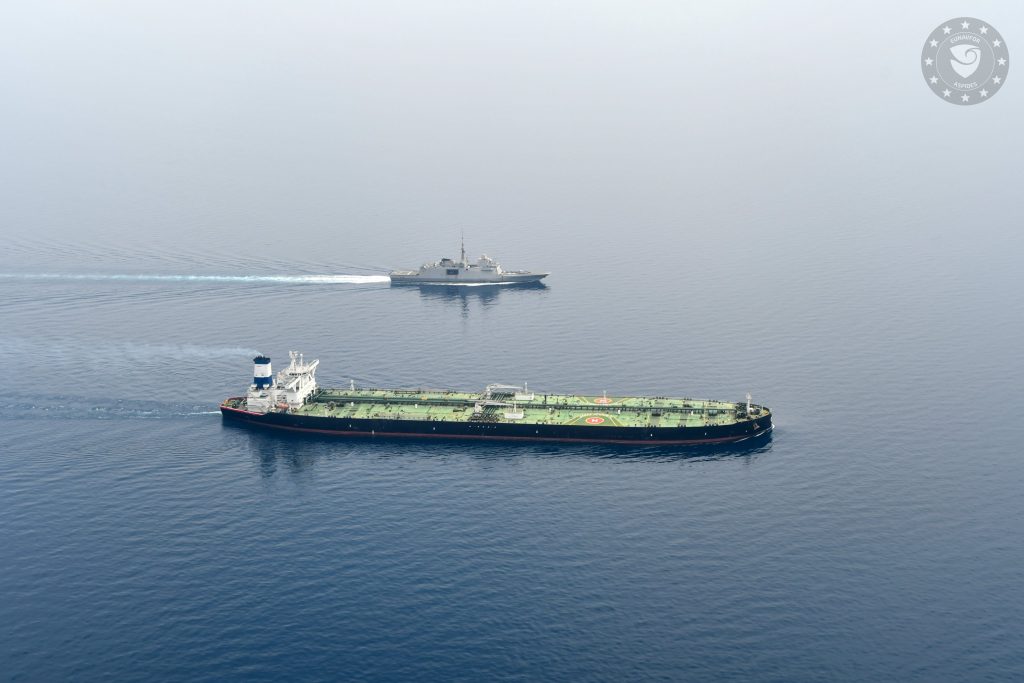
Merchant vessel in the Red Sea under the protection of the Aspides forces, September 7, 2026.
Merchant vessel in the Red Sea under the protection of the Aspides forces, September 7, 2026. Photo credit: EUNAVFOR ASPIDES / X

What’s happened: Following a “lightning offensive”, the Houthis have captured much of Yemen’s Red Sea coast giving them effective control of the strategic Bab el Mandeb Strait which separates the Arabian Peninsula and Horn of Africa.

  • The cities of Abha, Khamis Mushait, Jizan, and Najran were all targeted, along with local infrastructure and Aramco-owned energy facilities wounding at least 73.
  • The Houthis’ lightning offensive follows the breakdown of a ceasefire brokered between them and Saudi Arabia in 2022. Apart from seizing the Yemeni Red Sea coast, the Houthis have also launched dozens of drone and missile attacks against southern Saudi Arabia.
  • Troops from the internationally recognised government of Yemen failed to defend the western Yemeni coastline from the Houthis with their positions collapsing shortly after the offensive began.
  • Saudi Arabia has conducted hundreds of air strikes on Houthi positions, yet not succeeded in dislodging its fighters. The Saudi Crown Prince, Mohammed Bin Salman, reportedly requested military assistance from the US in the form of air support while the Houthis advanced on the city of Mocha. These requests are said to have been denied.
  • Initial assessments suggest that the rapid collapse of Yemeni forces stemmed from a lack of preparedness and widespread corruption. Around 80 per cent of personnel were allegedly “ghost” soldiers, existing only on paper to allow their salaries to be claimed.
  • Yemeni government forces are reportedly seeking to reverse their losses by launching a counter-offensive aimed at retaking the port city of Mocha.
  • In a limited success for the Yemeni government, its forces claimed a victory further north in Al-Jawf province, where dozens of Houthi fighters reportedly surrendered.
  • The Houthi offensive was supported by drones launched from Iraq by Iran-aligned militias against Saudi oil infrastructure, damaging the East-West oil pipeline and injuring several people. Saudi authorities subsequently shut down the pipeline, which normally carries millions of barrels of oil a day.
  • Oil prices rose by 3 per cent on global markets in response to the Houthi advances, with Brent crude reaching $108 per barrel before stabilising at around $107.
  • These developments represent the most significant escalation between the Houthis and Saudi Arabia since the 2022 ceasefire, as well as greatest strategic shift in Yemen since the fall of Sanaa in 2015.
  • In a further escalation, the Houthis claimed this morning that they had struck King Khalid Air Base in Khamis Mushait, targeting hangars, radar systems, runways and ammunition depots.

Context: The Bab el Mandeb is estimated to handle approximately 12% global trade including 11% maritime oil, and 8% liquified natural gas.

  • As the Bab el Mandeb is narrower than the Strait of Hormuz, it will likely be easier for the Houthis to control and disrupt global shipping from their new positions.
  • This now means that Iran and its proxies control two of the most strategically important waterways for global trade and oil, along with the Strait of Hormuz separating the east of the Arabian Peninsula from the Iranian mainland.
  • Around two weeks after the October 7, 2023 massacre, the Houthis launched their first attack toward Israel, that was intercepted by the US Navy over the Red Sea. On October 31, 2023, the Houthis first explicitly claimed responsibility for attacking Israel, including a missile launches toward Eilat.
  • The missile was targeted by the Arrow 3 anti-missile defence system and thought to be the first operational exo-atmospheric interception in history.
  • This also marked the first time that the Yemeni group had become directly involved in the Israeli-Arab Conflict, targeting ships it claimed were linked to Israel with drone and missile attacks, as well as attempted boardings and seizures. Some of the attacks were thought to have been coordinated with Hezbollah, to simultaneously attack Israel from the north and south.
  • Overall, it is estimated that the Houthis launched over 500 missiles and drones towards Israel from the end of October 2023, though to February 2026.
  • The Houthis were also responsible for attacking around 100 commercial vessels.
  • While these attacks were of limited success and lethality, they functionally prevented insurers from approving policies for ships sailing west of the Yemeni coast, forcing them to take the much longer route of circumnavigating Africa. This significantly increased associated costs which were subsequently passed onto global consumers.
  • While the vast majority of Houthis missiles and drones were intercepted, a small number of projectiles were able to reach their intended targets. Two Israelis were killed, one by a drone in Tel Aviv in July 2024 and a second drone attack in Eilat in 2025 that also injured around 20 people.
  • The southern port city of Eilat was forced to close because of these attacks in the summer of 2025 after its revenues fell to zero.
  • The Houthis refer to themselves as “Ansar Allah”, and are a Zaydi Shia separatist group which emerged in opposition to the former president, Ali Abdallah Saleh and growing Saudi influence in Yemen in the 1990s. They conquered significant parts of Yemen during the Arab Spring between 2011 and 2015 which they have retained control of.
  • The Houthis are closely aligned with Iran and have greatly benefited from training and support from the IRGC-Quds Force, but retained a higher degree of independence than proxies and clients in Lebanon and Iraq, i.e. Hezbollah or Khomeinist Shia militias.
  • Before 2023, the Houthis used the territory it controls in Yemen to launch missile and drone attacks against both Saudi Arabia and the UAE.
  • The Houthis are sanctioned by the UK, and designated as a foreign terrorist organisation by the US.

Looking ahead: While the Houthis have assured freedom of navigation for all non-Saudi vessels in the Bab el Mandeb, whether they will honour this promise remains to be seen given their prior targeting of ships even tangentially linked to Israel.

  • It is likely that if any countries support Saudi Arabia’s anti-Houthi campaign their shipping will also be targeted.

July 30, 2026

US strikes IRGC targets after Jordan missile attacks

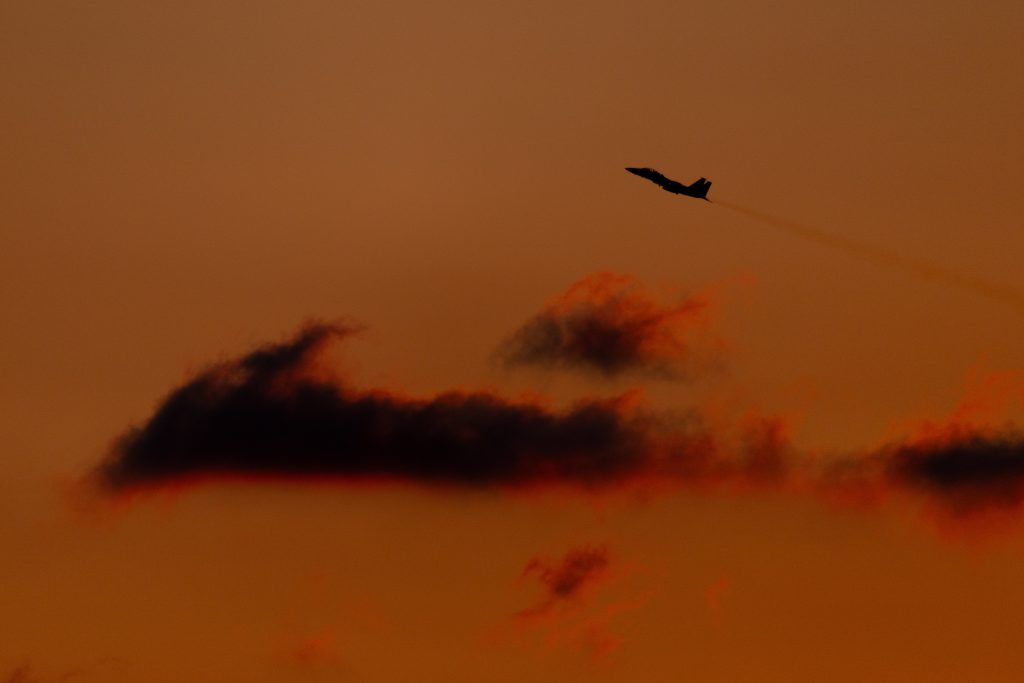
Israeli airforce planes take off as seen in Israel, during the ongoing war between Israel/US and Iran. March 1, 2026. Photo by Nati Shohat/Flash90 *** Local Caption *** איראן שאגת הארי מטוסי קרב מטוס המראה מלחמה

What’s happened: The US has responded to what CENTCOM called a “surprise” wave of missile attacks against military bases in Jordan yesterday with its own “powerful” retaliatory airstrikes on IRGC targets in the southwest of the country.

  • American targets include command centres, missile and drone facilities, and coastal surveillance infrastructure.
  • Ahead of the strikes, President Trump asserted that Iran was “going to get a beating” and that the US would be “hitting hard.”
  • Saudi and US jets also launched waves of airstrikes against Iranian proxy Shia militias in Iraq late on Tuesday night. These strikes followed what the US has described as “over 30 IRGC-directed aerial drone attacks” on oil facilities in the Saudi Eastern and Riyadh regions on Monday and Tuesday emanating from Iraq.
  • The American-Saudi attacks killed approximately 20 Iranian proxy militiamen who were also members of the Popular Mobilisation Forces.
  • Commenting on the strikes, Major General Turki al-Maliki of the Saudi Ministry of Defence said that the Kingdom “reiterates that it does not seek escalation but will respond decisively to any aggression directed against it”, referring to the originators as “Iran-backed terrorist militias.”
  • Iraq’s recently appointed Prime Minister, Ali al-Zaidi, responded by cancelling a scheduled meeting with Saudi Arabia’s Crown Prince, Mohammed bin Salman. Its President, Nizar Amidi, was similarly condemnatory, branding the attacks “as an unacceptable act, a flagrant violation of Iraqi sovereignty, and entirely contrary to international law and the United Nations Charter.”
  • The Popular Mobilisation Forces, an umbrella formation of predominantly Iranian-sponsored Shia militias established after the Islamic State’s invasion of Iraq in 2014, responded with a statement condemning “the treacherous terrorist attacks”, branding them “an extremely serious escalation and a violation of Iraq’s sovereignty, targeting its official security institutions.”
  • A drone also struck a US liquid natural gas storage tanker at the northern Egyptian port of Damietta, causing an explosion and fire. No group or country has claimed responsibility yet. To date, Egypt has not been attacked by any Iranian or proxy projectiles since Israel and the US launched the current war with Iran on 28th February.
  • The IRGC also fired a salvo of ballistic missiles at American bases in Jordan on Wednesday morning, with the US confirming that it had intercepted what was described as a “surprise attack.”

Context: The American geographically limited targeting of Iran likely indicates a prioritisation of weakening Iran’s military assets around the Strait of Hormuz rather than escalating and causing damage elsewhere in the country.

  • This is the first time that Saudi Arabia has acknowledged participating in strikes against Iran or its proxies despite being extensively targeted up until now. The UAE, Bahrain, and Kuwait are all reported to have launched direct airstrikes on Iran, but covertly and have never released statements admitting to doing so.
  • Since 28th February 2026, the Islamic Resistance in Iraq have launched a significant number of drone attacks against US bases in the Middle East and energy infrastructure in the Gulf, especially Kuwait and Saudi Arabia.
  • While mostly ineffective, three US troops were killed when an IRI-launched drone struck a military base in Jordan in February 2024. Two Israeli soldiers were also killed by a drone launched from Iraq which impacted their Golan Heights base in October 2024.
  • The Islamic Resistance in Iraq is understood to primarily be an exercise in branding providing some deniability for the more Iran-aligned factions operating in the Popular Mobilisation Forces, especially Kataib Hezbollah and Asa’ib Ahl al-Haq.
  • In March and May, the UAE, Kuwait, Bahrain, Saudi Arabia, Qatar, and Jordan issued joint statements condemning “the attacks carried out by armed factions loyal to Iran from the Republic of Iraq against a number of countries in the region, as well as their facilities and infrastructure.”
  • These statements also reiterated how the signatories valued their “fraternal relations with the Republic of Iraq”, while calling on Baghdad to “take the necessary measures to immediately halt the attacks launched by factions, militias, and armed groups from Iraqi territory toward neighbouring countries, in order to preserve brotherly relations and avoid further escalation” as well as their right to self-defence.
  • Iraqi Shia militias are Iran’s most enduring proxies in the Arab world, pre-dating Hezbollah’s official manifesto proclamation and establishment in 1985. Its oldest proxy militia, the Badr Group, was founded in 1982 and fought against Saddam Hussein in the Iran-Iraq War.
  • In the aftermath of the US-led invasion of 2003, pre-existing groups returned to Iraq while new ones were established with Iranian patronage. Broadly referred to as “Special Groups” and supported by the IRGC-Quds Force and Hezbollah, they would go on to spawn factions including Kataib Hezbollah, Asaib Ahl al-Haq, the Promised Day Brigades, and Mahdi Army.
  • After the Islamic State invasion of Iraq in the summer of 2014, these groups reconstituted as the Popular Mobilisation Forces and formally integrated into the government’s structures, arguably playing a more decisive role in combat operations than the Iraqi Armed Forces. Post-Islamic State, the Popular Mobilisation Forces remained an important part of the Iraqi state’s security apparatus and never disbanded. They were also subject to occasional US air strikes, with their then Chief of Staff, Abu Mahdi Al-Muhandis of Kataib Hezbollah, being assassinated alongside the IRGC-QF’s commander, Major General Qassem Soleimani, in January 2020.
  • Shortly after Hamas’s invasion of southern Israel on 7th October 2023, a new grouping of Iraqi Shia militias emerged on Telegram branding themselves as the “Islamic Resistance in Iraq”, claiming missile and drone attacks against Israel and US bases in the Middle East. Some of these were branded as “joint operations” with the Houthis.

Looking ahead: Despite overnight strikes on IRGC targets, President Trump appears to remain open to negotiating a diplomatic solution with Iran, telling reporters: “We’ll see if we get there with an agreement at some point.”

  • Pakistan has confirmed that negotiations between the US and Iran are “ongoing”, and that it is doing all it can “to bring all parties back to the Islamabad MOU.”
  • Negotiations are understood to be focusing on a broader de-escalation and the Strait of Hormuz.

July 24, 2026

Mossad thwarts Iranian plot targeting Israeli politicians

Iran's MOIS

What’s happened: Mossad has announced the disruption of a plot directed by Iran’s Ministry of Intelligence and Security (MOIS) which attempted to infiltrate Israel using proxy agents and harm unspecified “senior officials.”

  • The announcement was disseminated through the Prime Minister’s Office, and described “a joint effort of international agencies to uncover how officers of the Iranian Ministry of Intelligence recruited foreign elements in order to advance attacks against senior Israeli officials in Israel.”
  • Following a joint investigation conducted by Mossad, Shin Bet, and unspecified foreign intelligence partners, it was established that a French resident, Servet Ozkur, was “recruited by two [Iran-based] criminal proxy elements, Baba Mahouzadeh Hajijafan (“Babak”) and Mehmet Nedim Yigit (“Nedim”)”, who subsequently tasked him “with recruiting an operational cell composed of foreign nationals for the purpose of infiltrating Israel.”
  • Ozkur is said to have made several trips to Iran “meeting with his handlers and receiving payment from them for facilitating the missions”, and has since been expelled from France.
  • Mossad’s announcement went on to say that these individuals were known to have links with the Zindashti Network, an organised narcocriminal gang which acts on behalf of and as a proxy of the MOIS.
  • The Zindashti Network is controlled by Naji Ibrahim Sharifi-Zindashti, and is said to have “carried out numerous acts of transnational repression including assassinations and kidnappings across multiple jurisdictions in an attempt to silence the Iranian regime’s perceived critics.”
  • The Network has been sanctioned by both the UK and the US for these activities, and Naji Ibrahim Sharifi-Zindashti was indicted by the US in January 2024 on suspicion of conspiracy to use interstate commerce in the commission of a murder-for-hire plot. This plot is alleged to have entailed Zindashti contracting two Canadian nationals to assassinate individuals residing in Maryland, including a defector from Iran.
  • In parallel, the US attacked various sites across Iran for the thirteenth consecutive time Thursday night. Iranian media reported explosions in several cities, including the port city Jask in southern Iran and the port city Konarak in southwestern Iran. Explosions were reported previously in the port city Bandar Abbas and on Qeshm Island. Air defence systems were activated in Tehran.
  • According to CENTCOM, the US targeted, “military command centres, drone storage facilities, communications networks, coastal surveillance sites, and maritime capabilities to further diminish the threat Iran poses to civilian mariners and commercial vessels transiting the Straits of Hormuz.”          
  • Earlier this morning Jordan reported that several Iranian missiles had been intercepted.

Context: This latest announcement coincides with Israel raising the state of alert in the air force, the air defence systems and the IDF Intelligence Branch. Defence Minister Katz said that Israel is ready for any scenario and made clear that Israel would land a crushing blow if Iran attacked.

  • While less reported on and understood in the West than the IRGC, the MOIS is nevertheless a highly capable, active, and dangerous intelligence agency.
  • Functionally the successor agency to the Pahlavi-era Savak, the MOIS is a civilian intelligence agency nominally answerable to the Iranian President, and somewhat less ideological than the IRGC.
  • The MOIS’s primary mandates are traditional espionage and intelligence collection, especially concerning dissidents. In contrast, the IRGC has a significantly broader mandate to uphold, protect, and expert the Islamic Revolution, is more militarised, and predominantly operates in or adjacent to conflict zones.
  • In one of its highest-profile operations, the MOIS abducted and renditioned Jamshid Shahrmahd, a prominent dissident who held German citizenship and US residency while he was travelling through the UAE in 2020. He was subjected to a show trial in Iran and executed in 2024.
  • An MOIS officer working under diplomatic cover out of the Iranian Embassy in Vienna, Assadollah Assadi, was arrested in Germany in 2018 and subsequently convicted in Belgium for attempting to direct a plot against a high-profile dissident rally in France organised by the MEK. Sentenced to 20 years, he was freed in a prisoner swap in 2023.
  • The MOIS have also been implicated in the recruitment of Western and US assets through Press TV, which it is alleged to use for media cover. At least one of these assets is known to have defected to Iran.

Looking ahead: Following days of escalating hostilities between the US and Iran, President Trump has indicated that he is considering a “massive attack” that is “bigger than ever before,” and that Israel “would join in two minutes if I asked them to.”

  • While there is no indication of whether or not these threats are genuine, it is almost impossible to accurately predict if President Trump will follow through with what he has said.
  • Several Israeli cities have ordered that public bomb shelters should open over the weekend, and the British Embassy in Tehran has evacuated all its staff from Iran given the current “security situation” without providing further details.

July 23, 2026

Houthis strike Saudi tankers as Saudi nuclear deal raises concerns in Israel

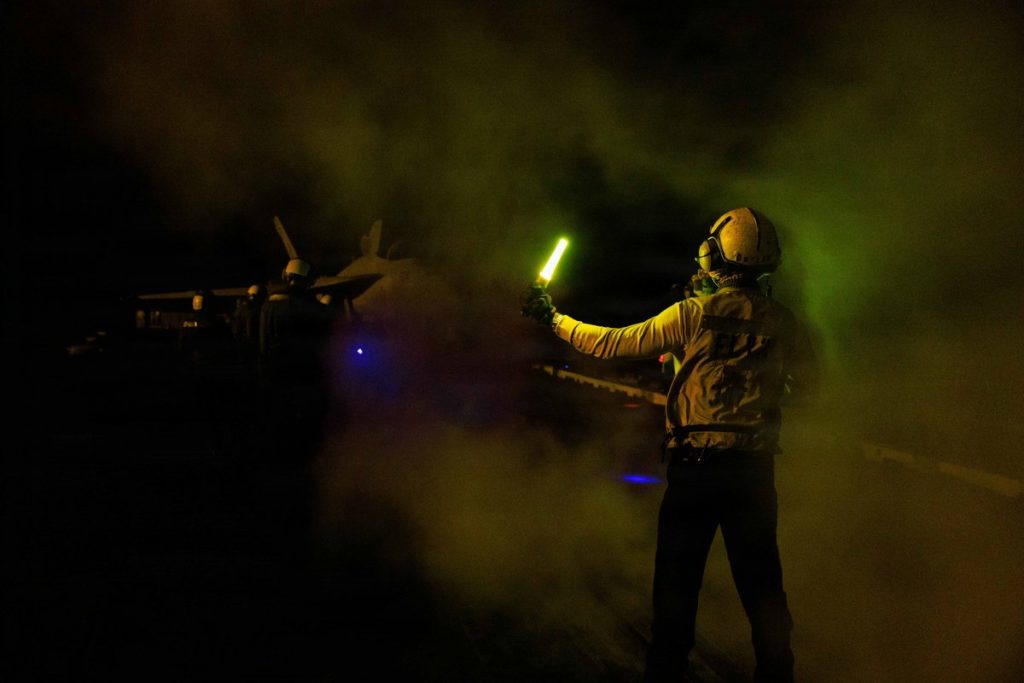
US Sailors signal an F/A-18E Super Hornet on the deck of USS George H.W. Bush (CVN 77) as the aircraft carrier transits the Arabian Sea. July 22, 2026.
US Sailors signal an F/A-18E Super Hornet on the deck of USS George H.W. Bush (CVN 77) as the aircraft carrier transits the Arabian Sea. July 22, 2026. Photo credit: US CENTCOM / X

What’s happened: The Houthi rebels in Yemen have escalated their attacks in the last 24 hours, firing on Saudi vessels in the Red Sea for the first time in the present crisis. Two Saudi oil tankers were hit, with confirmed reports of fire and damage on one and no credible reporting on the condition of the other.

  • The Houthi attack comes three days after they declared a naval blockade on Saudi shipping in the Red Sea. A gradual shift in Saudi shipping from the Persian Gulf to the Red Sea since the Iranian blockade on the Strait of Hormuz, which began in March of this year, had been seen as a major long-term shift that would weaken the impact of both the current Iranian blockade and any future threatened one.
  • It was unclear how and whether the Houthi attack on Saudi shipping in the Red Sea was coordinated with Iran. The Houthis have, notably, not attacked Israeli or American targets at all in the current crisis. They stopped their missile attacks on Israel entirely when the Gaza ceasefire went into effect in October 2025, with the exception of a one-week period beginning on March 28 of this year at the very end of the Israeli-American war with Iran.
  • The Houthi attacks on Saudi shipping came hours before the US conducted its twelfth night of air strikes on Iranian targets. According to CENTCOM, last night’s attacks focused on missile and drone storage facilities, coastal surveillance systems, maritime capabilities, and air-defence sites.
  • The US air strikes did not follow through on Trump’s explicit threat, made yesterday on social media, to strike Iranian civil infrastructure on a one-to-one basis in response to attacks on shipping in the Strait of Hormuz. “For every ship that Iran shoots at,” the President wrote, “the United States will immediately take out one Iranian bridge or one Iranian power plant, including those in or around Tehran.” The US has largely refrained from striking targets near Tehran in the last twelve days, aiming most of its fire at military facilities directly implicated in Iranian attacks on shipping.
  • Yesterday morning, Iran fired six ballistic missiles at the Aqaba area in southern Jordan. The Iranians claimed they were aimed at US targets, including what they claimed were US aircraft at Aqaba airport, a claim that was not independently verified.
  • This was a smaller attack than the one carried out last week on Muwaffaq Salti Air Base in eastern Jordan, which killed three US military personnel. Aqaba, on the other hand, sits directly on the border with the Israeli city of Eilat, where the missiles and interceptions were loudly heard.
  • Iran’s Islamic Revolutionary Guard Corps (IRGC) said it attacked US forces in multiple bases and airfields in Kuwait. There were no reports of casualties. The IRGC further stated that its navy “emphasises that the strait of Hormuz is under our control.”

Context: As expected, the US Energy Secretary and his Saudi counterpart signed a civil nuclear cooperation agreement in Washington yesterday.

  • Fallout from the agreement roiled the Israeli security establishment and became a topic of debate in the Israeli electoral campaign as well.
  • Israeli commentators linked the Saudi agreement to other Trump administration initiatives in the region, especially including diplomatic efforts in Lebanon and the proposed sale of F-35 fighter jets to Turkey. Taken together, the moves are seen as the emergence of a US-backed Sunni bloc to counter Iranian influence — and, more subtly, as signs of Israel’s declining influence in Washington. None would have been realistically possible without the collapse of the Iranian-backed Assad regime in Syria in December 2024.
  • Israel has not publicly responded to the Saudi-American nuclear deal. Israel’s immediate principal concerns regard the possibly of domestic nuclear enrichment in Saudi Arabia. The US deal does not promise enrichment in Saudi Arabia, but rather posits a two-year  study to be conducted by both countries into the feasibility of such an option.
  • Should it be deemed feasible, a “blackbox” facility, that would keep the technology and know-how in American hands, could be constructed. This is contrast to the 2009 nuclear agreement reached with another US ally in the Gulf, the UAE, which stipulated that no enrichment could take place on Emirati soil.
  • Israel’s other concerns are that a change in the Saudi regime could leave nuclear capabilities in more dangerous and radical hands, and that the new deal will open the door to other middle powers in the region, including Egypt and Turkey, to begin pursuing enrichment capabilities of their own.
  • There is great disappointment, too, that the US changed its position from insisting that any nuclear deal would require the Saudis to normalise relations with Israel. It remains to be seen if this condition will come up again at the end of the two-years study on the feasibility of domestic enrichment.
  • Former Prime Minister and current Opposition Leader Yair Lapid cast the Saudi nuclear deal as a personal failure of Prime Minister Netanyahu. Speaking on a podcast yesterday, he revealed that during the so-called “Change Government” which he and Naftali Bennet headed in 2021-22, the US, then under President Biden, was also interested in pursuing a separate nuclear deal with the Saudis, but that he and Bennett, despite their overall good relations with the administration, threatened to go to Congress and do whatever it took to scuttle the deal. He alleged that Netanyahu does not have the ability to challenge Trump because of a lack of good relations with Congressional leaders, and further hinted that Trump’s interference in Netanyahu’s legal troubles (the President has openly called for the Prime Minister to be pardoned in his ongoing trial) meant that he couldn’t openly challenge the President, even on an issue of vital national security.

Looking ahead: The Saudi nuclear deal will likely be challenged in Congress, but it does not need ratification as a treaty. Similar to the situation which obtained with Iran deal from 2015, it would require an act of Congress to block it, which would be vetoed by the President. A veto can only be overridden with two-thirds of the votes of both Houses of Congress, a very unlikely outcome for this issue.

  • Greece is expected to conclude a $4 billion air defence deal with Israel today. The Greek missile and air defence program, dubbed “Achilles Shield” will rely on technology from the Israeli defence firms Rafael and the Israel Aircraft Industries. It is just one of several anticipated purchases from NATO countries and other Western allies of Israeli defence technology in the global military buildup underway in recent years.

July 22, 2026

US advances Saudi nuclear deal as Trump weighs next move on Iran

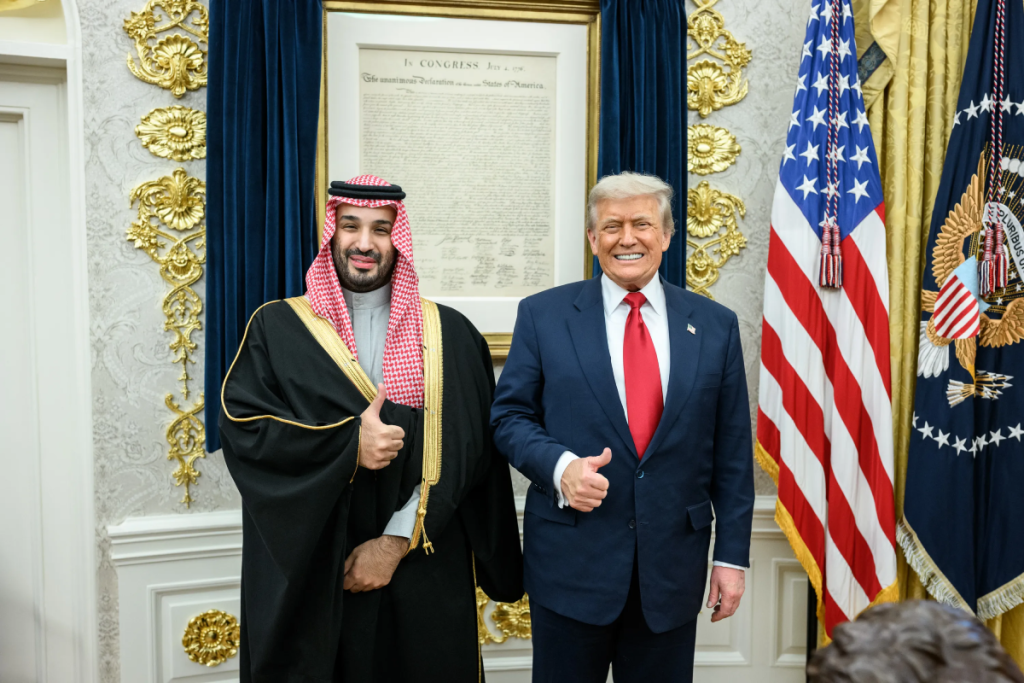
President Donald Trump with Crown Prince Mohammed bin Salman of Saudi Arabia in the White House.
President Donald Trump with Crown Prince Mohammed bin Salman of Saudi Arabia in the White House. Photo credit: The White House

What’s happened: The Trump administration announced that it is moving forward on a nuclear deal with Saudi Arabia which will provide for American companies to develop nuclear infrastructure in Saudi Arabia, possibly even including enrichment capabilities. The agreement must be approved in Congress, where it could face serious opposition.

  • The US completed its eleventh consecutive night of airstrikes on Iran overnight.
  • According to CENTCOM, targets included aircraft hangars, drone storage facilities, and operational military infrastructure. The choice of targets would appear to indicate that for now the US is focused on degrading Iran’s capacity to threaten shipping in the Strait of Hormuz, rather than hitting any symbolic or strategic target that would indicate an escalation.
  • Iranian fire overnight was more limited than in previous nights earlier in the week. The Iranians reported employing anti-aircraft fire (without apparently hitting anything) in various regions, including around Tehran. There were no reports of ballistic missile launches overnight. Earlier in the week, the Iranians launched ballistic missiles at targets in Jordan, Kuwait, and Bahrain. In one incident in Jordan, an Iranian missile killed three American servicemen.
  • The deadly attack in Jordan was Iran’s fourth attack on the kingdom (and at a target so close to the border with Israel that shrapnel from missile defence fell inside Israeli territory) in five days. It was carried out with Iran’s medium-range Kheibar Shekan missile system. These are buried deep underground in facilities that were hit by US bombs during the war earlier this year, but which the Iranians managed to excavate during the ceasefire in place since April.
  • President Joseph Aoun of Lebanon met with President Trump in the Oval Office yesterday, where he reportedly presented a detailed Lebanese plan for the full implementation of the US-brokered June 26 framework for a long-term settlement in southern Lebanon.
  • The Aoun plan calls for staged withdrawals of the IDF from southern Lebanon, with the Lebanese Armed Forces (LAF) progressively taking over territory vacated by the IDF. It also envisions Hezbollah’s military capabilities being completely dismantled or placed under the authority of the Lebanese state.
  • President Trump praised Aoun and announced the resumption of direct commercial flights from the US to Lebanon, ending a ban that has been in place since 1985.
  • Aoun too praised his American counterpart, calling him a “great president.”
  • In comments that garnered wide attention in Israel, Aoun also raised the “ultimate objective of ending the state of hostility between Lebanon and Israel forever,” a wording that falls short of a call for a full peace treaty and normalised relations, but still goes well beyond what any Lebanese leader has been willing to say since the ill-fated peace agreement between Israel and Lebanon in 1983.
  • In recent days, three “pilot zones” of formal LAF responsibly in southern Lebanon have been established. All three are north of the so-called Yellow Line demarcating the areas under formal IDF control since a tenuous ceasefire went into effect in April. Yesterday, the IDF pulled out of the town of Zoutar al-Gharbiyeh and handed it over directly to the LAF.

Context: The looming Saudi-US nuclear agreement would be a dramatic shift in the regional alliance structure and overall geostrategic landscape of the Middle East.

  • The agreement grants US companies nearly exclusive rights to develop civilian nuclear infrastructure in Saudi Arabia. At their discretion, non-US firms could be allowed to act as secondary suppliers.
  • The agreement does not rule out developing enrichment capabilities in Saudi Arabia, nor does it guarantee it. Instead it calls for the two sides to jointly conduct a two-year long study of the viability of domestic enrichment.
  • If the conclusion of the study is that there is an economic viability to enriching uranium on Saudi soil, a facility would be constructed under a so-called “blackbox” arrangement, where the facility would be built and managed by Americans without any sensitive technology being transferred to the Saudis themselves. In the event the study ends without a US agreement for a “blackbox” facility, the Saudis would be banned from pursuing an enrichment arrangement of their own — but only for ten years, after which they would be allowed to seek other non-US partners.
  • This part of the agreement constitutes a marked departure from the agreement the US previously signed in 2009 with another regional partner, the UAE, which included a pledge from the Emiratis not to enrich uranium or reprocess spent fuel. Instead they rely on partnerships with foreign (mostly American, but also South Korean) firms for these processes.
  • The Non-Proliferation Treaty does not explicitly ban uranium enrichment for non-nuclear powers, but very few countries have pursued these capabilities, and the ones that have are almost all US allies and, importantly, had achieved the capability before acceding to the treaty.
  • Previous attempts to reach a nuclear agreement with Saudi Arabia were pursued by the Biden administration, which had conditioned any agreement on Riyadh concluding a full peace treaty with Israel and normalising relations with the Jewish state. These negotiations reportedly came very close to fruition in the autumn of 2023, but were cast aside in the aftermath of the October 7 massacre and the subsequent war in Gaza.
  • The US interest in a nuclear agreement with Saudi Arabia is twofold. It serves both as a check on Iranian regional ambitions and firmly locks the door on what was seen in Washington as a possible encroachment of China on a strategically important region where the US maintained for decades the only real superpower presence.
  • For Israel, there are long-term concerns about any nuclear capabilities in an Arab country whose regime can change orientation from one day to the next by succession or coup. When a potential deal was the price for normalising relations with a large and influential Arab state that is home to Islam’s two most sacred shrines, it was seen more favourably. Without that upside, it is looked upon rather more cautiously.
  • The wider regional implications are a cause for concern as well. Other medium powers, such as Egypt and Turkey, can be expected to pursue their own nuclear capabilities — still well below anything needed to build weapons — in light of the Saudis’ progress on this front.

Looking ahead: Reports from Washington indicate that the Trump administration is expected to make a fateful decision on the Iran conflict in the next few days. Either it escalates dramatically, or it moves to a new ceasefire.

  • On the table right now is a proposed ten-day ceasefire, during which the US and Iran would negotiate exclusively on the issue of reopening the Strait of Hormuz. This was supposed to have been covered by the more comprehensive MOU the two sides agreed to on June 17, but differing interpretations of the ambiguous wording led to conflict early on, and since the recent escalation the Strait has once more been closed entirely.
  • A significant escalation remains on the table too. President Trump has openly spoken of his preference for attacking a specific target, the deep underground facility at Pickaxe Mountain, where the Iranians are believed to be hiding centrifuges and other nuclear equipment more than 100 metres underground. The facility, notably, has not been attacked yet by Israeli or US forces.
  • The Israeli assessment is that the probability of an escalation remains high. Israeli officials have been widely quoted, by name and anonymously, saying that they prefer not to be involved in the present round of US-Iran fighting.

July 16, 2026

US deepens strikes inside Iran as ceasefire crumbles

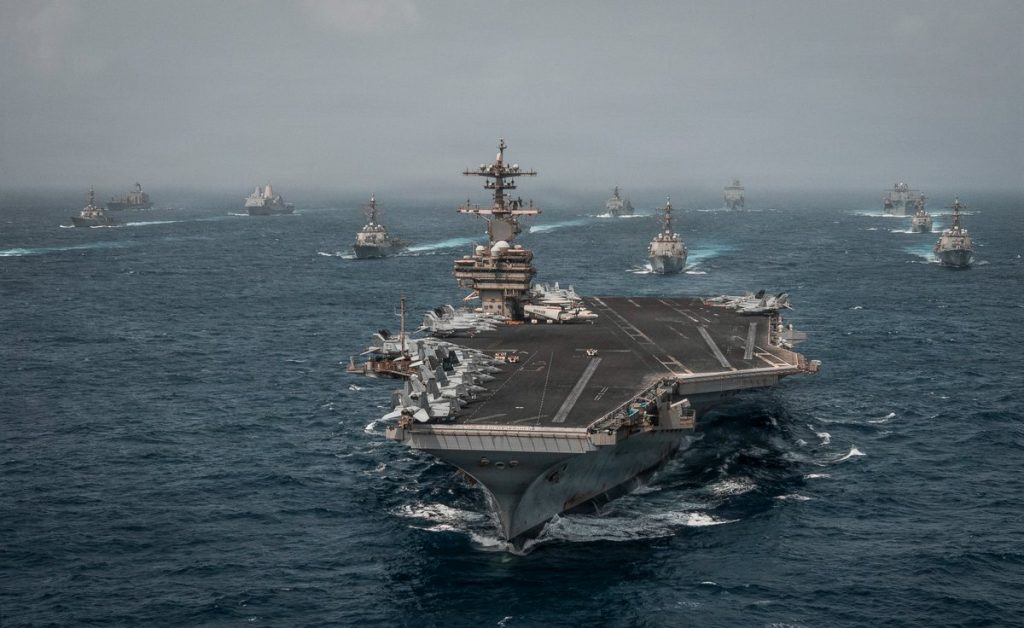
US Navy warships operating across the Middle East. July 14, 2026.
US Navy warships operating across the Middle East. July 14, 2026. Photo credit: US CENTCOM / X

What’s happened: The ceasefire between the US and Iran continues to unravel, with mutual blockades both now in effect and a series of low-intensity strikes from both sides over the last six nights.

  • Overnight, US forces launched their biggest air operation since the ceasefire went into effect, hitting targets not just on the coastline but also deep in Iran and inside the Tehran metropolitan area, a region avoided entirely in this week’s escalation until now. Notably, official CENTCOM statements about the operation used the term “shaping operation,” rather than “self-defence operation.” The latter term had been consistently used by the Americans to indicate that they were not intending to depart from the ceasefire framework; the former would seem to indicate that they are taking out targets that could get in the way of a future planned operation.
  • The ceasefire began unravelling on July 7. By July 10 both sides were openly trading blows. This exchange of fire has gradually escalated over the ensuing week.
  • On July 7, against a backdrop of stalled negotiations on the Iranian nuclear programme, sanctions relief, and shipping rights in the Straits of Hormuz, three attacks on neutral shipping in the Strait were carried out, apparently by Iranian drones. One of the ships was carrying Qatari liquified natural gas. The attacks took place as NATO leaders were gathered in Ankara for the alliance’s summit.
  • The following day, on July 8, the US revoked the licence that had temporarily allowed Iran to sell oil while negotiations were underway and conducted a very modest air operation on Iranian targets associated with the attacks on shipping.
  • Meanwhile, negotiations continued with the US demanding a public Iranian commitment that the Strait would remain open while the larger deal was being negotiated without any attacks on commercial vessels. The Iranians refused to make such a commitment, as for them this would be conceding their biggest asset going into the nuclear negotiations before those were really underway.
  • On July 10, with President Trump back in Washington from Ankara, three days of quiet diplomacy and low-level air strikes turned into a higher level crisis, with the President declaring that “in no uncertain terms the ceasefire is over.” That night the US began hitting real Iranian military targets, rather than just carrying symbolic strikes against drone facilities implicated in the attacks on oil tankers.
  • The US continued hitting Iranian naval bases and radar facilities through July 13, including an audacious strike against a submarine base by a one-way US attack drone. There were conflicting reports on the damage caused by the US attack, with some reports indicating that an Iranian submarine was damaged or even destroyed. On that day, the US announced a full resumption of its naval blockade of Iran, which had been lifted with the MOU signed in June.
  • As the US expanded the range of targets struck in Iran, the Iranians too started launching missiles at US and allied facilities in neighbouring countries on night of July 13-14, including Bahrain, Kuwait, and Jordan. All three of these countries reported intercepting Iranian missiles.
  • Last night, the range of attacks expanded even further, with targets in the Tehran region being hit by US fire for the first time since the ceasefire went into effect. The US operation was also unusually long in duration, lasting seven hours.
  • Neither side has as of yet called for a halt to negotiations, and in fact all indications are that some kind of mediation via Qatar, Pakistan, and Oman is still underway. The White House has, for its part, stuck to a message of “talks will continue but the ceasefire is over,” and the Iranians too have publicly taken a similar approach.
  • The Iranians report 35 killed from this week’s US strikes. There are no reported losses from the US or its allies. Iranian retaliatory strikes have studiously avoided Israel; nor has the Iran-backed Hezbollah militia in Lebanon initiated any escalation for now.

Context: As tensions ratchet up, Israeli and global media have been full of speculation about possible targets in renewed military action, as well as astonishing revelations about the early days of the previous round.

  • Commercial traffic through the Strait of Hormuz has come to a virtual halt in the last week, after a few weeks of a very partial recovery that was still far from pre-war levels.
  • An earlier US pilot programme of escorting some commercial vessels through the Strait, closer to the Omani coast, had some limited success in May and June, before the MOU was signed, and there are indications that the US my consider pursuing a larger version of that should the current talks fail.
  • Alternatively, the Americans are considering a full-scale land invasion of the Iranian coastline near the Strait. This would likely take months to accomplish and come at a heavy cost.
  • Another option which has been publicly broached by the President himself is a wave of air strikes against strategic targets in Iran, notably including bridges and power plants, as a means of pressure on the regime to lift its blockade.
  • Two other potential military operations have been the subject of public speculation — and often of explicit public statements by administration and CENTCOM officials.
    • One is the so-called Pickaxe Mountain, near the Natanz nuclear facility. Natanz was one of three nuclear facilities, along with Isfahan and Fordow, that were struck by US bombings in Operation Midnight Hammer in June 2025. Pickaxe Mountain is a facility less than 2km from the Natanz facility which  is buried more than 100 metres deep into a mountain. It has never been seen by international inspectors, and was still under construction during the June 2025 war. Satellite imagery has shown accelerated excavation and construction there since then. Trump has fanned speculation about a US special forces operation there by both publicly threatening the site and, on a radio interview earlier this week, pointing out that America’s bunker-buster bombs alone would not be able to damage it.
    • Trump has also publicly discussed an attack on Kharg Island, Iran’s main oil export hub (a facility he called on the US to strike decades ago when he was an opinionated real estate magnate in New York). Administration officials have leaked to friendly media outlets over the past week speculation that an attack on Kharg Island would be impractical, costly, and not yield the desired outcome — something that can be read as trying to dissuade the President from approving such an attack or part of a deception operation.
  • On the backdrop of speculation about a future operation, new revelations in both the Israeli and US media were published regarding the Mossad’s ambitious plans for deposing the Iranian regime at the outset of the war which began on February 28. Plans called for an invasion of Kurdish forces from northern Iraq (which the US apparently vetoed) and even the possible installation of former President Mahmoud Ahmedinijad to head a replacement regime.
  • Long investigative articles in both the New York Times and Haaretz detailed contacts that Ahmedinijad, famous for aggressive remarks during his presidency about eliminating Israel and denying the Holocaust, had with Mossad in recent years in Hungary and Central America. An Israeli air strike against IRGC guards who had effectively been holding him in house arrest in the first days of the war had been reported as a failed assassination attempt, but is now believed to have been intended to free him to assume power. The reported plot ran aground shortly after that for reasons that are still unknown.

Looking ahead: There are two sixty-day deadlines at play here, both of which are frequently referenced by US officials often without clarity as to which one.

  • The MOU calls for a sixty-day period, renewable by mutual consent, for concluding an agreement on Iran’s nuclear programme, as well as sanctions relief and freedom of navigation in the Strait of Hormuz. The agreement was signed in Islamabad on June 18, so that sixty-day period ends on August 17.
  • The administration informed Congress of a renewal of hostiles with Iran on July 7, which allowed it to reset the sixty-day deadline for Congressional authorisation under the War Powers Act. Without another ceasefire, this would mean it would need to get some kind of Congressional authorisation to continue fighting past September 5, something that would place the unpopular war in Iran directly on the public agenda only weeks before the midterm elections in the US.
  • In Israel, the placement of US refuelling aricraft at Ben Gurion Airport has been a source of growing public dissatisfaction, as it leads to cancellations of flights from Israel’s only functional international airport. Growing public pressure led the Government to accelerate the departure of the US aircraft from the airport as the summer holiday got underway, but this week, that process was frozen, and it was quietly announced that the US planes still there would be staying for the time being.

July 14, 2026

UK designates IRGC under new hostile states powers

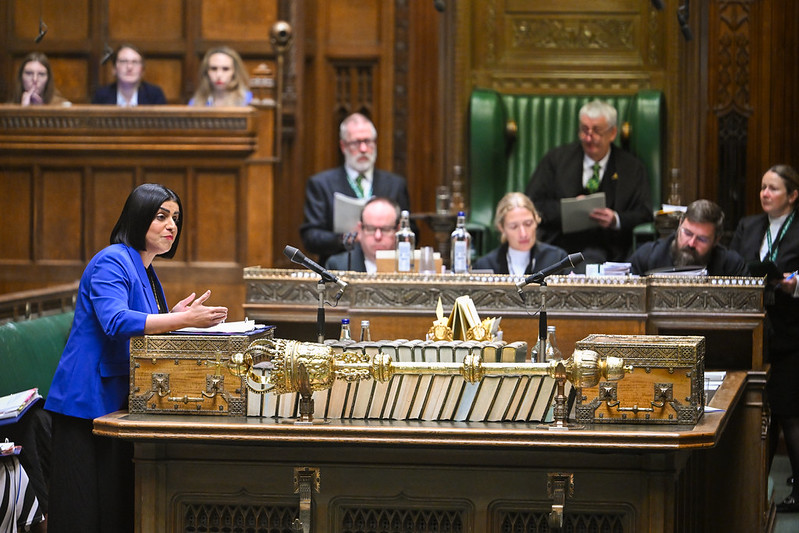
Shabana Mahmood speaking in the House of Commons. September 10, 2024.
Shabana Mahmood speaking in the House of Commons. September 10, 2024. Photo credit: House of Commons

What’s happened: The British government has announced that it will designate the Iranian Revolutionary Guards Corps (IRGC) under new powers to crack down on foreign state-backed activity.

  • This development was announced by the Home Secretary, Shabana Mahmood, in the House of Commons on Monday. Ms Mahmood confirmed that the draft legislation would be laid down this week and voted on by Wednesday or Thursday, formally coming into law by Friday.
  • The group Harakat Ashab al-Yamin al-Islamia (HAYI, also known as Islamic Movement of Companions of the Right, IMRC), the virtual proxy which claimed responsibility for attacks on the Jewish community this past spring, has also been designated, as has the main intelligence directorate of the general staff of the armed forces of the Russian Federation Volunteer Corps, or GRU VC.
  • This criminalises expressing support, assisting, or gaining material benefit from these groups with a maximum punishment of 14 years imprisonment.
  • In a written statement, Dame Angela Eagle, Minister of State for Security said that the IRGC “is a central component of the Iranian state’s security apparatus, answerable directly to Iran’s Supreme Leader. Its role extends far beyond that of a conventional military force. It encompasses intelligence activity, the use of proxy actors, and the projection of influence designed to advance Iranian state objectives.”
  • She also specifically cited an attempted IRGC-directed assassination plot against Iran International controlled by the Quds Force’s Unit 840, and attempts by IRGC-linked cyber proxy actors targeting the UK as examples of the threat levels emanating from Tehran.
  • The Conservatives have cautiously welcomed this development, with the Shadow Foreign Secretary, Dame Priti Patel stating that the decision was “long overdue”, and that “the Government must urgently explain how this designation will be enforced, and on what timetable.”
  • Alongside IRGC and HAYI designation, the  government also announced £250 million over the next 3 years to boost security of the Jewish communities. 
  • The funding will be split across policing priorities to tackle antisemitism including:
    • A further £86 million to the Metropolitan Police which will fund around 300 additional officers to increase police presence in Jewish communities.
    • Over £22 million to Greater Manchester Police to sustain the increase in policing presence following the tragic attack in Heaton Park last year,
    • Around £43 million to be distributed across 7 other force areas with significant Jewish communities: Hertfordshire, Essex, Northumbria, Sussex, Thames Valley, West Midlands and West Yorkshire,
    • £41 million for national policing coordination and increased antisemitism capabilities. This will fund antisemitism training for all officers in England and Wales, strengthen investigations and ensure surge resources are available to all forces.
    • £59 million to Counter-Terrorism Police to bolster protective security and counter state threats.

Context: This follows the Home Secretary being granted new powers under the National Security (State Threats) Act 2026 to use proscription-like powers to designate groups working at the behest of, or in the interests of, foreign states to carry out acts which threaten the UK’s security and the safety of communities across the country.

  • Jewish communal groups have for years called for IRGC proscription. Despite Conservative pledges that proscription would be forthcoming in 2023, successive Prime Ministers and Home Secretaries failed to do so.
  • Proscription was expected to take place by 2024, but the Foreign, Commonwealth & Development Office (FCDO) instead issued a raft of sanctions against the IRGC Quds Force’s Unit 840, Quds Force officers, and other individuals implicated in the killing of dissidents in Turkey.
  • It is also understood that while the Home Office was amenable to and supported proscription, the FCDO blocked the proposals out of concern that Iran might retaliate by severing diplomatic relations between London and Tehran.
  • The National Security Act which criminalised assisting foreign intelligence services received Royal Assent in 2023 and was subsequently used to charge, prosecute, and convict agents working on behalf of Iran and Russia. However, belonging to or supporting the IRGC did not automatically become a criminal offence.
  • Prosecutions relating to Iran have seldom referenced which specific agency or service was sponsoring the alleged plot, instead using “Iranian intelligence services” as a more generic catch-all phrase. Apart from the National Security Act, prosecutions also used Terrorism Act 2000 and Official Secrets Act 1911.
  • In May 2025, Jonathan Hall KC, the Independent Reviewer of Terrorism Legislation, argued that the Terrorism Act 2000 was designed to disrupt the influence non-state actors, and should not be used to proscribe state actors. Instead, he suggested that new proscription-like legislation should be drafted.
  • While Labour had committed to “take the approach used for dealing with non-state terrorism and adapt it to deal with state-based domestic security threats” in its 2024 general election manifesto, it only committed to take firm action in the aftermath of spring 2026’s HAYI-claimed attacks against the Jewish community.
  • Additional resources towards Jewish comunnities’ safety comes  following a series of attacks and the raising of the UK’s national terror threat level from substantial to severe.

Looking ahead: Now the IRGC has been designated, the relevant legislation must be properly enforced, both by Home Office police forces and the Crown Prosecution Service (CPS).

  • In the aftermath of Hamas’s 7th October attacks, the CPS have shown a distinct reluctance to enforce Section 12 of the Terrorism Act 2000 which criminalises supporting, inviting support for, and expressing an opinion or belief that is supportive of a proscribed organisation.
  • In one case, the CPS initially twice refused to charge an individual who was alleged to have chanted “I love the 7th of October” and “I like an organisation that starts with H” during a pro-Palestinian protest. Charges were only approved on the police’s third approach to the CPS.
  • Given past precedent and systemic resourcing challenges, it is a realistic possibility that inviting support for, or expressing an opinion or belief that is supportive of a designated body when done so for a prohibited purpose may not be fully enforced.

July 9, 2026

US expands strikes on Iran

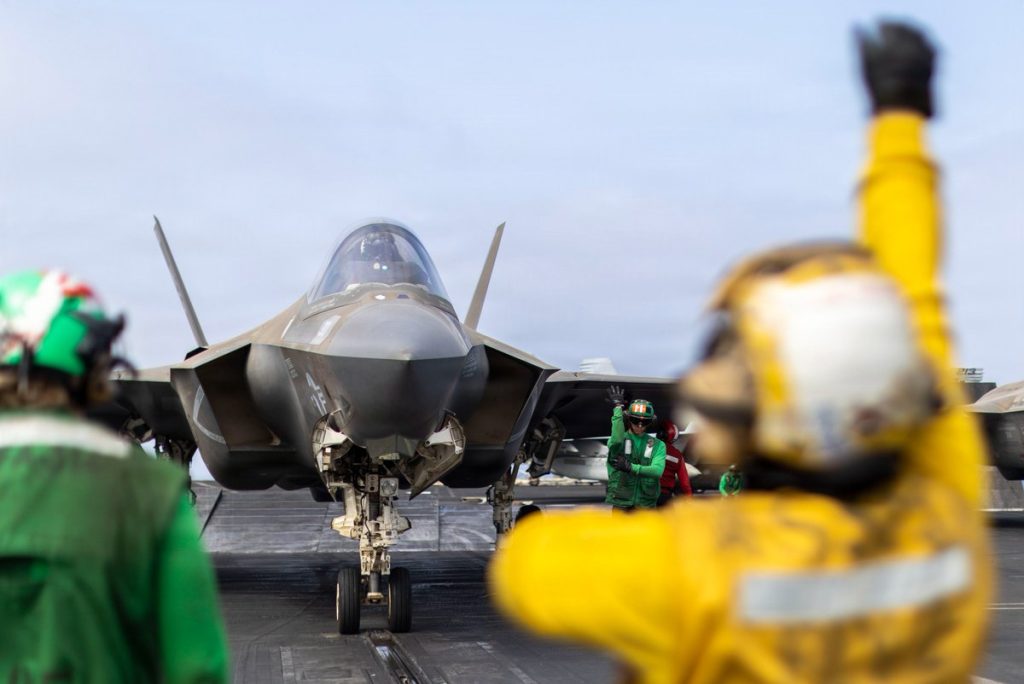
A US Marine Corps F-35C stealth fighter prepares to take off from USS Abraham Lincoln (CVN 72) in the Arabian Sea. July 6, 2026.
A US Marine Corps F-35C stealth fighter prepares to take off from USS Abraham Lincoln (CVN 72) in the Arabian Sea. July 6, 2026. Photo credit: US CENTCOM.

According to CENTCOM, the US engaged 90 targets last night in Iranian territory.

  • For the second consecutive night, the US strikes focused on the port in Bandar Abbas, which is near the Strait of Hormuz, Bushehr, Kharg Island and large swaths of southeastern Iran. The targets  included air defence systems, coastal surveillance assets, missile and drone storage sites, naval capabilities and military logistics infrastructure.
  • It is understood the US informed Israel in advance about its plans to attack Iran.
  • The Islamic Revolutionary Guard Corps announced that it struck two US bases in Kuwait and two in Bahrain in retaliation for the American strikes.
  • Prime Minister Netanyahu and Defence Minister Katz held a security consultation last night. The current assessment is that the escalation in hostilities will remain confined to the Gulf. However, Israel is closely monitoring events and is preparing for the possibility of rapid escalation in hostilities that might also  broaden Iranian attacks to include Israel.  
  • The IDF is on high alert, both defensively and offensively, equipped with operational plans, armed aircraft on standby, a target bank provided by the IDF Intelligence and close coordination with the US.

July 7, 2026

Iran uses Khamenei funeral to project regime strength

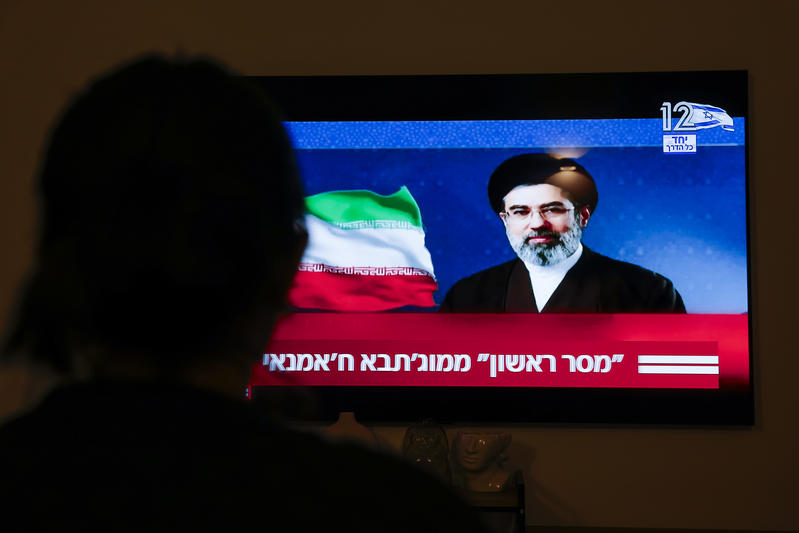
A person watches a television broadcast showing a message from Iran’s Supreme Leader Mojtaba Khamenei to the international community, in Moshav Mishmar David, March 12, 2026.
A person watches a television broadcast showing a message from Iran’s Supreme Leader Mojtaba Khamenei to the international community, in Moshav Mishmar David, March 12, 2026. Photo by Nati Shohat/Flash90

What’s happened: Millions of mourners have taken to the streets of Iran’s capital, Tehran, for the multi-day funeral procession and ceremony of its former Supreme Leader, Ali Khamenei.

  • Ali Khamenei’s funeral began on 3rd July, moving from Tehran to the holy cities of Qom and Mashhad, before crossing into Iraq for stops in Najaf and Karbala.
  • Delayed by four months since his elimination by Israel on 28th February 2026, his son and successor as Supreme Leader, Mojtaba Khamenei, was notably absent, which added to rumours about his poor state of health.
  • Mojtaba’s three brothers, Masoud, Meysam and Mostafa were all present along with other dignitaries including former President Ahmedinejad, and General Ahmad Vahidi, commander of the IRGC as were many senior foreign dignitaries.
  • Saudi Arabia’s King Salman and Crown Prince Mohammed bin Salman sent condolences which were conveyed to Iranian President Masoud Pezeshkian by the Kingdom’s Deputy Foreign Minister Waleed Elkhereiji.
  • Other notable attendees included Lebanon’s Defence Minister, Pakistan’s Prime Minister and Interior Minister, Turkey’s Vice President – the only NATO member state to send a representative – India’s Deputy Foreign Minister, the Russian Security Council’s Deputy Chairman.
  • The President of Tajikistan, Prime Minister of Armenia, President of Georgia, and Afghan Taliban’s Foreign Minister were also in attendance.
  • Four other members of the Khamenei family killed on 28th February have also been buried in the past week including Mojtaba’s wife, son, and daughter.

Context: Ali Khamenei was eliminated by an Israeli air strike during the opening salvos of the US and Israel’s war against Iran which broke out on 28th February.

  • The Iranian regime appears to be using the funeral as an opportunity to showcase an impression of a strengthened post-war self to the world post-ceasefire and MOU signing.According to the dissident news site, Iran Wire, the regime has invited and hosted 400 foreign influencers to cover the funeral, and present a more positive image of the country to global audiences, including from the UK.
  • Mojtaba Khamenei was reported to have been severely injured in the air strike which eliminated his father, although no definitive proof of life has emerged or been provided. He has not been seen in public since before the war begun, and has only communicated externally in writing.
  • In his absence, Iran is understood to have effectively fallen under the IRGC’s control reinforcing the relative impotence of the President, currently Masoud Pezeshkian. Negotiations with the US were led by Mohammad Bagher Ghalibaf, Speaker of the Iranian Parliament.
  • Proceedings have been significantly more controlled and dignified than during the previous Supreme Leader, Ruhollah Khomeini’s funeral which took place in 1989 where the casket was damaged because of crowds of mourners attempting to touch it. Dozens were also reportedly crushed to death.
  • The fact that Lebanon sent a senior government representative, Defence Minister Michel Menassa, suggests the continued influence of Iran on Lebanon. A Lebanese political source suggested this reflects no policy shift on Iran’s interference, only a desire to lower tensions and avoid burning bridges.
  • Beirut wants to keep Iran from sabotaging its framework agreement with Israel. President Aoun defended the government’s decision saying, “Our diplomatic relations with Iran are ongoing and unbroken. How did other Arab and non-Arab countries participate in expressing condolences? Was it expected that Lebanon would officially be absent from this funeral?”
  • The most recent round of indirect “technical” talks in Doha, between Iran and the US were described by President Trump as having been “very good” but remain inconclusive. Israel has a highly sceptical view of these talks, particularly as they fail to address the two issues of most immediate concern to Jerusalem: ballistic missiles and regional proxies such as the Houthis and Hezbollah. However, at this point, Israel appears unable to influence proceedings.
  • Meanwhile, Israel’s Ambassador to the US, Yechiel Leiter, yesterday claimed that the trilateral framework signed with Lebanon had superseded the first clause of last month’s US-Iranian MOU. The US is yet to respond to these comments.
  • President Trump has also said that ⁠the United ⁠States will ‌either ‌make a ‌deal with Iran or “finish the ‌job”, while reiterating the former was his preference.

Looking ahead: Khamenei is due to be buried in Mashhad on 9th July.

  • US-Iran negotiations are due to resume two days later on 11th July. These talks are expected to address a range of issues including sanctions relief, unfreezing funds, and nuclear enrichment.

Newsletter sign-up

Please enter your information below to subscribe to our daily newsletter and stay updated and informed.

Donate to BICOM

At BICOM, we rely on the generosity of people like you to keep our website and services running. Your donation, no matter the size, makes a real difference. Please consider supporting us today. For further information please email: [email protected]