What’s happened: The Israeli political scene spent much of yesterday focussed on the controversy of the film NAZA which won the Special Jury Prize at the Venice Film Festival.
- The film portrays anonymous interviews with soldiers from the Intelligence Directorate regarding collateral damage estimations (CDE). The Hebrew acronym for such estimations is naza (nezeq agavi).
- The IDF Spokesperson Brigadier General Effi Defrin invited the producers of the film NAZA to allow IDF representatives to view the film in full in order to respond to allegations raised by the film.
- Regarding the general claims made by the film and in the previews which have been released, the IDF emphasised in multiple statements that targeting decisions are not made by AI but rather always by humans, contrary to what is claimed in the film. Furthermore, claims of national and military strategy alluded to by the junior-level officers interviewed anonymously would have necessarily been unknown to them.
- Politicians and public figures were quick to react to the film and the 24 minutes of sustained applause it received.
- Culture Minister Miki Zohar posted on social media that “the burning self-hatred of the filmmakers, who are prepared to harm their homeland in order to receive applause from the antisemites around the world, is unfathomable and constitutes treason against the state.” He further threatened to seek to have their citizenship revoked, though it was unclear what the legal basis for this would be.
- Gadi Eisenkott, leader of the Yashar party and widely billed as the most likely man to replace Netanyahu as prime minister in the next election, described the film as providing a “distorted and one-sided picture.” While averring that “criticism in a democratic society is legitimate,” he described the film as not criticism but rather “smearing our soldiers” in a “just and extremely difficult war.”
- Two former hostages took to social media with scathing reactions to the film and especially to the filmmakers. Eliya Cohen, who was held by Hamas for 505 days and weighed only 44 kilograms upon his release following extended abuse and deprivation (including the removal of a bullet from his leg without anaesthesia) posted a video in Hebrew lambasted the filmmakers for “spreading lies” about the people who fought to save him and still fight to protect Israel from those who carried out the invasion and massacre on October 7.
- Rom Braslavski, who was held for 738 days and has since vividly described the physical and sexual abuse he endured, posted a message directly to the filmmakers: “You’re repulsive, and I truly wish upon you a day and a half in Gaza, not with Hamas, but with the Gazans whom you love so much. You won’t make movies like this after that.”
- One of the two Israeli filmmakers, Yuval Avraham, gave an interview to Israel’s Channel 13 last night to the veteran Israeli journalist Raviv Drucker, who had seen the film and offered it qualified praise and mild criticism in a column in yesterday’s Haaretz. When Drucker challenged Avraham on claims that were verifiably false, Avraham’s defence was that the Guardian, which had produced the film, was in charge of fact checking. When Drucker asked why the film didn’t include any mention of the October 7 massacre or any comparison with how other western armies estimate collateral damage, Avraham shot back that Drucker could include these in his own film on “Israeli war crimes” if he ever chose to make one.
Context: An assessment of collateral damage potential at a target is only one part of target selection and strategy. That is the part that soldiers operating in the Intelligence Directorate, like the ones interviewed anonymously in the film, might know about.
- They would not know about the military advantage of hitting the target (a key determinant in any proportionality assessment), or whether there has been any authorisation to actually hit the target or, if so, what damage was ultimately caused. A fuller picture would need the relevant military lawyers, pilots or drone operators, and, of course, senior commanders who actually make the final targeting decisions and view the damage assessment after the strike.
- Crucially, any choice of targets in the war in Gaza also had to make assessments regarding the risk to Israeli hostages.
- The fact that soldiers in the Intelligence Directorate make collateral damage assessments is not unusual. It is, in fact, a basic requirement of the laws of armed conflict. The UK armed forces do the same thing and use the conventional English acronym for the practice, CDE (collateral damage estimation). The rendering of the Hebrew acronym in English so that it can look suspiciously like the word Nazi is quite clearly a deliberate choice to provoke.
- Moreover, the very insistence on making such assessments would seem to belie the charge that the film and its supporters want to advance, that Israel is committing a genocide. An attempt to wipe out a people as such wouldn’t have collateral damage estimations because no damage (except to friendly forces) would be collateral to the mission at all.
- The film’s claim that that collateral damage estimations allowed for attacks on one Hamas fighter that could kill 500 civilians are verifiably false, as no such attack was ever recorded in the entirety of the war. In fact, on only two days in nearly three years of fighting did the total death toll in Gaza reach 500. On only seven more days did the death toll exceed 400. Nearly all of those nine days were in October 2023, in the first weeks after the October 7 massacre.
- The deadliest day for the Palestinians in the entire war, by far, was October 7 itself. 1,500 of the invaders were eliminated in Israeli territory; another 300 Gazans were killed in Gaza by Israeli fire and rockets aimed at Israel that fell short. Together with the 1,200 Israelis killed on October 7, the total fatalities for that day is 3,000, an order of magnitude larger than even the deadliest days of the subsequent war.
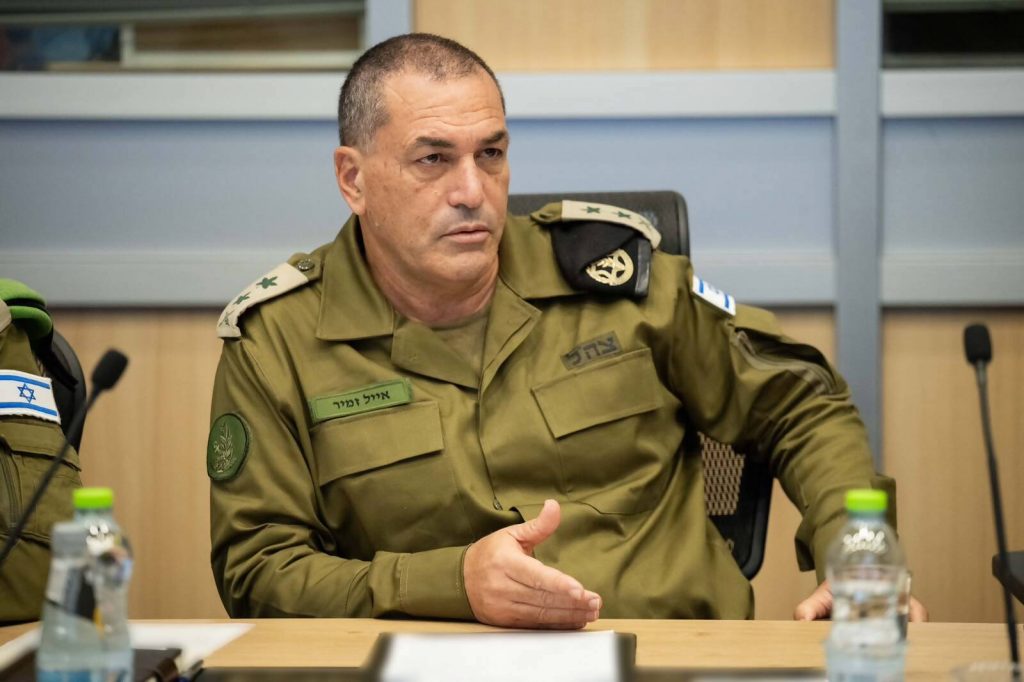
Looking ahead: IDF Chief of Staff Eyal Zamir supported the call of the IDF Spokesperson to view the film and respond to the specific events raised in it and take relevant action where necessary. He also announced a series of steps to be implemented in the IDF in response to the film and the issues raised by it.
- Zamir instructed the Planning Directorate to establish a “multi-organisational and multi-disciplinary team” for contending with false accusations against the IDF, in cooperation with experts from Israel and the world.
- He also instructed the Military Advocate General Maj. Gen. Itai Ofir to “review and take possible legal action regarding the film,” particularly regarding suspicions that classified material was used in the production of the film.