LATEST

Hamas and the Muslim Brotherhood

Key background
  • Hamas is an Islamist Palestinian nationalist movement which currently governs the Gaza Strip. It is proscribed by the UK and in the majority of western countries.
  • Its primary state backers are Iran, Turkey, and Qatar. It is also active in the West Bank, East Jerusalem, Syria, and Lebanon.
  • Since seizing control of the Gaza Strip in 2007, it has continuously launched attacks against Israel and weaponised civilian infrastructure by embedding itself into schools, mosques, and hospitals.
  • Hamas’s 7th October attacks on southern Israel killed 1200, and over 250 hostages were subsequently taken to the Gaza Strip.
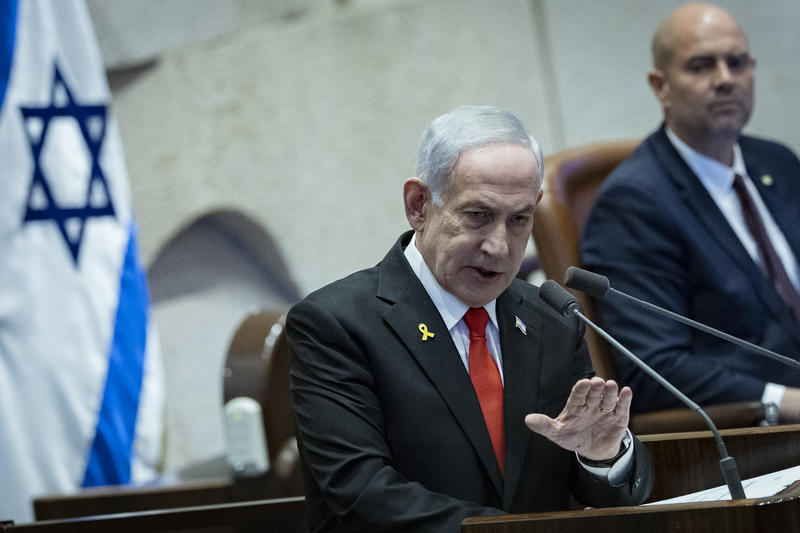
Israeli Prime Minister Benjamin Netanyahu at a 40 signatures debate, at the plenum hall of the Knesset, the Israeli parliament in Jerusalem, on January 19, 2026.
Israeli Prime Minister Benjamin Netanyahu at a 40 signatures debate, at the plenum hall of the Knesset, the Israeli parliament in Jerusalem, on January 19, 2026. Photo by Chaim Goldberg/Flash90

Updated January 21, 2026

Netanyahu to join Trump’s Board of Peace

What’s happened: Prime Minister Netanyahu announced this morning that Israel would accede to President Trump’s invitation to join his Board of Peace.

  • Argentina, Azerbaijan, Belarus, Hungary, Kazakhstan, Morocco, the United Arab Emirates, and Vietnam have also said they would join. It was not clear from the Prime Minister’s announcement if Israel would be paying $1 billion for a permanent membership.
  • President Trump told reporters yesterday that “we think we know” where the body of the last Israeli hostage in Gaza is. Referring to Ran Gvili, who was killed in the October 7 attacks and whose body has been held ever since in Gaza, the President said, “They have one left that we think we know where it is, amazing, it looked like we weren’t going to get anywhere near that, now they’ve gotten that almost.”
  • Egyptian President Abdel Fattah al-Sisi will meet President Trump today on the sidelines of the Davos. The two are due to discuss Phase 2 of the Gaza ceasefire and to coordinate their moves before a bruited American ultimatum on Hamas disarmament and the possible entry of Egyptian-trained Palestinian forces into Gaza.
  • In Jerusalem, the Israel Lands Authority took possession of a large UNRWA facility in Jerusalem and began demolishing parts of it. This was in accordance with the new law from last year which bans all UNRWA activity inside Israel and severely limits any official interaction between Israel and UNRWA in territories Israel controls.
  • UNRWA vacated the facility six months ago, and the ILA proceeded with the demolition yesterday to stop other illegal activities taking place at the site as well as to advance plans for its redevelopment.

Context: According to various media sources, President Trump is expected to deliver an ultimatum to Hamas regarding the terrorist organisation’s disarmament in the second phase of the Gaza ceasefire. Reports differ, however, on the content of the ultimatum, its timeline, its proposed methods of decommissioning, and the threats which back it up.

  • A Palestinian police force presently being trained in Egypt is reportedly ready to carry out the disarmament, should Hamas accept the conditions of Trump’s ultimatum. This force reports directly to the Palestinian committee of technocrats whose appointments were announced last week. They would be tasked not only with collecting rockets and IEDs, but also the rifles and small arms with which Hamas enforces its domestic rule.
  • Notably, this would mean that disarmament is an internal Palestinian affair, and not an endeavour achieved by the International Stabilisation Force, which has not yet come into being and does not have pledged commitments from enough countries to be viable.
  • The Egyptian-trained force would, if Hamas agrees to Trump’s ultimatum, hope to enter Gaza sometime in February or March and seek to complete its task rapidly. Despite whatever enthusiasm both Egyptian and US officials express (in anonymous leaks) regarding both the ultimatum and the police force, both Israeli and Palestinian officials remain sceptical about the entire plan.
  • Palestinian officials are concerned that an under-equipped police force seen, accurately or not, as aligned with the PA could quickly find itself a target of superior Hamas weapons (as happened in 2007). Israeli officials share that concern while also opposing any role for the PA in Gaza.
  • In the meantime, few in Israel believe Hamas will agree to Trump’s ultimatum anyway. As such, the IDF continues to prepare itself for a possible military offensive in February or March to disarm Hamas by force.
  • An Israeli operation following a Hamas refusal to carry out the conditions of the ceasefire, it is believed, would have a measure of international legitimacy. And a ground offensive into central Gaza unencumbered by the presence of Israeli hostages and the implied threat to their wellbeing, it is further believed, could be more effective than anything tried in two years of warfare following the October 7 attack.

Looking ahead: President Trump is scheduled to make a major prime time address tonight. In the background are at least four major international crises: the Gaza ceasefire and the formation of the new Board of Peace, the violent crackdown on anti-regime protesters in Iran and the possibility of US military action there, and the US threats on Greenland and the attendant tensions in the NATO alliance and the transition in Venezuela following the US capture of Nicolas Maduro.

  • With international attention focused on Venezuela and Greenland, US forces continue to move to the Persian Gulf region.
  • The eruption of violence in Iran in late December caught the US  Navy without a carrier group in the Gulf. As of yesterday, the USS Lincoln Carrier Strike Group transited through the Strait of Malacca and into the Bay of Bengal. It is expected to continue west to the Persian Gulf.
  • Circumventing the globe in the opposite direction were the F-15Es which had served to intercept drone attacks from Iran in previous rounds of fighting in 2024 and 2025. These reportedly left bases in the UK for bases in Jordan yesterday, accompanied by KC-135 Stratotanker aerial refuelling jets.
January 20, 2026

Israel–US tensions surface over Gaza’s future

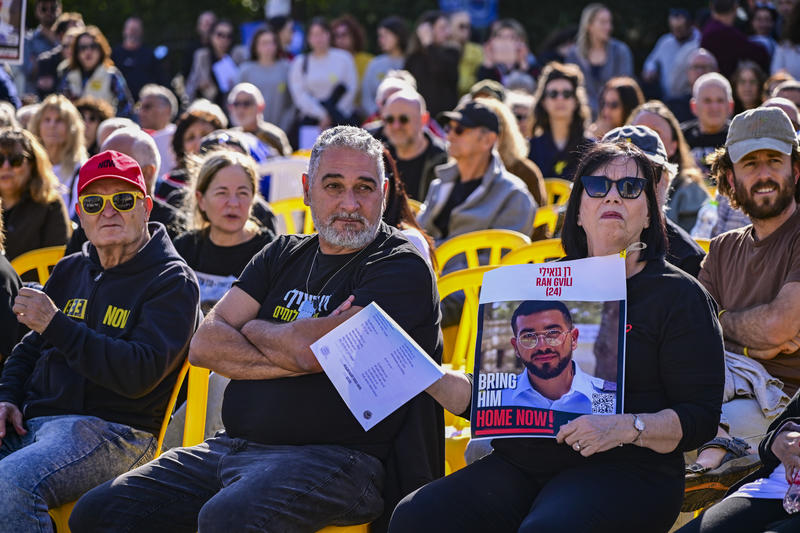
Relatives, friends and supporters of Master Sgt. Ran Gvili, whose body is held by Hamas, attend a Kabbalat Shabbat ceremony at Hostage Square in Tel Aviv, calling for the return of his body from Hamas captivity, on January 16, 2026.
Relatives, friends and supporters of Master Sgt. Ran Gvili, whose body is held by Hamas, attend a Kabbalat Shabbat ceremony at Hostage Square in Tel Aviv, calling for the return of his body from Hamas captivity, on January 16, 2026. Photo by Avshalom Sassoni/Flash90 *** Local Caption *** רן גואילי שוטר חטוף כיכר החטופים קבלת שבת הפגנה אחרון

What’s happened: Amidst growing differences between the Israeli government and the Trump administration, the Israeli government decided yesterday to delay opening of the Rafah crossing between Gaza and Egypt.

  • The opening is one of many measures that are supposed to happen in line with Phase two of the ceasefire agreement, which the US administration announced was underway earlier this week.
  • Israel opposed moving on to phase 2 before the body of the last Israeli hostage, Ran Gvili, was recovered from Gaza, and Israeli officials were particularly unnerved by the inclusion of Qatar and Turkey not just in Trump’s Board of Peace, but also in the Gaza Executive Board which is designated for a direct role in supervising postwar Gaza reconstruction and governance.
  • The Gaze Executive Board is the body which oversees the National Committee for the Administration of Gaza (NCAG), the so-called “technocratic” committee of Palestinians responsible for transitional governance of Gaza.
  • Outside of Israel, growing attention has been focused on the charter of President Trump’s Board of Peace.
    • The establishment of the Board was explicitly set out in the Comprehensive Plan which brought the Gaza war to a ceasefire in October 2025 and was endorsed by a UN Security Council resolution. Over the past week, the US administration has been sending formal invitations to countries to join the Board together with a detailed charter. The charter indicates a much broader role for the Board than just overseeing transitional governance and reconstruction in Gaza.
    • The charter grants broad personal powers to President Trump, with the language unclear if these powers will last longer than his term in office. It offers countries a “permanent membership” if they contribute $1 billion dollars at the outset, though a three-year membership is free. Its mandate  includes securing “enduring peace in areas affected or threatened by conflict,” not just Gaza.
    • Among US allies, the only vocal scepticism about the Board registered so far has been from France, which has not definitively said whether it will join, and Israel, which is angered about the inclusion of Qatar and Turkey on the subcommittee explicitly tasked with overseeing governance in Gaza, the aforementioned Gaza Executive Board.

Context: The role of Qatar and Turkey in the future governance of Gaza continues to be a cause of concern for Israeli security officials, and a point of contention in domestic Israeli politics.

  • In Knesset, opposition leader Yair Lapid blasted Netanyahu for either failing to block Qatar and Turkey from gaining a foothold in Gaza. “Hamas’s hosts in Istanbul and Doha, Hamas’s ideological partners, have been invited to run Gaza,” he said from the rostrum. Turning to the Prime Minister, he said that Netanyahu either “agreed behind our backs that Turkey, Qatar, and the Palestinian Authority would be in Gaza,” or that he didn’t know that the US had included them, which means “Trump doesn’t give a damn about you.”
  • Netanyahu acknowledged that the US and Israel had “a certain argument” on the issue of Qatari and Turkish involvement, but emphasised that forces from the two countries would not set foot in the Strip.
  • Former Prime Minister Naftali Bennett, not currently a member of Knesset, took to social media to criticise the Prime Minister on the matter. “Erdogan and the despicable Qatar, the greatest haters of Israel, the most enthusiastic aides of Hamas, are being ushered in through the front door to run Gaza,” he tweeted. “What a terrible diplomatic failure by the Netanyahu-Ben-Gvir-Smotrich government. Soon we will fix this, too.”
  • Disagreement between the US and Israel  is another case of most recent ruptures between the Trump administration and US allies. These rifts are becoming interlinked, as Donald Trump clashed with French President Emmanuel Macron over the potential inclusion of Vladimir Putin in the Board of Peace. 
  • The question of the Rafah Crossing has long been a bone of contention internationally and internally in Israel.
    • When Israel withdrew all its soldiers and civilians from the Gaza Strip in 2005, it signed a multilateral agreement called the Movement and Access Accord which created a complicated mechanism for operating the crossing between Gaza and Egypt by Palestinian and European forces with a remote supervisory role by Israel.
    • The arrangement was abandoned when Hamas took over the Strip following its coup in 2007. Egypt shut the crossing down completely in May 2024 when Israeli forces retook the Philadelphi Corridor, and the ceasefire which ended the war a year and a half later called for the crossing to be reopened, implicitly under an arrangement that would resemble the 2005 Accord.
    • Initially, Israel announced it would reopen the crossing for one-way traffic — from Gaza to Egypt — but eventually under international pressure and despite strong opposition in the Cabinet, it agreed to open it for two-way traffic in Phase 2 of the ceasefire. The decision yesterday to delay the opening further was interpreted by all sides as an expression of Israeli frustration at both the incomplete return of deceased hostages and, most especially, at the last minute inclusion of both Qatar and Turkey in the Gaza Executive Board.

Looking ahead: Lurking behind all the disagreements about the Board of Peace, the Gaza Executive Board, the NCAG, and the ISF is the question of Hamas disarmament. No credible plan for the actually disarming the terrorist organisation has been put forward by any of the various committees and boards.

  • Netanyahu himself, speaking at yesterday’s stormy Knesset debate, alluded to the possibility that the IDF would be forced to carry out the task itself should international efforts to disarm Hamas fail to yield results. “Phase 2 says something simple: Hamas will be disarmed, and Gaza will be demilitarised,” he said in his speech before Parliament, before adding that this “will be achieved either the easy way or the hard way.”
  • Reports in the Israeli media based on leaks from the IDF suggest that such an operation would require four or five reserve divisions to be mobilised. The establishment of internationally backed governing and oversight bodies in the wake of the ceasefire would no doubt complicate such a ground offensive, especially in comparison to previous IDF incursions into Gaza over the past two years of war. But without concern over the fate of living hostages binding Israel’s hands, the IDF would be much freer to act than it was in previous rounds of fighting.

January 19, 2026

US announces makeup of new governance for Gaza

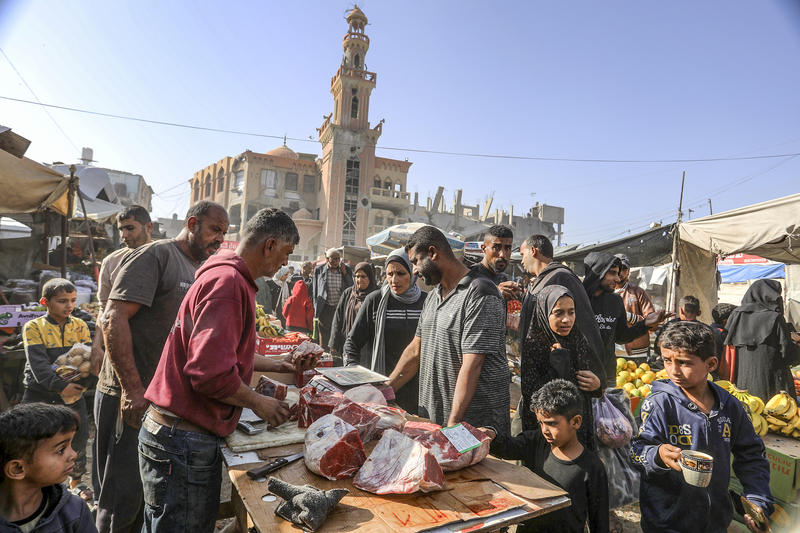
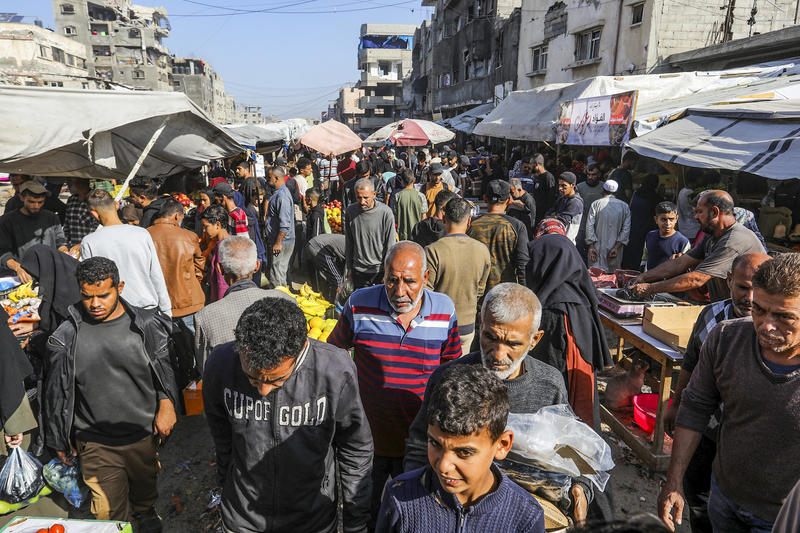
Palestinians shop at a market in Khan Yunis
Palestinians shop at a market in Khan Yunis, in the southern Gaza Strip, on November 21, 2025. Photo by Abed Rahim Khatib/Flash90 *** Local Caption *** הפסקת אש עזה פלסטיני פלשתיני שוק קניות חאן יונס

What’s happened: Over the weekend, the Trump administration announced the composition of the Gaza Board of Peace and an executive committee that will liaise between the board and the newly-formed government of Palestinian technocrats.

  • The Board of Peace will be led by President Trump and include Secretary of State Rubio, US envoys Witkoff and Kushner, Former Prime Minister Blair, Apollo Global Management CEO Marc Rowan, World Bank President Ajay Banga and deputy US National Security Adviser Robert Gabriel.  
  • The executive committee members will include the envoys Kushner and Witkoff, Blair, Rowan, Turkish Foreign Minister Hakan Fidan, Qatari diplomat Ali Thawadi, Egyptian General Intelligence Director Hassan Rashad, UAE Minister of International Cooperation Reem Al-Hashimy, former UN humanitarian coordinator Sigrid Kaag, Israeli-Cypriot businessman Yakir Gabay and former UN envoy to the Mideast Nickolay Mladenov.
  • Dr. Ali Shaath will be the Chairman of the National Committee for the Administration of Gaza (NCAG), the main Palestinian technocratic body on the ground. Committee members will include a range of Palestinian technocrats, some of whom were previously affiliated to the Palestinian Authority (PA).
  • The Israeli Prime Minister’s Office issued a statement noting that the US announcement “was not coordinated with Israel and runs contrary to its policy.” Israeli officials are concerned the board includes senior representatives from Turkey and Qatar.
  • Leader of the Opposition Lapid said, “For the past year I’ve been telling the government: ‘If you don’t advance the Egyptian solution with the United States and the world, you’ll end up with Turkey and Qatar in Gaza.’ Last night, the composition of the ‘Board of Peace’ was announced—Turkey is in, Qatar is in and, according to the IDF, Hamas has 30,000 armed men in Gaza. That is a complete political failure of the Netanyahu government after the courage and endless sacrifice made by IDF soldiers and commanders.”
  • Former Prime Minister Bennett commented, “Two years after it massacred us, Hamas is still alive, in control and growing stronger. The entry into Gaza by Qatar and Turkey, Hamas’s supporters and financiers, gives Hamas a reward for the October 7 massacre, endangers Israeli citizens’ security and sends a grave message to the peoples in the region that for massacring Jews one receives political and military achievements.”
  • Following the signing of committee’s mission statement Shaath said that the NCAG will act to entrench security, to repair vital infrastructure and to advance stability in the Gaza Strip. Shaath said that the top priority at present was to reopen the Rafah crossing in both directions.
  • Speaking at a rally on Saturday night, the parents of the last deceased hostage held in Gaza, Ran Gvili said, “While we are here, still waiting for Rani’s return, a Board of Peace for the second stage is being established. How can anyone think about a second stage, and what peace are they talking about at all? Peace with people who have refused to return our son, despite having consented to that in an agreement?”

Context: Israel has consistently stated that there can be no practical implementation of Phase 2 before the body of the final fallen hostage is returned and Hamas is disarmed.    

  • The decision to include Turkish and Qatari representatives on the Gaza executive committee has caused alarm across the political spectrum is Israel, though the decision is not a surprise. Those countries were key actors in persuading Hamas to agree to the ceasefire in October and are considered key allies by Trump. The major concern is that Hamas will receive a renewed influx of funds allowing it to pay fighters and consolidate its control.  
  • In parallel to the announcements, the US led Civil-Military Coordination Centre (CMCC) in Kiryat Gat continues to coordinate aid into Gaza and to develop plans to build new residential neighbourhoods for Gazans, (initially on the Israeli side of the yellow line).
  • Currently, around 800 trucks of supplies enter into Gaza every day, but once they pass the yellow line, Hamas is able to place a tax on every delivery which it then uses to replenish their accounts and rehabilitate their practical control over the Strip.  
  • Israel is further concerned that Hamas attacks on its troops along the yellow line have increased.
  • The announcement over the weekend is largely driven by Trump’s desire to showcase progress, even if concrete changes on the ground remain mostly symbolic for now.
  • Despite formal denials the NCAG appears closely connected to the PA, as is reflected in its leadership, composition, and Ramallah’s clear endorsement.
  • Hamas welcomes the committee because it poses no real threat to its power, serving as civilian cover while Hamas retains security control. This worryingly resembles the classic model of Hezbollah, operating as the main military force under a weak civilian leadership.
  • Although thousands of Hamas fighters were killed during the two year war, the latest assessment suggests every fighter killed has been replaced, (albeit younger, less experienced, less skilled) and that the combined forces of Hamas and Islamic Jihad once more stands at around 40,000.
  • The IDF significantly degraded their rocket arsenal, with about 90% of it destroyed, but military officials believe that hundreds of rockets still remain in the Strip, mostly short-range.

Looking ahead: In an effort to avoid a clash with the US administration Prime Minister Netanyahu has instructed Foreign Minister Saar to liaise with US Secretary of State Rubio.

  • According to Israel Hayom, Trump will use the platform of the World Economic Forum in Davos this week to condemn Hamas for its delay in handing over its weapons.
  • After Davos, all of the countries involved, including Turkey and Qatar, will present Hamas with a categorical demand to disarm. If Hamas rejects the demand to hand over its weapons, President Trump could give a green light to an Israeli military operation, as he said publicly in their last meeting with Netanyahu.
  • It’s understood that Donald Trump has invited other world leaders to join the Board of Peace, including Prime Minister Starmer. 

January 16, 2026

Iran unrest exposes regime vulnerability, says Israeli historian

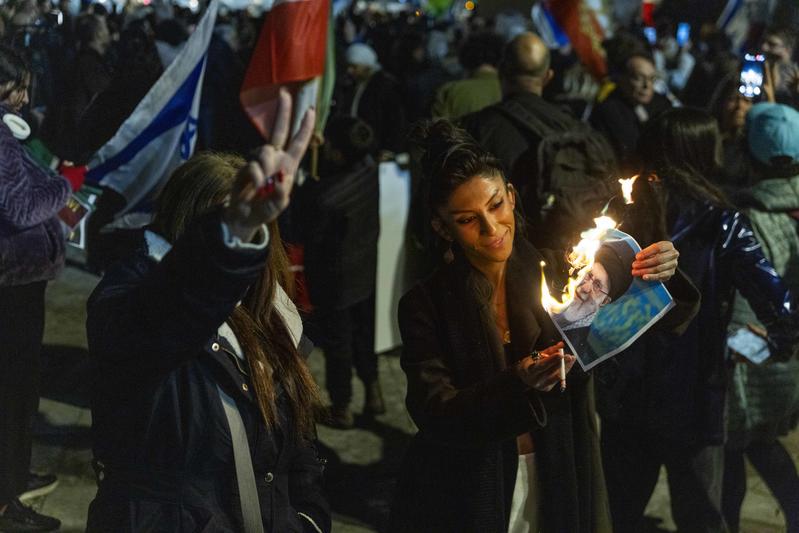
Israeli demonstrators express their solidarity with the Iranian people.
Israeli demonstrators express their solidarity with the Iranian people. Holon, central Israel, January 14, 2026. Photo by Chaim Goldberg/Flash90

Iran’s ongoing protests represent the most sustained and socially broad challenge to the Islamic Republic in years, but there are still no clear signs the regime is close to collapse, according to Eyal Zisser, Chair of Contemporary Middle Eastern History at Tel Aviv University.

Speaking with BICOM’s CEO Richard Pater, Professor Zisser said the current wave of unrest differs sharply from previous episodes. “What we are seeing is unprecedented,” he said. “This time the scale and duration are different. The protests are continuing, and more and more segments of Iranian society are joining.”

Unlike earlier demonstrations that were confined to specific groups or cities, the current unrest has drawn in students, women, workers and parts of the urban middle class across the country. “Different social groups are effectively joining hands,” Zisser noted, adding that the protests are affecting day-to-day life well beyond Tehran.

However, he cautioned against overstating their immediate impact. “The regime remains strong,” he said. “It still has powerful instruments of repression, particularly the Revolutionary Guards and the Basij, and we do not yet see signs of the regime disintegrating.”

A changed strategic context

What makes this moment distinct, Zisser argued, is the wider strategic environment. Last summer, Israeli actions targeting regime-linked military assets, carefully calibrated to avoid civilian harm, have punctured the perception of Iranian invulnerability.

“This was important psychologically,” he said. “It showed that the regime is not as strong as many people believed, and that can encourage people in Iran to take to the streets.”

The posture of the United States also matters. In contrast to previous administrations that relied largely on rhetoric, Zisser suggested that sustained political and economic pressure could have a real impact. “I don’t expect a military occupation of Iran,” he said, “but the goal is to undermine the regime’s confidence and capacity to rule.”

Concerns that external pressure could backfire by rallying Iranians around the regime are misplaced, he added. “Pressure is not directed against the Iranian people. They are not naïve, they understand where responsibility lies.”

Watching for cracks

Historically, regime collapse in Iran and elsewhere has been preceded by fractures within the security forces. For now, Zisser said, those signs are absent. “We don’t see hesitation or defection within the Revolutionary Guards or Basij yet,” he said. “But this is something to watch very closely. If that happens, it would be a decisive indicator.”

Other warning signs include symbolic acts of dissent. Zisser pointed to instances of Iranian athletes refusing to participate in regime rituals, such as declining to sing the national anthem. “These are small signs, but they matter,” he said. “They show erosion of legitimacy.”

At the same time, he warned that a regime under pressure may seek to externalise the crisis. “When regimes feel they are losing control, they sometimes look for confrontation abroad,” he said, noting that Israel, Arab states and Western interests could all become targets.

Lebanon: Hezbollah unchecked

Turning to Israel’s northern border, Zisser was unsparing in his assessment of Lebanon. “It’s not that the Lebanese government isn’t doing enough, it is doing almost nothing,” he said.

The Lebanese Armed Forces, he argued, are unwilling and unable to confront Hezbollah, whose core military capabilities remain intact despite limited Israeli operations. “Missile stockpiles and production facilities are still there, many of them deep inside Lebanon, not just in the south.”

Israel’s current approach reflects a desire to avoid escalation, but Zisser stressed that the underlying problem remains unresolved. “Israel cannot simply give up,” he said, adding that Hezbollah’s fortunes are inseparable from those of Iran. “If Iran weakens, Hezbollah weakens.”

Syria and the Druze question

On Syria, Zisser said recent US rhetoric about the new leadership reflects a search for stability rather than confidence in long-term change. “Syria remains fragmented, and trust is minimal,” he said. Any meaningful security arrangement involving Israel would require time, confidence-building, and a significant reduction in Iranian influence.

Particular concern remains for the Druze community in southern Syria. While ceasefires exist, Zisser described them as fragile. Israeli proposals for humanitarian corridors are understandable, he said, but “from Damascus’s perspective they are unacceptable.”

Gaza: no rebuilding without demilitarisation                                              

Asked about Gaza, Zisser expressed scepticism about ambitious reconstruction plans absent a fundamental shift in reality on the ground. “Hamas will not disarm voluntarily,” he said, “and Israel will not accept arrangements that leave Hamas militarily intact.”

Past experience, he argued, has shaped Israeli thinking. “Israel has learned that withdrawing without ensuring demilitarisation only leads to renewed conflict.” Without a new political and security framework, reconstruction risks laying the groundwork for the next war rather than lasting stability.

January 15, 2026

US announces beginning of Phase 2 of Trump’s plan for Gaza

Palestinians shop at a market in Khan Yunis, in the southern Gaza Strip
Palestinians shop at a market in Khan Yunis, in the southern Gaza Strip, on November 21, 2025. Photo by Abed Rahim Khatib/Flash90 *** Local Caption *** הפסקת אש עזה פלסטיני פלשתיני שוק קניות חאן יונס

What’s happened: Steve Witkoff, the US Special Envoy who has overseen the ceasefire process in Gaza, announced yesterday that the ceasefire had officially entered Phase 2. The sides will now be “moving from ceasefire to demilitarisation, technocratic governance and reconstruction,” according to Witkoff’s statement.

  • Israel did not publicly object to the move, though Israeli officials remain dissatisfied that that a new phase was declared before the return of last Israeli hostage, police Sgt. Ran Gvili, who was killed fighting Hamas invaders on October 7 and whose body has been held in Gaza ever since. Equally unsettling from Israel’s perspective is the move to Phase 2 before Hamas has given up its weapons.
  • Witkoff’s announcement was accompanied by the unveiling of the so-called “technocratic” Palestinian administration which is supposed to govern Gaza for an unspecified transitional period, known formally as the National Committee for the Administration of Gaza (NCAG), but did not include any announcement of the membership of the Board of Peace, the international committee that is supposed to oversee the NCAG.
  • The announcement on Gaza comes as attention both in Israel and the United States is focused on Iran and on the possibility of American military action in Iran in support of anti-regime protesters. Israeli officials quoted in the local media believe that if a strike is imminent, Israel will have a short window of advance notice.
  • The US does not presently have a carrier strike group in the Gulf, as forces have been diverted to the Caribbean in recent months in anticipation of potential conflict in Venezuela. A report in the Wall Street Journal explains that “without an aircraft carrier and its associated air wing, including jet fighters, helicopters and electronic-jamming aircraft, the number of military aircraft in the region is also limited to those allowed to deploy to other nations’ bases.” An American carrier should be arriving in the Gulf in the coming fortnight. US defence officials  indicate that a strike is still possible even, however logistically more challenging without a carrier group.
  • Israel’s Home Front Command has issued no directives for now, and schools and businesses are all operating normally.

Context: For three months, Gaza has effectively been under Phase 1 of the ceasefire which was agreed to in early October last year. The twenty remaining living Israeli hostages were returned, as were 27 of the 28 deceased ones.

  • Israeli withdrew its forces behind the “yellow line” which divided the Strip into roughly half under Hamas control and roughly half under Israeli control. A surge of humanitarian aid came into Gaza, which did not include many dual use items that would be necessary for any substantial reconstruction but could also be used by Hamas to rebuild its tunnels and reconstitute its fighting capabilities. 
  • Phase 2 of the ceasefire is supposed to include not just a transitional Palestinian government in Gaza, but also a full disarmament of Hamas and an Israeli withdrawal from the Gaza Strip. Significant gaps exist regarding the terms of both of these measures, with Israel very reluctant to move all the way back to the prewar border, and Hamas giving no indication of a willingness to disarm.
  • The US and its regional allies, mostly Turkey, Qatar, and Egypt, are keen to focus on heavy weaponry, such as launchers and RPG’s, without any urgency on the rifles and guns that Hamas uses to maintain its rule over the Strip. American and Arab officials speak of an ambitious “buy-back” programme for dealing with Hamas weapons, but it is not clear that this will satisfy Israel or that Hamas will actually agree to participate.
  • Another unresolved issue is Hamas tunnels. Even on the Israeli side of the yellow line, locating and destroying tunnels has proven to be an onerous task for the IDF. A detailed investigation in Yediot Ahronot revealed that “IDF officers have a professional argument over whether the tunnels that the IDF discovered in the long fighting were indeed destroyed. The professionals in the Combat Engineering Corps assert that not all the methods that the IDF used to destroy the tunnels did indeed put them out of commission and that they could be re-dug. The army uses different explosives for different tunnels; in some places, it makes do with sealing them; in others, it destroys central intersections of the tunnel network. Hamas invested a great deal of resources to learn how to circumvent the damage caused to the tunnels, to dig them again and to cover their tracks deep underground.”
  • Israel is additionally concerned that in Phase 2, it will face pressure to allow more than humanitarian aid into the Strip. It is widely assumed in Israel that metals, concrete, and heavy building equipment, will be used for manufacturing rockets and rebuilding tunnels. The massive aid convoys of Phase 1 have been “taxed” by Hamas in a manner that has allowed it fully reestablish its prewar administration in the areas beyond the yellow line that it controls.
  • Israel prefers to view this announcement as symbolic rather than clash openly with the US administration.

Looking ahead: With the NCAG staffed, what remains to be established is the BOP (Board of Peace) and the ISF (International Stabilisation Force). The US is expected to make an announcement on the BOP as early as next week. It will include members from the US, Germany, the UK, the UAE, Egypt, Qatar, and others. Finding countries willing to send armed forces for the ISF has proven more problematic, especially with no actual disarmament of Hamas on the horizon.

  • It is being reported that Prime Minister Sir Keir Starmer will take a place in the Board, whilst Sir Tony Blair is suggested for the Executive Board, where he might serve alongside Steve Witkoff or Jared Kushner. 

January 6, 2026

IDF continues to target Hamas and Hezbollah

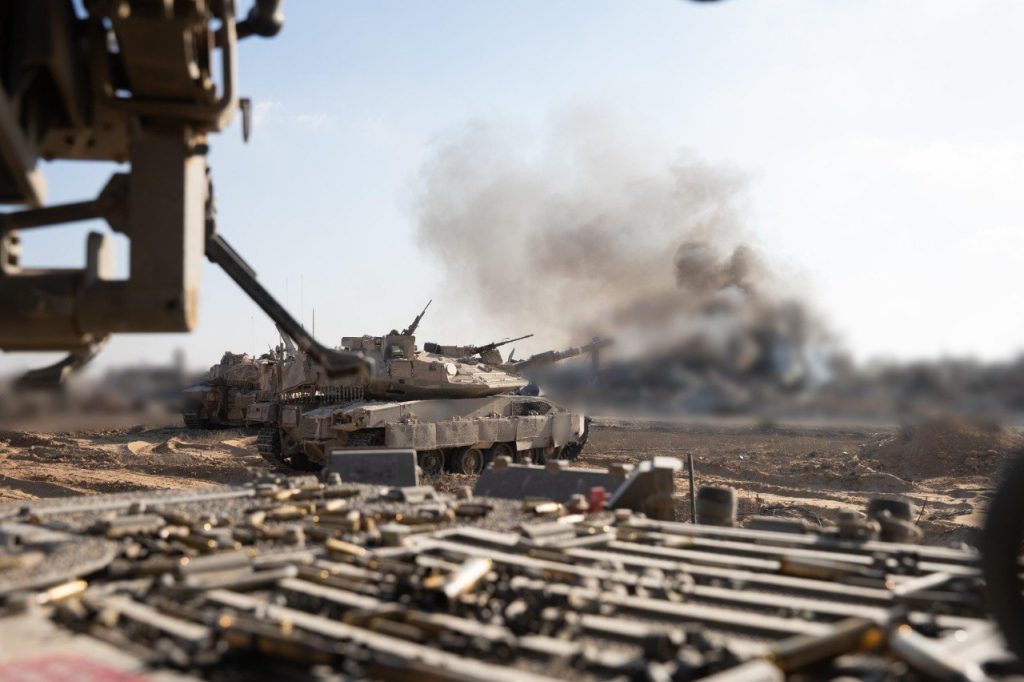
Forces from the Nahal Brigade’s combat team advanced to conduct a search in the Rafah area.
Forces from the Nahal Brigade’s combat team advanced to conduct a search in the Rafah area. Photo credit: IDF

What’s happened: IDF operations to enforce the ceasefires in both Lebanon and Gaza continue.

  • In Gaza yesterday, the IDF located a rocket launcher loaded with five rockets aimed at Israel in the Beit Hanoun area, in the northern Gaza Strip. The launcher was successfully dismantled.
  • Also in the northern Gaza Strip, near Beit Lahia, the IDF destroyed a two-kilometre Hamas tunnel.
  • In the southern Gaza Strip, there were at least two incidents of Hamas attacks on Israeli positions on the Yellow Line, the line dividing the Gaza Strip into Israel-controlled and Hamas-controlled sectors, that were successfully repulsed by IDF troops.
  • In southern Lebanon, the Israeli Air Force carried out airstrikes against weapons caches and terrorist infrastructure belonging to both Hezbollah and Hamas, including, most notably, a weapons production site belonging to Hamas. Evacuation orders were issued before the air strikes to avoid civilian casualties.

Context: The IDF operations in both the north and the south fall under the rubric of the ceasefire arrangements that permit Israel to continue to target both Hamas and Hezbollah infrastructure.

  • According to Israeli figures, 400 Hezbollah operatives have been eliminated in Israeli air strikes since the ceasefire in Lebanon went into effect nearly 14 months ago. That ceasefire put an end to Hezbollah rocket attacks on Israel which began on October 8, 2023, the day after Hamas’ invasion of southern Israel.
  • Following the meeting last week between President Trump and Prime Minister Netanyahu, there was no public announcement over moving to phase 2 of the ceasefire agreement, as had been anticipated by many experts and commentators.
  • The US position for the last few weeks has been a preference to move on to the second phase despite incomplete achievements in the first one. Israel has steadfastly resisted any move to phase 2 before all hostages are released and before Hamas is disarmed.
  • One deceased Israeli hostage, Ran Gvili, remains in Gaza.
  • Following the meeting in Florida, Trump made statements that were much closer to the Israeli position on disarmament than what leaks from the administration before the meeting had indicated would be the case. “If they don’t disarm, as they agreed to do, they agreed to it, and then they will be hell to pay for them,” the President said. “And we don’t want that. I’m not concerned about anything that Israel’s doing.”
  • With no realistic move to phase 2 on the horizon, the Yellow Line is becoming a de facto security border for the IDF in Gaza, something the Chief of General Staff Eyal Zamir emphasised in recent remarks to soldiers in the Strip. “We are positioned along the Yellow Line and control the dominant terrain overlooking the Gaza Strip – this is a new security boundary,” he said. “The Yellow Line is an enhanced defensive line that supports swift operational responses as required. We will continue operating to weaken Hamas as necessary – the troops must remain alert and prepared for developments.”
  • Following a reform in the registration procedures for international NGOs, Israel announced last week that 37 NGOs operating in Gaza that had refused to comply with the reformed procedures would be deregistered and need to shut down operation by March of this year.
  • The organisations, most notably Doctors Without Borders (also known by its French acronym MSF) have launched a broad public campaign against the Israeli measures, claiming that they threaten medical care and constitute a form of “collective punishment.” A joint statement from the foreign ministers of ten countries, including the UK, also condemned the move and claimed that “one in three healthcare facilities in Gaza” could be closed as a result.
  • Figures released by Israeli authorities showed just how untrue these claims were. The aid provided by the organisations among the 37 that are to be deregistered constituted barely 1 percent of the total volume of aid. Specifically regarding MSF, Israel’s COGAT reports that 5 out of 220 clinics in Gaza are operating by MSF, and 2 out of 33 hospitals are (this figure includes 15 field hospitals in its total). In its PR campaign, MSF repeatedly assert that Israel has provided no evidence that any of its staff were connected to Hamas or other terrorist organisations, though COGAT and others regularly post information about MSF employees implicated in terrorist activities.
  • Just in the last week, Israel’s Ministry of Foreign Affairs identified two MSF employees as members of a terrorist organisations. Fadi al-Wadiya was an Islamic Jihad operative working on the organisations’ rocket capabilities and an MSF employees, according to the Ministry, which also published pictures of him in military fatigues. And Nasser Hamdi Abdelatif al-Shalfouh was both an MSF employee and a Hamas sniper, also according to the Ministry.
  • Also last week, the Israeli watchdog NGO Monitor identified four MSF doctors who were also members of Gazan terrorist organisations, including not just Hamas but also the PFLP.
  • According the latest COGAT data, 4,200 humanitarian aid trucks entered Gaza in the last week, carrying food, medical supplies and shelter equipment, based on the prioritisation by the international organisations.
  • On December 29, 160 Gazans in need of medical care crossed into Israel at the Kerem Shalom Crossing and then from there into Jordan via the Allenby Bridge.
  • Since the ceasefire went into effect in October, 600 to 800 trucks of aid have entered Gaza each day carrying humanitarian goods, including food, medical supplies, tents, etc. Roughly 20% of all aid has been handled by the UN. 

Looking ahead: The US deadline for the complete disarmament of Hezbollah came and passed last week on December 31, and neither the US nor Israel are satisfied that anything like a thorough disarmament has taken place.

  • Leaks from Israeli officials to the local media indicate particular frustration with the ambiguous role of the Lebanese Armed Forces. One anonymous defence official was quoted saying, “We won’t allow threats to pile up in Lebanon. If need be, we’ll attack in the Dahiya too. We won’t hesitate.” The Dahiya is a neighbourhood in southern Beirut known as a Hezbollah stronghold, where Hezbollah leader Hassan Nasrallah was eliminated by an Israeli air strike in September 2024.

January 5, 2026

Post Trump meeting, Netanyahu declares support for the Iranian people

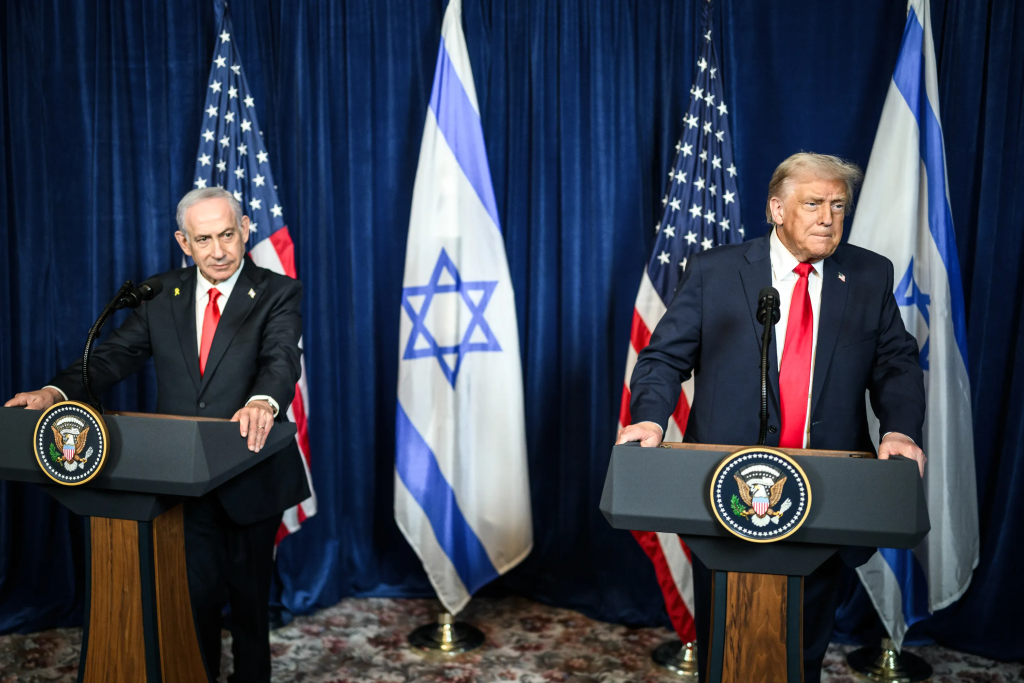
President Donald Trump hosts a bilateral meeting with Israeli Prime Minister Benjamin Netanyahu
President Donald Trump hosts a bilateral meeting with Israeli Prime Minister Benjamin Netanyahu at Mar-a-Lago. December 29, 2025. Photo credit: The White House.

What’s happened: At the start of Sunday’s weekly cabinet meeting, Prime Minister Netanyahu expressed support for the Iranian people.

  • Netanyahu told his ministers, “we identify with the struggle of the Iranian people, with their aspirations for freedom, liberty, and justice. It is very possible that we are standing at the moment when the Iranian people are taking their fate into their own hands.”
  • Similarly, President Trump has also expressed support for the protesters in Iran and warned that if Iran, “starts killing people like they have in the past, I think they’re gonna get hit very hard by the United States.”
  • According to the New York Times, senior Iranian officials acknowledged that the Islamic Republic has entered “survival mode.”
  • During the cabinet meeting, Netanyahu also related to the Iranian issue that came up at last week’s meeting with President Trump saying, “We reiterated our joint position of zero enrichment on one hand, and the need to remove the 400 kilograms of enriched material from Iran and oversee the sites with tight and genuine supervision.”
  • Netanyahu also expressed support for the US “determined decision and action” in Venezuela, “to restore freedom and justice to that part of the world.”

Context: The Iranian issue was one of the top priorities for Netanyahu when he met Trump last week. Overall, the top objective for Netanyahu was to consolidate on the military achievements across several fronts including Iran, Gaza, Lebanon and Syria. The common thread was to reaffirm US support that if necessary Israel will act to prevent Iran and their proxies from rearming and to ensure Israeli military freedom of action to counter any developing threats.

  • Although details of the private meeting between Trump and Netanyahu remain vague, Netanyahu also told ministers on Sunday that Trump was “unequivocal” on Gaza.
  • Netanyahu said, “He repeated this both in our private conversations and to public opinion at the press conference there. He said it: ‘The essential condition is that Hamas disarms.’ There is no other option. This is an essential and fundamental condition for the implementation of his 20-point plan. He made no concessions and showed no flexibility on this issue.”
  • Without continued Israeli action Israeli officials are concerned that the achievements of the last year will be eroded. To ensure the achievements are consolidated Israel is banking on continued close coordination with US defence officials.    
  • In the wake of the October 7th attack Israel is pursuing a new security doctrine, that includes forward and pre-emptive defence. It is further understood Israel’s new defence posture includes:
    • Disarming terrorist armies.
    • Disarming and destroying military infrastructure above and below ground in a way that will make it impossible to renew the fighting, or to carry out surprise attacks on Israel’s borders and civilian communities adjacent to them.
    • Preventing terror groups from restoring their military capabilities.
    • Establishing effective international enforcement mechanisms that will ensure and enforce precise implementation of the disarmament.
    • Secure US support to operate independently, without having to coordinate with the US every time Israel detects violations of the arrangements.
  • Specifically on Gaza, Netanyahu reiterated the Israeli position to secure the return of the body of Ran Gvili, the last remaining hostage who has not been buried in Israel before transitioning to the second phase.
  • When it comes to disarming Hamas the priorities include decommissioning RPG launchers, other rockets, missiles, mortars, anti-tank weapons, and heavy drones.
  • Thirdly, the destruction of the remaining underground infrastructure, especially attack tunnels, as well as  command and control centres and weapons manufacturing sites. Israel is also demanding a complete ban on military training in the Strip.
  • At this point Israel remains insistent on remaining on the Yellow Line to ensure the protection of communities on the Gaza periphery.
  • Similarly in the north, Israel is demanding that Hezbollah be fully stripped of its heavy and long-range arms, including rockets and missiles and drones
  • Regarding Iran, Israel will support an international agreement that removes Iran’s ability to develop its military nuclear programme. In addition, Netanyahu seems to have secured support from Trump that also recognises Iran’s efforts to rebuild its array of conventional military threat of ballistic missiles as another red line.      
  • It appears that Trump was accommodating to most of Israel’s demands. The main area of disagreement appears to be the role of Turkey, both in Gaza and their ambitions to extend their sphere of influence in Syria.
  • According to Nahum Barnea writing in Yediot Ahronot, “There will probably not be Turkish soldiers in the international force whose establishment is unlikely, but Turkish contractors will be included in the [Gaza reconstruction] work, and F-35 jets will be sold to the Turkish air force. Netanyahu was unable to persuade Trump that Erdogan is bad; Erdogan was unable to persuade Trump that Netanyahu is bad. Trump enjoys both of their displays of sycophancy.”    
  • On Venezuela, Israel has been concerned for several years of their alliance and connection to both Iran and Hezbollah.    

Looking ahead: Later today Israeli – Syrian negotiations over a security agreements in southern Syria are expected to be resumed in Paris. The talks have been on hold for the last two months.

  • Israeli defence establishment remains on high alert over concern that the Iranian regime could try and divert domestic attention by launching an attack on Israel.
  • On Sunday, Iran International, a Persian language opposition channel broadcasting from London, reported that the Islamic Revolutionary Guards Corps (IRGC) has conducting further missile launching exercises. The exercise includes tests of air defence systems and is being conducted in several cities including Tehran and Shiraz.
  • The Israeli assessment remains that the Iran remains exposed, and that their air defences have not been reconstituted since the 12 Day War last summer. Nevertheless, there is concern that if the regime fears it will be deposed then an attack on Israel could be its only move left.

December 16, 2025

Netanyahu meets US envoy as tensions rise in Gaza and Lebanon

Prime Minister Benjamin Netanyahu Meets with US Ambassador to Turkey and Special Envoy to Syria Tom Barrack, Monday, December 15, 2025.
Prime Minister Benjamin Netanyahu Meets with US Ambassador to Turkey and Special Envoy to Syria Tom Barrack, Monday, December 15, 2025. Photo credit: Ma'ayan Toaf (GPO)

What’s happened: Over the weekend, Israel carried out an air strike that eliminated Raed Saad, the deputy commander of Hamas’ military wing and one of the architects of the October 7 attacks.

  • In a joint statement, Prime Minister Netanyahu and Defence Minister Katz linked the strike to the detonation of a Hamas explosive device that had wounded Israeli soldiers earlier in the day on the ‘Israeli side’ of the Yellow Line in Gaza.
  • They described Saad as “one of the architects of the October 7 massacre” who in “recent days had been engaged in rehabilitating the terrorist organisation and in planning and carrying out attacks against Israel and rebuilding an attack force, in blatant violation of the ceasefire rules and Hamas’s commitments to adhere to President Trump’s plan. Instead of promoting demilitarisation, he was engaged in rearming for acts of terrorism.”
  • Another Israeli official described Saad as an arch-terrorist who worked day in and day out to violate the agreement and renew the fighting, and stressed that the strike was carried out “in response to these violations and was intended to ensure the continuation of the ceasefire.”
  • Also over the weekend, the IDF called off a strike on a Hezbollah armaments warehouse in the village of Yanouh in southern Lebanon at the last minute. Acting on Israeli intelligence, Lebanese Armed Forces (LAF) had approached the spot to enforce the ceasefire agreement but disturbances broke out with residents which caused the LAF to withdraw.
  • The IDF Spokesperson’s Unit Arab media branch then issued evacuation orders for the area, after which the LAF asked for permission to return to the site in order to act.
  • A defence official said that Israel had received evidence of coordination between the LAF and Hezbollah. “Despite this, we gave the LAF an opportunity to address this violation. We conveyed a message to Lebanon this evening through the Americans: Cooperation between Hezbollah and Lebanon is unacceptable.”
  • Yesterday, Prime Minister Netanyahu met US Ambassador to Turkey and special envoy to Syria Tom Barrack. Sources said the sides arrived at mutual understandings on both Israel’s freedom of operation in Syria to neutralise emerging threats as well as the advancement of US-mediated talks with Syria aimed at forging a new security arrangement. Barrack posted on X that they had had “constructive dialogue working towards regional peace and stability.”
  • In the past, Barrack had drawn ire from officials for his comments about Israel not being a democracy as well as his support for the inclusion of Turkish troops in a future international force in Gaza, a position Israel is staunchly opposed to.
  • Searches continue for the body of Ran Gvili, the last Israeli hostage remaining in Gaza. Israeli officials claim Palestinian Islamic Jihad holds more information about his location.

Context: While Israeli officials framed the strike on Saad as an effort to strengthen the ceasefire, and while he was undoubtedly seeking to strengthen and rehabilitate Hamas, it also ties in with Israel’s strategy of closing accounts with those responsible for the Hamas attacks on October 7.

  • Reports from Washington suggest the administration is unhappy with the strike. Yesterday President Trump said that Washington was “looking into” whether Israel had violated the Gaza ceasefire, while a report in Axios said US officials are frustrated with Israeli actions in Gaza since the ceasefire and Trump recently told Netanyahu that he needs to be a “better partner” on Gaza.
  • While Phase One calls for all the Israeli hostages to be returned, Trump is eager that Phase Two in Gaza should begin in early 2026. That phase envisions Hamas disarming and Israel withdrawing as a multinational ‘International Stabilisation Force’ (ISF) deploys across the Strip at the same time that a Palestinian technocratic body begins managing Gaza’s day-to-day affairs.
  • Trump yesterday told reporters who asked about the ISF that “in a form, its already running, but it’ll get stronger and stronger, and more and more countries are coming into it. They’re already in, but they’ll send any number of troops that I ask them to send.” However major questions remain as to the composition of the ISF, its mandate, and its capacity to disarm Hamas, which is thought to have approximately 10,000-20,000 fighters in Gaza.
  • In Lebanon, Israel is sceptical that the LAF will be able to disarm Hezbollah, with defence officials believing that more IDF strikes in Lebanon may be inevitable. Hezbollah has violated the ceasefire agreement more than 1,900 times since it first went into effect more than a year ago. In this period, the IDF has attached and enforced roughly 1,100 violations with the LAF enforcing close to 600 violations that it was asked to deal with.
  • In light of the continued challenges from Hezbollah, the security cabinet met last week to discuss IDF plans for a large-scale offensive against Hezbollah targets in Lebanon if efforts fail to disarm Hezbollah by the end of 2025. Air force combat jets have recently carried out several drills over Israel and over the Mediterranean Sea.

Looking ahead: A conference is taking place in Doha today which is organised by the US Central Command (CENTCOM) to discuss the ISF.

  • Representatives from more than 45 countries have been invited to participate although Turkey has been excluded, likely due to Israeli opposition.

December 10, 2025

Search for remains of last hostage on hold as storm hits coast

Heavy winds and rain at the beach in the southern Israeli city of Ashdod, December 10, 2025.
Heavy winds and rain at the beach in the southern Israeli city of Ashdod, December 10, 2025. Photo by Flash90 *** Local Caption *** רוח חוף ים סערה סופה גשם חורף מזג אוויר

What’s happened: The ongoing search for the body of Ran Gvili, the last remaining hostage from the October 7 massacre not repatriated to Israel for burial, has been temporarily called off due to an impending large storm.

  • Storm Byron, named by the new Southeast Mediterranean convention instituted by Greece, Israel, and Cyprus five years ago, is expected to bring harsh weather to Israel and the Palestinian territories.
  • In preparation, COGAT has confirmed that almost 270,000 tents and tarpaulins have entered Gaza in recent weeks along with fuel, 5,600 tons of medical supplies and over 1,500 trucks of blankets and winter clothes.
  • In addition, since the ceasefire went into effect, over 18,000 food trucks have entered Gaza, with about 20% of those coming from the UN. According to the most updated figures, between 600 and 800 trucks carrying humanitarian goods enter every day.
  • The New York Post reported yesterday on a video that had surfaced on social media from the summer showing several tons of baby formula and nutritional shakes meant for kids being hidden in an underground Hamas facility. According to the report, the video was taken during the late summer weeks when global headlines were dominated by an alleged famine in Gaza. The video was distributed by a Ahmed Fouad Alkhatib, a Gaza native and anti-Hamas activist, who accused Hamas of attempting to starve its own populace in an attempt to put pressure on Israel.
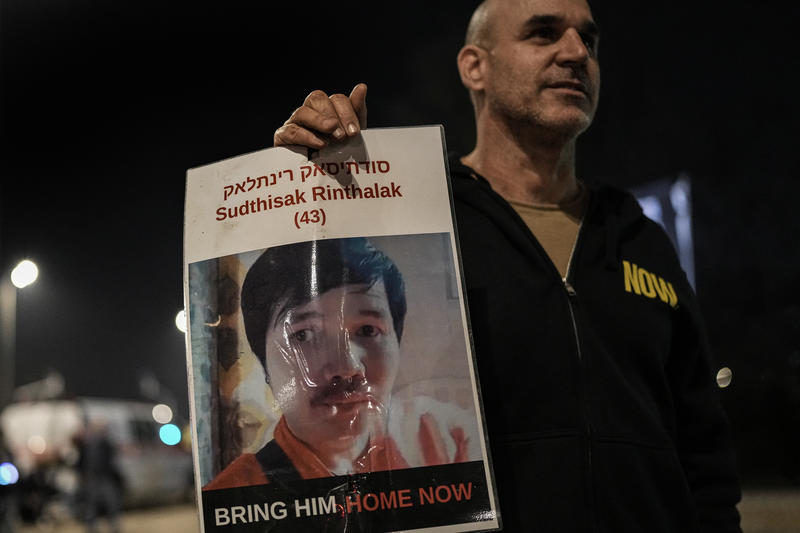
  • Yesterday at Ben Gurion Airport, a small ceremony was held to mark the repatriation of the body of Sudthisak Rinthalak, a citizen of Thailand who was abducted and murdered in the October 7 attack and whose body was returned to Israel last week.
  • Israel is set to reopen the Allenby Crossing today. The crossing is one of only three crossings between territory under Israeli control and Jordan, and the only one connecting the West Bank to Jordan. Israel closed the crossing in September following a deadly attack in which a Jordanian citizen driving a truck with aid for Gaza opened fire on Israelis, killing two security personnel. Shortly after the incident, Israel had the crossing reopened for passenger traffic, but it has been closed for  trucks for the past three months.

Context: President Trump has indicated that he would like to announce the conclusion of Phase One of the ceasefire and the beginning of Phase Two.

  • Israeli officials are hesitant to accede to this without first achieving the return of the last hostage to Israel. There is fear in Israel that even a small compromise on this very clear and very measurable ceasefire condition will be a repeat of the mistakes made in previous ceasefires in Gaza and Lebanon, where global pressure on Israel not to insist on full implementation ended up allowing terrorist organisations to build up and thrive on its borders.
  • Israeli officials have speculated that Hamas is deliberately delaying the repatriation of Gvili’s body in order to drag out the first stage of the ceasefire, which has allowed Hamas to reestablish and consolidate its hold on half of the Gaza Strip, and avoid entering the second stage, which could see it forced to disarm.
  • Both the US and Israel would like to see a forceful mandate for the International Stabilisation Force, yet to be formed, which will enforce Phase Two of the ceasefire agreement. It remains unclear whether the mandate will fall under Chapter VI or VII of the UN Charter. Both Israel and the US are keen on the latter which provides the legitimate use of force for enforcement purposes. Israel is wary of repeating the failure of UNIFIL in Lebanon that is only mandated to carry arms for self defence under Chapter VI. Chapter VII is crucial if the mission is to include disarming Hamas. In any event there are still no countries prepared to send troops for such a mission, apart from Turkey that has been vetoed by Israel.
  • Parallel to that, Israel has acceded to a US request to map out several “green zones” inside the part of the Gaza Strip held by the IDF as places for temporary housing for Gazans. Preliminary infrastructure work has been done in these zones so that trailer homes and schools can be connected to water and sewage lines. Only families vetted to ensure that they have no arms and no connection to Hamas will be allowed to enter the green zones, and this will only begin once the second phase of the ceasefire has formally begun.
  • Israel Hayom reports that the Israeli Government, contrary to its publicly stated position, conveyed to the Palestinian Authority a limited willingness to accept the “pathway to a Palestinian state” mooted in Trump’s 20-point plan which was the basis of the Gaza ceasefire, but only if the Palestinian Authority accepted two conditions: a definitive end to the pay-for-slay programme for terrorists in Israeli prisons and an end to UNRWA activity in both the West Bank and Gaza. The Palestinians, according to the report, rejected both conditions.
  • Former head of the Shin Bet Ronen Bar has spoken publicly for the first time since leaving his role. He called once more for the formation of a State Commission of Inquiry to investigate the failures leading up to the October 7 attack. He made the statement, widely interpreted in Israeli media as a swipe at Prime Minister Netanyahu’s attempt to craft a bespoke inquiry outside the framework of the Commission of Inquiries Law. He noted, fifteen State Commissions of Inquiry have been convened under the rubric of this law, and they have investigated matters including Israel’s failure to prepare for the Yom Kippur War, the massacre of Palestinians in two Lebanese Refugee Camps during the First Lebanon War, the assassination of Prime Minister Rabin, and the October 2000 riots.
  • Prime Minister Netanyahu has sought to sidestep a State Commission of Inquiry by appointing a ministerial committee to convene a special governmental commission of inquiry, whose mandate would include investigating the role of the Supreme Court, the media, and anti-government protesters in the lead-up to the October 7 massacre.

Looking ahead: The US administration is determined to see diplomatic progress on Gaza, as well as with Syria and Egypt, and may be willing to apply moderate pressure to achieve this.

  • President Trump appears eager to announce some kind of positive development on at least one at his scheduled meeting with Prime Minister Netanyahu on December 29, and ideally all three.

December 4, 2025

Deceased Thai hostage returned

Israelis attend a rally outside the southern Israeli city of Sderot, calling for the release of slain hostages Ran Gvili and Sudthisak Rinthalak.
Israelis attend a rally outside the southern Israeli city of Sderot, calling for the release of slain hostages Ran Gvili and Sudthisak Rinthalak, whose bodies are still held by Hamas in Gaza, November 29, 2025. Photo by Tsafrir Abayov/Flash90 *** Local Caption *** עצרת חטופים שדרות חרבות ברזל שער הנגב הפגנה מפגינים

What’s happened: Israel’s Institute for Forensic Medicine positively identified the remains handed over by Hamas yesterday as belonging to Thai national Sudthisak Rinthalak.

  • On October 7, 2023, Rinthalak, then 42 years old, was murdered in the orchards of Kibbutz Beeri. His body was abducted by Palestinian Islamic Jihad and held in Gaza for two years.
  • Sudthisak Rinthalak was from the northern Thailand and had been working in Israel since 2017.
  • On October 7, a total of 39 Thai nationals were murdered and 31 were taken captive.
  • The only deceased hostage being still held in Gaza is Ran Givili, an Israeli policeman, who reportedly eliminated 14 terrorists before he was killed and his body taken to Gaza
  • A major firefight erupted yesterday in Rafah, southern Gaza, between IDF soldiers and Hamas militants. Two Hamas fighters emerged from a tunnel shaft and launched a rocked propelled grenade at an IDF armoured personnel carrier. Four soldiers were wounded, of whom one is listed in a serious condition. Soldiers returned fire and eliminated one of the  Hamas man.
  • Following the incident, which Israeli officials characterised as a “grave violation of the ceasefire,” the IDF struck Hamas targets in al-Mawasi, killing six. Eyal Zamir, IDF Chief of Staff, said yesterday that “it is unacceptable for terrorists to emerge from shafts and tunnels in which they have been trapped and, while fleeing to hiding places, to carry out attacks against IDF soldiers in the area.”
  • Direct talks between civilian officials from Israel and Lebanon were held yesterday in Naqoura, on the Lebanese side of the Israel-Lebanon border under the auspices of US envoy Morgan Ortagus.

Context: As ever, the Israeli policy for both Gaza and Lebanon, is guided by the US who are keen to see progress towards peace and stability on both fronts.

  • In Gaza, yesterday’s the decision to reopen the Rafah crossing is being tied to the Netanyahu-Trump call from earlier this week.
  • There are conflicting reports about the operation of the crossing, with Israel insisting that traffic for now will only be of Gazans leaving into Egypt and not the other way around, while the Egyptians would like the crossing to operate only if it is two-way. Following the latest violation of the ceasefire, there have been calls inside Israel to delay the opening.
  • In Lebanon, the US-led talks which took place yesterday involved a host of civilian issues beyond the usual remit that is normally insisted upon by the Lebanese side. Israel was represented at Naquora by Uri Resnick, a senior official in the National Security Council, and Lebanon by Simon Karam, a Maronite Christian who previously served as Lebanon’s ambassador to the UN. Also attending the meeting were representatives of the IDF, Lebanese Armed Forces (LAF), and the UN.
  • This was the first direct encounter of civilian officials from Israel and Lebanon since the Madrid Peace Conference in 1991.
  • This development, welcomed on the Israeli side, evidences the success of the US policy in Lebanon and the new pragmatic approach of the Lebanese government. It also shows the weakening grip of Hezbollah and its ability to impose its will over the Lebanese government.
  • Israel is now hopeful that on one hand it can continue to target Hezbollah, according to the provisions of the ceasefire agreement, whilst maintaining civilian dialogue with Lebanese government.
  • The talks focused on not just on the implementation of the 2024 ceasefire agreement, but ranged over issues including the maritime border, gas exploration, the return of residents to border communities, and even possible cooperation in agriculture. Looming behind the entire process is the US demand for the disarmament of Hezbollah to be completed by December 31.

Looking ahead: According to the provisions of the ceasefire agreement, Hamas should have released all the hostages within the first 72 hours. Ran Gvili remains the last deceased hostage, now held for over 790 days in Hamas’s captivity.

  • There’s hope that the meeting in Naquora will be a springboard for continued Israeli-Lebanese dialogue in spite of the continued threat post by Hezbollah.
  • Prime Minister Netanyahu announced this morning that the next head of Mossad will be Maj Gen Roman Gofman, currently the Prime Minister’s Military Secretary.

Newsletter sign-up

Please enter your information below to subscribe to our daily newsletter and stay updated and informed.

Donate to BICOM

At BICOM, we rely on the generosity of people like you to keep our website and services running. Your donation, no matter the size, makes a real difference. Please consider supporting us today. For further information please email: [email protected]