
LATEST

Iran and their Proxies

Key background
  • The Islamic Revolutionary Guard Corps is a branch of the Iranian Armed Forces with a constitutional mandate for guaranteeing the Islamic Republic’s integrity and projecting its influence abroad. In practice, this manifests as supporting Iranian allies and proxies with funds, weapons, and training.
  • Many of its allies and proxies are terrorist groups and human rights abusers including: Hamas, PIJ, Hezbollah, the Islamic Resistance in Iraq, the Houthis, Syrian Arab Republic, and Russia.
  • Iran is the world’s leading enabler and facilitator of terrorism, especially targeting the US and its allies. It has also targeted diplomatic missions and diaspora Jews.
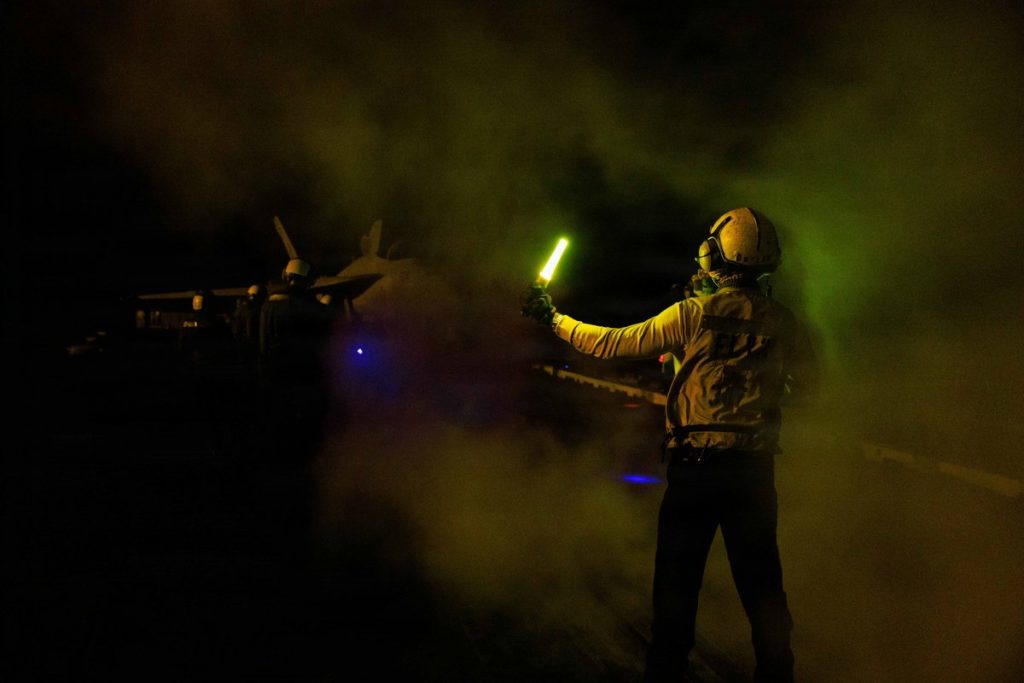
US Sailors signal an F/A-18E Super Hornet on the deck of USS George H.W. Bush (CVN 77) as the aircraft carrier transits the Arabian Sea. July 22, 2026.
US Sailors signal an F/A-18E Super Hornet on the deck of USS George H.W. Bush (CVN 77) as the aircraft carrier transits the Arabian Sea. July 22, 2026. Photo credit: US CENTCOM / X

Updated July 23, 2026

Houthis strike Saudi tankers as Saudi nuclear deal raises concerns in Israel

What’s happened: The Houthi rebels in Yemen have escalated their attacks in the last 24 hours, firing on Saudi vessels in the Red Sea for the first time in the present crisis. Two Saudi oil tankers were hit, with confirmed reports of fire and damage on one and no credible reporting on the condition of the other.

  • The Houthi attack comes three days after they declared a naval blockade on Saudi shipping in the Red Sea. A gradual shift in Saudi shipping from the Persian Gulf to the Red Sea since the Iranian blockade on the Strait of Hormuz, which began in March of this year, had been seen as a major long-term shift that would weaken the impact of both the current Iranian blockade and any future threatened one.
  • It was unclear how and whether the Houthi attack on Saudi shipping in the Red Sea was coordinated with Iran. The Houthis have, notably, not attacked Israeli or American targets at all in the current crisis. They stopped their missile attacks on Israel entirely when the Gaza ceasefire went into effect in October 2025, with the exception of a one-week period beginning on March 28 of this year at the very end of the Israeli-American war with Iran.
  • The Houthi attacks on Saudi shipping came hours before the US conducted its twelfth night of air strikes on Iranian targets. According to CENTCOM, last night’s attacks focused on missile and drone storage facilities, coastal surveillance systems, maritime capabilities, and air-defence sites.
  • The US air strikes did not follow through on Trump’s explicit threat, made yesterday on social media, to strike Iranian civil infrastructure on a one-to-one basis in response to attacks on shipping in the Strait of Hormuz. “For every ship that Iran shoots at,” the President wrote, “the United States will immediately take out one Iranian bridge or one Iranian power plant, including those in or around Tehran.” The US has largely refrained from striking targets near Tehran in the last twelve days, aiming most of its fire at military facilities directly implicated in Iranian attacks on shipping.
  • Yesterday morning, Iran fired six ballistic missiles at the Aqaba area in southern Jordan. The Iranians claimed they were aimed at US targets, including what they claimed were US aircraft at Aqaba airport, a claim that was not independently verified.
  • This was a smaller attack than the one carried out last week on Muwaffaq Salti Air Base in eastern Jordan, which killed three US military personnel. Aqaba, on the other hand, sits directly on the border with the Israeli city of Eilat, where the missiles and interceptions were loudly heard.
  • Iran’s Islamic Revolutionary Guard Corps (IRGC) said it attacked US forces in multiple bases and airfields in Kuwait. There were no reports of casualties. The IRGC further stated that its navy “emphasises that the strait of Hormuz is under our control.”

Context: As expected, the US Energy Secretary and his Saudi counterpart signed a civil nuclear cooperation agreement in Washington yesterday.

  • Fallout from the agreement roiled the Israeli security establishment and became a topic of debate in the Israeli electoral campaign as well.
  • Israeli commentators linked the Saudi agreement to other Trump administration initiatives in the region, especially including diplomatic efforts in Lebanon and the proposed sale of F-35 fighter jets to Turkey. Taken together, the moves are seen as the emergence of a US-backed Sunni bloc to counter Iranian influence — and, more subtly, as signs of Israel’s declining influence in Washington. None would have been realistically possible without the collapse of the Iranian-backed Assad regime in Syria in December 2024.
  • Israel has not publicly responded to the Saudi-American nuclear deal. Israel’s immediate principal concerns regard the possibly of domestic nuclear enrichment in Saudi Arabia. The US deal does not promise enrichment in Saudi Arabia, but rather posits a two-year  study to be conducted by both countries into the feasibility of such an option.
  • Should it be deemed feasible, a “blackbox” facility, that would keep the technology and know-how in American hands, could be constructed. This is contrast to the 2009 nuclear agreement reached with another US ally in the Gulf, the UAE, which stipulated that no enrichment could take place on Emirati soil.
  • Israel’s other concerns are that a change in the Saudi regime could leave nuclear capabilities in more dangerous and radical hands, and that the new deal will open the door to other middle powers in the region, including Egypt and Turkey, to begin pursuing enrichment capabilities of their own.
  • There is great disappointment, too, that the US changed its position from insisting that any nuclear deal would require the Saudis to normalise relations with Israel. It remains to be seen if this condition will come up again at the end of the two-years study on the feasibility of domestic enrichment.
  • Former Prime Minister and current Opposition Leader Yair Lapid cast the Saudi nuclear deal as a personal failure of Prime Minister Netanyahu. Speaking on a podcast yesterday, he revealed that during the so-called “Change Government” which he and Naftali Bennet headed in 2021-22, the US, then under President Biden, was also interested in pursuing a separate nuclear deal with the Saudis, but that he and Bennett, despite their overall good relations with the administration, threatened to go to Congress and do whatever it took to scuttle the deal. He alleged that Netanyahu does not have the ability to challenge Trump because of a lack of good relations with Congressional leaders, and further hinted that Trump’s interference in Netanyahu’s legal troubles (the President has openly called for the Prime Minister to be pardoned in his ongoing trial) meant that he couldn’t openly challenge the President, even on an issue of vital national security.

Looking ahead: The Saudi nuclear deal will likely be challenged in Congress, but it does not need ratification as a treaty. Similar to the situation which obtained with Iran deal from 2015, it would require an act of Congress to block it, which would be vetoed by the President. A veto can only be overridden with two-thirds of the votes of both Houses of Congress, a very unlikely outcome for this issue.

  • Greece is expected to conclude a $4 billion air defence deal with Israel today. The Greek missile and air defence program, dubbed “Achilles Shield” will rely on technology from the Israeli defence firms Rafael and the Israel Aircraft Industries. It is just one of several anticipated purchases from NATO countries and other Western allies of Israeli defence technology in the global military buildup underway in recent years.

July 22, 2026

US advances Saudi nuclear deal as Trump weighs next move on Iran

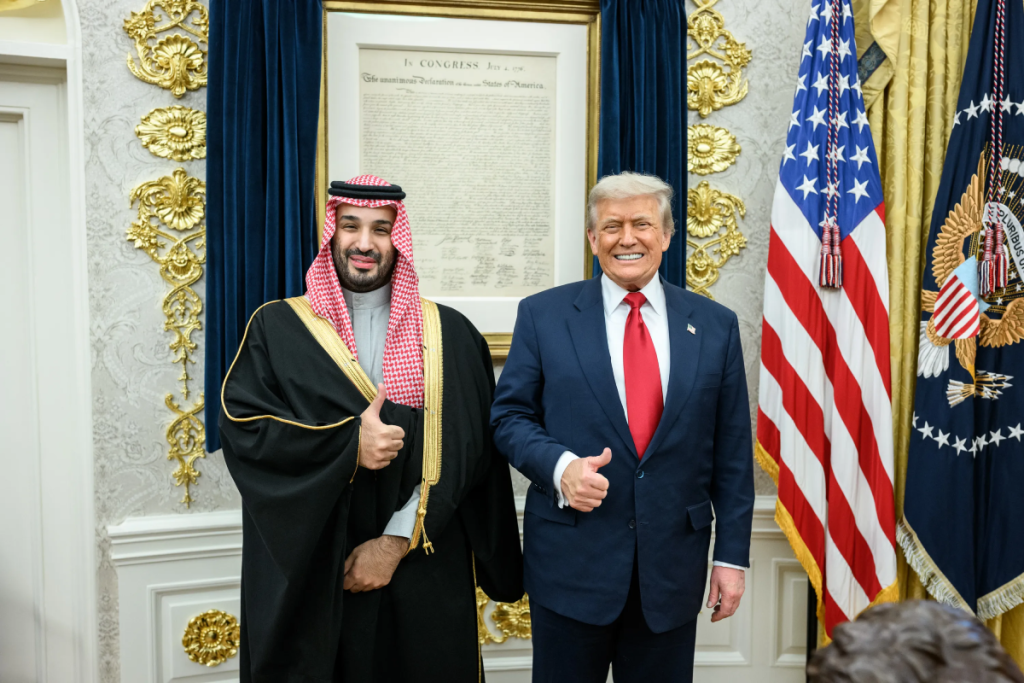
President Donald Trump with Crown Prince Mohammed bin Salman of Saudi Arabia in the White House.
President Donald Trump with Crown Prince Mohammed bin Salman of Saudi Arabia in the White House. Photo credit: The White House

What’s happened: The Trump administration announced that it is moving forward on a nuclear deal with Saudi Arabia which will provide for American companies to develop nuclear infrastructure in Saudi Arabia, possibly even including enrichment capabilities. The agreement must be approved in Congress, where it could face serious opposition.

  • The US completed its eleventh consecutive night of airstrikes on Iran overnight.
  • According to CENTCOM, targets included aircraft hangars, drone storage facilities, and operational military infrastructure. The choice of targets would appear to indicate that for now the US is focused on degrading Iran’s capacity to threaten shipping in the Strait of Hormuz, rather than hitting any symbolic or strategic target that would indicate an escalation.
  • Iranian fire overnight was more limited than in previous nights earlier in the week. The Iranians reported employing anti-aircraft fire (without apparently hitting anything) in various regions, including around Tehran. There were no reports of ballistic missile launches overnight. Earlier in the week, the Iranians launched ballistic missiles at targets in Jordan, Kuwait, and Bahrain. In one incident in Jordan, an Iranian missile killed three American servicemen.
  • The deadly attack in Jordan was Iran’s fourth attack on the kingdom (and at a target so close to the border with Israel that shrapnel from missile defence fell inside Israeli territory) in five days. It was carried out with Iran’s medium-range Kheibar Shekan missile system. These are buried deep underground in facilities that were hit by US bombs during the war earlier this year, but which the Iranians managed to excavate during the ceasefire in place since April.
  • President Joseph Aoun of Lebanon met with President Trump in the Oval Office yesterday, where he reportedly presented a detailed Lebanese plan for the full implementation of the US-brokered June 26 framework for a long-term settlement in southern Lebanon.
  • The Aoun plan calls for staged withdrawals of the IDF from southern Lebanon, with the Lebanese Armed Forces (LAF) progressively taking over territory vacated by the IDF. It also envisions Hezbollah’s military capabilities being completely dismantled or placed under the authority of the Lebanese state.
  • President Trump praised Aoun and announced the resumption of direct commercial flights from the US to Lebanon, ending a ban that has been in place since 1985.
  • Aoun too praised his American counterpart, calling him a “great president.”
  • In comments that garnered wide attention in Israel, Aoun also raised the “ultimate objective of ending the state of hostility between Lebanon and Israel forever,” a wording that falls short of a call for a full peace treaty and normalised relations, but still goes well beyond what any Lebanese leader has been willing to say since the ill-fated peace agreement between Israel and Lebanon in 1983.
  • In recent days, three “pilot zones” of formal LAF responsibly in southern Lebanon have been established. All three are north of the so-called Yellow Line demarcating the areas under formal IDF control since a tenuous ceasefire went into effect in April. Yesterday, the IDF pulled out of the town of Zoutar al-Gharbiyeh and handed it over directly to the LAF.

Context: The looming Saudi-US nuclear agreement would be a dramatic shift in the regional alliance structure and overall geostrategic landscape of the Middle East.

  • The agreement grants US companies nearly exclusive rights to develop civilian nuclear infrastructure in Saudi Arabia. At their discretion, non-US firms could be allowed to act as secondary suppliers.
  • The agreement does not rule out developing enrichment capabilities in Saudi Arabia, nor does it guarantee it. Instead it calls for the two sides to jointly conduct a two-year long study of the viability of domestic enrichment.
  • If the conclusion of the study is that there is an economic viability to enriching uranium on Saudi soil, a facility would be constructed under a so-called “blackbox” arrangement, where the facility would be built and managed by Americans without any sensitive technology being transferred to the Saudis themselves. In the event the study ends without a US agreement for a “blackbox” facility, the Saudis would be banned from pursuing an enrichment arrangement of their own — but only for ten years, after which they would be allowed to seek other non-US partners.
  • This part of the agreement constitutes a marked departure from the agreement the US previously signed in 2009 with another regional partner, the UAE, which included a pledge from the Emiratis not to enrich uranium or reprocess spent fuel. Instead they rely on partnerships with foreign (mostly American, but also South Korean) firms for these processes.
  • The Non-Proliferation Treaty does not explicitly ban uranium enrichment for non-nuclear powers, but very few countries have pursued these capabilities, and the ones that have are almost all US allies and, importantly, had achieved the capability before acceding to the treaty.
  • Previous attempts to reach a nuclear agreement with Saudi Arabia were pursued by the Biden administration, which had conditioned any agreement on Riyadh concluding a full peace treaty with Israel and normalising relations with the Jewish state. These negotiations reportedly came very close to fruition in the autumn of 2023, but were cast aside in the aftermath of the October 7 massacre and the subsequent war in Gaza.
  • The US interest in a nuclear agreement with Saudi Arabia is twofold. It serves both as a check on Iranian regional ambitions and firmly locks the door on what was seen in Washington as a possible encroachment of China on a strategically important region where the US maintained for decades the only real superpower presence.
  • For Israel, there are long-term concerns about any nuclear capabilities in an Arab country whose regime can change orientation from one day to the next by succession or coup. When a potential deal was the price for normalising relations with a large and influential Arab state that is home to Islam’s two most sacred shrines, it was seen more favourably. Without that upside, it is looked upon rather more cautiously.
  • The wider regional implications are a cause for concern as well. Other medium powers, such as Egypt and Turkey, can be expected to pursue their own nuclear capabilities — still well below anything needed to build weapons — in light of the Saudis’ progress on this front.

Looking ahead: Reports from Washington indicate that the Trump administration is expected to make a fateful decision on the Iran conflict in the next few days. Either it escalates dramatically, or it moves to a new ceasefire.

  • On the table right now is a proposed ten-day ceasefire, during which the US and Iran would negotiate exclusively on the issue of reopening the Strait of Hormuz. This was supposed to have been covered by the more comprehensive MOU the two sides agreed to on June 17, but differing interpretations of the ambiguous wording led to conflict early on, and since the recent escalation the Strait has once more been closed entirely.
  • A significant escalation remains on the table too. President Trump has openly spoken of his preference for attacking a specific target, the deep underground facility at Pickaxe Mountain, where the Iranians are believed to be hiding centrifuges and other nuclear equipment more than 100 metres underground. The facility, notably, has not been attacked yet by Israeli or US forces.
  • The Israeli assessment is that the probability of an escalation remains high. Israeli officials have been widely quoted, by name and anonymously, saying that they prefer not to be involved in the present round of US-Iran fighting.

July 16, 2026

US deepens strikes inside Iran as ceasefire crumbles

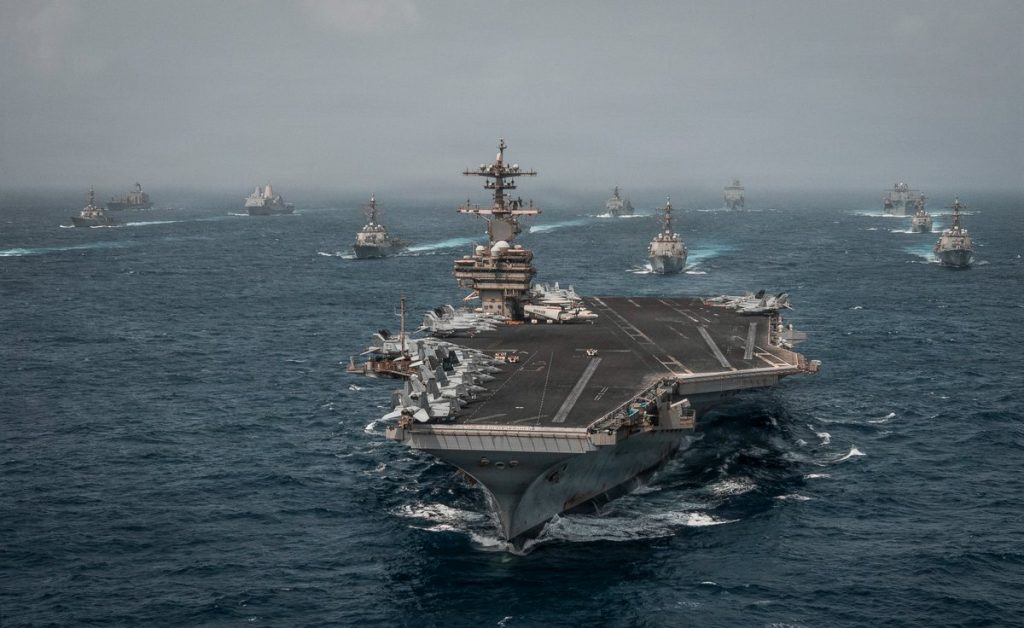
US Navy warships operating across the Middle East. July 14, 2026.
US Navy warships operating across the Middle East. July 14, 2026. Photo credit: US CENTCOM / X

What’s happened: The ceasefire between the US and Iran continues to unravel, with mutual blockades both now in effect and a series of low-intensity strikes from both sides over the last six nights.

  • Overnight, US forces launched their biggest air operation since the ceasefire went into effect, hitting targets not just on the coastline but also deep in Iran and inside the Tehran metropolitan area, a region avoided entirely in this week’s escalation until now. Notably, official CENTCOM statements about the operation used the term “shaping operation,” rather than “self-defence operation.” The latter term had been consistently used by the Americans to indicate that they were not intending to depart from the ceasefire framework; the former would seem to indicate that they are taking out targets that could get in the way of a future planned operation.
  • The ceasefire began unravelling on July 7. By July 10 both sides were openly trading blows. This exchange of fire has gradually escalated over the ensuing week.
  • On July 7, against a backdrop of stalled negotiations on the Iranian nuclear programme, sanctions relief, and shipping rights in the Straits of Hormuz, three attacks on neutral shipping in the Strait were carried out, apparently by Iranian drones. One of the ships was carrying Qatari liquified natural gas. The attacks took place as NATO leaders were gathered in Ankara for the alliance’s summit.
  • The following day, on July 8, the US revoked the licence that had temporarily allowed Iran to sell oil while negotiations were underway and conducted a very modest air operation on Iranian targets associated with the attacks on shipping.
  • Meanwhile, negotiations continued with the US demanding a public Iranian commitment that the Strait would remain open while the larger deal was being negotiated without any attacks on commercial vessels. The Iranians refused to make such a commitment, as for them this would be conceding their biggest asset going into the nuclear negotiations before those were really underway.
  • On July 10, with President Trump back in Washington from Ankara, three days of quiet diplomacy and low-level air strikes turned into a higher level crisis, with the President declaring that “in no uncertain terms the ceasefire is over.” That night the US began hitting real Iranian military targets, rather than just carrying symbolic strikes against drone facilities implicated in the attacks on oil tankers.
  • The US continued hitting Iranian naval bases and radar facilities through July 13, including an audacious strike against a submarine base by a one-way US attack drone. There were conflicting reports on the damage caused by the US attack, with some reports indicating that an Iranian submarine was damaged or even destroyed. On that day, the US announced a full resumption of its naval blockade of Iran, which had been lifted with the MOU signed in June.
  • As the US expanded the range of targets struck in Iran, the Iranians too started launching missiles at US and allied facilities in neighbouring countries on night of July 13-14, including Bahrain, Kuwait, and Jordan. All three of these countries reported intercepting Iranian missiles.
  • Last night, the range of attacks expanded even further, with targets in the Tehran region being hit by US fire for the first time since the ceasefire went into effect. The US operation was also unusually long in duration, lasting seven hours.
  • Neither side has as of yet called for a halt to negotiations, and in fact all indications are that some kind of mediation via Qatar, Pakistan, and Oman is still underway. The White House has, for its part, stuck to a message of “talks will continue but the ceasefire is over,” and the Iranians too have publicly taken a similar approach.
  • The Iranians report 35 killed from this week’s US strikes. There are no reported losses from the US or its allies. Iranian retaliatory strikes have studiously avoided Israel; nor has the Iran-backed Hezbollah militia in Lebanon initiated any escalation for now.

Context: As tensions ratchet up, Israeli and global media have been full of speculation about possible targets in renewed military action, as well as astonishing revelations about the early days of the previous round.

  • Commercial traffic through the Strait of Hormuz has come to a virtual halt in the last week, after a few weeks of a very partial recovery that was still far from pre-war levels.
  • An earlier US pilot programme of escorting some commercial vessels through the Strait, closer to the Omani coast, had some limited success in May and June, before the MOU was signed, and there are indications that the US my consider pursuing a larger version of that should the current talks fail.
  • Alternatively, the Americans are considering a full-scale land invasion of the Iranian coastline near the Strait. This would likely take months to accomplish and come at a heavy cost.
  • Another option which has been publicly broached by the President himself is a wave of air strikes against strategic targets in Iran, notably including bridges and power plants, as a means of pressure on the regime to lift its blockade.
  • Two other potential military operations have been the subject of public speculation — and often of explicit public statements by administration and CENTCOM officials.
    • One is the so-called Pickaxe Mountain, near the Natanz nuclear facility. Natanz was one of three nuclear facilities, along with Isfahan and Fordow, that were struck by US bombings in Operation Midnight Hammer in June 2025. Pickaxe Mountain is a facility less than 2km from the Natanz facility which  is buried more than 100 metres deep into a mountain. It has never been seen by international inspectors, and was still under construction during the June 2025 war. Satellite imagery has shown accelerated excavation and construction there since then. Trump has fanned speculation about a US special forces operation there by both publicly threatening the site and, on a radio interview earlier this week, pointing out that America’s bunker-buster bombs alone would not be able to damage it.
    • Trump has also publicly discussed an attack on Kharg Island, Iran’s main oil export hub (a facility he called on the US to strike decades ago when he was an opinionated real estate magnate in New York). Administration officials have leaked to friendly media outlets over the past week speculation that an attack on Kharg Island would be impractical, costly, and not yield the desired outcome — something that can be read as trying to dissuade the President from approving such an attack or part of a deception operation.
  • On the backdrop of speculation about a future operation, new revelations in both the Israeli and US media were published regarding the Mossad’s ambitious plans for deposing the Iranian regime at the outset of the war which began on February 28. Plans called for an invasion of Kurdish forces from northern Iraq (which the US apparently vetoed) and even the possible installation of former President Mahmoud Ahmedinijad to head a replacement regime.
  • Long investigative articles in both the New York Times and Haaretz detailed contacts that Ahmedinijad, famous for aggressive remarks during his presidency about eliminating Israel and denying the Holocaust, had with Mossad in recent years in Hungary and Central America. An Israeli air strike against IRGC guards who had effectively been holding him in house arrest in the first days of the war had been reported as a failed assassination attempt, but is now believed to have been intended to free him to assume power. The reported plot ran aground shortly after that for reasons that are still unknown.

Looking ahead: There are two sixty-day deadlines at play here, both of which are frequently referenced by US officials often without clarity as to which one.

  • The MOU calls for a sixty-day period, renewable by mutual consent, for concluding an agreement on Iran’s nuclear programme, as well as sanctions relief and freedom of navigation in the Strait of Hormuz. The agreement was signed in Islamabad on June 18, so that sixty-day period ends on August 17.
  • The administration informed Congress of a renewal of hostiles with Iran on July 7, which allowed it to reset the sixty-day deadline for Congressional authorisation under the War Powers Act. Without another ceasefire, this would mean it would need to get some kind of Congressional authorisation to continue fighting past September 5, something that would place the unpopular war in Iran directly on the public agenda only weeks before the midterm elections in the US.
  • In Israel, the placement of US refuelling aricraft at Ben Gurion Airport has been a source of growing public dissatisfaction, as it leads to cancellations of flights from Israel’s only functional international airport. Growing public pressure led the Government to accelerate the departure of the US aircraft from the airport as the summer holiday got underway, but this week, that process was frozen, and it was quietly announced that the US planes still there would be staying for the time being.

July 14, 2026

UK designates IRGC under new hostile states powers

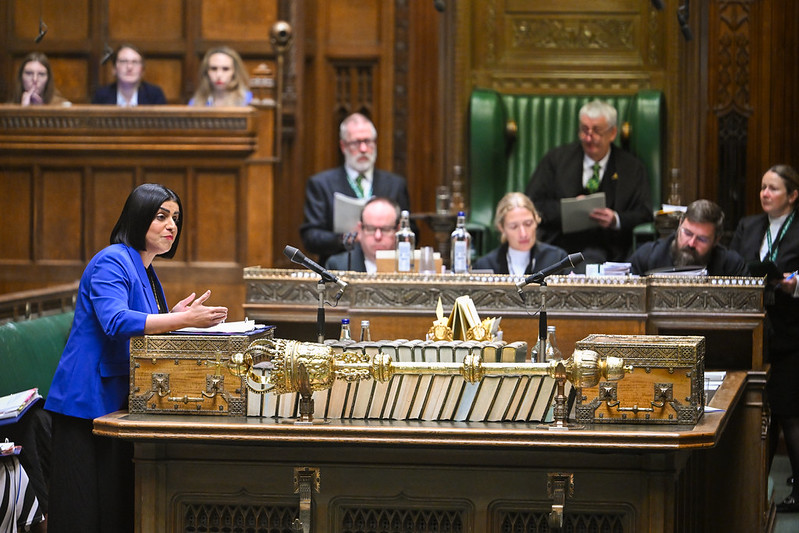
Shabana Mahmood speaking in the House of Commons. September 10, 2024.
Shabana Mahmood speaking in the House of Commons. September 10, 2024. Photo credit: House of Commons

What’s happened: The British government has announced that it will designate the Iranian Revolutionary Guards Corps (IRGC) under new powers to crack down on foreign state-backed activity.

  • This development was announced by the Home Secretary, Shabana Mahmood, in the House of Commons on Monday. Ms Mahmood confirmed that the draft legislation would be laid down this week and voted on by Wednesday or Thursday, formally coming into law by Friday.
  • The group Harakat Ashab al-Yamin al-Islamia (HAYI, also known as Islamic Movement of Companions of the Right, IMRC), the virtual proxy which claimed responsibility for attacks on the Jewish community this past spring, has also been designated, as has the main intelligence directorate of the general staff of the armed forces of the Russian Federation Volunteer Corps, or GRU VC.
  • This criminalises expressing support, assisting, or gaining material benefit from these groups with a maximum punishment of 14 years imprisonment.
  • In a written statement, Dame Angela Eagle, Minister of State for Security said that the IRGC “is a central component of the Iranian state’s security apparatus, answerable directly to Iran’s Supreme Leader. Its role extends far beyond that of a conventional military force. It encompasses intelligence activity, the use of proxy actors, and the projection of influence designed to advance Iranian state objectives.”
  • She also specifically cited an attempted IRGC-directed assassination plot against Iran International controlled by the Quds Force’s Unit 840, and attempts by IRGC-linked cyber proxy actors targeting the UK as examples of the threat levels emanating from Tehran.
  • The Conservatives have cautiously welcomed this development, with the Shadow Foreign Secretary, Dame Priti Patel stating that the decision was “long overdue”, and that “the Government must urgently explain how this designation will be enforced, and on what timetable.”
  • Alongside IRGC and HAYI designation, the  government also announced £250 million over the next 3 years to boost security of the Jewish communities. 
  • The funding will be split across policing priorities to tackle antisemitism including:
    • A further £86 million to the Metropolitan Police which will fund around 300 additional officers to increase police presence in Jewish communities.
    • Over £22 million to Greater Manchester Police to sustain the increase in policing presence following the tragic attack in Heaton Park last year,
    • Around £43 million to be distributed across 7 other force areas with significant Jewish communities: Hertfordshire, Essex, Northumbria, Sussex, Thames Valley, West Midlands and West Yorkshire,
    • £41 million for national policing coordination and increased antisemitism capabilities. This will fund antisemitism training for all officers in England and Wales, strengthen investigations and ensure surge resources are available to all forces.
    • £59 million to Counter-Terrorism Police to bolster protective security and counter state threats.

Context: This follows the Home Secretary being granted new powers under the National Security (State Threats) Act 2026 to use proscription-like powers to designate groups working at the behest of, or in the interests of, foreign states to carry out acts which threaten the UK’s security and the safety of communities across the country.

  • Jewish communal groups have for years called for IRGC proscription. Despite Conservative pledges that proscription would be forthcoming in 2023, successive Prime Ministers and Home Secretaries failed to do so.
  • Proscription was expected to take place by 2024, but the Foreign, Commonwealth & Development Office (FCDO) instead issued a raft of sanctions against the IRGC Quds Force’s Unit 840, Quds Force officers, and other individuals implicated in the killing of dissidents in Turkey.
  • It is also understood that while the Home Office was amenable to and supported proscription, the FCDO blocked the proposals out of concern that Iran might retaliate by severing diplomatic relations between London and Tehran.
  • The National Security Act which criminalised assisting foreign intelligence services received Royal Assent in 2023 and was subsequently used to charge, prosecute, and convict agents working on behalf of Iran and Russia. However, belonging to or supporting the IRGC did not automatically become a criminal offence.
  • Prosecutions relating to Iran have seldom referenced which specific agency or service was sponsoring the alleged plot, instead using “Iranian intelligence services” as a more generic catch-all phrase. Apart from the National Security Act, prosecutions also used Terrorism Act 2000 and Official Secrets Act 1911.
  • In May 2025, Jonathan Hall KC, the Independent Reviewer of Terrorism Legislation, argued that the Terrorism Act 2000 was designed to disrupt the influence non-state actors, and should not be used to proscribe state actors. Instead, he suggested that new proscription-like legislation should be drafted.
  • While Labour had committed to “take the approach used for dealing with non-state terrorism and adapt it to deal with state-based domestic security threats” in its 2024 general election manifesto, it only committed to take firm action in the aftermath of spring 2026’s HAYI-claimed attacks against the Jewish community.
  • Additional resources towards Jewish comunnities’ safety comes  following a series of attacks and the raising of the UK’s national terror threat level from substantial to severe.

Looking ahead: Now the IRGC has been designated, the relevant legislation must be properly enforced, both by Home Office police forces and the Crown Prosecution Service (CPS).

  • In the aftermath of Hamas’s 7th October attacks, the CPS have shown a distinct reluctance to enforce Section 12 of the Terrorism Act 2000 which criminalises supporting, inviting support for, and expressing an opinion or belief that is supportive of a proscribed organisation.
  • In one case, the CPS initially twice refused to charge an individual who was alleged to have chanted “I love the 7th of October” and “I like an organisation that starts with H” during a pro-Palestinian protest. Charges were only approved on the police’s third approach to the CPS.
  • Given past precedent and systemic resourcing challenges, it is a realistic possibility that inviting support for, or expressing an opinion or belief that is supportive of a designated body when done so for a prohibited purpose may not be fully enforced.

July 9, 2026

US expands strikes on Iran

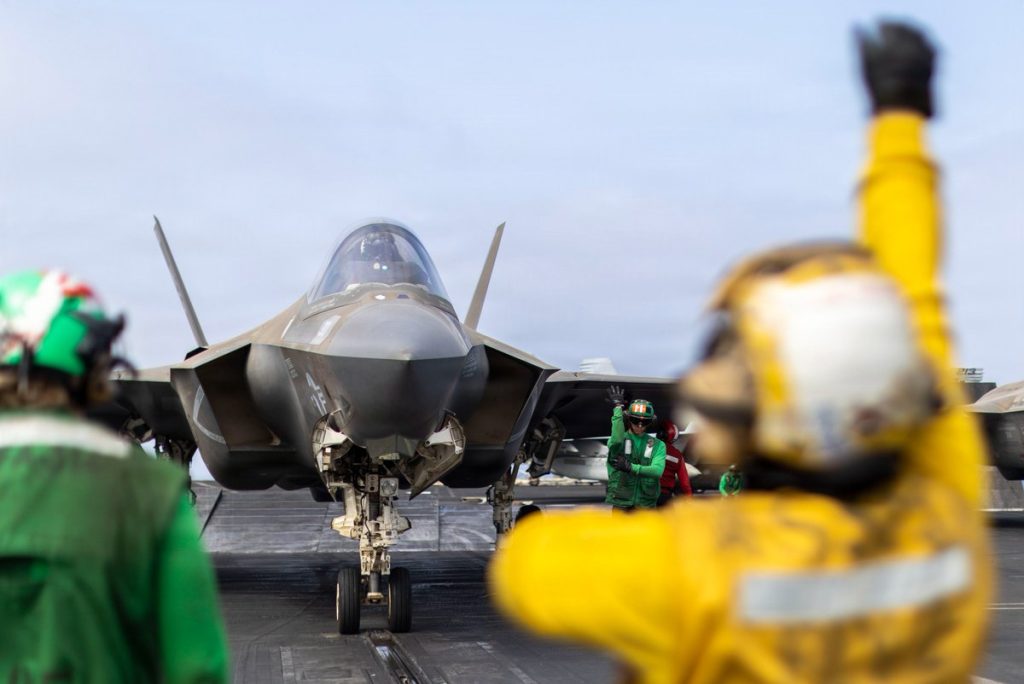
A US Marine Corps F-35C stealth fighter prepares to take off from USS Abraham Lincoln (CVN 72) in the Arabian Sea. July 6, 2026.
A US Marine Corps F-35C stealth fighter prepares to take off from USS Abraham Lincoln (CVN 72) in the Arabian Sea. July 6, 2026. Photo credit: US CENTCOM.

According to CENTCOM, the US engaged 90 targets last night in Iranian territory.

  • For the second consecutive night, the US strikes focused on the port in Bandar Abbas, which is near the Strait of Hormuz, Bushehr, Kharg Island and large swaths of southeastern Iran. The targets  included air defence systems, coastal surveillance assets, missile and drone storage sites, naval capabilities and military logistics infrastructure.
  • It is understood the US informed Israel in advance about its plans to attack Iran.
  • The Islamic Revolutionary Guard Corps announced that it struck two US bases in Kuwait and two in Bahrain in retaliation for the American strikes.
  • Prime Minister Netanyahu and Defence Minister Katz held a security consultation last night. The current assessment is that the escalation in hostilities will remain confined to the Gulf. However, Israel is closely monitoring events and is preparing for the possibility of rapid escalation in hostilities that might also  broaden Iranian attacks to include Israel.  
  • The IDF is on high alert, both defensively and offensively, equipped with operational plans, armed aircraft on standby, a target bank provided by the IDF Intelligence and close coordination with the US.

July 7, 2026

Iran uses Khamenei funeral to project regime strength

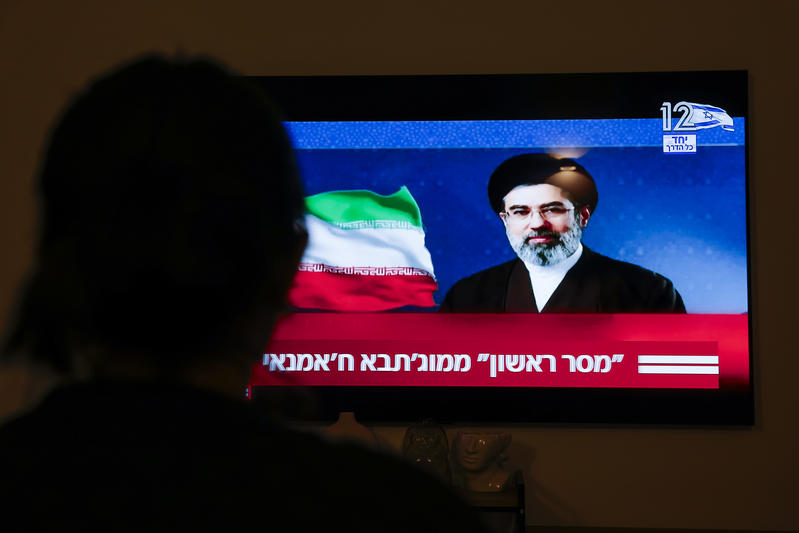
A person watches a television broadcast showing a message from Iran’s Supreme Leader Mojtaba Khamenei to the international community, in Moshav Mishmar David, March 12, 2026.
A person watches a television broadcast showing a message from Iran’s Supreme Leader Mojtaba Khamenei to the international community, in Moshav Mishmar David, March 12, 2026. Photo by Nati Shohat/Flash90

What’s happened: Millions of mourners have taken to the streets of Iran’s capital, Tehran, for the multi-day funeral procession and ceremony of its former Supreme Leader, Ali Khamenei.

  • Ali Khamenei’s funeral began on 3rd July, moving from Tehran to the holy cities of Qom and Mashhad, before crossing into Iraq for stops in Najaf and Karbala.
  • Delayed by four months since his elimination by Israel on 28th February 2026, his son and successor as Supreme Leader, Mojtaba Khamenei, was notably absent, which added to rumours about his poor state of health.
  • Mojtaba’s three brothers, Masoud, Meysam and Mostafa were all present along with other dignitaries including former President Ahmedinejad, and General Ahmad Vahidi, commander of the IRGC as were many senior foreign dignitaries.
  • Saudi Arabia’s King Salman and Crown Prince Mohammed bin Salman sent condolences which were conveyed to Iranian President Masoud Pezeshkian by the Kingdom’s Deputy Foreign Minister Waleed Elkhereiji.
  • Other notable attendees included Lebanon’s Defence Minister, Pakistan’s Prime Minister and Interior Minister, Turkey’s Vice President – the only NATO member state to send a representative – India’s Deputy Foreign Minister, the Russian Security Council’s Deputy Chairman.
  • The President of Tajikistan, Prime Minister of Armenia, President of Georgia, and Afghan Taliban’s Foreign Minister were also in attendance.
  • Four other members of the Khamenei family killed on 28th February have also been buried in the past week including Mojtaba’s wife, son, and daughter.

Context: Ali Khamenei was eliminated by an Israeli air strike during the opening salvos of the US and Israel’s war against Iran which broke out on 28th February.

  • The Iranian regime appears to be using the funeral as an opportunity to showcase an impression of a strengthened post-war self to the world post-ceasefire and MOU signing.According to the dissident news site, Iran Wire, the regime has invited and hosted 400 foreign influencers to cover the funeral, and present a more positive image of the country to global audiences, including from the UK.
  • Mojtaba Khamenei was reported to have been severely injured in the air strike which eliminated his father, although no definitive proof of life has emerged or been provided. He has not been seen in public since before the war begun, and has only communicated externally in writing.
  • In his absence, Iran is understood to have effectively fallen under the IRGC’s control reinforcing the relative impotence of the President, currently Masoud Pezeshkian. Negotiations with the US were led by Mohammad Bagher Ghalibaf, Speaker of the Iranian Parliament.
  • Proceedings have been significantly more controlled and dignified than during the previous Supreme Leader, Ruhollah Khomeini’s funeral which took place in 1989 where the casket was damaged because of crowds of mourners attempting to touch it. Dozens were also reportedly crushed to death.
  • The fact that Lebanon sent a senior government representative, Defence Minister Michel Menassa, suggests the continued influence of Iran on Lebanon. A Lebanese political source suggested this reflects no policy shift on Iran’s interference, only a desire to lower tensions and avoid burning bridges.
  • Beirut wants to keep Iran from sabotaging its framework agreement with Israel. President Aoun defended the government’s decision saying, “Our diplomatic relations with Iran are ongoing and unbroken. How did other Arab and non-Arab countries participate in expressing condolences? Was it expected that Lebanon would officially be absent from this funeral?”
  • The most recent round of indirect “technical” talks in Doha, between Iran and the US were described by President Trump as having been “very good” but remain inconclusive. Israel has a highly sceptical view of these talks, particularly as they fail to address the two issues of most immediate concern to Jerusalem: ballistic missiles and regional proxies such as the Houthis and Hezbollah. However, at this point, Israel appears unable to influence proceedings.
  • Meanwhile, Israel’s Ambassador to the US, Yechiel Leiter, yesterday claimed that the trilateral framework signed with Lebanon had superseded the first clause of last month’s US-Iranian MOU. The US is yet to respond to these comments.
  • President Trump has also said that ⁠the United ⁠States will ‌either ‌make a ‌deal with Iran or “finish the ‌job”, while reiterating the former was his preference.

Looking ahead: Khamenei is due to be buried in Mashhad on 9th July.

  • US-Iran negotiations are due to resume two days later on 11th July. These talks are expected to address a range of issues including sanctions relief, unfreezing funds, and nuclear enrichment.

July 2, 2026

Israel marks 1000 days since October 7

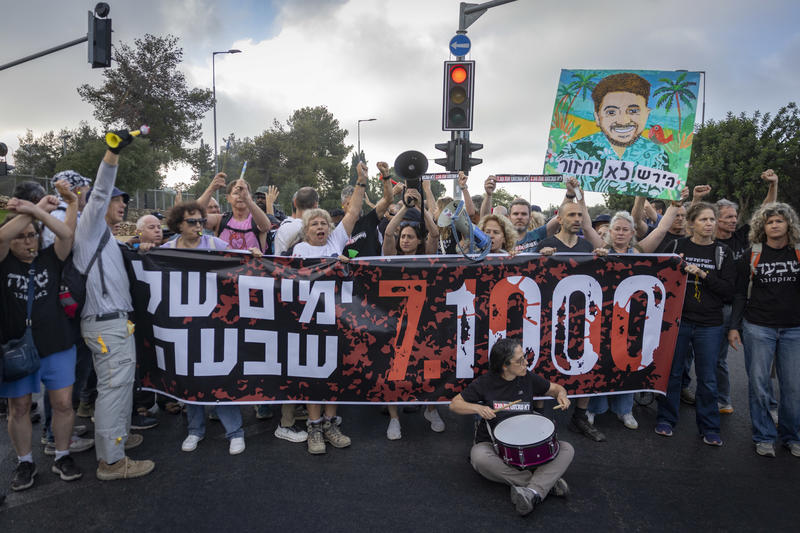
Protesters demonstrate outside the Knesset, the Israeli parliament, in Jerusalem, during events marking the 1,000th day since the October 7 massacre, July 2, 2026.
Protesters demonstrate outside the Knesset, the Israeli parliament, in Jerusalem, during events marking the 1,000th day since the October 7 massacre, July 2, 2026. Photo by Chaim Goldberg/Flash90

What’s happened: Israel marked 1,000 days today since the October 7 massacre. Commemorations began this morning at 6:29, the hour of the initial salvo which opened the attack on that Saturday morning. A ceremony was held at 8:00 this morning at the site of the Nova Festival, where 378 Israelis were murdered and 44 abducted. Ceremonies and protests of various kinds are scheduled today in at least 50 different Israeli cities, towns, and villages.

  • 1,000 days after the onset of war, and despite various ceasefires in place on all fronts, low intensity combat continued in Gaza. Just in the last few days, the IDF carried out a few successful targeted operation against wanted terrorists in the Gaza Strip.
  • On Tuesday, a precision operation successfully eliminated Adel Jihad Mohammad Asfour, a platoon commander in the military wing of Hamas, who was rebuilding and training new Hamas fighters in preparation for a future round of combat with Israel. The day before that, the IDF struck Mohammad Fathi Abd al-Hay Abu Fakher, a commander in Hamas’ Rafah brigade who for twenty years has served as a central figure in Hamas’ network of weapons smugglers.
  • Earlier this week, the IDF eliminated Talal Jaber Mohammad Abd al-Aal, an Islamic Jihad terrorist who took part in the October 7 attack and later in holding Israeli hostages kidnapped that day. One of his hostages, Rom Braslavski, reacted with relief at hearing that his tormentor was dead. “This is Talal Abd al-Aal, or as I know him, Abu Youssef,” he wrote on social media. “This is the man who weighed 100 kilograms and jumped on my neck while I was malnourished. This is his face. This is his hand. This is him.”
  • In other interviews, he described how al-Aal forced open his mouth at a time when he could barely move his emaciated body from malnutrition and spat into it. Braslavski, who has also spoken at length about the physical and sexual torture he endured in captivity, spoke yesterday with journalists about his satisfaction with the IDF operation to eliminate al-Aal and his continued trauma. “My October 7 continued every day, again and again,” he said. “As far as people are concerned, we have moved on. They say, ‘Look how nicely he is dressed, how nicely his hair is arranged,’ but no one knows what is happening inside. No one is with us when we wake up screaming at night. No one is with us when we get flashbacks in the middle of life.” Braslavski is expected to speak tonight at the main gathering in Hostages Square in Tel Aviv to commemorate 1,000 days since the massacre.
  • There were no public updates on US-Iran talks in held in Doha yesterday, but according to media reports they focused on mechanisms for reopening the Straits of Hormuz — an issue of acute concern not just for the two belligerent parties, the US and Iran, but especially for the mediating country, Qatar — and the unfreezing of $6 billion in Iranian assets held in Qatar. Iranian state media reported that the Doha talks had concluded, but did not report what the outcome was.

Context: On the one thousandth day of the war which Hamas and its allies launched against Israel on October 7, all the various parts of the axis arrayed against Israel are severely weakened, but not all are completely defeated.

  • Hamas has been reduced to a militia policing one third of Gaza, without any of its strategic capabilities to invade Israel or fire rockets on its cities.
  • Hezbollah is a shadow of its former self, struggling to sabotage a US-backed agreement that will lead to its dismantling by Lebanese authorities. Despite its loses, Hezbollah still maintains some of its military capabilities.
  • Iran has sustained two massive attacks by the US and Israel that have left its stock of uranium buried underground, its missile production facilities offline, and its economy in shambles.
  • Israel has recovered its hostages and made major strategic gains on all fronts, but defeated none of its enemies. The State itself and the Jewish people more widely have come under a sustained moral attack from activists, organisations, and governments the from across the world. Internally, despite a moment of unity, it remains divided as ever as elections approach and recriminations about the failures leading up to the attack mount.
  • State Commissions of Inquiry have been formed after previous security failures in Israel, but the current governing coalition has refused to allow such an inquiry to be held. A State Commission is normally chaired by a Supreme Court judge, and many in the Netanyahu bloc  believe that this would unfairly bias the work of a committee formed under the State Commission of Inquiry law.
  • They have instead proposed an ad hoc Commission that would have equal representation of coalition and opposition figures. This proposal is rejected by opposition figures, senior military and security officials past and present, and, according to opinion polls, the overwhelming majority of Israeli citizens.
  • A decidedly nonpolitical commemoration was held by senior officers of the IDF yesterday evening at which Chief of  Staff  Zamir told assembled officers that the IDF was at a “strategic crossroads in the war” which began on October 7. “Today we are holding a multi-arena operational, intelligence, and strategic assessment, marking 1,000 days of combat,” he said. “This war has changed methods of warfare, operational concepts, and the way we operate. We remember, we learn, and we prepare for the continuation of the combat and the many challenges that lie ahead.” At the same event, he described the October 7 attack as “an attack on the very existence of the Jewish people.”
  • In pre-election opinion polls, former Chief of  Staff  Eisenkot’s Yashar party continues to strengthen, mostly at the expense of the combined list led by former Prime Ministers Naftali Bennett and Yair Lapid, known as Together.

Looking ahead: There is, as yet, no final date for the upcoming election, though speculation is focused on October 20, which would be only seven days earlier than the originally scheduled date of October 27 (which has still not been ruled out).

  • In Tel Aviv this evening there will be a protest outside the Defence Ministry and several events at the square in front of the Tel Aviv Museum of Art which has become known as Hostage Square, following the nonstop vigils there for two years after the massacre on behalf of the hostages held in Gaza until the last ones were released in October 2025.
  • Many of the unofficial ceremonies being held, including a large rally planned for tonight in Tel Aviv, are organised as protests demanding a State Commission of Inquiry into the failures that led to the massacre.

June 23, 2026

Concern over US limiting Israeli freedom of action

The Chief of Staff, Lt. Col. Eyal Zamir held a situation assessment in southern Lebanon, June 21, 2026.
The Chief of Staff, Lt. Col. Eyal Zamir held a situation assessment in southern Lebanon, June 21, 2026. Photo credit: IDF

What’s happened: Israel affirms it will continue to act against threats.

  • On Monday evening Prime Minister Netanyahu along with his Minister of Defence and the IDF Chief of Staff issued a joint statement declaring, “The IDF will continue to act with determination in order to neutralise threats against our soldiers and our citizens, demolish terrorist infrastructure, and maintain the security zone in southern Lebanon.”
  • The comments followed reports from the talks in Switzerland between the US and Iran that Israel would not be party to a new de-confliction mechanism in Lebanon.  Instead, the US would serve as Israel’s representative, and Iran would represent Hezbollah, mediated by Pakistan and Qatar.
  • Against the backdrop of those talks, Prime Minister Netanyahu stated earlier in the day that his directive to the IDF were clear and had not changed, adding that “Our fighters in southern Lebanon have full freedom of action to thwart any direct or developing threat to them or to the residents of the North. The IDF has no restrictions on this matter.”
  • While the IDF maintains full freedom of action inside the yellow line security zone, and can act to remove immediate threats, the US has placed restrictions to act elsewhere, specifically Beirut, but also elsewhere in Lebanon. A senior Israeli official told Channel 13 News, “The message we’ve gotten from the Americans in the past few weeks is clear: ‘You had credit to operate without restrictions, and that’s over.’”
  • On Monday evening, IDF Chief of Staff Zamir met in Gaza with senior IDF officers to discuss developments in the Strip and Hamas’s ongoing military buildup. The recommendation that was presented at the meeting was to begin an operation in the Gaza Strip to disarm Hamas—and to leave the intensity of this operation to the government’s discretion. However, the concern and assessment aired at the meeting was that President Trump would prevent a major operation and would agree to be flexible with Hamas on the issue of disarmament.
  • The IDF also announced that over the weekend security forces  eliminated Sabai Zaher Abd al-Hamid Abu Hasna, a Nukhba terrorist in Hamas’ military wing.  According to the IDF, “Throughout the war, Abu Hasna planted explosive devices and recently attempted to advance terrorist attacks targeting IDF troops operating in the area. Abu Hasna infiltrated Israeli territory during the October 7th massacre and took part in holding Omer Shem Tov hostage in Hamas captivity.”
  • Abu Hasna was eliminated alongside Ahmed Samir Muhammad Washah, who the IDF say “simultaneously served as a photographer for the Al Jazeera network and as a sniper operative for Hamas.”
  • In a separate strike last week, the IDF eliminated two more operatives in the military wings of the Hamas and Palestinian Islamic Jihad (PIJ). According to the IDF, they operated within a Hamas-run financial network responsible for transferring funds into Gaza. As a result, they “facilitated the transfer of more than half a billion NIS (~£126 million) to Hamas’ military wing by operating a network of dozens of couriers and money exchangers in Turkey and the Gaza Strip. With these funds, Hamas has continued, particularly in recent months, to pay salaries to its terrorists and finance terror attacks against IDF troops and the civilians of the State of Israel, in violation of the ceasefire agreement.”

Context: Israel faces a challenging balancing act maintaining its freedom of operation in both Lebanon and Gaza, as well as how they maintain close coordination with the US.

  • Despite these latest IDF operations (described above) it is also understood that the Trump administration recently blocked other planned Israeli military operations in Gaza. The operation was discussed by senior Israeli officials, but the Americans were reportedly unimpressed and asked Israel not to pursue it at the current juncture in time.
  • There is ongoing concern that not enough pressure is being brought to bear by the US and their international partners to force Hamas into fulfilling its commitment to disarm. Two weeks ago, a delegation headed by Khalil al-Hayya travelled to Egypt to begin talks about the second stage of the Trump peace plan and Hamas’s disarmament. Hamas officials argued that they could not comply because of Israel’s ongoing targeted attack and instead would only agree to disarm after a Palestinian state was established.
  • In lieu of any progress on disarmament, Israel is expanding its control of the Strip, now holding close to 70 per cent of the enclave. Despite the lack of progress the US are aiming to begin reconstruction in parts of Gaza that are under IDF control.
  • One of the current agenda items is where to base the technocratic National Committee for the Administration of Gaza. Israel is insisting that it be built near the yellow line so as to keep the NCAG out of Hamas’s control, but the Palestinian Authority has demanded that the structure be built deep inside Gaza territory. Israeli officials are worried that acceding to this demand will have a negative impact on disarmament, and on the reconstruction and future administration of the Gaza Strip, producing a situation in which Hamas is able to perpetuate its rule under the auspice of the NCAG.
  • Meanwhile Hamas remains armed and has continued to recruit and train operatives as well as preparing for future military operations against the IDF in Gaza.
  • Another concern is the amount of aid entering into Gaza now exceeds demand. Hamas is able to control the supply and stockpiling goods and selling the aid for profit.      
  • Last week secret documents that were discovered in Gaza reveal that just before the October 7 assault, Hamas’s leadership discussed the need to prevent at any cost the steps being taken to normalise relations between Israel and Saudi Arabia. Two weeks before the massacre, Yahya Sinwar fiercely attacked Saudi Crown Prince Mohammad bin Salman and – just a few days before October 7 – said that there was no choice but to take extraordinary measures to generate a strategic reversal.  The documents include minutes of a meeting in Tehran between Iranian officials and a Hamas delegation.

Looking ahead: The latest round of direct talks between Israel and Lebanon are scheduled to begin later today in Washington. The parties are expected to discuss reaching an agreement about an initial IDF withdrawal from southern Lebanon.

  • Israel is thought to have drafted plans to resume fighting Hamas in the Gaza Strip, but will presumably seek to coordinate with the US first.

June 22, 2026

Hezbollah tunnel complex tests fragile Lebanon ceasefire

IDF operating in Hezbollah fortress in Yahala, June 21, 2026.
IDF operating in Hezbollah fortress in Yahala, June 21, 2026. Photo credit: IDF.

What’s happened: A publicly undeclared ceasefire appears to have taken hold in southern Lebanon over the past day after a particularly deadly weekend for the IDF in combat with Hezbollah.

  • Over the weekend, five Israeli soldiers were killed in two incidents, with a further thirteen injured. Since the formal ceasefire went into effect in on  17th April, 24 IDF soldiers have been killed in combat with Hezbollah.
  • Foreign Minister  Gideon Saar said that Israel will respect the ceasefire as long as Hezbollah does as well. “We don’t have territorial ambitions in Lebanon,” he posted in a summary of a call with his New Zealand counterpart, “but we will not withdraw from the security zone and expose our citizens to Hezbollah’s attacks and possible invasion. Lebanon’s sovereignty has been breached for decades to this very day by Iran’s indirect occupation by Hezbollah. It’s the interest of both Lebanon and Israel that Hezbollah’s terror state will be dismantled.”
  • Tensions in Lebanon occur against the backdrop of talks in Switzerland that began yesterday between Iran and the US, mediated by Qatar and Pakistan.
  • The talks were attended by US Vice President JD Vance and Iranian Foreign Minister Abbas Araghchi. The US delegation also included Steve Witkoff and Jared Kushner, while the Iranian one had parliamentary speaker Mohammad Bagher Ghalibaf. Qatar’s Prime Minister Sheikh Mohammed bin Abdulrahman Al Thani was there too, as were both the Prime Minister and top military officer of Pakistan, Shehbaz Sharif and Asim Munir.
  • After 18 hours of talks, the sides agreed to establishment of a “de-confliction cell” to end the fighting in Lebanon and reportedly agreed on a “roadmap” framework for negotiations to reach an agreement within the sixty days stipulated by the Memorandum of Understanding.

Context: Hezbollah violations of the ceasefire are intended to leave Israel in a strategic bind. Either it responds, and risks the ire of the Trump administration, as well as blame for scuttling talks to end the war in Iran, or it does nothing, allowing Hezbollah to attack it at will and formalising a linkage between Tehran’s priorities and the vulnerability of Israel’s northern towns and villages.

  • The focus of Israel’s paused, but essentially ongoing, military effort in Lebanon is on Nabatiyeh and the Ali Taher ridge, especially around the Beaufort Castle. Both sites are beyond the so-called Yellow Line, and both bring with them historical resonances from Israel’s previous wars in Lebanon.
  • Nabatiyeh is remembered in Israel as the place where Israel irrecoverably lost support from Lebanon’s Shias in an incident in October 1983. The bitter experience is widely studied as an example of what to avoid in any counterinsurgency situation.
  • The Beaufort Castle is remembered for the pitched battle to conquer it from the PLO early in the 1982 war and the triumphant but politically tone deaf appearance of senior politicians there the next day. It was also the most well documented site of Israel’s hasty withdrawal in May 2000, memorialised in a best-selling novel and popular film.
  • In the Ali Taher ridge itself, the IDF has located a massive underground complex of Hezbollah terrorists. Here is where the IDF has located the Badr’s unit’s nerve centre, including at least one tunnel that is one kilometre among an extensive system of tunnels, parts of which are inside the Yellow Line area of southern Lebanon. These are the tunnels Hezbollah would use in an October 7-style raid on northern Israel.
  • Since the weekend, the IDF has surrounded the facility and believes it is now in control of all the tunnel compound’s access points. It is estimated that there at least 30 Hezbollah fighters besieged in the complex. In line with US demands, the IDF is not opening fire for now.
  • Israeli officials quoted in the media believe that once the operation around the tunnel complex is ended, the IDF can begin staged withdrawals of territory in Lebanon, particularly territory north of the Yellow Line.
  • For Israel, it is important that any withdrawal be seen as an Israeli initiative or the outcome of Israel-Lebanese negotiations, and not as something dictated to Israel by the needs of US-Iran diplomacy.
  • Despite pressure from the political echelon (responding to pressure from the Trump Administration), senior IDF officials are unanimous that Israeli border communities cannot be protected right now from Hezbollah attack, whether that is in antitank missiles being fired at homes, as was the case from late 2023 until November 2024, or in an October 7-like raid into a civilian community, without an IDF presence close to the border in southern Lebanon.

Looking ahead: The political leaders who attended the talks in Switzerland are due to fly home today, but the technical teams will continue the talks on site and in person.

  • Talks between Israel and Lebanon are expected to be renewed today. Israel is interested in reaching an agreement with Lebanon that would see its forces leave small pockets of territory and hand them over directly to the Lebanese Armed Forces. These would serves as “pilot zones” where the LAF would prove that it could keep Hezbollah out and take responsibility for territory vacated by Israel.

June 19, 2026

Critique of the US-Iran MOU

BICOM Analysis
BICOM Analysis

The MOU appears to grant Iran significant economic concessions at the outset, while deferring the most important nuclear, regional, and enforcement questions to a later agreement.

  • Immediately upon signature, the United States commits to begin lifting the blockade of Iranian ports and to waive sanctions necessary to allow Iran to resume oil exports. At current prices, it is estimated that this could provide the Iranian regime with over $5 billion a month in additional revenue.

Iranian nuclear programme

  • The nuclear language in the MOU is limited. Iran reaffirms that it “shall not procure or develop nuclear weapons”, but similar commitments were already made under the Non-Proliferation Treaty and the JCPOA. The MOU establishes a 60-day period to negotiate a full nuclear agreement and says that any final deal must resolve the disposition of Iran’s stockpiled enriched material, with down-blending on site under IAEA supervision.
  • However, the MOU does not require all enriched uranium to be removed from Iran. Nor does it make clear whether Iran would have to dismantle its nuclear infrastructure, whether it would be permitted to retain enrichment capacity, or whether inspectors would have the “anytime, anywhere” access necessary to verify compliance.

Lebanon

  • The MOU also contains language with direct implications for Israel’s freedom of action. It states that the US, Iran, and “their allies in the current war” declare the “immediate and permanent termination of military operations on all fronts, including in Lebanon.” This formulation appears to seek to bind Israel to an end to operations against Hezbollah, despite Israel not being a party to the MOU and despite ongoing threats from Hezbollah.
  • This could also complicate the US-backed Israel-Lebanon ceasefire reached in early June, which stated that any cessation of hostilities must be agreed directly between Israel and Lebanon, and not through a separate track.
  • It is also incredibly worrying that the US appears to have acceded to Iranian demands to link between the Islamic Republic in Iran and its proxy undermining sovereignty in Lebanon. For decades it has been a long established US position through consecutive administrations of both Democrats and Republicans that Hezbollah is a proscribed terrorist organisation responsible for the deaths of US citizens.

Financial and sanctions relief

  • The MOU also states that, “upon the implementation” of the agreement, the US will make fully available for use frozen or restricted Iranian funds and assets, potentially worth up to $100 billion. However, the text does not specify what concrete steps Iran must take before gaining access to these funds.
  • The agreement also allows released funds to be paid to any beneficiary designated by the Central Bank of Iran. This is significant because it appears broad enough to permit payments to entities linked to the IRGC, the Iranian military, or suppliers connected to Iran’s weapons procurement networks.
  • The MOU also envisages the development, together with regional partners, of a reconstruction and economic development plan for Iran worth at least $300 billion, to be implemented under a final agreement. Given the IRGC’s extensive role in the Iranian economy, including in construction and infrastructure, it is difficult to see how such a package could avoid materially benefiting an organisation designated by the US as a terrorist group.
  • Under a final agreement, the MOU calls for the complete elimination of sanctions on Iran, including UN Security Council sanctions and US primary and secondary sanctions. It does not appear to include a clear snapback mechanism should Iran violate the terms of the deal. This is especially significant because many US primary sanctions on Iran were originally imposed in response to terrorism, not only the nuclear programme. The agreement therefore appears to envisage the lifting of terrorism-related sanctions without requiring Iran to end its support for terrorist organisations.

Terrorism & proxies

  • The agreement does not address Iran’s support for terrorism, nor its missile and drone programmes. This omission is particularly important because sanctions relief could give Iran the resources to rebuild its conventional military capabilities and increase funding and other support to their proxies such as Hezbollah and newly established HAYI terrorist network that operates across Europe including in the UK.

Human rights

  • Finally, the MOU requires the US not to interfere in Iran’s internal affairs. This provision could be read as limiting American support for Iranian democracy, human rights, internet freedom, and broadcasting efforts. It would also mark a significant political concession to the regime at a time when Tehran continues to face domestic opposition and international criticism over its repression of protesters.

Conclusion

  • Taken together, the MOU appears to front-load economic relief for Iran, postpone the hardest nuclear questions, leave Iran’s regional proxy network untouched, and risk constraining Israeli action against Hezbollah. For Israel and other regional actors concerned by Iranian power, the central question is whether the 60-day negotiating period produces a more palatable agreement.

Newsletter sign-up

Please enter your information below to subscribe to our daily newsletter and stay updated and informed.

Donate to BICOM

At BICOM, we rely on the generosity of people like you to keep our website and services running. Your donation, no matter the size, makes a real difference. Please consider supporting us today. For further information please email: [email protected]