LATEST

Iran and their Proxies

Key background
  • The Islamic Revolutionary Guard Corps is a branch of the Iranian Armed Forces with a constitutional mandate for guaranteeing the Islamic Republic’s integrity and projecting its influence abroad. In practice, this manifests as supporting Iranian allies and proxies with funds, weapons, and training.
  • Many of its allies and proxies are terrorist groups and human rights abusers including: Hamas, PIJ, Hezbollah, the Islamic Resistance in Iraq, the Houthis, Syrian Arab Republic, and Russia.
  • Iran is the world’s leading enabler and facilitator of terrorism, especially targeting the US and its allies. It has also targeted diplomatic missions and diaspora Jews.
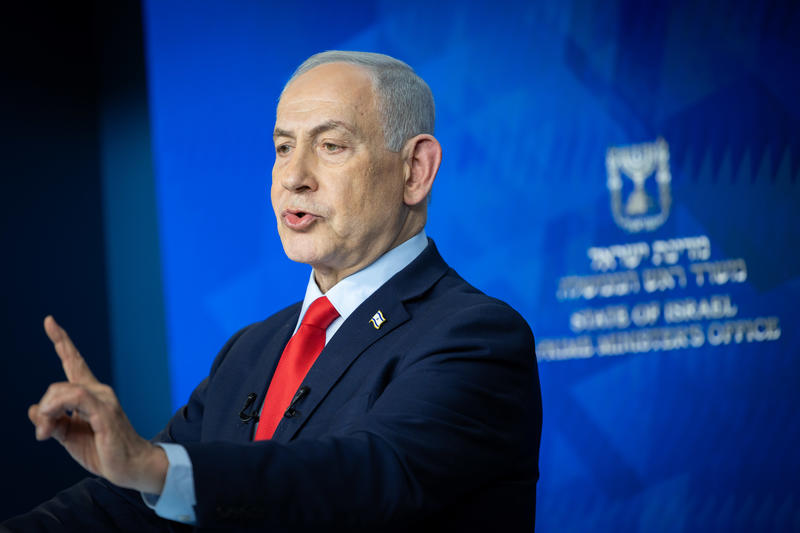
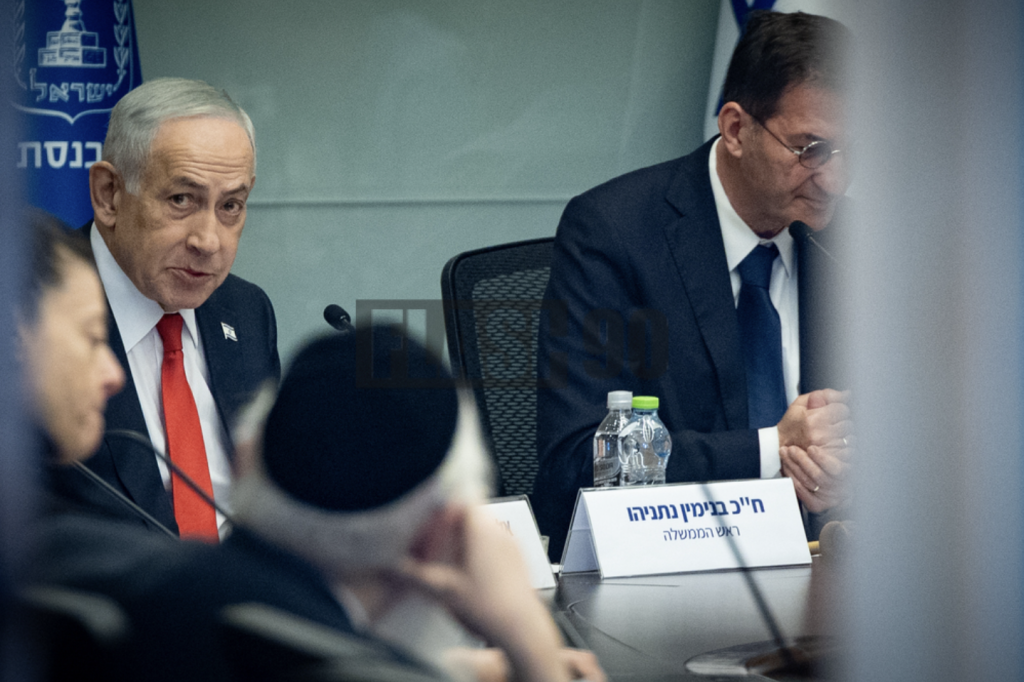
Prime Minister Benjamin Netanyahu arrives to a Defence and Foreign Affairs Committee meeting at the Knesset, the Israeli parliament in Jerusalem on February 5, 2026.
Prime Minister Benjamin Netanyahu arrives to a Defence and Foreign Affairs Committee meeting at the Knesset, the Israeli parliament in Jerusalem on February 5, 2026. Photo by Yonatan Sindel/Flash90

Updated February 9, 2026

Netanyahu to make surprise trip to Washington this week

What’s happening: Prime Minister Netanyahu will set out tomorrow for Washington to meet President Trump for discussions on the Iran negotiations and the possibility of US military action in Iran.

  • The announcement of a meeting between the two leaders this week came as a surprise, as Netanyahu was initially not expected in Washington until mid-February, when Trump will launch his Board of Peace. The earlier date is likely the reason that Israel’s security cabinet meeting was moved up from this Sunday to last Thursday.
  • Multiple reports in Israeli media noted that the Prime Minister would be accompanied by Brig. Gen. Omer Tischler, who is slated to be the next commander of the Israeli Air Force. This was interpreted by all observers as a sign of tight coordination in planning for a military operation against Iran, should the President ultimately decide that this is the course of action he prefers.
  • A round of talks held last Friday in Muscat, Oman, did not yield any agreement except to continue talks. Despite hints in the week before the Muscat talks that Iran was willing to make significant concessions on uranium enrichment as a means to bid off pressure on other issues seen as more crucial to regime survival, at the talks themselves, Iranian Foreign Minister Abbas Araghchi refused to accept any end to enrichment and refused as well to agree to the offshoring of Iran’s existing stock of enriched uranium.
  • The Muscat talks were the first meeting of any kind between US and Iranian officials since the Twelve Day War last June. And, in fact, they were not a direct meeting at all, with US and Iranian negotiators passing messages to each other via Omani diplomats.
  • While tensions escalate, Iran’s Supreme Leader Ali Khamenei continues to avoid making any public appearances that might make him a target for attack. An Iranian Air Force event held every year on February 8 and attended by the Supreme Leader every year for the last 37 years was held yesterday without him out of fears that it would be too tempting a target for Iran’s enemies.

Context: Four issues are at stake in the US-Iran standoff, though in many cases the pursuit of each is at cross purposes with that of the others. Those four issues are the Iranian nuclear programme, the ballistic missile programme, Iran’s regional proxies, and the regime’s brutal crackdown on protesters in December and January.

  • Iranian statements since the Muscat meeting have indicated that only the nuclear issue was discussed, and no US statements have directly contradicted that. Tump, for his part, called the talks “very good” and told reporters that Iran “wants to make a deal very badly.”
  • Reports in both US and Israeli media indicate a distinct lack of enthusiasm from the White House regarding a US strike against Iran, especially as it remains unclear if such an attack could really lead to the regime collapsing. The US is quite keen, however, to leverage the threat of a strike to yield concessions from the Iranians on other pressing issues.
  • The anti-regime protests and the regime’s brutal crackdown are what invested the recent US moves with a certain urgency. This urgency is decidedly attenuated in Israel, where Iran’s nuclear programme is still seen as crippled since the Twelve Day War, and its ballistic missile programme similarly understood to be set back.
  • Anonymous leaks in Israeli media suggest a general scepticism in Jerusalem regarding both Witkoff and Kushner, and a decided preference for Secretaries Rubio and Hegseth — both widely seen as Iran hawks and both sidelined for now as the US seeks the appearance of giving negotiations a chance.

Looking ahead: The deadliest night of the Iran uprising was January 8-9. This week will see the end of the traditional month-long mourning period for the dead, estimated in the tens of thousands.

  • Analysts expect that the end of the mourning period could herald a renewed period of protests in the country, with reports that merchants from the Grand Bazaar are organising a general strike to begin later this week.
  • More violence in Iran coming at a time when both the US and Iran are focusing negotiations on Iranian geostrategic issues rather than internal ones could potentially refocus the confrontation on the issue that brought Trump to threaten force to begin with — and to promise that “help is on its way.”
February 5, 2026

Israel remains wary, ahead of US-Iran talks

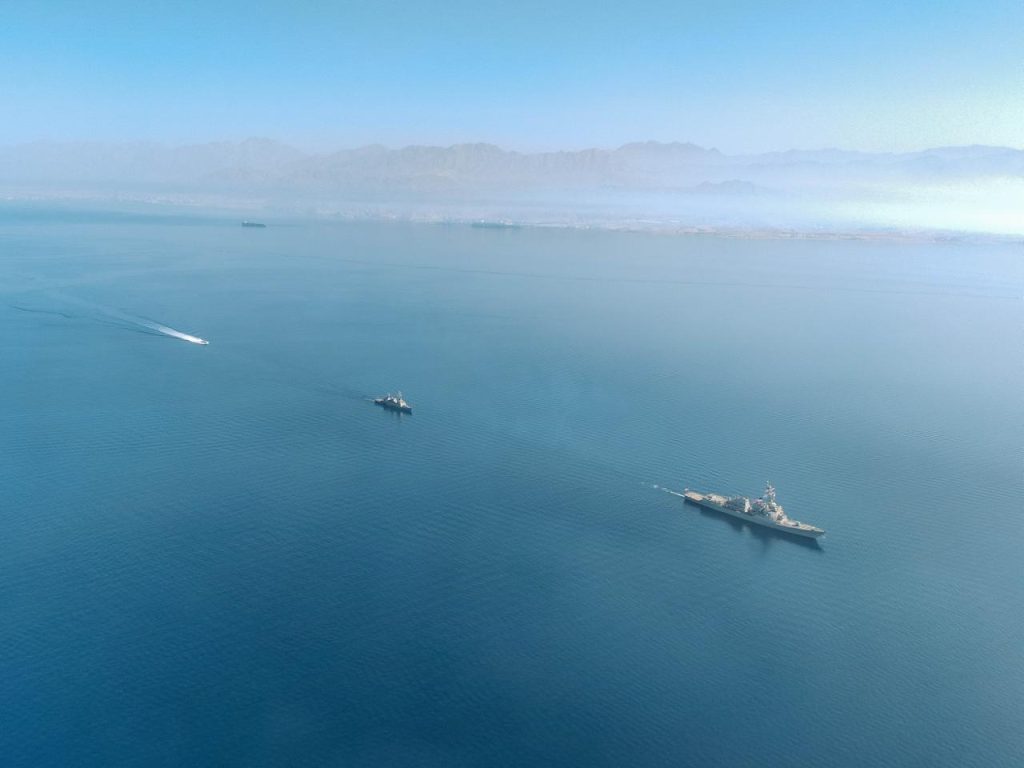
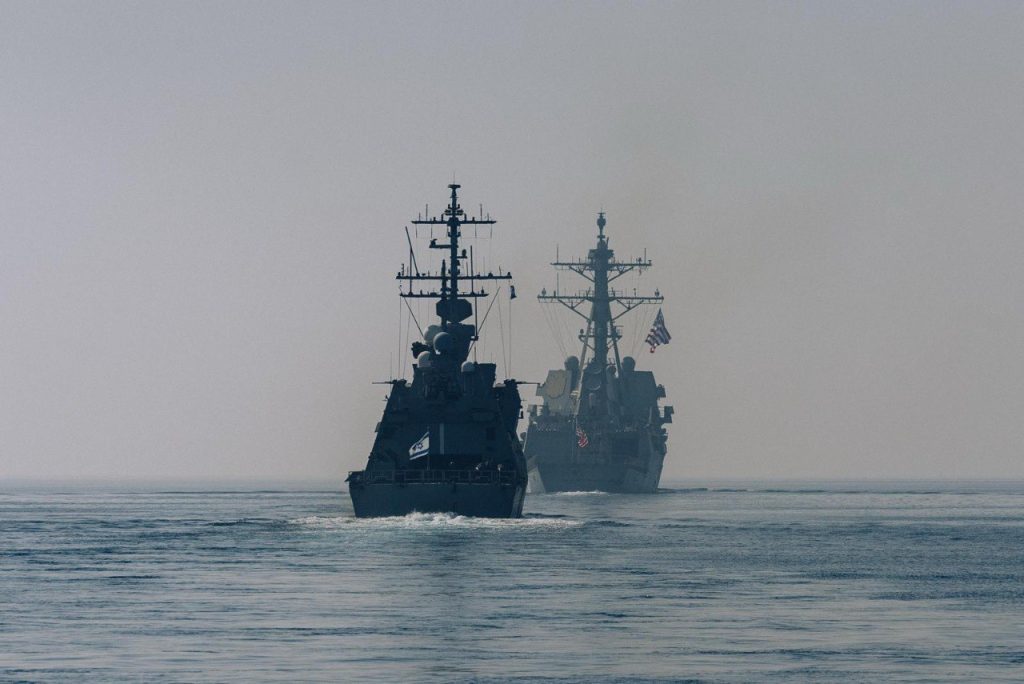
A joint exercise between the US destroyer and Israeli Navy, February 1, 2026.

What’s happening: US and Iranian representatives will meet as scheduled in Oman for talks tomorrow, after reports yesterday suggested that the talks had been cancelled.

  • A Trump administration official told the Associated Press that several Arab and Muslim leaders had urged the administration not to walk away from talks even though Iranian officials had pressed to narrow their scope. According to the report, the White House is sceptical about the prospects of the talks’ success.
  • President Trump told NBC that Iranian Supreme Leader Khamenei “should be very worried,” but added that the Iranians are “negotiating with us.”

Context: It remains the case that the US are looking to exhaust diplomatic channels, primarily to garner international legitimacy before resorting to military strikes.

  • US Secretary of State Rubio, appears to hold the same view as Israel, that there are four issues that need to be on the agenda. On Thursday, Rubio reiterated, “I think in order for talks to actually lead to something meaningful they will have to include certain things, and that includes the range of their ballistic missile. That includes their sponsorship of terrorist organisations across the region. That includes the nuclear programme. And that includes the treatment of their own people.” As it currently stands the Iranians are only willing to discuss the nuclear file.  
  • Vice President Vance has warned of the risks of nuclear proliferation across the Middle East if Iran were to acquire nuclear weapons. He also highlighted the unique difficulties of dealing with Iran. Whereas with Russia and China President Trump can have direct conversations with their leaders, this is not possible with Iran’s Supreme Leader. Vance added that President Trump was trying to achieve his objectives through diplomacy, but would take military action if he felt that was the only way possible.
  • The US continues its force build up sending even more military aircraft to the region.
  • For further context, see our briefings from earlier this week:

Looking ahead: Israel’s security cabinet, which was scheduled to convene on Sunday, has been moved up to Thursday afternoon.

February 4, 2026

Israel braces for Iran escalation

A joint exercise between the US destroyer and Israeli Navy, February 1, 2026.
A joint exercise between the US destroyer and Israeli Navy, February 1, 2026. Photo credit: IDF

What’s happened: As diplomatic attention focuses on upcoming negotiations between Iran the US this weekend, in Israel there is an increasing consensus that a US operation in Iran is inevitable.

  • Leaks to that effect to local media followed the meeting yesterday between senior Israeli officials, including the Prime Minister, and US Special Envoy Steve Witkoff.
  • That meeting lasted three and a half hours, and no details from what was discussed were publicly reported.
  • With the US “armada” largely in place in the Gulf region, two minor incidents demonstrated the high level or alert on all sides yesterday. An Iranian drone  flying towards the  aircraft carrier USS Abraham Lincoln was downed by a F-35 fighter jet. And there were murky reports of an IRGC speedboat intercepted by the US forces as well.
  • The IDF’s Home Front Command held a large exercise at its Zikim base, near the Gaza border. The exercise simulated a massive missile strike on a large population area, with wounded people trapped in collapsed towers and rubble. The exercise was both an implementation of lessons learned from last years Twelve Day War with Iran and preparation for the possibility of an imminent war following upon a expected US offensive against the Islamic regime.

Context: From the US perspective, there are four pressing issues in the Iran file: the nuclear programme, the ballistic missile programme, Iran’s regional proxies, and the regime’s violent crackdown on protesters earlier this winter.

  • It was the last issue that prompted the escalation in the US military presence as well as Trump’s threat to initiate military action against Iran. But it is also this last issue which doesn’t seem to be on the table in any way in the upcoming negotiations between the two countries.
  • The threat to topple the regime could yield concessions on other issues which are a priority for the US and its regional allies, but that would mean abandoning President’s Trump “help is on its way” pledge. Israeli analysts are sceptical that Trump will ultimately be willing to do this.
  • Even on the first three issues, there is no guarantee that there is a genuine willingness for give and take on all equally. The US and Iran are mostly focussed on the first — the nuclear programme. Israeli analysts believe Iran will not consider any real concessions on Iran’s proxy forces, as this too would, in the Iranian perspective, put the regime’s survivability in question.
  • Regarding the first issue, the current US position is a demand to completely halt the nuclear programme and ship Iran’s stock of enriched uranium, estimated at some 450 kg, out of the country (presumably to Russia). It is not known definitively where this stock is or if, following the US bombing operation last June, it is even accessible.
  • If serious negotiations do actually get underway following this weekend’s meeting, it is expected that several months of talks would be needed to finalise agreement on the nuclear issue alone regardless of whether other items on the agenda are addressed or not.

Looking ahead: The location of this weekend’s US-Iran talks is still not settled, with some reports indicating that the US has agreed to move the talks from Turkey to Oman and others contradicting that claim. The Iranians have requested to change the location of the talks, originally scheduled for Istanbul.

  • It was unclear why the change of venue was important to the Iranians, though there was speculation that the significance of the new location was that fewer third parties would be involved.
  • Direct US-Iran talks are expected to mostly focus on the Iranian nuclear programme, which the Iranians have indicated they are willing to discuss, while broader talks would likely touch on concerns about both the Iranian ballistic missile programme and Iran’s regional proxies, which the Iranians are less eager to discuss.
  • The President’s son-in-law Jared Kushner is expected to join Special Envoy Steve Witkoff on the US side of this weekend’s talks with Iranian Foreign Minister Abbas Araghchi. In Jerusalem this is seen positively, as Kushner is considered by Israeli officials to be both better informed and less eager to reach a deal at all costs than Witkoff.

February 3, 2026

US Envoy Witkoff to arrive in Israel

US Middle East Envoy Steve Witkoff delivers a statement to the media, near Kiryat Gat, on October 21, 2025
US Middle East Envoy Steve Witkoff delivers a statement to the media, near Kiryat Gat, on October 21, 2025. Photo by Chaim Goldberg/Flash90

What’s happened: Diplomatic efforts to reach some sort of agreement between Iran and the US that might avert an impending US offensive operation in Iran kicked into high gear this week. Following high-level meetings between senior defence and intelligence officials in Washington over the weekend, US and Israeli officials are expected today to discuss respective positions on a diplomatic settlement.

  • To that end, US Special Envoy Steve Witkoff will arrive in Israel today for meetings with the Prime Minister, Mossad Director, and IDF Chief of General Staff. The four are expected to discuss the Israeli position on the principal issues which the Americans will be negotiating with Iran.
  • The three principal issues under discussion are the Iranian nuclear programme, the Iranian ballistic missile programme, and Iran’s regional proxies. Significant gaps exist between the Israeli and American positions on the latter two issues.
  • Publicly, at least, the Iranians reject any negotiations on the latter two issues, rendering the difference between the Israel and American position slightly less important.
  • Of the upcoming negotiations between the US and Iran, President Trump said, “We have a tremendous force going there, just like we did in Venezuela, even bigger, and they’ll be there soon. And I’d like to see a deal negotiated. I don’t know that that’s going to happen. But right now we’re talking to them, we’re talking to Iran, and if we can work something out that would be great, and if we can’t probably bad things will happen.”

Context: Israel’s approach to the prospect of a negotiated settlement between Iran and the US is best characterised as multilayered scepticism. Scepticism regarding the issues mooted by a deal, scepticism about Witkoff’s motives and capabilities, scepticism about the viability of a deal altogether even if it is a good one.

  • In public at least, Israel has several red lines. On the nuclear programme, Israel insists on zero enrichment and the removal of uranium from Iranian territory. On missiles, Israel wants to see a reduction in stocks, range, and production capacity. On regional issues, Israel wants to reach an informal understanding that Iran is no longer exporting its revolution through proxy armies in the region.
  • Witkoff is perceived in Israel as an opponent of any US military strike in Iran, and Israeli officials have leaked to local media concerns that Witkoff might be “duped” by Iranian negotiators and rush into a deal that appears like an achievement while leaving Iran in a position to threaten Israel and the region.
  • Even if a deal is reached, Israelis are sceptical that its implementation could be monitored and enforced in the long term. A ‘good’ deal throws the Islamist regime a lifeline at its weakest moment, and a ‘bad’ gives it the opportunity to regroup and rearm. Any deal, it is assumed, would lead to sanctions relief, eliminating the one lever that actually succeeded in bringing Iranians out into the streets against the Islamic regime.
  • Israel is in a sense reassured, that Iran hawks in both Congress and the administration take Israel’s position on the nuclear programme, especially, quite seriously. For this reason, it is understood in Jerusalem, the Americans need a level of coordination that clearly delimits things Israel wants, things Israel can tolerate while publicly opposing, and things that Israel will actively oppose.
  • The Israeli assessment remains that the US is more likely than not to mount a military offensive, given the enormous movement of military assets to the region. However Trump currently wants to first exhaust the diplomatic route. 
  • The pressure on Iran is mounting, as the UK Home Office confirmed that it would begin the process of proscribing the IRGC in the UK. This announcement immediately followed the EU confirming that it would take the same steps after France dropped its long-standing opposition to banning the group.
  • The EU’s decision to designate the IRGC as a terrorist group is understood to have been in response to its participation and leading role in violently suppressing mass anti-government protests across Iran which are alleged to have killed tens of thousands.
  • While the Home Office have reportedly supported proscription under both this and prior governments, the FCDO allegedly opposed and blocked it on the grounds that doing so risked prejudicing diplomatic relations with Iran which they feared could be broken off.

Looking ahead: Witkoff’s meetings in Israel today are only a prelude to the main diplomatic event in Turkey this Friday, where he will meet with Iranian Foreign Minister Abbas Araghchi. Jared Kushner will attend the talks in Turkey (he is not joining in Witkoff in Israel today), as will representatives from Egypt, Qatar, and Turkey. There were unconfirmed reports that officials from UAE, Oman, and Pakistan might also be invited.

  • In the build-up to the talks, Iranian officials have spoken to various Western media outlets about concessions Iran might entertain on the nuclear programme, including shutting it down, joining a regional consortium to produce nuclear power, and shipping its uranium to Russia.

January 28, 2026

Netanyahu warns Iran not to attack, while awaiting decision from Trump

Prime Minister Benjamin Netanyahu holds a press conference at the Prime Minister's office in Jerusalem, January 27, 2026.
Prime Minister Benjamin Netanyahu holds a press conference at the Prime Minister's office in Jerusalem, January 27, 2026. Photo by Noam Revkin Fenton/POOL

What’s happened: Prime Minister Netanyahu yesterday warned Iran not to make the mistake of attacking Israel.

  • Netanyahu said, “President Trump will decide whatever he decides; the State of Israel will decide what we will decide. We are monitoring events. If I may use the phrasing that I use from time to time, we are prepared for any scenario. If Iran makes the mistake of attacking us, it will meet with a response that it cannot even imagine.”
  • He was also asked about the investigation of his chief of staff, Tzachi Braverman, which the prime minister described as “one big fake news event and a witch hunt that used criminal methods.” When asked specifically whether Braverman would be appointed Israeli ambassador to Britain, Netanyahu replied, “why not?”
  • It comes as President Trump declared, “There is another beautiful armada floating beautifully toward Iran right now,” before adding, “I hope they make a deal.”
  • Yesterday, CENTCOM’s air component, AFCENT, announced that it will commence a multi-day “readiness exercise to demonstrate the ability to deploy, disperse, and sustain combat airpower across the US Central Command area of responsibility.” This comes just a day after the arrival in the Middle East of the carrier strike group led by the USS Abraham Lincoln.
  • In parallel, Iran and the US holding quiet contacts mediated by Oman and Qatar, aimed at reaching a diplomatic solution to the nuclear issue as well as other issues. There are suggestions that Iran is showing flexibility, reflecting the intense pressure on the regime. The talks are being held between Iranian Foreign Minister Araghchi and US envoy Witkoff.
  • Israel and the US want Iran to stop all efforts to enrich uranium, agree to remove their current stockpile out of Iran, and end their programme to expand ballistic missile development and production.
  • As the US has increased its force build up ahead of a possible strike against Iran, the scope of the horrific massacre that was committed in the streets across the country has begun to emerge. According to intelligence recently released, the number of people who were killed by the regime in its bid to suppress the protests has reached tens of thousands. Iran International, an opposition media outlet, reported that more than 36,000 people have been killed so far. Time Magazine cited two Iranian Health Ministry officials as saying that up to 30,000 people were killed in the streets in Iran just on January 8-9.

Context: In the case of  any external intervention it is the primary responsibility of the international community – led by the US – to protect the Iranian people from the repressive regime.

  • Israel has assisted in obtaining intelligence that indicates Iran carried out mass executions of protesters, contradicting assurances allegedly given by Iranian leaders to President Trump. Trump had cited Iran’s supposed cancellation of over 800 executions as a reason for delaying military action (while Iran denied both the promise and the existence of such execution plans.) US intelligence reportedly includes first-person testimony of executions and live fire against protesters, which Israel played a role in collecting and corroborating.
  • There appear to be three scenarios:
    • US military strikes that will aim to significantly weaken the Islamic Republic.
    • Iranian willingness for a ‘capitulation agreement’ that would include abandoning its nuclear capacity and missile programmes, something it has consistently refused to do in the past. Despite Natanz’s destruction, Fordo is thought to remain active, its defences are being upgraded, and the stockpile of highly enriched uranium is dispersed across the country. While Iran is not currently enriching uranium, it could have the capacity to assemble an improvised nuclear device.
    • An assessment that a US military strike is not feasible and the absence of an agreement, which might leave Iran suffering from slow systemic collapse under sanctions and internal decay.
  • The Trump administration is  apparently split. In the diplomatic camp, the envoys Witkoff and Kushner favour negotiations to avoid regional war and preserve broader Middle East stabilisation plans, supported by Qatar, Saudi Arabia, and Turkey. The more hawkish camp reportedly includes Vice President Vance, Secretary of State Rubio, Secretary of War Hegseth. They endorse a decisive military strike to weaken or topple the Iranian regime, viewing it as morally and strategically justified. 
  • At the current juncture Trump appears to favour exhausting the diplomatic channel before launching a military operation.
  • Israel assesses that the regime’s failure to defend itself during the 12 Day War of Summer 2025 shattered the fear barrier among the population, accelerating long-term instability.
  • Israel has also warned that the negotiations are merely another a stalling tactic, and the gaps between the sides remain unbridgeable. On the other hand, abandoning their nuclear and missile programme would bring sanctions relief and offer regime an economic lifeline.
  • Other US allies in the region including Saudi Arabia appear to be adopting a more cautious approach towards military entanglement. In contrast, Israel, the UK, Jordan are thought to support potential US military action, offering intelligence, logistics, and missile-defence cooperation.
  • US CENTCOM commander Admiral Cooper recently spent several days in Israel, reinforcing the impression that US and Israel militaries are reaching new heights of coordination, including integrating joint air defence and shared target banks.
  • Netanyahu has always seen Iran as the overriding strategic issue that influences all other fronts (Gaza, Lebanon, Syria, West Bank and Yemen).
  • Israel remains deeply concerned over a surprise Iranian missile or drone strike, prompting intense intelligence monitoring and readiness for a response.    

Looking ahead: It remains unclear whether US-Iranian diplomatic talks will reach a successful conclusion and avoid war, with the ultimate decision to be made by Trump.

  • The working assumption within Israel is that with the regime at an all-time weak point, a US attack could be a game-changer. Trump has made conflicting statements – warning Iran that he would bomb them and also saying he hoped diplomacy will work. He loathes any comparison to Barack Obama, who in his view abandoned the Iranian people in the 2009 Green Revolution and did nothing after his ‘red line’ in Syria was crossed by Assad.  
  • If the US were to strike, the working assumption within Israel is that the country will be attacked in response. In such a scenario, Israel is expected to retaliate.
  • Another question is whether in the aftermath of US (and Israeli) strikes, the regime might fall. Many analysts have concluded that the current situation constitutes a rare opportunity to topple the regime that should not be missed.

January 16, 2026

Iran unrest exposes regime vulnerability, says Israeli historian

Israeli demonstrators express their solidarity with the Iranian people.
Israeli demonstrators express their solidarity with the Iranian people. Holon, central Israel, January 14, 2026. Photo by Chaim Goldberg/Flash90

Iran’s ongoing protests represent the most sustained and socially broad challenge to the Islamic Republic in years, but there are still no clear signs the regime is close to collapse, according to Eyal Zisser, Chair of Contemporary Middle Eastern History at Tel Aviv University.

Speaking with BICOM’s CEO Richard Pater, Professor Zisser said the current wave of unrest differs sharply from previous episodes. “What we are seeing is unprecedented,” he said. “This time the scale and duration are different. The protests are continuing, and more and more segments of Iranian society are joining.”

Unlike earlier demonstrations that were confined to specific groups or cities, the current unrest has drawn in students, women, workers and parts of the urban middle class across the country. “Different social groups are effectively joining hands,” Zisser noted, adding that the protests are affecting day-to-day life well beyond Tehran.

However, he cautioned against overstating their immediate impact. “The regime remains strong,” he said. “It still has powerful instruments of repression, particularly the Revolutionary Guards and the Basij, and we do not yet see signs of the regime disintegrating.”

A changed strategic context

What makes this moment distinct, Zisser argued, is the wider strategic environment. Last summer, Israeli actions targeting regime-linked military assets, carefully calibrated to avoid civilian harm, have punctured the perception of Iranian invulnerability.

“This was important psychologically,” he said. “It showed that the regime is not as strong as many people believed, and that can encourage people in Iran to take to the streets.”

The posture of the United States also matters. In contrast to previous administrations that relied largely on rhetoric, Zisser suggested that sustained political and economic pressure could have a real impact. “I don’t expect a military occupation of Iran,” he said, “but the goal is to undermine the regime’s confidence and capacity to rule.”

Concerns that external pressure could backfire by rallying Iranians around the regime are misplaced, he added. “Pressure is not directed against the Iranian people. They are not naïve, they understand where responsibility lies.”

Watching for cracks

Historically, regime collapse in Iran and elsewhere has been preceded by fractures within the security forces. For now, Zisser said, those signs are absent. “We don’t see hesitation or defection within the Revolutionary Guards or Basij yet,” he said. “But this is something to watch very closely. If that happens, it would be a decisive indicator.”

Other warning signs include symbolic acts of dissent. Zisser pointed to instances of Iranian athletes refusing to participate in regime rituals, such as declining to sing the national anthem. “These are small signs, but they matter,” he said. “They show erosion of legitimacy.”

At the same time, he warned that a regime under pressure may seek to externalise the crisis. “When regimes feel they are losing control, they sometimes look for confrontation abroad,” he said, noting that Israel, Arab states and Western interests could all become targets.

Lebanon: Hezbollah unchecked

Turning to Israel’s northern border, Zisser was unsparing in his assessment of Lebanon. “It’s not that the Lebanese government isn’t doing enough, it is doing almost nothing,” he said.

The Lebanese Armed Forces, he argued, are unwilling and unable to confront Hezbollah, whose core military capabilities remain intact despite limited Israeli operations. “Missile stockpiles and production facilities are still there, many of them deep inside Lebanon, not just in the south.”

Israel’s current approach reflects a desire to avoid escalation, but Zisser stressed that the underlying problem remains unresolved. “Israel cannot simply give up,” he said, adding that Hezbollah’s fortunes are inseparable from those of Iran. “If Iran weakens, Hezbollah weakens.”

Syria and the Druze question

On Syria, Zisser said recent US rhetoric about the new leadership reflects a search for stability rather than confidence in long-term change. “Syria remains fragmented, and trust is minimal,” he said. Any meaningful security arrangement involving Israel would require time, confidence-building, and a significant reduction in Iranian influence.

Particular concern remains for the Druze community in southern Syria. While ceasefires exist, Zisser described them as fragile. Israeli proposals for humanitarian corridors are understandable, he said, but “from Damascus’s perspective they are unacceptable.”

Gaza: no rebuilding without demilitarisation                                              

Asked about Gaza, Zisser expressed scepticism about ambitious reconstruction plans absent a fundamental shift in reality on the ground. “Hamas will not disarm voluntarily,” he said, “and Israel will not accept arrangements that leave Hamas militarily intact.”

Past experience, he argued, has shaped Israeli thinking. “Israel has learned that withdrawing without ensuring demilitarisation only leads to renewed conflict.” Without a new political and security framework, reconstruction risks laying the groundwork for the next war rather than lasting stability.

January 14, 2026

Monitoring the Iranian protests

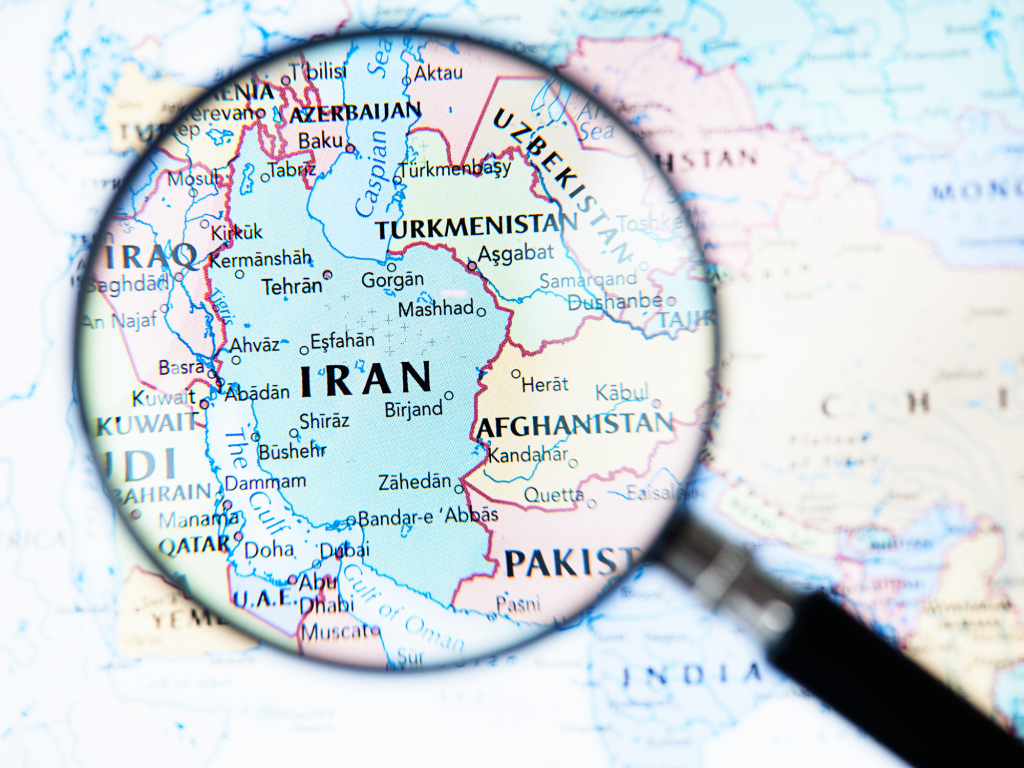
Iran on a map
Iran on a map. Photo credit: Canva

What’s happened: Violence continues to engulf Iran as the Islamic Republic’s forces crack down on protests throughout the country.

  • Official regime sources put the death toll of protesters at around 2000, with unofficial and unverified reports placing the real figure at 12,000 and even higher. The higher estimates are based on reports coming from Iranian hospitals treating thousands of victims with bullet wounds.
  • There were also reports that regime forces themselves have sustained casualties, possibly as high as 500 killed. If these reports are true, it would indicate a much more violent encounter between protesters and security forces, and it would constitute another bit of evidence that the official death toll of 2,000 is extremely low.
  • President Trump gave further hints that the US are poised to take military action against the Iranian regime, posting yesterday on his social media account that “help is on its way.” At a speech in Michigan later in the day, Trump called on “Iranian patriots” to “keep protesting and take over your institutions if you can,” adding, “Save the names of the killers and abusers that are abusing you. You are being very badly abused.” At the speech, he repeated again that “help is on its way.”
  • In the meantime, Trump announced an immediate 25% tariff on goods from countries with commercial ties with Iran. There has not yet been any announcement on its implementation. Countries that have both commercial ties with Iran and a significant trade portfolio with the US include China, Turkey, India, the UAE, and Pakistan.

Context: In recent days, as the violent uprising in Iran escalated, Iranian officials sought to reopen negotiations with the Trump administration on an agreement regarding Iran’s nuclear programme.

  • Initially, some US officials expressed a tentative openness to proceeding. Israeli officials quoted anonymously in local media described the Iranian move as a “trap” designed to prevent the US from taking military action against regime targets in support of the protesters. Whatever openness there might have been by administration officials was shut down yesterday by Trump’s post on social media that “I have cancelled all meetings with Iranian Officials until the senseless killing of protesters STOPS.”
  • Current Israeli assessments are that Trump will make good on his threat to attack Iran. The initial threat was that the US would attack if the Iranians violently cracked down on protesters with deadly force, something which has since happened.
  • Trump has twice ordered military operations against Iran, first in 2020 in the assassination of Qasem Soleimani and second in 2025 when he sent B-2 bombers with bunker busters to destroy three Iranian nuclear facilities. In both cases, a very limited operation was launched at a precise target in conditions where success was nearly assured. An American operation that is longer, broader, and less likely to have a decisive impact on the course of events will not appeal to the President. A clear target timed and executed in a way that might actually bring the regime down, on the other hand, might — if such a target exists.
  • The clearest targets in this case would be the Islamic Revolutionary Guard Corps (IRGC) and the various security agencies most directly implicated in the violent repression of the current uprising, most notably the IRGC’s Basij (internal repression militia). The US would also like to both disrupt the communications capacities of the regime and at the same time restore those of the protesters. Even here, in the best case scenario, the protesters would still need to be able to marshal enough manpower to overcome regime forces.
  • Latest reports suggest that Israel and US-aligned Arab states were urging the US to hold off on an attack for the time being and wait until the regime was further weakened by the uprising. In the meantime, those states urged the US to assist protesters to get around the communications blackout imposed by the regime, as well as target it with cyberattacks and possibly assassinations as well.
  • American interest in a possible military action in Iran comes at a time of reduced US naval presence in the Gulf. In October, a carrier group was moved from the Gulf to the Caribbean in anticipation of military action in Venezuela. The US maintains six Navy warships in the Gulf, as opposed to twelve in the Caribbean. In the US attack on Iran in June, long range bombers took off from a base in Missouri, however that was for a radically different mission than the one under consideration now.
  • Israeli and US defence officials remain in close dialogue. In addition, US CENTCOM has now opened a new coordination office at Al Udeid Air Base in Qatar to enhance regional integrated air and missile defence.

Looking ahead: Israel remains on alert for a possible Iranian attack in response to any US move — or even a surprise attack.

  • For now, Home Front Command has not issued any special instructions and schools and businesses are operating as usual.
  • Israeli officials have also speculated that Iran-backed terrorist organisations might mount an attack on an Israeli or Jewish target outside the region.
  • The US administration has indicated that it would like to convene the first meeting of the Board of Peace, the advisory board for overseeing postwar Gaza governance, sometime next week in Switzerland. Membership of the Board has not been announced beyond its designated High Representative, the Bulgarian diplomat Nikolay Mladenov who is broadly trusted and well regarded by all sides in the conflict. However, reports have suggested Prime Minister Starmer could be involved too.
  • The Board sent officials letters of invitation to participate in the technocratic committee that is supposed to actually govern Gaza in place of Hamas, according to the ceasefire agreement which went into effect last October. The committee, known as the National Committee for the Administration of Gaza (NCACG) includes a former Deputy Transportation Minister from the Palestinian Authority and the Chair of the Gaza Chamber of Commerce.

January 12, 2026

Israel stands with the people of Iran

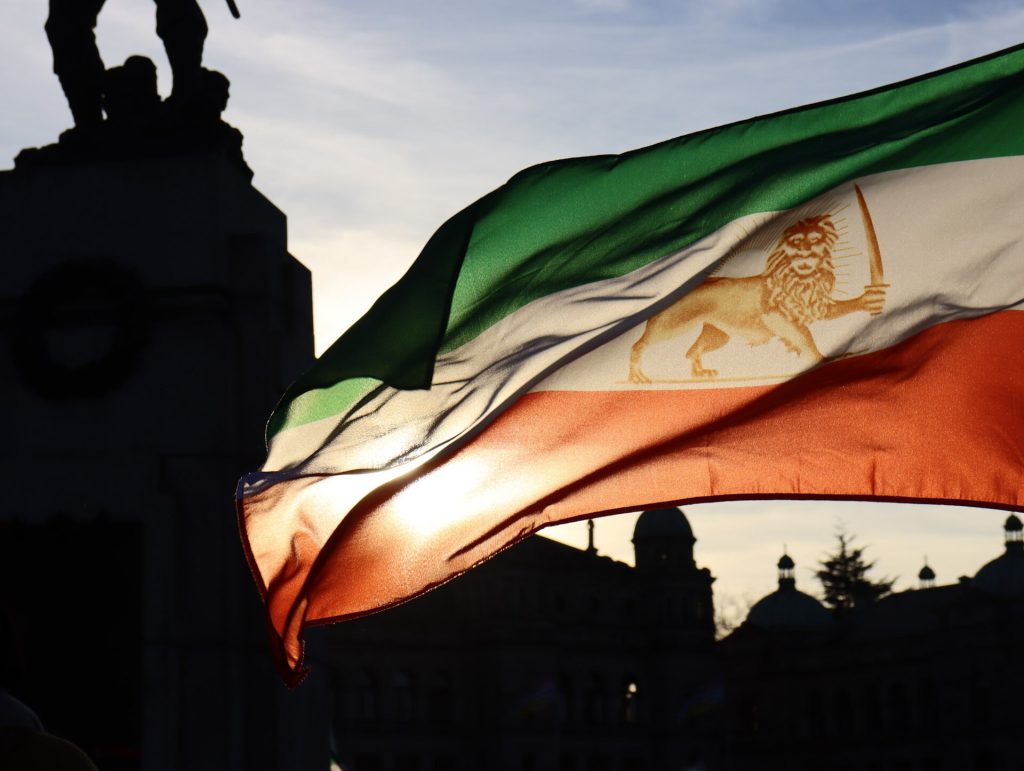
The Lion and Sun Flag of Iran.
The Lion and Sun Flag of Iran. Photo Credit: Nevin Thompson, Creative Commons licence

What’s happening: Israel’s political and security leadership are carrying out regular situation assessments, multiple times a day, to review the ongoing protests in Iran.

  • Ahead of the government’s weekly meeting, Prime Minister Netanyahu said, “Israel is closely monitoring the events unfolding in Iran. The protests for freedom have spread throughout the country. The people of Israel, and the entire world, stand in awe of the immense bravery of Iran’s citizens.”
  • He added, “Israel supports their struggle for freedom and firmly condemns the mass killings of innocent civilians. We all hope that the Persian nation will soon be liberated from the yoke of tyranny, and when that day comes, Israel and Iran will once again be faithful partners in building a future of prosperity and peace for both nations.”
  • Anti-regime groups assess that over 2,000 people have been killed over the weekend, since the Basij  paramilitaries have begun opening fire on protestors.
  • Speaking from his home in the US, the son of the exiled Iranian monarch, Reza Pahlavi, yesterday declared that the transition from civil protest to national uprising to liberate Iran had begun. He urged demonstrators to take over the main streets and declared all the regime’s propaganda institutions a legitimate targets. He called on the security forces to join and help topple the regime. He also expressed support for peace with Israel.
  • Iranian leaders have threatened that if they are attacked by the US, they will target Israel in response. In light of this, Israel has deployed its array of anti-missile defence systems and is confident its intelligence will track any direct threat.

Context: As the protests enter their third week, there is growing concern over the level of violence now being deployed by the regime against the protestors.

  • Some analysts believe the current events are on a different scale and volume than in the past, and the barrier of fear appears to have been broken. Others caution that that there hasn’t been a substantial growth or further spreading of the campaign and that it is limited to pockets of support, the majority in east Tehran.
  • Israel assesses that until last Thursday, the Iranian leadership was confident that the protests could be contained, but since then they have become more concerned.
  • One sign the Iranian regime views the current protests as particularly dangerous is their decision on Thursday evening to completely shut down internet access across the country. Growing evidence that the regime is now shooting protestors suggests that the regime’s fears for survival are palpable.    
  • According to Israeli analysts the current strength of the regime includes:
    • 150,000 – 200,000 members of the IRGC who are ideologically committed and to a degree insulated from the financial instability.
    • 2 million active members of the Basij paramilitary enforcers, who number a further 3 million affiliates. Although they generally come from working class backgrounds, whose families are most likely seriously harmed by the economic crisis, they too have not shown any significant signs of rebellion.
    • Approximately 420,000 members of the army, considered the weak underbelly of the regime (and not involved in clamping down on the protests). They have not yet shown signs of significant changes in allegiance.      
  • One critical factor will be if policemen and soldiers defect to join the protests. This happened in the overhaul of the regimes in Egypt and Tunisia, but has not yet occurred in Iran.
  • Israel’s defence establishment assesses a low to very low possibility that Israel will be attacked. Former National Security Council director Maj. Gen. (res.) Yaakov Amidror told Kan News, “The odds of them opening fire on the State of Israel—and giving the United States and Israel the legitimacy to use their full power against Iran—are extremely slim. It behoves us to be modest: whatever can be done under the radar should be done under the radar, and whatever requires publicity should not be done, which includes not talking. Let’s hope that this opposition succeeds.”
  • Since the Israeli Operation Rising Lion last July, Iran remains exposed to air strikes.  
  • Netanyahu is insisting on coalition communications discipline, that only he will speak on the matter. This followed more provocative statements from ministers last week.
  • Donald Trump, who warned that the US might get involved if the regime killed protestors, has said that the “military is looking at” “very strong options.” These might include:
    • An advanced military posture as an initial step, moving more naval assets and aircraft to the region, particularly in order to augment the defence of US bases.  
    • Cyber-attacks against the Iranian tools of repression, command and control centres.
    • Running psych-ops, exposing and embarrassing the regime to encourage the protestors.                            
    • Military strikes on Iranian military or government targets, which at this point seems less likely, although continued regime repression could trigger an intervention, especially as some opposition voices inside Iran are calling for US military assistance.
  • Trump  feels emboldened following the audacious operation in Venezuela and his ability to deliver regime change. However most of the US’s regional allies including Saudi Arabia, Turkey, Qatar  and UAE are opposed to a military intervention.    
  • Israel enjoys intimate security coordination and intelligence sharing with the US, but any decision to strike or intervene will be made in Washington.              

Looking ahead: Israel is concerned the Iranian regime will become even more violent in clamping down on the protests.  

  • The more the regime begins to fear for its own survival, the greater the risk becomes that it might make a miscalculation. Consequently, Israel will be very cautious about public statements.
  • President Trump has said that Iran reached out to the US regarding potential negotiations on its nuclear programme, and that the US may agree to meet. He also added that he is in contact with Iranian opposition leaders.
  • Reza Pahlavi, the crown prince, is positioning himself as a leader in waiting, with some of the protesting crowds calling to restore the monarchy.

January 5, 2026

Post Trump meeting, Netanyahu declares support for the Iranian people

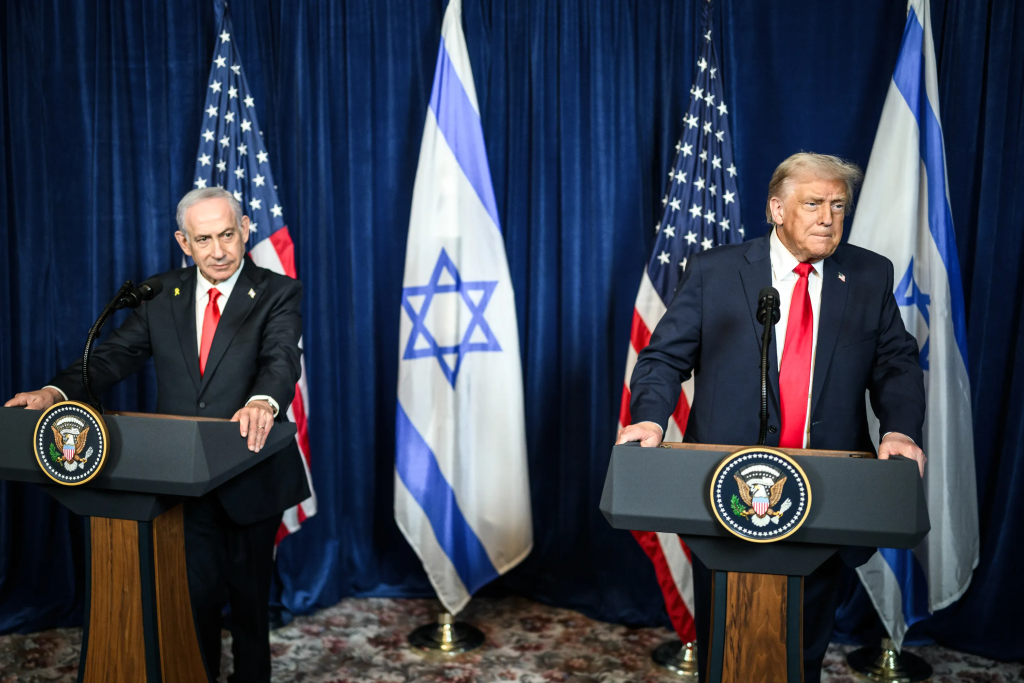
President Donald Trump hosts a bilateral meeting with Israeli Prime Minister Benjamin Netanyahu
President Donald Trump hosts a bilateral meeting with Israeli Prime Minister Benjamin Netanyahu at Mar-a-Lago. December 29, 2025. Photo credit: The White House.

What’s happened: At the start of Sunday’s weekly cabinet meeting, Prime Minister Netanyahu expressed support for the Iranian people.

  • Netanyahu told his ministers, “we identify with the struggle of the Iranian people, with their aspirations for freedom, liberty, and justice. It is very possible that we are standing at the moment when the Iranian people are taking their fate into their own hands.”
  • Similarly, President Trump has also expressed support for the protesters in Iran and warned that if Iran, “starts killing people like they have in the past, I think they’re gonna get hit very hard by the United States.”
  • According to the New York Times, senior Iranian officials acknowledged that the Islamic Republic has entered “survival mode.”
  • During the cabinet meeting, Netanyahu also related to the Iranian issue that came up at last week’s meeting with President Trump saying, “We reiterated our joint position of zero enrichment on one hand, and the need to remove the 400 kilograms of enriched material from Iran and oversee the sites with tight and genuine supervision.”
  • Netanyahu also expressed support for the US “determined decision and action” in Venezuela, “to restore freedom and justice to that part of the world.”

Context: The Iranian issue was one of the top priorities for Netanyahu when he met Trump last week. Overall, the top objective for Netanyahu was to consolidate on the military achievements across several fronts including Iran, Gaza, Lebanon and Syria. The common thread was to reaffirm US support that if necessary Israel will act to prevent Iran and their proxies from rearming and to ensure Israeli military freedom of action to counter any developing threats.

  • Although details of the private meeting between Trump and Netanyahu remain vague, Netanyahu also told ministers on Sunday that Trump was “unequivocal” on Gaza.
  • Netanyahu said, “He repeated this both in our private conversations and to public opinion at the press conference there. He said it: ‘The essential condition is that Hamas disarms.’ There is no other option. This is an essential and fundamental condition for the implementation of his 20-point plan. He made no concessions and showed no flexibility on this issue.”
  • Without continued Israeli action Israeli officials are concerned that the achievements of the last year will be eroded. To ensure the achievements are consolidated Israel is banking on continued close coordination with US defence officials.    
  • In the wake of the October 7th attack Israel is pursuing a new security doctrine, that includes forward and pre-emptive defence. It is further understood Israel’s new defence posture includes:
    • Disarming terrorist armies.
    • Disarming and destroying military infrastructure above and below ground in a way that will make it impossible to renew the fighting, or to carry out surprise attacks on Israel’s borders and civilian communities adjacent to them.
    • Preventing terror groups from restoring their military capabilities.
    • Establishing effective international enforcement mechanisms that will ensure and enforce precise implementation of the disarmament.
    • Secure US support to operate independently, without having to coordinate with the US every time Israel detects violations of the arrangements.
  • Specifically on Gaza, Netanyahu reiterated the Israeli position to secure the return of the body of Ran Gvili, the last remaining hostage who has not been buried in Israel before transitioning to the second phase.
  • When it comes to disarming Hamas the priorities include decommissioning RPG launchers, other rockets, missiles, mortars, anti-tank weapons, and heavy drones.
  • Thirdly, the destruction of the remaining underground infrastructure, especially attack tunnels, as well as  command and control centres and weapons manufacturing sites. Israel is also demanding a complete ban on military training in the Strip.
  • At this point Israel remains insistent on remaining on the Yellow Line to ensure the protection of communities on the Gaza periphery.
  • Similarly in the north, Israel is demanding that Hezbollah be fully stripped of its heavy and long-range arms, including rockets and missiles and drones
  • Regarding Iran, Israel will support an international agreement that removes Iran’s ability to develop its military nuclear programme. In addition, Netanyahu seems to have secured support from Trump that also recognises Iran’s efforts to rebuild its array of conventional military threat of ballistic missiles as another red line.      
  • It appears that Trump was accommodating to most of Israel’s demands. The main area of disagreement appears to be the role of Turkey, both in Gaza and their ambitions to extend their sphere of influence in Syria.
  • According to Nahum Barnea writing in Yediot Ahronot, “There will probably not be Turkish soldiers in the international force whose establishment is unlikely, but Turkish contractors will be included in the [Gaza reconstruction] work, and F-35 jets will be sold to the Turkish air force. Netanyahu was unable to persuade Trump that Erdogan is bad; Erdogan was unable to persuade Trump that Netanyahu is bad. Trump enjoys both of their displays of sycophancy.”    
  • On Venezuela, Israel has been concerned for several years of their alliance and connection to both Iran and Hezbollah.    

Looking ahead: Later today Israeli – Syrian negotiations over a security agreements in southern Syria are expected to be resumed in Paris. The talks have been on hold for the last two months.

  • Israeli defence establishment remains on high alert over concern that the Iranian regime could try and divert domestic attention by launching an attack on Israel.
  • On Sunday, Iran International, a Persian language opposition channel broadcasting from London, reported that the Islamic Revolutionary Guards Corps (IRGC) has conducting further missile launching exercises. The exercise includes tests of air defence systems and is being conducted in several cities including Tehran and Shiraz.
  • The Israeli assessment remains that the Iran remains exposed, and that their air defences have not been reconstituted since the 12 Day War last summer. Nevertheless, there is concern that if the regime fears it will be deposed then an attack on Israel could be its only move left.

December 23, 2025

Concern over missile production as Iran conducts tests

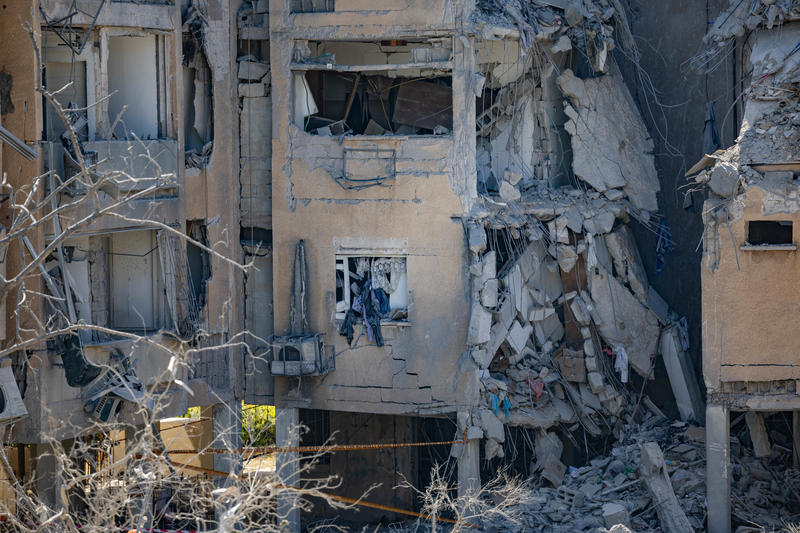
Scene from the city of Holon, where a ballistic missile fired from Iran hit civilian infrastructure, June 19, 2025.
Scene from the city of Holon, where a ballistic missile fired from Iran hit civilian infrastructure, June 19, 2025. Photo by Oren Ben Hakoon/Flash90

What’s happened: A large military exercise in Iran over recent days has heightened alert levels in the region and brought to the fore discussions in Israel, US, and elsewhere regarding the possible resumption of hostilities following the last June’s Twelve Day War.

  • Iranian state media reported missile tests in several regions of the country, including Khoramabad, Mahabad, Isfahan, Mashhad, and Tehran. Israeli intelligence assessments were that, although war was unlikely, Iran could use a broad missile test such as the one it carried out this week as a cover for launching a surprise attack on Israel. These concerns were conveyed by Israeli officials to their US counterparts, including by IDF Chief of Staff Zamir to Admiral Brad Cooper, the head of CENTCOM, in a call on Saturday.
  • The Iranian Foreign Ministry characterised the Iranian missile programme as purely defensive and non-negotiable. “Iran’s missile programme has been developed solely for the defence of the country and is fundamentally not a matter for negotiation,” the ministry’s spokesman, Esmaeil Baghaei, told reporters.  “The media hype is also part of a hybrid war that the Zionist regime, with the help of the United States and affiliated media networks, has long designed and pursued against the Islamic Republic of Iran,” he added.
  • In the days leading up to the missile tests, multiple western intelligence agencies reported “suspicious movements” of Iran’s Revolutionary Guards, heightening concern that war might break out, either by design or by miscalculation by one of the sides. These movements were connected not just to the missile test, but also to drone activity and air defence drills.
  • Prime Minister Netanyahu referred to the Iranian threat yesterday in remarks made after meeting the leaders of Cyprus and Greece, “We know that Iran has recently been conducting exercises. We have been following this, and we have been maintaining the necessary readiness. I want to make it clear to Iran: any action against Israel will be answered with very harsh retaliation.”
  • The consensus among observers is that Iran is actively seeking to restore and augment missile capabilities that were lost in the Twelve Day War in preparation for a future confrontation with Israel. US officials believe that, left unchecked, Iran could produce up to 3000 ballistic missiles per year.
  • The IDF has revealed that one of three Hezbollah operatives who were eliminated yesterday in southern Lebanon was serving simultaneously in the Lebanese Armed Forces (LAF). The Israeli Air Force struck a vehicle in the Sidon area, killing the three men that were, “engaged in efforts to repair terrorist infrastructure.” The IDF revealed that one of the Hezbollah terrorists had a dual role, serving simultaneously in a LAF intelligence unit. This disclosure comes amid numerous complaints that the LAF is not doing enough to enforce  the ceasefire mechanism and some of its personnel are affiliated with Hezbollah.

Context: The Iranian threat to Israel over the years leading up to the October 7 War and since has been understood in Israel as ranging over three categories: the nuclear programme, proxies, and missiles.

  • Current Israeli assessments are that Iran suffered major setbacks on all three, and that it has struggled to restore its capacities on the first two. On missiles, however, the picture is more daunting. Only 36 Iranian ballistic missiles made impact in Israel during the Twelve Day War, but these killed 32 Israelis and caused extensive property damage. Moreover, the threat of missiles during those days shut the Israeli economy down completely.
  • Besides ramping up missile production, the Iranians are also fortifying and modernising launch sites. They retain up to 75% of the mobile launchers they had at the beginning of the war, and are manufacturing new ones. And as for fixed sites, Iran is reportedly working to build hardened silos that are more resistant to Israeli and US attacks.
  • All this is happening on the backdrop of a severe domestic crisis in Iran. Tehran, the capital city and home to ten million people, is unable to supply its population with water. Local reservoirs operate at only ten percent capacity. Electricity throughout the country is limited to a few hours a day, and petrol is severely rationed. The Iranian rial is trading at historic lows, and emigration of educated Iranians continues despite the governments efforts to stop it.
  • The regime’s censorship and restrictions of internet access have not succeeded in dampening public dissent. Iran’s second-largest city, Mashad, was the scene of wide scale protests against the regime. Israeli officials are concerned that the Iranian leadership may see a new war with Israel as a way of distracting the public and shoring up support.
  • In addition to the domestic political crisis in Iran, the renewed Iranian armament project takes place in an evolving geostrategic environment. Western countries have long complained about Iranian-Russian cooperation on drone production, particularly as it impacts the war in Ukraine.
  • China is widely believed to be helping Iran on ballistic missile production, both in supplying raw materials and in providing technology transfers. Turkey’s role is murkier. Iranian proxies planning terror attacks on Israeli targets were believed to be operating in Turkey. Attacks on Israeli targets in Latin America were recently foiled by local police and intelligence forces. These are believed to have been planned by Hamas and Hezbollah command centres located in Turkey.

Looking ahead: Prime Minister Netanyahu is due to meet President Trump in Florida on December 29. He is expected to present the President with an Israeli dossier on Iran’s efforts to restore its ballistic missile arsenal as well as renew its nuclear programme and fund its network of terrorist proxies, including Hezbollah, Hamas, and the Houthis.

  • The two leaders are also expected to discuss the further implementation of ceasefire agreements in both Lebanon and Gaza, with the US side expected to exert pressure on Israel to move forward on promised territorial withdrawals in spite of the fact that other commitments — return of the last deceased hostage in Gaza and disarmament in both Gaza and Lebanon — have not yet been achieved.
  • Gaps exist as well between the Israeli and American positions regarding both Syria and Turkey, and these are expected to be discussed and possibly resolved during the leaders’ meeting.

Newsletter sign-up

Please enter your information below to subscribe to our daily newsletter and stay updated and informed.

Donate to BICOM

At BICOM, we rely on the generosity of people like you to keep our website and services running. Your donation, no matter the size, makes a real difference. Please consider supporting us today. For further information please email: [email protected]