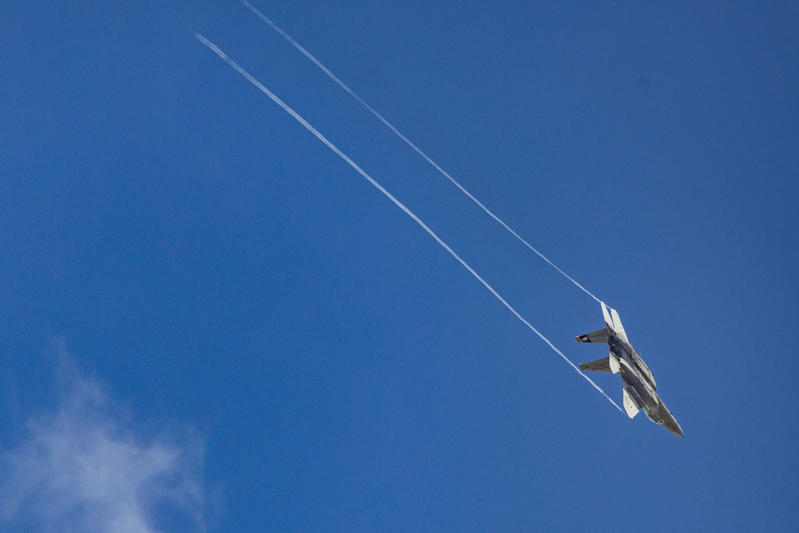
What’s happened: Senior officials from Israel and Syria held a meeting yesterday with the goal of defusing tensions, less than a week after an Israeli air strike on an airbase in the northwest of Syria.
- The meeting was hosted in Jordan and attended by, among others, Syria’s Foreign Minister Asaad al-Shaibani and the Mossad Director Gofman. There were conflicting reports about Gofman’s attendance, with some reporting that he participated by video.
- Most media coverage in Israel, citing Israeli sources, reported a positive meeting between the Syrian and Israeli officials, with all sides committed to understanding the vital interests and red lines of the others.
- The air strike last week was widely seen as a warning shot by Israel against the entrenchment and expansion of Turkey’s presence in Syria. Following the operation, Prime Minister said in a video statement, “We will not tolerate Turkish military entrenchment moving southward because that threatens us.”
- Official Turkish responses to the Israeli operation were scathing, though equivocal about the extent of Turkey’s involvement in the restoration works at the Syrian airbase.
- Diplomatic responses from other countries were more muted, but overwhelmingly negative, with American officials in particular appearing to cast doubt on Israel’s assessments of the situation on the ground in Syria as well as the motives of Israeli leaders in ordering the strike.
- One notable exception to this is Greece, which has not taken any public position on the Israeli air strike, but whose Foreign Minister Giorgos Gerapetritis warned in an interview yesterday with a leading Greek newspaper that Turkey’s interventions in Syria “are not always beneficial” for the region, and pointedly refused to condemn the Israeli operation.
Context: Syria under the Assads functioned as an Iranian satellite in the regional alliance structure from the 1980s until the regime fell in 2024. It was armed by the Soviets (and, later, the Russians) for decades, and hosted a large Russian presence from 2015.
- The collapse of the Assad regime brought both the Iranian and Russian influence in Syria to an abrupt end. For Israel, this was an enormous and immediate strategic gain, cutting Hezbollah in Lebanon off from its land bridge to Iranian arms supplies and opening Syrian airspace for Israeli planes to reach Iran unmolested in two wars in 2025 and 2026.
- When the Assad regime fell, Israel undertook another dramatic action that has shaped the politics of the next two years: it launched a massive operation that destroyed not only Syria’s stockpiles of unconventional weapons, but completely eliminated its entire air force and navy.
- The rationale for the operation was to ensure that no jihadist force could get its hands on weapons and capabilities that are normally reserved for sovereign states, as had happened when Libya fell apart a decade earlier. The result was to completely eliminate any direct threat on Israel from Syria (and purchase for the IDF an extraordinary freedom of action in confronting Iran), but also to create a vacuum in Syria that other regional powers, not least Turkey, were tempted to fill.
- Despite the tension between them, Israel and Turkey do have shared interests. Both strongly wish to avoid any return of Iranian military assets or influence into Syria. Both strongly wish to avoid seeing the Syrian state disintegrate again, and both strongly wish to avoid Syria becoming a base for ISIS or any ISIS-like jihadist organisation.
- Israel accepts that Syria will need to reconstitute some of its military capacities that were destroyed, it is wary of the grey area between Turkish assistance in rebuilding airbases and naval capabilities and effective Turkish control of such facilities or a long-term Turkish presence at rebuilt bases.
- Unlike in the Assad era, today Israel can enunciate its red lines in direct diplomatic contacts like yesterday’s meetings. It can also express those red lines kinetically, as in last week’s air strikes at a Syrian airbase. But the room to manoeuvre there is small.
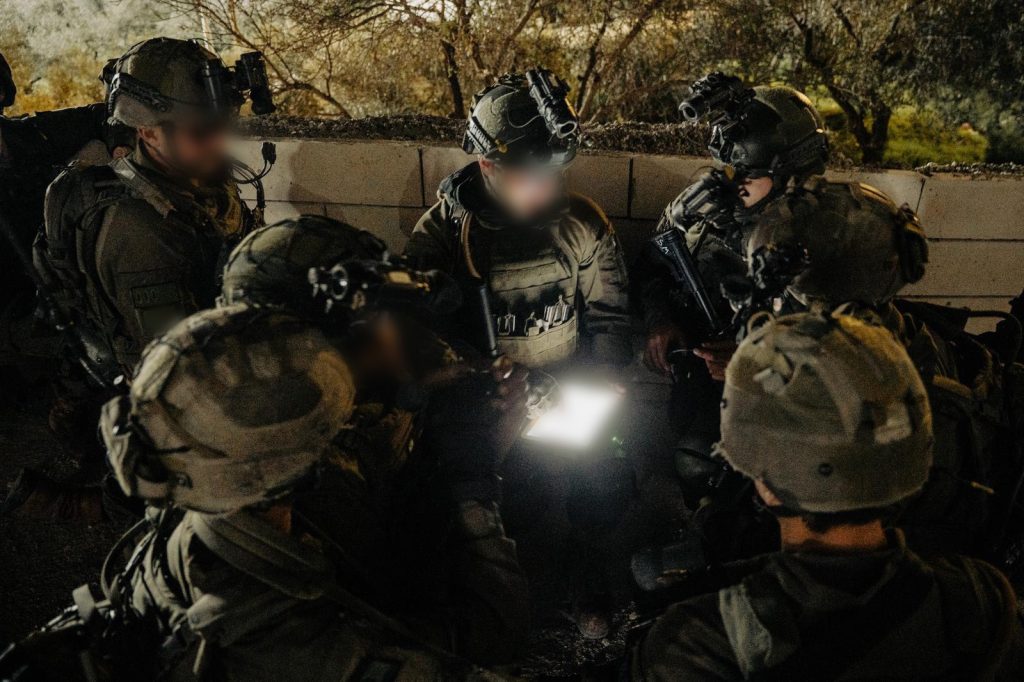
- Bombing a runway at a base where Turkish forces paid an earlier visit isn’t risky. If and when Turkish forces are permanently stationed there, such a base becomes a much more complicated target. This is why the US is so interested in a deconfliction mechanism. The last thing it needs in the region is an operational miscalculation that has one of its regional allies accidentally killing troops from the army of another of its regional allies. This explains the logic and timing of the strike last week, initiated by the IDF, led by intelligence.
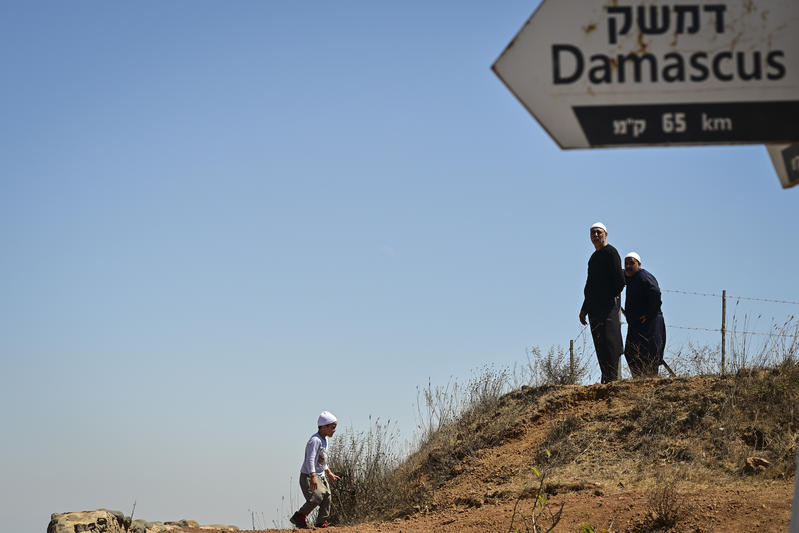
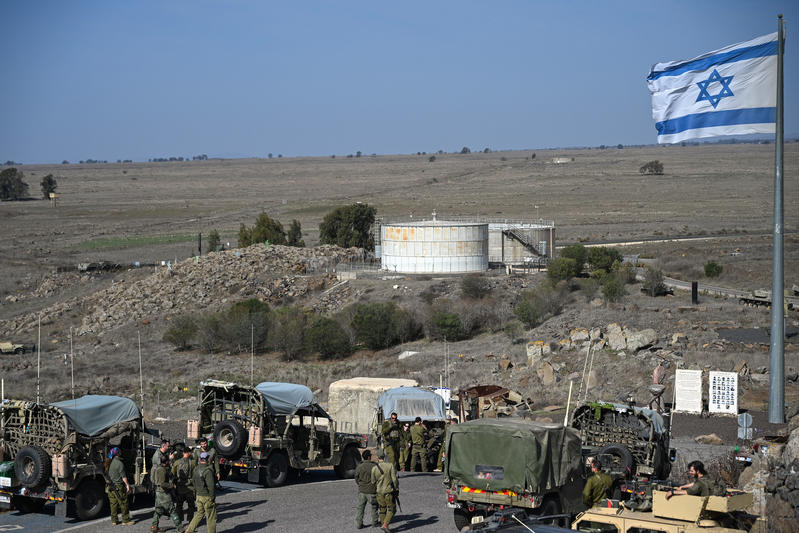
- Turkey, like Israel, has forces controlling bits of sovereign Syrian territory near its border, though the Turks hold far more territory than the Israelis (roughly 5,000 square kilometres held by Turkish forces as opposed to about 350 square kilometres held by the IDF).
- The prospect of an expanded Turkish presence in Syria poses a challenge to Israel that is of a radically different nature than that posed by the historic presence of Iran and Russia.
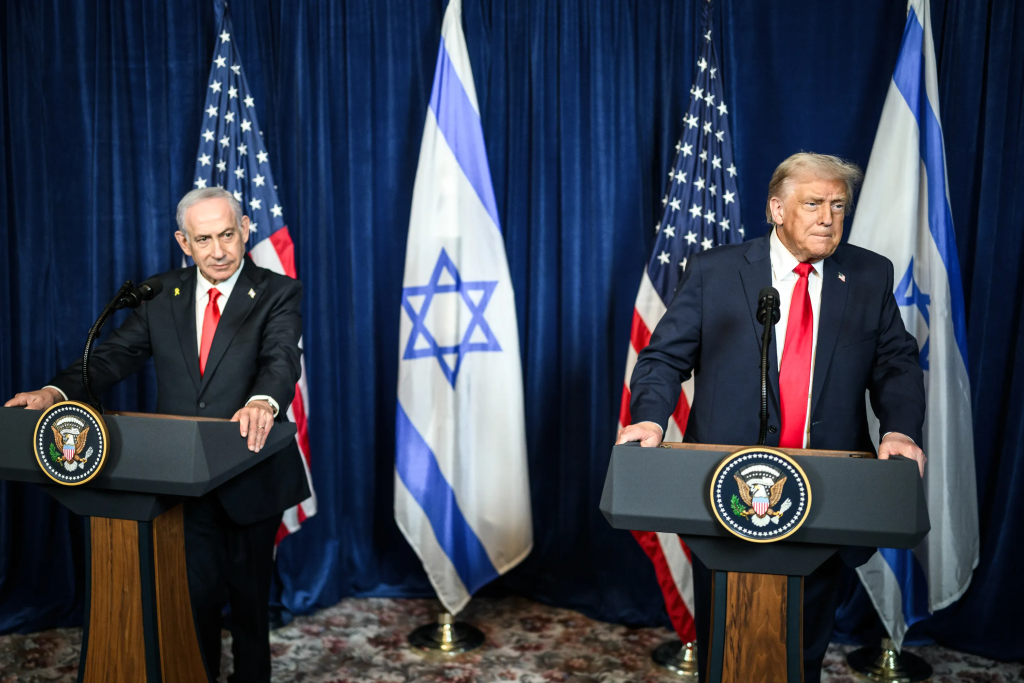
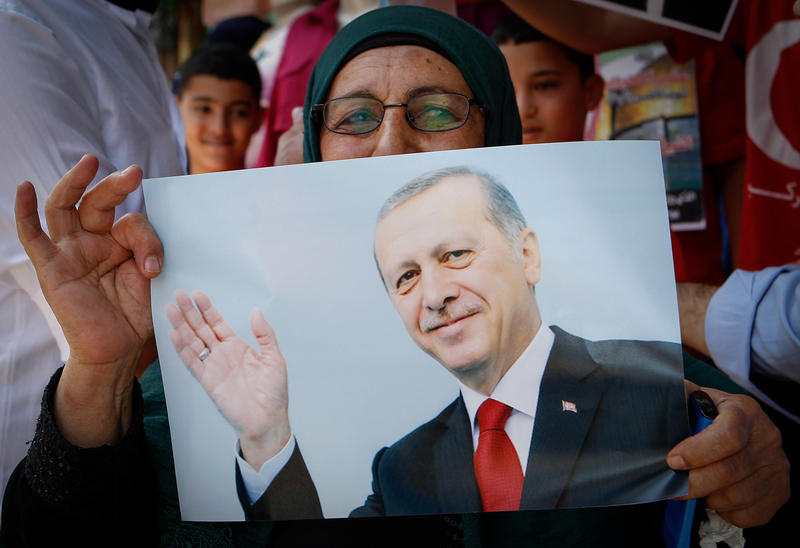
- Turkey, unlike Iran and Russia, is a member of NATO and a US ally. The alliance with the US is longstanding and structural, but in the Trump era it is personal too. Erdogan, Turkey’s autocratic ruler with a history of antisemitic pronouncements and a pronounced hostility to Israel, is very close to Trump and has successfully leveraged his influence on White House decision making at multiple junctions, often to Israel’s disadvantage.
- The Iranian presence in Syria was an obvious and, in many ways, uncomplicated threat to Israel. The Islamic Republic was a sworn enemy of Israel and of the United States as well. Turkey and Israel are not enemies, and they share many common interests besides just close ties with Washington.
- Turkey under Erdogan has broad regional ambitions that concern Israel (and other states as well). But in Syria, it also has a clear set of interests that are more immediate and not connected just to long-term ambitions.
- It would like a stable regime in Damascus, and not a return to civil conflict and chaos. It wants to begin repatriating refugees from the Syrian civil war — and to use its ability to influence the refugee situation as a lever of power in its relations with western Europe.
- It would like to cooperate with Syria in curbing Kurdish political ambitions on both sides of the border.
- And it has an obvious financial interest in being the main contractor of any reconstruction of the Syrian military.
- Israel too has an interest in a stable Syria governed under a strong central government, rather than a return to civil conflict and jihadist encroachment. But Israel would prefer that any reconstruction of Syria’s military capability be limited and not an open door for competing regional powers to entrench themselves on Israel’s northern borders.
- Israel is particularly interested to keep out of Syria new radar and anti-aircraft facilities that would close the air bridge that has been crucial to its operations in Iran over the last two years.
- And Israel has also made a moral and material commitment to Syria’s Druze and Kurdish minorities that it cannot afford to betray.
Looking ahead: The direct talks between Syria and Israel come on a background of discreet American efforts to create a deconfliction mechanism that would bring Turkey into the picture as well. It is not yet known if any formal agreement has been reached for a such a three-way mechanism involving Israel, Syria, and Turkey, and if so, what its content will be.
- Syria, for its part, has indicated that it sees the talks as a part of its larger effort to reach a fuller security understanding with Israel that would see Israeli forces withdraw to the disengagement lines in place from 1974.
- Foreign Minister al-Shaibani gave an interview to Reuters on Saturday, the day before his meeting in Jordan with the head of the Mossad, where he said that he anticipated that talks with Israel, suspended since the beginning of the war with Iran in February, would recommence soon.