LATEST

Syria

Key background
  • Following Israel’s establishment in 1948, Syria – along with other hostile neighbours – immediately declared war. Since then, the two countries have been in a state of belligerent hostility.
  • In the lead up to the 1967 Six Day War – during which Israel captured the strategically located Golan Heights – Syria had fired mortars and attacked Israeli farmers in northern Israel. Six years later, Syria (along with Egypt in the south) launched a surprise attack in what became the Yom Kippur War. After several days of intense fighting, Israel ultimately regained positions won in 1967. In 1974, US diplomatic efforts established the armistice line that was monitored by UNDOF (UN Disengagement Observer Force).
  • For close to 50 years since 1974 this was Israel’s quietest frontier, and in 1981, the government asserted Israeli civil administration over the territory, effectively annexing it. In 2007 Israel destroyed a Syrian site aiming to produce nuclear weapons.
  • During the Syrian civil war, as Iran tried to militarily entrench itself in Syria, use the country as a smuggling route for advanced weapons for Hezbollah, and set up Iranian proxies on the Syrian Golan, Israel launched its ‘Campaign between the wars’ to disrupt these activities.
  • In March 2019, the Trump administration reversed decades of US policy by formally recognizing Israel’s annexation of the Golan Heights.
  • Since the fall of the Assad regime in December 2024, Israel has taken over positions in the former UN controlled demilitarised zone, including the strategic high point on Mount Hermon. Israel has also vowed to protect the Druze of southern Syria.
The Israeli border with Syria, as seen from the Golan Heights
The Israeli border with Syria, as seen from the Golan Heights. July 03, 2025. Photo by Oren Cohen/FLASH90

Updated July 16, 2025

Israel intervenes to protect Druze in southern Syria

What’s happened: More than two hundred people were killed over the last four days in sectarian violence in As-Suwayda, a province of Syria in the country’s southwest with a Druze majority.

  • Militias affiliated with the new regime in Damascus attacked members of the Druze community in the city of As-Suwayda. As the violence spread, Israeli aircraft attacked regime targets, including tanks and APC’s of the Syrian army, before the latter pulled out of Suwayda and declared a ceasefire.
  • Fighting in As-Suwayda erupted on Sunday following an incident where members of a Bedouin tribe attacked and robbed a Druze man on the province’s main highway.
  • In the two days after the incident, Druze and jihadist Sunni militias clashed with at least 135 people reported killed. Syrian military forces entered the region. Publicly, it was claimed that the force was there to quell sectarian violence, but it was widely assumed on all sides that the actions were at least partly coordinated with the Sunni militias attacking the Druze.
  • As the violence spread yesterday during the day, images of massacres and mutilations of Druze civilians were rapidly spread on social media in Syria and in Israel, where members of the Druze minority quickly mobilised demonstrations and pressured the Government to act immediately to protect their co-religionists across the border.
  • The Israeli operation targeted Syrian tanks moving south from Damascus, as well as other Syrian Army vehicles and a Syrian airfield in southwestern Syria.
  • Prime Minister Netanyahu and Defence Minister Katz issued a joint statement pledging to maintain Israel’s policy of “demilitarisation” in southern Syria and to protect the Druze. “Israel is committed to preventing harm being inflicted on the Druze in Syria, owing to the deep covenant of blood with our Druze citizens in Israel and their historical and familial link to the Druze in Syria. We are acting to prevent the Syrian regime from harming them, and to ensure the demilitarisation of the region adjacent to our border with Syria.”

Context: Since the collapse of the Assad regime, Israel has sought to enforce a de facto demilitarised zone in As-Suwayda, both to protect the Druze minority and to prevent hostile forces from approaching Israel’s border.

  • As recently as last week, Israel and the new Syrian regime seemed poised to reach some kind of diplomatic agreement, with reports circulating of talks held between the two sides in Azerbaijan. Israel faces a delicate balancing act in Syria between its commitments to the Druze and Kurdish minorities, its interest in preventing Syria from falling under the influence of a hostile regional power, and its need to keep a quiet border at a time when its military capacities and attention are focused on Gaza, Lebanon, Yemen, and Iran.
  • An unnamed senior Israeli official was quoted in Yediot Ahronot as saying of Syrian’s new leader Ahmed al-Sharaa: “We want to keep him on the right side and prevent other actors, such as Turkey, from filling the vacuum. He’s taking steps toward an arrangement, while seeking every way to survive. It’s our job, however, to remember that he is a jihadist. There will always be assassination attempts against him, and he doesn’t control all of Syria yet. For these reasons, negotiations with him will proceed slowly and cautiously.”
  • Meanwhile, the US Ambassador to Israel Mike Huckabee issued a strongly worded statement condemning the killing of a Palestinian-American in a clash on Friday with Israeli settlers in the West Bank. 20-year-old Sayfollah Musallet from Florida was visiting his family when he was killed on Friday. Huckabee, a strong supporter of the settler movement and advocate of Israeli annexation of the West Bank, wrote in his statement that “there must be accountability for this criminal and terrorist act.”

Looking ahead: Defence Minister Katz reiterated this morning Israel’s commitment to the Druze of southern Syria, and explicitly threatened to use force if regime forces did not clear the area.

  • In a statement his office released earlier today, he said, “The Syrian regime must leave the Druze in As-Suwayda alone and withdraw its forces. As we have made clear and warned—Israel will not abandon the Druze in Syria and will enforce the disarmament policy we have decided upon. The IDF will continue to attack regime forces until their withdrawal from the area – and will soon raise the level of responses against the regime if the message is not understood.”
  • Speculation is also rife that the ultra-Orthodox Shas party will also leave the governing coalition, following on the heels of the departure of United Torah Judaism.
  • This would leave Netanyahu’s coalition with a minority government. This alone would not necessarily topple the Government or force early elections, especially as Parliament is about to recess. If the Government does fall when the Knesset reconvenes in October, that would most likely lead to elections sometime in early 2026, only a few months earlier than the latest possible date in October 2026.

July 10, 2025

The Knesset receives optimistic message from Syria

Abdulaziz Al-Khamis, Saudi Journalist and Political Analyst in the Knesset
Abdulaziz Al-Khamis, Saudi Journalist and Political Analyst attends the lobby for promoting a regional security arrangements at the Knesset, the Israeli parliament in Jerusalem, July 9, 2025. Photo by Yonatan Sindel/Flash90 *** Local Caption *** עבד אל-עזיז אל-ח׳מיס סעודי עיתונאי השקת השדולה קידום הסדר ביטחוני אזורי כנסת ישראל לובי

What’s happened: On Wednesday, July 9, a conference in the Israeli parliament hosted a Syrian businessman and political activist.

  • The activist, Shadi Martini, reported that he met with Syrian President Al-Sharaa two weeks prior and had a long conversation about Israel. Al-Sharaa told him that, “Opportunities like these in the Middle East come once in a century, but the window won’t always be open. Let us take advantage of this window, not miss it, because I want Israeli, Syrian, Saudi, Palestinian and Jordanian children to grow up with hope.” 
  • Another attendee to the Knesset event was a Saudi journalist Abdulaziz Alkhamis, based in the UAE. He said that, “From Riyadh to Abu Dhabi, the message isn’t who won the war, but what comes next. The Gulf is war-weary. There’s a hunger for stability and partnership. We’re asking if Israel can move from an era of force to an era of partnership, and to use its military deterrence, which it definitely has, for diplomatic success. Please turn the advantages of the Iron Dome into a bridge of hope.”

July 8, 2025

Netanyahu and Trump coordinate future moves

President Trump and Prime Minister Netanyahu
President Trump and Prime Minister Netanyahu. Photo credit: The White House / X

What’s happened: Prime Minister Netanyahu arrived in Washington and had dinner with President Trump in an event that was not open to media.

  • Before the meeting, Trump announced that talks on a new nuclear deal with Iran were scheduled and he once more pledged to do everything to ensure Iran would not acquire nuclear weapons. “We have scheduled Iran talks,” he said, “and they want to talk. They took a big drubbing, I think, when we hit the three sites, really, I would say the three sites, not just the one. The one was a big one.”
  • Israeli officials in Washington briefing journalists claimed that talks in Doha on a new hostage deal were reaching a conclusion. One much quoted anonymous source said that the deal was “80 to 90 percent agreed on.” In other places, the quote, attributed to a senior official briefing reporters on the flight to Washington, was that Israel had achieved “80 to 90 percent” of its goals in the negations in Doha. 
  • Kan News’ diplomatic correspondent Suleiman Maswadeh reported from Washington that according to Israeli sources there it was possible that an agreement would not be signed this week but rather next. Maswadeh further reported that the delays last week were caused by Hamas rejecting the Witkoff framework, and that Hamas categorically rejected the conditions that might have led to an immediate release of all hostages, rather than the emerging framework for a partial release during the ceasefire.

Gaza: Five IDF soldiers were killed and fourteen others injured yesterday in an incident in Beit Hanoun, in the northern Gaza Strip.

  • All five served in the Netzah Yehuda Battalion of the Kfir Brigade. They were identified as Staff Sergeant Meir Shimon Amar, 20, from Jerusalem; Sergeant Moshe Nissim Frech, 20, from Jerusalem; Sergeant First Class (res.) Benyamin Asulin, 28, from Haifa; Staff Sergeant Noam Aharon Musgadian, 20, from Jerusalem; and Staff Sergeant Moshe Shmuel Noll, 21, from Beit Shemesh. 
  • 37 soldiers have been killed since the end of the ceasefire in March this year. 888 IDF soldiers have been killed in total since the war began on October 7, 2023.
  • The deadly incident in Beit Hanoun occurred roughly one kilometre from the border fence in an area that has been in full control of the IDF since the ground operation began in late October 2023 — including during the two ceasefires. Army Radio reports that it is still unclear how a terrorist squad was able to operate in the area, to plant at least four explosive devices that were remotely detonated.
  • In Khan Yunis in the southern Gaza Strip, IDF Chief of General Staff Eyal Zamir met with troops and reiterated his commitment to the war’s two principal objectives, defeating Hamas and liberating the hostages. “Alongside Iran, the central theatre is in Gaza. We are determined and we will lead here to victory… All roads lead to one place: hostages and victory.”

Context: The talks in Washington are focused on the hostage deal, the anticipated nuclear talks with Iran and wider regional moves towards normalisation between Israel and Sunni Arab states.

  • Talks in Doha dealt not just with the proposed 60-day ceasefire and partial hostage release, but with some general terms regarding the end of the war that would be negotiated during the ceasefire. Leaks to Israeli media suggest that the Israeli Government still rejects a role for the Palestinian Authority in the Strip after the war. “There will be another force in the Strip that will include Palestinians, for sure, but not the PA,” according to the senior Israeli official briefing reporters on the flight to Washington.
  • Israel Hayom claims that Prime Minister Netanyahu rejected proposals from Washington that would have included a rhetorical commitment to a Palestinian state as a way of securing a peace agreement with Saudi Arabia. According to the report, the Prime Minister’s position remains that Palestinian statehood “was permanently removed from the table in the wake of the October 7 massacre.”
  • The US lifted sanctions against Hayat Tahrir al-Sham, the organisation that was led by Syrian President Ahmed al-Sharaa until he seized power in the country. As of June 23, the organisation is no longer designated as a Foreign Terrorist Organisation by the US State Department.
  • On a visit to Damascus on Saturday, the Foreign Secretary, David Lammy, also announced that the UK would be resuming diplomatic ties with Syria. Despite this, Hayat Tahrir al-Sham remains a proscribed organisation.
  • American mediated talks seek to reach an agreement between Israel and Syria. US officials are reported to believe that an agreement with Syria will soften Netanyahu’s position on Gaza and allow him to make concessions during the negotiations to end the war during the ceasefire he might otherwise have struggled to push through politically.
  • Lebanon, too, is looking to reach an agreement with Israel. Lebanese Prime Minister Nawaf Salam announced that he seeks a security arrangement with Israel which would see the latter fully withdraw from Lebanese territory and commit Lebanon to disarming Hezbollah. 
  • Besides the regional peace initiatives, another goal of the Prime Minister’s visit in Washington is to secure US commitments on Israel’s interests in Iran. Specifically, the Prime Minister reportedly wants US support for a future attack on Iran should the Islamic regime either move its stockpile of highly enriched uranium or rebuild the core facilities damaged by Israeli and US air strikes in June, including not just those related to its nuclear programme but also its missile production sites. 
  • Additionally, Israeli officials seek a US commitment to demand zero enrichment on Iranian soil as a condition for any future nuclear agreement, a position the Trump administration was deliberately ambiguous about in the earlier negotiations conducted in the spring of this year.

Looking ahead: Defence Minister Yisrael Katz has asked the IDF to prepare a “humanitarian city” to be built on the ruins of Rafah in the southern Gaza Strip  

  • A key indicator of progress in the hostage talks will be when US envoy Witkoff joins the talks in Doha.
  • Netanyahu will remain in Washington for at least two more day: Later today, he will meet  Vice President JD Vance and Speaker of the House of Representatives Mike Johnson. Tomorrow, he is scheduled to meet with Secretary of Defence Pete Hegseth and on Thursday with leaders of the Jewish community. Sources in the prime minister’s entourage said there is no intention of extending the visit to the US into the weekend this time.

July 2, 2025

Israel accepts Trump’s ceasefire conditions

People walking next to pictures of Israelis held hostage by Hamas
People walking next to pictures of Israelis held hostage by Hamas terrorists in Gaza, in Jerusalem, July 2, 2025. Photo by Yonatan Sindel/Flash90 *** Local Caption *** חטופים תמונות חמאס חרבות ברזל מלחמה תמונות לוח

What’s happened: President Trump announced that Israel had accepted his “necessary conditions” for a new 60-day ceasefire deal.

  • His announcement credited the efforts of both Qatar and Egypt in reaching the conditions for an agreement. Disagreements remain regarding the types of guarantees the US would offer to ensure that the ceasefire really does lead to an end of the war, as Hamas insists, and the general contours of both sides’ positions regarding the future governance of Gaza.
  • According to Trump, the US would “work with all parties to end the War” during the proposed ceasefire period. “I hope… that Hamas takes this Deal, because it will not get better — IT WILL ONLY GET WORSE,” Trump wrote.
  • Reports indicated that Hamas had softened its position somewhat on both issues in recent days. Hamas is also making demands regarding the distribution international aid. The newly launched US-backed aid mechanism known as the Gaza Humanitarian Foundation is widely seen as a threat to Hamas’ internal power base in Gaza. 
  • Hamas currently holds at least twenty living Israeli hostages abducted in the October 7 attack. Twenty-eight hostages abducted that day are believed to be dead, and there are grave concerns for the well being of two more. Additionally, Hamas holds the remains of one soldier killed in 2014. 
  • Two incidents of settler violence in the Binyamin region of the West Bank have unsettled the political arena in Israel. 
  • On Friday night, radical settlers attacked reservist IDF soldiers who were trying to evacuate an illegal outpost set up on private Palestinian land. Settlers pelted soldiers with rocks, vandalised military vehicles, and reportedly used their own cars to ram military vehicles. 
  • On Sunday, a sensitive IDF facility was damaged by arsonists. Following both incidents, the IDF removed five illegal settler outposts. Prime Minister Netanyahu said of the incidents, “No civilised country can tolerate anarchistic violence such as setting fire to a military installation, damaging IDF property and attacks on security personnel by citizens of the country.”
  • The IDF announced this morning that it had detained an Iranian terrorist cell operating in southwest Syria. Four Syria citizens were arrested in an operation in two Bedouin villages south of Quneitra. 
  • Houthi rebels in Yemen fired a missile at central Israel yesterday. It was intercepted en route. Both Israeli and American officials made heated public threats to respond in Yemen using means employed against Iran in the recent war, though so far no retaliatory operation to this missile has been mounted.
  • Gadi Eisenkot resigned his seat in Parliament and officially left Benny Gantz’s National Unity Party. At least two other MK’s are expected to follow him in leaving the party. Speculation is rife that they will be joining a new party to be headed by former Prime Minister Naftali Bennett.

Context: Steps toward a new ceasefire occur on a backdrop of fundamental disagreement in the Israeli defence establishment regarding the goals of the war and their feasibility.

  • IDF Chief of General Staff Eyal Zamir has been reportedly pressing the Government to seize the moment and reach a deal to rescue the remaining living hostages. “Hamas is a dead organisation,” he was quoted as saying on Channel 12 News. “We saw in the war against Iran that they did nothing. They fired a single rocket. The hostages are the most important thing at the moment.”
  • Far-right ministers Smotrich and Ben-Gvir strongly disagreed, with the former quoted by Channel 13 News as charging Zamir with “giving up on victory and on winning the war.” Prime Minister Netanyahu, too, made his objections known to any arrangement which would end the war and leave Hamas in power.
  • At his upcoming meeting with Trump in Washington next week, Prime Minister Netanyahu is also expected to ask the US for guarantees to ensure it can continue to operate against Iranian nuclear facilities in the event Iran tries to restart its nuclear programme, badly damaged in the recent Twelve Day War.
  • Both Trump and Netanyahu are keen to leverage both the war in Iran and any possible ceasefire in Gaza to achieve other regional agreements, with particular emphasis on Syria and Saudi Arabia. 
  • Saudi interest in a normalisation deal with Israel has cooled of late, despite heightened interest in such a deal in both Jerusalem and Washington. A weakened Iran, the result of a successful Israeli aerial campaign in June, means that the Saudi need for a closer relationship with Israel or the US is not as acute as it once was, and the Saudi demand for a clear path to Palestinian statehood as a condition for any diplomatic engagement may be hard to meet in the initial ceasefire agreement — if there is even one. 
  • In the meantime, efforts are afoot to bring Syria into some kind of normalisation agreement with Israel, or barring that, a more limited belligerence pact. Following the collapse of the Assad regime last December, Israel conducted a massive aerial campaign to destroy the Syrian Air Force and Navy, and the IDF took up positions in southwestern Syria. The IDF occasionally took offensive action in the ensuing months, particularly to protect Syria’s Druze minority. Since May, however, the IDF has refrained from any offensive military action, and the Syrians have reportedly been pursuing peace talks with Israel through European and American mediators.
  • Reports in Arab media indicate that the Syrians are not interested in a comprehensive peace deal, but rather an accord which would formally end the conflict between the two states. The Syrians have not demanded an Israeli withdrawal from the Golan Heights, but have requested that any deal involve an Israeli withdrawal from the buffer zone occupied by Israel since 2024. According to other Arab media reports, pro-Turkish elements in the new Syrian government are worried that any kind of peace deal with Israel would enhance Israeli and Saudi influence in Syria at the expense of Turkey.

Looking ahead: Netanyahu will fly to Washington next week to meet the President and Congressional leaders, as well as Secretary of State Rubio, Secretary of Defence Hesgeth, and other senior officials.

  • In cabinet he told ministers that the meetings “come in the wake of the great victory that we achieved in Operation Rising Lion. Taking advantage of the success is no less an important part of achieving the success.” He also added, regarding the recent war with Iran, “I must also say something about the opposition, which during the great challenge, lined up, almost all of them. This is important and I hope that it will be preserved as a compass for the future.”
  • The contentious appointment of a new Shin Bet Director remains unresolved. Yesterday, the Supreme Court declined to rule on the matter, and instead granted more time for the Cabinet Secretary and the Attorney General to iron out a compromise. If they cannot, the Court will be forced to issue a formal ruling.

June 30, 2025

Speculation and pressure to secure hostage deal

People protest calling for the release of hostages
People protest calling for the release of hostages held in the Gaza Strip, outside the Prime Minister's residence in Jerusalem, June 28, 2025. Photo by Yonatan Sindel/Flash90 *** Local Caption *** בית ראש הממשלה משפחות חטופים מלחמה חרבות ברזל

What’s happened: On Sunday, Prime Minister Netanyahu alluded to the latest diplomatic moves being discussed behind the scenes.  

  • Netanyahu suggested, “that many opportunities have now opened in the wake of this victory. adding, “first of all, to extricate the hostages. Obviously, we are going to have to solve the Gaza issue as well, to defeat Hamas, but I expect that we will accomplish both missions.”
  • In an interview on Fox News President Trump said that other countries had recently reached out to him and had asked to join the Abraham Accords. “We have some really great countries in there right now, and I think we’re going to start loading them up, because Iran was the primary problem.”   
  • Last night the forum of security ministers met to discuss the war in Gaza. The meeting ended without any decision having been made.
  • Whilst in Gaza, British-Israeli soldier Sgt. Yisrael Natan Rosenfeld, was killed yesterday by a improvised explosive device (IED) in the northern Gaza Strip. He is 880th IDF soldier to fall since October 2023. 
  • On Sunday the IDF confirmed that Hakham Muhammad Issa Al-Issa, a senior Hamas military wing official, considered one of the architects of the October 7 massacre, had been eliminated. Issa had played a key role in military training and weapons production.

Context: There is renewed hope that, now the war with Iran is over, the government can prioritise securing the release of the 50 hostages, 20 of whom are thought to be alive, who have now been held for 633 days.

  • Commentators have noted that, in his comments last night, Netanyahu for the first time cited the release of the hostages as the primary objective, rather than the defeat of Hamas.
  • The change in Netanyahu’s language could also be a result of the position taken by Chief of Staff Zamir, who said that the IDF is close to achieving the objectives it was given in Gaza.
  • It is understood, the IDF are close to controlling 75 per cent of the Gaza Strip and can’t move much further without risking the hostages. Whist by remaining static they are susceptible to continued Hamas attacks.       
  • Netanyahu’s comments followed the optimistic posts by President Trump and his talk about a possible ceasefire and further diplomatic developments. 
  • As well as ongoing speculation around Saudi Arabia there are suggestions that Syria would be open to normalisation with Israel.
  • According to the latest reports in Arab media, Syria is demanding Israeli recognition of Ahmed al-Sharaa’s regime, a withdrawal from the buffer zone and the territories that Israel took over in southern Syria, and diplomatic arrangements in southern Syria. 
  • At the same time, sources from diplomatic circles indicate that Syria is prepared to recognise Israeli sovereignty over the Golan Heights.
  • Over the weekend a Syrian official said they would not rule out the possibility of a meeting between President al-Sharaa and Prime Minister Netanyahu on the sidelines of the UN General Assembly in New York in September.
  • Despite ongoing talks via Egyptian and Qatari mediators no breakthrough has been achieved yet. Hamas still refuses to agree to a partial deal without unequivocal guarantees about the war’s end.
  • Israel has accepted the US proposed Witkoff deal, but so far Netanyahu, has refused to agree to end the war completely, without Hamas disarming and removal from power. 
  • The Hamas leadership remains in disarray, now compounded by Iran’s defeat — an event with direct implications for both Hamas and Palestinian Islamic Jihad, which were part of the Iranian proxy network and benefited from its technical, military, and financial support.
  • In parallel, the government has approved the return of residents from eight more communities who were displaced after being attacked by Hamas on October 7, allowing them to return to their homes near the Gaza border. This is another indication that the security threat posed by Hamas has diminished.
  • Despite the presence of hard-right ministers opposed to ending the war with Hamas, their influence appears to be waning, as the latest polling suggests that many prospective Ben Gvir voters have defected to Likud, while Smotrich continues to poll below the electoral threshold.

Looking ahead: Strategic Affairs Minister Dermer will arrive in Washington today, where he is expected to meet senior White House officials to discuss ending the war in Gaza and the possible expansion of the Abraham Accords.

  • The security cabinet are expected to reconvene later today.
  • There is speculation that if successful, Netanyahu will travel to Washington in two weeks’ time.   
  • After his court appearances this week were cancelled, further delays are expected, particularly if he does travel to Washington. After that the court is scheduled to break for its summer recess.

June 5, 2025

Rocket fire from Syria amid nuclear tensions with Iran

Tourists enjoy a scenic view of Syria from the top of Mount Bental, Golan Heights on May 28, 2025.
Hundreds of high school pupils and tourists enjoy a scenic view of Syria from the top of Mount Bental, which was closed to the public due to the war, Golan Heights on May 28, 2025. Photo by Michael Giladi/Flash90 *** Local Caption *** הר בנטל סוריה

What’s happened: As nuclear negotiations between the US and Iran continue, tensions between Jerusalem and Damascus have risen after two projectiles were fired from Syria. 

  • Two rockets were launched yesterday which landed in the Golan Heights. These are the first rockets to be fired from Syria in over a year, and did not cause any damage or casualties.
  • The attack was claimed by two new and previously unrecognised groups: the “Islamic Resistance Front”, and “Mohammed Deif Brigade”. Neither group’s claim has been verified, but in a recording released by the Lebanese pro-Hezbollah Mayadeen outlet, a Mohammed Deif Brigade spokesman said that the fire was in response to “Israel’s massacres in Palestine, Israel’s daily attacks in Syria, and the wave of normalization between the current Syrian regime and Israel”.
  • Defence Minister Katz responded by saying that Israel viewed “the Syrian president directly responsible for every threat and [rocket] fire toward the State of Israel”, a “full response” would follow soon, and that Israel “will not allow a return to a pre-October 7 reality”.
  • In a statement of its own, the IDF said that “The Syrian regime is responsible for what is happening in Syria and will continue to bear the consequences as long as hostile activity continues from its territory”.
  • Israel’s response was artillery fire at the site where the rockets were fired from, and a series of air strikes destroying weapons it says belonged to the regime in southern Syria. The Syrian Observatory for Human Rights subsequently reporting explosions in Quneitra and Deraa “following Israeli aerial strikes”.
  • Syria responded to the rocket attack and Israeli retaliation strike by insisting that it would “never be a threat” to anyone in the region.
  • Earlier this week, President al-Sharaa gave an unprecedented interview to the US-based Jewish Journal where he indicated his openness to positively engage with Israel, stated that the two countries “have common enemies”, and expressed a desire to use the 1974 Disengagement Agreement with Israel as a framework for future engagement.
  • Yesterday, America’s Ambassador to Turkey who also serves as its Syria Envoy, was sent to Israel for talks with Prime Minister Netanyahu, which are likely to focus on de-escalating the current security situation.
  • In other news, negotiations between the US and Iran are continuing, but appear decreasingly likely to succeed.
  • In his first direct comments on Witkoff’s proposals, Iranian Supreme Leader Ali Khamenei said that the framework “contradicts our nation’s belief in self-reliance” and runs counter to its energy independence ambitions.
  • In a speech, Khamenei said the proposal “contradicts our principle of power by 100%” and vowed that Iran would not agree to stop enriching uranium on its own soil, calling it “a key tool in the nuclear program.” He added that “The rude and arrogant leaders of America repeatedly demand that we should not have a nuclear programme. Who are you to decide whether Iran should have enrichment?”
  • Following the speech, Iran’s foreign minister, Seyed Abbas Araghchi, emphasised the Islamic Republic’s position, writing “no enrichment, no deal.”
  • Meanwhile, ABC quoted an unnamed Iranian official who that the US’ proposed terms are “unreasonable, greedy and unconventional.”
  • Yesterday, after speaking to Russia’s President Putin, Trump signalled Russia could be involved, and that Iran was ‘slowwalking’ its decision on enrichment. “President Putin suggested that he will participate in the discussions with Iran and that he could, perhaps, be helpful in getting this brought to a rapid conclusion,” Trump wrote on Truth Social. “It is my opinion that Iran has been slowwalking their decision on this very important matter, and we will need a definitive answer in a very short period of time!”
  • On Monday, Trump wrote on Truth Social “Under our potential Agreement — WE WILL NOT ALLOW ANY ENRICHMENT OF URANIUM!” 

Context – Syria: Since the toppling of the Baathist regime in December 2024, the new government under Ahmed al-Sharaa’s leadership has gone to significant lengths to impress its non-threatening posture on the international community, including Israel.

  • President al-Sharaa has directly referred to Israel by name on a consistent basis since taking office, and it is understood that Israel and Syria are now engaging in direct negotiations intended to deconflict the border region around the Golan Heights. This follows indirect negotiations brokered by Turkey and Azerbaijan.
  • Sharaa’s interview marks a major development in Israeli-Syrian relations where up until now, pre-1967 borders were viewed as the starting point for any potential peace negotiations.

Context – Iran: At the crux of the disagreement between the sides is the issue of Iran abandoning its nuclear enrichment, which Khamenei sees a red line. While Iran is said to be open to uranium being enriched by a consortium operating within its own borders, it is unlikely to agree to this taking place abroad as per stipulations by the US.

  • Earlier this week, Saudi Arabia reportedly warned Iran that by failing to reach a nuclear deal, it risked Israeli strikes and causing further regional de-escalation.
  • The Financial Times reported that Iran is rebuilding its air defence systems that were destroyed in October 2024’s Israeli strikes in anticipation of further attacks, specifically targeting its nuclear site. Satellite imagery indicates that S-300 air defence systems have been redeployed to critical sites including nuclear enrichment facilities at Natanz and Fordo.
  • The official failure of talks would increases the chances of Israeli military action against Iranian nuclear sites.

Looking ahead: Mediators working to secure the release of hostages and a ceasefire in Gaza are “optimistic” that Hamas will update their proposal reflecting a somewhat softened stance.

  • Egyptian and Qatari mediators have continued to negotiate with Hamas, alongside US-Palestinian activist and businessman, Bishara Bahbah who acted as the main backchannel through which Edan Alexander’s release was secured last month.
  • Some outlets have raised the possibility that a breakthrough may occur just before the holiday of Eid begins at sunset tonight.

May 16, 2025

Israel and Syria in the post-Assad world

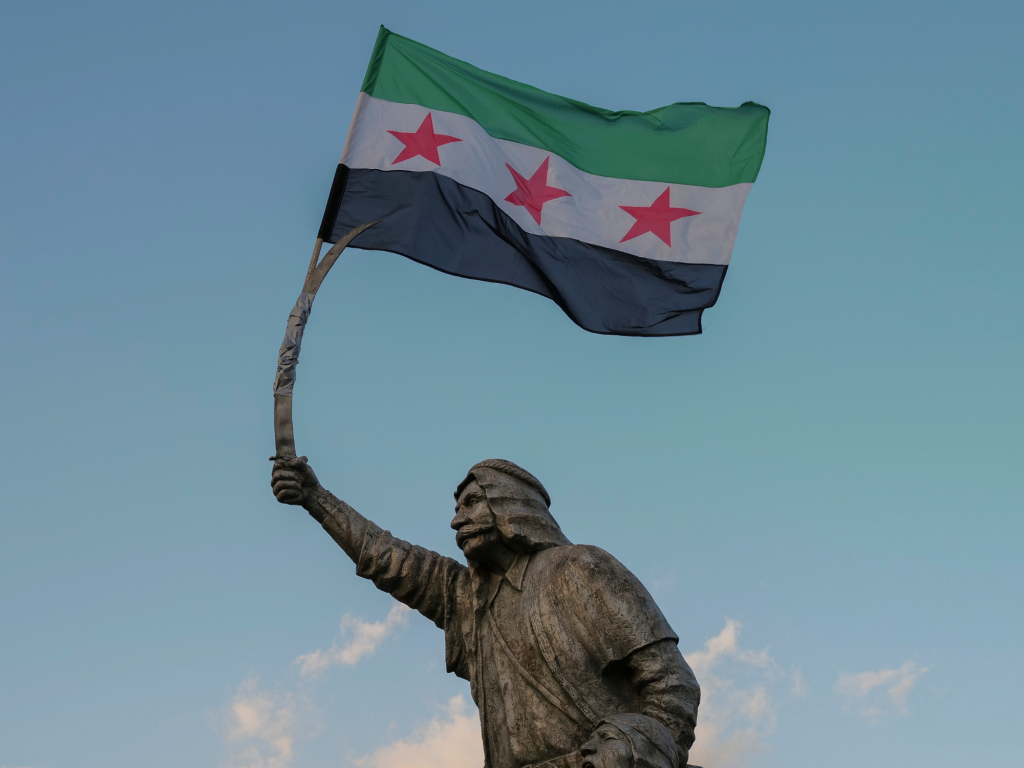
The Syrian opposition flag in Majdal Shams, in the Golan Heights, December 8, 2024.
The Syrian opposition flag in Majdal Shams, in the Golan Heights, December 8, 2024. Photo by Michael Giladi/Flash90

New BICOM research: Six months after the fall of the Assad regime, Israel faces a new and volatile reality on its border with Syria. BICOM’s latest paper explores the post-Assad landscape, from Israel’s posture to the emerging Druze alliance and the changing regional axes of power.

  1. In the six months since the Assad regime’s collapse, Israel has adopted a forward-leaning posture in Syria – militarily, politically, and diplomatically. Despite initial satisfaction at Assad’s removal, Israel has not welcomed his successor, Ahmed al-Sharaa, who previously led the jihadist Nusra Front and is viewed with deep suspicion in Israeli security circles.
  2. On the day the regime fell, the IDF moved decisively to take full control of the long-standing buffer zone once patrolled by UNDOF, along with several strategic sites just inside Syrian territory. This step was taken to ensure that southwestern Syria does not become, like southern Lebanon or post-Qaddafi Libya, a haven for hostile militias and jihadist operating under the cover of state collapse.
  3. After Assad’s fall, Syrian Druze began seeking Israeli protection following jihadist attacks and civil unrest. Cross-border Druze visits and religious pilgrimages have resumed, symbolising a growing informal alliance. Nevertheless, for Syrian Druze, overt alignment with Israel remains fraught with risk. Historical precedent from Lebanon offers cautionary lessons about the long-term viability of alliances with Israel for minority groups in the region.
  4. Israeli strategy is anchored in one central imperative: preventing the emergence of jihadist-controlled zones along its borders. Past experience with Hezbollah and Hamas has shown that it is easier to prevent the consolidation of such actors than to dislodge them once entrenched.
  5. Israel is also committed to protecting the Druze minority and, where possible, maintaining its longstanding alliance with the Kurds as well. This is a moral commitment that Israel needs for its own regional credibility, as well as a minimal condition of maintaining its rule in the Golan.
  6. The rise of al-Sharaa has opened the door for the Turkish-Qatari axis to expand directly into Syria. Trump’s overture, aligned with Qatari and Turkish interests, does not necessarily conflict with Israeli actions on the ground – in fact, it tacitly acknowledged and accepted Israel’s assertive military presence, including in the buffer zone and in support of the Druze.

May 8, 2025

Are Israel and Syria holding indirect talks?

Druze from Syria enter Israel
Druze from Syria enter Israel on the occasion of Nabi Shuaib's holiday, at Majdal Shams, April 25, 2025. Photo by Jamal Awad/Flash90 *** Local Caption *** דרוזים סוריה נכנסים ישראל חג נבי שועייב דרוזי גבול

Diplomatic speculation: During a visit to France, Syrian President Ahmed al-Sharaa (Mohammed Abu al-Jolani) confirmed that Syria was holding indirect negotiations with Israel. 

  • It followed a report by Reuters that the UAE has set up a backchannel for talks focused on security, intelligence matters and confidence-building between the two states.
  • Asked about that report during a press conference in Paris, Sharaa responded: “There are indirect negotiations taking place via mediators to calm the situation…We talk to all states that are in communication with the Israeli side to pressure them to stop interfering in Syria’s affairs and violating its airspace and striking some of its installations.”
  • An intelligence source said UAE security officials, Syrian intelligence officials and former Israeli intelligence officials were involved in the mechanism, among others. One source described the effort as focused on “technical matters,” and said there was no limit to what may eventually be discussed. A senior Syrian security source told Reuters that the UAE-based backchannel was limited strictly to security-related issues, focusing on several counterterrorism files.
  • Israel Hayom quotes Western diplomatic sources who believe that various channels of communication exist between the countries in the region. It quotes security expert saying, “It is very important to study the messages from Syria at this time of regime change,” adding “At this stage, no final decisions have been made about the response to these changes.” 
  • The backchannel with Israel was reportedly established a few days after Sharaa met with UAE President Sheikh Mohammed bin Zayed Al Nahyan last month.
  • UAE Assistant Foreign Minister for Political Affairs and Foreign Minister’s Envoy told Reuters that “the claim that the UAE is ‘mediating secret talks’ between Syria and Israel is categorically false, adding that the UAE is not part of any such talks.”

Protecting the Syrian Druze: Over the last week, reports from Druze communities in southern Syria described Syrian security forces making arrests, insulting Druze religious leaders, and harassing women. There were also reports of more than 10 people killed.      

  • As a result, hundreds Israeli Druze who have served in the IDF sent a letter to the prime minister and the defence minister demanding Israel support the Druze in Syria. The letter reads: “We expect you to keep your promise of solidarity, defence, and a halt to the massacre of our fellow Druze across the border. Hundreds of soldiers are ready to volunteer immediately to fight to save our brethren. We are brothers, Jews and Druze, in our country and outside its borders.” 
  • Prime Minister Netanyahu and Defence Minister Katz issued a joint statement saying, “We will not allow [Syrian] troops to deploy south of Damascus or pose any threat to the Druze community.” 
  • The IDF Spokesperson’s Office announced that military forces were ready in southern Syria to prevent hostile elements from entering the Druze towns. 
  • Earlier this week Coordinator of Government Activities in the Territories (COGAT) Maj. Gen. Ghassan Aliyan visited southern Syria and met with leaders of the Druze community to discuss their security-related and humanitarian difficulties. The Druze representatives at the meeting presented both a humanitarian crisis and security threat from radical Islamists. 
  • Israeli helicopters reportedly dropped equipment and supplies in Syria last week and evacuated injured Druze to hospitals in Israel.  

Context: Israel officials and analysts are still trying to determine the true nature of new Syrian regime.

  • The Syrian President’s visit to Paris (his first ever visit to a European country) and his meeting with President Macron mark an incredible turnaround for someone who spent most of his adult life as jihadist, affiliated with Al-Qaeda.  He also remains on the US list of wanted terrorists and has a 10 million dollar bounty on his head.
  • The Syrian motivation for diplomatic talks stems from the desire of the new regime to lift the sanctions on it and to repair the country’s international status. Syria likely wants international recognition as part of a process of normalisation with the West.   
  • Israel’s strategic interests in southern Syria include:
    • Keep jihadist forces away from its border. 
    • Protecting the Druze minority and, where possible, maintaining its longstanding alliance with the Kurds as well. This constitutes a moral commitment that Israel needs for its own regional credibility, as well as a minimal condition of maintaining its rule in the Golan. But much more than that, it is important for domestic Israeli politics. The Druze community has made an outsize contribution to Israeli security, in this war no less than in previous ones, and it constitutes a cohesive and focused pressure group that the Israeli leadership cannot just ignore, particularly on an issue that is now so salient for the community.
  • The Israeli Air Force strikes on Syrian territory last weekend were intended to destroy what remains of weapons systems left over from Assad’s army that could be used against Israel; and to send a message to Syria’s new ruler against continuing the murderous clashes that they started with the Druze. 
  • One of those strikes was 500 metres from the presidential palace in Damascus. 
  • Israel has no interest in continuously operating in Syrian territory. It appears that the IDF prefers to accumulate a bank of targets and attack them in one go when there is appropriate opportunity. 
  • The new Syrian regime has two main objections to the Druze:
    • Religious – for Sunni jihadists, the Druze are considered infidels 
    • Political – the Druze in Syria have a degree of autonomy in the area of Al-Suwayda and this poses a challenge to the new central government. This is a similar situation to the Kurds in the northeast and the Alawites in western Syria. 

Looking ahead: Israel is expected to maintain control of a security zone inside southern Syria adjacent to the Israeli border.

  • It is also expected to continue to provide humanitarian aid to Syrian Druze and explore the possibility of allowing a limited number to work inside Israel. 
  • The rhetoric from the new Syrian regime towards Israel has been surprisingly moderate, insisting it does not want any military entanglement with Israel. At the same time, Israel is concerned that due to the close relations between Jolani and Turkish President Erdogan, Turkey could increase its influence in the country, including in some military sensitive areas.

April 4, 2025

Israel strikes in Syria and Lebanon

Israel Air Force fighter jet F-15, at the Tel Nor airforce base. January 01, 2024. Photo by Moshe Shai/FLASH90 *** Local Caption *** îèåñ ÷øá F 15 çéì àåéø

On Wednesday evening, the IDF launched extensive airstrikes on targets in Hama and Damascus in Syria, which it later confirmed were “military capabilities” and “military infrastructure sites.”

  • Commenting on the strikes yesterday, Defence Minister  Israel Katz said “The air force’s activity yesterday near the airports in T4 [an airbase near Homs], Hama, and the Damascus area sends a clear message and serves as a warning for the future…I warn Syrian leader Jolani: If you allow hostile forces to enter Syria and threaten Israeli security interests, you will pay a heavy price.”
  • Turkey, which is widely viewed as the new Syrian government’s patron state responded by condemning the Israeli strikes, demanding Israel withdraw from the Syrian territory it occupies, and accused it of becoming “the greatest threat to regional security…[and a] strategic destabiliser, causing chaos and feeding terrorism.”
  • Israeli Foreign Minister, Gideon Saar, responded by saying that Turkey was playing a “negative role” in Syria, and that “they are doing their utmost to have Syria as a Turkish protectorate. It’s clear that is their intention”.
  • In southern Syia, the IDF says it eliminated several gunmen after coming under attack during an operation to confiscate weaponry and dismantle terrorist infrastructure in the village of Tasil, located eight miles north of the Israeli border.
  • This was the second shooting incident in the southern Syria security zone this week.
  • Overnight the Israeli Air Force struck once more in Lebanon, destroying targets associated with both Hezbollah and Hamas. Yesterday, the IDF said it “struck a Hezbollah terrorist who operated in the area of Aalma El Chaeb in southern Lebanon”. The IDF has also confirmed that the strike on the Lebanese city of Sidon, targeting Hassan Farhat, a local Hamas commander responsible for numerous attacks against Israel, one of which killed a soldier during a rocket strike on the city of Tzfat in February 2024.

March 11, 2025

Israel targets military assets in southern Syria

The Chief of the General Staff, LTG Eyal Zamir, visited the Area of Separation in Syria
The Chief of the General Staff, LTG Eyal Zamir, visited the Area of Separation in Syria on March 9, 2025. Photo credit: IDF Spokesperson’s Office

11/03/2025

What’s happened: Israeli Air Force jets conducted air strikes in southern Syria last night.

  • The IDF Spokesperson’s Office announced that the planes “struck radars and detection assets used for constructing aerial intelligence assessments in southern Syria.”
  • The IDF added that “command positions and military sites containing weapons and military equipment belonging to the Syrian Regime in southern Syria were [also] struck.”
  • According to Syrian reports, there were at least 41 airstrikes, making this the largest attack in the last two months.
  • On Sunday the new IDF Chief of Staff Lt. Gen. Zamir, visited troops inside Syria and conducted a situational assessment. He reviewed their deployment in the area of the northeastern Israeli  border and was briefed about the developments inside Syrian territory. Zamir was also presented with anticipated possible developments and the planned reactions.
  • Yesterday saw the new Syrian President announce an agreement with the commander of the Kurdish forces in Syria (SDF) to integrate the Kurds into Syrian institutions and the Syrian army.
  • This development followed the regime’s attacks against Alawites in western Syria over the weekend, with reports of hundreds of civilians killed.
  • The IDF has not changed its deployment in Syria, and does not intend to intervene in domestic Syrian affairs. 

Context: The attacks against the Alawites by regime supporters has sharpened Israeli concerns that they are dangerous recalcitrant Jihadis.

  • The current Israeli assessment is that the new regime, led by Ahmed Hussein al-Sharaa (also known as Abu Mohammad al-Julani) has not yet secured full control of Syria after seizing power, and is still facing numerous challenges.
  • Yesterday, Israeli Foreign Minister Saar related to the killings saying, “They were jihadists and remain jihadists, even if some of their leaders have donned suits.” He called for the international community to “come to its senses… it must raise its voice against the barbaric murder of civilians, against the pure evil of jihadists.”
  • In hindsight, there is further appreciation inside Israel for the significant strikes that Israel carried against the weapons of the former Assad regime that were estimated to have destroyed 80% the Syrian army’s main capabilities.
  • Those strikes in December 2024 were the largest military operation the IDF has ever undertaken, and one the IDF had not prepared in advance.
  • It was based on the logic that Syria possessed significant capabilities that could pose a threat were they to fall into irresponsible hands.
  • Three months later, these strikes yesterday attest to residual concern over four potential threats from Syria:
    • The new regime: although Israel may not be their current priority, once stabilised, they could pivot to attacking Israel, especially with their leader al-Sharaa having family roots in the Golan. Israeli leaders have been clear that they will not accept regime forces south of Damascus.      
    • The still possible fragmentation of Syria: and the role of ISIS affiliated Sunni Jihadis in southern Syria. Israel has already targeted armed men that approached the border area.  
    • Palestinian terror groups: including Hamas and Islamic Jihad – some of whom were released from prison after Assad fell – and who could still use Syria as a launchpad for attacks.
    • The role of Turkey: and their ambitions to set up military bases close to the Israeli border. 
  • Whilst all these threats are currently contained, Israel remains deployed in small but strategically significant positions inside southern Syria. Israel’s primary position is within the demilitarised zone established in the 1974 armistice agreement. This includes the strategic summit on Mount Hermon. Beyond that, Israel also has operational freedom of movement in what it calls a ‘security zone’, which includes some (mostly Druze) villages.  
  • Last month Prime Minister Netanyahu committed to defend the Druze of southern Syria.  

Looking ahead: Israeli leaders have said that they expect the IDF to remain in the buffer zone adjacent to the Israeli border for the foreseeable future.   

  • Israel is hoping that the US troops remain deployed in Eastern Syria, despite suggestions that Trump was to remove them.
  • Defence Minister Katz is exploring the possibility of granting Druze in southern Syria permits to work inside Israel. This could see Syrian Druze working in construction and agriculture in Druze towns on the Israeli controlled Golan.

Newsletter sign-up

Please enter your information below to subscribe to our daily newsletter and stay updated and informed.

Donate to BICOM

At BICOM, we rely on the generosity of people like you to keep our website and services running. Your donation, no matter the size, makes a real difference. Please consider supporting us today. For further information please email: [email protected]