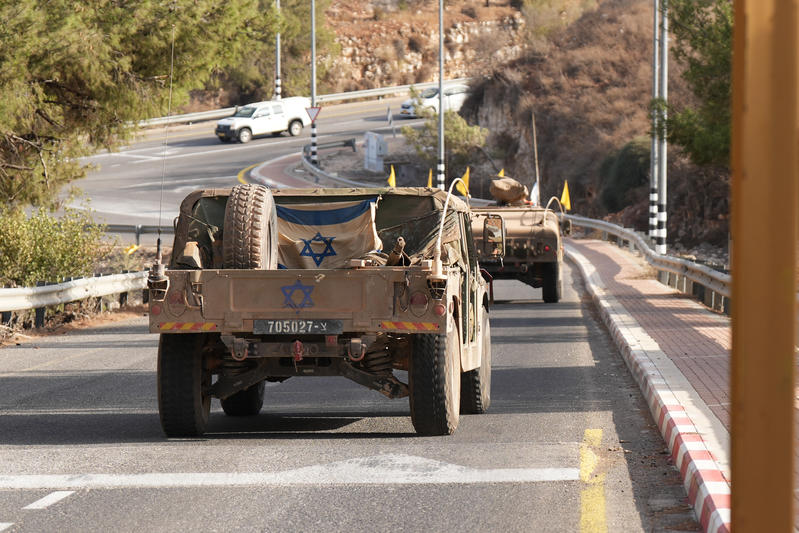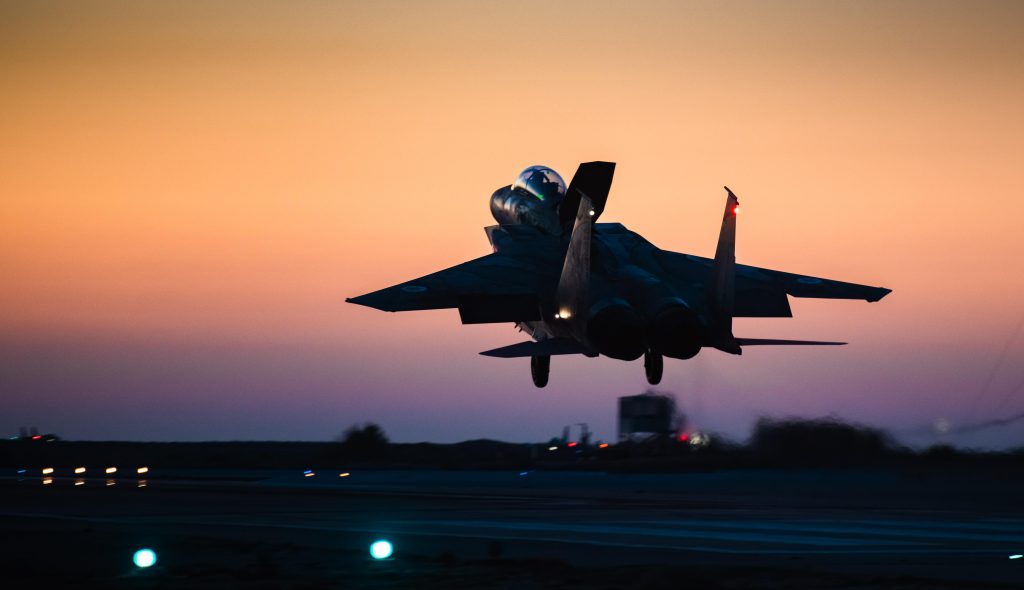
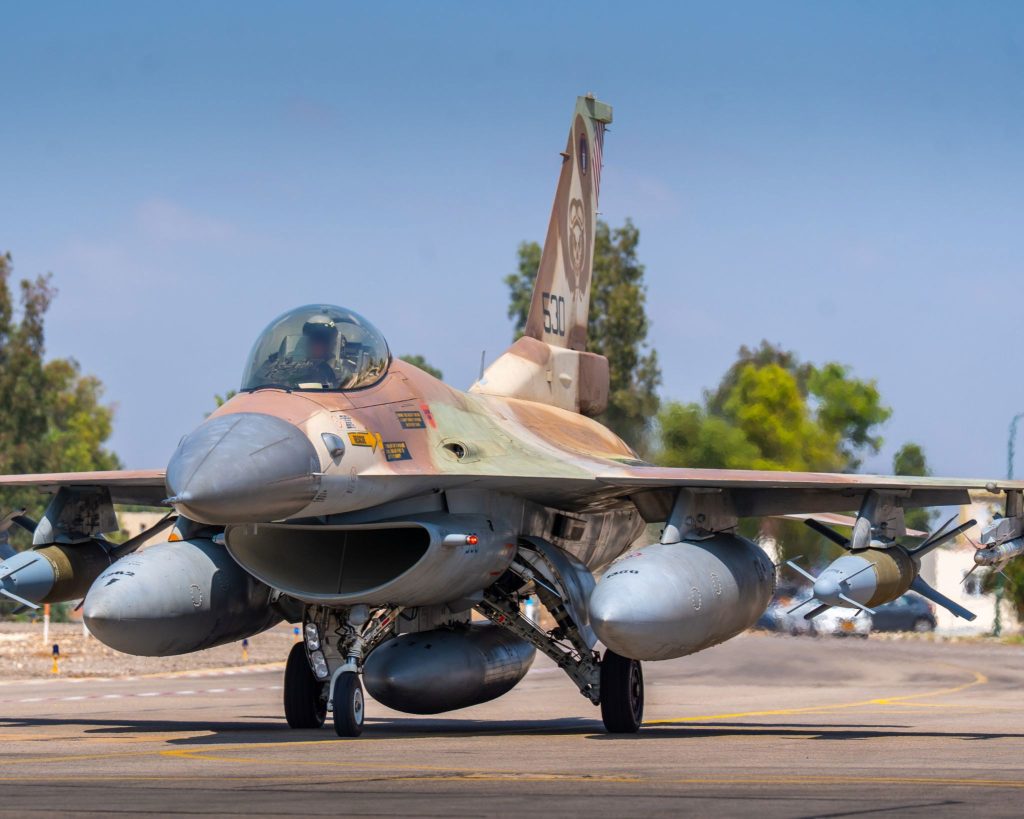
What’s happened: A series of IDF airstrikes in Lebanon in the past week have eliminated fifteen Hezbollah operatives.
- Most of the operations were conducted last Thursday and Saturday, and struck weapons storage and production facilities operated by Hezbollah in southern Lebanon.
- The IDF reported that it completed a series of strikes on Radwan Force’s infrastructure and weapon storage facilities. The IDF stressed that “the presence of terrorist infrastructure and the weapons storage facilities that were struck constituted a violation of the understandings between Israel and Lebanon, while endangering the civilians in the area.”
- On Saturday, the IDF struck in the area of Chebaa, eliminating two terrorists from the ‘Lebanese Resistance Brigades’ – which operates under the direction of Hezbollah – who were involved in smuggling weapons. Also on Saturday, the IDF killed a Hezbollah operative who was attempting to rehabilitate Hezbollah military infrastructure in the area of Baraashit. The IDF also struck Hezbollah terrorist infrastructure in the Beqaa area in southern Lebanon.
- On Monday, Lebanese media reported the presence of Israeli drones in Tyre and in the Dahiya district of Beirut, Hezbollah’s principal stronghold in the Lebanese capital region.
- Overnight Monday, the IDF conducted a raid in border town of Houla to destroy several buildings that were being used by Hezbollah.
- Meanwhile, in Gaza, the standoff over the one hundred or so Hamas fighters holed up in tunnels on the Israeli side of the Yellow Line continues. Israel has refrained from any offensive military action against the Hamas fighters in the tunnels for fear that such action would collapse the ceasefire entirely — with Israel taking the blame for the resumption of the war.
- Israel has indicated that it is open to allowing the fighters safe passage across the Yellow Line, but only if they first surrender their weapons. Israel is also demanding that Hamas release the last four deceased hostages still remaining in Gaza before any advancement is made to next stages of the ceasefire.
Context: A year on from the ceasefire in Lebanon, Israel has began ramping up its operations against Hezbollah. Israel’s government has also been increasingly vocal about Hezbollah violations of its ceasefire commitments and increasingly impatient with the pace of the disarmament the Lebanese government claims to be carrying out.
- Israel’s Channel 12 News reports that Israel has given Lebanon an ultimatum that it will broaden its operation unless the Lebanese Armed Forces (LAF) rapidly escalate their disarmament efforts, as stipulated in the ceasefire agreement.
- The LAF, for its part, claims it is operating under the five-stage plan it announced two months ago to achieve a “state monopoly on weapons.” The plan calls first for a three-month operation focused on the area of Lebanon south of the Litani River (and closest to the border with Israel) to be followed up by a more comprehensive effort in the rest of the country.
- According to CENTCOM, the LAF has successfully removed nearly 10,000 rockets, almost 400 missiles, and over 205,000 unexploded ordnance fragments during the past year. A report in Reuters even claims that the LAF was running low on explosives because it had used so much of its stock to destroy Hezbollah weapons.
- Israeli authorities are unimpressed with the LAF’s efforts. According to Israeli sources, the LAF avoids entering villages that are Hezbollah strongholds and refrains entirely from entering private homes where Hezbollah weapons are stored. The public face of the disarmament efforts is also a cause for concern. The LAF routinely publishes pictures of weapons confiscation operations it has carried out in Palestinian refugee camps, but avoids releasing photos of the operations it claims to be conducting directly against Hezbollah.
- Israel also believes that despite less financial support from Iran, Hezbollah is still in better shape than the LAF in terms of arms and equipment and that despite the decrease in volume of arms smuggling via Syria, the group has still been able to continue to smuggle small quantities of arms.
- Israel is keen not to repeat the experience of previous ceasefires in Lebanon which came into effect with vague international promises regarding disarmament that were never fulfilled. Enforcing the disarmament commitments in Lebanon is also important for the precedent it sets moving forward in postwar Gaza.
Looking ahead: Lebanon is due to hold parliamentary elections in May 2026.
- Lebanese political observers believe that Hezbollah calculates that if it can hold on to its weapons until the elections, it will be able to achieve a more favourable outcome for itself, and then leverage that into sabotaging whatever remains of the disarmament campaign.
- Israeli analysts also believe that Hezbollah will seek to take advantage of the scheduled visit of Pope Leo XIV at the end of this month to step up smuggling operations, with the assumption that Israel will be reluctant to conduct a large air or ground campaign just before or during the pontiff’s visit.
- Yediot Ahronot reports that the US is planning on building a large military base inside Israel near the Gaza border for use by the international forces that will enforce the ceasefire. Cost estimates run around $500 million, and the base is expected to hold several thousand troops. It would mark an unprecedented international military presence in Israel. Multiple media reports in Israel have noted the gradual but sustained eclipsing of Israel’s role in the CMCC, the temporary command centre established in Kiryat Gat immediately following the ceasefire.