LATEST

Hezbollah and Lebanon

Key background
  • Hezbollah (‘Party of Allah’’) is the world’s most heavily armed non-state actor and was founded in Lebanon in 1982 with the help of Iran’s IRGC.
  • Prior to summer 2024, Hezbollah was thought to possess approximately 45,000 fighters, 5,000 of whom have completed advanced training in Iran and 20,000 of whom are organised in reserve units. It also possesses an estimated 130,000 – 150,000 missiles.
  • After proscribing its military wing in 2008, the UK proscribed the entire organisation as a terrorist group in 2019.
  • Hezbollah has built a $1bn-a-year global network and has operated on UK soil. In 2020, the US State Department estimated that Hezbollah received $700m a year from Iran.
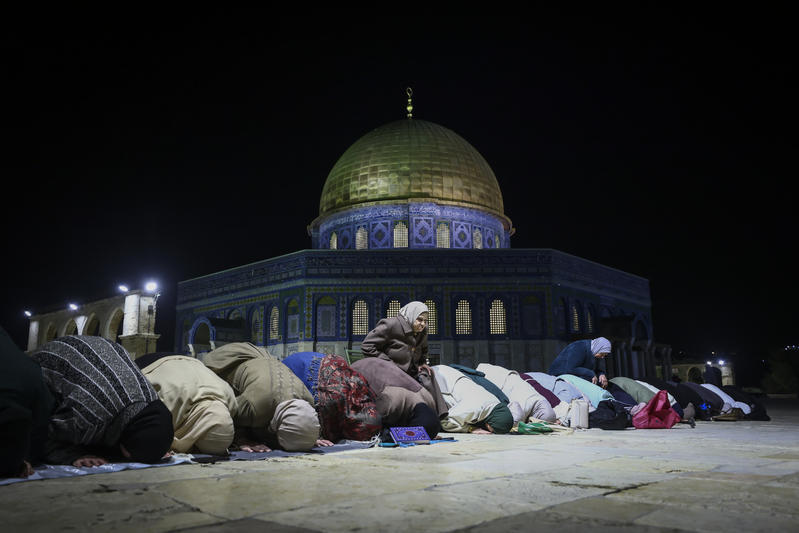
Muslim worshippers pray at the Al-Aqsa Mosque compound in Jerusalem’s Old City, marking the beginning of the holy Muslim month of Ramadan, February 17, 2026.
Muslim worshippers pray at the Al-Aqsa Mosque compound in Jerusalem’s Old City, marking the beginning of the holy Muslim month of Ramadan, February 17, 2026. Photo by Jamal Awad/Flash90 *** Local Caption *** אל אקצא רמאדן דת העיר העתיקה הר הבית ירושלים ירושלים העתיקה כיפת הסלע

Updated February 18, 2026

Ramadan begins amid disarmament disputes on every front

What’s happening: The beginning of Ramadan sees a tense quiet on all fronts.

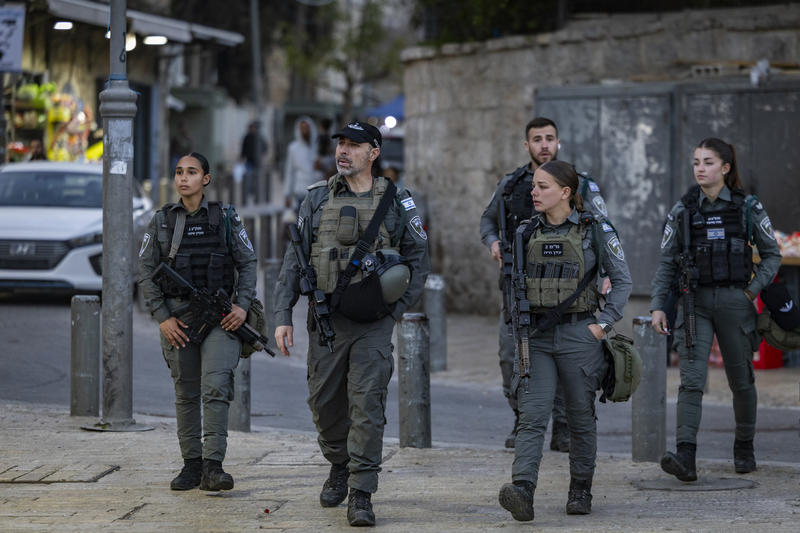
  • In Jerusalem, thousands of police officers are in the streets as tens of thousands of worshippers are expected to make their way to the Al Aqsa Mosque in the Old City, especially on Fridays.
  • The Coordinator of Government Activities in the Territories (COGAT) announced that Israel would grant permits to 10,000 West Bank Palestinians to enter Jerusalem for Friday prayers at the Al‑Aqsa Mosque compound. Similar to last year, only males aged 55 and above, women 50 and above, and children 12 and below when accompanied by a first-degree relative will be allowed entry.
  • In the West Bank, the IDF and Border Patrol have deployed special forces to deal with the increased tensions.
  • British Prime Minister Starmer spoke to US President Trump last night about negotiations between the US and Iran, as well as the situation in Gaza.
  • It comes as Iran claimed to have come to a “general understanding” with the US on the range of topics under negotiation, despite there being no confirmation of this from  US  officials. Iranian Foreign Minister Abbas Araghchi, who is leading the Iranian delegation in Geneva, told Iranian state media there had been “positive progress” in discussions on sanctions and nuclear programme.
  • On a Fox News interview yesterday, Vice President JD Vance described the recent talks with Iran as “in some ways… went well” but noted that the Islamic Republic remains unwilling to accept some of President Trump’s nuclear red lines. “Our primary interest here is we don’t want Iran to get a nuclear weapon. We don’t want nuclear proliferation,” Vance said, adding that the US would very much like to resolve this through a conversation and a diplomatic negotiation, but all options are on the table.
  • Also yesterday, Iran’s Supreme Leader Khamenei warned President Trump that the Islamic Republic cannot be overthrown.
  • Iran’s proxy force in Lebanon, Hezbollah, rejected the Lebanese government’s plan to continue the next stage of the disarmament which it accepted as a condition for the ceasefire that has been in place since November 2024.
  • Hezbollah Secretary-General Sheikh Naim Qassem said in a speech on Monday that “what the Lebanese government is doing by focusing on disarmament is a major mistake because this issue serves the goals of Israeli aggression,” while Shia ministers walked out of Monday’s cabinet session in protest.

Context: All three ceasefires from the past year – in Lebanon, Iran, and Gaza – are stuck on one form or another on the issue of disarmament.

  • Despite public optimism from both Iranian and US officials about negotiations underway in Geneva, Israeli observers remain sceptical that any agreement can be reached and Israel continues to prepare for a US operation in Iran.
  • Iranian and US negotiators have not come to an agreement on shipping Iran’s stocks of enriched uranium out of the country, and the Iranians reject any limitations on the range of their ballistic missiles as “illogical,” in the words of the Supreme Leader Khamenei.
  • The Lebanese plan for disarming Hezbollah would see the Lebanese Armed Forces carry out a decommissioning of Hezbollah weapons in the area north of the Litani River and up to the Awali River, about 40 kilometres south of Beirut, over the next four months. This follows what the Lebanese claim is a successful decommissioning south of the Litani River and up to the border with Israel, though Israel disputes much of the Lebanese claim of successful disarmament there.
  • It is in Gaza, however, that the issue is most acute. Morocco, Albania, and Greece signalled yesterday that they could join Indonesia in contributing forces to the International Stabilisation Force, which is supposed to enforce the ceasefire in effect since October 2025. But none of these countries is preparing a force which can actively disarm Hamas.
  • With no path to Hamas disarmament, there is no guarantee that a renewal of combat is not in the offing. And as long as that is the case, it is unlikely any real investment in Gaza’s reconstruction will take place.

Looking ahead: Tomorrow in Washington the Board of Peace will hold its inaugural meeting with Israel represented by Foreign Minister Gideon Saar. The Board of Peace will have to formulate plans for reconstruction and disarmament, and it will have to lay out a mandate for the ISF. It will also likely formalise the role of the technocratic transitional government which has yet to enter Gaza.

  • The Iranian semi-official news agency Fars reported that Iran and Russia will conduct navy drills in the Sea of Oman and the northern Indian Ocean tomorrow.

February 10, 2026

IDF confronts terrorists in Rafah, Syria and Lebanon

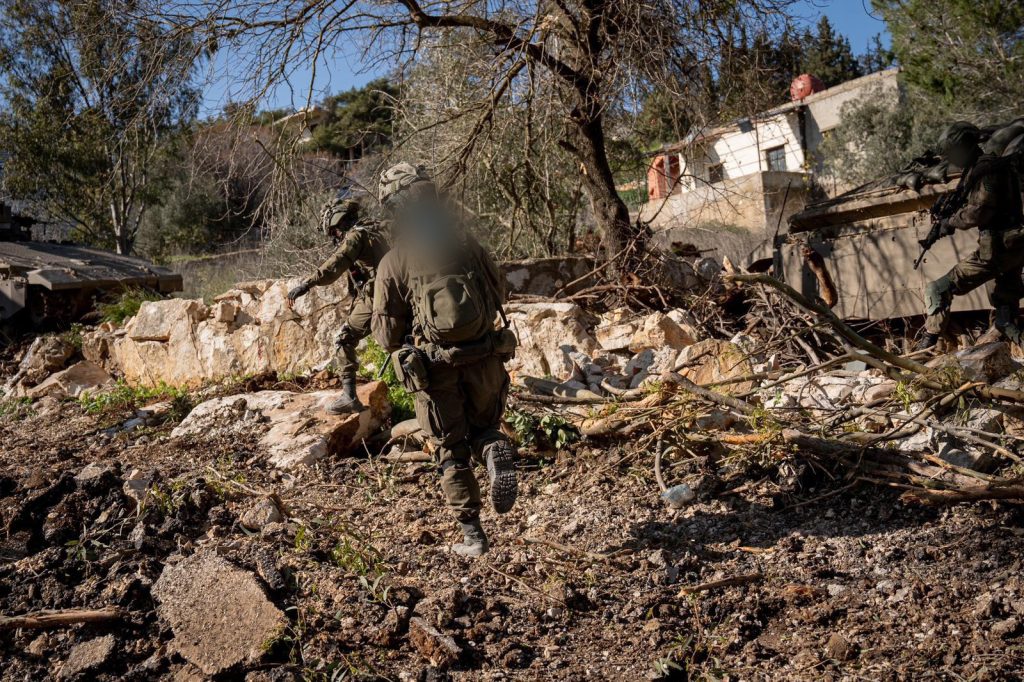
IDF soldiers.
IDF soldiers. Photo credit: IDF

What’s happening: In Rafah, in the south of the Gaza Strip, four Hamas terrorists emerged from a tunnel and attacked IDF troops on the Israeli side of the Yellow Line. The soldiers returned fire and eliminated all four gunmen.

  • An IDF operation in Syria yesterday destroyed a weapons depot belonging to the al-Jama’a al-Islamiyya (Islamic Group) terror group. The IDF’s announcement of the operation noted that the depot was located thanks to precise intelligence on the group’s activities.
  • Earlier this week, an IDF operation in Lebanon resulted in the capture of a senior member of the terrorist organisation, known for its close links with both Hezbollah and the foreign operations of Hamas. When his capture was announced, he was described as a “high-quality intelligence target.”
  • Domestically, the Israeli political discussion is still dominated by reactions to the 55-page document released by the Prime Minister last week which spelled out his actions and statements in the lead-up to Hamas’s October 7 attack. The document included many quotes from Cabinet protocols that cast Netanyahu in a flattering light and portray him as alert to the Hamas threat while being stymied at every step by the security establishment.
  • Critics, including opposition politicians and former security officials, pushed back on the claims in the document and pointed to many places where context was missing that apparently changed the entire import of the quotes statements attributed both to the Prime Minister and senior security officials. Benny Gantz called it a “rewriting of history,” while Yair Lapid called it a “falsification of security protocols in an official document issued by the Prime Minister’s Office, in a way that must have been intentional.” 
  • The Israeli cabinet approved measures pushed by Finance Minister Bezalel Smotrich to broaden Israel’s civil powers in the West Bank, notably on property, planning, and the management of two holy sites. The measures are technical, but their impact could be broad, making it much easier for Israeli citizens to purchase property from Palestinians in the West Bank.
  • The Trump Administration did not directly condemn this move, but it did issue a statement reiterating that “President Trump has clearly stated that he does not support Israel annexing the West Bank.”

Context: Dozens of Hamas fighters are suspected to still be hiding out in tunnels on the Israeli side of the line, and incidents such as this one have become a regular occurrence since the ceasefire went into effect last October.

  • The al-Jama’a al-Islamiyya organisation has been operating in Lebanon and Syria since the 1980s in cooperation with other larger terrorist organisations. Its independent standing was not affected by the ceasefires agreed to by Hezbollah in 2024 and Hamas in 2025.
  • Al-Jama’a al-Islamiyya is, like Hamas, a Muslim Brotherhood affiliate. Following leadership changes in 2022, the Lebanese branch pursued a closer alliance with Hamas and Hezbollah, setting aside past differences to focus on fighting Israel.
  • The decisions made on the West Bank don’t change the legal status of any territory and don’t herald any dramatic demographic changes either. They are all minor legal changes that grant more civil powers to Israel, rather than leaving the territory to be governed as an occupied territory by the IDF.
  • The changes are technical and may not withstand challenges in Israeli courts. But taken together, they could dramatically alter the balance of power in the territory between the IDF, the Palestinian Authority, and the civilian aspects of the West Bank settler enterprise.
    • One notable change is to open up property registries. These have been mostly sealed for decades. Making them available to the public could make it easier to locate absentee property holders to offer to buy land from.
    • A second change repeals a Jordanian ban on land sales that made it effectively illegal for a Palestinian in the West Bank to sell any property to an Israeli.
    • A third change broadens the powers of Civil Administration planning authorities to parts of the West Bank that lie outside Israeli settlements.
    • A fourth change establishes new authorities under Israeli control for the management of two holy sites, Rachel’s Tomb on the outskirts of Bethlehem and the Tomb of the Patriarchs in Hebron.
  • In the background of this decision are two major political weaknesses. First, the party of Bezalel Smotrich, the Minister most associated with this decision, is polling at or below the electoral threshold. And secondly, the settler movement itself has not been able to bring more Israelis to move from Israel into the West Bank. Nearly all of the population growth of Israelis in the West Bank has been confined to three ultra-orthodox settlements right on the Green Line, with negative net migration for many of the remaining 120 or so settlements deeper in the territory.

Looking ahead: Prime Minister Netanyahu leaves for Washington today for private talks with President Trump about the Iran situation. Contrary to earlier reports, he will not be taking with him a delegation of senior military and security officials. Unlike previous trips to the White House, this one is designated as a closed meeting, and there are no scheduled public events or media availabilities.

  • While it is likely that Iran will be the main focus of talks, we might as well expect that Netanyahu and Trump will touch on other issues such as the situation in Lebanon and reconstruction of Gaza. 
  • There is still no date for the beginning of operations for Gaza “technocratic” governance committee, the National Committee for the Administration of Gaza (NCAG). This is despite reports that it might be entering the Strip this coming week.
  • It was reported yesterday that up to 8000 soldiers from Indonesia could be headed to Gaza as part of the International Stabilisation Force (ISF). This is the first major commitment of manpower to the ISF, though here too there was no date given for when the operation would be underway. Indonesia does not have diplomatic relations with Israel.

January 16, 2026

Iran unrest exposes regime vulnerability, says Israeli historian

Israeli demonstrators express their solidarity with the Iranian people.
Israeli demonstrators express their solidarity with the Iranian people. Holon, central Israel, January 14, 2026. Photo by Chaim Goldberg/Flash90

Iran’s ongoing protests represent the most sustained and socially broad challenge to the Islamic Republic in years, but there are still no clear signs the regime is close to collapse, according to Eyal Zisser, Chair of Contemporary Middle Eastern History at Tel Aviv University.

Speaking with BICOM’s CEO Richard Pater, Professor Zisser said the current wave of unrest differs sharply from previous episodes. “What we are seeing is unprecedented,” he said. “This time the scale and duration are different. The protests are continuing, and more and more segments of Iranian society are joining.”

Unlike earlier demonstrations that were confined to specific groups or cities, the current unrest has drawn in students, women, workers and parts of the urban middle class across the country. “Different social groups are effectively joining hands,” Zisser noted, adding that the protests are affecting day-to-day life well beyond Tehran.

However, he cautioned against overstating their immediate impact. “The regime remains strong,” he said. “It still has powerful instruments of repression, particularly the Revolutionary Guards and the Basij, and we do not yet see signs of the regime disintegrating.”

A changed strategic context

What makes this moment distinct, Zisser argued, is the wider strategic environment. Last summer, Israeli actions targeting regime-linked military assets, carefully calibrated to avoid civilian harm, have punctured the perception of Iranian invulnerability.

“This was important psychologically,” he said. “It showed that the regime is not as strong as many people believed, and that can encourage people in Iran to take to the streets.”

The posture of the United States also matters. In contrast to previous administrations that relied largely on rhetoric, Zisser suggested that sustained political and economic pressure could have a real impact. “I don’t expect a military occupation of Iran,” he said, “but the goal is to undermine the regime’s confidence and capacity to rule.”

Concerns that external pressure could backfire by rallying Iranians around the regime are misplaced, he added. “Pressure is not directed against the Iranian people. They are not naïve, they understand where responsibility lies.”

Watching for cracks

Historically, regime collapse in Iran and elsewhere has been preceded by fractures within the security forces. For now, Zisser said, those signs are absent. “We don’t see hesitation or defection within the Revolutionary Guards or Basij yet,” he said. “But this is something to watch very closely. If that happens, it would be a decisive indicator.”

Other warning signs include symbolic acts of dissent. Zisser pointed to instances of Iranian athletes refusing to participate in regime rituals, such as declining to sing the national anthem. “These are small signs, but they matter,” he said. “They show erosion of legitimacy.”

At the same time, he warned that a regime under pressure may seek to externalise the crisis. “When regimes feel they are losing control, they sometimes look for confrontation abroad,” he said, noting that Israel, Arab states and Western interests could all become targets.

Lebanon: Hezbollah unchecked

Turning to Israel’s northern border, Zisser was unsparing in his assessment of Lebanon. “It’s not that the Lebanese government isn’t doing enough, it is doing almost nothing,” he said.

The Lebanese Armed Forces, he argued, are unwilling and unable to confront Hezbollah, whose core military capabilities remain intact despite limited Israeli operations. “Missile stockpiles and production facilities are still there, many of them deep inside Lebanon, not just in the south.”

Israel’s current approach reflects a desire to avoid escalation, but Zisser stressed that the underlying problem remains unresolved. “Israel cannot simply give up,” he said, adding that Hezbollah’s fortunes are inseparable from those of Iran. “If Iran weakens, Hezbollah weakens.”

Syria and the Druze question

On Syria, Zisser said recent US rhetoric about the new leadership reflects a search for stability rather than confidence in long-term change. “Syria remains fragmented, and trust is minimal,” he said. Any meaningful security arrangement involving Israel would require time, confidence-building, and a significant reduction in Iranian influence.

Particular concern remains for the Druze community in southern Syria. While ceasefires exist, Zisser described them as fragile. Israeli proposals for humanitarian corridors are understandable, he said, but “from Damascus’s perspective they are unacceptable.”

Gaza: no rebuilding without demilitarisation                                              

Asked about Gaza, Zisser expressed scepticism about ambitious reconstruction plans absent a fundamental shift in reality on the ground. “Hamas will not disarm voluntarily,” he said, “and Israel will not accept arrangements that leave Hamas militarily intact.”

Past experience, he argued, has shaped Israeli thinking. “Israel has learned that withdrawing without ensuring demilitarisation only leads to renewed conflict.” Without a new political and security framework, reconstruction risks laying the groundwork for the next war rather than lasting stability.

January 6, 2026

IDF continues to target Hamas and Hezbollah

Forces from the Nahal Brigade’s combat team advanced to conduct a search in the Rafah area.
Forces from the Nahal Brigade’s combat team advanced to conduct a search in the Rafah area. Photo credit: IDF

What’s happened: IDF operations to enforce the ceasefires in both Lebanon and Gaza continue.

  • In Gaza yesterday, the IDF located a rocket launcher loaded with five rockets aimed at Israel in the Beit Hanoun area, in the northern Gaza Strip. The launcher was successfully dismantled.
  • Also in the northern Gaza Strip, near Beit Lahia, the IDF destroyed a two-kilometre Hamas tunnel.
  • In the southern Gaza Strip, there were at least two incidents of Hamas attacks on Israeli positions on the Yellow Line, the line dividing the Gaza Strip into Israel-controlled and Hamas-controlled sectors, that were successfully repulsed by IDF troops.
  • In southern Lebanon, the Israeli Air Force carried out airstrikes against weapons caches and terrorist infrastructure belonging to both Hezbollah and Hamas, including, most notably, a weapons production site belonging to Hamas. Evacuation orders were issued before the air strikes to avoid civilian casualties.

Context: The IDF operations in both the north and the south fall under the rubric of the ceasefire arrangements that permit Israel to continue to target both Hamas and Hezbollah infrastructure.

  • According to Israeli figures, 400 Hezbollah operatives have been eliminated in Israeli air strikes since the ceasefire in Lebanon went into effect nearly 14 months ago. That ceasefire put an end to Hezbollah rocket attacks on Israel which began on October 8, 2023, the day after Hamas’ invasion of southern Israel.
  • Following the meeting last week between President Trump and Prime Minister Netanyahu, there was no public announcement over moving to phase 2 of the ceasefire agreement, as had been anticipated by many experts and commentators.
  • The US position for the last few weeks has been a preference to move on to the second phase despite incomplete achievements in the first one. Israel has steadfastly resisted any move to phase 2 before all hostages are released and before Hamas is disarmed.
  • One deceased Israeli hostage, Ran Gvili, remains in Gaza.
  • Following the meeting in Florida, Trump made statements that were much closer to the Israeli position on disarmament than what leaks from the administration before the meeting had indicated would be the case. “If they don’t disarm, as they agreed to do, they agreed to it, and then they will be hell to pay for them,” the President said. “And we don’t want that. I’m not concerned about anything that Israel’s doing.”
  • With no realistic move to phase 2 on the horizon, the Yellow Line is becoming a de facto security border for the IDF in Gaza, something the Chief of General Staff Eyal Zamir emphasised in recent remarks to soldiers in the Strip. “We are positioned along the Yellow Line and control the dominant terrain overlooking the Gaza Strip – this is a new security boundary,” he said. “The Yellow Line is an enhanced defensive line that supports swift operational responses as required. We will continue operating to weaken Hamas as necessary – the troops must remain alert and prepared for developments.”
  • Following a reform in the registration procedures for international NGOs, Israel announced last week that 37 NGOs operating in Gaza that had refused to comply with the reformed procedures would be deregistered and need to shut down operation by March of this year.
  • The organisations, most notably Doctors Without Borders (also known by its French acronym MSF) have launched a broad public campaign against the Israeli measures, claiming that they threaten medical care and constitute a form of “collective punishment.” A joint statement from the foreign ministers of ten countries, including the UK, also condemned the move and claimed that “one in three healthcare facilities in Gaza” could be closed as a result.
  • Figures released by Israeli authorities showed just how untrue these claims were. The aid provided by the organisations among the 37 that are to be deregistered constituted barely 1 percent of the total volume of aid. Specifically regarding MSF, Israel’s COGAT reports that 5 out of 220 clinics in Gaza are operating by MSF, and 2 out of 33 hospitals are (this figure includes 15 field hospitals in its total). In its PR campaign, MSF repeatedly assert that Israel has provided no evidence that any of its staff were connected to Hamas or other terrorist organisations, though COGAT and others regularly post information about MSF employees implicated in terrorist activities.
  • Just in the last week, Israel’s Ministry of Foreign Affairs identified two MSF employees as members of a terrorist organisations. Fadi al-Wadiya was an Islamic Jihad operative working on the organisations’ rocket capabilities and an MSF employees, according to the Ministry, which also published pictures of him in military fatigues. And Nasser Hamdi Abdelatif al-Shalfouh was both an MSF employee and a Hamas sniper, also according to the Ministry.
  • Also last week, the Israeli watchdog NGO Monitor identified four MSF doctors who were also members of Gazan terrorist organisations, including not just Hamas but also the PFLP.
  • According the latest COGAT data, 4,200 humanitarian aid trucks entered Gaza in the last week, carrying food, medical supplies and shelter equipment, based on the prioritisation by the international organisations.
  • On December 29, 160 Gazans in need of medical care crossed into Israel at the Kerem Shalom Crossing and then from there into Jordan via the Allenby Bridge.
  • Since the ceasefire went into effect in October, 600 to 800 trucks of aid have entered Gaza each day carrying humanitarian goods, including food, medical supplies, tents, etc. Roughly 20% of all aid has been handled by the UN. 

Looking ahead: The US deadline for the complete disarmament of Hezbollah came and passed last week on December 31, and neither the US nor Israel are satisfied that anything like a thorough disarmament has taken place.

  • Leaks from Israeli officials to the local media indicate particular frustration with the ambiguous role of the Lebanese Armed Forces. One anonymous defence official was quoted saying, “We won’t allow threats to pile up in Lebanon. If need be, we’ll attack in the Dahiya too. We won’t hesitate.” The Dahiya is a neighbourhood in southern Beirut known as a Hezbollah stronghold, where Hezbollah leader Hassan Nasrallah was eliminated by an Israeli air strike in September 2024.

January 5, 2026

Post Trump meeting, Netanyahu declares support for the Iranian people

President Donald Trump hosts a bilateral meeting with Israeli Prime Minister Benjamin Netanyahu
President Donald Trump hosts a bilateral meeting with Israeli Prime Minister Benjamin Netanyahu at Mar-a-Lago. December 29, 2025. Photo credit: The White House.

What’s happened: At the start of Sunday’s weekly cabinet meeting, Prime Minister Netanyahu expressed support for the Iranian people.

  • Netanyahu told his ministers, “we identify with the struggle of the Iranian people, with their aspirations for freedom, liberty, and justice. It is very possible that we are standing at the moment when the Iranian people are taking their fate into their own hands.”
  • Similarly, President Trump has also expressed support for the protesters in Iran and warned that if Iran, “starts killing people like they have in the past, I think they’re gonna get hit very hard by the United States.”
  • According to the New York Times, senior Iranian officials acknowledged that the Islamic Republic has entered “survival mode.”
  • During the cabinet meeting, Netanyahu also related to the Iranian issue that came up at last week’s meeting with President Trump saying, “We reiterated our joint position of zero enrichment on one hand, and the need to remove the 400 kilograms of enriched material from Iran and oversee the sites with tight and genuine supervision.”
  • Netanyahu also expressed support for the US “determined decision and action” in Venezuela, “to restore freedom and justice to that part of the world.”

Context: The Iranian issue was one of the top priorities for Netanyahu when he met Trump last week. Overall, the top objective for Netanyahu was to consolidate on the military achievements across several fronts including Iran, Gaza, Lebanon and Syria. The common thread was to reaffirm US support that if necessary Israel will act to prevent Iran and their proxies from rearming and to ensure Israeli military freedom of action to counter any developing threats.

  • Although details of the private meeting between Trump and Netanyahu remain vague, Netanyahu also told ministers on Sunday that Trump was “unequivocal” on Gaza.
  • Netanyahu said, “He repeated this both in our private conversations and to public opinion at the press conference there. He said it: ‘The essential condition is that Hamas disarms.’ There is no other option. This is an essential and fundamental condition for the implementation of his 20-point plan. He made no concessions and showed no flexibility on this issue.”
  • Without continued Israeli action Israeli officials are concerned that the achievements of the last year will be eroded. To ensure the achievements are consolidated Israel is banking on continued close coordination with US defence officials.    
  • In the wake of the October 7th attack Israel is pursuing a new security doctrine, that includes forward and pre-emptive defence. It is further understood Israel’s new defence posture includes:
    • Disarming terrorist armies.
    • Disarming and destroying military infrastructure above and below ground in a way that will make it impossible to renew the fighting, or to carry out surprise attacks on Israel’s borders and civilian communities adjacent to them.
    • Preventing terror groups from restoring their military capabilities.
    • Establishing effective international enforcement mechanisms that will ensure and enforce precise implementation of the disarmament.
    • Secure US support to operate independently, without having to coordinate with the US every time Israel detects violations of the arrangements.
  • Specifically on Gaza, Netanyahu reiterated the Israeli position to secure the return of the body of Ran Gvili, the last remaining hostage who has not been buried in Israel before transitioning to the second phase.
  • When it comes to disarming Hamas the priorities include decommissioning RPG launchers, other rockets, missiles, mortars, anti-tank weapons, and heavy drones.
  • Thirdly, the destruction of the remaining underground infrastructure, especially attack tunnels, as well as  command and control centres and weapons manufacturing sites. Israel is also demanding a complete ban on military training in the Strip.
  • At this point Israel remains insistent on remaining on the Yellow Line to ensure the protection of communities on the Gaza periphery.
  • Similarly in the north, Israel is demanding that Hezbollah be fully stripped of its heavy and long-range arms, including rockets and missiles and drones
  • Regarding Iran, Israel will support an international agreement that removes Iran’s ability to develop its military nuclear programme. In addition, Netanyahu seems to have secured support from Trump that also recognises Iran’s efforts to rebuild its array of conventional military threat of ballistic missiles as another red line.      
  • It appears that Trump was accommodating to most of Israel’s demands. The main area of disagreement appears to be the role of Turkey, both in Gaza and their ambitions to extend their sphere of influence in Syria.
  • According to Nahum Barnea writing in Yediot Ahronot, “There will probably not be Turkish soldiers in the international force whose establishment is unlikely, but Turkish contractors will be included in the [Gaza reconstruction] work, and F-35 jets will be sold to the Turkish air force. Netanyahu was unable to persuade Trump that Erdogan is bad; Erdogan was unable to persuade Trump that Netanyahu is bad. Trump enjoys both of their displays of sycophancy.”    
  • On Venezuela, Israel has been concerned for several years of their alliance and connection to both Iran and Hezbollah.    

Looking ahead: Later today Israeli – Syrian negotiations over a security agreements in southern Syria are expected to be resumed in Paris. The talks have been on hold for the last two months.

  • Israeli defence establishment remains on high alert over concern that the Iranian regime could try and divert domestic attention by launching an attack on Israel.
  • On Sunday, Iran International, a Persian language opposition channel broadcasting from London, reported that the Islamic Revolutionary Guards Corps (IRGC) has conducting further missile launching exercises. The exercise includes tests of air defence systems and is being conducted in several cities including Tehran and Shiraz.
  • The Israeli assessment remains that the Iran remains exposed, and that their air defences have not been reconstituted since the 12 Day War last summer. Nevertheless, there is concern that if the regime fears it will be deposed then an attack on Israel could be its only move left.

December 23, 2025

Concern over missile production as Iran conducts tests

Scene from the city of Holon, where a ballistic missile fired from Iran hit civilian infrastructure, June 19, 2025.
Scene from the city of Holon, where a ballistic missile fired from Iran hit civilian infrastructure, June 19, 2025. Photo by Oren Ben Hakoon/Flash90

What’s happened: A large military exercise in Iran over recent days has heightened alert levels in the region and brought to the fore discussions in Israel, US, and elsewhere regarding the possible resumption of hostilities following the last June’s Twelve Day War.

  • Iranian state media reported missile tests in several regions of the country, including Khoramabad, Mahabad, Isfahan, Mashhad, and Tehran. Israeli intelligence assessments were that, although war was unlikely, Iran could use a broad missile test such as the one it carried out this week as a cover for launching a surprise attack on Israel. These concerns were conveyed by Israeli officials to their US counterparts, including by IDF Chief of Staff Zamir to Admiral Brad Cooper, the head of CENTCOM, in a call on Saturday.
  • The Iranian Foreign Ministry characterised the Iranian missile programme as purely defensive and non-negotiable. “Iran’s missile programme has been developed solely for the defence of the country and is fundamentally not a matter for negotiation,” the ministry’s spokesman, Esmaeil Baghaei, told reporters.  “The media hype is also part of a hybrid war that the Zionist regime, with the help of the United States and affiliated media networks, has long designed and pursued against the Islamic Republic of Iran,” he added.
  • In the days leading up to the missile tests, multiple western intelligence agencies reported “suspicious movements” of Iran’s Revolutionary Guards, heightening concern that war might break out, either by design or by miscalculation by one of the sides. These movements were connected not just to the missile test, but also to drone activity and air defence drills.
  • Prime Minister Netanyahu referred to the Iranian threat yesterday in remarks made after meeting the leaders of Cyprus and Greece, “We know that Iran has recently been conducting exercises. We have been following this, and we have been maintaining the necessary readiness. I want to make it clear to Iran: any action against Israel will be answered with very harsh retaliation.”
  • The consensus among observers is that Iran is actively seeking to restore and augment missile capabilities that were lost in the Twelve Day War in preparation for a future confrontation with Israel. US officials believe that, left unchecked, Iran could produce up to 3000 ballistic missiles per year.
  • The IDF has revealed that one of three Hezbollah operatives who were eliminated yesterday in southern Lebanon was serving simultaneously in the Lebanese Armed Forces (LAF). The Israeli Air Force struck a vehicle in the Sidon area, killing the three men that were, “engaged in efforts to repair terrorist infrastructure.” The IDF revealed that one of the Hezbollah terrorists had a dual role, serving simultaneously in a LAF intelligence unit. This disclosure comes amid numerous complaints that the LAF is not doing enough to enforce  the ceasefire mechanism and some of its personnel are affiliated with Hezbollah.

Context: The Iranian threat to Israel over the years leading up to the October 7 War and since has been understood in Israel as ranging over three categories: the nuclear programme, proxies, and missiles.

  • Current Israeli assessments are that Iran suffered major setbacks on all three, and that it has struggled to restore its capacities on the first two. On missiles, however, the picture is more daunting. Only 36 Iranian ballistic missiles made impact in Israel during the Twelve Day War, but these killed 32 Israelis and caused extensive property damage. Moreover, the threat of missiles during those days shut the Israeli economy down completely.
  • Besides ramping up missile production, the Iranians are also fortifying and modernising launch sites. They retain up to 75% of the mobile launchers they had at the beginning of the war, and are manufacturing new ones. And as for fixed sites, Iran is reportedly working to build hardened silos that are more resistant to Israeli and US attacks.
  • All this is happening on the backdrop of a severe domestic crisis in Iran. Tehran, the capital city and home to ten million people, is unable to supply its population with water. Local reservoirs operate at only ten percent capacity. Electricity throughout the country is limited to a few hours a day, and petrol is severely rationed. The Iranian rial is trading at historic lows, and emigration of educated Iranians continues despite the governments efforts to stop it.
  • The regime’s censorship and restrictions of internet access have not succeeded in dampening public dissent. Iran’s second-largest city, Mashad, was the scene of wide scale protests against the regime. Israeli officials are concerned that the Iranian leadership may see a new war with Israel as a way of distracting the public and shoring up support.
  • In addition to the domestic political crisis in Iran, the renewed Iranian armament project takes place in an evolving geostrategic environment. Western countries have long complained about Iranian-Russian cooperation on drone production, particularly as it impacts the war in Ukraine.
  • China is widely believed to be helping Iran on ballistic missile production, both in supplying raw materials and in providing technology transfers. Turkey’s role is murkier. Iranian proxies planning terror attacks on Israeli targets were believed to be operating in Turkey. Attacks on Israeli targets in Latin America were recently foiled by local police and intelligence forces. These are believed to have been planned by Hamas and Hezbollah command centres located in Turkey.

Looking ahead: Prime Minister Netanyahu is due to meet President Trump in Florida on December 29. He is expected to present the President with an Israeli dossier on Iran’s efforts to restore its ballistic missile arsenal as well as renew its nuclear programme and fund its network of terrorist proxies, including Hezbollah, Hamas, and the Houthis.

  • The two leaders are also expected to discuss the further implementation of ceasefire agreements in both Lebanon and Gaza, with the US side expected to exert pressure on Israel to move forward on promised territorial withdrawals in spite of the fact that other commitments — return of the last deceased hostage in Gaza and disarmament in both Gaza and Lebanon — have not yet been achieved.
  • Gaps exist as well between the Israeli and American positions regarding both Syria and Turkey, and these are expected to be discussed and possibly resolved during the leaders’ meeting.

December 16, 2025

Netanyahu meets US envoy as tensions rise in Gaza and Lebanon

Prime Minister Benjamin Netanyahu Meets with US Ambassador to Turkey and Special Envoy to Syria Tom Barrack, Monday, December 15, 2025.
Prime Minister Benjamin Netanyahu Meets with US Ambassador to Turkey and Special Envoy to Syria Tom Barrack, Monday, December 15, 2025. Photo credit: Ma'ayan Toaf (GPO)

What’s happened: Over the weekend, Israel carried out an air strike that eliminated Raed Saad, the deputy commander of Hamas’ military wing and one of the architects of the October 7 attacks.

  • In a joint statement, Prime Minister Netanyahu and Defence Minister Katz linked the strike to the detonation of a Hamas explosive device that had wounded Israeli soldiers earlier in the day on the ‘Israeli side’ of the Yellow Line in Gaza.
  • They described Saad as “one of the architects of the October 7 massacre” who in “recent days had been engaged in rehabilitating the terrorist organisation and in planning and carrying out attacks against Israel and rebuilding an attack force, in blatant violation of the ceasefire rules and Hamas’s commitments to adhere to President Trump’s plan. Instead of promoting demilitarisation, he was engaged in rearming for acts of terrorism.”
  • Another Israeli official described Saad as an arch-terrorist who worked day in and day out to violate the agreement and renew the fighting, and stressed that the strike was carried out “in response to these violations and was intended to ensure the continuation of the ceasefire.”
  • Also over the weekend, the IDF called off a strike on a Hezbollah armaments warehouse in the village of Yanouh in southern Lebanon at the last minute. Acting on Israeli intelligence, Lebanese Armed Forces (LAF) had approached the spot to enforce the ceasefire agreement but disturbances broke out with residents which caused the LAF to withdraw.
  • The IDF Spokesperson’s Unit Arab media branch then issued evacuation orders for the area, after which the LAF asked for permission to return to the site in order to act.
  • A defence official said that Israel had received evidence of coordination between the LAF and Hezbollah. “Despite this, we gave the LAF an opportunity to address this violation. We conveyed a message to Lebanon this evening through the Americans: Cooperation between Hezbollah and Lebanon is unacceptable.”
  • Yesterday, Prime Minister Netanyahu met US Ambassador to Turkey and special envoy to Syria Tom Barrack. Sources said the sides arrived at mutual understandings on both Israel’s freedom of operation in Syria to neutralise emerging threats as well as the advancement of US-mediated talks with Syria aimed at forging a new security arrangement. Barrack posted on X that they had had “constructive dialogue working towards regional peace and stability.”
  • In the past, Barrack had drawn ire from officials for his comments about Israel not being a democracy as well as his support for the inclusion of Turkish troops in a future international force in Gaza, a position Israel is staunchly opposed to.
  • Searches continue for the body of Ran Gvili, the last Israeli hostage remaining in Gaza. Israeli officials claim Palestinian Islamic Jihad holds more information about his location.

Context: While Israeli officials framed the strike on Saad as an effort to strengthen the ceasefire, and while he was undoubtedly seeking to strengthen and rehabilitate Hamas, it also ties in with Israel’s strategy of closing accounts with those responsible for the Hamas attacks on October 7.

  • Reports from Washington suggest the administration is unhappy with the strike. Yesterday President Trump said that Washington was “looking into” whether Israel had violated the Gaza ceasefire, while a report in Axios said US officials are frustrated with Israeli actions in Gaza since the ceasefire and Trump recently told Netanyahu that he needs to be a “better partner” on Gaza.
  • While Phase One calls for all the Israeli hostages to be returned, Trump is eager that Phase Two in Gaza should begin in early 2026. That phase envisions Hamas disarming and Israel withdrawing as a multinational ‘International Stabilisation Force’ (ISF) deploys across the Strip at the same time that a Palestinian technocratic body begins managing Gaza’s day-to-day affairs.
  • Trump yesterday told reporters who asked about the ISF that “in a form, its already running, but it’ll get stronger and stronger, and more and more countries are coming into it. They’re already in, but they’ll send any number of troops that I ask them to send.” However major questions remain as to the composition of the ISF, its mandate, and its capacity to disarm Hamas, which is thought to have approximately 10,000-20,000 fighters in Gaza.
  • In Lebanon, Israel is sceptical that the LAF will be able to disarm Hezbollah, with defence officials believing that more IDF strikes in Lebanon may be inevitable. Hezbollah has violated the ceasefire agreement more than 1,900 times since it first went into effect more than a year ago. In this period, the IDF has attached and enforced roughly 1,100 violations with the LAF enforcing close to 600 violations that it was asked to deal with.
  • In light of the continued challenges from Hezbollah, the security cabinet met last week to discuss IDF plans for a large-scale offensive against Hezbollah targets in Lebanon if efforts fail to disarm Hezbollah by the end of 2025. Air force combat jets have recently carried out several drills over Israel and over the Mediterranean Sea.

Looking ahead: A conference is taking place in Doha today which is organised by the US Central Command (CENTCOM) to discuss the ISF.

  • Representatives from more than 45 countries have been invited to participate although Turkey has been excluded, likely due to Israeli opposition.

December 4, 2025

Deceased Thai hostage returned

Israelis attend a rally outside the southern Israeli city of Sderot, calling for the release of slain hostages Ran Gvili and Sudthisak Rinthalak.
Israelis attend a rally outside the southern Israeli city of Sderot, calling for the release of slain hostages Ran Gvili and Sudthisak Rinthalak, whose bodies are still held by Hamas in Gaza, November 29, 2025. Photo by Tsafrir Abayov/Flash90 *** Local Caption *** עצרת חטופים שדרות חרבות ברזל שער הנגב הפגנה מפגינים

What’s happened: Israel’s Institute for Forensic Medicine positively identified the remains handed over by Hamas yesterday as belonging to Thai national Sudthisak Rinthalak.

  • On October 7, 2023, Rinthalak, then 42 years old, was murdered in the orchards of Kibbutz Beeri. His body was abducted by Palestinian Islamic Jihad and held in Gaza for two years.
  • Sudthisak Rinthalak was from the northern Thailand and had been working in Israel since 2017.
  • On October 7, a total of 39 Thai nationals were murdered and 31 were taken captive.
  • The only deceased hostage being still held in Gaza is Ran Givili, an Israeli policeman, who reportedly eliminated 14 terrorists before he was killed and his body taken to Gaza
  • A major firefight erupted yesterday in Rafah, southern Gaza, between IDF soldiers and Hamas militants. Two Hamas fighters emerged from a tunnel shaft and launched a rocked propelled grenade at an IDF armoured personnel carrier. Four soldiers were wounded, of whom one is listed in a serious condition. Soldiers returned fire and eliminated one of the  Hamas man.
  • Following the incident, which Israeli officials characterised as a “grave violation of the ceasefire,” the IDF struck Hamas targets in al-Mawasi, killing six. Eyal Zamir, IDF Chief of Staff, said yesterday that “it is unacceptable for terrorists to emerge from shafts and tunnels in which they have been trapped and, while fleeing to hiding places, to carry out attacks against IDF soldiers in the area.”
  • Direct talks between civilian officials from Israel and Lebanon were held yesterday in Naqoura, on the Lebanese side of the Israel-Lebanon border under the auspices of US envoy Morgan Ortagus.

Context: As ever, the Israeli policy for both Gaza and Lebanon, is guided by the US who are keen to see progress towards peace and stability on both fronts.

  • In Gaza, yesterday’s the decision to reopen the Rafah crossing is being tied to the Netanyahu-Trump call from earlier this week.
  • There are conflicting reports about the operation of the crossing, with Israel insisting that traffic for now will only be of Gazans leaving into Egypt and not the other way around, while the Egyptians would like the crossing to operate only if it is two-way. Following the latest violation of the ceasefire, there have been calls inside Israel to delay the opening.
  • In Lebanon, the US-led talks which took place yesterday involved a host of civilian issues beyond the usual remit that is normally insisted upon by the Lebanese side. Israel was represented at Naquora by Uri Resnick, a senior official in the National Security Council, and Lebanon by Simon Karam, a Maronite Christian who previously served as Lebanon’s ambassador to the UN. Also attending the meeting were representatives of the IDF, Lebanese Armed Forces (LAF), and the UN.
  • This was the first direct encounter of civilian officials from Israel and Lebanon since the Madrid Peace Conference in 1991.
  • This development, welcomed on the Israeli side, evidences the success of the US policy in Lebanon and the new pragmatic approach of the Lebanese government. It also shows the weakening grip of Hezbollah and its ability to impose its will over the Lebanese government.
  • Israel is now hopeful that on one hand it can continue to target Hezbollah, according to the provisions of the ceasefire agreement, whilst maintaining civilian dialogue with Lebanese government.
  • The talks focused on not just on the implementation of the 2024 ceasefire agreement, but ranged over issues including the maritime border, gas exploration, the return of residents to border communities, and even possible cooperation in agriculture. Looming behind the entire process is the US demand for the disarmament of Hezbollah to be completed by December 31.

Looking ahead: According to the provisions of the ceasefire agreement, Hamas should have released all the hostages within the first 72 hours. Ran Gvili remains the last deceased hostage, now held for over 790 days in Hamas’s captivity.

  • There’s hope that the meeting in Naquora will be a springboard for continued Israeli-Lebanese dialogue in spite of the continued threat post by Hezbollah.
  • Prime Minister Netanyahu announced this morning that the next head of Mossad will be Maj Gen Roman Gofman, currently the Prime Minister’s Military Secretary.

December 3, 2025

Rafah border crossing to reopen

People seen before crossing to Egypt through the Rafah border crossing in the southern Gaza Strip
People seen before crossing to Egypt through the Rafah border crossing in the southern Gaza Strip, on November 24, 2020. Photo by Abed Rahim Khatib/Flash90

What’s happening: Despite the ongoing failure of Hamas to release the remains of all hostages, Israel announced today that it will allow the reopening of the Rafah crossing for Palestinians leaving Gaza into Egypt.

  • The crossing will operate under the coordination of Israel, Egypt, and a small contingent of officials from the European Union.
  • According to Israeli media there are suggestions that the Israeli decision to open the crossing even before the last hostages are recovered came as a result of a request from President Trump in phone call with Prime Minister Netanyahu on Monday.
  • The human remains transferred to Israeli by Hamas on Tuesday are not those of deceased hostages, according to the Israeli National Institute of Forensic Medicine, which examined the remains.
  • Today, Palestinian Islamic Jihad said that it is working with the Red Cross to locate the remains of one deceased hostage whom it had abducted.
  • The bodies of two hostages taken in the October 7 attack, one Israeli, Ran Gvili, and one Thai citizen, Sudthisak Rinthalak, have yet to be handed over.
  • This morning Palestinian sources are claiming that the body of a deceased hostage has been found in northern Gaza, but there has not yet been a formal statement.
  • Prime Minister Netanyahu met yesterday with Trump’s Deputy Special Envoy to the Middle East Morgan Ortagus. Israeli officials reportedly shared with Ortagus intelligence showing both that Hezbollah are rearming and that the Lebanese Armed Forces were either unwilling or unable to do much about it.

Context: The latest phone call between Netanyahu and Trump once more highlighted the president’s direct engagement in the Middle East and across the various fronts including Gaza, Lebanon, Syria and Iran.    

  • Not only is Trump’s influence seen in Israel’s decision to open the Rafah crossing, but also in the de-escalation in Syria, following the Beit Jinn incident late last week in which six Israeli soldiers were wounded and 13 Syrians were killed.
  • It has since been reported that some of the armed men weren’t just militants, but rather part of the new regime’s security forces. The US administration is keen to reach understandings with Syria and Israel on a number of issues before the expected Netanyahu-Trump meeting. These include restrictions on IDF operations in areas in which al-Sharaa’s troops operate, cooperation in dealing with Sunni terrorist organisations, and guaranteeing the wellbeing of the Druze population in the As-Suwayda enclave.
  • On Lebanon, tensions are ratcheting up as the sides approach the unofficial US deadline of December 31 for the disarmament of Hezbollah. Foreign Minister Gidon Saar, who also met yesterday with US Envoy Ortagus, told reporters, “The terrorist organisation is rearming at a far quicker pace that it is being disarmed. The responsibility resides with the Lebanese government. There have also been money transfers from Iran to Hezbollah via Turkey. That needs to be curtailed.”
  • In a rare positive diplomatic development Lebanon has agreed to send a civilian government  representative to the ceasefire monitoring committee meeting with Israel. Simon Karam, their former Ambassador to the US  will head Lebanon’s delegation to review the ceasefire mechanism. Until now Lebanon has always sent military representatives so as not to legitimise engagement with the State of Israel. Israel’s Prime Minister’s office will also send a representative.
  • However, with the Pope’s visit in Lebanon now over, the perceived immunity from Israeli strikes has been lifted. Israel has reportedly conveyed to the Lebanese government that it is “very likely to begin to take harsher measures” against Hezbollah if the disarmament conditions of the November 2024 ceasefire are not fully implemented.
  • US diplomacy is making its presence felt here too. The US will not provide aid to Lebanon unless it fulfils its commitments on disarming Hezbollah. Where American statements regarding Israel and Syria on the one hand and Israel and Gaza on the other have largely pushed in a de-escalatory direction, this has not been the case regarding Israel and Lebanon.
  • The UN General Assembly approved by a majority of 123 votes a resolution calling on Israel to withdraw from the Golan Heights.  7 countries voted against and 41 abstained, including the UK.
  • The resolution is presented to the General Assembly every year, at the initiative of Syria and receives an automatic majority. The resolution  calls for Israel to withdraw to the June 4, 1967 lines.
  • In Gaza, Israel is concerned that Iran has been encouraging Hamas to refuse any kind of disarmament. In parallel,  the US is seeking to begin reconstruction in Gaza even without disarmament, but focused only on the area under Israel’s control. This measure is strongly opposed by Egypt.

Looking ahead: Ortgaus’ next stop after Israel will be  Lebanon, where she is expected to take part in the Mechanism meeting. She is expected to demand strict enforcement of the disarmament clauses, including a measure the Lebanese Armed Forces have refused thus far to implement: searches in private homes where Hezbollah caches are stored.

  • The latest reports suggest that Netanyahu and Trump will meet on December 28 in Mar-a-Lago, and not the White House. Netanyahu is expected to fly directly to Florida, and to return to Israel within 48 hours, without a stop in Washington.

November 25, 2025

Palestinian Islamic Jihad claim to have found another deceased hostage

Ran Gvili, Dror Or and Sudthisak Rinthalak.
Ran Gvili, Dror Or and Sudthisak Rinthalak. Photo credit: Hostages nad Missing Families Forum (Collage by BICOM)

Hostage body: Palestinian Islamic Jihad (PIJ) has claimed that it has located the body of one of the remaining hostages following a search in central Gaza.

  • So far there has been no announcement of when the body will be handed over to Israel.
  • The discovery was made following five days of searches by PIJ operatives alongside representatives from Egypt and the Red Cross in the Nuseirat area in the centre of the Strip.
  • The last hostage returned was the body of Meny Goddard two weeks ago.
  • Three deceased hostages remain in Gaza. These include two Israeli citizens, Ran Gvili and Dror Or, as well as one Thai citizen Sudthisak Rinthalak.
    • Ran Gvili (24) was an Israeli Border Policeman who reportedly eliminated 14 terrorists before he was killed and his body taken to Gaza (the IDF declared his death in January 2024).
    • Dror Or (49) and his wife, Yonat, were murdered from their home in Beeri. His body taken to Gaza, along with their two children, Noam and Alma, who were released in the November 2023 deal.
    • Sudthisak Rienthalak (43) was a Thai agricultural worker, who was kidnapped while working in the orchards of Kibbutz Beeri. It is noteworthy that the Hamas attack on October 7 attack did not only target Israeli Jews, but also Muslims and Christians from around the world who happened to be in southern Israel on that fateful morning.
  • Palestinian Islamic Jihad is the second-largest Palestinian terrorist group, responsible for numerous atrocities and the murder of Israeli hostages. They are closely aligned with, and backed by, Iran.
  • Prime Minister Netanyahu condemned the delays in handing over the deceased hostages: “In light of the Islamic Jihad’s announcement regarding the location of findings related to a deceased hostage, Israel views with severity the delay in their immediate transfer into its hands. This constitutes a further violation of the agreement. Israel demands the immediate return of the three deceased hostages still being held in the Gaza Strip.”

Ongoing IDF operations: The IDF continues to operate in the designated Green Zone, in the Israeli controlled side of the Yellow Line.

  • In the Rafah area in the south troops continue to dismantle the remaining terror tunnels in the area. According to the IDF “Over the weekend, 17 terrorists emerged from an underground tunnel route in the area. Following significant combat…11 of the terrorists inside the route were eliminated.” A further six were arrested and taken for questioning.
  • The IDF Spokesperson’s Unit confirmed, “As part of the activity over the past week, hundreds of meters of underground tunnel routes were dismantled, and more than 60 targets were struck, including approximately 15 tunnel shafts and around 40 structures used by the terrorist organisations in the Gaza Strip. Additionally, a Hamas flag, military gear, and weapons were located in the Rafah area along the yellow line, including: firearms, rifles, explosive devices, magazines, and other weapons.”
  • In a separate incident on Monday, several terrorists were identified crossing the yellow line and approaching IDF troops in the northern Gaza Strip, which according to the IDF posed, “an immediate threat,” two terrorists were eliminated.
  • These type of engagements have reoccurred several times in the last month. According to the terms of the ceasefire agreement, they constitute breaches by Hamas, and Israel has freedom of action to respond and defend their forces.  
  • In the West Bank, counter terror commandos eliminated a Palestinian who had been on the run for the last 18 months, after killing two IDF soldiers in a car ramming attack outside Nablus in May 2024. Following the attack he had turned himself in to the Palestinian police, but they released him after he claimed the incident was a traffic accident rather than a nationalistically motivated attack. Since then, he had been considered a wanted terrorist.

Advancing towards the ‘Day After’: For Israel, the return of the remaining three hostages – as agreed upon in the Trump Plan – remains the first condition that needs to be met. After that the disarming of Hamas and the decommissioning of their weapons remain the priority.

  • Israel is able to do this in the areas under its control – those that are closest to the border and the civilian communities, (although the work is painstakingly difficult and slow).
  • The planning and coordination for the International Stabilisation Force (ISF) continues to be led by the US in the CMCC (Civil Military Coordination Center) based in Kiryat Gat, and includes representatives from 21 countries, although not Turkey, Qatar or the Palestinian Authority.  
  • Despite the received UN mandate last week, there remain many unanswered questions for the ISF. These include: what weapons will they have? What will be their rules of engagement? How will they be coordinated with the IDF? How are they expected to locate and destroy tunnels, confiscating weapons – by consent or by force? There is scepticism if this force will even be formed and deployed. So far there have been no countries willing to send troops for this mission.
  • At this point the IDF sees the advantage in being able to share monitoring with the international representatives at the CMCC. For example they share how Hamas commandeers the majority of the 600+ aid trucks that enter Gaza every day. Similarly the IDF are sharing their intelligence on Hamas efforts to reassert control and reorganise their military structure.
  • Earlier this week, Palestinian Authority deputy chairman Hussein al-Sheikh met with former Prime Minister Tony Blair in Ramallah. According to Sheikh’s post on X, the pair discussed issues related to the “day after” the war in Gaza, as well as issues related to the West Bank and Palestinian statehood.
  • According to COGAT, Israel assisted close to 300 Gazans in need of medical treatment this week, enabling them and their escorts to leave Gaza overland into Jordan on their way to unspecified third countries.


Designating Muslim Brotherhood: President Trump announced that he has commissioned a report to ascertain if  “certain chapters” of the Muslim Brotherhood can be designated Foreign Terrorist Organisations (FTOs) and Specially Designated Global Terrorists (SDGTs).

  • The US will now begin the process of labelling Muslim Brotherhood chapters as terrorist organisations which would bring sanctions against the movements.
  • Trump signed an executive order directing Secretary of State Rubio and Treasury Secretary Bessent to submit a report within 45 days on whether to designate any Muslim Brotherhood chapters, such as those in Lebanon, Egypt, and Jordan. The order notably omitted to mention Turkey or Qatar.  
  • Prime Minister Netanyahu commended President Trump, “on his decision to outlaw and designate the ‘Muslim Brotherhood’ organisation as a terrorist organisation.” Netanyahu added that the Muslim Brotherhood “endangers stability throughout the Middle East and also beyond the Middle East.
  • In the UK, Reform announced at their conference last month that, if they form the next government, they would proscribe the Muslim Brotherhood.

Newsletter sign-up

Please enter your information below to subscribe to our daily newsletter and stay updated and informed.

Donate to BICOM

At BICOM, we rely on the generosity of people like you to keep our website and services running. Your donation, no matter the size, makes a real difference. Please consider supporting us today. For further information please email: [email protected]