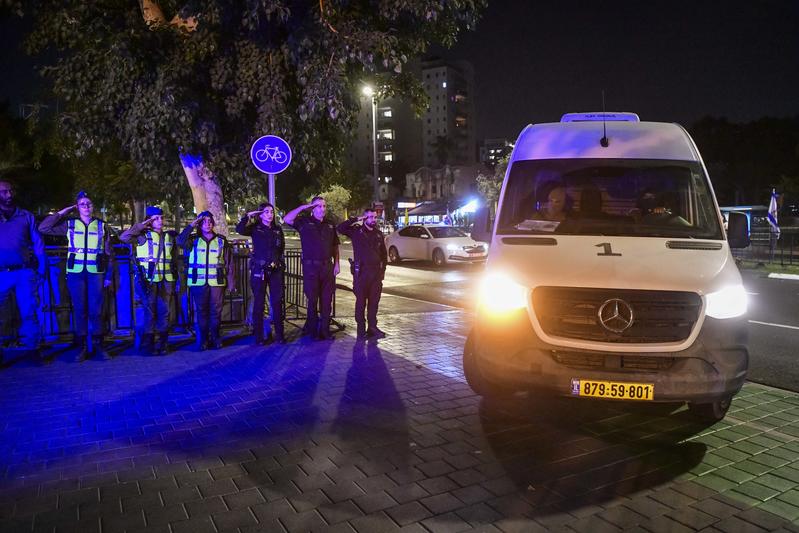
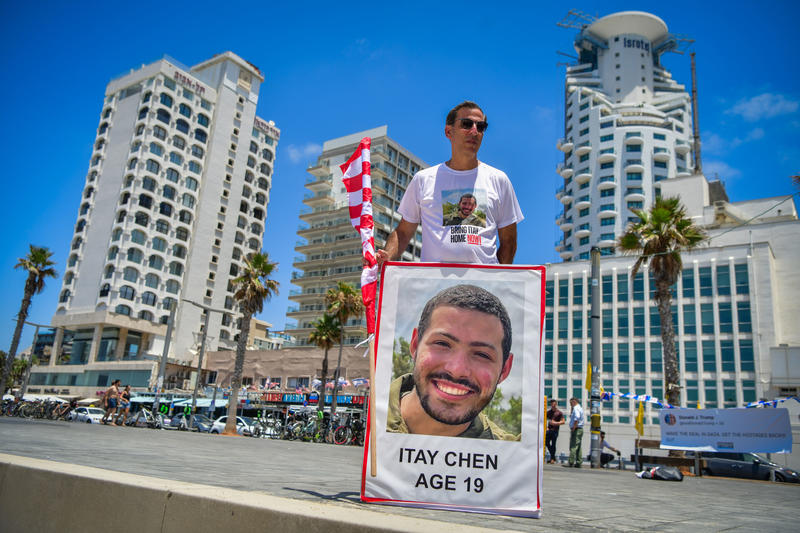
What’s happened: The remains of the deceased hostage Staff Sgt. Itay Chen, were returned to Israel last night.
- As in the past, the identification process was first completed by the National Institute of Forensic Medicine before his family was notified.
- Itay Chen was killed while defending Nahal Oz on October 7 and his body was taken into Gaza by Hamas. His death was announced five months later.
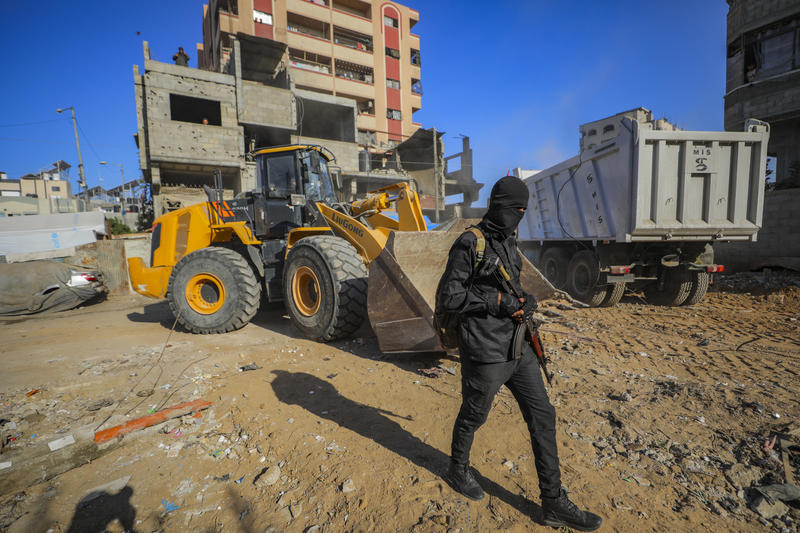
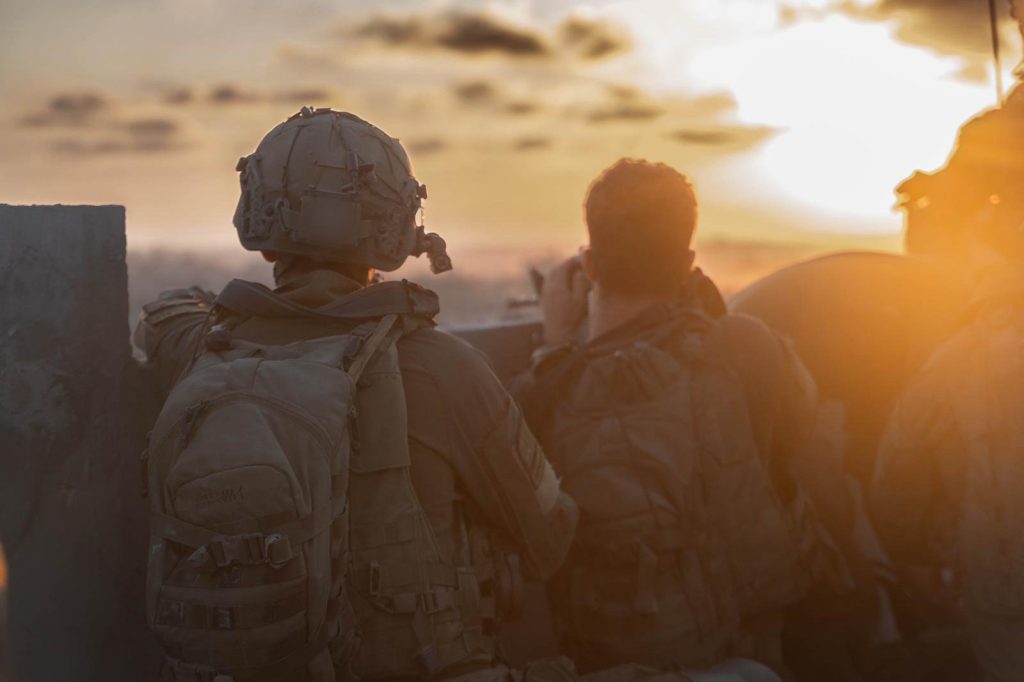
- In parallel, the IDF has continued to operate in the Gaza Strip in the Israeli controlled areas south and eastwards of the Yellow Line. The IDF Spokesperson’s office confirmed that, “an underground tunnel route spanning hundreds of meters long and tens of meters deep was located in the Jabaliya area and dismantled…The route was used by Hamas terrorists for prolonged stays and for organising terrorist activities against IDF troops.”
- Moreover, IDF soldiers have also identified a compound containing launchers, rockets, and launch positions belonging to Hamas…in the centre of the Shejaiya area in northern Gaza.”
Context: Itay Chen is the last kidnapped IDF soldier from this war. On October 7 he fought with his tank crew that included Sgt. Tomer Leibovitz, Captain Daniel Peretz and Staff Sgt Matan Angrest. The only survivor of the crew was Angrest, who was taken as hostage, while the bodies of Peretz and Chen were also taken to Gaza.
- Another seven deceased hostages still remain in the Gaza Strip 761 days since October 7.
- Included in these seven still held in Gaza are the remains of Hadar Goldin, who was killed during Operation Protective Edge in the summer of 2014.
- Israel is satisfied that the return of bodies has continued, but is keen to speed up the process and retrieve all the remaining hostages. The latest estimations are that Hamas knows the location of three or four remaining bodies. Even if Hamas does not know the whereabouts, it may be that allowing Hamas to search (within Israeli controlled areas) will be faster than the IDF doing it, as Hamas may have more precise information.
- The extensive Hamas tunnel network remains an ongoing operational challenge for the IDF. It is estimated to be over 550km in length, (and possibly longer) and according to the most recent assessment from the Ministry of Defence, only 40 per cent of the tunnels mapped have so far been destroyed. Operationally the IDF is now prioritising destroying the tunnels in the area it currently controls.
- Hamas claims that around 200 armed terrorists are trapped below ground in a network of tunnels within the Israeli controlled area. Hamas has asked (via mediators) to grant them safe passage out of the area which poses a dilemma for the IDF. On one hand, their presence endangers troops, but Israel is also unwilling to grant these fighters amnesty. Israel is currently demanding the return of all the deceased hostages before a decision is made on the trapped Hamas operatives.
- Since the demarcation of the Yellow Line there have been several incidents of Gazans trying to cross it. According to IDF rules of engagement, they are only targeted if they pose an immediate threat, and otherwise are arrested.
- As part of the preparation for the next phase, Israeli and US teams now share a joint war room as part of the CMCC (Civilian-Military Coordination Center), which is primarily aimed to coordinate civilian projects. The mechanism also allows them to jointly monitor ongoing potential Hamas preparations to carry out future attacks.
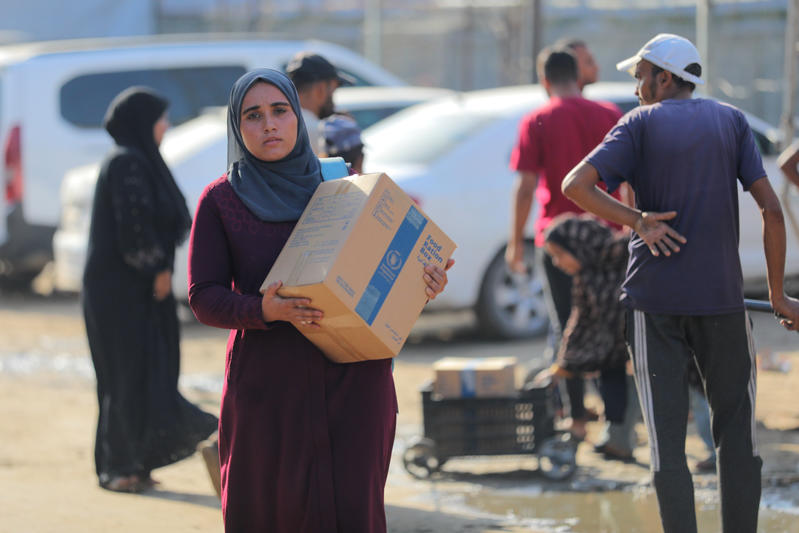
- Humanitarian aid continues to enter Gaza, at an average rate of approximately 600 trucks a day including food, fuel and gas. In contrast to the US and Israeli backed GHF that delivered over 185 million meals directly to the Gazan civilian population during the five months it operated up until the ceasefire, the current aid is being facilitated by the UN and other international organisations which allows Hamas to control the distribution once inside the Strip.
- According to a new report by UN Watch hundreds of UNRWA workers maintained ties with Hamas, and other terror groups. The study presents 490 verified cases of agency employees who praised massacres, incited violation or were personally active in the terror organisations.
Looking ahead: As winter approaches, hundreds of thousands of Gazans remain without a permanent home. With the ceasefire holding, and increased aid entering the Strip it is now Hamas’ responsibility to disarm to allow the reconstruction efforts to begin.
- The UN Security Council is expected to vote in the next two weeks to endorse the US plan to establish an International Stabilisation Force. However it currently appears that many Arab countries that are supposed to contribute soldiers are unwilling to do so until Hamas is disarmed.