LATEST

Hezbollah and Lebanon

Key background
  • Hezbollah (‘Party of Allah’’) is the world’s most heavily armed non-state actor and was founded in Lebanon in 1982 with the help of Iran’s IRGC.
  • Prior to summer 2024, Hezbollah was thought to possess approximately 45,000 fighters, 5,000 of whom have completed advanced training in Iran and 20,000 of whom are organised in reserve units. It also possesses an estimated 130,000 – 150,000 missiles.
  • After proscribing its military wing in 2008, the UK proscribed the entire organisation as a terrorist group in 2019.
  • Hezbollah has built a $1bn-a-year global network and has operated on UK soil. In 2020, the US State Department estimated that Hezbollah received $700m a year from Iran.
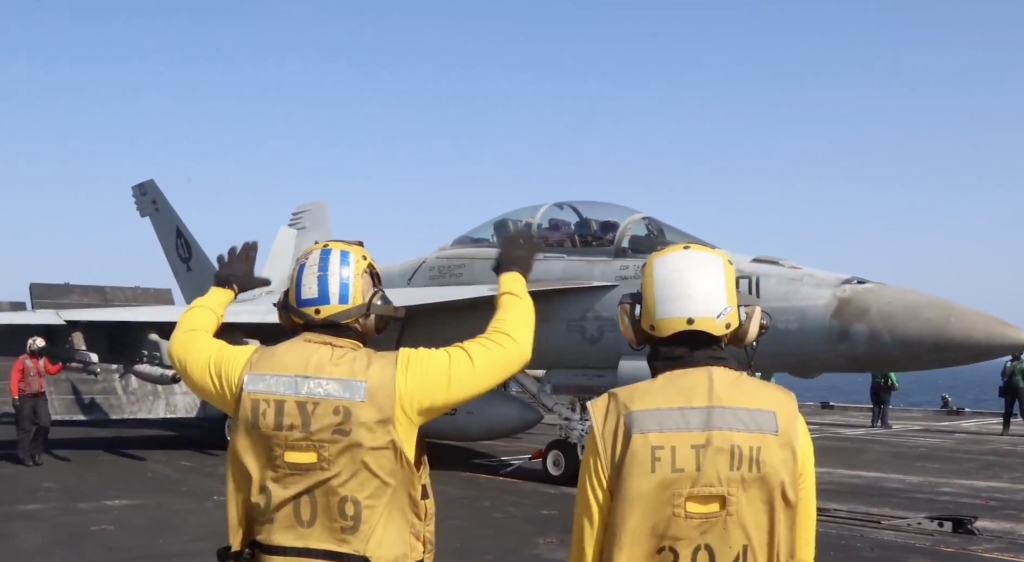
US Navy F/A-18 Super Hornets launch from USS Abraham Lincoln, one of two aircraft carriers enforcing the blockade on Iranian ports while also supporting Project Freedom, May 4, 2026.
US Navy F/A-18 Super Hornets launch from USS Abraham Lincoln, one of two aircraft carriers enforcing the blockade on Iranian ports while also supporting Project Freedom, May 4, 2026. Photo credit: U.S. Central Command / X

Updated May 5, 2026

Israel helps defend UAE

What’s happened: Iran fired 12 ballistic missiles, three cruise missiles, and four attack drones at the United Arab Emirates on Monday.

  • Emirati officials said one strike caused a large fire and three injuries at its key oil port of Fujairah.
  • The attack was condemned internationally, with  Prime Minister Starmer saying the UK would continue to “support the defence of our partners in the Gulf”.
  • The UAE is being assisted in defence by Israel’s Iron Dome anti-missile defence system, operated in the UAE by IDF personnel, which successfully intercepted one of the missiles. The current war with Iran is the first time that the advanced tech has been deployed and used operationally outside of Israel.  
  • This latest Iranian attack came in response to President Trump’s announcing the beginning of “Project Freedom,” which seeks to ensure freedom of navigation for commercial shipping through the Strait of Hormuz.
  • The US successfully escorted two American-flagged merchant ships that passed through the southern tip of the Straits on Monday. Trump also said yesterday that the US had struck seven Iranian “fast boats.”
  • In Israel the IDF is also preparing itself defensively and has kept its air-defence systems on a high state of alert in readiness for a resumption of Iranian attacks.
  • In Lebanon, Hezbollah fired several mortars in two incidents on Monday night towards IDF troops in southern Lebanon. There were no reports of casualties.

Context: Israel’s military support for the UAE is the latest example of the strategic significance of the Abraham Accords and highlights the potential of Israel’s future alliances with other Sunni Gulf states.

  • According to the UAE Ministry of Defence Iran has now fired 549 ballistic missiles, 29 cruise missiles, and 2,260 attack drones against the UAE since the war began. By comparison, Iran fired around 650 missiles towards Israel, the majority of which being ballistic missiles. Thanks to Israel’s array of missile defence systems about 90 per cent of the missiles were intercepted.
  • Israel continues to maintain a high level of coordination with the US including at a political level and among senior military commanders.
  • When it comes to the prospect of relaunching attacks on Iran, it appears Israel will follow the US lead. At this point it is unclear whether the US is planning a limited operation in the Strait of Hormuz area or a broader attack. A broader attack could include striking Iranian national infrastructure, including energy facilities, roads, steel factories and gas and oil facilities.
  • The working Israeli assumption is that a US attack of any scope would prompt Iran to retaliate against Israel. As part of the preparation for a possible resumption of the war, thousands of aerial components and munitions have recently been flown into Israel on board cargo planes.
  • Israeli defence officials see the current volatility, and the potential collapse of the ceasefire that could see the resumption of hostilities. The latest assessment is that a resumption of direct fighting with Iran will lead to the immediate collapse of the fragile ceasefire with Hezbollah too. At that point Israel anticipates Hezbollah will fire missiles deep into Israeli territory.
  • There had been hope that the US economic stranglehold over the Straits coupled with military threats would force the Iranians to accept a deal on US terms, but this currently appears less likely. Compounding this are reports of splits within the Iranian leadership, which is also preventing them from reaching an agreement.
  • All this suggests a resumption of war with Iran could be inevitable. The only question is whether  Trump favours a short series of harsh strikes or a resumption of a more comprehensive offensive that will continue until the Iranian regime capitulates. In this scenario Israel is thought to have prepared a bank of targets and is once more expected to join the US in striking Iran.
  • Fujairah port lies on the UAE’s eastern coast on the Gulf of Oman, beyond the Strait of Hormuz. A pipeline runs from Abu Dhabi’s oil fields to Fujairah, which allows oil to be shipped to international markets despite Hormuz being blockaded.

Looking ahead: In a month’s time the Israeli Air Force is expecting the delivery of the first of six Boeing KC-46 tanker aircraft, a US military aerial refuelling and strategic military transport aircraft. According to Israel’s MOD, the tanker aircraft, designated “Gideon” in Hebrew, will be “equipped with Israeli systems and adapted to the operational requirements of the Israeli Air Force, enabling it to extend operational range and maintain air superiority across all theatres.”

  • Israel also announced that it expects to double its fleet of US-made F-35 stealth jets from 50 to 100 and its F-15IA fleet from 25 to 50. The Israeli MOD said that procurement of these jets, “will serve as a cornerstone of the IDF’s long-term force development, addressing evolving regional threats and preserving Israel’s strategic air superiority.”
  • On Sunday Prime Minister Netanyahu said Israel will also simultaneously, “develop groundbreaking Israeli-made aircraft. This will change the entire picture.”
  • He also related to the ongoing drone threat from Hezbollah, confirming he commissioned a “special project” to thwart the threat, adding, “it will take time, but we are on it.”

April 29, 2026

Hezbollah drone attacks expose limits of Lebanon ceasefire

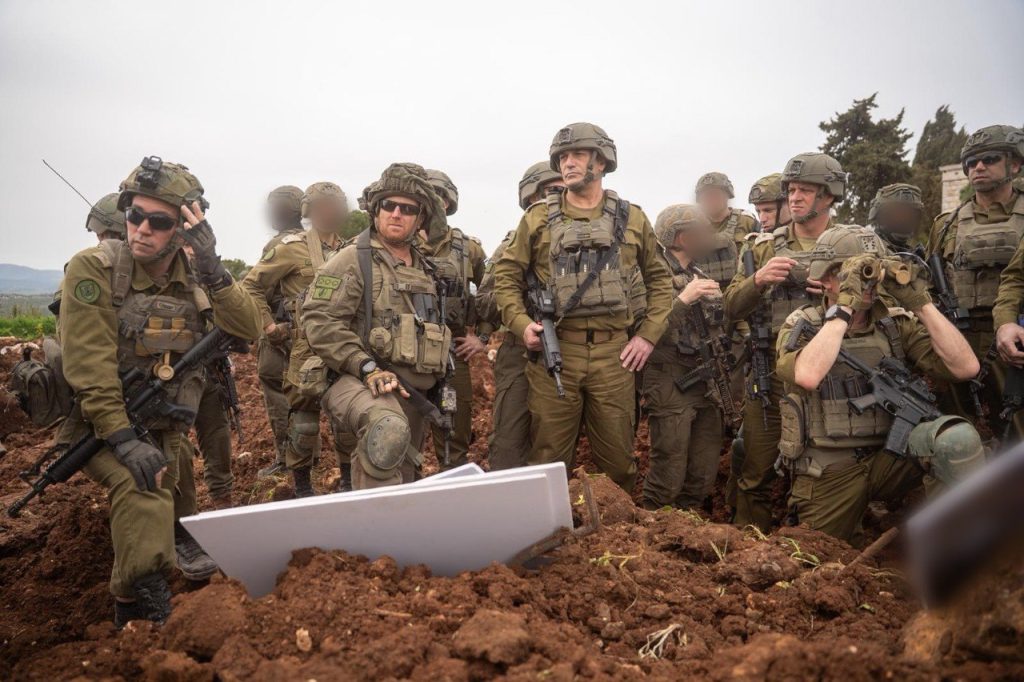
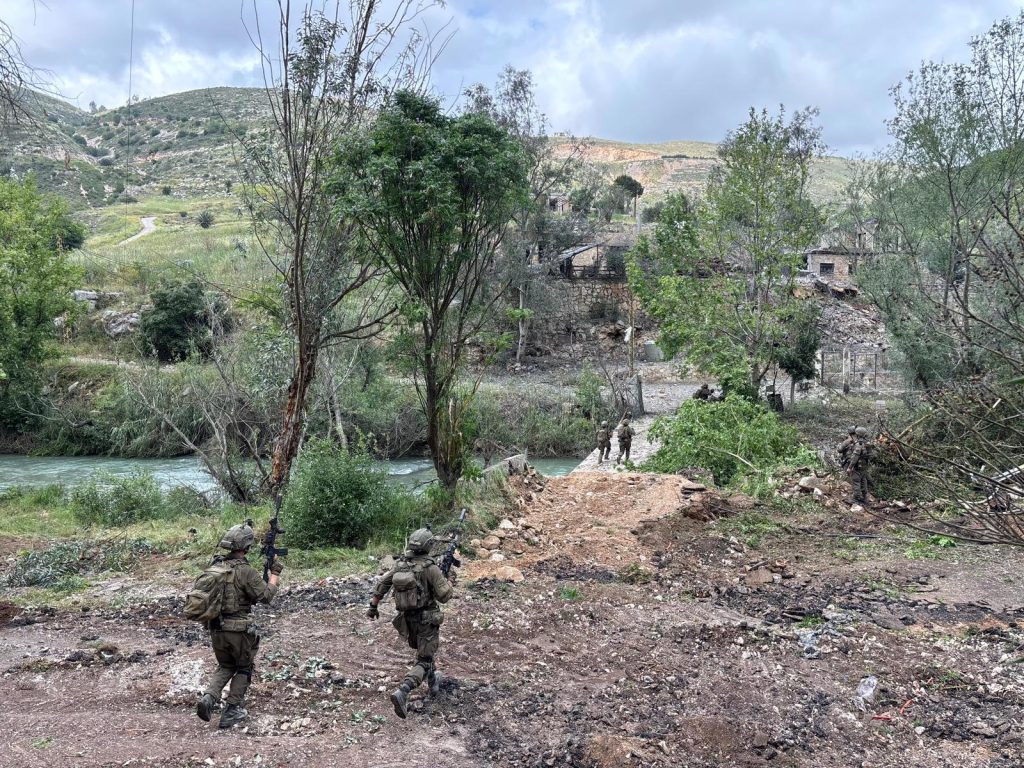
Reserve forces from the 226th Brigade, under the command of the 146th Division, are operating south of the forward defence line in southern Lebanon, April 28, 2026.
Reserve forces from the 226th Brigade, under the command of the 146th Division, are operating south of the forward defence line in southern Lebanon, April 28, 2026. Photo credit: IDF

What’s happened:  Israel suffered another casualty in southern Lebanon, when an Israeli civilian working as a contractor for the Defence Ministry was killed in a Hezbollah drone attack yesterday.

  • Amer Hujirat, 44 years old from Shfaram was operating heavy engineering machinery supporting the IDF near Bint Jbeil in southern Lebanon. His 19-year-old son was working with him at the time and was lightly injured in the attack.
  • Once more, Hezbollah used a fibre optic-guided drone in the attack, as it did in the attack earlier this week which killed Sgt. Idan Fooks. These drones, also known as FPV’s, cannot be electronically jammed. The only method to defeat to them is to shoot them down, which has proven to be difficult. Hezbollah has made extensive use of this weapon in the last two weeks, which it apparently started using as far back as 2024.
  • The IDF destroyed two enormous tunnels in southern Lebanon that had been built by Hezbollah over the course of the last decade. The two tunnels were located about 11 km north of the border with Israel and reached about 26 metres underground. One was 700 metres long and the other 1200 metres long, and they were not connected to each other.
  • The two tunnel compounds contained living quarters, staging areas, and access routes to launch sites, as well as large weapons stores. Each could have been used by hundreds of Hezbollah fighters to launch an October 7-style invasion of northern Israel. They were discovered by the IDF during the intense fighting which broke out in March following Hezbollah rocket attacks.
  • Captured Hezbollah fighters provided crucial intelligence that allowed the IDF to clear out the tunnels and eventually destroy them yesterday in a massive controlled explosion that used 500 tons of explosives and was so large that it registered on seismographs in northern Israel as an earthquake.

Context: The informal ceasefire, where low-level attacks continue, but where Israel refrains from retaliating in Beirut due to limitations imposed by the US so as not to interfere with the ongoing negotiations in Iran, continues.

  • Israeli frustration with this informal ceasefire, which leaves IDF soldiers behind the forward defensive line, but vulnerable to attacks without Israel having the means to exact a price for attacks on its soldiers, has become a source of frustration for the army.
  • At the same time, the US continues to push Israel and Lebanon to reach a diplomatic agreement that would exceed the measures of a ceasefire, even if it might fall short of a full peace treaty. Media reports have indicated that Egypt too has taken on a mediator role in the negotiations. European governments too have indicated that they would be willing to help Lebanon carry out a disarmament of Hezbollah, a sentiment echoed publicly by EU Commission President von der Leyen.
  • The holding pattern of the Lebanon fighting exists at the insistence of the United States while it pursues a negotiated settlement in the larger conflict with Iran, of which the Lebanon conflict remains a secondary front. On Monday, the Iranians proposed a deal through Pakistani intermediaries that would have seen an immediate end to their blockade of the Straits of Hormuz as well as the American blockade on Iranian ports as a first step to further negotiations on the nuclear programme. It also would have committed the U.S. to  a full end to the war with Iran. The Trump administration appears to have rejected this proposal.
  • As the US continues to build up its forces in the region in anticipation of a possible collapse of the ceasefire which has been in effect for more than three weeks now, the administration has begun signalling publicly in the last day that might prefer a long-term economic squeeze on Iran over either of the two options that were until very recently seen as the most likely — a negotiated agreement or a renewal of the war with a massive attack on Iranian infrastructure.
  • The negotiations that have taken place have dealt exclusively with the Iranian nuclear programme and not, as far as is publicly known, with either the Iranian ballistic missile programme or with Iran’s support of it proxy network in the region. This has led to a great deal of frustration on the part of Israeli officials, who, in leaks to local media, also indicate that Jerusalem is not always fully updated on the diplomatic developments or American positions regarding Iran.
  • The talks included various proposals for moving highly enriched uranium out of Iran, but foundered on the American insistence on a 20-year commitment from Iran not to engage in enrichment activities. The Iranians, according to Pakistanis mediators, were unwilling to commit to more than five years.
  • Assuming that gap could be bridged, an agreement along the lines discussed would an unwelcome development from the Israeli perspective. It would leave Iran free to develop more ballistic missiles, and the lifting of sanctions would rescue a regime precisely at its weakest moment, while allowing to further finance its terrorist proxies closer to Israel. At the same time, a new round of fighting without a decisive conclusion or an American “declaration of victory” and departure could be even worse. The possibility of a continued blockade on Iran while a temporary ceasefire remains in place could be the least bad option.
  • The US too, appears to coming to that conclusion — or at the very least, wanting to create a public impression that is coming to that conclusion. Multiple reports today in US media quoted Trump administration officials as preparing for an extended blockade of Iran as the US’s best near-term strategy, with officials estimating that the economic costs to Iran of the status quo are much higher than they are to the US or its allies. Iran has apparently taken to “junk storage” of oil surpluses, as unsold oil, blocked in port by the US Navy, has filled its existing storage capacities and left it in a position where it might soon need to halt production altogether.

Looking ahead: Trump has extended the ceasefire indefinitely as long as negotiations are underway.

  • At the same time, the US continues its force buildup in the region, with a third carrier strike group arriving this week. The USS George HW Bush joins the USS Abraham Lincoln and the USS Gerald R Ford, already in theatre.
  • Some 50,000 ground troops are also stationed across the region in American bases, a significant change from the buildup that presaged the February 28 launch of hostilities.

April 27, 2026

Fragile ceasefire holds on paper as Hezbollah violations mount

IDF in souther Lebanon, April 27, 2026.
IDF in souther Lebanon, April 27, 2026. Photo credit: IDF.

What’s happened: President Trump announced the extension of the fragile ceasefire for an additional three weeks following direct talks between Beirut and Jerusalem’s envoys to the US at the White House.

  • Despite this, Israeli officials accused Hezbollah yesterday of violating the ceasefire agreement on 16 separate occasions within the last week.
  • In response, the IDF struck Hezbollah military structures in southern Lebanon. Israeli officials are concerned that the understandings with Lebanon that underpinned the ceasefire might collapse unless the US can pressure the Lebanese government to take action against Hezbollah north of the security zone.
  • Sgt. Idan Fooks, a 19-year-old resident of Petah Tikva, was killed by an exploding Hezbollah drone. Six soldiers were injured, four of whom were hospitalised in serious condition. He is the third Israeli soldier to be killed since the ceasefire began and the 15th in this campaign.
  • There remains deep resentment in northern Israel. This morning mayors from the northern border communities announced that schools would be closed as of tomorrow. The mayors said that despite the announcements about a ceasefire, the reality on the ground proves that security on the border had not been restored and that the communities remain under fire.

April 23, 2026

Israel marks Independence Day amid fragile ceasefires

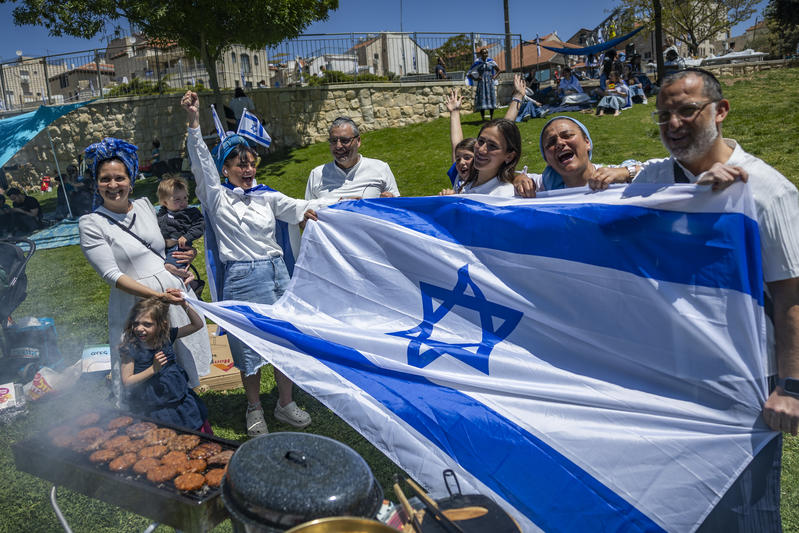
People celebrate Israel’s 78th Independence Day at Sacher Park in Jerusalem, April 22, 2026.
People celebrate Israel’s 78th Independence Day at Sacher Park in Jerusalem, April 22, 2026. Photo by Yonatan Sindel/Flash90

What’s happened: Israel celebrated 78 years of statehood yesterday. It was the first Independence Day Israel has marked since the October 7 invasion and massacre without any hostages being held in Gaza.

  • The State of Israel’s population stands at 10.2 million people, more than twelvefold since the state was founded in 1948. This includes 7.8 million Jews, roughly 45% of the world’s total.
  • Celebrations of Israel’s independence took place throughout the country yesterday without incident, as ceasefires in wars in Gaza, Lebanon, and Iran mostly held. An exception to that was a Hezbollah rocket attack on IDF positions in southern Lebanon and several nearby Israeli communities inside northern Israel on Tuesday evening.
  • Today, ambassadors to the United States from both Israel and Lebanon will renew talks begun at the beginning of the ceasefire last week. They will be joined by Secretary of State Marco Rubio and, for the first time, by the US ambassador to Israel Mike Huckabee.
  • The White House outlined its public positions on the Iran conflict yesterday, with White House Press Secretary Karoline Leavitt emphasising the US position on the nuclear issue, rather than on other issues which had been raised earlier such as Iran’s ballistic missile programme or its network of regional proxies. “Iran can never obtain a nuclear bomb to threaten the United States and our allies,” she told reporters, “and they must turn over the enriched uranium that’s in their possession.”
  • Both the US and Iran released videos of their forces enforcing their respective blockades. US videos showed a forced boarding of a ship near the Strait of Hormuz and of another unflagged ship, linked to Iran, in the Indo-Pacific, which was carrying 2 million barrels of Iranian oil that had been loaded at Kharg Island.
  • The US blockade operation has been called Operation Economic Fury, following on the kinetic campaign which was known as Operation Epic Fury. Iranian forces fired on and disabled at least three ships attempting to transit into the Gulf of Oman through the Straits.

Context: The ceasefire between Israel and Hezbollah declared on April 16 was due to last ten days. It did not stipulate any territorial changes, but rather kept positions frozen in place, leaving the IDF in control of swathe of Lebanese territory a few kilometres deep.

  • The Lebanese proposal to extend the ceasefire by one month (ten days in some media reports) would maintain these positions, and not require any withdrawals by the IDF. But the Lebanese proposal includes a demand that Israel stop demolitions inside the zone of southern Lebanon that it holds and would presumably continue to hold for the additional month of a ceasefire extension.
  • Israeli media report that some 20 Lebanese villages abutting the Israeli border are in the process of being demolished by Israeli bulldozers, many of which have been moved up from Gaza to complete the mission as quickly as possible.
  • In previous rounds of fighting, the IDF has watched as Hezbollah accessed weapons caches stored in residences in these villages and used them to conduct attacks on Israeli border communities. Particularly problematic from the Israeli perspective was the use of anti-tank fire on homes in Israeli communities along the border.
  • The present demolitions are intended to ensure that this pattern is not repeated, even in the event of a full Israeli withdrawal at some future point.
  • This fits into a larger Israeli lesson learned since the October 7 attacks. At the time, Israel made the decision to evacuate frontline communities on the northern border at the same time that a similar evacuation was necessary along the Gaza envelope.
  • For more than a year, tens of thousands (well over 100,000 at one point) of Israelis from both north and south were in temporary housing and hotels. Israeli officials have largely come to see the northern evacuation as a mistake that handed Hezbollah an unjustified victory.
  • While the US waits to see if Iran will moderate its position on any of the issues under negotiation, its naval blockade continues. So too do preparations for a renewed aerial assault on Iran to begin immediately with the end of the ceasefire. The US has now positioned a third aircraft carrier in the vicinity. Israeli officials anticipate that a renewed US air operation would last several days and would target Iran’s energy infrastructure.
  • Recent days have also seen repeated reports of another global power’s increasing involvement in efforts to hammer out a deal — China. Beijing is reportedly pressuring Iran to reach a compromise with the United States that would reopen the Straits of Hormuz, whose closure threatens China’s economy far more than it does those of the US and its Western allies.

Looking ahead: The ceasefire in Lebanon is due to expire on April 26. Efforts are underway in Washington to mediate a durable agreement between Israel and Lebanon, or, failing that, to extend the ceasefire so that negotiations can continue. The Lebanese have requested a one-month extension on the ceasefire. Israel’s position on this possibility is not publicly known.

  • The ceasefire declared in Iran on April 8 was originally due to last only two weeks. According to multiple US media reports, all sides have agreed to extend it until at least this coming Sunday. This would put the expiration of the Iran ceasefire on the same day as the expiration of the Lebanon ceasefire.
  • The parallel blockades have hurt all sides in the conflict, but don’t appear to be driving anyone to moderate their positions. The IMF warned this week that in a “severe scenario” of long-term blockade, global GDP could decline by 2% in 2026.

April 21, 2026

Israel marks Memorial Day, continues to operate in southern Lebanon

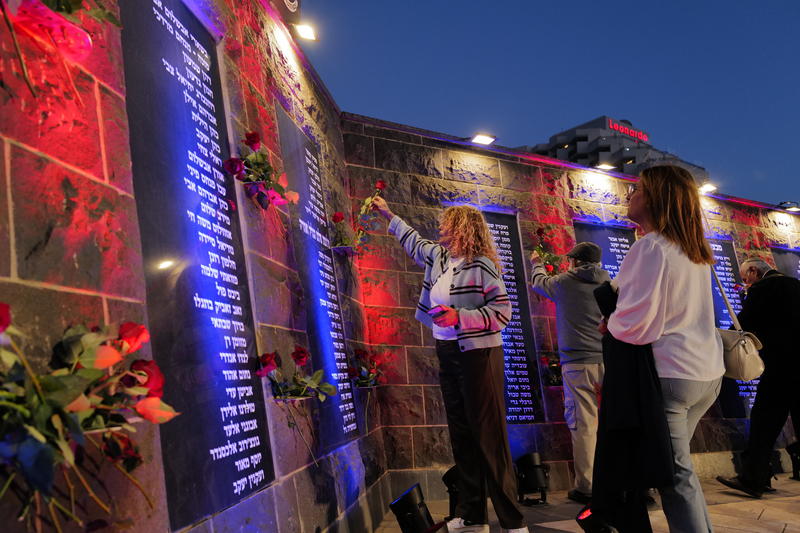
People and Israeli soldiers attend a memorial ceremony in Tiberias on the eve of Israel's Memorial Day, as the country commemorates fallen soldiers and victims of terror, April 20, 2026.
People and Israeli soldiers attend a memorial ceremony in Tiberias on the eve of Israel's Memorial Day, as the country commemorates fallen soldiers and victims of terror, April 20, 2026. Photo by Michael Giladi/Flash90

What’s happened: Today is Memorial Day in Israel, which commemorates the fallen Israeli soldiers and civilian victims. Over the last year, 172 soldiers and 56 civilians were killed, marking a total of 25,648 soldiers who have fallen in war and the 5,313 civilians who were murdered in terror attacks.

  • Two more soldiers were killed in Lebanon over the weekend, despite the ceasefire. Sgt. First Class (res.) Lidor Porat, a 31-year-old resident of Ashdod, was killed when an IDF engineering vehicle drove over a bomb that had been planted by Hezbollah in the forward defensive zone. On Friday, 48-year-old Warrant Officer (res.) Barak Kalfon, was killed by  an IED exploded.
  • Fifteen soldiers have been killed in Lebanon since the beginning of March.
  • At the state ceremony at the Western Wall Plaza last night, President Herzog spoke about the legacy of the fallen. Herzog said, “They left behind a void in our hearts that will never be filled. But they also left us strength of spirit. We do not live by the sword, but with it. We will wield it with one hand when needed, like now, and it will be sharp and resolute. But the spirit will always exist, the spirit that dreams of peace, freedom and dignity, the spirit that is filled with faith and with love for humanity, the people and the land.”
  • IDF Chief of Staff Zamir said, “We, as a people, all parts of the people, must have a deep partnership in the mission of security and shouldering the burden through learning and changing. This war has taught us that these are the essential conditions for our military might and that cohesion is a condition for our survival.”
  • At 11am local time this morning, across the country, Israelis paused wherever they were, including on motorways, and stood in silence as a two-minute siren sounded.

Context: Following the ceasefire with Lebanon, which was announced by US President Trump, IDF forces continued ground manoeuvres in the areas under their control in southern Lebanon.

  • The IDF has divided the security zone into three lines:
    • The red zone is defined as the first line of villages adjacent to the Israel-Lebanon border, in which a majority of the buildings have already been cleared and are considered to be terrorist-free, and IDF troops have taken up permanent positions in some locations.
    • The second line (similar to Gaza), is the yellow line – or the anti-tank missile line. This is the row of villages located six-to-ten km from the border. This zone is meant to prevent direct fire of anti-tank missiles on civilian communities in northern Israel. In this area, IDF forces continue to clear the houses and entrench their positions. One of the locations in this area where low-level conflict is the area around Bint Jbeil, where a few isolated Hezbollah terrorists remain surrounded.
    • The third line is the Litani River, where the IDF aims to assert its control via the use of firepower and observation posts.
  • In line with Israel’s commitment to the ceasefire, they are not expanding their operations but, according to the IDF continue to act, “in accordance with orders given by the political leadership… the IDF has the right to take the necessary measures for self-defence against threats, while maintaining the security of the citizens of the State of Israel and the troops deployed in the field.”
  • According to Israel’s interpretation of the ceasefire conditions, the IDF will target any terrorist operatives up to the Litani River, and maintain their freedom of action in southern Lebanon. This appears similar to the arrangement reached in November 2024, except this time they currently hold a much deeper presence within southern Lebanon.
  • Israel is framing this as “Forward Defence Line” rather than a formal security zone, which Israel held with similar dimensions between 1983 and 2000. There appear to be two major distinctions:
    • Firstly, the security zone consisted of heavily fortified semi-permanent positions, while this time the IDF does not envision a long term presence and does not want to remain static.
    • Secondly, during the 1980s and 90s the IDF had a partner in the form of the SLA – South Lebanon Army, made up of Lebanese Christian allies.
  • Those former Lebanese Christian allies were reeling after the releases of a photo of an IDF solider desecrating a statue of Jesus Christ. The photo was apparently taken in the Christian village of Debel, which had contributed to the SLA and had not been evacuated this time, due to their opposition to Hezbollah. The IDF said they view the incident with “great severity and emphasises that the soldier’s conduct is wholly inconsistent with the values expected of its troops.”
  • Prime Minister Netanyahu also commented on this grave incident “As the Jewish state, Israel cherishes and upholds the Jewish values of tolerance and mutual respect between Jews and worshippers of all faiths. All religions flourish in our land and we view members of all faiths as equals in building our society and region. Yesterday, like the overwhelming majority of Israelis, I was stunned and saddened to learn that an IDF soldier damaged a Catholic religious icon in southern Lebanon. I condemn the act in the strongest terms. Military authorities are conducting a criminal probe of the matter and will take appropriately harsh disciplinary action against the offender. While Christians are being slaughtered in Syria and Lebanon by Muslims, the Christian population in Israel thrives unlike elsewhere in the Middle East. Israel is the only country in the region that the Christian population and standard of living is growing. Israel is the only place in the Middle East that adheres to freedom of worship for all. We express regret for the incident and for any hurt this has caused to believers in Lebanon and around the world.”
  • Furthermore, the IDF later assisted the community in restoring the statue to its place.
  • Meanwhile there is anger among residents of northern Israel who feel betrayed by their own government, with the perception that the premature ceasefire was forced upon them before their safety was adequately reached.
  • US Admiral Cooper, commander of CENTCOM, visited Israel again over the weekend and met with IDF Chief of Staff Zamir, suggesting the two militaries remain closely coordinated.

Looking ahead: Tonight marks the sharp shift in the Israel public mood, as Memorial Day ends and celebration of Israel’s 78th Independence Day begins.

  • Israel remain on a high level of alert wary of the possibility of renewed fighting, should the talks between the US and Iran collapse.
  • Trump’s two week deadline for ceasefire talks with Iran ends tomorrow. According to Saudi media, Pakistan has asked the US and Iran to extend the ceasefire by two weeks.  

April 17, 2026

Trump declares ten day ceasefire in Lebanon

The Chief of Staff visits the 162nd Division in southern Lebanon, March 15, 2026.
The Chief of Staff visits the 162nd Division in southern Lebanon, March 15, 2026. Photo credit: IDF

What’s happened: Following President Trump announcement on Thursday afternoon, the ceasefire between Israel and Hezbollah came into effect midnight local time.

  • The sides released a joint statement which stated how an understanding had been reached “in which both nations will work to create conditions conducive to lasting peace between the two countries, full recognition of each other’s sovereignty and territorial integrity, and establishing genuine security along their shared border, while preserving Israel’s inherent right to self-defence.”
  • The statement also confirms that “Israel and Lebanon request that the United States facilitate further direct negotiations between the two countries with the objective of resolving all remaining issues, including demarcation of the international land boundary, with a view to concluding a comprehensive agreement that ensures lasting security, stability, and peace between the two countries.”
  • In the final hours before the ceasefire Hezbollah fired dozens of missiles and rockets towards northern Israel. Most of them were intercepted and several landed in uninhabited territory. A 25-year-old motorcyclist and a 17-year-old girl sustained serious injuries from interceptor shrapnel near the city of Karmiel. A 40-year-old man in Nahariya sustained moderate injuries.
  • Inside Lebanon the IDF attacked the launchers that fired the rockets. IDF officials reported that more than 380 Hezbollah targets in southern Lebanon were attacked in the past 24 hours.
  • The IDF told residents of southern Lebanon that IDF troops would remain in the area despite the start of the ceasefire and residents are forbidden to travel south of the Litani River. However, as of this morning it appears many Lebanese are ignoring this warning.    Earlier in the day Lebanese President Aoun rebuffed US efforts to hold a telephone conversation with Prime Minister Netanyahu, contrary to President Trump’s declaration the day before.

Context: Prime Minister Netanyahu had informed government ministers at the security cabinet meeting on Wednesday that in the event that Trump were to ask Israel to hold its fire in Lebanon, he would agree. Nevertheless, the timing came as a surprise to the Israeli public and government ministers.

  • There is grave concern that behind the scenes it was Iran that demanded the linkage to their own  ceasefire, reinforcing the perception that their influence in Lebanon remains intact. This was a situation that Israel had categorically rejected when the US and Iran agreed to the broader  ceasefire.
  • Marom Hagalil Regional Council Chairman Amit Sofer told Israeli media, “It’s unreasonable for Trump to link the Lebanese theatre to the Iranian theatre. By so doing, he’s sentencing the residents of northern Israel to more years of an ongoing threat. The IDF must be allowed to win and to achieve the objective that the political leadership gave it: disarming Hezbollah…. Hezbollah must be isolated from its Iranian big brother, that’s part of cutting off the terrorist lifeline and breaking the axis of evil, which is why a ceasefire is currently a worse possibility for the north than continuing the war is.”
  • The ceasefire is expected to follow the same format of the agreement that was concluded by the Biden administration in November 2024, whereby Israel will be allowed to take action against Hezbollah violations. There is hope (but limited confidence) that this time the Lebanese government will also act to enforce the agreement. However, even though the IDF continued to operate in Lebanon and to strike Hezbollah since November 2024, it is now self-evident that Hezbollah was still able to rebuild and threaten the residents of northern Israel.  
  • In an encouraging sign the statement including mutual “full recognition of each other’s sovereignty.” This is particularly significant as it marks the first time that Lebanon and Israel have recognised each other in a normalised fashion rather than as enemy states.
  • Following Trumps announcement, Prime Minister Netanyahu declared, “We have two fundamental demands for these peace talks: First, the disarmament of Hezbollah. Second, a sustainable peace agreement, peace through strength. To achieve this ceasefire, Hezbollah insisted on two conditions: First, that Israel must withdraw from all Lebanese territory, back to the international border. Second, a ceasefire based on the ‘quiet for quiet’ model. I agreed to neither of these, and indeed, those two conditions are not being met.”
  • He further clarified, “We are remaining in Lebanon in a reinforced security buffer zone…. This is a security strip ten km deep, which is much stronger, more intense, more continuous, and more solid than what we had previously. That is where we are and we are not leaving. This allows us, first and foremost, to block the danger of an invasion into our communities, and secondly, it allows us to prevent direct anti-tank fire into the communities. The residents are now protected from these two dangers. Of course, there are still problems; They still have rockets left. We will have to deal with that as well, as part of the progress toward a security agreement and a continuous peace treaty.”
  • Earlier this week, Israel and Lebanon’s ambassadors to the US met for direct talks under Secretary of State Rubio’s supervision in Washington DC. These were Israel and Lebanon’s first direct talks since 1993, and shortly afterwards a joint statement was released proclaiming how they had held “productive discussions” on steps “toward launching direct negotiations between Israel and Lebanon.”
  • This comes as the US and Iran also move towards extending their own ceasefire with further Pakistani mediated negotiations taking place in Islamabad.

Looking ahead: According to Netanyahu, he is anticipating another invitation to the White House, this time along with Lebanese President Aoun, for an opportunity “to forge a historic peace agreement with Lebanon.”  

April 16, 2026

Trump announces Netanyahu and Aoun due to speak directly

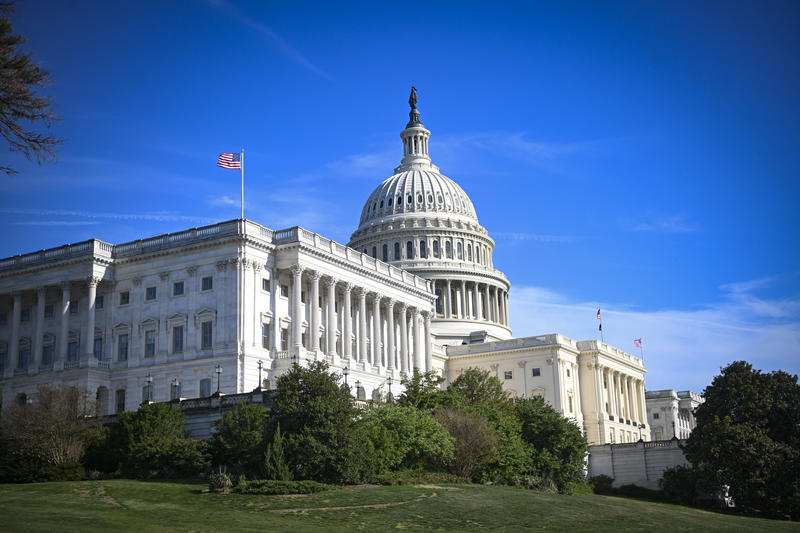
View of the United States Capitol in Washington, D.C., April 14, 2026.
View of the United States Capitol in Washington, D.C., April 14, 2026. Photo by Arie Leib Abrams/Flash90

What’s happened: President Trump announced that leaders of Israel and Lebanon are due to speak to each other directly today.

  • Prime Minister Netanyahu and Lebanese President Joseph Aoun are expected to discuss efforts to reach a ceasefire in the Israeli-Lebanese war raging since Hezbollah launched rocket attacks on northern Israel on March 2, violating a ceasefire that had been in place since November 2024.
  • Direct talks were held yesterday in Washington between Israel’s ambassador to the US Yehiel Leiter and his Lebanese counterpart Nada Hamadeh Moawad, together with US Secretary of State  Rubio. A joint statement issued by the three parties said only that they had held “productive discussions toward launching direct negotiations.”
  • The war was still ongoing this morning, despite reports in Lebanese media that a ceasefire might go into effect overnight. Israeli operations have been limited to southern Lebanon, apparently in line with a US demand not to launch further strikes on Beirut following a large air strike on April 8.
  • Hezbollah rocket fire and drone strikes on  towns and villages in northern Israel continued as well both last night and this morning, with no fatalities reported and one injury in the Arab town of Tamra.
  • In southern Lebanon, one IDF soldier was seriously wounded and four other lightly wounded in a Hezbollah rocket attack.
  • On the ground, the IDF continues to operate in and around the Hezbollah stronghold of Bint Jbeil. Commenting on that battle and the larger war, Netanyahu said last night, “We are about to decisively defeat Bint Jbeil, to eliminate this large Hezbollah stronghold. Meanwhile, yesterday I instructed the IDF to continue to reinforce the security zone, and to expand it eastward to the slopes of Mount Hermon so that we might be able to help even better our Druze brothers during their time of need.”
  • Chief of General Staff Eyal Zamir visited IDF troops in southern Lebanon yesterday. Speaking with soldiers, he reported that the IDF estimates it has eliminated 1,700 Hezbollah fighters since the war broke out in March. He also said that he had already approved operational plans for further combat in both Lebanon and Iran, to be implemented should ceasefire talks fail.
  • Regarding the competing blockades around the Strait of Hormuz, CENTCOM reported that ten ships had been turned around by the US naval blockade. At the same time, it appears at least two US-sanctioned supertankers made it into the Gulf despite the US blockade. Some media reports have indicated that Iran might consider letting ships pass through the Omani side of the Straits of Hormuz without hindrance, but it was unclear if this proposal was relating to a comprehensive settlement or a confidence-building measure while talks were ongoing.

Context: Direct talks between a Lebanese and Israeli leader, much less publicly known direct talks, would be highly unusual, as Lebanese law technically still forbids any kind of communication of any Lebanese citizen with any Israeli.

  • Israel’s demands for a ceasefire with Lebanon are a revised and improved version of the ceasefire that ended the previous round of fighting in November 2024. As in the 2024 ceasefire, Israel insists on full freedom of action for the IDF to operate in Lebanon to enforce provisions of the ceasefire, both north and south of the Litani River. Also in line with the earlier ceasefire, Israel insists on a Lebanese commitment to disarm Hezbollah. But in the new ceasefire, Israel would like to see this actually carried out, and is therefore insisting on some form of US oversight for the disarmament.
  • A more dramatic departure from previous ceasefire regards territory. In the previous ceasefire, Israel held on to five strongpoints in southern Lebanon, with a long-term commitment to withdraw. In current discussions, Israel is asking for a buffer zone to be established which would be completely clear of Hezbollah presence (it is unclear if in the immediate term civilians evacuated from these areas would be allowed to return, especially those in areas that would place Israelis in range of anti-tank fire).
  • The implication of such a buffer zone would be a longer-term IDF presence until some kind of more stable diplomatic arrangement can be negotiated. Notably, according to reports in Israeli media at least, Lebanon itself has not insisted on an immediate or full withdrawal of Israeli forces from its territory.
  • Another minor taboo that was broken in the initial talks between Israel and Lebanon was the discussion of economic issues. A weakening of Hezbollah by Israel followed by a full disarmament by the Lebanese state under US supervision is expected to open the door to massive investment and reconstruction by two large US allies in the region, Saudi Arabia and the UAE.
  • This has introduced a new incentive for Lebanon to do what it has been unable or unwilling to do until now. Especially it has been in a deep economic crisis now for over a decade.
  • All sides agree that the war in Lebanon is a secondary front to the larger war between Iran on one side and the US and Israel on the other.  

Looking ahead: Based on leaks to the media, the initial round of US-Iran talks last week was not the complete failure it had been largely reported to have been and negotiations are set to continue, even after Vice President Vance’s departure from Islamabad.

  • Pakistani efforts to mediate between the sides, along with parallel efforts from Turkey and Egypt, have yielded a few areas of possible consensus.
  • According to media reports, the US is prepared to establish a $250 billion aid fund for Iran in the event of an agreed conclusion to the war that meets its demands.
  • It is willing to recognise Iran’s right to a civilian nuclear programme, while insisting on a 20-year ban on enrichment. It is also demanding that Iran turn over its stockpile of highly enriched uranium.
  • The Iranians, for their part, have proposed depleting the highly enriched uranium they still have on Iranian soil with international supervision, which would also make it unusable for weapons purposes.
  • Negotiations between the US and Iran are also reported to cover both the fighting in Lebanon and the position of the Houthis in Yemen. At the same time, there are no public reports that the talks have touched upon an issue that was central to both the US and Israeli war effort, namely the Iranian ballistic missile programme.

April 15, 2026

Lebanese and Israeli representatives meet in Washington

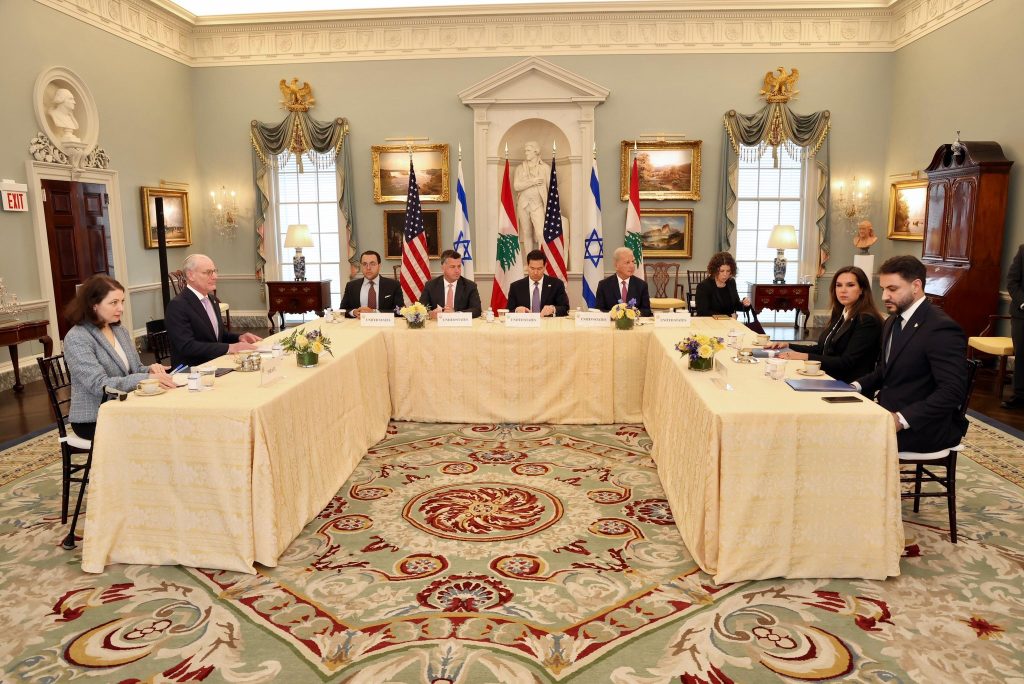
Israeli and Lebanese delegations meet in Washington, DC.
Israeli and Lebanese delegations meet in Washington, DC, March 14, 2026. Photo credit: Shmulik Almany via Ambassador Yechiel Leiter / X

What’s happened: The two ambassadors met yesterday with the goal of reaching a peace agreement between the two countries.

  • Ahead of the meeting, US Secretary of State Rubio referred to a “historic opportunity” rather than a ceasefire. He spoke of how the talks were about “bringing a permanent end to 20 or 30 years of Hezbollah’s influence in this part of the world and the – not just the damage that it’s inflicted on Israel, the damage that it’s inflicted on the Lebanese people. We have to remember the Lebanese people are victims of Hezbollah. The Lebanese people are victims of Iranian aggression. And this needs to stop.”
  • He cautioned that it would take time. “This is a process, not an event.” He spoke of the hope that “we can outline the framework upon which a permanent and lasting peace can be developed so that, as I said, the people of Israel can live in peace, and the people of Lebanon can live not just in peace but the prosperity and security that they deserve.”
  • Following the meeting, the three sides issued a joint statement noting that the participants held “productive discussions” on steps “toward launching direct negotiations between Israel and Lebanon.” The United States congratulated the two countries on this historic milestone and expressed its support for further talks, and for the Government of Lebanon’s plans to restore the monopoly of force and to end Iran’s overbearing influence.” The US also “underscored that these negotiations have the potential to unlock significant reconstruction assistance and economic recovery for Lebanon and expand investment opportunities for both countries.”
  • After the meeting, Israeli Ambassador to the US Yechiel Leiter said, “The Lebanese government made it very clear that they will no longer be occupied by Hezbollah,” adding, “We are both united in liberating Lebanon from an occupation power dominated by Iran called Hezbollah.”
  • Ambassador Leiter revealed that the sides discussed “the long-term vision, where there will be a clearly delineated border between our countries, and where the only reason we’ll need to cross each other’s territory will be in business suits to conduct business, or in bathing suits to go on vacation.”
  • At the same time, rocket fire from Hezbollah continues. This morning about 40 rockets were fired into northern Israel.

Context: This symbolic but significant meeting was the first time Israel and Lebanon have held direct talks since 1993.

  • For Israel, the talks reflect the doctrine of ‘peace through strength,’ Ambassador Leiter committed to “work tirelessly for tranquility and prosperity for all. Today, we pursue those values for ourselves and especially for our Lebanese neighbours of all ethnic denominations. I commend President Joseph Aoun and his government for not allowing itself to be held hostage to the threats of Hezbollah’s leader. Naim Qassem and Hezbollah belong to the past. We are here for the future. I believe that we can, in good faith, accomplish the following interrelated goals: the complete dismantlement of Hezbollah, the freeing of Lebanon from Iran’s terror proxy, and the achievement of a real, lasting and mutually-celebrated peace for the benefit of our peoples.”
  • It is understood that at this point the US aspire to reach a ‘shelf agreement’ that will be ready for implementation once Hezbollah is disarmed. 
  • It is also notable that France has so far been absent from the process. Given Paris’s historic role in Lebanon and its longstanding political and cultural ties there, this underlines how firmly the talks are currently being driven by Washington.
  • Despite the optimism emanating from Washington, fighting in southern Lebanon continued, whist Hezbollah missiles and drone continue to target communities in northern Israel. A security official revealed that still over 50 per cent of Hezbollah attacks are being launched from south of the Litani River, signifying that despite IDF advances on the ground it will take much more work to fully demilitarise southern Lebanon.
  • Whilst IDF manoeuvres in southern Lebanon continue, Israeli troops have not advanced further north and have held back from any further escalation. The IDF has not targeted Hezbollah positions in Beirut for almost a week. This is thought to have been done at the request of the US.
  • Meanwhile, Hezbollah continue to attack northern Israel. Sirens were sounded throughout the day yesterday in Kiryat Shmona and other northern communities. A drone struck the main entrance to Nahariya.
  • The negotiations are a result of US pressure on both sides, aiming to create a political horizon for Lebanon and, mainly, to create conditions to allow for US-Iranian negotiations.The Israeli approach is to negotiate with Lebanon as if there is no Hezbollah, and to fight Hezbollah as if there are no peace negotiations.
  • Whilst Iran continues to exercise influence over Lebanon it will be impossible to reach a deal. As an example, despite Lebanon declaring the Iranian ambassador to Lebanon as persona non grata, they have been unable to expel him and he remains holed up in the embassy.  

Looking ahead: Despite Israel’s desire to sever the ties between Iran and Lebanon, most analysts believe there can only be progress with Lebanon once the US has resolved their conflict with Iran.

  • After this initial meeting the sides are expected to meet again in the next few weeks. It will be noteworthy whether the talks remain at the level of ambassadors or if more senior figures agree to meet.  A second indicator of progress will be the inclusion of military officials, cartographers, and national security experts.

April 14, 2026

IDF continues to operate against Hezbollah in southern Lebanon

IDF continue operations in the Bint Jbeil area to expand the security zone.
IDF continue operations in the Bint Jbeil area to expand the security zone. March 12, 2026. Photo credit: IDF

What’s happened: In Bint Jbeil, one of Hezbollah’s key strongholds, Israeli forces are continuing operations to expand the security zone.

  • The IDF has now reached the main centre of Hezbollah operations in the town. So far, the IDF says it has eliminated more than 100 terrorists, but its thought there are dozens more, including members of the Radwan Force still holding out.
  • The IDF revealed yesterday that more than 250 terrorists and Hezbollah commanders were eliminated in the large-scale strikes in Lebanon on April 8.
  • According to a senior intelligence official, “Within a single minute, the IDF struck dozens of Hezbollah command centres and eliminated hundreds of terrorists. The elimination of these commanders delivered a broad, strategic blow that affected all dimensions of the organisation’s capabilities. These were commanders with extensive experience and knowledge that has now been cut short. We have not yet completed assessing the full impact of the strike, and we continue to identify additional terrorists who were eliminated each day.”
  • Also yesterday, another IDF soldier Sergeant-Major (res.) Eyal Uriel Bianco, a 30-year-old resident of Katzrin, was killed in southern Lebanon when a Humvee overturned.
  • Meanwhile, rocket fire towards northern Israel continued yesterday with sirens throughout the day. A three-story residential building in Nahariya was hit directly yesterday afternoon by a rocket that was not intercepted.

April 10, 2026

Israel to begin direct negotiations with Lebanon

The IDF Chief of Staff, Eyal Zamir, during a situational assessment on the outskirts of Bint Jbeil in southern Lebanon.
The IDF Chief of Staff, Eyal Zamir, during a situational assessment on the outskirts of Bint Jbeil in southern Lebanon. April 9, 2026.

What’s happened:  On Thursday night Prime Minister Netanyahu announced that, “Following repeated requests from the Lebanese government to open peace negotiations with us, last night I instructed the Cabinet to begin direct negotiations with Lebanon.”

  • He added that the talks would have two goals: “First, the disarming of Hezbollah. Second, a historic, sustainable peace agreement between Israel and Lebanon.”
  • At the same time he sought to reassure the residents of the north that currently, “there is no ceasefire in Lebanon. We are continuing to strike Hezbollah with full force, and we will not stop until we restore your security.”
  • Late Thursday night, a single missile fired by Hezbollah at central Israel was intercepted. Nobody was injured and no damage was caused. Earlier, missiles were fired at Haifa and Haifa Bay. Some were intercepted and others fell in uninhabited areas. Hezbollah also continued to fire rockets at border communities throughout the night. Nobody was injured and no damage was caused.
  • Earlier this week the IDF conducted the largest coordinated strike across Lebanon since the start of the war. According to the IDF, “within 10 minutes and across multiple areas simultaneously,” the IDF targeted “more than 100 Hezbollah command centres and military sites.”
  • The IDF added that most of the infrastructure struck “was located within the heart of the civilian population, as part of Hezbollah’s cynical exploitation of Lebanese civilians as human shields in order to safeguard its operations. Prior to the strikes, steps were taken to mitigate harm to uninvolved individuals as much as possible.”
  • Lebanese officials are divided over the prospects of talks with Israel, with some trying to condition them on first reaching a ceasefire, whilst others who oppose Hezbollah think negotiations should be held even under fire.  

Context: As the fragile, temporary ceasefire with Iran holds, Israel continues to insist that Lebanon is not included in the ceasefire.

  • Despite Iranian and Pakistani claims to the contrary, various senior US officials have backed Israel’s position, including Vice President JD Vance who told reporters yesterday that, “the Iranians thought that the ceasefire included Lebanon, and it just didn’t. We never made that promise. We never indicated that was going to be the case. What we said is that the ceasefire would be focused on Iran, and the ceasefire would be focused on America’s allies, both Israel and the Gulf Arab states.” White House Press Secretary Leavitt added that, “Lebanon is not part of the ceasefire. That has been related to all parties involved in the ceasefire.”
  • Israel sees this as a favourable position that poses a dilemma to Iran. If Iran continues to hold its fire, it will have abandoned Hezbollah, whilst if Iran opens fire, it will cause Israel and the US to resume strikes with greater intensity.
  • Pakistan, the new intermediaries in the ceasefire, drew international criticism, as their Defence Minister, Khawaja Asif stated In  now-deleted post on X (formerly Twitter) that “Israel is evil and a curse for humanity” going on to say “I hope and pray people who created this cancerous state on Palestinian land to get rid of European jews burn in hell.”
  • Within Israel there are mixed views over the successes garnered throughout the war. IDF Chief of Staff Zamir declared on Thursday the achievements in the war against Iran are “unprecedented and historic. The Iran from before this war is not the same Iran; it is much weaker. We are prepared to return to intense fighting at any given moment if required.” Nevertheless there is concern over how to translate the military achievements into a strategic victory, particularly regarding Iran’s remaining stockpile of highly enriched uranium.        
  • In the background, the US has also encouraged the Israeli government to pursue the direct talks with Lebanon. This followed significant comments from Lebanese President Joseph Aoun from the beginning of the war when he explicitly blamed Hezbollah for dragging Lebanon into the conflict and even called for efforts to reach normalisation with Israel.
  • This was a significant positive development that reflects the domestic anger toward Hezbollah for importing a conflict at the behest of Iran against the interests of the Lebanese population. Israel did not formally respond to Aoun’s proposal until last night.
  • Despite Israel’s public commitment to continue striking Hezbollah, it is expected that the intensity will now be reduced. However the IDF’s ground operation is expected to continue with efforts focused at removing Hezbollah’s military infrastructure in southern Lebanon. The IDF are also expected to retaliate against Hezbollah for any attacks on Israel’s home front.  
  • According to the Lebanese Health Ministry, 1,888 Lebanese have been killed although they do not distinguish between Hezbollah operatives and civilians. According to the Israeli military over 1,400 Hezbollah members have so far been eliminated during the war.          
  • The starting point for the talks is expected to be based on UN Resolution 1701 from 2006, that never fully implemented  the removal of all terrorist infrastructure south of the Litani River. In addition Lebanon is expected to reaffirm its commitment to the agreement signed in November, 2024. Significantly, this authorised Israel to continue to target Hezbollah fighters  and in general prevent their efforts to rearm.
  • In response to the latest developments, the UK government has taken a position questioning Israel’s ongoing actions against Hezbollah. Asked about the Israeli strikes on Hezbollah, Prime Minister Keir Starmer said, “That shouldn’t be happening. That should stop. That’s my strong view,” adding that “it’s not a technical matter, but a matter of principle.” Starmer made the remarks in Bahrain during his trip to the Middle East. The same position was also shared by the Foreign and Defence Secretaries, in a development that appears to further strain the special relationship between the UK and the US.
  • Behind the scenes it is thought that Israel and Lebanon have been exchanging messages for more than a year. Both governments have a shared interest in limiting Hezbollah outsized influence, with the efforts thought to include intelligence sharing of the movements of Hezbollah members and the locations of its hidden weapons storehouses.  
  • There remains residual concern over whether the Lebanese Armed Forces are either unwilling or unable to confront Hezbollah, which is also why Israel insists on retaining its freedom of operation.

Looking ahead: Direct negotiations are expected to begin next week in Washington.

  • Prime Minister Benjamin Netanyahu has tasked Israel’s ambassador to the US Yechiel Leiter to represent Israel.
  • The US Ambassador to Lebanon Michel Issa will facilitate the talks. The Lebanese delegation will be headed by Simon Karam, a former Lebanese ambassador to the US and Parliament Speaker Nabih Berri, leader of the Shiite Amal Party.

Newsletter sign-up

Please enter your information below to subscribe to our daily newsletter and stay updated and informed.

Donate to BICOM

At BICOM, we rely on the generosity of people like you to keep our website and services running. Your donation, no matter the size, makes a real difference. Please consider supporting us today. For further information please email: [email protected]