
From dominance to decline: the story of Israel’s left
For the first three decades of Israel’s existence, the Israeli left was not simply a political camp. It was the identity of the state.
They built the institutions, founded the military, shaped the economy, absorbed mass immigration, negotiated Israel’s place in the world, and dominated almost every layer of political power. In Israel’s first election in 1949, parties of the left and centre-left collectively held an overwhelming majority of 69 seats out 120 in the first Knesset.
Today, the parties that once governed Israel uninterrupted for nearly thirty years have been reduced to a shadow of their former selves. The Labour Party, which gave rise to iconic Israeli leaders such as David Ben-Gurion, Golda Meir, Yitzhak Rabin, and Shimon Peres, has collapsed from a state-building giant into a marginal player, while the communist and democratic socialist strands of the Israeli left have been reduced to marginal factions within broader alliances.
The story of the Israeli left is therefore not merely the story of electoral decline. It is the story of how Israel evolved over the last half century.
The three traditions of the Israeli left
From the beginning, the Israeli left was never one unified movement. It emerged from three distinct political traditions that competed, cooperated, and evolved alongside each other.
Mapai: The ruling establishment
The dominant force was Mapai, led by David Ben-Gurion.
Mapai represented Labour Zionism: socialist in economics, pragmatic in security matters, and focused above all on building a Jewish state. It oversaw the creation of Israel’s institutions before independence and became the natural party of government after 1948.
In Israel’s first election in 1949, Mapai won 46 seats, nearly 40 per cent of the Knesset, and dominated Israeli politics for decades, well into the 1970s.
Mapai was pivotal in building up:
- the Histadrut trade union system,
- much of Israel’s welfare state,
- the state bureaucracy,
- the early Israeli economy,
- and the foundations of the IDF.
Mapam: The ideological socialist left
To Mapai’s left stood Mapam, more explicitly Marxist, more collectivist, and more ideological, though smaller electorally.
Mapam drew heavily from the kibbutz movement and believed socialism was not merely an economic system but a moral and national mission. In Israel’s first election, Mapam won 19 seats, making it the second-largest party in the country.
At times, Mapam was sympathetic towards the Soviet Union and represented a more doctrinaire socialist vision than Ben-Gurion’s pragmatic Labour Zionism. Yet despite ideological disagreements, Mapam remained part of the broader Zionist left. Over the years, it alternated between opposition and participation in Mapai-led governments and between 1965 and 1984 it was part of the Alignment alliance that brought together Israel’s Zionist left.
Maki: The communist tradition
Then there was Maki, the Israeli Communist Party.
Unlike Mapai and Mapam, Maki stood partly outside the mainstream Zionist consensus. It combined Jewish and Arab communists and aligned itself more closely with Soviet and international communist politics. Though never a major electoral force, it maintained a consistent presence in Israeli politics during the state’s early decades, particularly among segments of the Arab population, trade union activists, and parts of the radical Jewish left.
In the 1961 election, Maki won 5 seats, while the broader non-Mapai left — including Mapam and Ahdut HaAvoda — collectively held more than 20 seats in the Knesset. Yet the rise of nationalism after the 1967 Six Day War, combined with the global decline of communism and growing polarisation around the Arab-Israeli conflict, gradually pushed the communist left to the margins of Israeli politics.
The golden age of Labour dominance (1948–1977)
The first three decades of Israel’s history belonged overwhelmingly to the Labour movement.
Between 1948 and 1977, every Israeli prime minister came from Mapai or its successors. The left’s dominance was so complete that many Israelis simply viewed it as the natural order of politics.
This was partly because Labour’s legitimacy rested on state-building itself.
Mapai’s leadership also reflected the ethos of early Zionism: secular, collectivist, Ashkenazi, and heavily shaped by European socialist traditions.
The Labour movement:
- Built the institutions of state, including the trade unions.
- Absorbed massive waves of Jewish immigration.
- Managed rationing and economic hardship.
- Built national infrastructure.
- Established Israel’s diplomatic networks.
- Led the country through successive attempts of its neighbour to destroy in 1984 Arab-Israeli War, 1967 Six-Day War, and 1973 Yom Kippur War.
The consolidation on the left
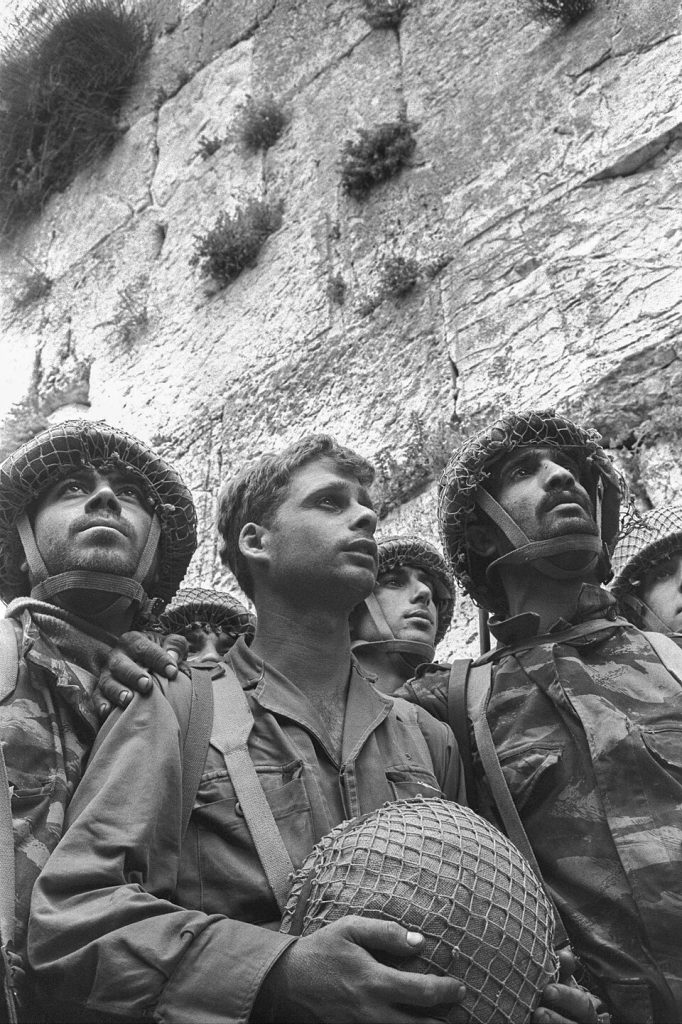
The Six Day War in 1967 changed Israeli politics profoundly.
Israel’s victory transformed the country psychologically and strategically, but it also created dilemmas that would later fracture the left.
The capture of:
- West Bank
- East Jerusalem
- Gaza Strip
- Golan Heights
- Sinai Peninsula
raised new questions about territory, security, settlements, and Israel’s identity.
But before that, the Israeli left achieved its greatest electoral victory.
Partly in response to consolidation on the right, where Gahal was formed as a unified force of Israel’s conservative and liberal camp, Mapai joined forces with the smaller left-wing party Ahdut HaAvoda prior to the 1965 election.
Then, in 1968, both parties merged with Rafi, a Mapai splinter party led by David Ben-Gurion, to form the Israeli Labour Party. In 1969, Labour joined forces with Mapam in the Alignment electoral alliance, led by Golda Meir, which won 56 seats, just five short of an outright majority in the 120-seat Knesset, achieving the largest electoral victory ever secured by a single party or alliance in Israeli history.
At the same time, Israeli society itself was changing.
Large numbers of Mizrahi Jews, immigrants from Middle Eastern and North African countries, increasingly felt alienated from the Ashkenazi Labour elite. Many viewed Labour as paternalistic, elitist, and dismissive of their traditions and identity.
Meanwhile, the old socialist economic model was beginning to strain under inflation, bureaucracy, and inefficiency.
The left still governed. But its dominance no longer looked permanent.
1977: the “Upheaval”
Then came the election that changed everything.
In 1977, Menachem Begin and Likud defeated Labour for the first time in Israeli history.
Israelis still call it simply HaMahapach – “the Upheaval”.
The election ended nearly thirty years of uninterrupted Labour rule.
It was not merely a political defeat. It was a cultural revolution.
Begin successfully built a coalition of:
- Mizrahi voters,
- religious Israelis,
- working-class communities,
- and nationalist voters
who felt excluded from Labour’s old establishment.
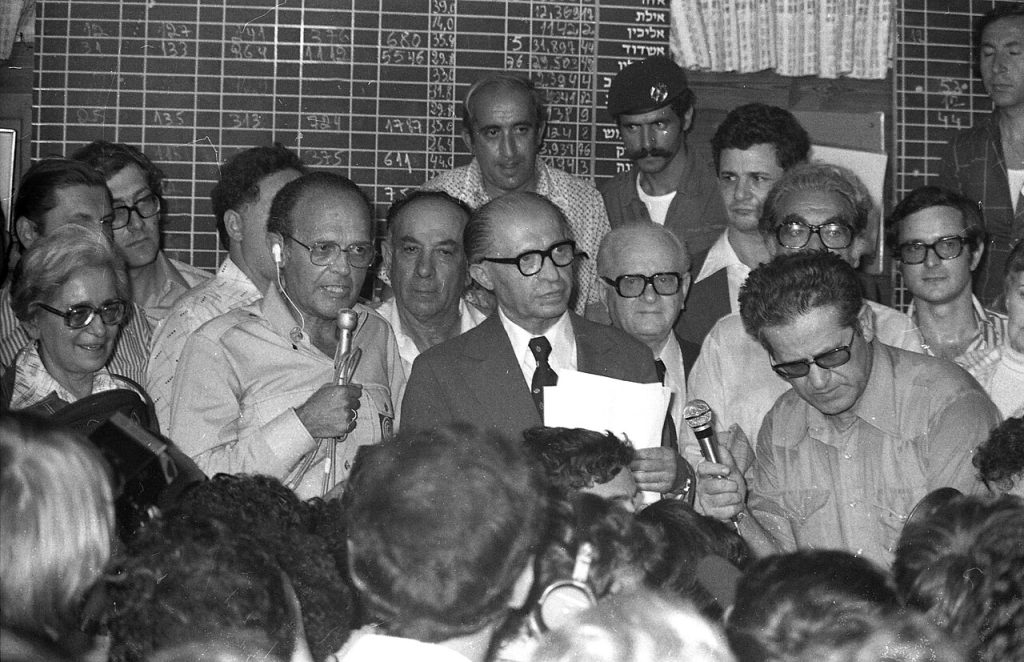
The trauma of the 1973 Yom Kippur War had already damaged Labour’s image as the guarantor of security. Now the social coalition underpinning Labour Zionism itself began to collapse.
The era of automatic left-wing governance was over.
From opposition to reinvention (1977–1992)
For the Israeli left, the years after 1977 were not simply years in opposition. They were years of ideological crisis.
Labour had built the state and governed it almost uninterrupted for three decades. Losing power to Menachem Begin came as the collapse of an entire political order.
Ironically, some of the Israeli right’s greatest achievements also complicated Labour’s identity crisis. In 1978, Begin signed the Camp David Accords with Egypt, becoming the first Israeli prime minister to reach peace with an Arab state. The agreement demonstrated that peace process and diplomacy were no longer exclusively identified with the left.
At the same time, the ideological foundations of the Labour movement were beginning to erode:
- Israel’s economy was gradually liberalising.
- Collectivist ethos of the early state was weakening.
- Younger Israelis felt less attached to the socialist ideals that had shaped the country’s founding generation.
Between Peres and Rabin
Throughout the 1980s, the Israeli Labour Party was shaped by the rivalry between two towering figures: Shimon Peres and Yitzhak Rabin.
The antagonism between the two men had erupted publicly in the aftermath of the 1973 Yom Kippur War. When Rabin was chosen to replace Golda Meir as prime minister in 1974, he appointed Peres as defence minister. Yet the partnership quickly deteriorated. Peres frequently challenged Rabin’s leadership from within the government, leading to deep personal distrust that would shape the Labour Party for decades.
The rivalry became openly public in 1979, when Rabin published his memoirs and famously described Peres as a “tireless schemer” and an “indefatigable manipulator”, cementing one of the most bitter political feuds in Israeli history.
Beyond personality, the divide also reflected two competing visions for Labour and for Israel itself.
Shimon Peres
Shimon Peres (born Szymon Perski, on 2 August 1923, in Wiszniew, Poland, now Vishnyeva, Belarus), a protégé of David Ben-Gurion and one of the architects of Israel’s nuclear programme, increasingly represented Labour’s technocratic and diplomatic wing.
He championed economic modernisation and regional integration in the guise of a new Middle East.
To supporters, Peres embodied strategic imagination and political innovation. To critics, he represented elite manoeuvring and excessive optimism about diplomacy.
Peres remained a central figure in Israeli politics for more than half a century, serving in various positions from the 1950s until his presidency ended in 2014.
Key positions held:
- 1959-65 – Deputy Minister of Defence
- 1969-70 – Minister of Immigrant Absorption
- 1970-74 – Minister of Transportation and Minister of Communications
- 1974-77 – Minister of Defence and Minister of Information
- 1977-92 – Labour Party Leader (1st term)
- 1977 – Acting Prime Minister
- 1984-86 – Prime Minister (1st term)
- 1986-88 – Minister of Foreign Affairs (1st term)
- 1988-90 – Minister of Finance
- 1992-95 – Minister of Foreign Affairs (2nd term)
- 1995-97 – Labour Party Leader (2nd term)
- 1995-96 – Prime Minister (2nd term)
- 2003-05 – Labour Party Leader (3rd term, interim)
- 2007-14 – President of Israel
In 2016, two years after leaving the office, Peres died at the age of 93.
Yitzhak Rabin
Yitzhak Rabin (born on 1 March 1922, in Jerusalem, Mandatory Palestine), by contrast, emerged from Labour’s traditional security establishment. A Palmach veteran and former IDF Chief of Staff during the Six Day War, he was cautious, pragmatic, and deeply shaped by military thinking.
Unlike Peres, whose instincts leaned towards political manoeuvring and diplomatic innovation, Rabin approached statecraft primarily through the lens of security and strategic stability. Initially sceptical of sweeping peace initiatives, he nevertheless gradually concluded that reconciliation with the Palestinians was necessary to preserve Israel’s long-term security and Jewish democratic character.
To supporters, Rabin embodied credibility, restraint, and strategic realism. To critics, he could appear rigid, reserved, and politically hesitant.
Key positions held:
- 1964-68 – IDF Chief of Staff
- 1968-73 – Ambassador to the US
- 1974 – Minister of Labour
- 1974-77 – Labour Party Leader (1st term)
- 1974-77 – Prime Minister (1st term)
- 1984-90 – Minister of Defence (1st term)
- 1992-95 – Labour Party Leader (2nd term)
- 1992-95 – Prime Minister (2nd term)
In 1995, Rabin was assassinated while serving as Prime Minister, the only Israeli Prime Minister to have been assassinated in office.
The rivalry between Peres and Rabin frequently paralysed Labour internally during its years in opposition. Yet it also reflected a broader struggle within the Israeli left itself: whether Labour’s future lay in continuity with its security-driven past or reinvention through diplomacy and political transformation.
In national unity governments
The 1982 Lebanon War further deepened divisions within Israeli society and accelerated the emergence of a more organised peace camp. Large protests against the war strengthened movements advocating negotiations with the Palestinians and a reassessment of Israel’s regional strategy.
At the same time, Israel entered a period of political instability. Neither Labour nor Likud could consistently secure decisive electoral victories, leading to a series of national unity governments during the 1980s. In the 1984 election, the Alignment won 44 seats, while Likud secured 41, resulting in an unusual rotation agreement under which Peres and Likud’s leader Yitzhak Shamir each served as prime minister.
Both formations continued governing together after the 1988 election until 1990, when Shimon Peres attempted to replace the national unity government with a left-led coalition supported by ultra-Orthodox parties. However, the attempt collapsed in what became known as “the dirty trick” (HaTargil HaMasriah in Hebrew).
Ahead of the 1992 election, Peres was replaced as Labour leader by Yitzhak Rabin.
While Labour remained electorally competitive, the political landscape was changing rapidly around it.
The outbreak of the First Intifada in 1987 forced many Israelis, including figures within Labour, to reconsider the long-term viability of governing millions of Palestinians indefinitely. For growing parts of the Israeli centre-left, separation from the Palestinians increasingly appeared not only desirable, but strategically necessary to preserve Israel as both a Jewish and democratic state.
The slow but steady decline (1992–2019)
The 1992 election marked the Israeli left’s last great political comeback.
The Labour Party won 44 seats, while the newly formed Shulamit Aloni-led Meretz alliance secured 12. Together with external support from Arab parties, the centre-left returned to power with a bold and ambitious vision for Israel’s future.
The timing seemed transformative.
The Cold War had ended. The Soviet Union had collapsed. Across much of the world, liberal democracy appeared ascendant and old geopolitical conflicts seemed increasingly solvable through diplomacy and economic integration.
In Israel, Rabin entered office with unmatched security credentials. As a former IDF Chief of Staff and Defence Minister, he possessed a level of public trust on national security that few left-wing leaders before or since have enjoyed. This credibility allowed him to pursue diplomatic initiatives that might have been politically impossible under other leaders.
Driven by peace process
The Oslo Accords, signed in 1993, became the defining project of the Israeli left.
For supporters, Oslo promised:
- End to the Israeli-Palestinian conflict
- Regional normalisation
- International legitimacy
- Economic integration
- Future built around coexistence rather than permanent war
For the first time, Israel formally recognised the Palestine Liberation Organisation, while they recognised Israel’s right to exist.
The moment carried enormous symbolic weight. The image of Rabin shaking hands with Yasser Arafat on the White House lawn became one of the defining images of the post-Cold War era.
Yet Oslo also polarised Israeli society more deeply than almost any issue before it.
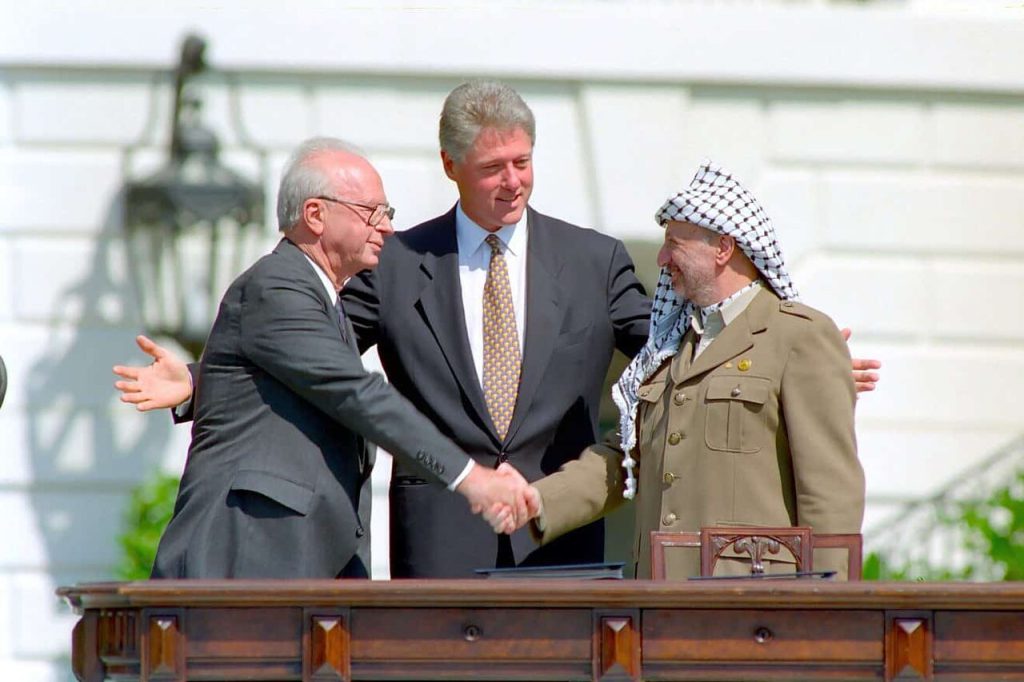
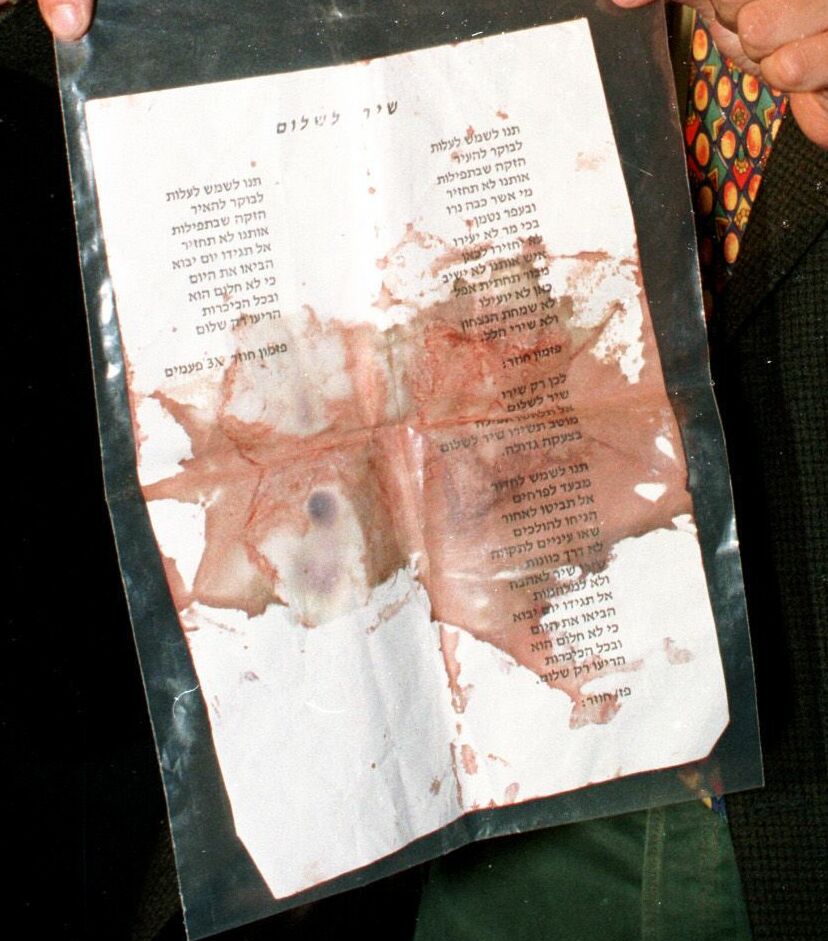
To supporters, Rabin represented strategic realism and historic courage. To opponents, Oslo endangered Israeli security and legitimised terrorism. Demonstrations against the government intensified, while political rhetoric grew increasingly toxic.
Then, on 4 November 1995, Rabin was assassinated by a Jewish extremist after a peace rally in Tel Aviv.
The assassination traumatised Israeli society and fundamentally reshaped Israeli politics. Rabin’s death froze Oslo in unfinished form, depriving the peace process of the one leader who possessed both the military credibility and political authority to sustain it.
Shimon Peres succeeded Rabin as prime minister, but he lacked Rabin’s standing with the broader Israeli public. A wave of Hamas suicide bombings in early 1996 further eroded confidence in the peace process.
In the 1996 election, Benjamin Netanyahu narrowly defeated Peres in Israel’s first direct election for prime minister.
The left’s final attempts to return
The Israeli left did not disappear overnight after 1996.
In fact, Ehud Barak’s victory in 1999 briefly appeared to signal a revival. Barak defeated Netanyahu in direct election of prime minister and promised to complete the Oslo process while preserving Israel’s security.
Once again, hopes for a historic breakthrough rose.
But the optimism of the 1990s soon collapsed.
The Palestinians led by Yasser Arafat rejected unprecedented concessions offered at Camp David Summit in 2000 and launched Second Intifada instead fundamentally transforming Israeli public opinion. Years of suicide bombings, shootings, and terror attacks shattered Israeli faith in the peace process.
For many Israelis, Oslo became associated not with reconciliation, but with insecurity.
The political consequences were devastating for the left.
Between 1992 and 2009, Labour declined steadily:
- 44 seats in 1992
- 34 in 1996
- 23 in 1999
- 18 in 2003 and 2006
- 13 in 2009
Mapam’s successor, Meretz also shrank dramatically, from 12 seats in 1992 to just 3 seats in 2009. While the communist party, Maki, continued contesting Knesset election as part of Arab-led Hadash, securing just a handful of seats from 70s onwards.
Yet the Israeli left was not replaced solely by the right. Increasingly, anti-Likud voters migrated towards new centrist movements rather than traditional Labour Zionism.
This became particularly visible with the rise of Kadima under Ariel Sharon (and Shimon Peres), followed later by Yesh Atid, Blue and White, and National Unity. These parties adopted parts of the centre-left’s diplomatic and institutional agenda while distancing themselves from the socialist ideological traditions.
There was one final major attempt to revive the centre-left as a governing force.
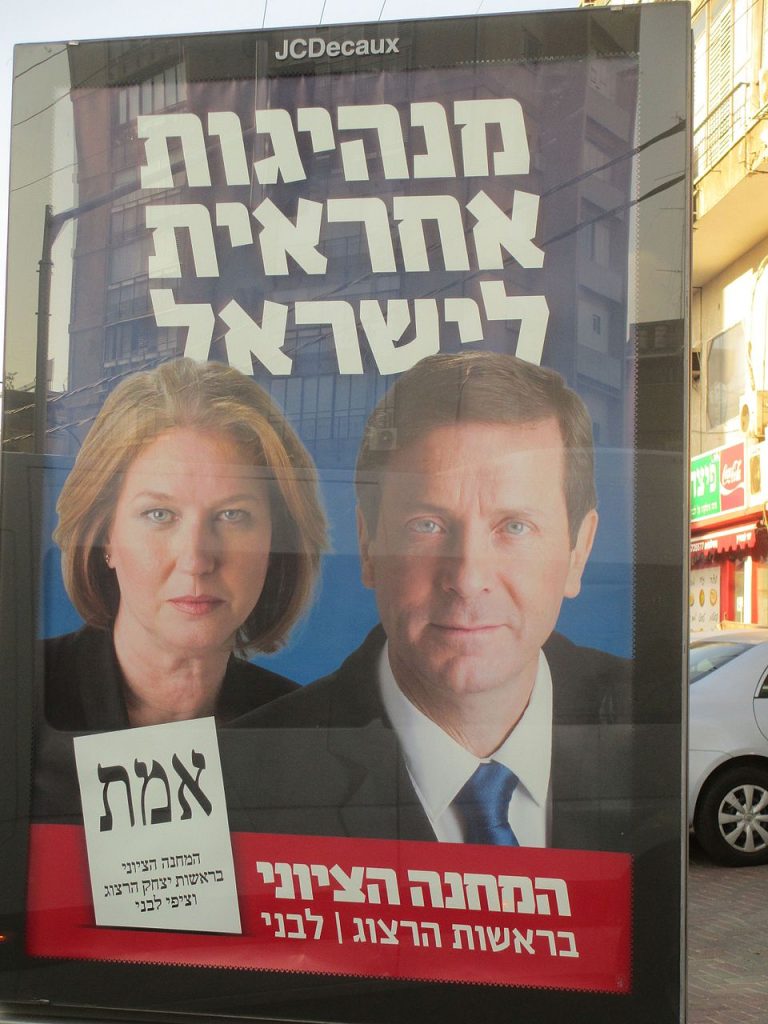
In 2015, Isaac Herzog, then leader of Labour, formed the Zionist Union alliance with Tzipi Livni. For a brief period, the alliance appeared capable of seriously challenging Netanyahu’s rule.
The Zionist Union won 24 seats and became the second-largest faction in the Knesset but failed to secure majority to form a government. What might have looked like a promise of a new era for Israeli left, became its last hurrah.
Zionist Union was dissolved following internal tensions in 2019. Meretz struggled to survive electorally. And centrist parties increasingly replaced the traditional left as the primary alternative to Likud-led governments.
From ruling movement to coalition partner (2019–today)
Today, Israeli politics no longer revolves around the historic Labour-versus-Likud divide that defined the country’s first decades.
The traditional Zionist left still participates in Israeli politics, but usually as a junior partner within broader anti-Netanyahu coalitions led by centrists rather than Labour itself.
This transformation became especially visible during the diverse coalition governments formed between 2021 and 2022, where left-wing parties participated alongside centrists, right-wing nationalists, and Arabs in coalition defined less by ideology than by opposition to Netanyahu.
Meanwhile, the historic parties of the Israeli left have continued to weaken electorally. In the 2022 election, Meretz failed to cross the electoral threshold entirely, while Labour barely survived, securing just 3.69 per cent of the vote and only 4 seats in the Knesset, an extraordinary fall for the movement that once dominated Israeli politics and built the state itself.
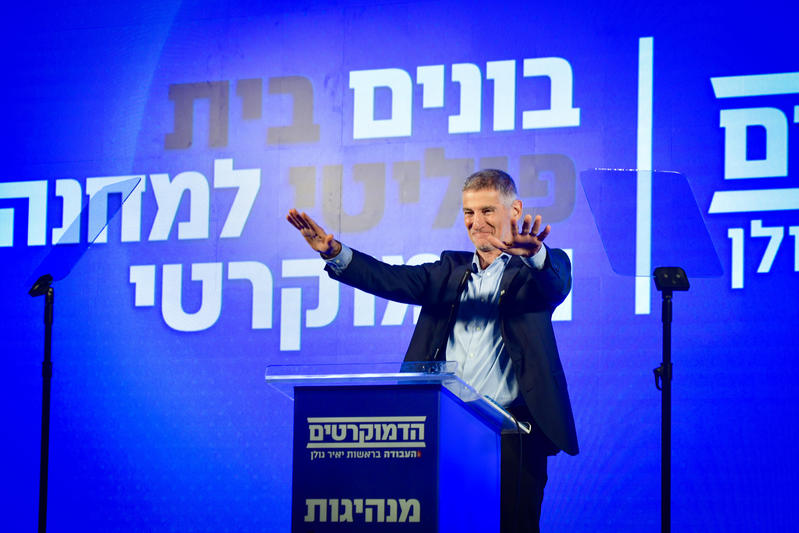
The electoral collapse accelerated efforts to consolidate the remnants of the Zionist left. In 2024, Labour merged with Meretz to form a new political platform known as The Democrats, seeking to unify Israel’s fragmented left under a single banner.
Now under the leadership of Yair Golan, The Democrats appear to have revived the ideology of the Israeli left, consistently polling in double figures, which could see them become an important component of the next government, albeit as a junior coalition partner.
As Israel approaches another election in 2026, the historic parties of the Zionist left no longer compete seriously for national leadership. The three original streams of the Israeli left – Mapai’s Labour Zionism, Mapam’s democratic socialism, and Maki’s communist Arab-Jewish politics – have all either faded, fragmented, or been absorbed into broader alliances.
Yet despite its electoral collapse, the Israeli left still shapes the country it once built.
Modern Israel remains deeply marked by the Labour Zionist project through its democratic institutions, welfare structures, military ethos, independent judiciary, universities, media, and much of its political culture.
The Israeli left may no longer dominate elections. But in many ways, it still shapes the country it created.