LATEST

Israel, the UK and the world

Key background
  • The UK and Israel share a strong relationship, built on historical, economic, and diplomatic ties. Both nations collaborate closely in trade, science, technology, and defence, with the UK being a key partner to Israel. The UK supports Israel’s right to exist as a Jewish state. Scientific progress, academic partnerships, and shared values of democracy further strengthen the bond.
  • Israel maintains diplomatic ties with 165 of the other 192 UN member states.
  • Israel maintains full diplomatic relations with two of its Arab neighbours, Egypt and Jordan, after signing peace treaties with the former in 1979, and the latter, 1994.
  • In 2020, supported by the US, Israel signed the Abraham Accords agreements establishing diplomatic relations with Bahrain, the UAE and Morocco.
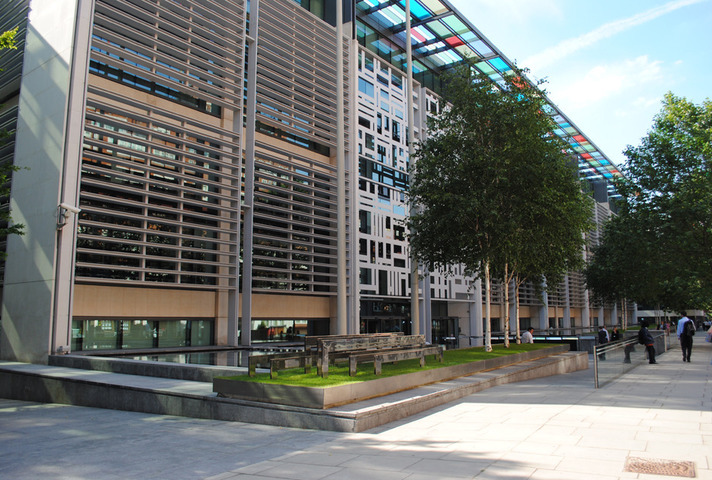
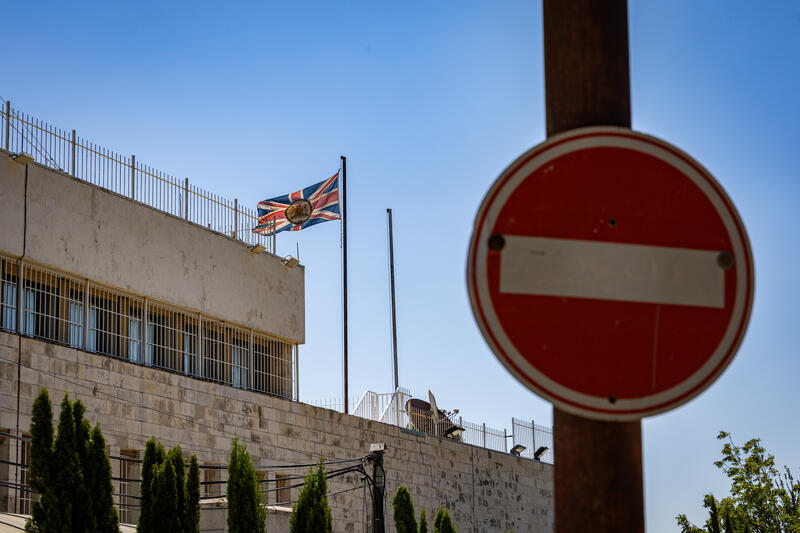
UK Home Office.
UK Home Office. Photo credit: GOV.UK

Updated July 9, 2026

UK strengthens law against hostile state proxies

What’s happened: The National Security (Hostile States) Bill has received Royal Assent, officially passing into law.

  • This grants the Home Secretary new counter-terrorism style powers to designate and target groups that are, according to a government press release, “working at the behest of, or in the interests of, foreign states in order to carry out acts which threaten the UK’s security and the safety of communities across the country.”
  • Designation is equivalent to proscription as stipulated in the Terrorism Act 2000, but also applies to hostile state actors and their proxies.
  • The new legislation criminalises assisting a designated body and obtaining material benefits from a designated body. It also includes supporting a designated body (where a person invites support for, or expresses an opinion or belief that is supportive of a designated body, and does so for a prohibited purpose).
  • An individual convicted of these offences may be punished with a maximum sentence of fourteen years and a fine.
  • The Home Secretary’s criteria for designation a group is if they “reasonably believe a body is, or has been, involved in foreign power threat activity and considers that designating the body is necessary to protect the safety or interests of the UK.”
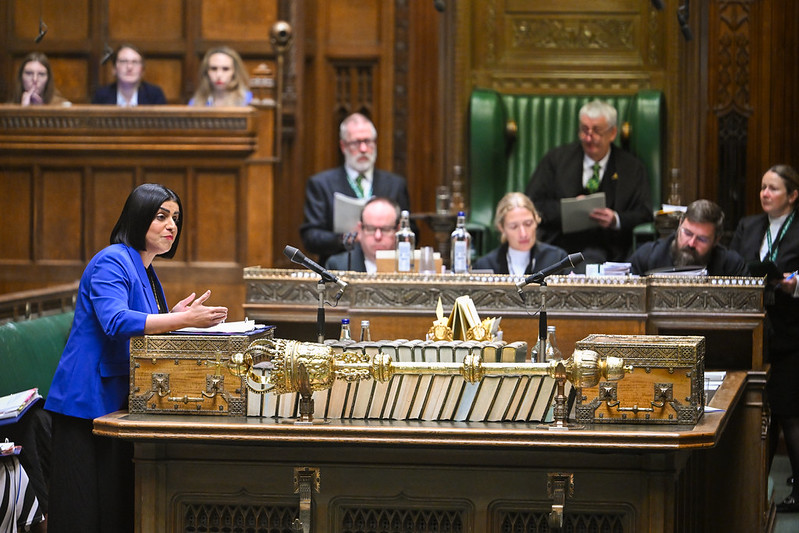
  • Commenting on the new law, the Home Secretary, Shabhana Mahmood said, “Under these new powers, we’re going further to dismantle and deter hostile activity. This act gives the police and intelligence agencies the tools they need to pursue foreign powers and their proxies, and better protect our communities, institutions, and democratic values.”
  • Sir Ken McCallum, the Director General of MI5 said, “Building on the important powers in the National Security Act 2023, which are already being heavily used, this legislation introduces new measures which will help us tackle the growing threat from proxy organisations, which are being increasingly used by states attempting to deniably target the UK.”

Context: MI5 acknowledged a 35 per cent increase in 2025 from the previous year, and over 20 potentially lethal Iranian-backed plots were identified.

  • The passage of The National Security (Hostile States) Bill follows a 2025 report by Jonathan Hall KC which highlighted the weaknesses in pre-existing legislation of The National Security Act 2023.
  • That law had been used to charge, prosecute, and convict agents working for Iran, Russia, and China. However Hall argued it was “less effective at disrupting proxies than foreign intelligence services.” This conclusion led to Hall’s recommendation to introduce “State Threats Proscription-like Power”.
  • The Bill was introduced in May’s King’s Speech. This followed a pledge by the Labour Party to take decisive action after waves of allegedly Iranian state-sponsored terrorism against the Jewish community in March and April. These attacks were claimed by Harakat Ashab al-Yamin al-Islamiyya (HAYI).
  • Although some suspects were arrested shortly after the attacks took place, they were charged for arson and being reckless as to whether life would be endangered rather than through the Terrorism Act 2000 or National Security Act 2023. If found guilty, sentencing would therefore be significantly shorter and less severe, despite allegations of hostile state (specifically Iranian) direction.
  • This had the effect of identifying a legal gap for hostile state activity by proxy, as was the case with HAYI. While HAYI had a presence on Telegram, it was widely described as being a “virtual” Iranian proxy group, as much as that it seemingly did not exist off social media, and was being remotely controlled and directed from the Middle East.
  • Jewish community and Iranian dissident groups have consistently lobbied the government for IRGC proscription.
  • The Conservatives pledged to proscribe the IRGC in 2023, but they ultimately U-turned and instead issued a new wave of sanctions against IRGC commanders.
  • While in opposition, Labour had indicated it would be willing to proscribe the IRGC, and its 2024 manifesto made specific reference to taking “the approach used for dealing with non-state terrorism and adapt it to deal with state based domestic security threats.”
  • After the recent wave of attacks in the spring, Labour reintroduced this policy with a renewed sense of urgency. While visiting the recently firebombed Kenton United Synagogue, Prime Minister Starmer pledged to table legislation allowing the UK to ban the IRGC in the upcoming parliamentary session.

Looking ahead: While the National Security (Hostile States) Bill never specifically mentioned the IRGC, it is highly likely to be the first group designated by Home Secretary.

  • Given recent convictions of Russian and Chinese agents, it is also a realistic possibility that Moscow and Beijing’s security services – such as the SVR, GRU, FSB, and MSS – may also be designated.

July 8, 2026

Israel cautions against F-35s for Turkey

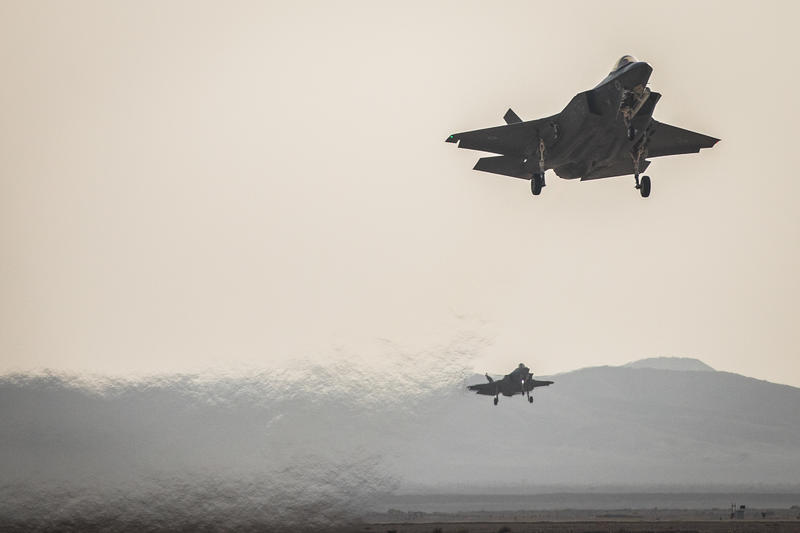
The "Adir" (F-35I) fighter jet during the "Blue Flag", an international aerial training exercise at the Ovda air force base, Southern Israel, November 11, 2019.
The "Adir" (F-35I) fighter jet during the "Blue Flag", an international aerial training exercise at the Ovda air force base, Southern Israel, November 11, 2019. Photo by Yonatan Sindel/Flash90

What’s happened: Prime Minister Netanyahu has advised President Trump not to supply Turkey with F-35 stealth fighter jets.

  • In an interview on CNN Tuesday evening, Netanyahu warned that, “notwithstanding the personal friendship that President Trump has with Erdoğan, it doesn’t make Turkey a friendly or a friendly state to the United States.”
  • “To the contrary,” Netanyahu continued, Turkey is “a regime that’s infected with the Muslim Brotherhood, which hates the United States.”
  • Referring to Erdoğan, Netanyahu said that “he harbours Hamas… He supports them. He finances them…He’s thrown his opponents in jail, all of them. He throws more journalists in jail than anyone can understand. So he’s not exactly a model ally of the United States. But even worse than that, he threatens Greece, a NATO ally. … And the most important thing, and I put it right on the table, he threatens to destroy my country, the one and only Jewish state.”
  • Netanyahu’s interview took place as President Trump arrived in Turkey for the NATO summit.  As part of Trump’s visit he could announce that the US will advance the sale of F-35s to Turkey. When asked if was going to sell the F-35’s, the President said “Turkey has been in many ways much more loyal than other countries that we think would be loyal…so it is something we definitely would consider.”
  • Israeli Ambassador to the US Yechiel Leiter said that Israel does not believe Turkey should possess F-35 aircraft but stressed that “Israel understands that the US administration has a broader set of strategic considerations it must take into account when making the decision. We oppose the sale of F-35 stealth fighter jets to Turkey, but will respect any American decision.”
  • Meanwhile, the US reportedly struck 80 targets in Iran.  US CENTCOM confirmed they have begun “launching a series of powerful strikes against Iran to impose heavy costs for targeting and attacking commercial shipping.”
  • The statement stressed that the strikes were in response “to Iranian attacks on three commercial vessels that were transiting the Strait of Hormuz. Iran’s demonstrated aggression was unwarranted, dangerous, and a clear violation of the ceasefire.”
  • The US Treasury announced that they revoked the temporary waivers that were issued as part of the MOU with Iran, that had allowed Iran to sell oil. US officials have tied the decision to Iranian behaviour, insisting that that the commitments within the MOU are “performance based.”    

Context: The F-35 programme was established in 2001, eight countries – including the UK – participated in the system development and demonstration phase of the F-35. Turkey joined the programme in 2002 and became a Level 3 Partner alongside Canada, Australia, Denmark and Norway.

  • In addition to Israel, the F-35 has subsequently been sold to several countries such as Japan, South Korea, Singapore and a range of European states.
  • Israel has long term objections to Turkey buying the F-35’s. It would challenge Israel’s long held Qualitative Military Edge (QME) which has been a fundamental US doctrine (bound into US law). It is intended to ensure Israel’s military forces can defeat any credible conventional threat from state or non-state actors. For over 50 years it has guaranteed Israel’s tactical and technological superiority.
  • Israel is also concerned that it would disrupt the power balance in the region, particularly regarding their posture in the eastern Mediterranean and with regards to Greece and Cyprus.
  • Compounding this, Turkey already possesses advanced Russian made S-400 air defence system. US officials have long argued that it is incompatible for Turkey to operate the S-400 alongside the F-35. This could allow Russia to gain technological insights into the aircraft’s radar signature and electronic systems, which could potentially compromise the stealth capabilities of the entire F-35 fleet.
  • Israel is troubled by the outsized influence of US Ambassador to Turkey Tom Barrack who is perceived as representing Erdoğan’s interests. The ambassador is very closely connected to the Turkish government, as well as possessing close connections in Lebanon, Syria and Iraq.
  • Trump sees Turkey as a NATO partner with a strong military and recently commended the country for not joining the “other side” during the war with Iran. Trump sees Turkey as a potential asset to help stabilise the region, rein in Russian influence, and keep Ankara in the West’s camp.
  • For Israel meanwhile, Erdoğan’s Turkey has become a regional adversary. It is part of the Muslim Brotherhood camp (along with Qatar), hosts Hamas officials, and supports Hamas politically and financially. For over a decade – and particularly since October 7 – it has regularly issued harsh and inciteful rhetoric against Israel.    
  • Their rivalry in the eastern Mediterranean relates to Israel’s growing alliances with Greece and Cyprus and their shared interests over trade routes and energy infrastructure. This includes exploration for natural gas, and the project to connect Israel to the European electric grid via an underground cable.
  • It is no coincidence that on the same day that Trump arrived in Turkey, Netanyahu visited the Haifa Naval Base, where he emphasised the goal of the Navy, “to ensure the shipping lanes and the freedom of maritime trade, which are so vital to the State of Israel.”
  • According to Anna Barsky in Maariv, “It was a deliberate signal. Israel sought to clarify that it does not view Turkey exclusively as a future aerial threat, but as a broader strategic threat that might impact freedom of maritime traffic, energy infrastructure and the increasingly close cooperation with Greece and Cyprus. Officials in Athens and Nicosia have also been closely tracking the developments. From their perspective, the question isn’t just how many planes Turkey is given, but the renewed legitimacy that Washington might confer to Ankara’s regional policies.”
  • A sale of F35’s to Turkey would not just signal a military achievement for Erdoğan but also a political victory. Thanks to his relationship with Trump, Turkey will have consolidated its status as a regional power.    

Looking ahead: Donald Trump announced this morning that the Iran ceasefire is over.

  • This announcement coincides with US Secretary of War Hegseth cancelling his scheduled trip to Israel. Hegseth was expected to discuss the potential sale of F-35s to Turkey.
  • The NATO summit is due to conclude later today. 
  • Due to Turkish deployment of the S-400, significant legal and political obstacles remain to a deal within US Congress.  
  • Brig. Gen. (res.) Mike Herzog, the former Israeli ambassador to the US, said in an interview on Army Radio this morning, “I’m not sure that it will really be possible to stop the deal. But I still think that Israel has a range of actions it can take in Congress. It can postpone by some years the delivery of the planes to Turkey.”

July 1, 2026

Israel secures AI and defence gains amid European tensions

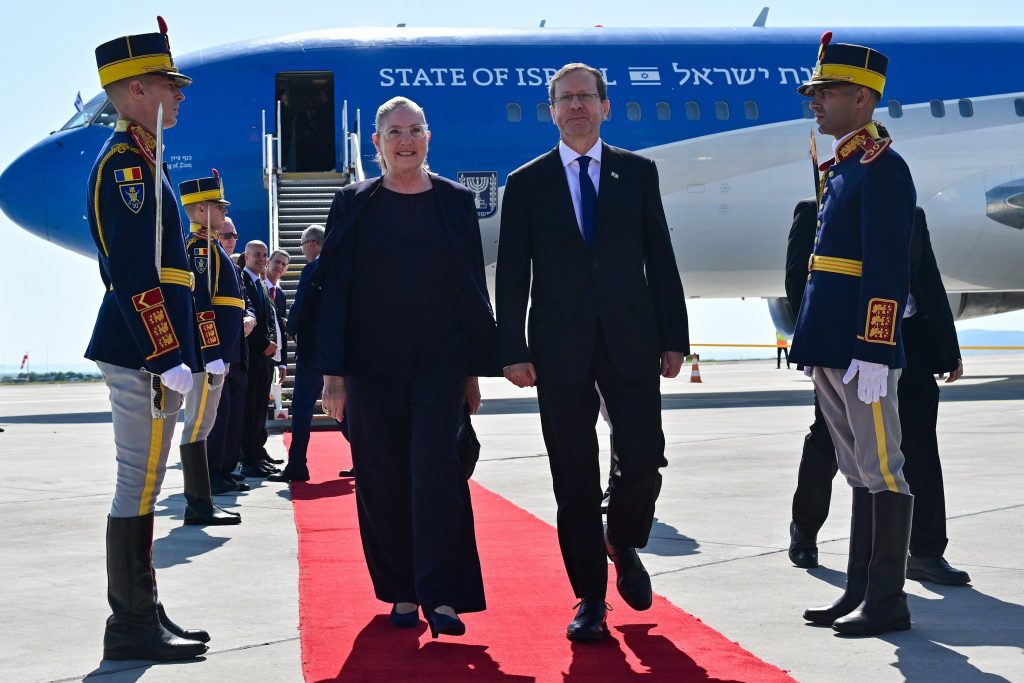
President Isaac Herzog and First Lady Michal Herzog arrived to Romania, June 28, 2026.
President Isaac Herzog and First Lady Michal Herzog arrived to Romania, June 28, 2026. Photo credit: Kobi Gideon / GPO

What’s happened: Alongside a historic peace framework agreement with Lebanon, Israel has achieved other significant progress in building international alliances.

  • At a Pax Silica Summit, Israel signed together with the United States, the United Kingdom, and 22 other nations Joint Statement on AI Opportunity.
  • Other signatories include countries from across the world such as Argentina, Sweden, and Japan, as well as Turkiye, the United Arab Emirates, and Qatar from the Middle East.
  • The signatories pledged to embrace AI opportunities, promote pro-innovative regulation, strengthen their cooperation and mobilise the private sector to drive the AI revolution.
  • New Pax Silica Artificial Intelligence Assistance Project for Panama was announced with an aim to strengthen global AI supply chain security by developing an AI supply chain credentialing and provenance platform that expedites the shipping of semiconductors, AI infrastructure, critical minerals, and related products through the Panama Canal.
  • Elsewhere this week, one of the of the top three Israeli defence companies, Rafael Advanced Defense Systems, announced a £1.7bn deal to sell its Spyder air defence systems to Romania.
  • Rafael won the Romanian Ministry of Defence’s tender for air-defence systems capable of intercepting drones, cruise missiles, guided munitions, airplanes and helicopters.
  • The deal was announced during President Isaac Herzog’s state visit to Romania, and includes the supply of launchers, interceptors, radar systems, training programmes and logistical support.
  • Another country investing in Israeli air defence technology, could be Greece. According to media reports, Athens is looking to acquire a £2.6bn package for its “Achilles’ Shield” defence umbrella.
  • This programme could include Rafael’s Spyder All-in-One and David’s Sling systems, as well as the Barak MX system developed by Israel Aerospace Industries (IAI), according to Greek sources.
  • On the other side of the Balkans, in Slovenia, the returning veteran Prime Minister Janez Janša announced that the Slovenian embassy would be relocated from Tel Aviv to Israel’s capital, Jerusalem.
  • Janša also pledged to reverse the previous Slovenian government’s decision to recognise a Palestinian state.
  • The move comes at a critical juncture, amid a growing campaign within EU institutions for the bloc to sanction Israel, a move opposed by Israel’s long-standing ally, Czechia. Czech Foreign Minister Macinka has, according to Bloomberg, told his EU counterparts: “Don’t even try, otherwise we’ll veto it.” According to Czech News Agency, the sanctions are opposed as well by Germany and Hungary.

Context: The Pax Silica is US initiative on AI and supply chain security focusing on critical minerals, energy inputs, advanced manufacturing, semiconductors, AI and technology infrastructure.

  • The 2026 Pax Silica Summit also saw ten new nations, such as Germany, Greece and EU as a whole, joining the initiative, which has arrived at 24 signatories so far, including Israel and the United Kingdom.
  • Rafael’s success in the Romanian tender for air defence system underscores the reputation of Israeli technology in this field, that has been proven during the years of conflict with Iran and their proxies.
  • This has been evidenced by a successful deployment of Israeli air defence systems, including the Iron Dome, in protecting the UAE, Saudi Arabia and Qatar during the War with Iran.
  • The above-mentioned Greek contract would be another milestone in Israel’s relations with the Hellenic Republic and another piece in the jigsaw puzzle of the strengthening cooperation between Israel, Greece, Cyprus, and India, as they seek to increase their defence capabilities and to establish the India–Middle East–Europe Economic Corridor (IMEC) to bolster trade routes between Europe and India. This was underscored by a recent series of high-level meetings between Israeli officials and the Chief of the Hellenic Navy, as well as military top brass in India.
  • Prime Minister Janša seeks to repair ties between Ljubljana and Jerusalem after four years of centre-left government in Slovenia, which embraced strongly anti-Israel stances including pushing for suspension of the EU-Israel Association Agreement.
  • Anti-Israel sentiment within EU has been recently fuelled by renewed Gaza flotilla activity. The participation of European citizens has helped keep the issue high on the EU’s political agenda, increasing pressure on governments and EU institutions to adopt a tougher line towards Israel.
  • Speaking to Israel Hayom Janša stressed the need for closer cooperation between the EU and Israel: “Instead of distancing themselves from one another, they must increase cooperation. Israel is not Europe’s problem; it is one of its most important allies.”
  • Israel has long-standing ties with Central European countries, rooted in shared history and defence, cultural, and economic cooperation. Its relationship with Czechia is especially deep, dating back to 1948, when Czechoslovakia played a crucial role in supplying the newly established State of Israel with weapons, including fighter aircraft, and training IDF pilots during the Israel’s War of Independence.

Looking ahead: A joint Foreign Ministry-IDF delegation to Venezuela is due to assist recovery efforts after powerful earthquakes there killed more than 1,700 people and left thousands homeless.

  • Israel is sending its delegation despite not having formal relations with Venezuela for 17 years. The team includes engineering experts from the Home Front Command and Foreign Ministry representatives.
  • Additional specialists from the Home Front Command and the National Emergency Management Authority are expected to join later. There are already Israeli volunteers on site helping with rescue efforts.
  • The EU Foreign Affairs Council is due to convene on July 13 and may discuss issues related to Israel. However, any anti-Israel resolutions appear unlikely, at least for now.

June 17, 2026

Court of Appeal upholds Palestine Action proscription

Palestine Action Protest in London, September 6, 2025.
Palestine Action Protest in London, September 6, 2025. Photo credit: indigonolan, licensed under the Creative Commons Attribution 4.0 International license.

What’s happened: On Monday, the British Court of Appeal overturned the High Court’s February ruling that then Home Secretary’s designation of Palestine Action had been unlawful, meaning that the group’s proscription still stands.

  • Responding to the announcement, the Home Secretary said that “The Court has found that Palestine Action has carried out acts of terrorism, celebrated those who have taken part in those acts and promoted the use of violence. It is not an ordinary protest or civil disobedience group, and its actions are not consistent with democratic values and the rule of law.”
  • She added that “This decision does not affect lawful protest in support of the Palestinian cause, which remains a fundamental democratic right. There is a difference between supporting Palestine and supporting a proscribed terrorist group.”
  • In a summary of the case, the Lady Chief Justice, Baroness Carr of Walton-on-the-Hill, said that it was “not sustainable” for Palestine Action to be portrayed as a non-violent organisation or a normal protest group given its continued intent to use violence. “It is not – as claimed – a direct action civil disobedience protest group like the suffragettes, operating transparently in the open,” she said, adding that the group “is a covert organisation which operates with secret cells to avoid the detection and prosecution of those using violence to destroy property and cause injury.”
  • The court concluded that the original judgement had been lawful, striking a fair balance between protecting national security and the right to protest.

Context: The government’s intent to proscribe Palestine Action was announced in June 2025 by the then Home Secretary, Yvette Cooper. That decision was taken days after the group raided and vandalised two Airbus A330 MRTT planes at RAF Brize Norton in Oxfordshire. Palestine Action subsequently claimed that this was an attempt to interrupt “Britain’s direct participation in the commission of genocide and war crimes across the Middle East”.

  • The planes were sprayed with red paint using repurposed fire extinguishers, and no other damage was caused. Two Palestine Action members infiltrated the airfield using scooters, and do not appear to have been challenged by base security. The damage caused was estimated by the authorities at £7 million. 
  • Addressing the Commons on 23rd June, Cooper stated that, since its founding in 2020, the group had “orchestrated a nationwide campaign of direct criminal action against businesses and institutions.” Increasing the frequency of its operations since 2024, Cooper argued that its “methods have become more aggressive, with its members demonstrating a willingness to use violence”. Apart from defence industry and infrastructure, other targets have included financial firms, charities, universities and Government buildings.
  • Cooper also emphasised that these activities had since reached the “threshold set out in the statutory tests established under the Terrorism Act 2000”, and that the group had “provided practical advice to assist its members with conducting attacks that have resulted in serious damage to property.”
  • In November 2024, Palestine Action claimed responsibility for an attack against the building which housed BICOM’s offices, as well as other Jewish community charities and Jewish-owned businesses. The accompanying Palestine Action specifically identified BICOM as having been the attack’s target.
  • In October 2025, Palestine Action’s founder, Huda Ammori, was granted permission to judicially appeal against the Home Secretary’s decision. She was initially successful in doing so, with the High Court ruling that proscription was both “unlawful” and disproportionate in how it interfered with the rights to freedom of expression and assembly, both of which are protected under Articles 10 and 11 of the European Convention of Human Rights in February 2026.
  • Immediately after the High Court’s ruling, the Home Secretary, Shabana Mahmood, announced her intent to contest it in the Court of Appeal. Her appeal began in April of this year, and concluded on Monday with a finding in her favour.
  • As a proscribed group, belonging to or supporting Palestine Action is punishable by sentences of up to 14 years. Since its initial banning, its supporters have deliberately risked arrest by holding signs in public reading “I oppose genocide. I support Palestine Action.”
  • Over 3000 individuals have been arrested on suspicion of Terrorism Act breaches in support of Palestine Action since July 2025, mostly at large demonstrations. Of these, just over 700 have been charged.
  • 117 individuals were arrested on suspicion of showing support for a proscribed organisation, namely Palestine Action at protests outside of the Court of Appeal. Of these, it is a realistic possibility that a significant proportion will be charged and face criminal proceedings for their alleged support of Palestine Action.
  • Last week, Four Palestine Action activists were jailed after causing £1.2m of damage and inflicting grievous bodily harm on a police sergeant.

Looking ahead: In an interview with the Guardian, Huda Ammori has confirmed her intent to have the Court of Appeal’s decision overturned and that the battle to do so will be won in the courts “or on the streets.”

  • No timeframe for has been given for when this legal action may be initiated, but Ammori has specifically cited a willingness to escalate to the UK Supreme Court and European Court of Human Rights if necessary.
  • It is highly likely that the Home Office will continue to challenge any further legal attempts to override Palestine Action’s proscription.
  • Even in the event that Monday’s decision is appealed to the Supreme Court or European Court of Human Rights, it is highly unlikely that any ongoing prosecutions against alleged Palestine Action members and supporters will be discontinued.

June 10, 2026

US strikes Iran as Israel intensifies operations in Lebanon

Sailors aboard USS George H.W. Bush (CVN 77) conduct night flight operations. June 7, 2026.
Sailors aboard USS George H.W. Bush (CVN 77) conduct night flight operations. June 7, 2026. Photo credit: US Central Command / X

What’s happened: A US Apache helicopter went down near the Strait of Hormuz yesterday. Both crew members were rescued alive by an unmanned sea drone. According to CENTCOM, this is the first such rescue successfully carried out by an autonomous surface vessel.

  • Official Iranian media claimed that Iranian forces had not engaged in any aerial activities near the Strait, and for hours after the incident it was unclear what exactly had transpired. Then President Trump announced that the helicopter had been shot down by Iranian fire, with US officials confirming that an Iranian one-way Shahed drone had brought the helicopter down.
  • In response, US forces launched a limited air strike against Iranian air defence, radar, and ground control stations near the Strait of Hormuz. An official CENTCOM statement referred to the US operation as “self-defence strikes,” the preferred term of US officials for operations that are not intended to signal an end to the US-Iran ceasefire in effect since April 8.
  • The Iranians responded this morning with what they claimed were attacks on 21 US bases in the region. Iran also claimed to have shot down a US MQ-9 Reaper drone over Iranian territory.
  • US officials denied that Iran had struck 21 or even fired at 21 sites. US and regional officials described successful interceptions of Iranian missiles over Kuwait, Bahrain, and Jordan, where the target appears to have been a large US air base at Al Azraq.
  • The ceasefire that was effectively imposed by the Trump administration on Iran and Israel after one day of mutual fire on Monday held. The Iranian attempt to leverage missile launches on Israel to bail out its proxy in Lebanon failed to stop Israeli action in Lebanon, however. The IDF this morning announced further evacuation orders in southern Lebanon ahead of anticipated Israeli military strikes. Earlier today, the IDF carried out a large strike against Hezbollah targets in the Lebanese city of Tyre.
  • The Israeli operations in Lebanon, including fire beyond the Litani River, carry significance on two levels. They constitute offensive action against Hezbollah, which had been attacking northern Israel in the week before, and they demonstrate definitively that the Iranian attempt this week to create a new “equation” by which Iran could fire at Israeli cities if Israel operated in Lebanon, failed to produce the result desired by Tehran.
  • Also yesterday, an armed man in a military uniform crossed into Israel from Lebanon. When he was discovered by the IDF, he opened fire, but was eliminated by IDF fire.
  • The UK Government is advancing legislation in Parliament that would designate the IRGC as a “threat to national security,” potentially closing a loophole that made it difficult to apply existing anti-terrorism provisions to a state-run intelligence service, rather than a non-state actor, even one backed a sovereign state, as existing legislation permits. This follows the discovery of at least 20 suspected plots to carry out attacks in the UK, especially against Jewish targets.
  • This move occurs on the same day that the UK announced a raft of sanctions against six firms it alleges are complicit in enabling settler violence in the West Bank. The six associations are small fundraisers, none of which are known to have assets or activities in the UK. This announcement was accompanied by an announcement of £10 million in aid for the Palestinian Authority, that was, notably, not conditioned on any reform or an end to the Authority’s policy of paying families of convicted terrorists.

Context: The low-scale flare-up between US and Iranian forces in the Gulf, like the one day of fighting between Israel and Iran earlier this week, all occur on the backdrop of a feverish US effort to reach an agreement with Iran on its nuclear programme.

  • US officials have begun leaking to American media some of the areas of agreement between the two sides in negotiations thus far. These include:
    • An Iranian commitment to suspend uranium enrichment for an extended period. The Iranians have apparently offered to suspend enrichment for ten years, while the US has demanded twenty. There was speculation the sides might agree on fifteen, though public pronouncements by President Trump indicate that the US will insist on twenty to reach an agreement.
    • Iran will “downblend” all enriched uranium. Earlier the US had insisted that Iran’s stockpile of highly enriched uranium be shipped out of the country. This stockpile is estimated at roughly 480 kg and believed to be buried in the ruins of a nuclear site destroyed by US forces in Operation Midnight Hammer last summer. If the leak is true, then none of this stockpile would leave Iran; it would, rather, be diluted (or “downblended”) in Iran with an active US role. Moreover, the agreed downblending would apply not just to the 480kg of highly enriched uranium, but to all the estimated 11 tons of uranium that has been enriched, even to much lower levels.
    • Iran would dismantle all three of its major nuclear sites in Natanz, Fordo, and Isfahan. It is unclear if Iran has actually agreed to this or whether it is still insisting on shutting down only two out of three.
    • A strict international inspections regime. Iran would have to agree to so-called “snap” inspections, which are unannounced ahead of time, by international inspectors, including at IRGC sites, where Iran had previously blocked inspectors’ access.
  • It is not known what the sides may or not have agreed to as far as the two parallel blockades imposed by the US and Iran, though it is widely believed both would be lifted quickly. It is much less likely, however, that any unfreezing of Iranian assets would happen as quickly, at least according to US sources.
  • Notably, none of the leaks about negotiations mention issues that were key points of contention in the lead-up to the war which began on February 28, including Iran’s support of regional proxy armies, its ballistic missile programme, or its violent suppression of protests in January of this year.
  • Global energy markets continue to adjust for Iran’s blockade, now more than 100 days old, on shipping traffic through the Strait of Hormuz. While the process is hardly painless and affects major US allies differently — Saudi Arabia and the UAE have alternative to the Strait while Qatar does not — the impact of the Iranian blockade has so far been much less catastrophic than initially feared. On the other hand, the US blockade or Iranian ports continues to grind down the Iranian economy with Israeli officials believing a breaking point there may be only weeks away.

Looking ahead: In Cairo, talks are underway between Palestinian factions under an Egyptian-led effort to reach an agreement on implementing the Gaza ceasefire and finding a workable formulation for Hamas disarmament, a key provision of the ceasefire. A successful agreement could pave the way for the “technocratic” committee to enter Gaza and bring the comprehensive agreement, which ended the war in October 2025, to the next stage.

  • Israeli officials are markedly pessimistic about any real mechanism for Hamas disarmament. According to Israeli analysts, Hamas has managed to retrench and rebuild its military and governing capacities in the roughly 40% of the Gaza Strip which it still controls.
  • Failure to implement the disarmament clause of the comprehensive agreement increases the likelihood that at some point the IDF will enter the rest of Gaza and forcibly disarm Hamas itself. In the war which began on October 7, 2023 and ended two years later with the comprehensive agreement, Israeli forces refrained from entering Hamas redoubts in central Gaza’s refugee camps for fear of harming Israeli hostages who were largely held in, and under, those densely populated areas. These hostages are all now home.

April 30, 2026

Israel condemns London terror attack

Terrorist stabbing people in Golders Green, London, April 29, 2026.
Terrorist stabbing people in Golders Green, London, April 29, 2026. Photo credit: CCT footage / X

What’s happened: President Herzog said he was “horrified by yet another violent attack on Jews in broad daylight on the streets of London.”

  • He added, “No Jew anywhere in the world should be a target because of their faith. In one of the great capital cities of the West, it has become dangerous to openly walk the streets as a Jew. This is an unacceptable situation. The British government and authorities must take urgent and immediate action before the next antisemitic attack occurs.”
  • The Prime Minsters Office released a statement noting, “Weakness gaslights one antisemitic attack after another in London. Words are not enough to confront this scourge. We demand and expect action by the British Government to protect the Jews of England and bring antisemites to justice.”
  • Israeli media reported that two Israeli tourists had saved at least ten other people from the terrorist. An eye witness told Kan News, “They ran after the stabber and warned everyone. There was a woman with a baby carriage with a little girl in it, whom they ushered away from the site. He was literally chasing her, so she was really, really lucky. They simply ran after him and began to yell to people to simply go, to go, to go, run away from here.”
  • Israel’s Ministry of Diaspora Affairs and Combating Antisemitism connected the attack to the new Iranian terrorist group Harakat Ashab al-Yamin al-Islamia (HAYI)  after they claimed responsibility for this latest attack in London. They had previously been behind several recent arson attacks targeting Jewish sites. 
  • Minister Chikli said, “The handwriting is on the wall, written in blood. We have warned in recent weeks that this is an emerging organisation with characteristics of decentralised terrorism, and today we see the realisation of this threat in the heart of London. The British government must wake up, do much more, and ensure the security of the Jewish communities.
  • Israeli officials monitoring the new group say they have identified, “coordinated pattern of operation that combines online propaganda, the mobilisation of local operatives, and distribution infrastructures linked to pro-Iranian militant networks.”
  • The ministry calls on European countries to “increase intelligence cooperation and enforcement against terrorist infrastructures operating in the digital and physical spheres, to prepare for the possibility of further attempted attacks against Jewish communities, and to act to thwart any terrorist activity against Jewish communities.
  • According to the ministry, “Between 27 April 2025, and 27 April 2026, approximately 6.37 million antisemitic posts related to the UK were published on X . Simultaneously, there was an increase in violent incidents against Jews, including the assault of an Orthodox Jewish man in Slough, arsons and attempted arsons of Jewish institutions in London, the torching of “Hatzola” ambulances in Golders Green, additional physical assaults against Jews in public spaces, and a fatal attack outside a synagogue in Manchester on Yom Kippur.”

April 20, 2026

Iranian proxy targets London Jewish sites

View of Regent Street in London, England. September 23, 2022.
View of Regent Street in London, England. September 23, 2022. Photo by Nati Shohat/Flash90

What’s happened: Police have opened an investigation into Iranian links to a series of arson attacks on Jewish targets in London.

  • On Saturday night, Kenton United Synagogue was targeted in an arson attack; two teenagers were arrested.
  • Chief Rabbi Sir Ephraim Mirvis said the Kenton fire, which did not cause any significant damage, was the third “cowardly” attack on Jewish sites in London in less than a week.
  • Posting on X Mirvis said, “A sustained campaign of violence and intimidation against the Jewish community of the UK is gathering momentum…Thank God, no lives have been lost, but we cannot, and must not, wait for that to change before we understand just how dangerous this moment is for all of our society.”
  • On Friday night, there was another attempted arson attack on a building  with links to the Jewish community, while last week, police arrested two suspects over an attempted arson attack on another synagogue in the capital.
  • Prime Minister Starmer said, “This is abhorrent, and it will not be tolerated. Attacks on our Jewish community are attacks on Britain.”
  • The Pro-Iranian group Harakat Ashab al-Yamin al-Islamia (HAYI) or Movement of the Companions of the Right Hand of Islam, has said it is responsible, and posted a video purporting to show the attack on the Kenton synagogue on social media.

Context: Harakat Ashab al-Yamin al-Islamia (HAYI) are a recently established Iranian proxy group. They have only been active since Israel and the US began their military campaign against Iran on 28th February 2026, and are likely part of Tehran’s retaliation strategy against Israel.

  • HAYI’s activities are assessed as almost certainly being part of a broader Iranian intelligence service-led psychological warfare campaign against Israel using diaspora Jewish communities as a proxy target.
  • HAYI represent a low-cost and low-risk asset which is almost certainly easy to operate with a degree of deniability, yet able to achieve significant cognitive effects on an adversary target audience, as well as divert responding local security agency resources.
  • Often described as a cut-out, they primarily exist on Telegram and are not believed to have members in a traditional sense. They are assessed as likely being controlled and directed by an Iranian intelligence service, i.e. the IRGC.
  • HAYI target Jewish and Zionist organisations with relatively unsophisticated arson attacks. Rather than attempting spectacular attacks to maximise casualties, HAYI tends to use or claims to have used incendiary devices or drones against these organisations, then creates videos of the attacks which are uploaded onto Iranian-linked Telegram channels.
  • HAYI’s claimed attacks include:
    • An explosion at a synagogue in Liege, Belgium on 9th March.
    • A claimed attack on an unspecified site in Greece on 11th March. No evidence of any such attack has been found.
    • An arson attack on a synagogue in Rotterdam, the Netherlands, on 13th March.
    • An explosion at a Jewish school in Amsterdam, the Netherlands on 14th March.
    • An arson attack on ambulances belonging to the Hatzolo charity in Golders Green, London on 23rd March. HAYI claimed that the adjacent synagogue was targeted.
    • An attack against the Bank of America in Paris was foiled by French authorities in on 29th March. The bank had been named as a potential target on HAYI’s Telegram channel.
    • A failed arson attack at a synagogue in Finchley, London, on 15th April.
    • An arson attack at Iran International’s parent company’s studios in Park Royal, London on 15th April
    • A claimed radioactive drone attack against the Israeli Embassy in Kensington, London, on 16th April. The Metropolitan Police and Israeli MFA have since confirmed that the Embassy was not attacked.
    • A failed arson attack at a Jewish charity (Jewish Futures) with links to Israel’s former offices in Hendon, London on 17th April.
    • A failed arson attack at a synagogue in Kenton, London on 18th April.
  • While investigations have been led or supported by Counter Terrorism Policing, they are being treated as antisemitic hate crimes rather than terrorist attacks.
  • The Metropolitan Police have said that the arson attack on Jewish Futures was “not being linked to other incidents in the northwest London area over the last week or last month’s arson in Golders Green”.
  • This is likely due to a level of distance between HAYI and its assessed Iranian intelligence service sponsors, as well as the fact that the group has not yet been proscribed. If HAYI were to be proscribed then acts linked to them would likely be investigated by Counter Terrorism Policing by default. It could also make sharing their videos an offence under Section 12 of the Terrorism Act 2000.
  • HAYI’s Telegram channel was deactivated shortly after March’s Golders Green attack. It peaked with approximately 200 followers. Footage of its attacks are now distributed on other major Iranian regime-linked channels including Sabereen News and Almihwar News.
  • HAYI’s agents are assessed as highly likely to be recruited online with promises of payment after providing evidence of following their handlers’ instructions, primarily using encrypted messaging apps such as Signal or Telegram to communicate.
  • In line with other examples of Russian and Iranian-sponsored espionage and terrorist activities against the UK and Israel, recruits typically lack a particular religious or ideological affinity for those they act on behalf of, and are motivated by money.
  • For example, both the Wagner Group and Iranian intelligence services have contracted local or European criminals to act on their behalf in the UK, i.e. to attack and burn down Ukrainian-owned businesses or conduct surveillance on Iran International’s studios.

Looking ahead: President Trump’s two week deadline for negotiations with Iran expires on Wednesday.  

  • Whilst significant gaps remain between the US and Iranian position, it remains unclear if they will reach an agreement or the deadline will be extended or there will be a resumption of hostilities.  

February 26, 2026

Modi’s visit deepens Israel-India ties

Prime ministers Benjamin Netanyahu and Narendra Modi in Jerusalem, February 25, 2026.
Prime ministers Benjamin Netanyahu and Narendra Modi in Jerusalem, February 25, 2026. Photo credits: Ma’ayan Toaf (GPO)

What’s happening: Indian Prime Minister Narendra Modi addressed the Knesset yesterday in a speech hailing ties between his country and Israel.

  • “It is a privilege and an honour for me to stand before this distinguished House,” he told assembled lawmakers. “I do so as the Prime Minister of India, and also as a representative of one ancient civilisation addressing another. I bring with me the greetings of 1.4 billion Indians, and a message of friendship, respect, and partnership.”
  • His speech ranged over issues including counterterrorism, regional cooperation, trade, and even tourism. It was well received by MP’s in the chamber and very positively covered in Israeli media. Particularly attention was given to his forceful condemnation of the October 7 attack on Israel and his description of Israel as “a protective wall against barbarism.”
  • Modi also explicitly referenced the IMEC initiative, the name used for the envisioned India Middle East Europe Economic Corridor, the Indian initiate for a multi-modal connection between India and Europe through allies such as Israel and the UAE that would see a dedicated network of rail, ship-to-rail, fibre optic cable connections — and even a proposed hydrogen pipeline.
  • It was followed by addresses from both Prime Minister Netanyahu and Opposition Leader Lapid.  “We are two ancient civilisations, and we had to travel through the journey of generations and face troubles and challenges,” Netanyahu said. “We have so many shared interests. We are two democracies. You are a giant democracy, but so is Israel. Think of the things we had to do, the things we went through, and how we preserved our democracy against challenges that I think very few countries have faced.” The Prime Minister described relations between the two countries as an “iron alliance” in the face of extremist Islam.
  • Yesterday, also saw another state visit cementing Israel’s new regional posture. President Isaac Herzog concluded a visit to the Addis Ababa, where he met Ethiopian Prime Minister Abiy Ahmed after meetings with Ethiopian President Taye Atske Selassie and local Jewish leaders as well.
  • Also on Wednesday, Israel formally accepted the appointment of an ambassador from Somaliland. In December, Israel became the first state to formally recognise Somaliland as an independent state.

Context: India is Israel’s largest market for defence exports, accounting for 34 per cent of total sales since 2020. The two countries have opened negotiation for a free trade agreement recently too.  

  • Modi’s visit put many non-security items on the agenda too, not least the possibility of a free trade agreement between the two countries, something the Indians are particularly keen to advance. The volume of trade between the two countries stood at $5 billion, with Israeli exports to India far exceeding Indian exports to Israel. This makes India Israel’s second largest trading partner in Asia (after China).
  • An alliance with a major Asian power, supplemented by already close ties in the Eastern Mediterranean with Greece and Cyprus, places Israel in the centre of a broad regional strategic alliance. The Israel-India axis also includes, the United Arab Emirates, Singapore and Sri Lanka, as well as the strategically placed Ethiopia and Somaliland in the Horn of Africa.
  • For India, closer ties with Israel are part of its portfolio diversifying national security strategy in the face of China. Closer ties, and large weapons purchases, allows them pick and choose from a variety of partners, such as Germany, France, Israel, in order not to become solely reliant on the US. Israel is located in a strategic region defined by Foreign Minister Subrahmanyam Jaishankar in his recent speech at the Munich Conference as “West Asia.”There is also an element of solidarity and gratitude in the relations between the states and especially the two Prime Ministers. Though India has managed to solidify ties with leading Western democracies in recent years, Modi himself was largely shunned initially when he came to power in 2014, but not by Israel. And Modi’s unequivocal support for Israel’s self-defence in the wake of October 7 stands out as well in comparison to the hedged public support Israel has received from many traditional allies in Europe and elsewhere.
  • India also recently joined the US-led “Pax Silica,” a strategic initiative for securing supply chains for semiconductors and AI-related industries. Core members include the US, UK, Israel, Singapore, Japan, South Korea, Australia, and the Netherlands.

Looking ahead: For all the excitement of the Modi visit to Jerusalem and the Herzog visit to Addis Ababa, Israeli attention continues to focus on the possibility of a US strike on Iran and its implications for the Israeli home front.

  • A third round of indirect talks between the US and Iran is underway today in Geneva, with the Iranians due to present their detailed proposal for a compromise on the nuclear programme.
  • Unlike in January when the US administration initially made its implicit threat that “help was on its way,” now US forces are positioned to actually carry out a threat if that is the direction the administration chooses to take.

February 12, 2026

Trump and Netanyahu talk Iran strategy

Prime Minister Netanyahu and Marco Rubio and their staff.
Prime Minister Netanyahu and Marco Rubio in the Blair House, Washington DC. February 11, 2026. Photo credit: Avi Ohayon (GPO)

What’s happening: President Trump and Prime Minister Netanyahu met for 2.5 hours yesterday in what was their seventh meeting since Trump returned to office in January 2025.

  • After the meeting, which lasted twice as long as was planned, Trump confirmed he had “insisted” negotiations with Iran would continue, but that “nothing definitive” had been agreed up to that point.
  • In a social media post, Trump expressed his preference to reach a negotiated settlement with Iran, but failing that “we will just have to see what the outcome will be”, invoking the US Air Force and Navy’s air strikes on Iranian nuclear targets on 22nd June 2025.
  • The Israeli Prime Minister’s Office wrote that Netanyahu had “emphasised the security needs of the State of Israel in the context of the negotiations, and the two leaders agreed on continued coordination and the close contact between them.”
  • Netanyahu also met with Secretary of State Rubio and signed on as a member of the Board of Peace for Gaza and signed another agreement stating that Israel accepts the terms of the charter of Trump’s board.
  • While there was no press conference after the meeting, reports in Jerusalem suggest the discussions touched on various scenarios in case the US negotiations with Iran collapse, or if a strike on Iran is launched whether the US would carry it alone.
  • Yesterday, Iran observed the 47th anniversary of the establishment of the Islamic Republic. It included mass parades in cities throughout Iran and  displays of missiles, burning American and Israeli flags, throwing darts at Trump’s portrait and coffins with stickers showing the faces of American generals, including a picture of US CENTCOM Commander Cooper.
  • In his address, Iranian President Pezeshkian said that “wall of distrust” created by the West is hindering nuclear talks with the US, vowing that Iran will never surrender to excessive demands and aggression.
  • Also yesterday, Iranian Foreign Minister Seyed Abbas Araghchi told Russia Today that Iran will not negotiate on its missile programme or regional alliances but he believes the sides can strike a nuclear deal better than the Joint Comprehensive Plan of Action signed in July 2015.

Context: The Trump-Netanyahu meeting follows US-Iranian nuclear negotiations resuming in Muscat on Friday where indirect talks were mediated by the Omani government. While the first round of negotiations yielded little beyond a mutual commitment from both the US and Iran to engage in further talks, no date for them has been set or announced.

  • Commenting on the negotiations, President Pezeshkian reasserted that Iran would not yield to “excessive” demands, but confirmed that it was ready for “any verification” of its nuclear programme in a seem willingness to engage with IAEA inspectors.
  • On Tuesday, Ali Larijani, Iran’s Secretary to the Supreme National Security Council, visited Oman to meet with Muscat’s Foreign Minister, Badr al-Busaidi who has served as the current round of talks’ main mediator. A photo released of the two men together shows al-Busaidi with a sheathed letter. Iran is known to communicate via mediators with written correspondence, and it is a realistic possibility that the letter contained a message intended for President Trump and his advisors.
  • While the US has entered negotiations with Iran insisting that its ballistic missile arsenal and regional proxies be addressed, Israel is concerned that these points may be conceded by Trump to achieve a nuclear deal.
  • Israel considers Iran’s missiles as a more imminent threat than that presented by Iran’s nuclear project. Officials in Jerusalem are also worried Israel might find itself hamstrung – as happened after the nuclear agreement that the Obama administration negotiated last decade.
  • While Iran has ostensibly indicated a level of willingness to engage with IAEA inspectors to ensure that its nuclear programme is only used for peaceful purposes, it has not demonstrated or indicated any flexibility on ceasing to enrich uranium on Iranian soil, nor on the issues of missiles or proxies. In fact, Tehran has gone as far as to specifically rule out negotiating on its missile stock, of which it is believed to possess 2000-3000.

Looking ahead: The Wall Street Journal has also reported that the US is currently preparing to deploy a second aircraft carrier group to the Middle East.

  • American officials said that the aircraft carrier USS George Washington, which is currently in Asia, and the carrier USS George H. W. Bush, which is off the East Coast of the United States, are presumably the candidates to head for the Middle East. That carrier would join the USS Abraham Lincoln which arrived in the region towards the end of January.
  • This deployment is likely intended to increase military pressure on Iran as negotiations potentially continue.

February 11, 2026

Netanyahu arrives to Washington

Prime Minister Benjamin Netanyahu met, at the Blair House in Washington, with the special envoys of the US President, Steve Witkoff and Jared Kushner. Washington, DC. February 10, 2026. Photo credit: Avi Ohayon (GPO)

What’s happening: Prime Minister Netanyahu arrived in Washington for a working meeting with President Trump in what will be their seventh meeting since Trump’s second term began, barely one year ago.

  • Prior to his departure, Netanyahu said the focus would primarily be on Gaza and Iran. Netanyahu announced that he would “present our views regarding the principles in the negotiations to the president – the important principles – and in my view, they are important not only to Israel, but to anyone who wants peace and security in the Middle East.”
  • Netanyahu will also reportedly share with Trump intelligence regarding Iranian efforts to develop ballistic missiles capable of reaching Europe and the United States as well.
  • Trump continues to broadcast optimism at the prospect of reaching a deal with Iran that could avert an armed confrontation. “We can make a great deal with Iran,” he told an interviewer yesterday, while Netanyahu was en route. Of Netanyahu, he said, “He also wants a deal. He wants a good deal.”
  • The US is reportedly working on a proposal for the disarmament of Hamas in Gaza that would allow Hamas to keep the small arms it uses to maintain power in the Strip. The US proposal, details of which were leaked to the New York Times while Netanyahu was on his way to Washington, would only require Hamas to give up weapons that can be used to strike Israel, mainly rockets and launchers, in order for it be considered to have fulfilled its obligations in Phase Two of the Comprehensive Plan which ended the war last October.

Context: Leaks in the Israeli media indicate that senior Israeli officials were alarmed at the prospect of Trump securing a deal with Iran that would be far below Israel’s minimum needs.

  • Israeli officials believe that Trump is under enormous pressure from his allies in Turkey and Qatar to accede to a deal that leave Iran with some enrichment capabilities and that would not set back its ballistic missile programme, a cause of acute concern in Jerusalem.
  • Iranian ballistic missiles caused significant damage to the Israeli home front in the Twelve Day War, and Israel believes that Iran has at least 2000 of them in its current stock and is rapidly developing the capabilities to manufacture many more.
  • For all the Israeli concern about an unsatisfactory deal, the consensus among local analysts and officials remains that ultimately the US will attack Iran. The Iranians have not thus far signalled any willingness to compromise even on the enrichment issue, much less the other American priorities (missiles, regional proxies, and the protest crackdown).
  • Trump, for his part, reminisced about the Iranian miscalculation that led to Operation Midnight Hammer last June in the same interview where he spoke of the prospects for an agreement. “Last time they didn’t believe I would do it,” he said of the US airstrike on three nuclear facilities. “They overplayed their hand.”
  • If the scenario reported by the New York Times about Gaza were to happen, Israel would face pressure to undertake its own commitments in Phase Two, including a significant territorial withdrawal from the position it holds along the Yellow Line today to a narrow buffer zone around the old Gaza-Israel border from before the war.
  • The Israeli understanding of the disarmament clause of the Comprehensive Plan includes not just offensive weapons, but also small arms and the massive tunnel infrastructure in Gaza as well.
  • It is unclear whether Hamas accepts even the more lenient American proposal for disarmament. Absent any kind of disarmament, it is unlikely Israel will carry out any further territorial withdrawals in Gaza.
  • There is, in such a scenario, even the possibility that Israeli will launch a new military offensive into central Gaza to carry out a forceful disarmament of Hamas, this time unhindered by consideration for the fate of hostages.

Looking ahead: At their meeting, Netanyahu is expected to formally invite Trump to Israel for this year’s Independence Day Festivities, which are to be held on April 21-22. Trump is already due to receive the prestigious Israel Prize, normally awarded only to Israeli citizens, in a ceremony that traditionally closes out the day’s official festivities. Netanyahu may reportedly also ask Trump to light a torch on Mount Herzl in the ceremony that usually opens the official festivities.

  • The political calendar may also be a consideration for this. With no compromise in the offing on the ultra-orthodox conscription bill, it is increasingly likely that parliament will be dissolved and early elections called. Elections are currently scheduled for October, when discussion will likely be dominated by the third anniversary of the October 7 invasion and massacre. But an early election would put Independence Day, and Trump’s festive visit as the Prime Minister’s guest, right at the peak of campaign season.

Newsletter sign-up

Please enter your information below to subscribe to our daily newsletter and stay updated and informed.

Donate to BICOM

At BICOM, we rely on the generosity of people like you to keep our website and services running. Your donation, no matter the size, makes a real difference. Please consider supporting us today. For further information please email: [email protected]