LATEST

Iran and their Proxies

Key background
  • The Islamic Revolutionary Guard Corps is a branch of the Iranian Armed Forces with a constitutional mandate for guaranteeing the Islamic Republic’s integrity and projecting its influence abroad. In practice, this manifests as supporting Iranian allies and proxies with funds, weapons, and training.
  • Many of its allies and proxies are terrorist groups and human rights abusers including: Hamas, PIJ, Hezbollah, the Islamic Resistance in Iraq, the Houthis, Syrian Arab Republic, and Russia.
  • Iran is the world’s leading enabler and facilitator of terrorism, especially targeting the US and its allies. It has also targeted diplomatic missions and diaspora Jews.
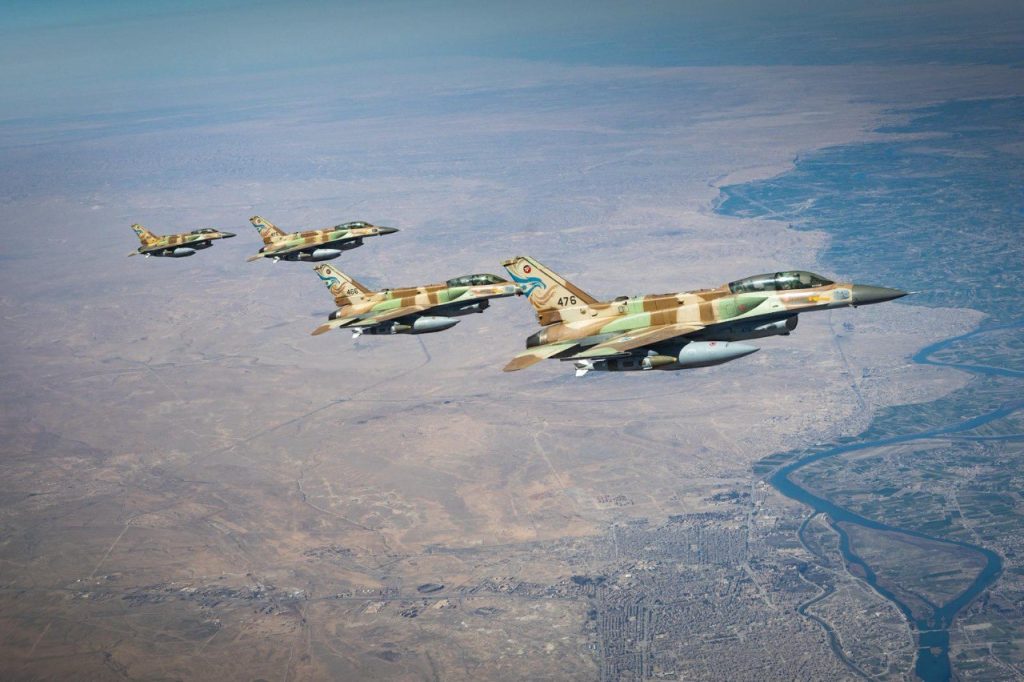
Israeli fighter jets on tarmac.
Israeli fighter jets on tarmac. Photo credit: IDF.

Updated March 24, 2026

US tests Iran deal prospects

What’s happened: President Trump announced on Monday that the US and Iran “have had over the last two days, very good and productive conversations regarding a complete and total resolution of our hostilities.”

  • As a result he was, “postponing any and all military strikes against Iranian power plants and energy infrastructure for a five day period.”      
  • In a CNBC interview and comments to reporters, Trump said Iran would abandon its nuclear weapons ambitions, stop uranium enrichment, hand over its 60% enriched uranium stocks, and reopen the Strait of Hormuz under joint control; he described this as“great for Israel.”
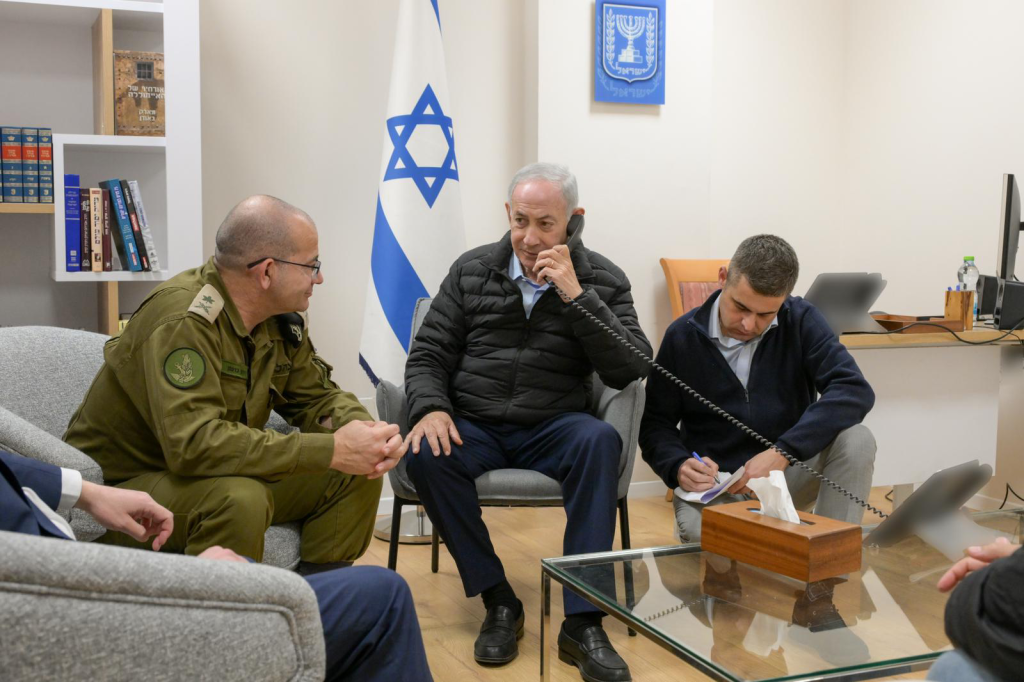
  • Later Prime Minister Netanyahu responded saying that he had spoken to Trump who “believes there is an opportunity to leverage the tremendous achievements we have reached alongside the US military to realise the goals of the war through an agreement” which Netanyahu clarified “will safeguard our vital interests.”
  • Netanyahu added that Israel was continuing to strike in both Iran and Lebanon. “We are smashing the missile programme and the nuclear programme, and we continue to deal severe blows to Hezbollah.”
  • There are conflicting reports whether these ‘talks’ are directly between US envoy Witkoff and the Iranian Foreign Minister Araghchi, who is acting on behalf of the new Supreme Leader Mojtaba Khamenei.  Or alternatively that these talks are indirect and being mediated by diplomats from Egypt, Turkey and Pakistan.  
  • In any event the Iranian’s have reportedly rejected all of Trump’s claims. Foreign Ministry spokesman Esmaeil Baqaei, denied direct or indirect contacts, saying Trump backed off due to fears of attacks on regional power grids, and that they have ignored messages passed on via third parties.

Context: The timing of Trump’s announcement just as the markets opened in the US, was seen as a deliberate move to calm the financial markets and step the rise in the price of oil. The ploy seemingly worked, as oil prices dropped 13% below $100 a barrel. Trump also backed waiving Iranian oil sanctions to ease global supply and cut costs.

  • As ever with Trump it is unclear if these are genuine negotiations, or merely an effort to calm financial markets and buy more time.
  • Israel was apparently made aware of the diplomatic efforts in advance and has been reassured by the Americans that any deal will meet with their shared war objectives.
  • Israel is confident that it has substantially damaged and degraded Iran’s ballistic missile programme, and future production capacity. Israel can also claim it has set the conditions for a potential regime change, even though there are currently no indications that this is imminent. The biggest issue that could be solved though renewed negotiations is the diluting or removal of Iran’s stockpile of highly enriched uranium.      
  • The US are signalling that they are interested in engaging with the Speaker of Iranian Parliament Mohammad Ghalibaf, who is considered to be closest to the new Supreme Leader and one of the key decision makers.  This in contrast to Foreign Minister Araghchi, who has been derisorily described as a ‘fax machine’ (an antiquated form of relaying messages).
  • Veteran Israeli analyst Ehud Yaari suggests that the Iranians appear serious, and that their opening position includes:
    • Suspending their missile development programme for five years
    • Reducing their enrichment of uranium
    • Discussing the status of the 450 kg of enriched uranium at 60 per cent
    • Agreeing to inspections and oversight by the IAEA over their remaining centrifuges
    • Ending the funding of regional proxies, including Hezbollah and Hamas        
  • Official messages emanating from Iran from senior IRGC commanders, suggest the Islamic Republic remain committed to continuing their missile attacks on Israel and the region.    
  • Israel’s current stance balances optimism over their achievement in the war so far and inherent scepticism over trusting any agreement with Iranian under its current leadership
  • Netanyahu has recalled former minister and trusted adviser Ron Dermer to lead Israel’s dialogue with the US. This builds on his visit last week to Saudi Arabia to reportedly discuss a potential agreement with Lebanon.
  • In the meantime attacks continue. Iran continues to fire ballistic missiles towards southern, central and northern Israel, whilst Hezbollah continue to attack northern Israel. Yesterday saw five hours of continuous bombardment from Lebanon.    
  • Overall, the IDF has so far struck more than 3,000 regime targets and overnight the IAF engaged more than 50 sites, including missile sites. Yesterday, the IDF struck regime targets, including a Islamic Revolutionary Guard intelligence headquarters, a central intelligence headquarters, ammunition warehouses, and air defence systems.

Looking ahead: Reports suggest that efforts are underway to set up a direct call possibly later today between the Parliament Speaker Ghalibaf and a senior US official, possibly Vice President Vance.

  • Trump’s new self-declared deadline of five days will expire at the end of this week, whereby it should be clearer if the war will indeed come to an end and under what conditions.
  • There are further suggestions that Pakistan will host and mediate talks between the Iranians and US officials in Islamabad this weekend.  
  • Meanwhile, five thousand US Marines are also on their way to the region, with reports suggesting they could be used in a potential ground operation to secure critical energy sites.
  • It is assumed that any US deal will be binding on Israel too, but not clear if it will include the fighting in Lebanon.

March 23, 2026

Iranian ballistic missiles strike southern Israel, wounding over 140 civilians

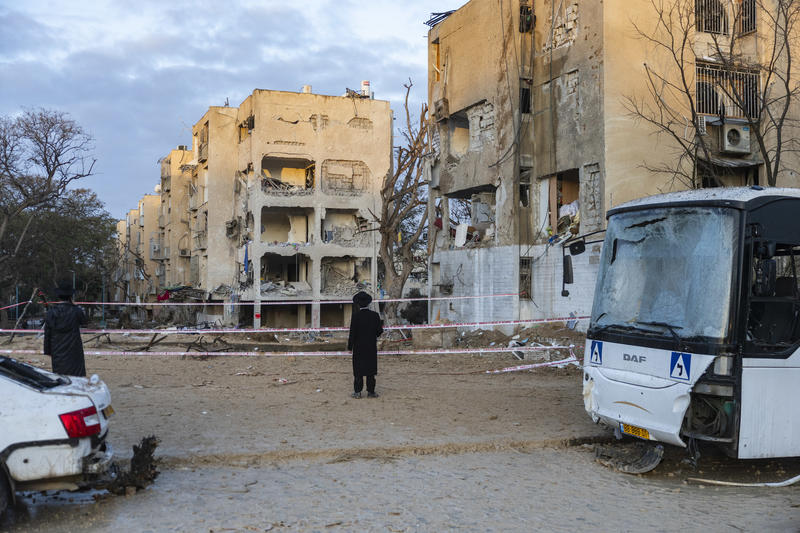
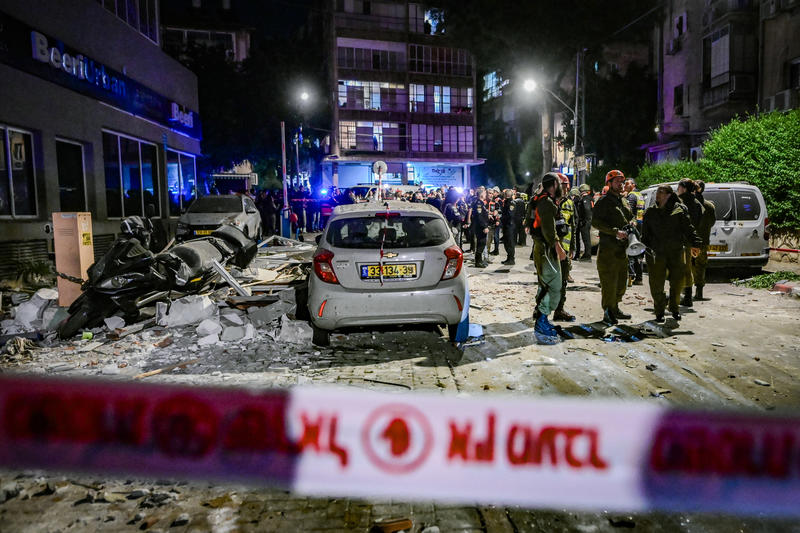
The scene where a missile fired from Iran toward Israel caused damage to residential buildings in the southern Israeli city of Arad, March 22, 2026.
The scene where a missile fired from Iran toward Israel caused damage to residential buildings in the southern Israeli city of Arad, March 22, 2026. Photo by Chaim Goldberg/Flash90

What’s happened: Over the weekend two southern Israel communities suffered direct hits from Iranian ballistic missiles.

  • In Arad on Saturday night, eighty-eight people were wounded. Ten are reported to be in serious condition, with 19 in moderate condition, 55 in light condition and four who suffered from shock.
  • Four residential buildings were damaged in the missile attack, with large numbers of rescue workers dispatched to the scene to help recover the wounded, many of whom were inside the damaged buildings.
  • Earlier on Saturday, fifty-four people were wounded by a ballistic missile that struck Dimona. A 12-year-old boy was hospitalised in serious condition.
  • The mayor of Dimona, Benny Biton told Kan Radio, that the residents’ behaviour had been exemplary, adding that rescue crews had evacuated all 475 people trapped within the damaged buildings.
  • At the scene in Arad, Police Commissioner Danny Levy reinforced the message that people in shelters were protected.  
  • The IDF confirmed that interception attempts had failed, but emphasised that these were Iran’s standard ballistic missiles and “not an unusual or unfamiliar ordnance.”
  • President Herzog visited Arad on Sunday and said that, “the Iranians do not differentiate between Muslims and Jews and Christians or between the elderly and the young. All civilians are there to be killed and destroyed, but we are here to show something else: we are ever resilient.”
  • In northern Israel, the IDF has informed the family of an Israeli farmer killed in Misgav Am near the Lebanon border that he died from a deadly misfire by Israeli artillery fire.

Context: Despite the costly failed interceptions, the IDF revealed that 92 per cent of Iranian missiles have been intercepted, but stress that there is no hermetic solution.

  • As Israel enters the fourth week of wars with Iran and Lebanon, it has enjoyed numerous tactical successes but faces the risk of a drawn-out war of attrition. Iran’s missile attacks have adapted in timing, type, and distribution, maintaining pressure on Israel’s home front despite sustained Israeli strikes.
  • Israeli strikes against Iran, including targeted eliminations and infrastructure destruction, have apparently not yet substantially weakened the regime or reduced Iran’s counter-strikes.
  • The US struggles with how to address Iran’s blockade of the Strait of Hormuz, with President Trump facing the dilemma of either escalating or appearing weak.
  • Crucially, Iran still possesses around 450 kg of highly enriched uranium (HEU); a strike on Natanz may have aimed to prevent the Iranians  relocating their stockpile. There is ongoing speculation whether a US or Israeli led special operation could extract the HEU.    
  • Visiting Arad on Sunday, Prime Minister Netanyahu said that Iranian actions over the weekend were proof that “Iran endangers the entire world.”
  • “In the last 48 hours, Iran targeted a civilian area. They’re doing that as a mass murder weapon. Luckily, no one was killed, but that’s due to luck, not their intention. Their intention is to murder civilians.
  • “Second… they fired on Jerusalem right next to the holy sites of the three monotheistic faiths, the Western Wall, the Church of the Holy Sepulchre, and the Al-Aqsa Mosque. And by dint of a miracle, again, none of them were hurt, but they were targeting the holy sites of the three major monotheistic religion.
  • “Third, they fired an intercontinental ballistic missile on Diego Garcia. That’s 4,000 km. I’ve been warning all the time. They have now the capacity to reach deep into Europe. They already have fired on European countries, Cyprus. They are putting everyone in their sights.
  • “Fourth, they’re stopping a maritime international route, energy route and trying to blackmail the entire world. What more proof do you need that this regime that threatens the entire world has to be stopped? Israel and the United States are working together for the entire world. And it’s time to see the leaders of the rest of the countries join up.
  • Netanyahu added that Israel had defined two goals – to “break completely their nuclear programme, break completely their missile programme, break completely their capacity to produce the components for both of these programmes.” He added that the country was well on the way to achieving these goals. “We’ve also set a goal of creating conditions for the Iranian people to overthrow this tyranny that has tormented them and made life miserable, and is making life miserable for the entire world. And I hope we achieve that too.”

Looking ahead: Trump’s deadline regarding Iran opening of the Strait of Hormuz expires in a few hours.

  • According to the latest assessment of IDF Chief of Staff Zamir, they are “mid-way” through the campaign. On Sunday Zamir said that, “the extensive damage that we have inflicted on the Iranian regime in the past three weeks is beginning to accumulate into a systemic, strategic military, economic and governmental achievement. As a result of that, the evil regime is weaker. Iran is more vulnerable and is without significant defensive capabilities. The regime’s leaders, who developed capabilities with the goal of annihilating us, are battered and confused.”
March 19, 2026

Muslim states turn on Iran

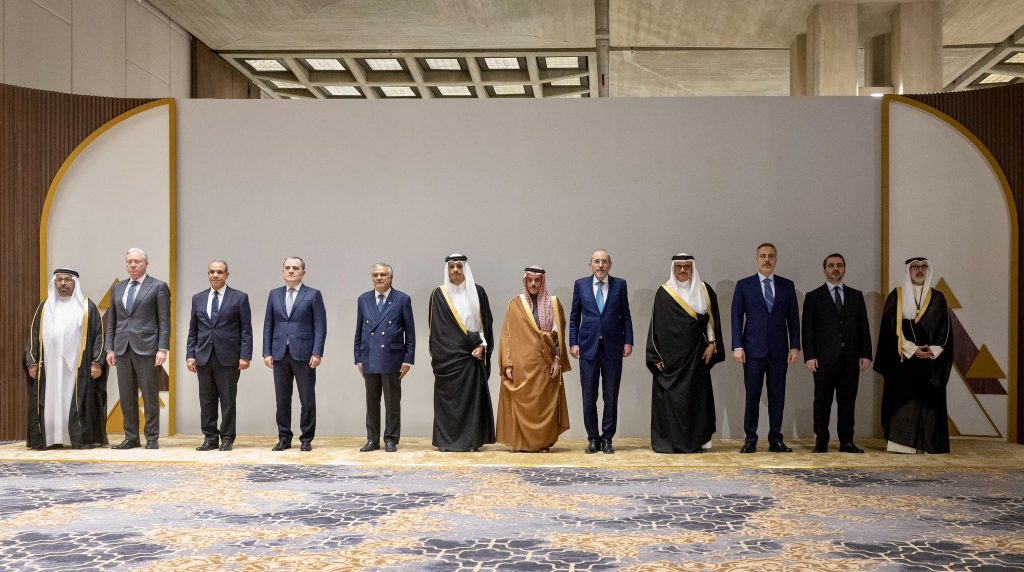
The foreign ministers of Turkey, Egypt, Saudi Arabia, Pakistan, Syria, Lebanon, Jordan, Azerbaijan, Qatar, Bahrain, Kuwait, and the UAE in Riyadh, March 18, 2026.
The foreign ministers of Turkey, Egypt, Saudi Arabia, Pakistan, Syria, Lebanon, Jordan, Azerbaijan, Qatar, Bahrain, Kuwait, and the UAE in Riyadh, March 18, 2026. Photo credit: Ministry of Foreign Affairs of Saudi Arabia / X

What’s happened: The foreign ministers of Türkiye, Egypt, Saudi Arabia, Pakistan, Syria, Lebanon, Jordan, Azerbaijan, Qatar, Bahrain, Kuwait, and the UAE called on Iran to immediately halt its attacks.

  • This comes as the situation escalates after Iran attacked Qatari facilities in the South Pars gas field in retaliation for Israeli strikes on Iran’s domestic gas infrastructure. This is the latest example of an Iranian attack on infrastructure in neighbouring countries.
  • Meeting in Riyadh, the muslim states also criticised Iranian attempts to obstruct international navigation in the Strait of Hormuz or “threatening maritime security in Bab al-Mandab” at the entrance to the Red Sea. 
  • Condemning the Iranian proxies the muslim states called  for “the cessation of support, financing and arming its affiliated militias in Arab countries, which Iran is doing to serve its goals and against the interests of these countries.”
  • In response to that attack, Qatar yesterday expelled Iranian diplomats declaring their military and security attaches personae non gratae. Qatari Ministry of Foreign Affairs stated “this decision comes in response to repeated Iranian targeting and the blatant aggression against the State of Qatar, which violated its sovereignty and security, in a flagrant breach of the principles of international law.”
  • Iran also continues attacking the Israeli home front. Iranian missiles fitted with cluster munitions and fired at population centres in Israel killed at least four people overnight. The use of cluster munitions on non-military targets is illegal under international law. In the West Bank, a cluster munition struck a beauty salon in a village outside of Hebron, killing three Palestinian women and injuring at least a dozen. In Adanim, just northeast of Tel Aviv, a cluster munition from an Iranian missile killed a Thai agricultural worker.
  • Also yesterday, Hezbollah fired a salvo of rockets aimed at the Gaza envelope area. It was a notable choice of target — not Israel’s north, where most Hezbollah rockets are fired, and not major cities in Israel’s centre’s, which were frequently targeted by Hezbollah in its short war with Israel in 2024 and at least once in the current round of fighting which began with Hezbollah’s rocket launch on March 2.
  • The Gaza envelope area requires a longer range of rocket from Lebanon. It is the area where Hamas carried out the October 7 massacre. It is also the region of Israel that was under intermittent rocket fire from Gaza from 2001 until the last two years, when an IDF offensive finally destroyed Hamas’ means of smuggling, manufacturing, and launching rockets.
  • IDF aircraft carried out an unprecedented air strike on the Iranian port of Bandar Anzali on the Caspian Sea. The strikes targeted Iranian naval vessels and brought the naval war to a theatre far from the Persian Gulf. The Caspian Sea has been the route for Russian and Iranian navies to trade weapons and munitions, including Iranian drones used against Ukraine.

Context: The most dramatic developments in the war yesterday involved attacks on gas facilities.

  • Israel struck the giant South Pars gas field yesterday, that is used by Iran to support their domestic needs, including the war effort. Iran retaliated by striking Qatari facilities on the same gas field that are used predominantly to serve the global market needs.
  • The South Pars gas field, the largest of its kind in the world, straddles the Qatari and Iranian exclusive economic zones (EEZ) in the Persian Gulf. The gas extracted on the Iranian side serves almost exclusively the domestic Iranian market. Taking it offline has little direct effect on global markets, but does increase dramatically the domestic political pressure on the Islamist regime.
  • Qatar, on the other hand, does use the gas field for export, and its development has made Qatar one of the the world’s biggest natural gas exporter. Concerns about disruptions to Qatar’s gas exports sent prices up on global markets yesterday, and led to urgent statements from French President Macron, among others.
  • President Trump’s statements on this struck conflicting notes. He claimed that the US had no advance knowledge of the Israeli plan to attack the Iranian gas site, even describing Israel’s actions as “violently lash[ing] out.” This claim was dismissed by nearly all American and Israeli sources in both countries’ medias, including by people normally quite sympathetic to the President. He further promised that Israel would not be hitting the site anymore. He also vigorously condemned the Iranian counterattack on a Qatari gas facility as “unjustifiable” since Qatar had not been involved in the attack on Iran.
  • At the same time, he threatened to destroy the facility if Iran hit further Qatari LNG facilities. In such a case, he wrote on his social media platform, “the United States of America, with or without the help or consent of Israel, will massively blow up the entirety of the South Pars Gas Field at an amount of strength and power that Iran has never seen or witnessed before.”
  • The Israeli strike on South Pars was described in most media outlets as a “major escalation” for hitting energy infrastructure, despite following days of Iranian strikes on energy infrastructure in various neighbouring countries, including refineries and gas fields Saudi Arabia, Bahrain, and the UAE.
  • Though the Iranian strike on Qatar received by far the most attention yesterday, its retaliatory strikes were not limited to that target. Today it struck Kuwait’s Mina al-Ahmadi refinery, causing a fire, and incidents at the UAE’s Habshan gas facility and Bab oilfield.
  • Additionally, an Iranian drone crashed and caused a fire at an Aramco refinery in Yanbu in Saudi Arabia. Yanbu is on Saudi Arabia’s Red Sea coast, far from the Persian Gulf and not impacted by the Iranian blockade on the Straits of Hormuz.
  • Israel, for its part, is a net exporter of natural gas, relying on its vast gas fields in its Mediterranean EEZ.

Looking ahead: No major ground offensive has been launched into Lebanon for now, though a massive call up of reserves in the last week indicates that it could happen at any moment.

  • In the meantime, intensive diplomatic efforts are underway to reach an agreed and enforceable framework to demilitarise the south of Lebanon in accordance with the 2024 ceasefire. Such a development would obviate the need for a large ground manoeuvre of the IDF.
  • IDF engagement in Lebanon continues, mostly by air with small ground manoeuvres as well. Air strikes destroyed two Litani River crossings used by Hezbollah to transfer weapons and fighters south to Israel’s border; two other bridges over the same river were hit earlier this week. The commander of the “Imam Hussein Division,” part of Iran’s Quds Force in Lebanon, was eliminated in an IDF air strike in Beirut. The IDF also reported eliminating 20 Hezbollah operatives in combat in southern Lebanon.
  • In the UK, 2 people appear in court today, charged with spying on Jewish community targets on behalf of the Iranian regime. 

March 18, 2026

Iranian illegal cluster ammunition killed two in Israel

Israeli security and rescue forces inspect the damage at the scene where a missile fired from Iran toward Israel caused damage and killed two people in Ramat Gan, central Israel, March 18, 2026.
Israeli security and rescue forces inspect the damage at the scene where a missile fired from Iran toward Israel caused damage and killed two people in Ramat Gan, central Israel, March 18, 2026. Photo by Avshalom Sassoni/Flash90

What’s happened: Two Israelis, an elderly couple in their 70’s, were killed in an Iranian missile attack on Ramat Gan overnight. The couple were at home during the attack, but did not manage to make it to the safe room in their apartment in time. The missile fired at central Israel contained a cluster munition, which splits into multiple small explosives distributed over a broad area. Its use over an urban area, targeting civilians is a war crime.

  • An Israeli air strike eliminated Irans’s Supreme National Security Council Secretary Ali Larijani, who had been functioning as Iran’s de facto wartime leader. He was killed in a strike on a safe house in a suburb of Tehran.
  • At the same time, a separate attack targeted a meeting of top commanders of the notorious Basij, the regime’s internal security force largely responsible for the massacre of tens of thousands of Iranian protesters in January. This strike eliminated at least ten senior Basij commanders, including the force’s top commander Gholamreza Reza Soleimani and his deputy, Rasem Qureishi.
  • A later strike targeted Iran’s intelligence minister, Esmaeil Khatib. This morning, Israel’s Defence Minister Katz announced that Khatib, whose ministry supported global terrorism as well brutal domestic repression, was eliminated. 
  • Hezbollah launched another massive barrage of rockets on northern Israel last night, similar to the one it launched six days before. Like the March 11 attacks, this one involved about 200 rockets, many of which fell short and landed in Lebanon.
  • Unlike on March 11, this time the Israeli Home Front Command did not wait until just one hour before to share with the public that an attack was planned. The attacks caused some limited damage but no injuries or deaths in Israel.
  • In Gaza, an Israeli air strike killed Yahya Abu Labda, a commander in Hamas’s supply and logistics department who was responsible for advancing Hamas’ “precision missile project,” according the the IDF Spokesperson.

Context: Whilst the targeted eliminations at the beginning of the war demonstrated impressive intelligence penetration, it also relied on the element of surprise. The strikes against the top brass of the Iranian security apparatus yesterday and overnight show the dynamic capability of Israeli intelligence to be able to locate high value targets, even when they know they are being targeted.

  • Israeli analysts have noted that the elimination of Ali Larijani may be even more significant than that of the Supreme Leader, as it was Larijani that was a more hands on decision maker and more central both to the war and the repression of Iranian protestors.  
  • Israeli officials hold out two metrics for assessing damage to the IRGC in general and the Basij in particular. First, they look to see whether command and control is disrupted. Second, they look for defections.
  • On the first measure there appears to be broad success. Giving orders and responding to tactical developments is becoming increasingly impossible for Iranian armed forces of all kinds.
  • On the second measure, nothing has moved yet. No prominent defections have been recorded. No senior officials have sought refuge in neighbouring countries. And despite scattered media reports which may themselves be psychological warfare, there are no significant incidents of forces abandoning post or laying down arms.
  • A report in The Guardian yesterday suggests that the UK national security adviser Jonathan Powell had attended some of the indirect talks conducted between the US and Iran before the war began on February 28. However, according to Bloomberg, Downing Street has denied that Powell was present at the negotiations.
  • The Guardian report aimed to present the Iranian position as moderate, compromising, and “surprisingly” reasonable. However, even the most generous interpretation of the last Iranian offer would have left it with nuclear capabilities far beyond any of the red lines set by the Americans.
  • Moreover, the Iranian offer contained nothing regarding the other issues which the US had put down as priorities for any kind of deal: the missile programme, Iran’s network of regional proxies, and its repression of anti-regime protests in January.
  • The bit of The Guardian which made the biggest splash (and was used to promote it on social media) was a quote, initially attributed to Powell, that US negotiators Jared Kushner and Steve Witkoff were “Israeli assets that dragged a president into a war he wants to get out of.” A corrected version of the article removed that attribution and instead attributed the quote to an unnamed diplomat from a Gulf country, the attribution the quote retains in a longer subsequent article the Guardian ran today, which once more prominently featured this assessment of the US negotiators.
  • Regardless of the provenance of the quote, this description of Witkoff and Kushner is ironic from an Israeli perspective as throughout the entire lead up to the war, officials in Jerusalem regarded the two as the biggest obstacles to a firmer US line on Iran. Leaks from Israeli officials routinely derided both as desperate to reach a deal, even an inadequate one, with Tehran, while most Israelis were finding a more receptive opening with Secretaries Rubio and Hegseth.
  • At the same time, both Kushner and Witkoff are Jewish. That a Gulf official would see two senior US officials who happen to be Jewish as “Israeli assets” driving America to a war it does’t want isn’t terribly surprising. That officials in Whitehall or editors at the Guardian see this not as a window into the prevailing views in the Arab world but rather as a deep revelation about what happened behind the scenes is, to say the least, a cause for concern.
  • Insinuations about nefarious influence weren’t limited to the British left yesterday. A senior aide to Tulsi Gabbard, President Trump’s controversial Director of National Intelligence, Joe Kent resigned from the Trump Administration yesterday over his opposition to the war in Iran.
  • Joe Kent’s appointment to the position last year was met with a great deal of opposition following his close associations with an assortment of neo-Nazis, white supremacists, and other far-right figures. His resignation letter, like the Guardian’s reporting, alleged that the United States were fighting the war in Iran for Israel and not for US interests.
  • It further insinuated that both the war in Iraq two decade ago as well as the allied campaign against ISIS in the last decade — in which his wife, a naval intelligence officer, was killed — were both caused by Israel.
  • In fact, Israel played no part in the Iraq War in 2003, and Israeli Prime Minister was later revealed to have privately warned the US against the war for fear that it might strengthen Iran. The campaign against ISIS too did not involve Israel in any way. At many points, in fact, Israel’s opposition to pro-Iranian forces in both Iraq and Syria led many commentators to (falsely) accuse Israel of supporting ISIS, making Kent’s accusation not just a lie, but a deeply ironic one.

Looking ahead: Despite a large call-up of reserves and frequent pronouncements by senior Israeli officials about an imminent ground operation in southern Lebanon, there has been so significant movement of the IDF across the border.

  • In the background, several countries, including France among others, have floated proposals for negotiations between Jerusalem and Beirut for an agreement that would prevent an expanded war.
  • It is unclear if any of these initiatives might lead to serious negotiations, and they are treated, in public at least, with great scepticism. At the same time, the large military offensive that was expected already last week has not been launched. Defence Minister Katz also alluded to more “significant surprises” to come.

March 17, 2026

Emerging Iranian proxy linked to attacks in Europe

Diaspora Affairs Minister Amichai Chikli attends a special plenary session at the auditorium in the Knesset, the Israeli parliament in Jerusalem, during the war with Iran and Hezbollah, March 9, 2026.
Diaspora Affairs Minister Amichai Chikli attends a special plenary session at the auditorium in the Knesset, the Israeli parliament in Jerusalem, during the war with Iran and Hezbollah, March 9, 2026. Photo by Yonatan Sindel/Flash90

What’s happened: Amichai Chikli, Israel’s Minister for Diaspora Affairs and Combating Antisemitism has alleged that a recently founded Iranian proxy group, Harakat Ashab al-Yamin al-Islamia (HAYI), was responsible for a series of attempted bombings at Jewish community sites in Belgium and in the Netherlands.

  • Last week, explosions and arson attacks took place at synagogues and a school in Liege, Amsterdam, and Rotterdam. While they did not cause any injuries or fatalities, some damage was incurred.
  • Local and national authorities strongly condemned the attacks, with the Dutch Prime Minster Rob Jetten referring to them as “horrible”, and stating that he understands “the anger and fear” of the Jewish community in the country.
  • Commenting on the attacks, Chikli said: “The recent events in Europe are not isolated incidents but part of a disturbing pattern of action: Terrorist networks affiliated with the Iranian axis are trying to expand their arena of operation into the cities and Jewish communities of Europe”, and that “The message must be clear – Jewish communities are not a legitimate target for threats, and the international community must act resolutely against any entity that attempts to export terrorism and antisemitism beyond the borders of the Middle East.”
  • Shortly after the attacks were conducted, related footage was shared on pro-Iranian regime Telegram channels, including ones associated with Hezbollah and the IRGC.
  • HAYI’s name is similar to that of a preexisting Iran-linked Iraqi Shia militia, Harakat Ansar Allah al-Awfiya (HAAA).
  • HAAA is designated as a terrorist group by the US, and its leader was reportedly killed in unclear circumstances in February, leading to suggestions that these attacks were an act of retribution.
  • HAAA is best known for a 2024 drone attack against a US base in Jordan which killed three deployed personnel.

Context: Iran and its proxies have a long, but broadly unsuccessful history of targeting diaspora Jewish communities and sites. 1994’s joint Iranian-Hezbollah bombing of the AMIA community centre in Argentina was the most devastating attack, killing 85.

  • Jewish community sites and individuals across Africa, Germany, Greece, Cyprus, UK, Kazakhstan, and Sweden have all allegedly been targeted, thus far unsuccessfully.
  • In the UK, four individuals were arrested by counter-terrorism police officers on suspicion of collecting intelligence on the local Jewish community on behalf of Iran. Officers have been granted additional time to interview the suspects, and the CPS are yet to authorise charges.
  • The UK Government is resisting calls to proscribe the IRGC as a terrorist organisation, deeming such a measure inappropriate for an organ of a foreign state, despite the fact that the US, the EU, Saudi Arabia and Canada have all done so, and despite being urged to follow suit by a growing number of MPs from across the political spectrum.
  • Plots are generally directed by the IRGC (especially Quds Force units), and occasionally by the Ministry of Intelligence and Security (MOIS).
  • During Operation Roaring Lion’s open salvos, the IDF eliminated Yahya Hosseini Panjaki, a career MOIS officer who acted as a liaison to the IRGC. The Times reported that he oversaw, “terrorist activities targeting Jews, Western actors and regime opponents in Iran and abroad”, as well as using local criminal elements as proxies to ensure a level of deniability for Tehran.
  • Rather than operating directly in Europe and North America, the IRGC and MOIS have generally preferred to contract espionage and terrorism to criminal elements.
  • A foiled plot to abduct and murder Masih Alinejad, a US-based Iranian dissident involved two Russian gangsters, while various plots against the UK-based Iran International dissident station have all been contracted to non-Iranians.
  • Other foiled plots in Greece and Cyprus involving Jewish community and RAF bases used Pakistani and Azeri nationals to collect intelligence.

Looking ahead: The latest assessment is suggesting that the operation will take longer than planned, with the projection that the war would continue for at least another month.

  • Both Israeli and the US want to fully exhaust the effort to topple the regime in Tehran. Israeli officials assess that President Trump is determined to bring about the fall of the
  • Iranian regime and that he does not intend to end the war before that is accomplished.In addition, Israeli officials believe the US is drafting plans to seize control of the Strait of Hormuz, and that will take at least another month to complete.

March 17, 2026

Senior regime figures targeted

Prime Minister Netanyahu ordering the elimination of senior Iranian regime officials, March 16, 2026.
Prime Minister Netanyahu ordering the elimination of senior Iranian regime officials, March 16, 2026. Photo credit: Ma’ayan Toaf / GPO

What’s happened: The IDF have confirmed that an air strike on Monday evening targeted and eliminated Ali Larijani, Secretary-General of the National Security Council of Iran, and Gholamreza Soleimani, the commander of the Basij for the past six years.

  • Similarly, Israel media are reporting the latest assessment from the head of IDF Intelligence Maj. Gen. Shlomi Binder. According to Binder, only now is Iran beginning to grasp the full scope of the damage that has been inflicted on it. In his view, Iranian troops are scared, lack motivation, and have been reluctant to go out to fire missiles as a result of the ongoing US and Israeli strikes.
  • The Basij forces are part of the armed internal apparatus of the Iranian regime. They are responsible for the repression, violence and widespread arrests of civilian demonstrators.
  • Various reports are suggesting that cracks are appearing within Iranian security forces. Iran International, which is affiliated with the Iranian opposition, reports from its sources an increase in the rate of deserters among the army and police in Iran. According to these sources, about 350 police officers abandoned their posts at one of the police bases. It was also reported that in some units the desertion rate reaches 90%.

March 16, 2026

IDF deepens operation in southern Lebanon, continues to strike Iran

As part of the forward defence mission: the 91st Division has begun targeted ground operations in southern Lebanon. March 16, 2026.
As part of the forward defence mission: the 91st Division has begun targeted ground operations in southern Lebanon. March 16, 2026. Photo credit: IDF

What’s happened: The IDF announced this morning that it has expanded its ground operations in southern Lebanon.

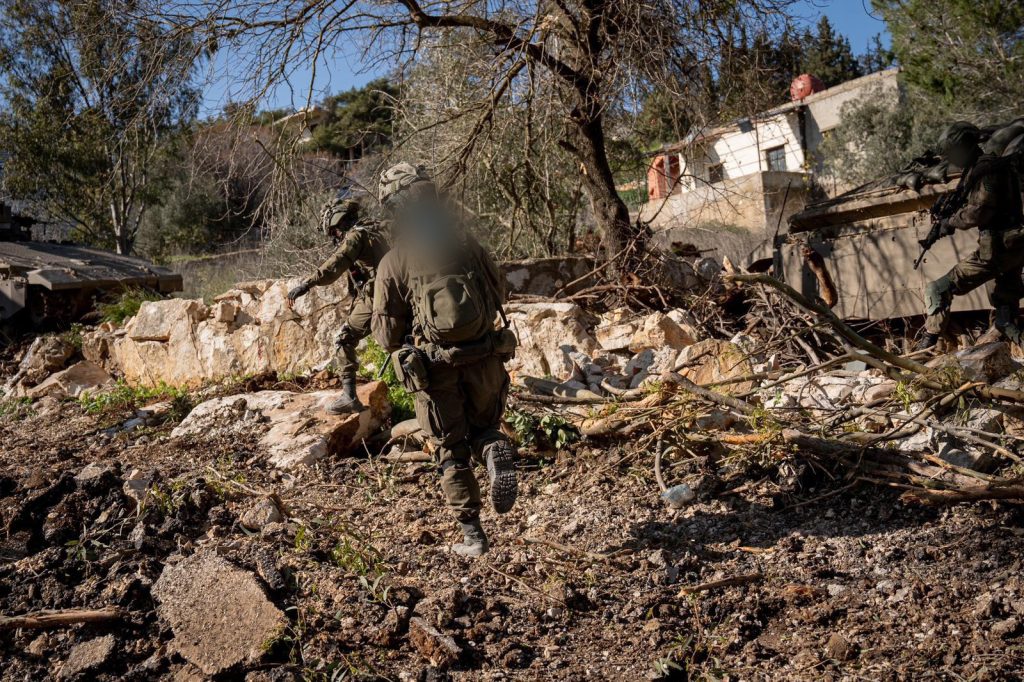
  • Three divisions are now operating in southern Lebanon, with more expected to join them. The IDF says it has struck about 1,000 Hezbollah targets since the start of the war, and has eliminated around 400 Hezbollah operatives.
  • The IDF continues to carry out a large-scale attacks against Iranian regime infrastructure targets in Tehran and other parts of the country. On Sunday, the IDF struck 200 targets across western and central Iran. The focus continues to be the further degrading of ballistic missiles array and other military targets.  
  • IDF Spokesperson Brig. Gen. Defrin told the Israeli public, “Our achievements are greater than we expected. The opening strike was very successful and consequently, so are our other attacks that have hit the Iranian regime. And we are intensifying the blow. Every day, the achievement increases and intensifies. And as a result, this is destabilising this regime. That is the reality. We are ahead of schedule.”
  • Despite a relative decrease in Iranian attacks over the weekend, missile fire from Iran was resumed Sunday night. Air raid sirens were activated twice in Beer Sheva and its environs, in the Dead Sea area and in the Gaza periphery. No casualties were reported.
  • In parallel Hezbollah continues its more intensive but short range attacks against northern Israel.  
  • Kan News reported that at the end of last week, Hamas secretly sent a letter to the new Iranian leader, Mojtaba Khamenei, and urged him to launch an uncompromising multi-theatre war. Hamas further committed not relinquish its arms, and called to activate all the theatres of the axis of resistance, including Lebanon, Yemen and Iraq, to exact a price from Israel. Hamas also fiercely attacked the Persian Gulf states that seek to establish normalised relations with Israel and said that the normalisation camp was a losing camp.

Context: As the war enters its third week, both US and Israeli officials sound upbeat at the military  achievements to date.

  • The  tight US – Israel  military cooperation continues with a  clear division of labour. Each military is carrying out their attacks in different strike zones, but with a shared intelligence target bank. Each sides has senior liaison officers in each other’s headquarters whilst a special intelligence team operates in Israel, feeds targets in real time to both militaries.  
  • According to the IDF Military Intelligence Directorate, the Israel Air Force has so far destroyed 100 Iranian anti-aircraft batteries and another 120 radars, providing it with absolute air superiority. Seventy percent of Iran’s missile launchers have been either destroyed, decommissioned or buried out of reach inside tunnels.
  • Military intelligence now assesses that Iran’s missile production has dropped to zero, but ongoing attacks are needed to prevent the Iranians from trying to resume production. Moreover, the volume of missile fire on Israel needs to be reduced further.
  • Rumours circulated over the weekend that the IDF is running out of interceptor missiles, based on a  report on the US website Semafor, that claimed Israel informed the US that it suffers from a severe shortage in missiles used to intercept ballistic missiles. This led the IDF to issue a statement, “As of now, there is no interceptor shortage. The IDF prepared for prolonged combat. We are continuously monitoring the situation.” In addition it was cleared for publication that Israel’s cabinet approved allocating NIS 2.6 billion (£626m) for further purchases for the war.
  • There are initial signs of diplomatic efforts to bring the war to an end.  Most significantly regarding Lebanon. Former Minister Dermer is once more serving as an envoy for the Prime Minister. Over the weekend he visited Saudi Arabia to discuss a peace initiative between Israel and Lebanon for after the fighting is over. One initiative aims to turn Hezbollah into a political movement without any military capabilities. The Lebanese government, the White House and the French are all party to the talks.
  • President Trump warned NATO could face a “very bad future” if US allies refused to help secure the Strait of Hormuz. Trump said countries that benefit from the shipping lane should contribute forces, including minesweepers and personnel to counter “bad actors” along Iran’s coast. “If there’s no response or if it’s a negative response I think it will be very bad for the future of NATO.”
  • In response, the UK is working alongside allies on plan to reopen Strait of Hormuz as announced this morning by Keir Starmer. 
  • The fear of rising energy prices from the closure of the Straits  – where 20% of the world’s oil passes – has led to an agreement by over 30 nations in Europe, North America and Northeast Asia to flood the market with 400 million barrels of oil. The US is leading the effort with a release of 172 million barrels from its Strategic Petroleum Reserve.
  • Saudi Arabia, Iraq, Kuwait and the UAE export approximately 14 million barrels per day. Approximately 5 million barrels per day can be exported using Saudi and UAE pipelines that end at the Red Sea and Gulf of Oman. The remaining 9 million barrels per day constitutes about 10% of global supply and can only pass through the Strait.
  • The closure of Hormuz provides strategic leverage to Iran. If Israel and the US prove unable to force the re-opening of the Straits, it will show Iran to be a regional hegemon which will provide it with leverage over the Gulf Countries and others.
  • Against the backdrop of this challenge, over the weekend, Trump announced that the US had “executed one of the most powerful bombing raids in the History of the Middle East, and totally obliterated every MILITARY target in Iran’s crown jewel, Kharg Island.” Trump added that the oil infrastructure on the island was not destroyed but warned that “should Iran, or anyone else, do anything to interfere with the Free and Safe Passage of Ships through the Strait of Hormuz, I will immediately reconsider this decision.”

Looking ahead: Two more IDF divisions are expected to join operations in southern Lebanon in the next few days.

  • European Union foreign ministers will discuss a potential ⁠widening of ⁠the EU Aspides naval mission to the Strait of Hormuz. The report in the Financial Times suggested that an EU-UN joint naval mission to ensure ⁠safe passage “seems more likely” than EU countries approaching ⁠Iran bilaterally.
  • Israel and the US have approved operational plans for the next three weeks. The plan is to destroy all of the Iranian regime’s components and capabilities.

March 12, 2026

Northern Israel under heavy fire

First documentation of Division 36 forces operating in the southern Lebanon as part of the forward defence operation in the area, March 11, 2026.
First documentation of Division 36 forces operating in the southern Lebanon as part of the forward defence operation in the area, March 11, 2026. Photo credit: IDF

What’s happened: A massive coordinated barrage of rocket and missile fire on northern Israel was carried out by Hezbollah and Iran yesterday evening, marking a significant escalation in the Lebanese front of the war, which opened on March 2 with a much smaller Hezbollah attack on northern Israel.

  • 200 Hezbollah rockets were fired on northern Israel, with a smaller barrage from Iran also hitting Israel’s north at the exact same time. Interceptions were carried out by Iron Dome, as the new laser-based Iron Beam interceptor is not yet operational.
  • In the hours prior to the attack, rumours circulated in Israel of an impending escalation without specific details. As the hour approached, Home Front Command urged all Israelis in the country’s north to remain close to shelters. Most of the projectiles were intercepted or landed in open fields. Two Israelis were lightly injured in the attack.
  • Following the coordinated attack on northern Israel, the IDF launched a massive airstrike on Lebanon, focusing on Hezbollah strongholds such as the Dahiya quarter of Beirut. The IDF reported destroying ten different Hezbollah command posts and dozens of rocket launchers.
  • Lebanese authorities report that since the fighting began last week 700,000 people have been displaced. Official death tolls list 439 men, 45 women, and 86 children, without any breakdown of combatants and non-combatants.
  • The destruction of Iranian air defences has opened the skies of Iran to further attacks on regime targets, while the volume of Iranian missile fire on Israel continues to decline.Israeli aircraft struck regime targets throughout the day yesterday, including the headquarters of the Islamic Revolutionary Guard Corps (IRGC), the IRGC air force command centre, the IRGC military academy, and various sites connected to the Basij militia that is notorious for its human rights breaches and crackdown against January’s mass protests that killed tens of thousands.
  • Unnamed US sources were quoted in Israeli media saying that Iran was running out of missile launchers, and that within days it would cease to be able to mount significant missile attacks on its neighbours. Air strikes on the regime-affiliated bank meant that it was unable to pay salaries to civil servants or the military, something US officials believe will hasten the regime’s collapse. The American assessment is that the IRGC and the Basij have sustained thousands of casualties, that their bases and headquarters are all largely destroyed, and that communications between unit commanders and forces in the field is partial at best.
  • Prime Minister Netanyahu and Finance Minister Smotrich announced yesterday that they were putting the controversial bill which would formalise draft exemptions for the Haredi public on hold in order to retool the 2026 budget bill and pass it by the mandatory deadline of March 31. According to Israeli law, if no budget is passed by that date, parliament is automatically dissolved and a snap election is called.  The Government is now calling for an across-the-board cut of 3% in all ministries to pay for the war.

Looking ahead: Two major strategic dilemmas lurk for Israeli and American decision makers as the war continues.

  • In Lebanon, Israel has to decide whether to  broaden its strikes beyond narrow Hezbollah targets. It is keen for Lebanon to feel the pressure of the ceasefire violations, and this is crucial for any future deterrence as well. On the other hand, recent pronouncements from Beirut hold open the possibility that Lebanon may finally be serious about reining Hezbollah in itself and possibly even negotiating a peace deal with Israel, something Israel would be reluctant to sabotage if indeed it is a real possibility.
  • The issue of Iran’s stockpile of highly enriched uranium (HEU) has not gone away, though its current whereabouts and status are shrouded in mystery since the US bombing in on the Fordow facility last June in Operation Midnight Hammer. Media reports indicate that both the US and Israel have drawn up plans for a potential ground operation using special forces at the site. Removing the HEU was a key demand of the US in the unsuccessful round of negotiations that preceded the outbreak of hostiles on February 28.

March 10, 2026

Trump signals the endgame as Israel confronts a strategic dilemma in Lebanon

Israelis take cover at a public shelter in Mazkeret Batya as a siren sounds warning of incoming ballistic missiles fired from Iran toward Israel, March 8, 2026.
Israelis take cover at a public shelter in Mazkeret Batya as a siren sounds warning of incoming ballistic missiles fired from Iran toward Israel, March 8, 2026. Photo by Yossi Aloni/Flash90

What’s happened: President Trump indicated he was ready to end the war on Iran sooner rather than later. “It’s going to be ended soon,” he told reporters in Florida, “and if it starts up again they’ll be hit even harder.”

  • Trump’s comments had an immediate effect on commodity prices, notably causing a rapid fall in oil prices, which had risen dramatically the day before. But the pace of attacks on Iran, and Iranian missile fire on Israel, did not materially change.
  • Prime Minister Netanyahu, for his part, also made comments that indicated that Israel does not intend to continue fighting this war until the Iranian regime completely collapses. “Our aspiration is to bring the Iranian people to throw off the yoke of tyranny,” he said during a visit late last night to the National Health Emergency Operations Center. “Ultimately it depends on them. But there is no doubt that through the actions taken so far we are breaking their bones — and our arm is still outstretched.”
  • Two more civilians were killed in Israel yesterday from Iranian missiles. Both were constructions workers on site in the central city of Yehud, not far from Ben Gurion Airport.
  • The name of the second of two soldiers killed in combat in Lebanon was released yesterday. Or Demry, 20, from Liman, near the northern border, was killed along with Maher Khatar 38. Khatar is the first IDF fatality from the Golan Druze community. Unlike Druze from inside Israel’s pre-1967 borders, Golan Druze almost never served in the IDF until very recently.
  • Hezbollah too launched a barrage of rockets on central Israel yesterday. One missile hit the city centre of Ramleh, injuring 16.
  • Following on Israel’s threat last week that Iranian regime officials in Lebanon who did not immediately leave the country would become targets, the IDF launched a targeted strikes on one hotel room in the Ramada Hotel in Beirut’s upscale Raouché district. The strike eliminated  five senior members of the Iranian Revolutionary Guard Corps, all of whom were involved in financing and directing terrorist operations among Iran’s Lebanese and Palestinian clients. Ten other people were injured in the strike. At least 150 Iranian nationals are known to have left Lebanon since Israel issued the unusual threat last week.
  • Meanwhile, the Israel Air Force continued its offensive operations over Iran. IAF airplanes struck the IRGC’s Quds Force Command Centre in Tehran, as well as a missile production and storage site in Isfahan. Airstrikes also disabled at least six Iranian airfields and destroyed the IRGC’s headquarters for unmanned aerial vehicles (UAVs).
  • Trump administration envoys Jared Kushner and Steve Witkoff were due to arrive in Israel today, but their visit has been cancelled. It had been intended to discuss strategic coordination between Washington and Jerusalem over the Iran war and, in particular, to focus on reactions among US allies in the Gulf.

Context: As the IDF continues its offensive operations in Lebanon in response to Hezbollah rocket and drone fire, potentially dramatic diplomatic developments are afoot.

  • Lebanese President Joseph Aoun lashed out at Hezbollah in comments yesterday to European officials, saying “Whoever launched those missiles wanted to bring about the collapse of the Lebanese state, plunging it into aggression and chaos… all for the sake of the Iranian regime’s calculation.” He proposed a four-point plan to end the war that would include “establishing a full truce” with Israel and direct negotiations.
  • Reports in US media indicated that Aoun was even open to the possibility of negotiating a full peace agreement with Israel, though both US and Israeli officials were reported to be sceptical about the seriousness of the proposal.
  • Israeli commentators focused on the strategic dilemma Israel finds itself in at this point in the conflict on its northern border. On the one hand, military achievements from both the 2024 war with Hezbollah and the current fighting have pushed Lebanon into making diplomatic overtures that have been an Israeli wish for decades. If there is a genuine option for concluding the state of war that has been in place for nearly eight decades with Lebanon, there is every reason to pursue it.
  • On the other hand, diplomatic and military conditions are ripe for an offensive which could land a deadly and unrecoverable blow on Hezbollah, weakened by the 2024, cut off from its Syrian land bridge, and nearly abandoned by its Iranian patron now deep in survival mode in the face of a massive US-Israeli barrage. To step back from this once-in-a-generation opportunity for the IDF to destroy its most tenacious regional enemy might not be a risk worth taking.
  • Avi Issacharoff writes in Yediot Ahronot, “What Israel must understand above all about Hezbollah is precisely what Israel has failed to understand about Hamas all these years, including after October 7: This is an extremist religious organisation that will not hesitate to use any means at its disposal to hurt the other side. They are not afraid of suffering a large number of casualties or damage to real estate, as Hezbollah sustained in Israeli air strikes on the Dahiya Quarter. This is an organisation that has sent hundreds of people to their deaths fighting in Syria in order to save an Alawite tyrant [then president Bashar al-Assad] because that is what Iran ordered it to do. This organisation will do everything it can to cause Lebanon to go up in flames, if only in order to rekindle the broad support [it once enjoyed] in that country. Hezbollah was the side party that invented suicide terrorism in the Middle East, and it does not appear that disarming the group and handing it to one Lebanese government or another will be a simple matter of Israeli bombings from the air.”
  • Since Hezbollah joined the war on March 2, most of its rocket fire in this war has been aimed at northern Israel. For Israeli residents, the difference between attacks from Lebanon and Iran is in the lead time to seek shelter: Alerts are sounded when Iranian missile fire is detected, usually five minutes before the sirens that indicate 90 seconds to impact. This gives most people enough time to seek a hardened shelter. With rocket fire from Lebanon, there is no alert, just the siren that gives 90 seconds. For anyone not near a hardened shelter, this is just enough to find a stairwell or some windowless room to seek shelter.
  • The weapon that has been a leading source of concern for the Israeli home front was the cluster munitions affixed to Iranian ballistic missiles. These work by releasing a cluster of two dozen or so submunitions from a missile warhead about 10km above the ground, which then disperse over a wide area. They are designed to be used over large military targets, such as airfields, and their use over cities in the manner that Iran has used them in both this war and the Twelve Day War last June is illegal under international law.

March 9, 2026

War enters 10th day

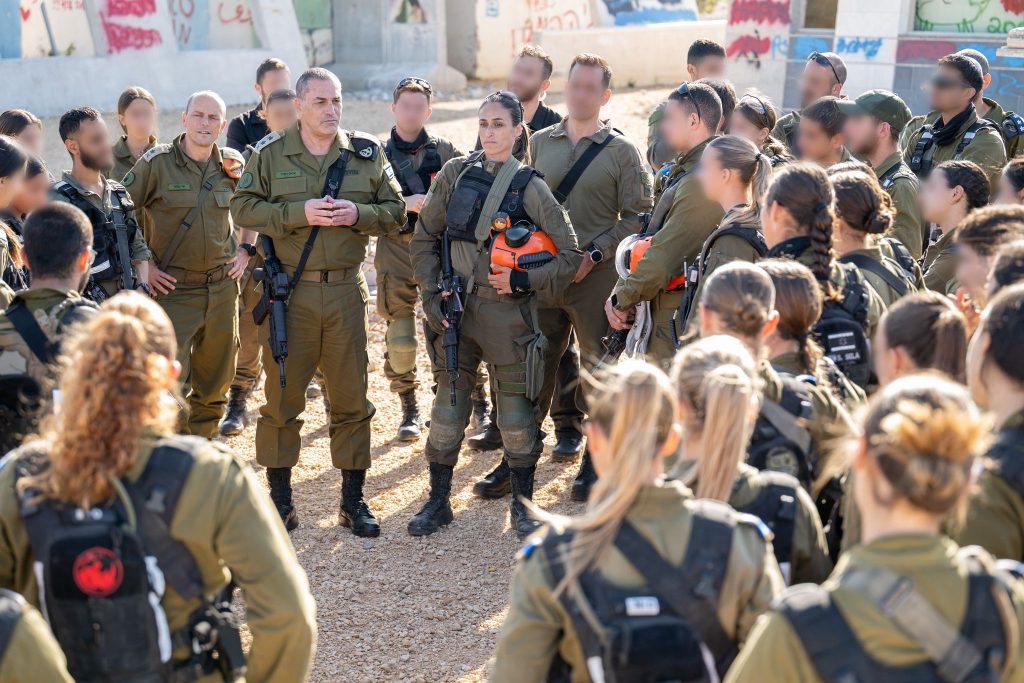
IDF Chief of the General Staff Eyal Zamir with female soldiers on the International Women's Day, March 8, 2026.
IDF Chief of the General Staff Eyal Zamir with female soldiers on the International Women's Day, March 8, 2026. Photo credit: IDF

What’s happened: The IDF and the US armed forces have kept up relentless strikes against the Iranian regime and military targets.

  • In the last 24 hours, more than 140 targets of the Iranian regime were bombed using more than 900 munitions.  IDF Spokesperson Defrin said last night that the air force headquarters of the Islamic Revolutionary Guard Corps had been destroyed.  The headquarters had been used to fire missiles and drones at the Israeli home front and at the Persian Gulf states.
  • On Sunday, the IDF eliminated Abu al-Qassem Baba’iyan in Tehran. Baba’iyan was only recently appointed as the Head of the Military Office of the Supreme Leader and the Chief of Staff of the emergency command of Headquarters. Baba’iyan was appointed after his predecessor, Ali Shadmani, was eliminated during Operation Rising Lion in June 2024.
  • Israel also targeted Iranian fuel storage facilities in Tehran on Saturday. This was the first reported attacks on Iran’s oil infrastructure since the start of the war. The IDF said the fuel was used for their missiles programme and to support their military and was therefore a legitimate target.
  • Iran meanwhile continues to fire missiles at Israel and overnight, air raid sirens were triggered in the centre of the country, the south, and the coastal region.  Some of the missiles were intercepted and the others fell in uninhabited areas. There are reports this morning of six missiles hitting Tel Aviv area with two reportedly killed. Meanwhile, communities in the north remain under frequent rocket and drone attacks from Hezbollah.
  • The IDF has also continued its offensive again Hezbollah targets. This morning it carried out several waves of strikes on Hezbollah targets in Beirut’s Dahiya neighbourhood. Lebanese media also reported an Israeli strike in southern Lebanon.
  • Also over the weekend, the Israeli Navy conducted a precision strike that eliminated five senior commanders in the IRGC Quds Force’s Lebanon Corps, while they were meeting at a hotel in Beirut.
  • Two IDF soldiers were killed on the Lebanese border yesterday. Sgt. Maj. Maher Khatar, 38, was laid to rest last night in Majdal Shams. The name of the second soldier has not yet been released. Prime Minister Netanyahu eulogised Maher as, “a brave fighter from the Druze community, [who] served as an example and inspiration to the youth of Majdal Shams who enlist in the ranks of the IDF, a growing trend in recent years that serves as an expression of the eternal covenant between us.”
  • Over the past week, in Lebanon, the IDF revealed that it, “struck over 600 terror targets across Lebanon from the air, sea, and ground, with some 820 munitions. During the strikes, more than 190 terrorists were eliminated, including the terrorist Abu Hamza Rami, the Commander of Islamic Jihad in Lebanon with the equivalent rank of Major General, two commanders at the equivalent rank of colonel, and three battalion commanders in the terrorist organisation. In addition, 27 waves of strikes were conducted in the Beirut region, including five in the Dahiya area.”
  • Iranian attacks on the Gulf states continued on Sunday, despite President Pezeshkian’s pledge on Saturday to halt them. This may suggest a rift between the political leadership and the IRGC, which is responsible for most military operations. The attacks are now targeting oil refineries and desalination plants that are vital to the economy and daily life in the Gulf states.

Context: Ten days into the campaign, the US and Israel continue their division of labour with systematic strikes on Iran’s military and industrial capabilities.

  • In the context of the war’s second phase (following the first phase of decapitation and establishing air superiority across most of Iran), the Israeli and US Air Forces are expanding the scope of their operations to increase the damage on Iran’s military, industrial and technological infrastructure. This includes strikes on IRGC headquarters, IRGC Air Force command centres, Basij and internal security headquarters.
  • An IDF general is quoted in Yediot Ahronot saying, “We can’t miss this opportunity. We mustn’t take our foot off the gas pedal until this regime collapses—neither we nor the United States. This is an opportunity that we won’t get again.”
  • From Israel’s perspective, one of the primary objectives remains the elimination of Iran’s ballistic missile arsenal. According to military estimates, Iran began the war with approximately 460 missile launchers and now has only about 150 left. Military officials describe creating ‘bottlenecks’ in the Iranian ability to launch heavy barrages, but they do retain some capabilities. Overall Iran has so far launched around 250 ballistic missiles towards Israel. Israel had anticipated around 150 a day.
  • 13 people have been killed in Israel  as a result of the Iranian strikes, with several more severely injured, including the fatalities from this morning. 
  • Overall, Iran has so far launched a total of around 830 ballistic missiles and over 1,300 drones across the region. On the first day, Iran launched around 350 ballistic missiles and nearly 300 drones.  Over the weekend, this had fallen to roughly 15–30 missiles a day.
  • The apparent appointment of Mojtaba Khamenei, the son of the late Supreme Leader is being interpreted as a sign of ongoing Iranian belligerence. Israel’s Defence Minister Katz has stated that any successor would be considered a target. A more conciliatory candidate could have posed more of a dilemma, particularly for some US officials who have expressed a desire to reach a surrender agreement with a more pragmatic leadership.

Looking ahead: At present, the IDF is preparing for a war that could last several weeks.

  • Israeli military leaders recognise that the war will last as long as President Trump decides. Trump has suggested a military campaign would last about four weeks.
  • Israeli officials are conscious that as successful as their military action may be, it will ultimately also require action by the Iranian public in order to topple the regime.
  • In the US, there is speculation that Trump is considering sending in special forces in order to seize the stockpile of Iran’s approximate 450 kg of enriched uranium that remained following the June 2025 war.

Newsletter sign-up

Please enter your information below to subscribe to our daily newsletter and stay updated and informed.

Donate to BICOM

At BICOM, we rely on the generosity of people like you to keep our website and services running. Your donation, no matter the size, makes a real difference. Please consider supporting us today. For further information please email: [email protected]