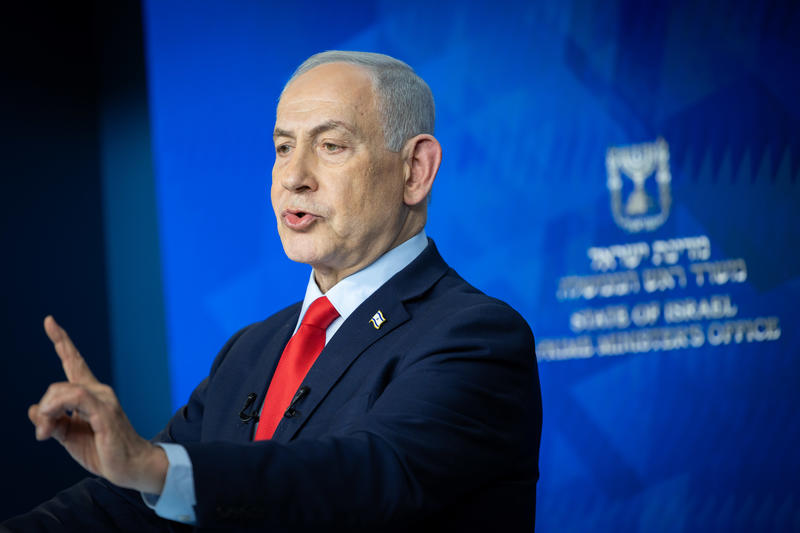
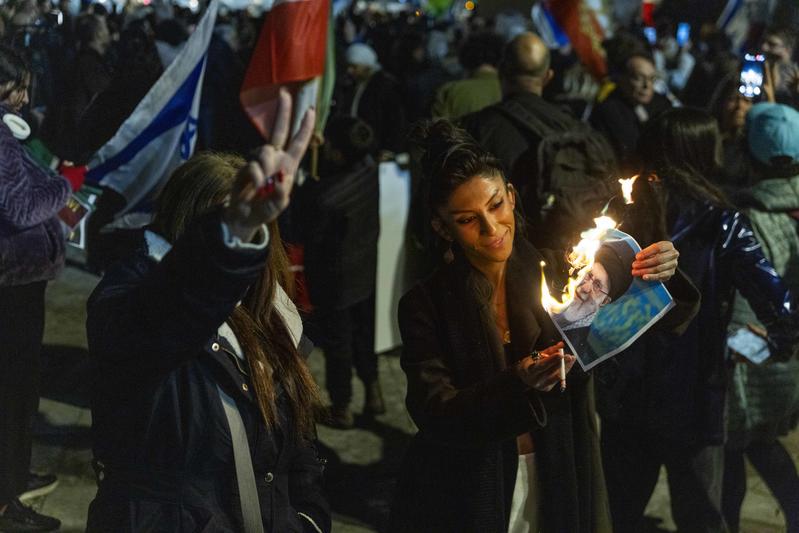
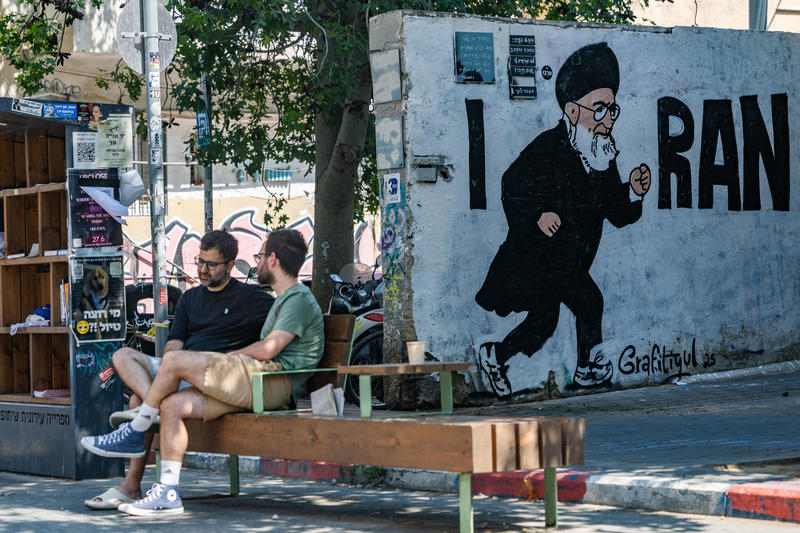
Iran’s ongoing protests represent the most sustained and socially broad challenge to the Islamic Republic in years, but there are still no clear signs the regime is close to collapse, according to Eyal Zisser, Chair of Contemporary Middle Eastern History at Tel Aviv University.
Speaking with BICOM’s CEO Richard Pater, Professor Zisser said the current wave of unrest differs sharply from previous episodes. “What we are seeing is unprecedented,” he said. “This time the scale and duration are different. The protests are continuing, and more and more segments of Iranian society are joining.”
Unlike earlier demonstrations that were confined to specific groups or cities, the current unrest has drawn in students, women, workers and parts of the urban middle class across the country. “Different social groups are effectively joining hands,” Zisser noted, adding that the protests are affecting day-to-day life well beyond Tehran.
However, he cautioned against overstating their immediate impact. “The regime remains strong,” he said. “It still has powerful instruments of repression, particularly the Revolutionary Guards and the Basij, and we do not yet see signs of the regime disintegrating.”
A changed strategic context
What makes this moment distinct, Zisser argued, is the wider strategic environment. Last summer, Israeli actions targeting regime-linked military assets, carefully calibrated to avoid civilian harm, have punctured the perception of Iranian invulnerability.
“This was important psychologically,” he said. “It showed that the regime is not as strong as many people believed, and that can encourage people in Iran to take to the streets.”
The posture of the United States also matters. In contrast to previous administrations that relied largely on rhetoric, Zisser suggested that sustained political and economic pressure could have a real impact. “I don’t expect a military occupation of Iran,” he said, “but the goal is to undermine the regime’s confidence and capacity to rule.”
Concerns that external pressure could backfire by rallying Iranians around the regime are misplaced, he added. “Pressure is not directed against the Iranian people. They are not naïve, they understand where responsibility lies.”
Watching for cracks
Historically, regime collapse in Iran and elsewhere has been preceded by fractures within the security forces. For now, Zisser said, those signs are absent. “We don’t see hesitation or defection within the Revolutionary Guards or Basij yet,” he said. “But this is something to watch very closely. If that happens, it would be a decisive indicator.”
Other warning signs include symbolic acts of dissent. Zisser pointed to instances of Iranian athletes refusing to participate in regime rituals, such as declining to sing the national anthem. “These are small signs, but they matter,” he said. “They show erosion of legitimacy.”
At the same time, he warned that a regime under pressure may seek to externalise the crisis. “When regimes feel they are losing control, they sometimes look for confrontation abroad,” he said, noting that Israel, Arab states and Western interests could all become targets.
Lebanon: Hezbollah unchecked
Turning to Israel’s northern border, Zisser was unsparing in his assessment of Lebanon. “It’s not that the Lebanese government isn’t doing enough, it is doing almost nothing,” he said.
The Lebanese Armed Forces, he argued, are unwilling and unable to confront Hezbollah, whose core military capabilities remain intact despite limited Israeli operations. “Missile stockpiles and production facilities are still there, many of them deep inside Lebanon, not just in the south.”
Israel’s current approach reflects a desire to avoid escalation, but Zisser stressed that the underlying problem remains unresolved. “Israel cannot simply give up,” he said, adding that Hezbollah’s fortunes are inseparable from those of Iran. “If Iran weakens, Hezbollah weakens.”
Syria and the Druze question
On Syria, Zisser said recent US rhetoric about the new leadership reflects a search for stability rather than confidence in long-term change. “Syria remains fragmented, and trust is minimal,” he said. Any meaningful security arrangement involving Israel would require time, confidence-building, and a significant reduction in Iranian influence.
Particular concern remains for the Druze community in southern Syria. While ceasefires exist, Zisser described them as fragile. Israeli proposals for humanitarian corridors are understandable, he said, but “from Damascus’s perspective they are unacceptable.”
Gaza: no rebuilding without demilitarisation
Asked about Gaza, Zisser expressed scepticism about ambitious reconstruction plans absent a fundamental shift in reality on the ground. “Hamas will not disarm voluntarily,” he said, “and Israel will not accept arrangements that leave Hamas militarily intact.”
Past experience, he argued, has shaped Israeli thinking. “Israel has learned that withdrawing without ensuring demilitarisation only leads to renewed conflict.” Without a new political and security framework, reconstruction risks laying the groundwork for the next war rather than lasting stability.