LATEST

Hezbollah and Lebanon

Key background
  • Hezbollah (‘Party of Allah’’) is the world’s most heavily armed non-state actor and was founded in Lebanon in 1982 with the help of Iran’s IRGC.
  • Prior to summer 2024, Hezbollah was thought to possess approximately 45,000 fighters, 5,000 of whom have completed advanced training in Iran and 20,000 of whom are organised in reserve units. It also possesses an estimated 130,000 – 150,000 missiles.
  • After proscribing its military wing in 2008, the UK proscribed the entire organisation as a terrorist group in 2019.
  • Hezbollah has built a $1bn-a-year global network and has operated on UK soil. In 2020, the US State Department estimated that Hezbollah received $700m a year from Iran.
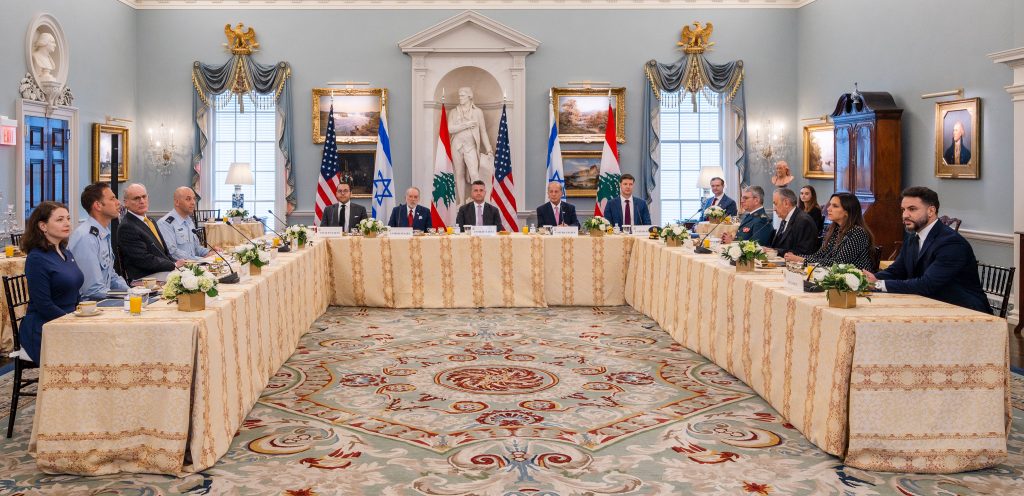
Israeli and Lebanese delegations meeting in Washington, DC, May 15, 2026.
Israeli and Lebanese delegations meeting in Washington, DC, May 15, 2026. Photo credit: US State Department

Updated June 4, 2026

New Israel-Lebanon ceasefire sets path for staged IDF withdrawal

What’s happened: Israel and Lebanon have agreed upon a new ceasefire. It was formally announced earlier today in a joint statement by both countries and the United States.

  • The statement conditions the cessation of fire on Hezbollah ceasing to fire and withdrawing all its operatives north of Litani River.
  • The parties agreed to establish “pilot zones,” in which parcels of territory will be handed over from the IDF directly to the Lebanese Armed Forces (LAF) in order not to leave a vacuum which can be exploited by Hezbollah. The implication of the agreement for a staged withdrawal — as well as the use of the word “pilot” — is that early success will lead to further withdrawals, but failure will stop the process.
  • The joint statement included unusually harsh language condemning the interference of Iran in Lebanon’s affairs.
  • In the joint statement, both countries reaffirmed respect for each other’s sovereign borders and committed themselves to “resolve all outstanding issues, and work toward a comprehensive agreement between the two countries.” The language chosen here quite deliberately does not set out a peace treaty as a final goal (as Israel might have preferred), but nor does it stipulate that a future agreement is only a security or military agreement (as Lebanon might have preferred, and was the norm for Arab states before any did reach peace treaties with Israel).
  • The Lebanese and Israeli representatives in Washington are expected to resume negotiations on the political and security tracks in the week of June 22 in an effort to reach a comprehensive agreement.

June 3, 2026

US-Iran exchange fire as tense Lebanon ceasefire holds

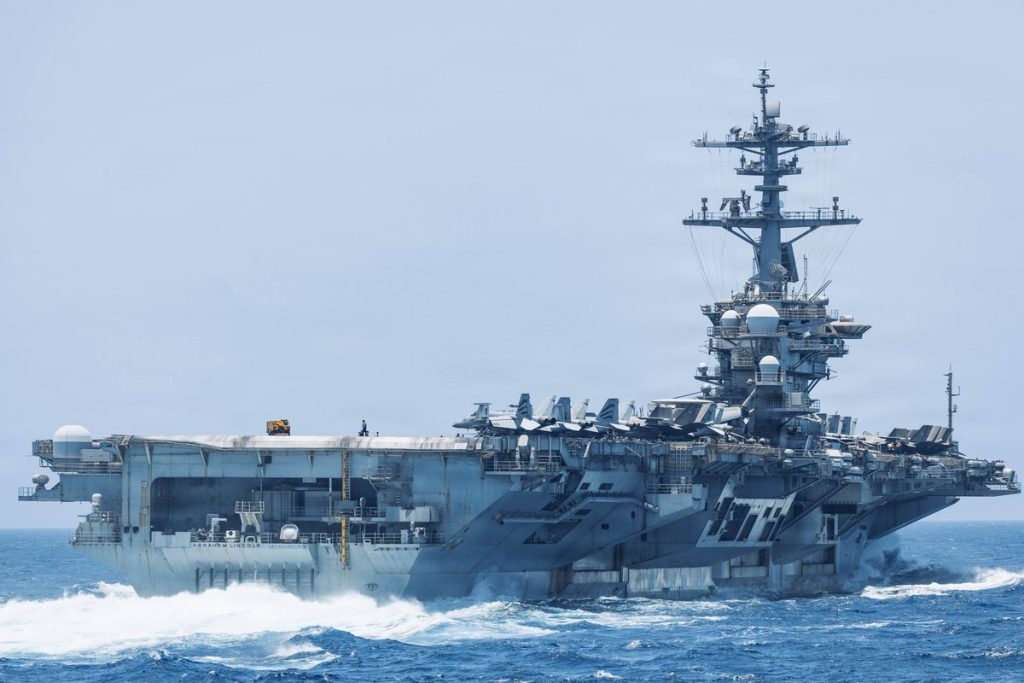
USS Abraham Lincoln (CVN 72) transits the Arabian Sea, June 2, 2026.
USS Abraham Lincoln (CVN 72) transits the Arabian Sea, June 2, 2026. Photo credit: US Central Command / X

What’s happened: On a backdrop of negotiations for a comprehensive US-Iran agreement, low intensity exchanges of fire continued in the last day.

  • US forces fired at a Botswana-flagged tanker that was heading toward Kharg Island in violation of the US-imposed blockade of Iranian ports. The tanker’s engine was disabled in the attack.
  • Following that incident, Iran launched several drones at US bases in Kuwait and Bahrain. According to American sources, the drones fired at Kuwait “fell short or broke apart” and the ones fired at Bahrain were successfully intercepted.
  • The US subsequently responded by striking an Iranian military facility on Qeshm Island.
  • There were no rocket attacks on Israel’s north overnight, as a tense ceasefire held.
  • Over recent days, Hezbollah had expanded the range of its attacks on Israel as well as keeping up a steady stream of drone attacks on IDF positions in southern Lebanon.
  • An imminent attack on a Hezbollah stronghold was reportedly called off at the last minute at the insistence of the Trump administration which pressured both sides to cease fire in the last 24 hours so as not to threaten the ongoing US-Iran talks.
  • The Israeli Government yesterday approved a plan for a massive investment in Israel’s battered northern communities. The plan would allocate 13 billion shekels (about £3.4 billion) in addition to the already approved 7 billion shekels from earlier decisions (about £1.8). The money will go to reconstruction, grants to small business owners, wage subsidies for hi-tech firms based in the north, and several headline projects in the Kiryat Shmona, including establishing an emergency medical facility there and a partial relocation of the nearby Tel Hai Academic College into the city itself.
  • Seated next to Kiryat Shemona’s mayor, Prime Minister Netanyahu spelled out the goals of the new investment plan, and said that his Government “is committed not only to the development of the North, but also to ensuring the security of the residents. There is no containment or leniency; we are acting against every threat in real-time.”
  • The new chief of Israel’s Mossad officially entered office yesterday. Roman Gofman, a major General in reserves who previously served as Prime Minister Netanyahu’s military secretary assumed his new position after the Supreme Court rejected petitions against his appointment.
  • At the ceremony yesterday, Prime Minister Netanyahu noted the Mossad’s central role in Israel’s longstanding conflict with Iran, saying that it “will continue to stand at the forefront of our struggle against Iran’s aggression. In continuation of the consistent policy we have been leading for years – we will not allow the Iranian regime to turn back the clock. We will not allow it to acquire nuclear weapons; we will not allow it to threaten our existence. This terrorist regime, which is destined to vanish from the world, and we will help it reach this goal, this regime will no longer threaten us with nuclear bombs and thousands of lethal ballistic missiles.”

Context: Though the US and Iran have not yet concluded an agreement that would definitively end the war which began on February 28 this year, both sides appear to believe an agreement is in reach. This was the main reason why an Iranian threat to quit the talks unless the US could force Israel to scale back its attacks was taken so seriously by the Trump administration.

  • The administration not only pressured Israel to back down from a planned strike agains Hezbollah targets in Beirut, it also leaked the contents of several tense phone calls between President Trump and Prime Minister Netanyahu.
  • There were conflicting reports about what the planned strike was supposed to look like and what Trump and Netanyahu had agreed to beforehand. According to one report in Israeli media, the evacuation order for the Dahiya district in Beirut, a Hezbollah stronghold, was issued in line with an agreement between the two leaders that Israel would threaten to attack the Dahiya but not actually carry out the threat, the idea being that an imminent strike would pressure Hezbollah to agree to cease its attacks.
  • At some point after the evacuation began, the Trump administration came under the impression that Israel was planning on going through with the strike and not just bluffing as had been agreed upon, and this is what led to the tense phone call between the President and the Prime Minister.
  • Israeli decision-makers are concerned that the emerging deal looks similar to the understandings that held during the 1990s, under which Israel was only allowed to respond with significant military strikes if its cities in the north were attacked, while its options for military action in response to attacks on its soldiers in southern Lebanon were extremely limited.
  • In the last seven years of the Security Zone (1993-2000), this understanding of the “rules of the game” led to many IDF casualties without the IDF having any real leverage over the Lebanese state or Hezbollah itself to stop them. It is particularly concerning now as Hezbollah has been able to use FPV drones to sustain a level of casualties on the Israeli side that is actually considerably higher than anything it did in the days of the unlamented Security Zone (1985-2000).
  • The leaked content of tense phone calls between Trump and Netanyahu reverberated in Israeli domestic politics too. Israeli politicians and media figures, not all associated with the right, criticised the Prime Minister for capitulating to the President’s demands and not following through on his threat to attack the Dahiya. Others noted that Israel has so tightly bound itself to Trump that it has lost any freedom of action.
  • It was not lost on domestic commentators that Trump explicitly invoked Netanyahu’s legal troubles as a lever of pressure on him. That he was willing to raise the topic and take credit for keeping Netanyahu out of jail (“You’d be in prison if it weren’t for me. I’m saving your ass,” Trump was reported as having said to the Prime Minster) is one thing. That someone at the White House choose to include those quotes in leaks about the phone call is even graver, both from the perspective of the Prime Minister himself and the entire political system, already wound up for an upcoming election where the question of the Prime Minister’s capacity to manage Israel’s multi-front wars while on trial for corruption is a major issue.

Looking ahead: The fourth round of talks between representatives of Israel and Lebanon are due to continue today in Washington. The US will reportedly propose a plan where the US will directly train Lebanese Armed Forces to deal with Hezbollah and carry out any disarmament agreed to in the talks.

  • Another idea to be raised in the talks is the creation of “pilot zones,” which would be designated blocks of territory where Israeli troops would withdraw and hand over the territory directly to the LAF. Assuming Hezbollah is prevented from reestablishing its presence in the pilot zones, these could be multiplied and expanded.

June 2, 2026

Trump declares Lebanon ceasefire, but fighting continues

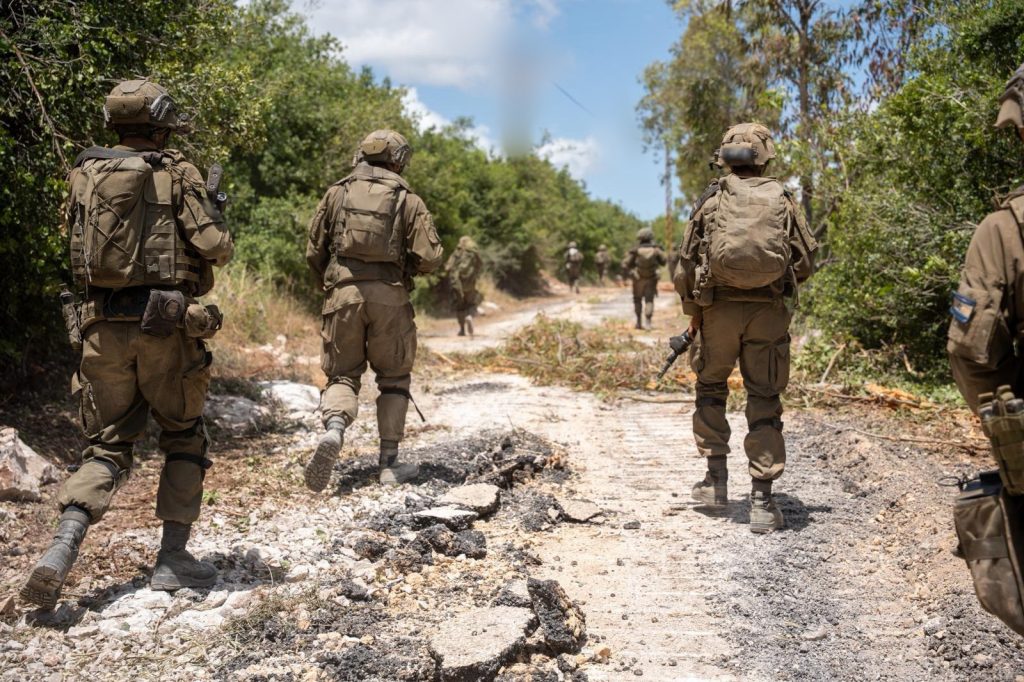
IDF operating in southern Lebanon, June 1, 2026.
IDF operating in southern Lebanon, June 1, 2026. Photo credit: IDF

What’s happened: President Trump and Prime Minister Netanyahu spoke on Monday night, in what Trump described as a “very productive call” to discuss the latest developments in Lebanon and the region.

  • Trump continued on his Truth Social post, “there will be no Troops going to Beirut, and any Troops that are on their way, have already been turned back. Likewise, through highly placed Representatives, I had a very good call with Hezbollah, and they agreed that all shooting will stop – That Israel will not attack them, and they will not attack Israel.”
  • Following the call Prime Minister Netanyahu said, “I spoke this evening with President Trump and told him that if Hezbollah does not stop firing at our cities and citizens – Israel will strike terrorist targets in Beirut. This position of ours remain unchanged. Concurrently, the IDF will continue to operate as planned in southern Lebanon.”
  • However  it appears that Israel cancelled the strikes on Beirut, hours after Prime Minister Netanyahu and Defence Minister Katz announced that they instructed the IDF to strike Hezbollah targets in Dahiya in southern Beirut.
  • US media described their conversation as “fraught.” According to Axios, “Trump’s anger appeared to be driven by the fact that Netanyahu’s decision to escalate in Lebanon was threatening to implode his negotiations with Iran.” Trump reportedly said  to Netanyahu, “You’re fucking crazy. You’d be in prison if it weren’t for me. I’m saving your ass. Everybody hates you now. Everybody hates Israel because of this.”
  • In domestic Israeli politics the bill to dissolve the Knesset was carried in its first reading last night by a majority vote of 106 MKs. No one voted against.

Context: Despite a declared ceasefire the fighting has continued. Last night around 20 rockets were fired last out of Lebanon into northern Israel.

  • A drone that infiltrated the western Galilee exploded in a military area. No one was injured.However, once more an explosive drone targeted and killed an IDF officer inside southern Lebanon. Cpt. Dr. Ori Yosef Silvester a thirty year old doctor of the Givati Brigade. Seven IDF soldiers were wounded in the attack, which was carried out by multiple drones not far from the Beaufort Castle. Three were hospitalised in serious condition.
  • This morning the Israeli Air Force struck various Hezbollah targets in southern Lebanon.  
  • Earlier on Monday, Netanyahu had declared, “There will not be a situation in which Hezbollah attacks our cities and our citizens, and its terrorist headquarters in Beirut, in Dahiya, remains out of bounds. We are continuing to deepen our operational activity on the ground in southern Lebanon and are eliminating Hezbollah strongholds. Hezbollah is on the run. We are determined to restore security to the residents of the north, just as we did for the residents of the south.”
  • These comments elicited criticism from within the security establishment that felt the premature pronouncement served as an early warning to senior Hezbollah figures, allowing them to hide or disperse.      
  • Trump’s intervention was also the second time that the IDF turned planes around on his instruction while they were en-route to a strategic strike. Last time it was Tehran (in June 2025), this time it was Beirut.
  • Prior to the Trump – Netanyahu call, Iran threatened to attack Israel and “advised” residents of northern Israel to leave the area should Beirut be attacked.
  • The public announcements on both sides appear to play into Iran’s hands as they successfully maintain the linkage between fighting in Lebanon and their negotiations with the US.
  • Israel apparent u-turn led to criticism across the board, with politicians posting on social media:
    • Minister Ben Gvir wrote, “Mr. Prime Minister, you said that a strong prime minister says ‘yes’ to the president of the United States when possible and ‘no’ when necessary. Now is the time to tell our friend, President Trump, ‘no.’ Now is the time to do what needs and must be done to strike at Hezbollah, to unfetter our troops and to restore security to the north.”
    • Leader of the Opposition Lapid wrote, “A client state in full.”
    • Yisrael Beiteinu Chairman Liberman wrote, “This isn’t a prime minister—this is a puppet!”
    • Yashar Chairman Eisenkot, “Never has there been an Israeli prime minister who has submissively accepted a demand like this, which is patently unreasonable!   Hezbollah is an enemy in Beirut’s Dahiya and in Baalbek, we need to strike Hezbollah in every place where it is deployed, and not to tie the IDF’s hands.” Adding, “What Netanyahu, the cabinet and the security cabinet are doing today is damaging to the State of Israel’s national interests out of weakness. And don’t let them tell you stories about the connection to the United States’ negotiations with Iran. Lebanon is here, Metula is taking fire, Israeli communities are empty and that is unconscionable. And the person who is doing that is the man who preached morality to everyone about the fundamental need as prime minister to say ‘no’ to the president of the United States when the State of Israel’s interests are being damaged.”
  • Due to the Trump – Netanyahu call the ceremony for new head of Mossad was postponed to today. Earlier in the day the High Court of Justice rejected petitions calling for the cancelling of Roman Gofman’s appointment. The court determined two-to-one that although there were failures with how Gofman handled a controversial incident from 2022, he did not deliberately mislead an investigation into the affair or abandon Ori Elmakayes, the individual at the centre of the allegations against Gofman

Looking ahead: Gofman is set to replace outgoing Mossad chief Barnea in a ceremony later today.

  • The bill to disperse the Knesset now returns to the Knesset House Committee for further preparation ahead of its second and third readings. The coalition parties have agreed that the general election would be held at some point between September 8 and October 20, though no final date has been set yet. In practical  terms, only the option of holding the election on September 1 was removed from the agenda.

June 1, 2026

Israel retakes Beaufort, Hezbollah expands attacks

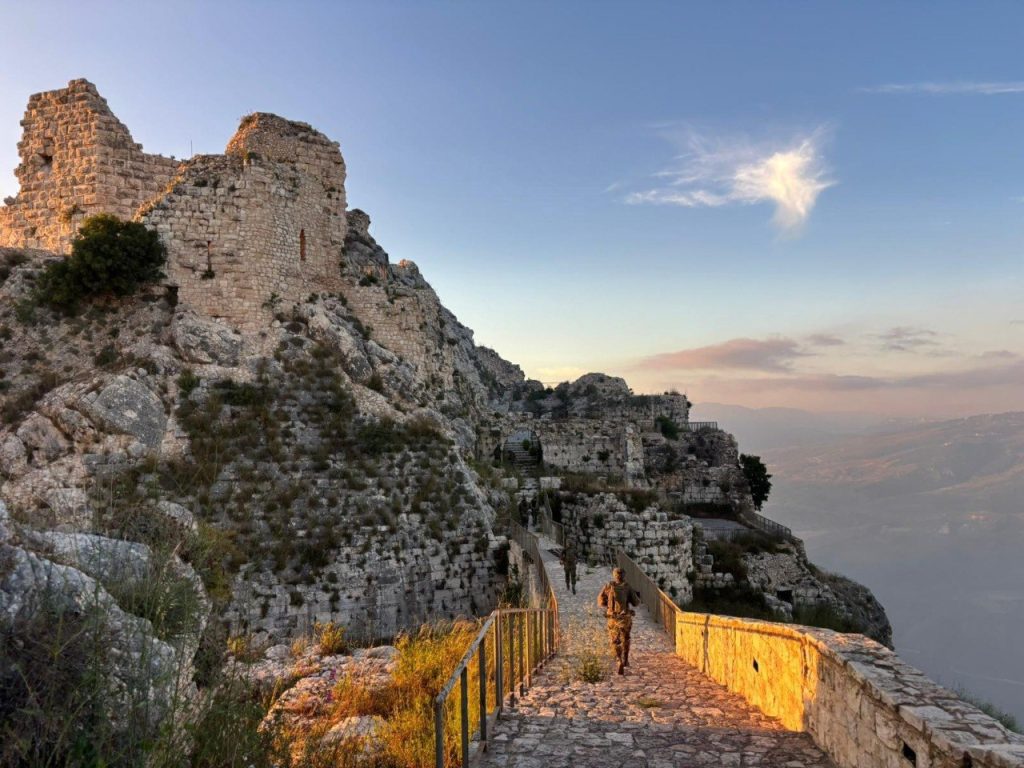
The IDF’s ground offensive advanced north of the Litani River, taking control of the strategic and iconic Beaufort Castle and Saluki Ravine, May 31, 2026.
The IDF’s ground offensive advanced north of the Litani River, taking control of the strategic and iconic Beaufort Castle and Saluki Ravine, May 31, 2026. Photo credit: IDF

What’s happened: The IDF’s ground offensive advanced north of the Litani River, taking control of the strategic and iconic Beaufort Castle and Saluki Ravine.

  • The IDF said that “the operation focuses on gaining control of the Beaufort Ridge and the Saluki River area, as well as expanding the damage  to Hezbollah and destroying significant terrorist infrastructure established on the ridge under Iranian guidance, from which Hezbollah operatives oversaw combat operations and executed numerous terrorist plans.”
  • An IDF soldier was killed on Sunday night in a Hezbollah explosive drone attack in southern Lebanon. Staff Sgt. Michael Tyukin, 21, from Ashkelon of the Givati Brigade’s Reconnaissance Unit, was an only child who moved to Israel from Ukraine with his mother in 2020. His death may have been the first fatal incident involving use of a drone equipped with a night-vision camera by Hezbollah.
  • A second soldier, Staff Sgt. Adam Tzarfati, 20, from Rosh HaAyin, a fighter in the Maglan Commandos, was killed overnight by an explosive drone in southern Lebanon. He is the 27th Israeli killed since Hezbollah began attacking Israel on March 2, and the 14th since the unobserved ceasefire in Lebanon took effect.
  • In parallel to the IDF offensive, Hezbollah expanded its fire launching dozens of rockets and drones on northern Israel, over the weekend.
  • As well as almost continuous rockets fired towards the communities close to the border, rocket fire expanded towards Acre, Safed and Tiberias (for the first time since the “ceasefire” was declared mid-April). Some of the rockets were intercepted and others fell in uninhabited areas
  • On Saturday alone there were over 220 air raid sirens sounded across northern Israel. The Home Front Command ordered schools and other educational facilities shut in communities along the Lebanon border, forcing thousands of children to stay home.
  • Prime Minister Netanyahu held two security consultations over the weekend. He also spoke with Secretary of State Rubio in an effort to persuade administration officials and President Trump that Israel could not allow Hezbollah to have immunity in Beirut. 
  • This morning, Prime Minister Netanyahu and Defence Minister Katz have  instructed the IDF to strike Hezbollah targets in the Dahiya Quarter of Beirut.

Context: The IDF said this latest operation was focused on continuing to target Hezbollah infrastructure, particularly their rocket and drone capacity. According to the IDF hundreds of rockets were fired from the captured area.

  • The goal of the operation is to remove the threat of direct anti-tank missile fire at civilian towns in the Galilee Panhandle, particularly Metula.
  • Not only did the area contain a significant Hezbollah infrastructure it also holds strategic value. Due to the relative high altitude Beaufort, built by Crusaders, controls the Nabatieh district as well as major traffic routes into southern Lebanon, whoever sits there can also see into northern Israel making the ridge strategically important.
  • The IDF first captured the castle early in the First Lebanon War in 1982 and held it until 2000 when Israel withdrew.  
  • The IDF’s success at conquering the site also points to the collapse of some of Hezbollah’s defences, reports have suggested that Hezbollah operatives fled from firefights and withdrew instead of standing their ground and fighting.
  • However Israel’s assessment is that Hezbollah remain determined to continues to launch rockets and drones. By expanding the range of its rocket fire, Hezbollah is also trying to leverage the Israeli home front to pressure decision-makers, while simultaneously reminding the Lebanese government of their power.
  • Although the expansion of the IDF operation has caused a certain amount of damage to Hezbollah, it has not altered the overall picture.
  • According to the IDF, overall Hezbollah has now fired around 5,500 rockets at IDF troops operating in the southern Lebanon plus around 2,500 at Israel. There have been at least 75 rocket impact sites in Israel. In addition, around 300 drone attacks have been recorded, with 25 striking targets.
  • The IDF believes Hezbollah still possesses thousands of short-range rockets, as well as hundreds with longer range.
  • In parallel at the end of last week the Pentagon hosted the fourth round of Israeli-Lebanon diplomatic talks. This “security track” as discussed in BICOM’s podcast is the first military-to-military discussion understood to focusing on dismantling Hezbollah and empowering the Lebanese Armed Forces (LAF). This track will be in parallel to the political track being led by US State Department.
  • In another incremental taboo breaking meeting, both sides sent senior military officials, including former commanders of the LAF Gen. Rodolphe Haykal and from Israel, Brig. Gen. Amichai Levin, head of the Strategic Division in the IDF Planning Directorate.

Looking ahead: The political track including the respective Israeli and Lebanese ambassadors is due to reconvene on Tuesday in Washington.

  • On the ground the IDF have said the operation is, “expanding to additional areas as we speak.” Holding Beaufort could facilitate a broader ground manoeuvre further to the north or east.

May 26, 2026

Hezbollah intensifies attacks on northern Israel

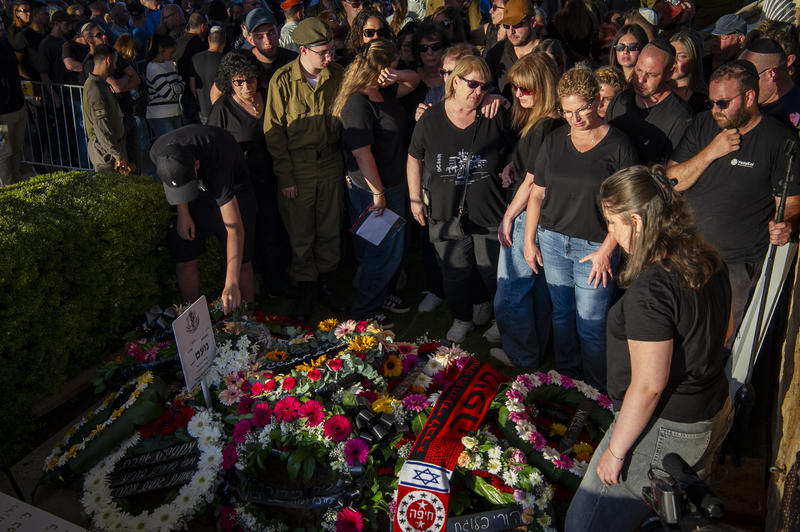
Family and friends of Israeli soldier Staff sergeant Noam Hamburger attend his funeral at the Military Cemetery in Atlit on May 24, 2026. He was killed in a Hezbollah explosive drone strike near the Israeli border with Lebanon.
Family and friends of Israeli soldier Staff sergeant Noam Hamburger attend his funeral at the Military Cemetery in Atlit on May 24, 2026. He was killed in a Hezbollah explosive drone strike near the Israeli border with Lebanon. Photo by Sharon Leibel/Flash90

What’s happened: Hezbollah has sharply escalated its attacks on communities in northern Israel over the past few days.

  • On Monday, the group fired more than 30 explosive drones at Israeli towns and outposts along the border and at IDF forces operating inside southern Lebanon. The attacks triggered repeated sirens, forcing civilians into shelters, and wounded troops.  One missile fired at the Galilee was intercepted by the Iron Dome system. Two drones hit a house in Metula, and a military site. Approximately 20 drones infiltrated Israeli territory, two hitting a building that houses foreign workers in Shtula.
  • Two more IDF soldiers were killed in an explosive drones trikes. On Friday, Staff Sgt. Noam Hamburger, a 23-year-old from Atlit, and on Sunday, Sgt. Nehorai Lazer, a 19-year-old resident of Eilat.
  • In response, the IDF reports striking more than 70 Hezbollah infrastructure sites across Lebanon, including roughly 10 command centres and weapons warehouses in the city of Tyre and other areas of southern Lebanon and the Beqaa Valley. The IDF described the targeted sites as having been used by Hezbollah to plan and execute attacks against Israeli civilians and IDF forces.
  • The air force also struck Hezbollah operatives riding motorcycles in sectors where Israeli troops are deployed, as part of a broader effort to degrade the group’s mobility and targeting capability.
  • Prime Minister Netanyahu declared that Israeli forces have eliminated over 600 Hezbollah operatives in recent weeks and vowing to maintain and increase pressure. Addressing the residents of the north, he stressed their resilience and said Israel will “hit them head on” and overcome the drone threat.
  • In a video, Netanyahu said “We aren’t lifting our foot off the [gas] pedal. To the contrary, I told [the IDF] to press even harder on the pedal. We will strike them. It’s true, they’re firing drones, fiber-optic drones, at us. We have a special team that is working on that, and we’ll solve that too.”

Context: The escalation in Lebanon coincides with the continued diplomatic efforts by the US to reach a comprehensive agreement with Iran. Iran continues to insist on the linkage that any ceasefire includes Lebanon.

  • There is broad concern that with Israel not part of the negotiations, the country is reliant on US backing. This was reiterated by US Secretary of State Rubio who told reporters on Monday that “Israel always has a right to protect itself…If Hezbollah is going to launch missiles or launches missiles at them, Israel has every right to respond to that, or to prevent that from happening. That’s always been understood. It’s being understood during the ceasefire.”
  • Overall Israel’s current approach in Lebanon is a mix of:
    • Sustained strikes and targeted operations aimed at degrading Hezbollah’s command, logistics, and drone infrastructure.
    • Operational containment along the border.
    • Diplomatic efforts through  talks in Washington with representatives of the Lebanese government.  
  • Since the ceasefire in mid-April it is estimated Hezbollah has fired more than 1,000 drones and around 700 rockets. Eleven Israelis have been killed and dozens injured.
  • At the same time, Israel has retrained from expanding  ground offensive or striking Beirut.    
  • IDF Northern Command describes Hezbollah’s repeated drone attacks on towns such as Metula and Shomera as having crossed an unacceptable red line.
  • Hezbollah’s decision to intensify its drone and rocket fire on northern Israel reflects a strategy of calibrated escalation in which they press their tactical advantage through the continued use of drones. Rather than trying to defeat Israel outright, Hezbollah aims to wear the IDF down through constant small-scale attacks.
  • Last night, the group released video footage demonstrating that it has drones fitted with thermal cameras, which would allow it to carry out nighttime drone strikes as well.
  • On the ground, Hezbollah have also resorted to traditional guerilla tactics. Some senior commanders see a similarity with the old Hezbollah terror cells of the 1990s before they became a sophisticated military. All this demonstrates that Hezbollah can still operate effectively despite incurring heavy losses.
  • Until a few days ago, Hezbollah focused its operations on IDF troops in southern Lebanon but has now begun to attack IDF outposts in Israel itself.
  • The IDF, meanwhile, is shifting from treating drones as a tactical nuisance to a strategic threat. The drone campaign has forced changes in operational rhythms, slowed the pace of village clearing, and pushed many activities to night‑time operations to reduce exposure.
  • A holistic solution does not yet exist to cope with Hezbollah fibre optic, First Person View (FPV) drones. Israel is rapidly exploring anti-drone technologies including nets, lasers, precision-fire systems, radar, acoustic sensors, and microwave weapons, but no comprehensive solution yet exists, as the war in Ukraine has demonstrated.  
  • Israel’s key challenge remains to protect residents in northern Israel from being held in a state of prolonged insecurity. The longer the attacks continue, mounting questions arise as to whether this can be achieved militarily.    
  • For the international community, the question is whether diplomatic efforts can produce a framework that strengthens the Lebanese state, constrains Hezbollah, and gives Israel a more predictable security environment along the border.

Looking ahead: As a result of the increased attacks schools near the northern border will not open today.

  • Senior IDF officials have presented a range of options to the security cabinet to approve a wider campaign inside Lebanon. They say that the current level of firepower is insufficient to fully deter Hezbollah’s stand‑off fire. The IDF is also working on plans to target Hezbollah’s drone‑infrastructure array as well as potentially target more of their senior commanders.

May 20, 2026

Fighting in Lebanon continues despite ceasefire extension

Israeli soldiers are seen near the Israeli border with Lebanon, northern Israel, May 17, 2026.
Israeli soldiers are seen near the Israeli border with Lebanon, northern Israel, May 17, 2026. Photo by Ayal Margolin/Flash90

What’s happened: Another IDF officer was killed in combat with Hezbollah in southern Lebanon yesterday. Maj. (res.) Itamar Sapir from the settlement Eli was 27 years old. His unit was operating in the Lebanese village of Qouza when a Hezbollah gunman surprised the forces by exiting the village church and opening fire.

  • Israeli Navy troops completed the interception of the flotilla to Gaza and placed all 430 activists on board Israeli vessels. Around fifty vessels were boarded and are presently en route to the port of Ashdod, where the activists will be detained before deportation. Israeli officials were keen to point out the absence of actual aid onboard the ships.
  • A report in The New York Times based largely on anonymous American claimed that Israel and the United States sought to install former Iranian President Mahmoud Ahmadinejad as leader of Iran in a complex and ultimately unsuccessful effort to topple the Iranian regime in the initial days of the war earlier this year.
  • The article detailed how an air strike that appeared to miss Ahmadinejad right after the war broke out on February 28 had in fact successfully taken out the IRGC forces who were enforcing his informal house arrest.
  • The article hinted heavily that Ahmadinejad had been in contact with Israeli intelligence before the war broke out, citing an investigation in New Lines magazine, an outlet that is widely seen as a pro-Qatari organ (though not identified as such in The New York Times article).
  • Ahmadinejad’s record of anti-Israel provocations and Holocaust denial would make him an astonishing partner, to say the least. And it is always possible (though, again, not mentioned in the article), that such a leak is deliberately designed to scuttle his political standing in Iran and increase regime paranoia about its penetration by Israeli intelligence.

Context: The losses of IDF soldiers in southern Lebanon, particularly in the context of the “ceasefire,” are taking a toll on morale both in public opinion and in the IDF. Soldiers and officers express mounting frustration with the terms of the ceasefire which, informally, restrict offensive Israel action outside of Israel’s zone of control in southern Lebanon, while leaving soldiers there exposed to Hezbollah fire. Hezbollah arms depots and senior leaders are mostly north of the Litani River, where the IDF has largely refrained from action in keeping with US requests not to disrupt the negotiations with Iran.

  • Twenty-two Israelis have been killed in Lebanon since the war began on March 2. Eight have been killed since the ceasefire was announced on April 16.
  • The Lebanese Health Ministry reported earlier this week that the death toll in Lebanon from the renewed fighting with Israel since March has now topped 3,000. The official figures do not distinguish between combatant and noncombatant casualties, but they do include 292 women and 211 children. With 83% of the reported fatalities comprising adult men. This would indicate a low level of civilian casualties in the war so far. Israeli officials believe the Lebanese figure may be an undercount as not all Hezbollah fatalities are  reported to Lebanese officials.
  • The ceasefire which brought an end to high-intensity hostilities on April 16 was originally set to last ten days. It was informally renewed to allow further negotiations, while its scope was also informally narrowed by all sides. The renewed ceasefire was due to expire May 17, but just before that deadline, a US-brokered agreement between Lebanon and Israel formally extended the ceasefire by another 45 days, bringing its scheduled expiration up to July 1. Observers on all sides are sceptical it could hold up if fighting resumes in the Iranian theatre.
  • A resumption of active combat in the Iranian theatre will presumably end those restrictions and free Israeli forces to take more aggressive action against Hezbollah targets deep in Lebanon. But there are two countervailing implications to this:
    • First, Israel’s north will presumably once more come under massive Hezbollah rocket fire — and this at a time when Israeli officials are determined not to repeat what is widely seen as the mistake of mass evacuations which happened in 2023-2024.
    • Second, the IAF will be busy hitting targets in Iran and have fewer planes and munitions to set aside for the Lebanese theatre.
  • President Trump’s statement on Monday that “a very major attack” had been postponed at the last minute this week at the request of three US Gulf allies — Qatar, the UAE, and Saudi Arabia — prompted a renewed interest in the conflicting desires of these countries. The claim itself was met with a mix of confirmation, denial, and some scepticism. Competing explanations  were offered including speculation that data-sharing from Russia and China to Iran meant that much of the attack had to be reconsidered, and that this could have been a bigger reason for the delay.
  • Israeli analysts frequently point to the divergent messages Gulf leaders give in public and in private on the Iran issue.
    • Publicly, they all favour continuing the diplomatic track and view any US or Israeli military operation as destabilising.
    • Privately, they are reported to support a decisive blow the Islamist regime.
  • Some grumble that the status quo, with no diplomatic settlement and no open conflict, is actually the worst for them as they pay a high economic and political cost for the parallel blockades imposed on either side of the Hormuz Strait by Iran and the United States.
  • Among the Gulf countries are competing interests and differing geographies at stake as well. Qatar is in a uniquely difficult position geographically, with no outlet to global shipping that doesn’t go through Hormuz. Both the UAE and the Saudis have alternative sea outlets as well as pipeline infrastructure to serve them. The Emiratis have two ports on the Gulf of Oman, and the Saudis have a massive port on the country’s west coast along the Red Sea.

Looking ahead: Both Israel and the United States appeared making final preparations for a renewal of hostiles in Iran as negotiations through Pakistani mediation showed no sign of a breakthrough.

  • Speaking to reporters, President Trump said that Iran had “a limited period of time” to conclude an agreement with the US before he would order renewed attacks. “Two or three days. Maybe Friday, Saturday, Sunday. Maybe early next week,” he said, adding “I hope we don’t have to do the war, but we may have to give them another big hit. I’m not sure yet. You’ll know very soon.”
  • In Israel meanwhile, the Prime Minister held an unusually long five-hour meeting with defence and security chiefs on Monday to discuss Israeli preparations for a US-led strike and it implications for Israel. Netanyahu’s testimony in his ongoing corruption trial, scheduled for today, was cancelled without any opposition from the prosecution or judges.
  • President Herzog also cancelled a scheduled trip to New York this week. And even the Herzliya Conference, an annual academic event billing many current and former security chiefs that was scheduled to take place has been abruptly postponed.

May 18, 2026

US indictment links Iraqi militia to attacks on Jewish sites in Europe

Mohammad Baqer Saad Dawood Al-Saadi with IRGC Quds Force commander Qassem Soleimani.
Mohammad Baqer Saad Dawood Al-Saadi with IRGC Quds Force commander Qassem Soleimani. Photo credit: US Departement of Justice.

What’s happened: On Friday evening, the US announced that it had taken custody of and indicted Mohammad Baqer Saad Dawood Al-Saadi, a senior member of the Iraqi Kataib Hezbollah militia on suspicion of collaborating with the IRGC-Quds Force to plot and execute terrorist attacks against global Jewish communities and Iranian dissident media sites on behalf of Harakat Ashab al-Yamin al-Islamiya (HAYI), which the US Department of Justice specifically identified as a “component of” Kataib Hezbollah.

  • The arrest is understood to have taken place in Turkey where Al-Saadi was transiting through from Iraq on his way to Russia, with local authorities subsequently transferring him to the FBI who extradited him to the US.
  • Offences Al-Saadi is alleged to have committed that were stated on a criminal complaint filed by the US Department of Justice include conspiracy to provide material support to a foreign terrorist organisation, conspiracy to provide material support for acts of terrorism, provision of material support for acts of terrorism, conspiracy to bomb a place of public use, and destruction of property by means of fire or explosive.
  • Kataib Hezbollah and the IRGC are mentioned in the DoJ’s criminal which alleged that Al-Saadi acted for both organisations. It is also alleged that “Since the onset of the U.S. and Israeli military conflict with Iran that began on or about February 28, 2026 (the “Iranian Military Conflict”), Mohammad Baqer Saad Dawood Al-Saadi, the defendant, has directed and urged others to attack U.S. and Israeli interests, including by killing Americans and Jews, in retaliation for the Iranian Military Conflict and to further the terrorist goals of Kataib Hezbollah and the IRGC. AL-SAADI and his associates have planned, coordinated, and claimed responsibility for at least 18 terrorist attacks in Europe (the “European Terrorist Attacks”) as well as two additional attacks in Canada, in the name of Harakat Ashab al-Yamin al-Islamiya, a component of Kataib Hezbollah.”
  • While early commentary on HAYI and its attacks against European and British Jewish communal sites acknowledged its logo’s similarity to Iranian-linked Iraqi Shia militias, the DoJ’s criminal complaint is the first time that control of HAYI has been explicitly linked to a particular group or Iranian intelligence agency.
  • It is also alleged that on or around 2nd April 2026, Al-Saadi attempted to contract a “Mexican cartel member who had the capability of carrying out a terrorist attack in New York and elsewhere in the United States” to target an unnamed synagogue in New York City, and ”two prominent Jewish centres in Los Angeles, California, and Scottsdale, Arizona”. Al-Saadi allegedly specified that the attacks should be recorded.
  • However, the cartel member in question is understood to have been an undercover FBI agent, working to provide evidence that would ultimately be used against Al-Saadi.

Context: Kataib Hezbollah is an Iraqi proxy of the IRGC-Quds Force which works “to establish an Iran-aligned government in Iraq, expel American forces from Iraq, and advance the regional and international interests of Iran in Iraq and the region”. It was designated as a foreign terrorist organisation by the US in 2009, and is not currently proscribed by the UK.

  • Established by the IRGC-QF in 2003, Kataib Hezbollah is one of the most influential and capable Iranian-linked Shia militias operating in Iraq.
  • Closely support by both the Quds Force and Lebanese Hezbollah, Kataib Hezbollah fought against British and American troops in the aftermath of the invasion of Iraq in 2003, anti-Assad Syrian rebels, and Islamic State.
  • They have also been implicated in war crimes and sectarian atrocities against Iraq’s Sunni population, and abducted and held an Israel journalist and academic hostage from January 2023 to September 2025.
  • Shortly after the Popular Mobilisation Units were formed to protect Iraq against the Islamic State in 2014, Kataib Hezbollah’s then Secretary General, Abu Mahdi Al Muhandis, was appointed its deputy commander underscoring his militia’s strength and importance in Iraq.
  • Al Muhandis was killed in January 2020 in the US drone strike which eliminated IRGC-QF commander, Major General Qassem Soleimani, in Baghdad.
  • Kataib Hezbollah are alleged to have been the last group to kill a British soldier in combat when a missile salvo fired at Camp Taji in retaliation for Soleimani and Al Muhandis’s deaths fatally injured Lance Corporal Brodie Gillon of the Royal Army Medical Corps on 12th March 2020.
  • Since 7th October 2023, Kataib Hezbollah are understood to have joined the Islamic Resistance of Iraq, a novel coalition of anti-US and Israel Iranian backed Shia militias. IRI subsequently launched dozens of mostly unsuccessful missile and drone attacks against Israel and US bases in the region, sometimes in what was claimed as joint operations with the Houthis.
  • In late-January 2024 an IRI drone strike killed three US troops stationed in Jordan. An October 2024 strike on the Golan Heights killed two IDF troops.
  • In August 2024, Iran International reported that Kataib Hezbollah was targeting Jewish communities in Central Asia with attempted but ultimately unsuccessful plots in Uzbekistan and Pakistan.
  • Attacks linked to HAYI, now identified by the US Department of Justice as a component of Kataib Hezbollah, have included multiple attacks across Europe, with six attacks on targets in London alone. This includes the Golders Green stabbings, for which the group has claimed responsibility, however, in this instance there is no evidence of a direct connection.

Looking ahead: As the trial continues, further disclosure about Kataib Hezbollah, HAYI, and broader Iranian state-sponsored terrorism targeting diaspora Jewish communities is both likely and expected.

  • Before Al-Saadi’s arrest and indictment, the British government were viewing and responding to HAYI as an Iranian intelligence service proxy, with policy proposals handrailing the National Security Act which criminalises assisting foreign intelligence services where such conduct is likely “prejudicial to the safety or interests of the United Kingdom”.
  • It is a realistic possibility that recent developments from America may influence the UK to expand its proscription application, specifically to designate Kataib Hezbollah as a terrorist group if Al-Saadi is found guilty of relevant charges.

May 13, 2026

Israel presses Hezbollah as Iran retains missile threat

Golani Special Operations Forces operating in a special operation to clear the Litani area and gain operational control of the area. May 12, 2026.
Golani Special Operations Forces operating in a special operation to clear the Litani area and gain operational control of the area. May 12, 2026. Photo credit: IDF.

What’s happened: The IDF announced that it had completed a complex operation in Lebanon that saw its forces go beyond the Litani River into Zawtar El Charqiyeh, roughly 10 kilometres north of the Lebanese-Israeli border.

  • According to the IDF, dozens of Hezbollah combatants were eliminated in the operation with a small number of Israeli soldiers lightly injured. The entire operation, though north of the Litani River, was still south of the line that Israel sees as its zone of control following the shaky ceasefire in effect for the last month.
  • This morning Lebanese media reported strikes on two vehicles south of Beirut. The IDF also announced it had launched a wave of air strikes on Hezbollah infrastructure sites in several areas of southern Lebanon.
  • This followed strikes on Hezbollah launch sites yesterday, while ground forces destroyed a large Hezbollah weapons depot in Rachaf in southern Lebanon. Ground forces operating in the area who came under threat from a Hezbollah contingent engaged them and eliminated 15 Hezbollah fighters with no losses to the IDF force.
  • Israel continues to seek an adequate response to the threat of Hezbollah fibre optic, First Person View (FPV) drones. An Israeli reservist, Alexander Glovanyov, 47, from Petah Tikva was killed in a drone attack over the weekend.
  • Leaked American intelligence assessments indicate that Iran has retained roughly 70 percent of its pre-war missile stockpile and roughly 70 percent of its mobile missile launchers. Moreover, according to the assessment, Iran restored operational access to 30 out of 33 missile sites it maintains along the Strait of Hormuz. According to a report in the New York Times, the US held back on using bunker-busting bombs on many missile sites in order to preserve them for operational contingencies in east Asia. Instead, missile sites were struck with ordinary munitions which sealed off entrances and caused significant damage, but did not entirely destroy the sites.
  • Amidst a resurgence in inflation linked to energy disruptions and looming midterm elections, President Trump denied that economic or electoral considerations would push him to accept a deal with Iran that didn’t meet his minimal demands. “The only thing that matters when I’m talking about Iran — they can’t have a nuclear weapon,” he said.
  • A group of Palestinian contractors who were due to begin the work of rebuilding the destroyed city of Rafah in the part of the Gaza Strip under Israeli control were held up at gunpoint by Hamas and prevented from crossing from the Yellow Line from the Hamas-controlled sector into the Israel-controlled sector, despite the work having been coordinated by the CMCC and the Board of Peace.
  • It has been widely speculated that Hamas views any reconstruction, particularly outside its zone of control, as a threat to its continued rule in the Strip. The move comes on the backdrop of new polling data indicating a dramatic drop in Gazans’ support for Hamas.

Context: The IDF’s announcement regarding the successful completion of a weeklong secret operation north of the Litani capped several days of tactical successes in Lebanon. The fact that it was the IDF that informed the world about the operation with no word from Hezbollah was a further indication of its success.

  • Despite the ceasefire, towns and villages in northern Israel still come under  rocket and drone fire. In incidents this morning and over the weekend, drones were intercepted and sirens were not sounded.
  • In the month since the ceasefire went into effect, the IDF has reported eliminating some 350 Hezbollah fighters and striking roughly 1,100 Hezbollah targets.
  • Throughout the current round of fighting in Lebanon, which began on March 2 when Hezbollah launched rockets into northern Israel, civilians have not for the most part been evacuated from the north. A massive evacuation of northern communities in the panicked aftermath of the October 7 attack nearly three years ago is widely viewed in Israel as having been a mistake — granting Hezbollah an unearned tactical victory, costing the Treasury dearly, and disrupting families and schooling for tens of thousands.
  • The April 26 ceasefire left Israel in control of a small security zone in southern Lebanon, where Israeli forces have come under consistent attacks from FPV’s, fibre-optic drones operated by a long cable rather than by remote control, making them impervious to electromagnetic jamming. The IDF has scrambled to find an adequate response to this threat, while reportedly also launching a rapid manufacturing drive for its own FPV’s. Two hundred Haredi soldiers are expected to serve in the new purpose-built factory. Officials have also been studying Ukrainian tactics in meeting a similar threat over the last four years of war there.
  • A US-Iran deal that ends the war in the Gulf, if one is reached, is expected to drastically limit Israel’s freedom of action in Lebanon and possibly even lead to a definitive end to the fighting on this front. Israeli officials remain concerned about such a possibility, particularly if a deal does not also end or severely curtail Iran’s support for its network of regional proxies, including Hezbollah in Lebanon.

Looking ahead: President Trump is expected to stay in China two more days and then return to Washington.

  • A renewed US aerial assault on Iran is unlikely to get underway while the President is in China, but the weekend of his return is anticipated as the moment when either a deal is struck — or the war resumes.

May 7, 2026

Israel targets elite Hezbollah commander

Chief of Staff, Lt. Col. Eyal Zamir, visited southern Lebanon in the Al-Khaiam sector, May 6, 2026.
Chief of Staff, Lt. Col. Eyal Zamir, visited southern Lebanon in the Al-Khaiam sector, May 6, 2026. Photo credit: IDF.

What’s happened: An Israeli air strike eliminated Radwan Force Commander Malek Balout. The Radwan force is Hezbollah’s elite strike force.

  • Balout has been its commander since January 2024 when the previous commander Wissam al-Tawil was eliminated. Under both men, the Radwan Force has been responsible for rocket fire on Israel and for preparing an October 7-style invasion of Israeli territory from the north.
  • Balout was eliminated in his hideout in the Dahiya quarter of Beirut. It was Israel’s first air strike in Beirut since  an informal commitment to the US to refrain from striking Beirut four weeks ago in order not to destabilise the US-Iran ceasefire. It is understood that Israeli officials informed the US about the impending air strike.
  • In a separate incident, four IDF soldiers were wounded in a Hezbollah attack last night in southern Lebanon. One of the four is  listed in a serious condition. The attack was carried out by an explosive drone. In an earlier attack, three more soldiers were wounded by an explosive drone, including one who was also listed in a serious condition.
  • Gaza was also the scene of an Israeli air strike, though the exact target of it remains unclear, with some media reports suggesting that a senior Hamas terrorist from the Nukhba force, which led the charge in the October 7 massacre, was targeted.
  • Local media reports focused on the death in the strike of Azzam al-Haya, a Hamas militant who is also the son of senior Hamas leader Khalil al-Haya, target of Israel’s unsuccessful air strike in Doha last year. Israeli officials indicated, however, that al-Haya was not the target.
  • The Israeli security cabinet met last night to discuss President Trump’s fourteen point proposal to conclude the war with Iran, a further indication that a successful conclusion to the negotiation process is considered a realistic possibility, even if not a guaranteed one. Prime Minister Netanyahu was keen to emphasise the high level of coordination between Jerusalem and Washington, saying yesterday, “We have full coordination between us, no surprises. We share common objectives, and the most important objective is the removal of the enriched material from Iran, all of the enriched material, dismantling enrichment capabilities in Iran. President Trump believes that he can achieve that in one way or another. But we are prepared for any scenario.”
  • The IDF meanwhile is still preparing for the possibility that the negotiations fail and the war resumes. Chief of General Staff Eyal Zamir said yesterday that, “We have an historic opportunity to change the regional reality in the multi-theatre war. Cooperation with the US military and coordination remain constantly ongoing and we are monitoring the situation. We have another series of targets in Iran that are ready for attack. We are on heightened readiness to resume a powerful and broad war that will facilitate deepening our achievements and which will further weaken the Iranian regime.”

Context: The exact details of Trump’s proposal have not been made public, but it was reported that the Iranians were given a one-page memorandum containing fourteen points.

  • The memorandum stipulates a 30-day period after the agreement in principle to negotiate a detailed agreement. But already in the points would be included various commitments, such as:
    • the removal of highly enriched uranium (HEU) from Iran, 
    • a moratorium on enrichment for an unknown number of years,
    • a limit on enrichment up to 3.67% after the end of the moratorium,
    • restrictions on weaponisation activities (not just on nuclear technology itself),
    • restrictions on underground facilities,
    • snap inspections, and
    • Iranian pledge never to build a nuclear weapon.
  • The proposal also calls for an immediate opening of the Strait of Hormuz, sanctions relief, and a declaration of a formal end of US-Iran hostilities.
  • Some reporting mentions the inclusion of the ballistic missile programme and Iranian sponsorship of regional proxies and other reporting leaves it out.
  • Multiple reports in western media indicate that Iran might agree to the removal of HEU from Iran, which could explain the optimism from the White House. Even in such a case, the Iranians would be still be left with lower-grade enriched uranium which they could rapidly enrich to a higher grade if they wanted to pursue a rapid breakout to a nuclear weapon.
  • Overall, Israeli officials appear divided on both the question of whether an agreement is likely and on the question of whether an agreement that hues to these lines is a positive development.
  • Sanctions relief without limitations on Iran’s proxy network will be a vital lifeline for Israel’s most violent regional threats at precisely the moment when Israeli military action had finally degraded their capabilities.
  • A concession on HEU that leaves Iran with the potential to enrich again on its own might just delay a future reckoning to a less advantageous point, from the Israeli and American standpoint. An Iran that reconstitutes its ballistic missile programme outside the shadow of a rigid sanctions regime could threaten Israel in future conflicts in the region.
  • At the same time, there has been no indication that the Israeli-American offensive has put the regime’s grip on power in question, as was hoped by decision-makers in Jerusalem and Washington when the war was first embarked on two months ago.

Looking ahead: Iran has not responded to President Trump’s proposal, though leaks from US officials indicate the US is expecting an answer soon — and that US officials are unusually optimistic about the outcome.

  • Trump will be in China next week, and it is widely understood that he will want to successfully conclude the diplomatic process by then. Failing that, a renewed military offensive would likely commence upon his return on May 16.

May 5, 2026

Israel helps defend UAE

US Navy F/A-18 Super Hornets launch from USS Abraham Lincoln, one of two aircraft carriers enforcing the blockade on Iranian ports while also supporting Project Freedom, May 4, 2026.
US Navy F/A-18 Super Hornets launch from USS Abraham Lincoln, one of two aircraft carriers enforcing the blockade on Iranian ports while also supporting Project Freedom, May 4, 2026. Photo credit: U.S. Central Command / X

What’s happened: Iran fired 12 ballistic missiles, three cruise missiles, and four attack drones at the United Arab Emirates on Monday.

  • Emirati officials said one strike caused a large fire and three injuries at its key oil port of Fujairah.
  • The attack was condemned internationally, with  Prime Minister Starmer saying the UK would continue to “support the defence of our partners in the Gulf”.
  • The UAE is being assisted in defence by Israel’s Iron Dome anti-missile defence system, operated in the UAE by IDF personnel, which successfully intercepted one of the missiles. The current war with Iran is the first time that the advanced tech has been deployed and used operationally outside of Israel.  
  • This latest Iranian attack came in response to President Trump’s announcing the beginning of “Project Freedom,” which seeks to ensure freedom of navigation for commercial shipping through the Strait of Hormuz.
  • The US successfully escorted two American-flagged merchant ships that passed through the southern tip of the Straits on Monday. Trump also said yesterday that the US had struck seven Iranian “fast boats.”
  • In Israel the IDF is also preparing itself defensively and has kept its air-defence systems on a high state of alert in readiness for a resumption of Iranian attacks.
  • In Lebanon, Hezbollah fired several mortars in two incidents on Monday night towards IDF troops in southern Lebanon. There were no reports of casualties.

Context: Israel’s military support for the UAE is the latest example of the strategic significance of the Abraham Accords and highlights the potential of Israel’s future alliances with other Sunni Gulf states.

  • According to the UAE Ministry of Defence Iran has now fired 549 ballistic missiles, 29 cruise missiles, and 2,260 attack drones against the UAE since the war began. By comparison, Iran fired around 650 missiles towards Israel, the majority of which being ballistic missiles. Thanks to Israel’s array of missile defence systems about 90 per cent of the missiles were intercepted.
  • Israel continues to maintain a high level of coordination with the US including at a political level and among senior military commanders.
  • When it comes to the prospect of relaunching attacks on Iran, it appears Israel will follow the US lead. At this point it is unclear whether the US is planning a limited operation in the Strait of Hormuz area or a broader attack. A broader attack could include striking Iranian national infrastructure, including energy facilities, roads, steel factories and gas and oil facilities.
  • The working Israeli assumption is that a US attack of any scope would prompt Iran to retaliate against Israel. As part of the preparation for a possible resumption of the war, thousands of aerial components and munitions have recently been flown into Israel on board cargo planes.
  • Israeli defence officials see the current volatility, and the potential collapse of the ceasefire that could see the resumption of hostilities. The latest assessment is that a resumption of direct fighting with Iran will lead to the immediate collapse of the fragile ceasefire with Hezbollah too. At that point Israel anticipates Hezbollah will fire missiles deep into Israeli territory.
  • There had been hope that the US economic stranglehold over the Straits coupled with military threats would force the Iranians to accept a deal on US terms, but this currently appears less likely. Compounding this are reports of splits within the Iranian leadership, which is also preventing them from reaching an agreement.
  • All this suggests a resumption of war with Iran could be inevitable. The only question is whether  Trump favours a short series of harsh strikes or a resumption of a more comprehensive offensive that will continue until the Iranian regime capitulates. In this scenario Israel is thought to have prepared a bank of targets and is once more expected to join the US in striking Iran.
  • Fujairah port lies on the UAE’s eastern coast on the Gulf of Oman, beyond the Strait of Hormuz. A pipeline runs from Abu Dhabi’s oil fields to Fujairah, which allows oil to be shipped to international markets despite Hormuz being blockaded.

Looking ahead: In a month’s time the Israeli Air Force is expecting the delivery of the first of six Boeing KC-46 tanker aircraft, a US military aerial refuelling and strategic military transport aircraft. According to Israel’s MOD, the tanker aircraft, designated “Gideon” in Hebrew, will be “equipped with Israeli systems and adapted to the operational requirements of the Israeli Air Force, enabling it to extend operational range and maintain air superiority across all theatres.”

  • Israel also announced that it expects to double its fleet of US-made F-35 stealth jets from 50 to 100 and its F-15IA fleet from 25 to 50. The Israeli MOD said that procurement of these jets, “will serve as a cornerstone of the IDF’s long-term force development, addressing evolving regional threats and preserving Israel’s strategic air superiority.”
  • On Sunday Prime Minister Netanyahu said Israel will also simultaneously, “develop groundbreaking Israeli-made aircraft. This will change the entire picture.”
  • He also related to the ongoing drone threat from Hezbollah, confirming he commissioned a “special project” to thwart the threat, adding, “it will take time, but we are on it.”

Newsletter sign-up

Please enter your information below to subscribe to our daily newsletter and stay updated and informed.

Donate to BICOM

At BICOM, we rely on the generosity of people like you to keep our website and services running. Your donation, no matter the size, makes a real difference. Please consider supporting us today. For further information please email: [email protected]