LATEST

Israel, the UK and the world

Key background
  • The UK and Israel share a strong relationship, built on historical, economic, and diplomatic ties. Both nations collaborate closely in trade, science, technology, and defence, with the UK being a key partner to Israel. The UK supports Israel’s right to exist as a Jewish state. Scientific progress, academic partnerships, and shared values of democracy further strengthen the bond.
  • Israel maintains diplomatic ties with 165 of the other 192 UN member states.
  • Israel maintains full diplomatic relations with two of its Arab neighbours, Egypt and Jordan, after signing peace treaties with the former in 1979, and the latter, 1994.
  • In 2020, supported by the US, Israel signed the Abraham Accords agreements establishing diplomatic relations with Bahrain, the UAE and Morocco.
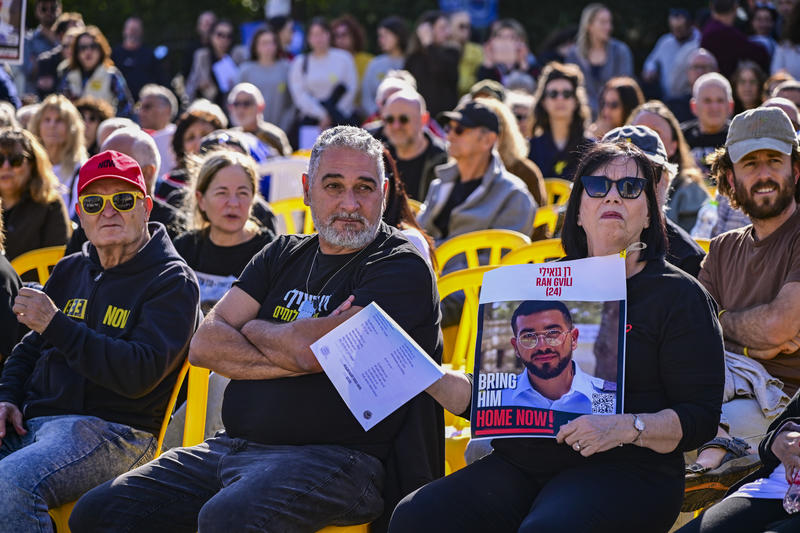
Relatives, friends and supporters of Master Sgt. Ran Gvili, whose body is held by Hamas, attend a Kabbalat Shabbat ceremony at Hostage Square in Tel Aviv, calling for the return of his body from Hamas captivity, on January 16, 2026.
Relatives, friends and supporters of Master Sgt. Ran Gvili, whose body is held by Hamas, attend a Kabbalat Shabbat ceremony at Hostage Square in Tel Aviv, calling for the return of his body from Hamas captivity, on January 16, 2026. Photo by Avshalom Sassoni/Flash90 *** Local Caption *** רן גואילי שוטר חטוף כיכר החטופים קבלת שבת הפגנה אחרון

Updated January 20, 2026

Israel–US tensions surface over Gaza’s future

What’s happened: Amidst growing differences between the Israeli government and the Trump administration, the Israeli government decided yesterday to delay opening of the Rafah crossing between Gaza and Egypt.

  • The opening is one of many measures that are supposed to happen in line with Phase two of the ceasefire agreement, which the US administration announced was underway earlier this week.
  • Israel opposed moving on to phase 2 before the body of the last Israeli hostage, Ran Gvili, was recovered from Gaza, and Israeli officials were particularly unnerved by the inclusion of Qatar and Turkey not just in Trump’s Board of Peace, but also in the Gaza Executive Board which is designated for a direct role in supervising postwar Gaza reconstruction and governance.
  • The Gaze Executive Board is the body which oversees the National Committee for the Administration of Gaza (NCAG), the so-called “technocratic” committee of Palestinians responsible for transitional governance of Gaza.
  • Outside of Israel, growing attention has been focused on the charter of President Trump’s Board of Peace.
    • The establishment of the Board was explicitly set out in the Comprehensive Plan which brought the Gaza war to a ceasefire in October 2025 and was endorsed by a UN Security Council resolution. Over the past week, the US administration has been sending formal invitations to countries to join the Board together with a detailed charter. The charter indicates a much broader role for the Board than just overseeing transitional governance and reconstruction in Gaza.
    • The charter grants broad personal powers to President Trump, with the language unclear if these powers will last longer than his term in office. It offers countries a “permanent membership” if they contribute $1 billion dollars at the outset, though a three-year membership is free. Its mandate  includes securing “enduring peace in areas affected or threatened by conflict,” not just Gaza.
    • Among US allies, the only vocal scepticism about the Board registered so far has been from France, which has not definitively said whether it will join, and Israel, which is angered about the inclusion of Qatar and Turkey on the subcommittee explicitly tasked with overseeing governance in Gaza, the aforementioned Gaza Executive Board.

Context: The role of Qatar and Turkey in the future governance of Gaza continues to be a cause of concern for Israeli security officials, and a point of contention in domestic Israeli politics.

  • In Knesset, opposition leader Yair Lapid blasted Netanyahu for either failing to block Qatar and Turkey from gaining a foothold in Gaza. “Hamas’s hosts in Istanbul and Doha, Hamas’s ideological partners, have been invited to run Gaza,” he said from the rostrum. Turning to the Prime Minister, he said that Netanyahu either “agreed behind our backs that Turkey, Qatar, and the Palestinian Authority would be in Gaza,” or that he didn’t know that the US had included them, which means “Trump doesn’t give a damn about you.”
  • Netanyahu acknowledged that the US and Israel had “a certain argument” on the issue of Qatari and Turkish involvement, but emphasised that forces from the two countries would not set foot in the Strip.
  • Former Prime Minister Naftali Bennett, not currently a member of Knesset, took to social media to criticise the Prime Minister on the matter. “Erdogan and the despicable Qatar, the greatest haters of Israel, the most enthusiastic aides of Hamas, are being ushered in through the front door to run Gaza,” he tweeted. “What a terrible diplomatic failure by the Netanyahu-Ben-Gvir-Smotrich government. Soon we will fix this, too.”
  • Disagreement between the US and Israel  is another case of most recent ruptures between the Trump administration and US allies. These rifts are becoming interlinked, as Donald Trump clashed with French President Emmanuel Macron over the potential inclusion of Vladimir Putin in the Board of Peace. 
  • The question of the Rafah Crossing has long been a bone of contention internationally and internally in Israel.
    • When Israel withdrew all its soldiers and civilians from the Gaza Strip in 2005, it signed a multilateral agreement called the Movement and Access Accord which created a complicated mechanism for operating the crossing between Gaza and Egypt by Palestinian and European forces with a remote supervisory role by Israel.
    • The arrangement was abandoned when Hamas took over the Strip following its coup in 2007. Egypt shut the crossing down completely in May 2024 when Israeli forces retook the Philadelphi Corridor, and the ceasefire which ended the war a year and a half later called for the crossing to be reopened, implicitly under an arrangement that would resemble the 2005 Accord.
    • Initially, Israel announced it would reopen the crossing for one-way traffic — from Gaza to Egypt — but eventually under international pressure and despite strong opposition in the Cabinet, it agreed to open it for two-way traffic in Phase 2 of the ceasefire. The decision yesterday to delay the opening further was interpreted by all sides as an expression of Israeli frustration at both the incomplete return of deceased hostages and, most especially, at the last minute inclusion of both Qatar and Turkey in the Gaza Executive Board.

Looking ahead: Lurking behind all the disagreements about the Board of Peace, the Gaza Executive Board, the NCAG, and the ISF is the question of Hamas disarmament. No credible plan for the actually disarming the terrorist organisation has been put forward by any of the various committees and boards.

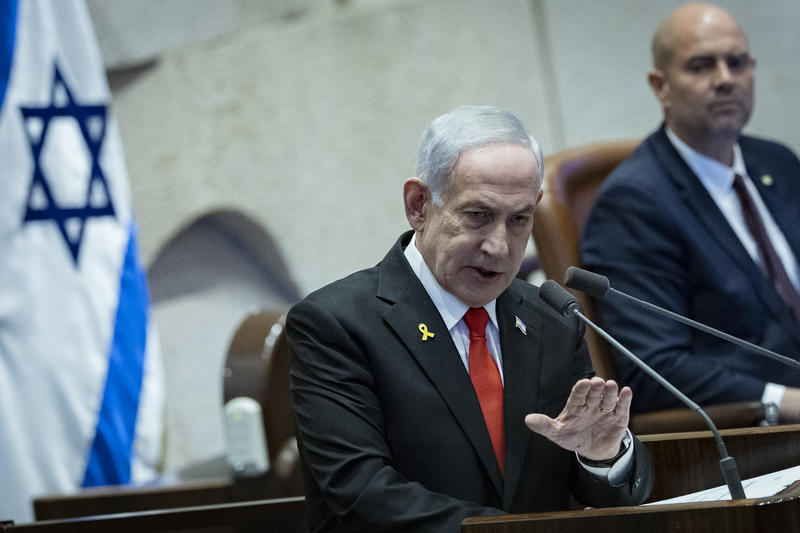
  • Netanyahu himself, speaking at yesterday’s stormy Knesset debate, alluded to the possibility that the IDF would be forced to carry out the task itself should international efforts to disarm Hamas fail to yield results. “Phase 2 says something simple: Hamas will be disarmed, and Gaza will be demilitarised,” he said in his speech before Parliament, before adding that this “will be achieved either the easy way or the hard way.”
  • Reports in the Israeli media based on leaks from the IDF suggest that such an operation would require four or five reserve divisions to be mobilised. The establishment of internationally backed governing and oversight bodies in the wake of the ceasefire would no doubt complicate such a ground offensive, especially in comparison to previous IDF incursions into Gaza over the past two years of war. But without concern over the fate of living hostages binding Israel’s hands, the IDF would be much freer to act than it was in previous rounds of fighting.

January 19, 2026

US announces makeup of new governance for Gaza

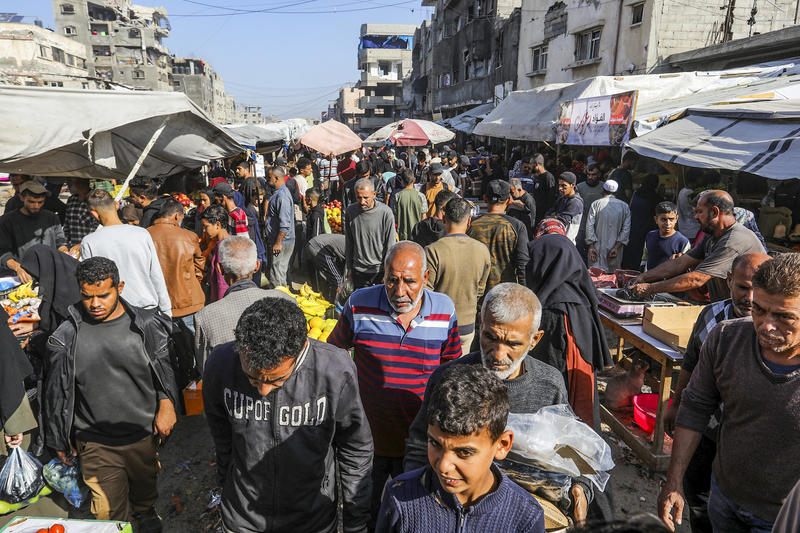
Palestinians shop at a market in Khan Yunis
Palestinians shop at a market in Khan Yunis, in the southern Gaza Strip, on November 21, 2025. Photo by Abed Rahim Khatib/Flash90 *** Local Caption *** הפסקת אש עזה פלסטיני פלשתיני שוק קניות חאן יונס

What’s happened: Over the weekend, the Trump administration announced the composition of the Gaza Board of Peace and an executive committee that will liaise between the board and the newly-formed government of Palestinian technocrats.

  • The Board of Peace will be led by President Trump and include Secretary of State Rubio, US envoys Witkoff and Kushner, Former Prime Minister Blair, Apollo Global Management CEO Marc Rowan, World Bank President Ajay Banga and deputy US National Security Adviser Robert Gabriel.  
  • The executive committee members will include the envoys Kushner and Witkoff, Blair, Rowan, Turkish Foreign Minister Hakan Fidan, Qatari diplomat Ali Thawadi, Egyptian General Intelligence Director Hassan Rashad, UAE Minister of International Cooperation Reem Al-Hashimy, former UN humanitarian coordinator Sigrid Kaag, Israeli-Cypriot businessman Yakir Gabay and former UN envoy to the Mideast Nickolay Mladenov.
  • Dr. Ali Shaath will be the Chairman of the National Committee for the Administration of Gaza (NCAG), the main Palestinian technocratic body on the ground. Committee members will include a range of Palestinian technocrats, some of whom were previously affiliated to the Palestinian Authority (PA).
  • The Israeli Prime Minister’s Office issued a statement noting that the US announcement “was not coordinated with Israel and runs contrary to its policy.” Israeli officials are concerned the board includes senior representatives from Turkey and Qatar.
  • Leader of the Opposition Lapid said, “For the past year I’ve been telling the government: ‘If you don’t advance the Egyptian solution with the United States and the world, you’ll end up with Turkey and Qatar in Gaza.’ Last night, the composition of the ‘Board of Peace’ was announced—Turkey is in, Qatar is in and, according to the IDF, Hamas has 30,000 armed men in Gaza. That is a complete political failure of the Netanyahu government after the courage and endless sacrifice made by IDF soldiers and commanders.”
  • Former Prime Minister Bennett commented, “Two years after it massacred us, Hamas is still alive, in control and growing stronger. The entry into Gaza by Qatar and Turkey, Hamas’s supporters and financiers, gives Hamas a reward for the October 7 massacre, endangers Israeli citizens’ security and sends a grave message to the peoples in the region that for massacring Jews one receives political and military achievements.”
  • Following the signing of committee’s mission statement Shaath said that the NCAG will act to entrench security, to repair vital infrastructure and to advance stability in the Gaza Strip. Shaath said that the top priority at present was to reopen the Rafah crossing in both directions.
  • Speaking at a rally on Saturday night, the parents of the last deceased hostage held in Gaza, Ran Gvili said, “While we are here, still waiting for Rani’s return, a Board of Peace for the second stage is being established. How can anyone think about a second stage, and what peace are they talking about at all? Peace with people who have refused to return our son, despite having consented to that in an agreement?”

Context: Israel has consistently stated that there can be no practical implementation of Phase 2 before the body of the final fallen hostage is returned and Hamas is disarmed.    

  • The decision to include Turkish and Qatari representatives on the Gaza executive committee has caused alarm across the political spectrum is Israel, though the decision is not a surprise. Those countries were key actors in persuading Hamas to agree to the ceasefire in October and are considered key allies by Trump. The major concern is that Hamas will receive a renewed influx of funds allowing it to pay fighters and consolidate its control.  
  • In parallel to the announcements, the US led Civil-Military Coordination Centre (CMCC) in Kiryat Gat continues to coordinate aid into Gaza and to develop plans to build new residential neighbourhoods for Gazans, (initially on the Israeli side of the yellow line).
  • Currently, around 800 trucks of supplies enter into Gaza every day, but once they pass the yellow line, Hamas is able to place a tax on every delivery which it then uses to replenish their accounts and rehabilitate their practical control over the Strip.  
  • Israel is further concerned that Hamas attacks on its troops along the yellow line have increased.
  • The announcement over the weekend is largely driven by Trump’s desire to showcase progress, even if concrete changes on the ground remain mostly symbolic for now.
  • Despite formal denials the NCAG appears closely connected to the PA, as is reflected in its leadership, composition, and Ramallah’s clear endorsement.
  • Hamas welcomes the committee because it poses no real threat to its power, serving as civilian cover while Hamas retains security control. This worryingly resembles the classic model of Hezbollah, operating as the main military force under a weak civilian leadership.
  • Although thousands of Hamas fighters were killed during the two year war, the latest assessment suggests every fighter killed has been replaced, (albeit younger, less experienced, less skilled) and that the combined forces of Hamas and Islamic Jihad once more stands at around 40,000.
  • The IDF significantly degraded their rocket arsenal, with about 90% of it destroyed, but military officials believe that hundreds of rockets still remain in the Strip, mostly short-range.

Looking ahead: In an effort to avoid a clash with the US administration Prime Minister Netanyahu has instructed Foreign Minister Saar to liaise with US Secretary of State Rubio.

  • According to Israel Hayom, Trump will use the platform of the World Economic Forum in Davos this week to condemn Hamas for its delay in handing over its weapons.
  • After Davos, all of the countries involved, including Turkey and Qatar, will present Hamas with a categorical demand to disarm. If Hamas rejects the demand to hand over its weapons, President Trump could give a green light to an Israeli military operation, as he said publicly in their last meeting with Netanyahu.
  • It’s understood that Donald Trump has invited other world leaders to join the Board of Peace, including Prime Minister Starmer. 

January 13, 2026

UK government eyes resuming free trade talks with Israel

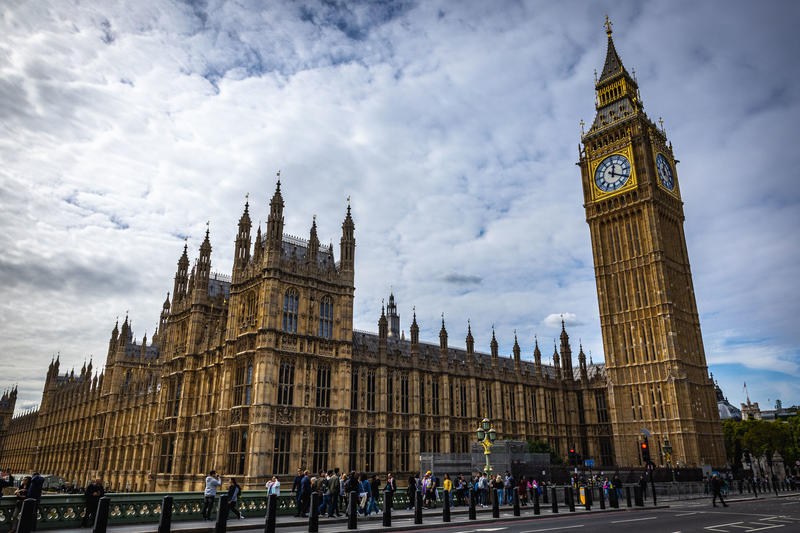
View of Elizabeth Tower, on the South Bank of the Thames, in London
View of Elizabeth Tower, on the South Bank of the Thames, in London. September 20, 2022. Photo by Nati Shohat/Flash90

What’s happening: Investment Minister, Lord Stockwood, assured the House of Lords that the UK Government is waiting for phase 2 of the Gaza ceasefire agreement to resume trade talks with Israel.

  • Lord Stockwood made this announcement in the Lords Grand Committee debate dedicated to trade with Israel last Thursday in response to a question from Lord Leigh (Conservative).
  • He highlighted that: “Israel’s innovative, high-tech economy is well aligned with our own, providing an avenue for critical imports in key sectors mentioned, such as healthcare, medicines for respiratory care, neurology, oncology and pain management to support the treatment of chronic and high-burden diseases.”
  • The debate was brought by Lord Austin, a crossbencher and former Labour MP and minister during Gordon Brown’s government, who currently serves as trade envoy to Israel.“Israel supplies one in seven NHS prescriptions, which save the health service nearly £3 billion every year. It is a global leader in digital health, biotech and medical innovation, delivering cutting-edge breakthroughs in early cancer detection, gene editing, Alzheimer’s research and cardiovascular treatment,” highlighted Lord Austin in his contribution.
  • Lord Austin also emphasised Israel’s contribution to the UK’s security: “Israel is also a key defence and security partner. It is the third-largest supplier of arms to the UK, and Israeli military equipment has saved the lives of British forces in combat zones. Its technology provides crucial support for the Armed Forces, and Israeli intelligence has helped prevent terror attacks here in Britain. It is obvious, in the face of Putin’s aggression, that we need to strengthen Britain’s air and cyber defences, and we are using Israel’s expertise in cyber security for that.”
  • This point was further expanded by Lord Leigh who pointed out: “In my opinion the UK is very unprepared for AI-driven drone warfare, but Israel has anticipated that future and we need to try to benefit from those skills. Unfortunately, banning arms sales to Israel has been extremely unhelpful at this time and now needs to be reversed, as does the ludicrous decision to ban Israeli defence officials from the Royal College of Defence Studies and then to ban Israel defence firms from a major London arms fair.”
  • Lord Leigh also warned that “Boycotts create a chilling effect: they deter investment, research and partnership far beyond their formal scope, and in fact, they nurture violence, extremism and antisemitism. The attempt to normalise the delegitimisation of Israel is pure antisemitism undertaken by bad actors with dangerous motives.”
  • This sentiment was echoed by multiple contributing member, which were subsequently assured by Lord Stockwood that: “the UK Government are committed to promoting our trade and business ties with Israel and strongly oppose boycotts.”

Context: The UK and Israel signed a trade and partnership agreement in 2019 to ensure continuity of trade relations following Brexit. In 2021, the two countries signed a Memorandum of Understanding in which they declared a shared interest in negotiating a free trade agreement. These negotiations were paused in May 2025 by the UK government.

  • The UK government’s decision to pause the trade talks was justified by then Foreign Secretary David Lammy as a reaction to the war in Gaza.
  • The same justification was used by the government when it suspended around 30 arms export licenses to Israel in September 2024.
  • Known as the ‘Start-up Nation’ Israeli companies contribute to the UK economy in many sectors, especially in healthcare, software engineering, fintech, cybersecurity, AI, and defence supporting thousands high-skilled jobs across the UK and bringing in cutting-edge solution to the UK consumers.
  • Israel’s contribution to the UK economy was recently highlighted by the UK Ambassador to Israel, Simon Walter, who wrote to CTECH that “Israel rose to eighth place in Europe in terms of investment in the UK per capita in 2025, up from tenth place last year. Over the past five years, more than 300 Israeli companies have expanded into the UK, generating 4,000 jobs and almost £1 billion in investment. Israeli investment created 871 jobs and contributed £173 million to the UK economy in the last year alone, as trade increased again, despite the Gaza war and campaigns to boycott Israel.”
  • According to the UK Department of Business and Trade, total trade in goods and services between the UK and Israel reached £6.2 billion in the year to the end of Q2 2025. This represents an increase of 3.7% or £218 million in current prices from the previous period.UK companies’ top exports to Israel account for medicinal and pharmaceutical products worth £284.5 million, cars worth £191.1 million and mechanical power generators worth £148.8 million.
  • Israeli businesses operating in the UK face pressure from the BDS movement, as well as harassment and, in some cases, violent attacks by extremist groups, including Palestine Action, which was proscribed as a terrorist organisation in June last year.

Looking ahead: Israel continues to work with the Trump administration to finalise phase one of the Gaza ceasefire agreement, despite persistent violations by Hamas.

  • Progression to phase two remains uncertain. Key obstacles include the remains of Israeli policeman Ran Gvili, the last Israeli hostage, still being held in Gaza, and the refusal by Hamas to honour the agreement by laying down its weapons, despite having committed to do both under the ceasefire terms.
  • It therefore remains unclear if in absence of any progress will be the UK government willing to reopen the trade talks with Israel.

January 5, 2026

Post Trump meeting, Netanyahu declares support for the Iranian people

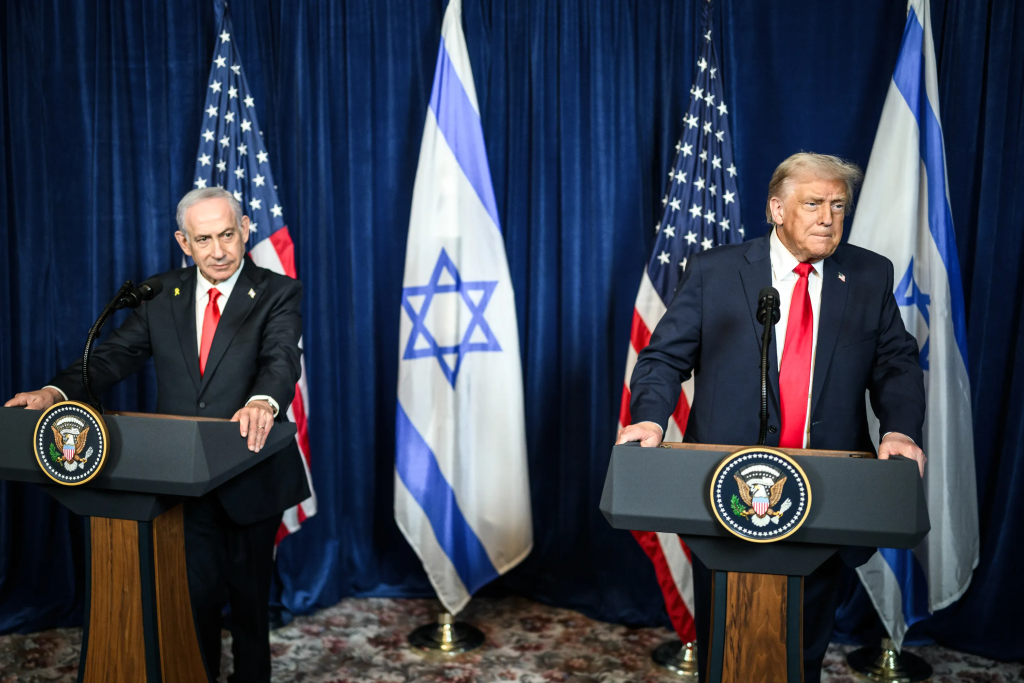
President Donald Trump hosts a bilateral meeting with Israeli Prime Minister Benjamin Netanyahu
President Donald Trump hosts a bilateral meeting with Israeli Prime Minister Benjamin Netanyahu at Mar-a-Lago. December 29, 2025. Photo credit: The White House.

What’s happened: At the start of Sunday’s weekly cabinet meeting, Prime Minister Netanyahu expressed support for the Iranian people.

  • Netanyahu told his ministers, “we identify with the struggle of the Iranian people, with their aspirations for freedom, liberty, and justice. It is very possible that we are standing at the moment when the Iranian people are taking their fate into their own hands.”
  • Similarly, President Trump has also expressed support for the protesters in Iran and warned that if Iran, “starts killing people like they have in the past, I think they’re gonna get hit very hard by the United States.”
  • According to the New York Times, senior Iranian officials acknowledged that the Islamic Republic has entered “survival mode.”
  • During the cabinet meeting, Netanyahu also related to the Iranian issue that came up at last week’s meeting with President Trump saying, “We reiterated our joint position of zero enrichment on one hand, and the need to remove the 400 kilograms of enriched material from Iran and oversee the sites with tight and genuine supervision.”
  • Netanyahu also expressed support for the US “determined decision and action” in Venezuela, “to restore freedom and justice to that part of the world.”

Context: The Iranian issue was one of the top priorities for Netanyahu when he met Trump last week. Overall, the top objective for Netanyahu was to consolidate on the military achievements across several fronts including Iran, Gaza, Lebanon and Syria. The common thread was to reaffirm US support that if necessary Israel will act to prevent Iran and their proxies from rearming and to ensure Israeli military freedom of action to counter any developing threats.

  • Although details of the private meeting between Trump and Netanyahu remain vague, Netanyahu also told ministers on Sunday that Trump was “unequivocal” on Gaza.
  • Netanyahu said, “He repeated this both in our private conversations and to public opinion at the press conference there. He said it: ‘The essential condition is that Hamas disarms.’ There is no other option. This is an essential and fundamental condition for the implementation of his 20-point plan. He made no concessions and showed no flexibility on this issue.”
  • Without continued Israeli action Israeli officials are concerned that the achievements of the last year will be eroded. To ensure the achievements are consolidated Israel is banking on continued close coordination with US defence officials.    
  • In the wake of the October 7th attack Israel is pursuing a new security doctrine, that includes forward and pre-emptive defence. It is further understood Israel’s new defence posture includes:
    • Disarming terrorist armies.
    • Disarming and destroying military infrastructure above and below ground in a way that will make it impossible to renew the fighting, or to carry out surprise attacks on Israel’s borders and civilian communities adjacent to them.
    • Preventing terror groups from restoring their military capabilities.
    • Establishing effective international enforcement mechanisms that will ensure and enforce precise implementation of the disarmament.
    • Secure US support to operate independently, without having to coordinate with the US every time Israel detects violations of the arrangements.
  • Specifically on Gaza, Netanyahu reiterated the Israeli position to secure the return of the body of Ran Gvili, the last remaining hostage who has not been buried in Israel before transitioning to the second phase.
  • When it comes to disarming Hamas the priorities include decommissioning RPG launchers, other rockets, missiles, mortars, anti-tank weapons, and heavy drones.
  • Thirdly, the destruction of the remaining underground infrastructure, especially attack tunnels, as well as  command and control centres and weapons manufacturing sites. Israel is also demanding a complete ban on military training in the Strip.
  • At this point Israel remains insistent on remaining on the Yellow Line to ensure the protection of communities on the Gaza periphery.
  • Similarly in the north, Israel is demanding that Hezbollah be fully stripped of its heavy and long-range arms, including rockets and missiles and drones
  • Regarding Iran, Israel will support an international agreement that removes Iran’s ability to develop its military nuclear programme. In addition, Netanyahu seems to have secured support from Trump that also recognises Iran’s efforts to rebuild its array of conventional military threat of ballistic missiles as another red line.      
  • It appears that Trump was accommodating to most of Israel’s demands. The main area of disagreement appears to be the role of Turkey, both in Gaza and their ambitions to extend their sphere of influence in Syria.
  • According to Nahum Barnea writing in Yediot Ahronot, “There will probably not be Turkish soldiers in the international force whose establishment is unlikely, but Turkish contractors will be included in the [Gaza reconstruction] work, and F-35 jets will be sold to the Turkish air force. Netanyahu was unable to persuade Trump that Erdogan is bad; Erdogan was unable to persuade Trump that Netanyahu is bad. Trump enjoys both of their displays of sycophancy.”    
  • On Venezuela, Israel has been concerned for several years of their alliance and connection to both Iran and Hezbollah.    

Looking ahead: Later today Israeli – Syrian negotiations over a security agreements in southern Syria are expected to be resumed in Paris. The talks have been on hold for the last two months.

  • Israeli defence establishment remains on high alert over concern that the Iranian regime could try and divert domestic attention by launching an attack on Israel.
  • On Sunday, Iran International, a Persian language opposition channel broadcasting from London, reported that the Islamic Revolutionary Guards Corps (IRGC) has conducting further missile launching exercises. The exercise includes tests of air defence systems and is being conducted in several cities including Tehran and Shiraz.
  • The Israeli assessment remains that the Iran remains exposed, and that their air defences have not been reconstituted since the 12 Day War last summer. Nevertheless, there is concern that if the regime fears it will be deposed then an attack on Israel could be its only move left.

December 22, 2025

Strengthening the Eastern Mediterranean alliance

A photorealistic visualisation of the flags of Greece, Israel and Cyprus under a clear Mediterranean sky.
A photorealistic visualisation of the flags of Greece, Israel and Cyprus under a clear Mediterranean sky. AI-generated by BICOM using DALL·E.

What’s happening: On Monday afternoon, Prime Minister Netanyahu will host meetings with the Prime Minister of Greece Kyriakos Mitsotakis and Cypriot President Nikos Christodoulides.

  • Netanyahu will conduct bilateral meetings with both leaders separately, followed by a trilateral meeting following held and joint statements to the press.
  • The trilateral summit is expected to focus on defence and security issues as well as energy connectivity, civil protection and innovation.
  • High on the agenda will be  strengthening of countire’s security cooperation, including the possibility of establishing a joint rapid-response military force that will be active in the Eastern Mediterranean, intended to present a united front against Turkey’s aggressive posture.
  • According to Greek media reports, the latest tensions have included Turkish jets infiltrating Greek airspace, which led to the Greek air force scrambling planes in response.

Context: This trilateral summit is the latest gathering of the three leaders that have been increasing cooperation in recent years.        

  • Israel already provides Greece with advanced weapons systems and a large deal was recently approved for precise munitions. The two countries are currently discussing another large deal for more Israeli weapons.
  • In the lead-up to the summit Israel denied reports about the establishment of a joint rapid-response force. However each nation wants to increase their military coordination which includes joint training exercises and sending a message to deter the Turks.
  • Israel-Greece relations have been strong for several years, with one senior Israeli official involved in the talks describing it as “intimate”. “Every year, Israel and Greece hold 40 joint exercises, meetings to exchange information, and more. There is always room to broaden cooperation, but the report in Greece about a rapid response force is not true and there is no feasibility of such a force.”
  • The leaders will also discuss the US-led IMEC (India-Middle East-Europe Economic Corridor). The initiative that looks to build an economic corridor that will link India, the Middle East, Israel and Europe by means of advanced transportation and energy infrastructure as well as increasing cooperation in the spheres of trade, economy, energy and security, including a train network, cables and energy.
  • On the energy front there appears two issues:
    • Cooperation over off shore natural gas fields, specifically the very large Aphrodite gas field, 85% of which belongs to Cyprus and 15% to Israel. Cyprus is considering building a gas facility that will rival Egypt’s.
    • Exploring the possibility of connecting themselves to an East Med electricity grid – via an underwater electricity cable. Greece is building an electricity line between Crete and Cyprus, and once Cyprus is connected to Israel this will effectively link Israel to the European electricity grid. However, many analysts are sceptical that such a scheme is feasible.
  • A further area of cooperation will see the establishment of a coordination centre to deal with civilian disasters such as fires and preparations for large earthquakes.
  • Israel views its ties with Greece and Cyprus as a strategic partnership, that strengthens regional stability and addresses each nation’s specific security challenges.
  • At the same time, Israel is careful to refer to Turkey as a rival rather than as an enemy.  
  • Last week the US Ambassador to Turkey (and special envoy to Syria) Tom Barrack visited Israel. Israel’s message to Turkey was apparently conciliatory, emphasising that both sides should make an effort to prevent the ongoing escalation in tensions.
  • Israeli-Turkish tensions are centred around Syria and Gaza. Ever since the fall of the Assad regime, Turkey has been making a clear effort to expand and to deepen its presence in Syria. This includes plans to deploy radars and air-defence batteries, which could restrict Israel’s aerial freedom of operation.
  • Israel has so far imposed a veto on any Turkish military presence in the Gaza Strip as part of the International Stabilisation Force. Israel is concerned that any Turkish involvement will restrict Israel’s ability to take military action to prevent Hamas from recovering militarily. In addition, there are concerns that, since Erdoğan is sympathetic towards Hamas, Turkish forces might even help Hamas to smuggle and/or manufacture weapons.
  • The sides will also discuss the role Cyprus and Greece are to play in the day after in Gaza. Greek Prime Minister Mitsotakis is also expected to visit Ramallah and meet the chairman of the Palestinian Authority, Mahmoud Abbas. Ahead of the trip the Greek government reemphasised their commitment to the two-state solution. The country wants to act as an honest brokers and contribute to the Gaza peace plan including, humanitarian assistance, reconstruction and a possible participation in the International Stabilisation Force.

Looking ahead: From the Israeli side no decision has been made to establish a joint rapid-response force. However, it is understood that the IDF are exploring a preliminary feasibility study. 

  • With a range of shared interests across the civilian and security spectrum, trilateral cooperation is expected to advance and increase.

December 17, 2025

Israel joins the global Pax Silica alliance

Signing ceremony for Pax Silica, Washington DC, December 12, 2025.
Signing ceremony for Pax Silica, Washington DC, December 12, 2025. Photo credit: US Department of State

What’s happened: Spearheaded by the US and launched last week at the summit in Washington DC, Pax Silica is a strategic initiative focused on securing and strengthening AI and technology supply chain.

  • Alongside the US and Israel, the summit convened stakeholders of the United Kingdom, Japan, South Korea, Singapore, the Netherlands, the UAE, and Australia, all representing nations with a major presence in the fast-growing AI industry.
  • The summit received also a guest contribution from Taiwan, the European Union, Canada, and the OECD.
  • The participants of the newly formed Pax Silica alliance committed to working in partnership in areas such as:
    • Strengthening the supply chains of critical minerals, chips, and energy.
    • Establishing joint ventures and shared strategic investments.
    • Protecting sensitive technologies and infrastructures from access or control by hostile nations.
    • Establishing a trustworthy technological ecosystem – including ICT systems, fibre optic cables, data centres, foundational models, and AI applications.
  • Israel was represented at the summit by Economic Advisor to the Prime Minister, Prof. Avi Simhon, who noted: “Together with our international partners, we are working to fortify the global AI industry, strengthen the resilience of supply chains, and ensure the economic and security prosperity of the participating countries and their citizens.”  

Context: While not explicitly stated, the initiative aligns with the broader strategy of the Trump administration to counter China and its influence, and to strengthen the US position in high-tech sectors, particularly the rapidly expanding AI industry.

  • This strategic dimension of the initiative was highlighted by the US Under Secretary for Economic Affairs Jacob Helberg who said: “If the 20th century ran on oil and steel, the 21st century runs on compute and the minerals that feed it. This historic declaration hails a new economic security consensus ensuring aligned partners build the AI ecosystem of tomorrow—from energy and critical minerals to high-end manufacturing and models.”
  • The US has explicitly stated that it views AI as a transformative force for its long-term prosperity. Donald Trump has also previously described economic security as an integral part of national security and has articulated the US ambition to win the AI race. This initiative should be viewed as part of that ambition.
  • According to the US State Department, the summit participants explored opportunities to partner on flagship projects across global technology stacks, including connectivity and data infrastructure, compute and semiconductors, advanced manufacturing, logistics, mineral refining and processing, and energy.
  • Furthermore, the initiative responds among other to a “growing demand from partners to deepen economic and technology cooperation with the United States” and to “the importance of fair market practices and policy coordination to protect sensitive technologies and critical infrastructure.”
  • Israel leads the world in billion-dollar start-up unicorns, pioneering innovation across sectors including green tech, healthcare, agriculture, AI and fintech. Known as the ‘Start-up Nation’, Israel has been the birthplace of companies such as satellite navigation provider Waze, cybersecurity firm Check Point, enterprise-grade AI developer AI21 Labs, the popular trading platform eToro, and project-management software provider Monday.com.
  • Earlier this month, Prime Minister Benjamin Netanyahu said of emerging technology, “I think there’s another revolution coming,” and described it, alongside the “achievement of a broader peace”, as one of the two enormous tasks he intends to focus on going forward.
  • Last month, Israel proposed a site in Kiryat Tivon, in the north of the country near Haifa, to host Nvidia’s multibillion-dollar technology campus. The US chip manufacturer, currently the world’s most valuable publicly listed company, is seeking to build a 160,000-square-metre R&D hub creating up to 8,000 jobs.
  • The company already has a strong presence in Israel, which hosts its largest operations outside the US. Nvidia employs in Israel over 5,000 people across seven R&D centres in cities including Tel Aviv, Jerusalem and Beersheba.
  • Israeli Ministry of Economy released its latest forecast yesterday which expects the Israeli exports to grow to $160 billion (approximately £121 billion), which represents an increase of approximately 3% compared to 2024.
  • According to initial estimates based on Central Bureau of Statistics (CBS) data, the exports are primarily driven by services, which already contribute by more than half of total Israeli exports and are projected to grow by 9% reaching $101 billion, up from $92.7 billion in 2024.
  • Israeli Ministry of Economy notes that: “The growth in this sector continues at an impressive pace and emphasises the expansion of activity in the industry, primarily High-Tech services such as software, computing, and research and development, and its significant contribution to Israel’s economic stability.”

Looking ahead: Under Secretary Helberg instructed US diplomats in Washington and overseas to translate the summit’s discussions into action by identifying infrastructure projects and coordinating economic security practices.

  • Helberg also stated that the pact is open to new members and that he expects more nations to join as early as Q1 2026.

December 15, 2025

Heightened concerns following the Sydney terror attack

People light candles in memory of the victims of the mass shooting attack in Sydney targeting the Jewish community during Hanukkah celebrations, in Tel Aviv, on December 14, 2025.
People light candles in memory of the victims of the terrorist attack in Sydney targeting the Jewish community during Hanukkah celebrations, in Tel Aviv, on December 14, 2025. Photo by Erik Marmor/Flash90

What’s happened: As of this morning the number of people who were murdered in the Sydney terror attack stands at 15. Another 40 people were wounded.

  • The attack targeted Australian Jews celebrating a Chabad Chanukah party on Bondi Beach.
  • Following the attack, President Herzog sent his “deepest condolences” to the Jewish community of Australia. He added, “These vile terrorists deliberately targeted innocent Jewish families celebrating the first night of Chanukkah… our message is clear: the Chanukah lights must go on and will be lit all over the world, especially in Bondi Beach in Sydney and all over Australia. In Australia, in Israel, and around the world, the Jewish people — the eternal people — will continue to bring light into the world and overcome this terrible darkness.”
  • Prime Minister Starmer noted, “Chanukah should be a time of celebration and joy. The news that the Bondi beach attack was an antisemitic terrorist attack against Jewish families at a Chanukah event is sickening….The United Kingdom will always stand with Australia and the Jewish community.” He added that his government was working with the CST (Community Security Trust) on the policing of Chanukah events.
  • The prime minister later posted a photo lighting the Chanukah candles alongside his wife with his message: “As we light the Chanukiah, our thoughts and prayers are with those murdered in the terrorist attack on Bondi beach today, their loved ones and the whole Jewish community. Light will always win over darkness.” He further noted, “Antisemitism has no place in our society. We stand in solidarity with the Jewish community, today and every day.”
  • Later in Jerusalem President Herzog lit the first night candle alongside the family of Staff Sgt. Ran Gvili at the President’s Residence in Jerusalem. The President stated, “Ran is a police officer who fell heroically in battle on October 7th. 800 days later, Ran is now the last hostage still being held by murderous terrorists in Gaza. We renew our call for Ran to be released immediately and returned home to his dear family for dignified burial!”

Context: For many Jews around the world a deadly attack of this nature has felt inevitable following the increased levels of antisemitism, particularly since the October 7 massacre.  

  • Jewish community organisations in both Australia and the UK have been warning politicians for two years that the violent rhetoric on weekly marches in our cities, would escalate to physical violence.
  • Following the Heaton Park Synagogue murders in Manchester, the UK government made commitments to changes in the law, to protect places of worship and assess cumulative impact of marches. Neither have been implemented.
  • The terrorist attackers have been identified as Sajid and Navid Akram, a father and son aged 24 and 50 of Pakistani origin. It remains unclear if they acted independently or if they received training and support.  
  • Pakistani nationals have carried out attacks in the past, such as in the 2008 terror attack in Mumbai that – like in Sydney – also targeted a Chabad event. Similarly Pakistani nationals, serving as Iranian proxies were involved in a foiled terrorist attack at a Chabad House in Athens in October 2024.
  • Over the last few months the Mossad had warned the Australian government that Iran and other malign groups were planning attacks.
  • There is some speculation that Iran carried out a revenge attack against Jews at an iconic Australian tourist site following recent Australian action against the Islamic Republic. Other reports have suggested the terrorists may have identified with ISIS.    
  • This deadly attack followed months of anti-Israel public protests, including chants to “globalise the intifada.” This attack is viewed as a sadly predictable result of inaction against those protests.
  • Despite the welcome words of Prime Minister Starmer there is heightened concern that not enough is being done to counter the growing spread of antisemitic rhetoric and there are ongoing concerns for the safety of the Jewish community.
  • In Australia this attack followed a huge increase in antisemitic attacks that included a firebomb attack on a Melbourne synagogue a year ago.
  • Yesterday Prime Minister Netanyahu noted his previous warnings to the Australian government that its policy was “promoting and encouraging antisemitism in Australia,” adding that its call for a Palestinian state ” pours fuel on the antisemitic fire…rewards Hamas terrorists [and] emboldens those who menace Australian Jews and encourages the Jew hatred now stalking your streets.” Netanyahu emphasised that “Antisemitism is a cancer. It spreads when leaders stay silent; it retreats when leaders act. I call upon you to replace weakness with action, appeasement with resolve.”
  • The prime minister also noted that it was a brave Muslim man that heroically disarmed one of the terrorists.      
  • The festival of Chanukah, meaning “dedication” in Hebrew, commemorates both the 164 BCE rededication of the Second Temple in Jerusalem after its desecration by the ruling Seleucid (Syrian Greek) Kingdom, under Antiochus IV, and the re-establishment of religious freedom for the Jewish people after a period of harsh repression.
  • The success of the popular revolt led by Judah Maccabee and his brothers has ever since symbolised the fight for liberty and freedom against overwhelming odds.
  • Chabad is a religious Jewish movement synonymous with outreach programmes for Jews of all backgrounds.

Looking ahead: Israel’s National Security Council has issued warning over the possibility that terror supporters will be inspired by this event and try to carry out copy-cat attacks.

  • As a result, the NSC have issued a set of recommendations that include avoiding “unsecured public events, including events at synagogues, Chabad houses, Chanukah parties… Be vigilant when near Jewish/Israeli locations, and report to the security forces if anything out of the ordinary is detected (a suspicious person or object).”
  • As the UK prepares for its public Chanukah celebrations this week, the Jewish community is on heightened alert. 

November 20, 2025

Mossad foils Hamas plot in Europe

Mossad operation infographic
Mossad operation infographic. Photo credit: Israel in the UK/X

What’s happened: The Prime Minister’s Office announced yesterday the conclusion of a complex antiterrorist operation conducted by the Mossad in cooperation with law enforcing authorities across Europe that led to the disruption of a massive Hamas network that was preparing terrorist attacks in Europe.

  • According to the announcement, arrests were made in Germany, Austria, and the UK, and large weapons caches were discovered in Austria and possibly elsewhere as well.
  • The terrorists involved coordinated with Hamas operatives in Turkey and Qatar. The announcement sparked some media interest in Israel yesterday, but was little noted abroad, though the discovery of a weapons cache in Austria was reported abroad two weeks ago.
  • According to the PMO, Hamas operative Mahmoud Nayim was arrested in the UK in November 2025.
  • In its statement the Austrian Directorate for State Security and Intelligence (DSN) specified that “Among the seized items were tens of thousands of euros in cash, numerous data storage devices and mobile phones, gas pistols, firearms, ammunition, knives, and related literature.”
  • The Prime Minister’‘s office warned that: “Since the October 7 massacre, the Hamas terrorist organisation has been working with renewed vigour to build infrastructure and recruit terrorist cells in Europe and other arenas, similar to the Iranian regime and its proxies.” Reiterating Mossad’s commitment  to countering terrorism “The Mossad, together with its partners in the Israeli and global intelligence and security communities, is leading extensive efforts to thwart terrorism against Israeli, Jewish, and innocent targets worldwide.”

November 20, 2025

UNRWA’s mandate extended despite growing criticism

A wide view of the 44th plenary meeting of the UN General Assembly, November 18, 2025.
A wide view of the 44th plenary meeting of the UN General Assembly, November 18, 2025. Photo credit: UN Photo/Loey Felipe

What’s happened: The United Nations General Assembly voted to extend the mandate of UNRWA, the controversial agency which handles aid for Palestinian refugees and their descendants and which has been accused by Israel of complicity in Hamas operations against Israel.

  • Voting in favour of extending the mandate were 149 countries, a significant drop from 165 previously. The United States and nine other countries voted against the measure. In a dramatic departure from precedent and a minor moral blow to UNRWA, five European countries abstained: Germany, Italy, Czechia, Bulgaria, and Latvia.
  • Israeli Foreign Minister Saar said the number of countries that refrained from supporting the extension of UNRWA’s mandate “reflects the beginning of a recognition within the international community of UNRWA’s negative role, which was infiltrated by Hamas, and whose employees participated in the Oct. 7 massacre.”
  • US Ambassador to Israel Mike Huckabee condemned settler violence in the West Bank, saying “Israelis can carry out terrorism as well,” while also noting that there were only “a very small number” of people involved and that Israel was acting to contain the problem.

November 18, 2025

Netanyahu welcomes UN vote on Gaza

Israeli Prime Minister Benjamin Netanyahu at a 40 signatures debate, at the plenum hall of the Knesset
Israeli Prime Minister Benjamin Netanyahu at a 40 signatures debate, at the plenum hall of the Knesset, the Israeli parliament in Jerusalem, on November 10, 2025. Photo by Yonatan Sindel/Flash90 *** Local Caption *** 40 חתימות כנסת מליאה ראש הממשלה בנימין נתניהו

What’s happened: The United Nations Security Council approved Resolution 2803, endorsing President Trump’s Comprehensive Plan and granting an international mandate for the creation of an International Stabilisation Force to operate in Gaza for the next two years.

  • The resolution explicitly references both the Board of Peace, a body to be managed by the Trump Administration and a “path to a Palestinian state.”
  • The UNSC resolution authorises Trump’s Board of Peace to oversee governance of the strip until December 31, 2027. The Board of Peace will be empowered to appoint a “technocratic, apolitical committee of competent Palestinians from the Strip” to manage the day-to-day affairs of the Gaza Strip.
  • The resolution also authorises the World Bank to allocate financial resources for the reconstruction of Gaza and calls for the establishment of an international trust fund for Gaza reconstruction.
  • The Board of Peace will oversee the International Stabilisation Force, a multination armed force operating with a UN mandate that will “coordinate” with Israel and Egypt for security missions in the Gaza Strip, including training and support Palestinian police personnel, securing humanitarian corridors, and securing border areas.
  • PM Netanyahu reacted to the vote by praising the Trump plan. In a post on X, he wrote that “The State of Israel and PM Netanyahu applaud President @realDonaldTrump and his tireless and devoted team. The courage and sacrifice of our brave soldiers, along with President Trump’s diplomatic efforts, helped bring home all of the living hostages and most of the deceased ones. and saying it “will lead to peace.”
  • Before the vote, at the start of the Government meeting on Sunday, Netanyahu reiterated that his “opposition to a Palestinian state in any territory has not changed one bit.”
  • Israel’s UN Ambassador Danny Danon also praised the adoption of the resolution, emphasising that Israel would not compromise on the implementation of the resolution’s demands for full Hamas disarmament. “As we are determined to bring back all the hostages, we will display the same determination and ensure that Hamas is disarmed,” he said. “We will not stop and will not rest until Hamas is not a threat to the State of Israel.”
  • The Palestinian Authority’s Foreign Minister Varsen Aghabekian Shahin also praised the resolution’s adoption, calling it a “first step in a long road towards peace.” Speaking to reporters in the Philippines, she said that “we could not embark on anything else before we had a ceasefire.”
  • Hamas issued a statement rejecting the UN Security Council resolution, saying that it did not address the Palestinians’ rights and demands. It further indicated that it would not cooperate with any attempt to disarm the organisation.
  • UN Secretary General Antonio Guterres hailed the resolution’s adoption and said that it was “essential now to translate the diplomatic momentum into concrete and urgently needed steps on the ground.”

Context: Despite reservations about some of the language – specifically relating to a pathway to a Palestinian state – Israel accepted the resolution as it sees it as a natural progression towards the next stage of the Trump 20 Point Plan.  

  • According to Israel Hayom, Israel was opposed to the changes in the text’s wording, but later dropped its opposition after receiving private commitments from the Trump administration that the state envisioned in the resolution, as far as the US administration is concerned, is in line with the 2020 “Deal of the Century” proposal of the first Trump administration, and not one that see the entirety of the West Bank and Gaza handed over to a fully sovereign Palestinian state.
  • China and Russia abstained in the vote on the resolution’s adoption. Either country could have vetoed the resolution had they been so inclined. Both expressed serious reservations about the outsized role of the US, particularly the implied mandate of President Trump’s Board of Peace to govern Gaza.
  • In an earlier Russian draft, the Board of Peace was unmentioned entirely. The Chinese and Russians were concerned that the ISF would essentially be reporting to the Board of Peace and through it to Washington. Ultimately, in the approved text, the Board of Peace retains the powers Trump had sought for it, but the ISF has to report back to the Security Council every six months.
  • Algeria, the only member of the UN Arab Group currently on the Security Council voted in favour of the resolution, but only after securing language on Palestinian statehood that went beyond the wording in Trump’s 20-point plan or the original American draft of the resolution.
  • Algeria’s ambassador told the Council that “genuine peace in the Middle East cannot be achieved without justice, justice for the Palestinian people, who have waited for decades for the creation of their independent state.”
  • Algeria was not alone on insisting on these changes to the resolution’s text. The New York Times reports that other countries on the Security Council, including France, Guyana, Pakistan, Slovenia, and Somalia, pushed for more forceful language on Palestinian statehood.
  • The resolution stipulates that after the Palestinian Authority reforms itself and reconstruction of Gaza progresses, “conditions may finally be in place for a credible pathway to Palestinian self-determination and statehood.”

Looking ahead: The mandate of the ISF goes far beyond mere peacekeeping and includes disarmament.

  • The question of when the ISF could begin operating remains open.
  • Though the Security Council resolution gives it a mandate to disarm Hamas, no country presently seems willing to take on the task.
  • It can’t be effective in the parts of Gaza under Hamas control while Hamas forces still operate there as quasi-sovereign military and police force. It could conceivably operate in areas the IDF vacates, but Israel won’t vacate these areas until some kind of Hamas disarmament is achieved.
  • President Trump is due to meet with Saudi Crown Prince Mohammed bin Salman today in the White House. Their discussions could have far-reaching implications for the entire regional alliance structure following both the Gaza War and the Twelve Day War with Iran.
  • Trump announced yesterday his intention to sell the Saudis F-35 fighter jets, a move that could put Israel’s qualitative military edge at risk.
  • Previous US administration’s (including Trump’s) had conditioned any such sale on Saudi commitments to scale back relations with China and to normalise relations with Israel. It is not yet clear what Trump will be expecting from the Saudis in return for the sale announced yesterday.

Newsletter sign-up

Please enter your information below to subscribe to our daily newsletter and stay updated and informed.

Donate to BICOM

At BICOM, we rely on the generosity of people like you to keep our website and services running. Your donation, no matter the size, makes a real difference. Please consider supporting us today. For further information please email: [email protected]