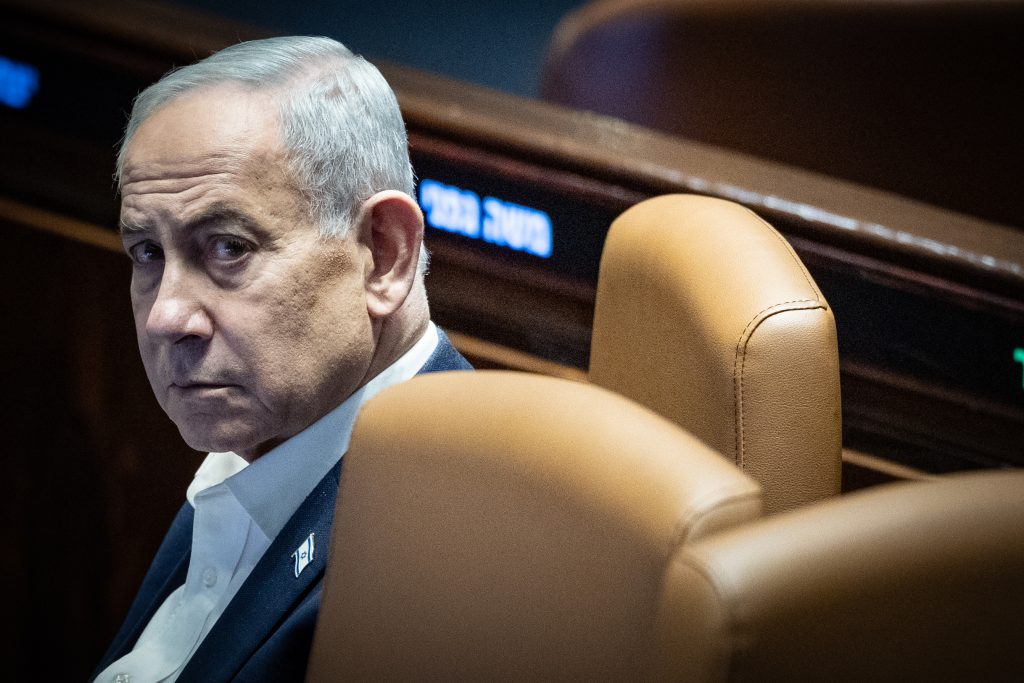
Despite the outgoing government surviving its full term, they have ruled over a bitterly divided country, punctuated by the massacre on October 7th and almost constant fighting since then.
Following the election in November 2022, all of the centrist parties upheld their boycott of joining a Netanyahu-led government because he was facing a criminal trial at the same time. This left Netanyahu no choice but to partner with the hard right and ultra-Orthodox parties in order to form a coalition.
In January 2023 Justice Minister Levin presented his plan for the overhaul of the judicial system. His proposals sparked mass protests across the country with huge rallies in Tel Aviv and elsewhere. Both sides of the debate claimed to be defending democracy. For Levin and his supporters it was about wrestling power away from an unelected judiciary in favour of Parliament. For opponents his moves violated the delicate balance and separation of powers, seen as fundamentally protecting democratic values. Ultimately the vast majority of Levin’s plan was never implemented.
In the aftermath of the October 7 massacre there was a veneer of unity, which has since dissipated, with each side blaming the other for having contributed to the disaster. For opponents of the government, their proposed reforms weakened the country in the eyes of its enemies and they ignored intelligence warnings regarding the potential for war. Government supporters argue that the huge protests undermined the state and broadcast weakness.
The government will present the military campaigns against Iran and its various proxies, as well as the removal of the leaders of terror groups, as a great success and a dramatic improvement to the country’s security. For opponents, all these fronts remain unresolved, with Israel sustaining enormous loses in its reputation and standing across the world, even among allies.
Among the key issues in this election, is the popularity and support for Prime Minister Netanyahu and this remains a litmus test. For some supporters, he is the greatest leader the country has ever had, combining supreme intellect, communications skills and unmatched experience. For some opponents he is a lying manipulator that places self-interest above those of the country.
The second key issue that has dominated the political discourse and will feature prominently is the status of the ultra-Orthodox and their induction into military service.
A third issue is the opposition’s demand for an independent commission of inquiry into the events of October 7. The government has consistently opposed this, claiming the committee – appointed by the President of the Supreme Court – would be ‘biased.
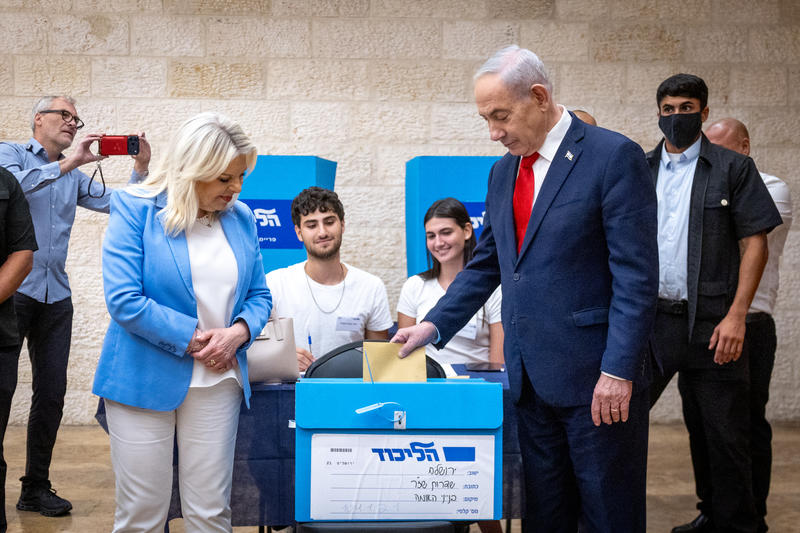
In practical terms another key issue will be voter turnout. In November 2022, voter turnout was 70.6%, one of the highest rates among established democracies, but numbers varied between the Arab community (53.2%) and the predominantly secular and liberal Tel Aviv (59.6%) on the one hand, and voting in ultra-Orthodox neighbourhoods on (over 80%) on the other.
Getting out the vote will be key for all sides, and an overall increase will have a proportional effect across the whole system. A second crucial issue will be the fate of small parties polling close to the electoral threshold of 3.25%. This had dramatic repercussions when both Meretz and Balad failed to cross the threshold last time, resulting in wasted votes. All parties will be cognisant of that failure, not only small parties fighting for their survival but the knock-on effect it will have on the blocs.