LATEST

Israeli politics & society

Key background
  • The State of Israel was founded in 1948 with its foundational document being its Declaration of Independence. This declaration confirmed Israel’s nature as a Jewish and democratic state where all citizens were viewed as equals before the law, and freedom of conscience, worship, education, and culture were to be guaranteed.
  • Israel’s constitution is uncodified, but practically oriented towards a number of “Basic Laws” concerning state institutions and rights. They can only be overturned by a supermajority vote in the Knesset.
  • Similarly to the UK, Israeli government has three branches: the legislature (Knesset), judiciary, and executive (cabinet lead by the Prime Minister). The President is elected by members of the Knesset for a single seven-year term and acts as its head of state, but this role is almost entirely ceremonial.
  • Israel uses pure proportional representation to elect its MKs. As this functionally precludes any one party securing an outright majority, Israel is governed by coalitions formed by the leader of the party that generally wins the most seats.
  • The current President is Isaac Herzog, and the Prime Minister is Benjamin Netanyahu of the Likud. Other coalition partners include United Torah Judaism, Shas, the Religious Zionist Party, Otzma Yehudit, New Hope, and Noam.
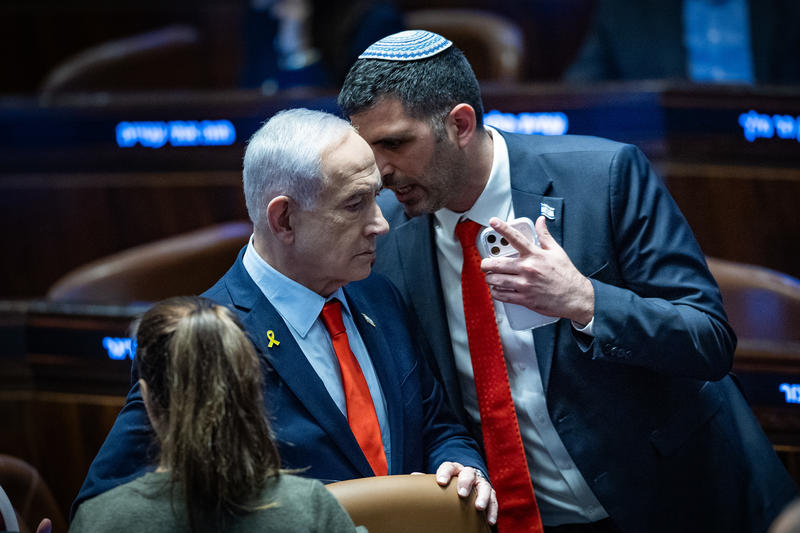
Israeli Prime Minister Benjamin Netanyahu speaks with Minister of Communications Shlomo Karhi during a 40 signatures debate, at the plenum hall of the Knesset, the Israeli parliament in Jerusalem, on January 5, 2026.
Israeli Prime Minister Benjamin Netanyahu speaks with Minister of Communications Shlomo Karhi during a 40 signatures debate, at the plenum hall of the Knesset, the Israeli parliament in Jerusalem, on January 5, 2026. Photo by Yonatan Sindel/Flash90

Updated July 6, 2026

Israel’s Cabinet sparks row over media regulator

What’s happened: Domestic politics in Israel was roiled by a unanimous decision by the Israeli cabinet yesterday not to comply with a Supreme Court ruling regarding a regulatory agency of commercial broadcast media.

  • The controversy has come to a head over a deal to purchase Channel 13, a commercial broadcaster whose news broadcasts are seen by many as more liberal-leaning and hostile to the Government.  In March 2026, a consortium of hi-tech billionaires, all more or less publicly identified with the opposition, swooped in with a successful bid to purchase the station. The government would prefer to block this buy-out.
  • In Israel, buy-outs need to be approved by a regulatory body known as the Second Authority for Television and Radio, yet this body currently does not have a quorum of members, due to several resignations – allegedly under political pressure – in the last two months.
  • The Government’s position is that without a quorum of 10 members, the Second Authority cannot function and thus cannot make binding decisions.
  • The Supreme Court had to decide whether to allow the continued functioning of the Second Authority or yield to the Government’s demand to hobble it or pack it with loyalist appointees who might not meet normal standards. Ultimately, it decided that the least bad option was to allow the Second Authority to keep functioning without the quorum. The Supreme Court identified the suspicion that resignations from the Second Authority were deliberately orchestrated by the government in order to stymie the Authority’s ability to rule on the Channel 13 buy-out by investors who are identified with the opposition.
  • It is this ruling which the Cabinet yesterday decided it would not abide by.
  • Reactions to the Cabinet decision have been furious, and despite significant developments on both the Gaza and Lebanon fronts (as well as a series of US visits being planned by senior officials for the coming week, a possible indication of a turning point on the Iran issue), the story has dominated headlines in Israel today.
    • President Herzog responded to the Cabinet decision with a statement that “noncompliance with the Supreme Court’s rulings is a red line that must never be crossed under any circumstances.”
    • Communications Minister Shlomo Karhi, the politician most identified with the Government’s push to dismantle existing commercial media regulation, attacked both the President and the Supreme Court ruling, saying, “Where was the president two weeks ago when the High Court of Justice handed down a decision in explicit contradiction to the law?”
    • Cabinet Secretary Yossi Fuchs denied that the Government was disobeying a Court ruling at all. “Contrary to reports, there isn’t a single word in the statement that calls for noncompliance with High Court of Justice rulings but, rather, fierce criticism of a ruling that is contrary to the explicit wording of the law,” he said in a statement, refereeing to the legally mandated quorum which the Court ruled was not necessary for now.
    • Opposition leader Yair Lapid was scathing in his reaction to the Cabinet decision. “This is the collapse of the foundations of our democracy,” he said. “Today, the government became a criminal. If the government sees that it is about to lose the election, either it will cheat in the election or it will announce that it is postponing the election because of a tense security situation or for some other reason, and there will no possibility of appealing this in court, because as far as it is concerned, there is no court.”
  • Prime Minister Netanyahu recused himself from the vote in Cabinet on the matter, as his current trial would have put him in a conflict of interest. Nevertheless, it was universally understood that the measure was being passed with his support and encouragement.

Context: The agency in question is Israel’s Second Authority for Television and Radio, which was formed in 1990 to regulate commercial broadcasting. A separate body, the Israel Broadcasting Authority, regulates public broadcasting.

  • The Second Authority is supposed to comprise 15 members, and by law has a quorum of 10 for binding decisions. Until recently, it had 14 members, but seven have resigned in one way or another, reportedly under pressure from Communications Minister Shlomo Karhi, who has been advancing a controversial media reform bill that would give the Government much more direct control of commercial media management.
  • The issue of whether the Authority can convene without a quorum of members – which the Supreme Court said is possible and which the government opposes – might seem arcane and technical. But is has sparked furious passions for two reasons.
    • First, the outcome over the fight on this regulatory body will have far-reaching implications for the media environment in Israel. The struggle to influence private and public media (or the struggle to protect them from undue corporate or government influence) is one of the main threads connecting both the Netanyahu corruption trials and the attempted judicial reform launched in early 2023.
    • Second, the precedent set by a Government announcing that it is practically ignoring a Supreme Court ruling reignites all the passions of the 2023 imbroglio over the judicial overhaul. For the Government’s critics, it serves as an indication of potential future attempts to skirt legal rulings and normative governance practices as the nation heads towards general elections which, if current polling is accurate, the governing coalition is slated to lose.
  • Channel 13 has the lowest ratings of the major news broadcasters, which are dominated by Channel 12 (also known as N12), whose reputation is more centrist, but also quite hostile to the Government and especially the Prime Minister.
  • Nevertheless, Channel 13 has been the target of efforts by Government loyalists to push its news coverage in a more friendly direction. In 2024, the board installed Yulia Shamalov-Berkovich, a former MK from the centrist Kadima party whose politics had moved distinctly to the right as CEO of Channel 13 News, despite her lack of relevant of experience in media or management. This led to an open revolt among the newsroom’s journalists, who refused to work with her, and she was ultimately forced to resign.
  • In the months following that affair, there were several attempts to engineer buyouts of Channel 13 by investors, some of whom were identified publicly with the right-wing coalition. All of these fell through due to regulatory or financial problems.
  • In March of this year, when the consortium of tech billionaires identified with the opposition succeeded in presenting a buyout of Channel 13, and it was at this point that the Communications Minister sought to change the composition of the Second Authority. The Court blocked his attempt to scramble the Second Authority and recreate it with his appointments as a conflict of interest and an attempt to block the successful buyout bid.

Looking ahead: The range of dates on which the next general election can be held continues to narrow. The latest legal date is October 27 of this year. By law, elections are held on Tuesday, and must be held at least ninety but no more than 150 days after parliament is formally dissolved.

  • For weeks, the coalition has been advancing a motion to dissolve parliament and hold early elections. Normally, this is a quick process, but this time while it was ongoing, the parties whose dispute was the reason for calling early elections — Likud and the religious nationalist parties on the one hand and the ultra-Orthodox parties on the other — found common cause on a bevy of controversial legislation.
  • At this point, the only Tuesdays that meet the legal time requirements are all in October, and the first two (October 6 and October 13) are impractical because of their proximity to holidays. This means that “early” elections will be early by, at most, one week (October 20) and may very well take place on their original date (October 27).
July 2, 2026

Israel marks 1000 days since October 7

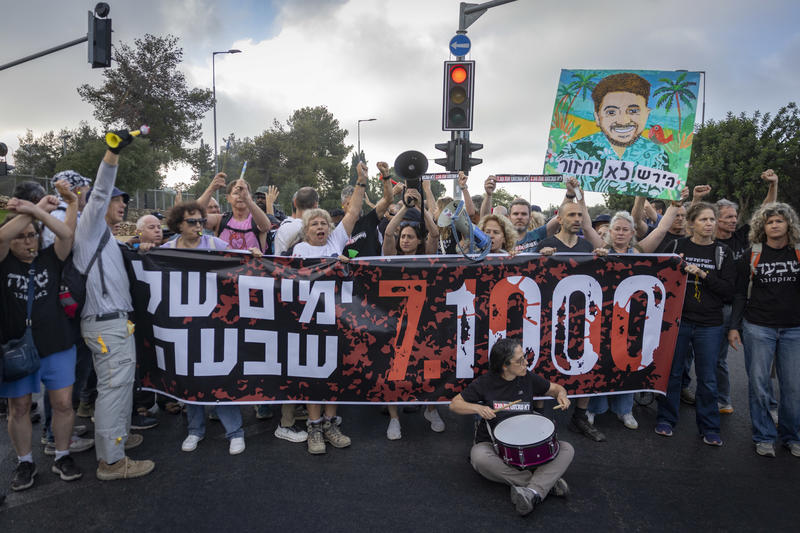
Protesters demonstrate outside the Knesset, the Israeli parliament, in Jerusalem, during events marking the 1,000th day since the October 7 massacre, July 2, 2026.
Protesters demonstrate outside the Knesset, the Israeli parliament, in Jerusalem, during events marking the 1,000th day since the October 7 massacre, July 2, 2026. Photo by Chaim Goldberg/Flash90

What’s happened: Israel marked 1,000 days today since the October 7 massacre. Commemorations began this morning at 6:29, the hour of the initial salvo which opened the attack on that Saturday morning. A ceremony was held at 8:00 this morning at the site of the Nova Festival, where 378 Israelis were murdered and 44 abducted. Ceremonies and protests of various kinds are scheduled today in at least 50 different Israeli cities, towns, and villages.

  • 1,000 days after the onset of war, and despite various ceasefires in place on all fronts, low intensity combat continued in Gaza. Just in the last few days, the IDF carried out a few successful targeted operation against wanted terrorists in the Gaza Strip.
  • On Tuesday, a precision operation successfully eliminated Adel Jihad Mohammad Asfour, a platoon commander in the military wing of Hamas, who was rebuilding and training new Hamas fighters in preparation for a future round of combat with Israel. The day before that, the IDF struck Mohammad Fathi Abd al-Hay Abu Fakher, a commander in Hamas’ Rafah brigade who for twenty years has served as a central figure in Hamas’ network of weapons smugglers.
  • Earlier this week, the IDF eliminated Talal Jaber Mohammad Abd al-Aal, an Islamic Jihad terrorist who took part in the October 7 attack and later in holding Israeli hostages kidnapped that day. One of his hostages, Rom Braslavski, reacted with relief at hearing that his tormentor was dead. “This is Talal Abd al-Aal, or as I know him, Abu Youssef,” he wrote on social media. “This is the man who weighed 100 kilograms and jumped on my neck while I was malnourished. This is his face. This is his hand. This is him.”
  • In other interviews, he described how al-Aal forced open his mouth at a time when he could barely move his emaciated body from malnutrition and spat into it. Braslavski, who has also spoken at length about the physical and sexual torture he endured in captivity, spoke yesterday with journalists about his satisfaction with the IDF operation to eliminate al-Aal and his continued trauma. “My October 7 continued every day, again and again,” he said. “As far as people are concerned, we have moved on. They say, ‘Look how nicely he is dressed, how nicely his hair is arranged,’ but no one knows what is happening inside. No one is with us when we wake up screaming at night. No one is with us when we get flashbacks in the middle of life.” Braslavski is expected to speak tonight at the main gathering in Hostages Square in Tel Aviv to commemorate 1,000 days since the massacre.
  • There were no public updates on US-Iran talks in held in Doha yesterday, but according to media reports they focused on mechanisms for reopening the Straits of Hormuz — an issue of acute concern not just for the two belligerent parties, the US and Iran, but especially for the mediating country, Qatar — and the unfreezing of $6 billion in Iranian assets held in Qatar. Iranian state media reported that the Doha talks had concluded, but did not report what the outcome was.

Context: On the one thousandth day of the war which Hamas and its allies launched against Israel on October 7, all the various parts of the axis arrayed against Israel are severely weakened, but not all are completely defeated.

  • Hamas has been reduced to a militia policing one third of Gaza, without any of its strategic capabilities to invade Israel or fire rockets on its cities.
  • Hezbollah is a shadow of its former self, struggling to sabotage a US-backed agreement that will lead to its dismantling by Lebanese authorities. Despite its loses, Hezbollah still maintains some of its military capabilities.
  • Iran has sustained two massive attacks by the US and Israel that have left its stock of uranium buried underground, its missile production facilities offline, and its economy in shambles.
  • Israel has recovered its hostages and made major strategic gains on all fronts, but defeated none of its enemies. The State itself and the Jewish people more widely have come under a sustained moral attack from activists, organisations, and governments the from across the world. Internally, despite a moment of unity, it remains divided as ever as elections approach and recriminations about the failures leading up to the attack mount.
  • State Commissions of Inquiry have been formed after previous security failures in Israel, but the current governing coalition has refused to allow such an inquiry to be held. A State Commission is normally chaired by a Supreme Court judge, and many in the Netanyahu bloc  believe that this would unfairly bias the work of a committee formed under the State Commission of Inquiry law.
  • They have instead proposed an ad hoc Commission that would have equal representation of coalition and opposition figures. This proposal is rejected by opposition figures, senior military and security officials past and present, and, according to opinion polls, the overwhelming majority of Israeli citizens.
  • A decidedly nonpolitical commemoration was held by senior officers of the IDF yesterday evening at which Chief of  Staff  Zamir told assembled officers that the IDF was at a “strategic crossroads in the war” which began on October 7. “Today we are holding a multi-arena operational, intelligence, and strategic assessment, marking 1,000 days of combat,” he said. “This war has changed methods of warfare, operational concepts, and the way we operate. We remember, we learn, and we prepare for the continuation of the combat and the many challenges that lie ahead.” At the same event, he described the October 7 attack as “an attack on the very existence of the Jewish people.”
  • In pre-election opinion polls, former Chief of  Staff  Eisenkot’s Yashar party continues to strengthen, mostly at the expense of the combined list led by former Prime Ministers Naftali Bennett and Yair Lapid, known as Together.

Looking ahead: There is, as yet, no final date for the upcoming election, though speculation is focused on October 20, which would be only seven days earlier than the originally scheduled date of October 27 (which has still not been ruled out).

  • In Tel Aviv this evening there will be a protest outside the Defence Ministry and several events at the square in front of the Tel Aviv Museum of Art which has become known as Hostage Square, following the nonstop vigils there for two years after the massacre on behalf of the hostages held in Gaza until the last ones were released in October 2025.
  • Many of the unofficial ceremonies being held, including a large rally planned for tonight in Tel Aviv, are organised as protests demanding a State Commission of Inquiry into the failures that led to the massacre.

June 25, 2026

Ultra-Orthodox protests exacerbate divisions within coalition

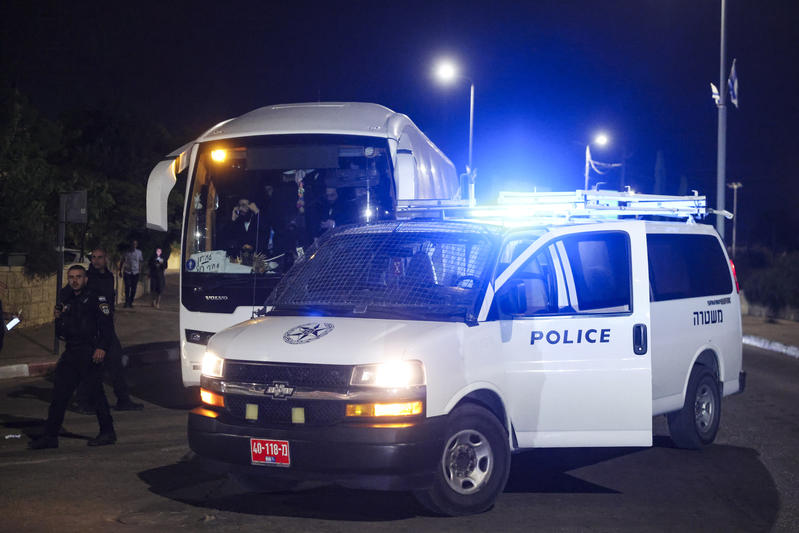
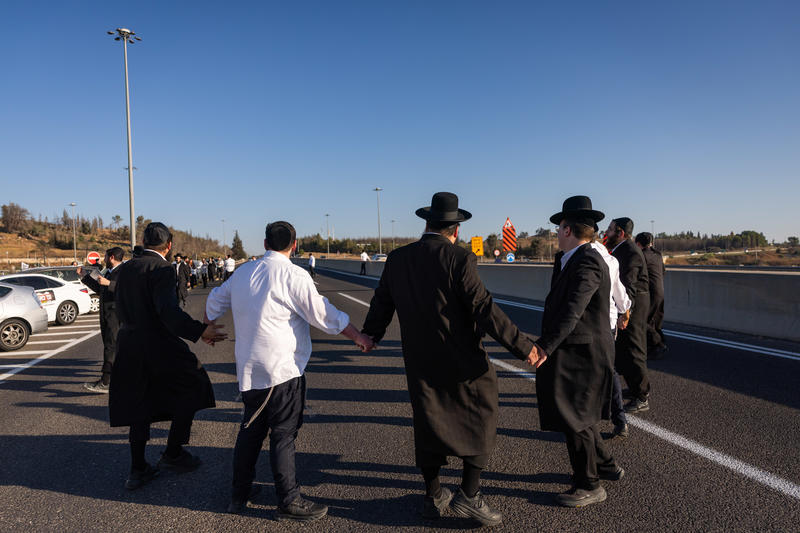
Ultra-Orthodox Jewish men block Highway 1 toward Tel Aviv during a protest against the imprisonment of yeshiva students who failed to comply with military recruitment orders, near Jerusalem, June 24, 2026.
Ultra-Orthodox Jewish men block Highway 1 toward Tel Aviv during a protest against the imprisonment of yeshiva students who failed to comply with military recruitment orders, near Jerusalem, June 24, 2026. Photo by Yonatan Sindel/Flash90

What’s happened: As negotiations in Switzerland, between the US and Iran, and in Washington, between Israel and Lebanon, drag on Israel’s attention yesterday turned to domestic politics and the brewing storm regarding Haredi conscription and the last ditch efforts of the governing coalition to push through controversial legislation before the anticipated dissolution of parliament.

  • Yesterday, a protest was organised by one of the ultra-Orthodox factions, Agudat Yisrael, with the intention of disrupting traffic nationwide through a slow-moving convoy heading towards a military prison where several ultra-Orthodox men who refused to comply with call-up orders are being detained.
  • The protest itself did not meet the expectations of its organisers, with far too few people showing up to have the desired effect. Traffic was disrupted for a few hours on major highways, but ultimately no rally was held outside the military prison.
  • Prime Minister Netanyahu completed his testimony to a Tel Aviv court yesterday in the corruption trial which has convulsed Israeli politics for nearly a decade. His trial has been underway since early 2020, and the criminal investigations which led to the trial began in 2016. The Prime Minister was first called to the witness stand in December 2024, and yesterday was his 98th hearing in the court. Over that time, multiple hearings were cancelled or postponed due to health crises, national emergencies, and wars in Gaza, Lebanon, and Iran.
  • With his testimony finished, he will not reappear in court until the day a verdict is read out. The claim, used alternately by the Prime Minister’s supporters and opponents for different ends, that the trial was interfering with ability to perform his official duties, is now mostly moot.
  • Also yesterday, an Israeli civilian working as a contractor for the Defence Ministry in Gaza was killed in a building collapse in the Gaza Strip. Raad Abu al-Qi’an, from the Bedouin town Hura, was carrying out demolition works with heavy machinery when the structure he was operating in collapsed. An IDF reservist was also killed in southern Lebanon in a truck accident. Master Sgt. (res.) Basil Sweid, 32, from the Druze town Peki’in, was driving a refuelling truck in the Yellow Line area of southern Lebanon when his truck overturned, killing him and moderately wounding a combat soldier.

Context: Protests from the ultra-orthodox public and the draft have been escalating in recent months because, in departure from earlier practice, ultra-Orthodox men who do not show up for draft call ups are occasionally being detained.

  • In years past, this did not occur due to a complex system of deferments which the Israeli judiciary has determined were illegal. The only way to keep the deferment system going is for parliament to pass legislation enshrining it into law. But such legislation is extremely unpopular, and has become even more so since the multi-front war which ensued following the October 7 massacre nearly three years ago.
  • Agudat Yisrael is the largely Hasidic party that together with Degel HaTorah, the non-Hasidic Ashkenazi faction, make up the joint list known as United Torah Judaism (UTJ) which represents the Ashkenazi ultra-orthodox public in general.  UTJ secured seven seats in the most recent Knesset election, the fourth consecutive election in which it won that exact number of mandates. It has won between six and eight seats in the last seven parliamentary elections, an indication of its steady, largely demographically determined, voting public.
  • The right-wing and religious coalition in power since late 2022 would ordinarily be expected to push such legislation through as the political cost of keeping its various factions in place, but the war and the steep losses incurred by both the secular and national religious public have made parts of the right-wing coalition squeamish about some of the more extreme measures that would be needed to make the blanket deferment legal.
  • At the same time, the absence of any legislation leaves the IDF with little choice but to actually detain draft refusers, even if in relatively small numbers, further inflaming passions in the Haredi community.
  • While comprehensive legislation on the issue remains off the table for now, Likud lawmakers and their Haredi allies are trying to push through deeply unpopular partial measures that each side desperately wants to see come into effect before the Knesset is formally dissolved and new elections called.
  • The ultra-orthodox parties would like to see the passage of far-reaching legislation entrenching legal privileges that are broadly rejected by the general public. The proposed Basic Law: Torah Study, for example, would define Torah study as “a foundational value of Jewish heritage” and would recognise Torah study as a “significant national contribution,” potentially opening the path for non-working non-serving ultra-Orthodox men to enjoy a host of public benefits normally reserved for IDF veterans. As a Basic Law, it would essentially be a quasi-constitutional statue that would override future legislation by future majorities in parliament.
  • Ultra-orthodox parties have also secured Netanyahu’s backing for a bill that would undo a reform in kashrut certification that was well liked by the public, including the religiously observant public, but which shut off a lucrative patronage valve for ultra-Orthodox parties.
  • They have also apparently secured the Prime Minister’s backing for a bill that would grant immunity from arrest for draft dodgers, which would not change the legal status of draft dodgers in the absence of comprehensive legislation on conscription, but would eliminate the biggest disincentive to refusal to serve.
  • In exchange for this, the Haredi parties have reportedly given their assent to support a raft of parliamentary measures which Netanyahu and his party are keen to pass despite enormous public opposition. These include controversial judicial reforms, such as splitting the role of Attorney General, a contentious media reform bill, and a measure to place the internal investigations unit of the Israel Police under the direct control of the Justice Minister.
  • The attempt to split the role of the Attorney General, if passed, would constitute the first real victory of the ambitious judicial reform whose rollout in the early days of the current Government in January 2023 sent Israel into months of demonstrations and counter-demonstrations.
  • The proposed legislation would create a separate Prosecutor General, who would be appointed to six-year terms by a public committee and be responsible for prosecutions and investigations. The remaining responsibilities would under the remit of a newly constituted position retaining the name Attorney General, but this Attorney General would be a political appointee of the Government whose term would be tied to the Government in power. Supporters of the reform claim it would be in line with reigning international standards, while opponents fear that would politicise the judicial system and eliminate a crucial check on executive power.
  • Netanyahu is accused of fraud and breach of trust for allegedly accepting expensive gifts in exchange for favours as well as for concocting a scheme to limit circulation of a free daily newspaper in exchange for more favourable coverage from an established daily tabloid (the plot, if real, was in any event never carried out). He is also accused of fraud, breach of trust, and bribery (a much more serious offence in the Israeli penal code) in a case where he allegedly advanced legislation that would have financially benefited a major media tycoon in exchange for positive media coverage.

Looking ahead: In the meantime, there is still no agreed upon date for the upcoming election. By law elections are scheduled for October 27 of this year. As the Knesset tarries in considering motions to dissolve itself and call early elections, the range of dates keeps shrinking. “Early” elections in Israel have to be held at least 90 days after parliament is formally dissolved, a no more than five months after that. Elections can only be held on a Tuesday and can’t be on a religious holiday. If the elections do not end up being held on their original date, it is likely they will only have been moved up by about a week to October 20.

  • In public opinion polling, the governing coalition and opposition blocs remain almost unchanged for more than two years. The two most recent polls to be published in recent days both show the coalition projected to win 53 seats and the opposition projected to win 67. In the opposition camp, six seats are projected for the Arab list Hadash-Ta’al who are not expected to join any future coalition, and four are projected for Ra’am, which was a part of the so-called “Change Government” in power briefly in 2021-22 under Prime Ministers Naftali Bennet and Yair Lapid.
  • The bigger drama inside the opposition bloc has been the steady erosion of support for the combined list of the two former Prime Ministers Bennett and Lapid and the concomitant rise of Gadi Eisenkot’s Yashar party. The former has fallen to 15 mandates in the most recent polls while the latter has risen to 20. Prime Minister Netanyahu’s Likud is steady on 23 mandates.
  • Netanyahu’s trial will continue with several dozen more witnesses due to testify, but Netanyahu himself no longer needs to appear in court in person. The deadline to complete the trial appears to be March 2028, when the head of the judging panel, Justice Rivka Friedman-Feldman, will reach the age of 70 and is due to retire.

June 9, 2026

Schools in Israel reopen

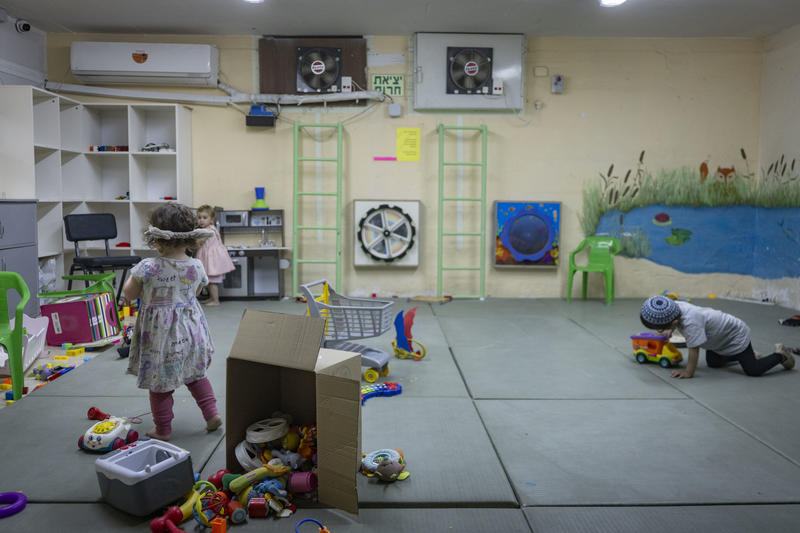
Children play in a public bomb shelter in the Nahlaot neighborhood of central Jerusalem, June 8, 2026.
Children play in a public bomb shelter in the Nahlaot neighborhood of central Jerusalem, June 8, 2026. Photo by Chaim Goldberg/Flash90

What’s happened: Home Front Command restrictions have been lifted nationwide, including schools that have reopened this morning.

  • The only exception is in communities along the Lebanese border where a “partial activity tier” was declared in towns on and near the confrontation line. People in these areas can work and hold classes only in structures or places from which they can access suitable protected areas.
  • Confrontation Line Communities Forum Chairman Moshe Davidovich shared the frustration felt by the area’s residents following the policy update. Davidovich told Kan News, “Again, we’re back to colours: Red, orange, green. Our children aren’t traffic lights. While the whole country gets back to normal, ostensibly green, we’re going back to the ongoing nightmare of war in the confrontation line communities, and we’re alone. We’re in dark conditions, darker than dark.”*
  • He was referring to the new features on the Home Front Command alert app which has new colours and sounds to distinguish warning stages: yellow for preparedness, red for entering protected spaces and green for the all-clear. The Home Front Command used the ceasefire period to introduce changes to its mobile app, making it easier to distinguish between different types of alerts.
  • Overnight two drones infiltrated into Israeli territory, one from the north and one from the south. A drone that was fired from Yemen was intercepted near Eilat after midnight. At the same time, sirens were sounded twice in towns in the western Galilee, where a drone was also intercepted.
  • At the conclusion of yesterday’s security cabinet meeting, it was decided to keep striking the Dahiya Quarter in Beirut in retaliation for every projectile launched at Israel. Prime Minister Netanyahu warned Iran against renewing its attacks on Israel. Netanyahu said: “Currently, they’re holding their fire on this front because after we hit the terrorist regime in Tehran, it ceased attacking us. If the terrorist regime makes the mistake of attacking us again, we will retaliate forcefully because Israel has the absolute right to self-defence, which we exercise as necessary.”

Context: It appears the fighting between Israel and Iran is over for now. The Iranian missile attacks and subsequent Israel response were the first direct hostilities between the two countries since April’s shaky ceasefire took effect.

  • This most recent escalation began on Sunday evening when Iran fired salvoes of missiles at northern Israel, ostensibly in response to Israeli air strikes on Hezbollah targets in Beirut. Israel retaliated with its own air strikes on aerial defence systems as well as a petrochemical facility in southwest Iran which it said was being used to manufacture raw materials used for ballistic missiles.
  • In total, Iran is estimated to have fired approximately 21 projectiles at Israel, all of which were successfully intercepted without causing any damage.
  • The Houthis in Yemen also attempted to launch two projectiles, one of which dropped short of Israel while the other was successfully intercepted. The Houthis have also renewed their threat to prevent Israeli maritime navigation in the Red Sea.
  • Responding to the escalation, President Trump stated on the Truth social media site that “Israel and Iran must stop shooting”, and is reported to have threatened that Israel may find itself alone and unsupported in the event that it further escalated conflict with Iran.
  • According to reports Trump also told Netanyahu that he would have to “use sense”, but that he was also “very close to signing a very powerful deal” details of which remain unspecified.
  • Both Israel and Iran have indicated a willingness to resume hostilities, but their shared short-term intent is for the ceasefire to hold.

Looking ahead: The IDF is still manoeuvring in southern Lebanon and expected to continue to target Hezbollah fighters and military infrastructure.

  • In parallel, talks in Washington between the Israeli and Lebanese government  representatives are also expected to continue.
  • In an interview with CNN, Lebanon’s President Aoun went as far as to accuse Iran of using his country as a “bargaining chip” in negotiations with the US, making further comments that were highly critical of Hezbollah and the IRGC.
  • President Aoun asserted that Israel should withdraw its troops from Lebanon, and that only then could Hezbollah be “dealt with” by Beirut. He also appealed for Israel to engage in peace talks, and confirmed that the current round of US-brokered negotiations were intended to reach a non-aggression pact rather than full peace deal.

June 4, 2026

Ultra-Orthodox draft protests escalate with attack on judge’s home

Ultra orthodox jewish men protest against the jailing of yeshiva students who failed to comply with an army recruitment order, at the home of Supreme Court Deputy President Noam Sohlberg in the settlement of Alon Shvut, June 3, 2026.
Ultra orthodox jewish men protest against the jailing of yeshiva students who failed to comply with an army recruitment order, at the home of Supreme Court Deputy President Noam Sohlberg in the settlement of Alon Shvut, June 3, 2026. Photo by Chaim Goldberg/Flash90

What’s happened: Ultra-orthodox rioters descended on the home of Supreme Court Deputy Chief Justice Noam Sohlberg in the West Bank settlement of Alon Shvut and smashed windows and caused other damage to his car, garden, and house.

  • The police arrested 65 suspected rioters fleeing the scene, of whom 62 remain in custody. Some of the rioters came equipped with miniature drones, according to police.
  • Sohlberg is normally seen as one of the more conservative jurists on the Court, but he joined other justices in a unanimous decision in 2024 which invalidated the exemptions from military service for ultra-Orthodox men, leaving the Knesset to advance legislation on the issue.
  • The attempt to legislate some kind of compromise formulation that would pass the Court’s muster failed in the current parliamentary session, leading to the coalition breakup and the current effort to dissolve parliament and hold early elections.
  • The incident was vociferously condemned by politicians in the opposition camp. Naftali Bennett, widely seen as the most likely alternative to Netanyahu in the next election, described the rioters and their backers as a “small extremist and violent group that receives protection from the government and permits itself to go further and further.” Gadi Eisenkot, whose Yashar party has been rising in the polls in recent weeks and also sees himself a possible replacement for Netanyahu, said “the extremist shirkers are harvesting the corrupt government’s fruits of incitement.”
  • The Prime Minister also condemned the rioters, who said that he “expects law enforcement officials to deal aggressively with the rioters.” Among other coalition figures, the condemnations were more muted, with one ultra-Orthodox MK saying “there is no place for violence in our camp,” while understanding the “pain” felt by some of the ultra-Orthodox public at calls for universal draft enforcement. Other leaders from ultra-Orthodox parties were yet to make statements on the incident.
  • President Herzog called the riot the home of a Supreme Court judge a “dangerous crossing of a red line.” He added: “I call on everyone: Stop before there is a disaster.”
  • In recent years, the phenomenon of protest outside the homes of public figures has become increasingly common in Israel. What began with protests outside official residences, such as those of the President or Prime Minister, turned into protests outside private residences of leading politicians and eventually mayors and senior civil servants.
  • In the last decade, protesters regularly gathered in front of the home of then-Attorney General Avichai Mandelblit demanding he indict Prime Minister Netanyahu (he eventually did) and even in front the home of a senior figure in the Ministry of Health who was associated with organising the early lockdowns and vaccination efforts. Yesterday’s riot is the first time such a protest descended into violence and property damage.
  • The riot in Alon Shvut comes on the backdrop of days of civil disturbances by parts of the ultra-Orthodox public opposed to ending the draft exemptions. Earlier this week, ultra-Orthodox demonstrators blocked major highways and even the rail line that connects Tel Aviv to Jerusalem and Ben Gurion airport, causing significant disruptions to the entire transportation system.

June 4, 2026

Controversial State Comptroller vote sparks legal challenge

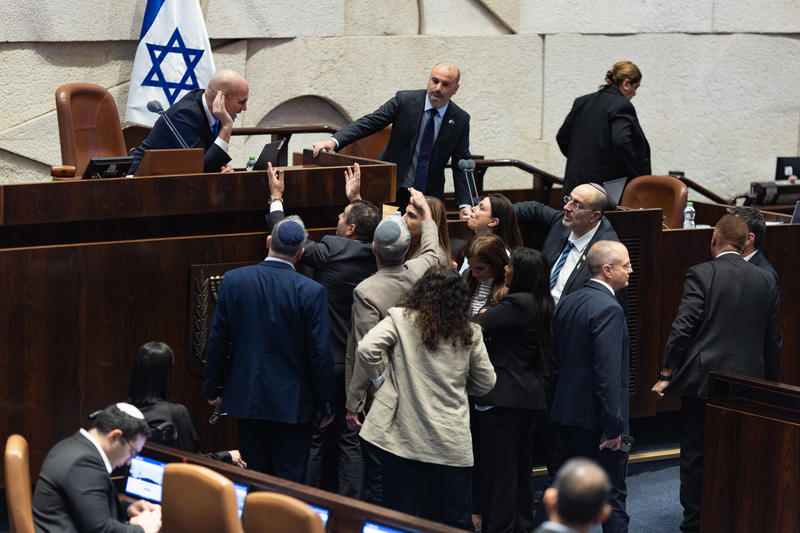
Members of the Knesset react during the State Comptroller elections at the plenum of the Knesset, in Jerusalem, June 3, 2026.
Members of the Knesset react during the State Comptroller elections at the plenum of the Knesset, in Jerusalem, June 3, 2026. Photo by Oren Ben Hakoon/Flash90

What’s happened: On Wednesday the Knesset voted to elect Michael Rabello as the next State Comptroller in a controversial vote likely to be challenged in the Supreme Court.

  • The position of State Comptroller, sometimes also translated into English as State Ombudsman, is formally independent of all party and political affiliation. The election of Michael Rabello, an attorney who has represented Netanyahu and his family over years, is seen by many of the Government’s critics and even some of its supporters as a significant breach with decades of existing practice.
  • The election of the Comptroller, like the election of State President, is formally done by a secret ballot of members of Knesset. If no candidate secures a 61 vote majority in the first ballot, the vote goes to a runoff where only a simple majority is needed. In yesterday’s first-round vote, Rabello had 57 votes and retired Supreme Court Justice Yosef Elron had 60 votes.
  • According to the rules, this meant a second round of voting. It was at this point that coalition MK’s were seen photographing themselves on their personal telephones with their ballot papers in hand, as if to document whom they were voting for.
  • It was speculated that this was done under pressure from party leaders, and the vote was immediately suspended, with the Knesset’s legal counsel emphasising that photographing ballot papers was illegal as it subverted the purpose of the secret ballot.
  • Nonetheless, when the vote was renewed, coalition MK’s were still seen photographing their own votes, and the final result was 61 for Rabello and only 57 for Elron.
  • Israeli media outlets, to say nothing of opposition politicians, were scathing in their critique of the process. Both the Yesh Atid party and the independent NGO, The Movement for Quality Government, have already filed briefs with the Supreme Court asking it to invalidate yesterday’s vote.
  • The chairman of Yesh Atid, former Prime Minister Yair Lapid called the election “tainted.” Naftali Bennett, also a former Prime Minister and leader of the combined list ‘Together’, created by merging his new party with Yesh Atid, described the process as “not a free election, but rather an extortion.”

May 20, 2026

Israel edges closer to election

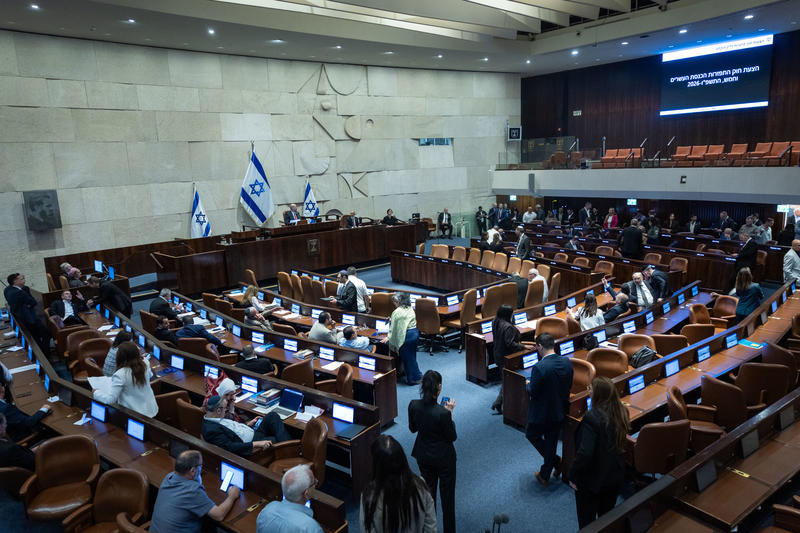
A plenum session at the assembly hall of the Knesset, the Israeli parliament in Jerusalem, May 20, 2026.
A plenum session at the assembly hall of the Knesset, the Israeli parliament in Jerusalem, May 20, 2026. Photo by Yonatan Sindel/Flash90

Election manoeuvring: Israel’s Parliament voted today in a preliminary reading in favour of a bill to dissolve the 25th Knesset. Motion was supported by 110 MKs from both government and opposition opening formally the path to early general election.

  • ⁠The bill will now return to the House Committee, where the government can determine the pace, and then returns to the plenum for a vote on its first reading.
  • ⁠It will then be returned to the committee, and only then will it be introduced to the plenum for a vote on its second and third reading, at which point an election date will be set.
  • ⁠To appease his ultra-Orthodox allies, Prime Minister Netanyahu has revived legislation intended to resolve the impasse over ultra-Orthodox conscription. This is also set to be debated today.
  • ⁠Israel will therefore see three crucial debates and votes today, which will help set the stage for the upcoming Knesset election. The election is due to be held this autumn. Originally scheduled for 27 October, it is now likely to be brought forward to avoid a clash with the anniversary of the October 7 massacre.

May 14, 2026

Coalition looks to set date for Knesset election

MK Yitzchak Goldknopf attends Education, Culture and Sports Committee meeting at the Knesset, the Israeli parliament, in Jerusalem, March 17, 2026.
MK Yitzchak Goldknopf attends Education, Culture and Sports Committee meeting at the Knesset, the Israeli parliament, in Jerusalem, March 17, 2026. Photo by Oren Ben Hakoon/Flash90

What’s happened: A bill to dissolve the Knesset has been introduced, with the backing of all the coalition parties. Formally, dissolving parliament leads to early elections.

  • The bill was presented by Coalition Chairman Ofir Katz from the Likud and is intended to allow the Likud to control the process of dissolving the Knesset and the election timetable.
  • The move came after Degel HaTorah announced it would push its own bill to dissolve the Knesset.
  • The Likud move follows the impasse over legislation regarding conscription for ultra-Orthodox men. A statement by the Ashkenazi ultra-orthodox Degel HaTorah faction, one part of the United Torah Judaism party, said that “We are sick and tired of futile actions designed to buy time and distract attention, only for it to be claimed in the end that there is no majority. We have notified the coalition management that we oppose the amendment to the Continuity Law and, per [rabbinic instructions], we are acting to dissolve the Knesset as soon as possible.”

Context: The Likud move is essentially designed to control the narrative over who decides when the Knesset is dissolved.

  • The earliest practical date for “snap” elections is September of this year. With elections scheduled for October 27 2026 anyway, the impact of “early” elections would be to shorten the current Knesset’s four-year term by approximately one month.
  • Negotiations over a conscription bill have been intensifying for months, and the promise by Prime Minister Netanyahu that a bill would be passed to the satisfaction of the ultra-Orthodox parties in the governing coalition was key to securing their support for a budget earlier this year. But earlier this week, the Prime Minister informed his coalition partners that there was no majority for passing such a bill, and those partners moved immediately to dissolve the Knesset.
  • The current dissolution proposal does not name a date, though two dates have already been bruited in local media.  By law in Israel, general elections are held on Tuesdays and are paid days off from work. The Shas party is said to prefer September 15, which would fall during the High Holy Days, and would be expected to motivate its voter base. Degel HaTorah is said to prefer September 1, which is normally the first day of school for all schools in Israel, except those that are ultra-Orthodox. A paid holiday would presumably delay that by a day.
  • While the ultra-Orthodox parties debate preferred dates for elections, the Prime Minister and his governing Likud party, together with the entire coalition, have a pressing interest in adjusting the date that has nothing to do with the legislative impasse over the conscription law.
  • An election in October will happen just as Israelis are marking three years since the traumatising October 7 attack, something the governing coalition as a whole does not believe will be to its advantage.
  • The current date, October 27, is particularly problematic because the standard Israeli way of writing the date (27.10) lends itself so easily to graphic manipulation in a way that recalls the standard way of writing October 7 (7.10), that no opposition poster, ad, banner, or video would conceivably resist incorporating into its visual campaign.
  • At the same time, with the war in Iran possibly about to restart and the Gaza ceasefire hitting a decisive point where either disarmament begins or the IDF embarks on a renewed offensive inside the approximately 40% of the Strip which it does not currently control, an election campaign in the summer would be nearly impossible.
  • Part of Netanyahu’s approach will be to promote his diplomatic achievements and it is in this context that his announcement of secretly visiting the UAE during the war with Iran should be seen. Until this week, nothing was publicly known about the meeting, which was apparently held on March 26 in Al Ain, an oasis city near the border with Oman.
  • The Prime Minister’s Office said the visit “brought a historic breakthrough in relations” between Israel and the UAE, while the UAE Foreign Ministry angrily denied that a meeting had even taken place.
  • The Foreign Ministry’s statement also denied “receiving any Israeli military delegation,” a denial that would seem to be referring to reports circulating over the past week that Israel sent an Iron Dome batter to the Emirates with Israeli soldiers to operate it during the war. Over the course of the fighting earlier this year, Iran targeted the UAE with more missiles than any other country, including Israel.
  • These leaks (followed by official statements) from the Prime Minister’s Office are another indication of what the Prime Minster might hope to accomplish in the final months of this term before facing the voters.
  • A diplomatic breakthrough or significant strategic achievement are the only hope the governing coalition, down in the polls by large margins since 2023, for an electoral comeback. Talk of imminent normalisation agreements with either Saudi Arabia or Lebanon has occasionally bubbled up from the Prime Minister’s milieu over recent months – and US led talks between Israel and Lebanon are set to resume today in Washington – but so far nothing of the sort has come to pass.

Looking ahead: In no poll does the current coalition of right-wing, religious-nationalist, and ultra-Orthodox parties come close to a majority in the Knesset.

  • Polls over the past two years consistently show the coalition, which commands 68 seats in the current parliament, returning with 48 to 52 seats (the Jewish opposition parties generally poll between 57-61 while the Arab parties are generally polling at approximately 10 seats). Even among right-wing voters, draft deferments for ultra-Orthodox men are extremely unpopular.
  • The coming weeks will  see last-ditch attempts to pass legislation that either will be unlikely to secure a majority in the next parliament or could affect the outcome of the coming election.
  • Among other matters on the agenda are the proposal to split the position currently held by the Attorney General into two or even three different positions. This proposed reform would formally result in a situation more in line with other parliamentary democracies, but it is regarded with suspicion by the Opposition who see it as an attempt to quash the Prime Minister’s corruption trial as well as a way of forcing through future legislation that might otherwise be moderated on constitutional grounds.
  • Also under consideration is a lowering of the electoral threshold, which both parliamentary blocs, stung by recent experiences of “vote wasting” may yet support.

May 11, 2026

High Court to review Mossad appointment

Incoming Mossad Director Maj. Gen. Roman Gofman arrives to a Defence and Foreign Affairs Committee meeting at the Knesset, the Israeli parliament in Jerusalem on February 5, 2026.
Incoming Mossad Director Maj. Gen. Roman Gofman arrives to a Defence and Foreign Affairs Committee meeting at the Knesset, the Israeli parliament in Jerusalem on February 5, 2026. Photo by Yonatan Sindel/Flash90

What’s happened: Ahead of tomorrow’s hearing at Israel’s High Court of Justice, Attorney General Gali Baharav-Miara has submitted her position arguing that the decision to appoint Roman Gofman as the next head of Mossad must be overturned.

  • Currently PM Netanyahu’s military secretary, Gofman’s appointment has already been approved by the Senior Appointments Advisory Committee. However, according to the Attorney General, there were “substantive flaws, both in the procedure employed by the committee, as well as in the factual foundation upon which the committee’s majority opinion was based, and in the conclusions that it formulated. This is sufficient to mandate the cancellation of the prime minister’s decision regarding the appointment.”
  • Baharav-Miara also revealed that the current director of the Mossad, David Barnea has written a classified letter to the court against the appointment. Israel media have reported excerpts of the letter in which Barnea wrote that Gofman, “has a significant problem with ethical integrity and establishing self-imposed boundaries.”
  • Barnea wrote that, “When a commander decides to circumvent military regulations, takes the law into his own hands, and chooses to do something he is not supposed to do, this has very far-reaching implications. Any command-level reprimand disqualifies a promotion, certainly a promotion to Mossad director. I view this case as someone abusing his power, even if it only lasted two weeks. After the initial decision, he should have reconsidered, even if the mistake hadn’t been discovered at that stage. Gofman should not be appointed director of the Mossad.”
  • Not for the first time, the attorney general’s rejection of this government’s appointment received severe criticism. Finance Minister Smotrich said that her, “position against Gofman’s appointment is one step too far. We are determined to pass the legislation to split the role of the attorney general during the summer session.”
  • Coalition Chairman MK Ofir Katz, sarcastically referred to the attorney general as, “Opposition Chairperson” claiming she is “conducting a hunt against excellent, heroic and worthy officers, only because this is the government that appoints them. She should be ignored and continue the appointment.”

Context: Maj. Gen. Roman Gofman currently serves as the military secretary to the prime minister. Whilst he is considered a courageous military commander he has no specific experience in intelligence operations.

  • The main scrutiny over his appointment relates to an incident in 2022 when Gofman was the commander of an IDF Division in the north. He allegedly authorised two intelligence officers to act as handlers for a 17-year-old influencer Ori Elmakayes. The two sent
  • Elmakayes classified information and asked him to post it online in an attempt to mount an “influence campaign”—even though they were not authorised to do so. Subsequently, Elmakayes was arrested by the Shin Bet for publishing secret information. He was held in solitary confinement for about two months and was then charged with espionage, and imprisoned for more than a year. In all that time without Gofman or anyone on his behalf stating that they were the ones who had instructed him to do so.
  • Gofman and his subordinates were never investigated as part of the affair and took no responsibility for it. They were questioned in the context of an internal IDF inquiry where they received a command level reprimand.
  • The Senior Appointments Advisory Committee refused to meet with Elmakayes and hear his version.
  • In his letter Barnea also wrote, “I cannot imagine that anyone beneath me would approve such an operation at all. In general, taking a 17-year-old, allowing him to sit for a year and a half—I don’t even know over what—while no one bothered to come and get him out of there. These are not our morals, not our values, it is beyond our red lines, and not within the realm of what is permissible or forbidden.”
  • According to Gofman, he played no role in handling Elmakayes.
  • If his candidacy is ultimately rejected, commentators have suggested that the current deputy director is ideally placed to take on the role. As is the Israeli convention, his name is not allowed to be published but merely referred to by his first initial “A.” He has been endorsed by Barnea, and is one of the most decorated high-ranking Mossad officials. Also for the benefit of the current government, he is also considered a right-wing ideologue.
  • For all the recent success’s attributed to the Mossad, including the beeper operation and numerous successes in Iran and elsewhere, it would seem logical to many that the successor come from within.
  • Maariv credits other quotes to Barnea saying, “The Mossad director is the only job in Israel in which the person holding the job is not subject to any regulation. He does as he pleases. He isn’t subordinate to anything. He is not subject to any regulation. He operates in the dark, in the twilight zone, carries out dramatic operations without regulation and without oversight, makes decisions and does not have above him an orderly mechanism of review, oversight or approval.”
  • “The Mossad director needs to reach that job when he has clear red lines, when he is capable of distinguishing between right and wrong, between what is allowed and what is forbidden, between the various aspects and consequences of Mossad operations. Gofman’s previous entanglements point to extreme unsuitability.”
  • Unlike James Bond, the Mossad doesn’t have a open ended ‘license to kill.’ Operations that could potentially kill human beings must be approved by the SHR – the Service Heads Committee, which includes the Mossad director, the director of military intelligence and the prime minister’s military secretary.

Looking ahead: The High Court will review the appointment tomorrow, and could invite Barnea the current Mossad director to present his objections.

  • The new head of Mossad is due to begin is role in early June.

May 6, 2026

Former head of Shin Bet joins Eisenkot’s party

Gadi Eisenkot, head of the Yashar party, holds a press conference with the party’s new member Yoram Cohen in Tel Aviv, May 5, 2026.
Gadi Eisenkot, head of the Yashar party, holds a press conference with the party’s new member Yoram Cohen in Tel Aviv, May 5, 2026. Photo by Flash90

New Names: Ahead of the Israeli general election, a slew of new names have announced their intention to run for political office.

  • The latest name – and most senior new recruit so far – is Yoram Cohen, the former head of the Shin Bet, who yesterday announced that he is joining Yashar led by former IDF Chief of Staff Gadi Eisenkot.  
  • A week ago Eisenkot announced that Shaul Meridor will be joining his party. Meridor was the former director of the Budget Department in the Finance Ministry. If elected, he would be Israel’s first third-generation politician. His father Dan, was the cabinet secretary in Begin’s government and went onto serve as a minister for both justice and finance with Likud under Netanyahu, before forming the Centre Party. He continued to serve in a series of senior positions including minister of intelligence and deputy prime minister. Shaul’s grandfather Eliyahu was a commander in the Irgun and a Knesset member for the Herut faction (precursor to the Likud).
  • Inbar Yehezkeli has also joined Eisenkot’s list. She is former senior official from the Welfare Ministry. She has also led several civil society organisations focusing on protecting women and was also a senior social policy adviser to then-finance minister Moshe Kahlon.
  • Even before the merger with Yair Lapid to create the Together Party, Naftali Bennett  recruited senior female officials. The first of whom, Keren Terner, held a senior role in the Transport Ministry and is a former director-general of the Finance Ministry.
  • Another one, recruited by Bennett is former director-general of the Communications Ministry Liran Avisar Ben Horin.
  • In an effort to appeal to younger voters and reservists, Bennett also included Yonatan Shalev on his list. Shalev is a 23-year-old military reservist and founder of the “Shoulder to Shoulder” movement, a grassroots initiative advocating military service for all, particularly the conscription of the ultra-Orthodox.
  • Avigdor Liberman’s party Yisrael Beiteinu has also recruited some new blood including Sharon Sharabi, the brother of hostage survivor Eli Sharabi and murdered hostage Yossi Sharabi.
  • Also joining Liberman is Israel Ben-Shitrit, an IDF reservist who served as a deputy company commander and was seriously wounded in battle in Gaza in early 2024. He is a 40-year-old father of five from the southern town of Yeruham.  

Context: It is quite unusual to have so many political announcements before the election date has even been set, although everyone understands the election must be held by the end of October.

  • All the attention around new recruits has so far been focused on the opposition parties that are jockeying and competing against the current government. They all intend to cooperate after the election with the shared aim of defeating Netanyahu and forming the next government.    
  • According to recent polling, the Bennett – Lapid merger has not seem any dramatic change in voting patterns. They were hoping the move would increase their share of the vote and cement the pair as the leaders of the anti-Netanyahu bloc, but their differences appear to have put off some supporters that either perceive Bennett as too right-wing or Lapid as too left.
  • There remains the possibility of further mergers with both Bennett and Lapid appealing to Eisenkot to join them too. Eisenkot’s support currently appears to be growing, but it is not impossible that based on internal polling he may eventually join them too. Alternatively, Liberman is also courting Eisenkot and is open to a potential merger.
  • Benny Gantz’s Blue and White party has disintegrated in the polls and several of his current members of Knesset are also looking to join one of the other parties. In the latest blow, his founding partner Chili Troper announced that he was leaving the ticket. He could eventually join either Bennett or Eisenkot.      
  • Writing in Maariv this morning, Ben Caspit described Yoram Cohen as the “hottest item on the political shelf.”  He goes on to describe the similarities between Cohen and Eisenkot. “Both are sons of Mizrahi families: Eisenkot’s parents immigrated to Israel from Morocco; Cohen’s parents immigrated to Israel from Afghanistan, which is why he was nicknamed the “Afghan” throughout his 35-year career in the Shin Bet. Both firmly believe in the motto, “Don’t whine, excel.” Both grew up in the periphery and ostensibly didn’t stand a chance of succeeding. Both succeeded in reaching the top of the Israeli defence pyramid. Both are modest, country-first patriots. Both were raised in religious households. Eisenkot, as an adult, is not religious; Cohen is—the best of the national-religious community.”
  • There is also speculation over who will join the Likud. Among the rumours, Yossi Cohen, the former head of Mossad, would be the biggest ‘star’. There have also been suggestions that Netanyahu will recruit family members of victims of October 7, that would help him deal with criticism over the government’s failure. The Likud is one of the only remaining parties with internal democratic mechanisms that sees party members vote for the list. However, it has also been customary to give the party leader discretion to reserve some slots to place his candidates on the list. This may be the case again this time, though there are also calls to cancel the internal primaries with the fear that it will further unsettle the party and lead to more rifts and factions.
  • In the background there are rumours of another new party – “Likud 2.0” that would be led by current or former Likud ministers such as Gilad Erdan (former Israeli ambassador to the UN), Yuli Edelstein (former speaker of the Knesset) and Moshe Kahlon (former Finance Minister).

Looking ahead: The election date has not yet been set, but must be held by October 27, the latest and declared three months in advance.

  • One theory suggests Netanyahu may go a week early and settle for October 20, which would avoid association with the number seven [i.e. the disaster of October 7].
  • His ultra-Orthodox partners are keen for a date in early September. This is seen as their optimal time, as it falls in the lead up to the Jewish High Holidays and numerous opportunities to reach their target audience to shore up their support.
  • Another theory suggests Netanyahu would prefer a date that he can best present diplomatic and security achievements. This could be earlier or later, depending if for example he can sell a deal with Iran as a political win.

Newsletter sign-up

Please enter your information below to subscribe to our daily newsletter and stay updated and informed.

Donate to BICOM

At BICOM, we rely on the generosity of people like you to keep our website and services running. Your donation, no matter the size, makes a real difference. Please consider supporting us today. For further information please email: [email protected]