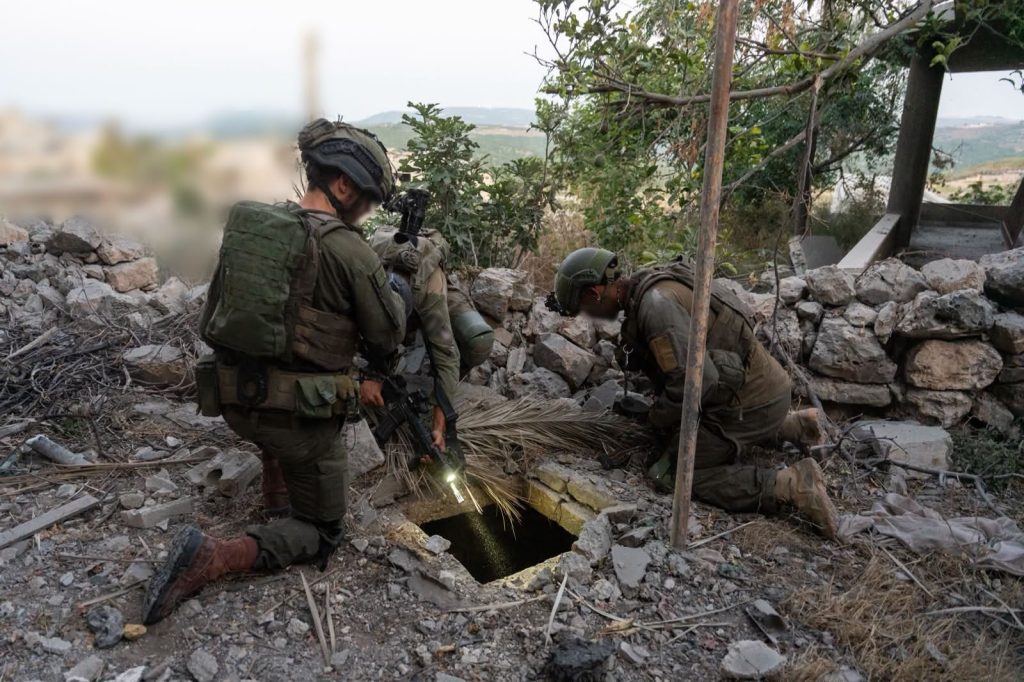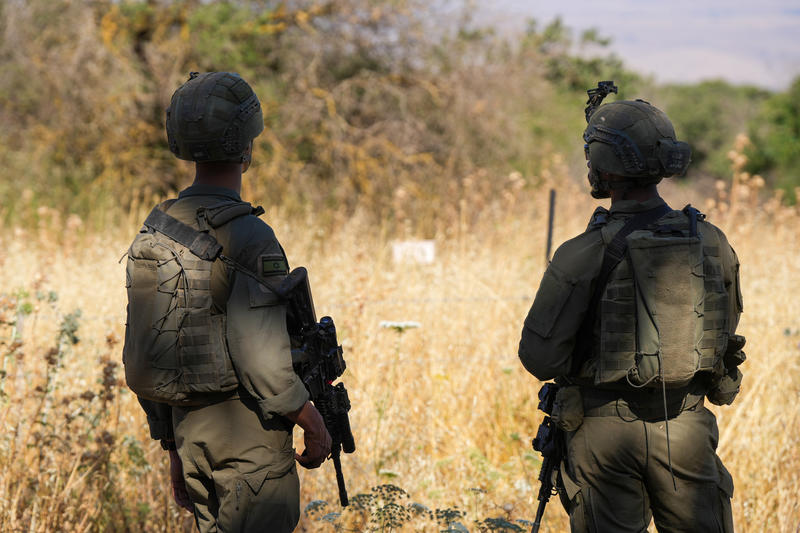
What’s happened: The IDF destroyed a massive tunnel complex in southwestern Lebanon yesterday that, among other things, was used s a production and launch facility for Hezbollah’s deadly unmanned aerial vehicles (UAVs) and had come to be known by Israeli soldiers as the “Ben Gurion Airport for drones.”
- Hundreds of tons of explosives were used to demolish the facility. Authorities in Israel warned northern residents that they might hear a loud noise and feel the earth shake momentarily, but that this was not an earthquake.
- The tunnel facility was 25 metres deep and more than 200 metres in length. It was heavily reinforced and included multiple blast doors to contain damage from Israeli air strike. Dozens of UAVs were discovered in the tunnels before their destruction. Hezbollah’s use of fibre-optic UAVs has been particularly deadly for the IDF in the fighting this year, which began on March 2 and continued even after a nominal ceasefire went into effect on April 16.
- The main entrance to the tunnel was located in the centre of the village Majdal Zoun, nestled between the village school and mosque. Majdal Zoun, less than 6 kilometres from the border with Israel, sits atop the so-called Shiite Ridge in southern Lebanon.
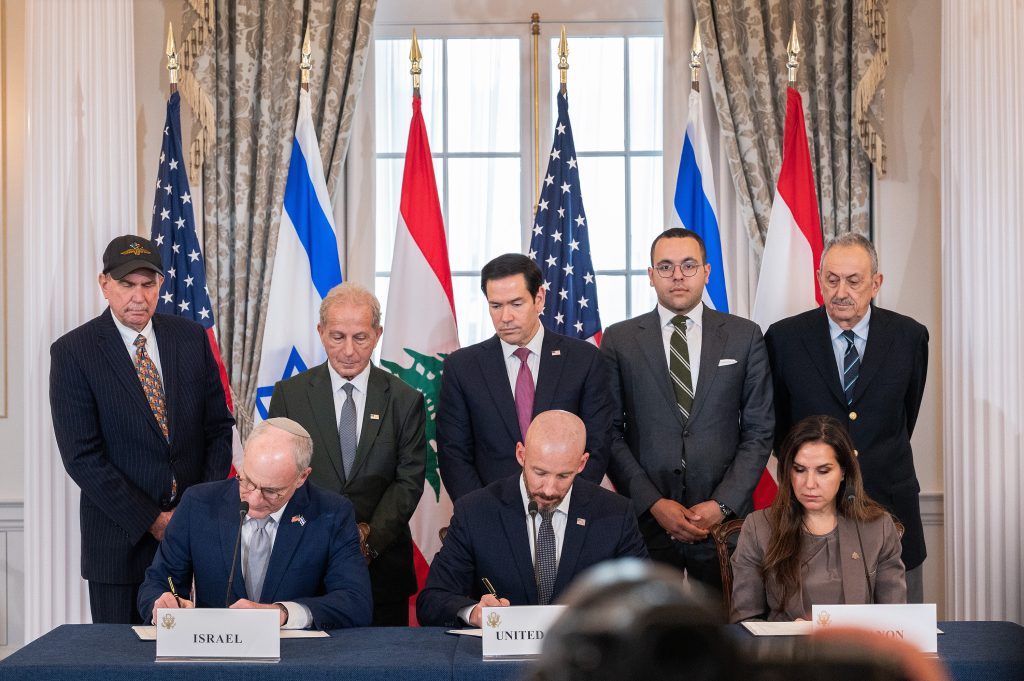
- Referring to the ongoing developments in Lebanon, Defence Minister Yisrael Katz said in a press event yesterday that Israel had no territorial claims on Lebanon, but that he would not allow the IDF to “withdraw even one millimetre” without the Lebanese Army fulfilling its commitments to disarming Hezbollah and dismantling its infrastructure. For now, according to Katz, Israel was not planning on any further withdrawals beyond the first two “pilot zones” mapped out in the unpublished security annex to the Israel-Lebanon Framework Agreement, signed last week.
- Elsewhere in the same press event, Katz discussed a large offensive operation against Hezbollah that had to be cancelled due to US pressure. The planned operation consisted of massive air strikes that, according to Katz, would have destroyed Hezbollah. With this operation vetoed due to US concerns about maintaining the ceasefire with Iran, the IDF chose instead to focus on deepening its land operation in southern Lebanon.
- Katz also referred to the possibility of further Israeli action against Iran, either with or without the United States. “Israel’s position is clear,” he said. “There isn’t a reality in which Israel will allow missile fire on its territory.”
- Fighting was reported in Abdin in southwestern Syria, near the point where the borders of Israel, Syria, and Jordan meet. There were other reported incidents of gunfire around Israeli outposts in the buffer zone Israel has held in southwestern Syria since the collapse of the Assad regime in December 2024.
Context: By mutual agreement, the security annex to the Israel-Lebanon Framework Agreement was not made public. Yesterday, a reporter for Asharq Bloomberg released what she claimed was a leaked text of the annex, and it has widely been regarded as authentic. No Lebanese, American, or Israeli officials have denied its authenticity.
- The annex has six points, and it goes into some detail about the “pilot zones” method for staged Israeli withdrawals. It calls on Israel and Lebanon to establish a Military Coordination Group for Lebanon (MCG4L) to oversee the logistics and implementation of the pilot zones.
- A designated pilot zone will be evacuated by the IDF and handed over to the Lebanese Armed Forces (LAF), who will be responsible for “clearance, taking legal measures against all non-state armed personnel engaging in unauthorised activity, and destroy or render inoperable associated infrastructure, including but not limited to weapons, weapons caches, tunnels, and command centres, by those non-state armed groups.”
- A verification method is employed, overseen by both Lebanon and Israel, together with the United States, and any further redeployment is conditioned on fulfilment of the conditions in each pilot zone.
- This entire mechanism is a massive departure from previous ceasefires following previous rounds of fighting between Israel and Hezbollah, including those in 1993, 1996, 2006, and 2024. It nowhere mentions the UN or UNIFIL and does not assign either body any responsibility. It implicitly endorses a continued Israeli military presence wherever the LAF is unable to dismantle Hezbollah. It includes a staged and verifiable mechanism for clearing southern Lebanon of Hezbollah arms and infrastructure, rather than just declaring the exercise of full Lebanese sovereignty over its territory as an aspiration. And, together with published Framework Agreement, it brings Lebanon closer to full recognition of Israel than any previous arrangement.
Looking ahead: Pressure is mounting on all sides to move forward to the next stages of the Comprehensive Agreement which ended the Gaza War in October last year. Israel’s public position is that it cannot move on to the next stages unless the commitments to disarm Hamas are carried out.
- According to Israeli media reports, however, the Trump administration submitted to Israel a document laying out a set of demands for Israeli actions on Gaza even in the absence of disarmament.
- These include allowing large-scale infrastructure work, allowing Palestinians to be relocated to designated areas currently under Israeli control, allowing construction for the facilities that are to house the “technocratic” governing committee, known as the National Committee for the Administration of Gaza, and the international armed force (ISF) that is supposed to oversee the next stage of implementation.
- Neither has yet entered Gaza, and in principle, both are only to commence work once disarmament has been agreed to. The entry of either would severely limit Israel’s ability to renew military action in Gaza, and the threat of renewed military action is the only leverage Israel has over Hamas right now as it resists carrying out its own obligations under the Comprehensive Agreement.
- In meetings with officials from the Board of Peace and even, according to media reports, directly with at least one US official, Hamas has refused to accept any kind of disarmament as called for in the ceasefire agreement from last October.
- An official IDF intelligence assessment, leaked to Israeli media, indicates that Hamas is preparing for another round of fighting in Gaza. The terrorist organisation has consolidated its governing apparatus over the parts of the Gaza Strip not held by the IDF, and it has, according to military intelligence, been manufacturing IED’s and anti-tank rockets in Gaza while smuggling drones and communication equipment from Egypt.