LATEST

Hamas and the Muslim Brotherhood

Key background
  • Hamas is an Islamist Palestinian nationalist movement which currently governs the Gaza Strip. It is proscribed by the UK and in the majority of western countries.
  • Its primary state backers are Iran, Turkey, and Qatar. It is also active in the West Bank, East Jerusalem, Syria, and Lebanon.
  • Since seizing control of the Gaza Strip in 2007, it has continuously launched attacks against Israel and weaponised civilian infrastructure by embedding itself into schools, mosques, and hospitals.
  • Hamas’s 7th October attacks on southern Israel killed 1200, and over 250 hostages were subsequently taken to the Gaza Strip.
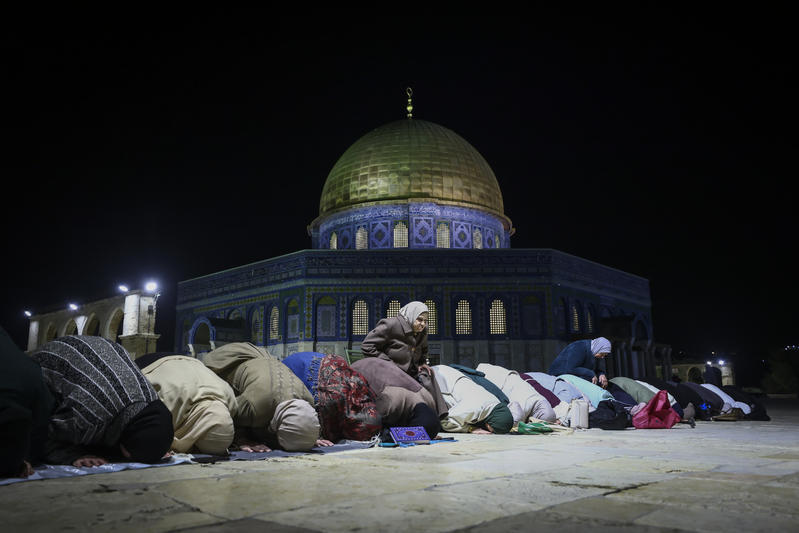
Muslim worshippers pray at the Al-Aqsa Mosque compound in Jerusalem’s Old City, marking the beginning of the holy Muslim month of Ramadan, February 17, 2026.
Muslim worshippers pray at the Al-Aqsa Mosque compound in Jerusalem’s Old City, marking the beginning of the holy Muslim month of Ramadan, February 17, 2026. Photo by Jamal Awad/Flash90 *** Local Caption *** אל אקצא רמאדן דת העיר העתיקה הר הבית ירושלים ירושלים העתיקה כיפת הסלע

Updated February 18, 2026

Ramadan begins amid disarmament disputes on every front

What’s happening: The beginning of Ramadan sees a tense quiet on all fronts.

  • In Jerusalem, thousands of police officers are in the streets as tens of thousands of worshippers are expected to make their way to the Al Aqsa Mosque in the Old City, especially on Fridays.
  • The Coordinator of Government Activities in the Territories (COGAT) announced that Israel would grant permits to 10,000 West Bank Palestinians to enter Jerusalem for Friday prayers at the Al‑Aqsa Mosque compound. Similar to last year, only males aged 55 and above, women 50 and above, and children 12 and below when accompanied by a first-degree relative will be allowed entry.
  • In the West Bank, the IDF and Border Patrol have deployed special forces to deal with the increased tensions.
  • British Prime Minister Starmer spoke to US President Trump last night about negotiations between the US and Iran, as well as the situation in Gaza.
  • It comes as Iran claimed to have come to a “general understanding” with the US on the range of topics under negotiation, despite there being no confirmation of this from  US  officials. Iranian Foreign Minister Abbas Araghchi, who is leading the Iranian delegation in Geneva, told Iranian state media there had been “positive progress” in discussions on sanctions and nuclear programme.
  • On a Fox News interview yesterday, Vice President JD Vance described the recent talks with Iran as “in some ways… went well” but noted that the Islamic Republic remains unwilling to accept some of President Trump’s nuclear red lines. “Our primary interest here is we don’t want Iran to get a nuclear weapon. We don’t want nuclear proliferation,” Vance said, adding that the US would very much like to resolve this through a conversation and a diplomatic negotiation, but all options are on the table.
  • Also yesterday, Iran’s Supreme Leader Khamenei warned President Trump that the Islamic Republic cannot be overthrown.
  • Iran’s proxy force in Lebanon, Hezbollah, rejected the Lebanese government’s plan to continue the next stage of the disarmament which it accepted as a condition for the ceasefire that has been in place since November 2024.
  • Hezbollah Secretary-General Sheikh Naim Qassem said in a speech on Monday that “what the Lebanese government is doing by focusing on disarmament is a major mistake because this issue serves the goals of Israeli aggression,” while Shia ministers walked out of Monday’s cabinet session in protest.

Context: All three ceasefires from the past year – in Lebanon, Iran, and Gaza – are stuck on one form or another on the issue of disarmament.

  • Despite public optimism from both Iranian and US officials about negotiations underway in Geneva, Israeli observers remain sceptical that any agreement can be reached and Israel continues to prepare for a US operation in Iran.
  • Iranian and US negotiators have not come to an agreement on shipping Iran’s stocks of enriched uranium out of the country, and the Iranians reject any limitations on the range of their ballistic missiles as “illogical,” in the words of the Supreme Leader Khamenei.
  • The Lebanese plan for disarming Hezbollah would see the Lebanese Armed Forces carry out a decommissioning of Hezbollah weapons in the area north of the Litani River and up to the Awali River, about 40 kilometres south of Beirut, over the next four months. This follows what the Lebanese claim is a successful decommissioning south of the Litani River and up to the border with Israel, though Israel disputes much of the Lebanese claim of successful disarmament there.
  • It is in Gaza, however, that the issue is most acute. Morocco, Albania, and Greece signalled yesterday that they could join Indonesia in contributing forces to the International Stabilisation Force, which is supposed to enforce the ceasefire in effect since October 2025. But none of these countries is preparing a force which can actively disarm Hamas.
  • With no path to Hamas disarmament, there is no guarantee that a renewal of combat is not in the offing. And as long as that is the case, it is unlikely any real investment in Gaza’s reconstruction will take place.

Looking ahead: Tomorrow in Washington the Board of Peace will hold its inaugural meeting with Israel represented by Foreign Minister Gideon Saar. The Board of Peace will have to formulate plans for reconstruction and disarmament, and it will have to lay out a mandate for the ISF. It will also likely formalise the role of the technocratic transitional government which has yet to enter Gaza.

  • The Iranian semi-official news agency Fars reported that Iran and Russia will conduct navy drills in the Sea of Oman and the northern Indian Ocean tomorrow.
February 16, 2026

Israel presses full Hamas demilitarisation as PA seeks to enshrine ‘pay for slay’

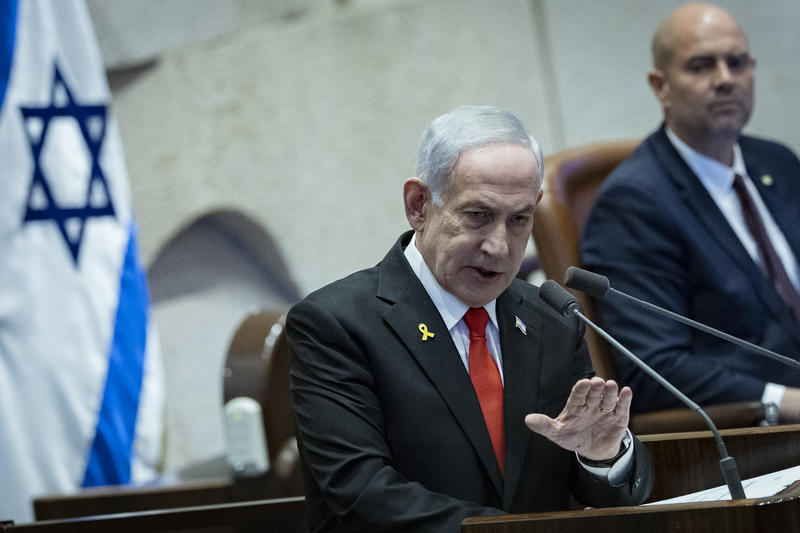
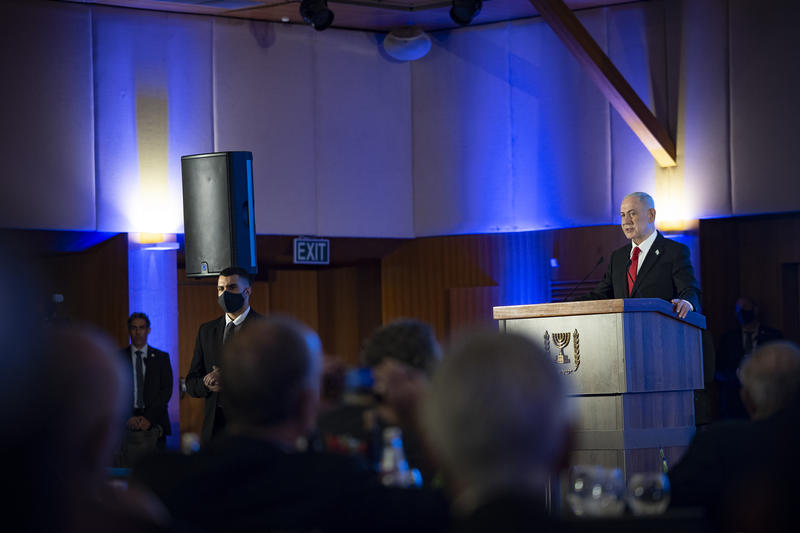
Israeli Prime Minister Benjamin Netanyahu attends a Conference of Presidents of Major American Jewish Organisations in Jerusalem, on February 15, 2026.
Israeli Prime Minister Benjamin Netanyahu attends a Conference of Presidents of Major American Jewish Organisations in Jerusalem, on February 15, 2026. Photo by Chaim Goldberg/Flash90

What’s happening: Addressing the annual Conference of Presidents of Major American ⁠Jewish Organisations, Prime Minister Netanyahu yesterday reiterated the importance he places on Hamas disarmament which meant that the group “must give up its weapons, not [just] its main weapons.”

  • Netanyahu elaborated that discussions around Hamas’s use of “heavy weapons” was disingenuous as there were practically none of them in Gaza.
  • Instead, he asserted that the priority for disarmament should be assault rifles, specifically AK-47s given their prominent usage in the 7th October attacks. He claimed that some 60,000 rifles were in Hamas’s hands, and had to “go outside” along with RPGs and rockets.
  • Netanyahu added that Israel has already dismantled 150 km of an estimated 500 km and still needs to “complete the job” of destroying Hamas’s remaining 350 kilometres of tunnels and any weapons factories.
  • The IDF alleges that Hamas continues to breach the ceasefire terms, including “an identification of several armed terrorists who took cover under debris east of the Yellow Line and adjacent to IDF troops, likely after exiting underground infrastructure in the area” in Beit Hanoun yesterday.
  • The Israeli Air Force has since confirmed that in airstrikes across Gaza it struck a terrorist that infiltrated Re’im military base on 7th October and a Palestinian Islamic Jihad commander.
  • Concurrently, the IDF has also increased the number of troops deployed in the West Bank in anticipation of tensions in the run-up to and during the festival of Ramadan which is expected to begin this week.

Context: Netanyahu’s comments come as the Trump Administration pushes to advance Phase 2 of the Trump Peace Plan for Gaza.

  • The administration continues to seemingly support the demilitarisation of Hamas, a key component of the plan. In a post on Truth Social yesterday, the President wrote that “Very importantly, Hamas must uphold its commitment to full and immediate demilitarisation.”
  • At the same time, the New York Times last week reported that the US is working on a proposal for the disarmament of Hamas that would allow Hamas to keep small arms it uses to maintain power in the Strip  – those same arms that Netanyahu discussed in his own speech. According to the plan, Hamas would only be required to give up weapons that can be used to strike Israel, mainly rockets and launchers, in order for it be considered to have fulfilled its obligations.
  • Allowing Hamas to retain small arms would leave intact the key instruments it uses both to threaten Israel and to enforce its authoritarian rule over Gazans.
  • Another component of Phase Two, the international stabilisation force was given a boost yesterday with an announcement by Indonesia’s military yesterday that up to 8,000 troops are expected to be ready to deploy to Gaza. Spokesperson of the the Indonesian National Armed Forces Donny Pramono said “Our troops are fully prepared and can be dispatched at short notice once the government gives formal approval.”
  • Ramadan has been relatively quiet over the last two years in the West Bank, but has historically seen higher numbers of attempted terrorist attacks, often linked to access restrictions at Al Aqsa Mosque the Temple Mount.
  • This year concerns are amplified by the prospect of an imminent potential escalation between the US, Israel, and Iran in the event of nuclear negotiations breaking down, as well as very high levels of unemployment in the West Bank (29% compared to 13% pre-7/10).
  • Last week the President Mahmoud Abbas of the Palestinian Authority ordered the drafting of a new constitution.
  • Ostensibly released in draft form to “expand community participation in drafting”, it has been criticised for committing to preserve Jerusalem’s “religious character and protecting its Islamic and Christian sanctuaries” while omitting any mention of the city’s Jewish identity, history, or population.
  • Article XXIV also confirms that the Pay for Slay stipend scheme which financially rewards and incentivises terrorism against Israelis would continue, seemingly with a level of constitutional formalisation.
  • Article XVII calls for “free and fair periodic elections and transparency as a constitutional right and the basis of democratic representation and free power”, despite legislative elections repeatedly being suspended or postponed.
  • The PA’s intent to enshrine its ‘Pay for Slay’ stipend scheme in a supposedly ‘reformed’ constitution comes as a backlash to the UK government’s unilateral recognition of a Palestinian state this autumn. Sir Keir Starmer demanded that the PA abandon the scheme, but critics argued that recognition without conditions would only embolden both Hamas and the PA to pursue a more radical course.

Looking ahead: President Trump’s Board of Peace is due to hold its inaugural meeting next week, most likely on Thursday. Israel will be represented by its Foreign Minister, Gideon Saar.

  • This meeting is expected to prioritise funding Gaza’s reconstruction, and it is understood that all 28 member countries will be represented, some by their heads of state.
  • Trump has said that more than $5 billion has been pledged towards Gaza humanitarian and reconstruction efforts. It is hoped that the UAE, Qatar, and Kuwait will make significant donations of $1.25 billion each, but Saudi Arabia has indicated that it must first consider Israel’s full withdrawal from Gaza as well as Hamas’s disarmament before donating.

February 11, 2026

Netanyahu arrives to Washington

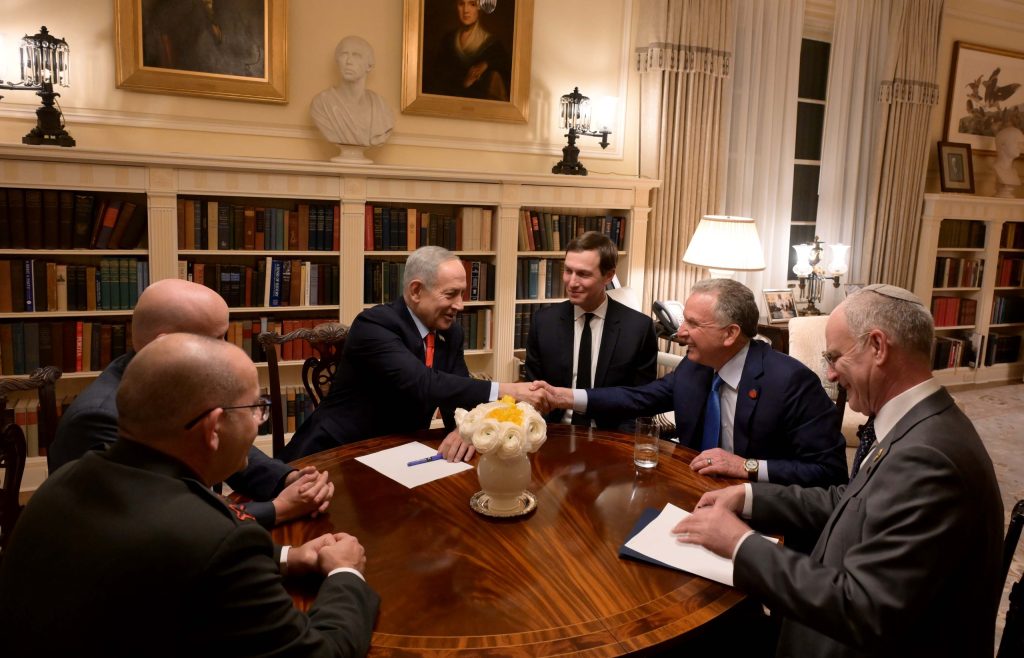
Prime Minister Benjamin Netanyahu met, at the Blair House in Washington, with the special envoys of the US President, Steve Witkoff and Jared Kushner. Washington, DC. February 10, 2026. Photo credit: Avi Ohayon (GPO)

What’s happening: Prime Minister Netanyahu arrived in Washington for a working meeting with President Trump in what will be their seventh meeting since Trump’s second term began, barely one year ago.

  • Prior to his departure, Netanyahu said the focus would primarily be on Gaza and Iran. Netanyahu announced that he would “present our views regarding the principles in the negotiations to the president – the important principles – and in my view, they are important not only to Israel, but to anyone who wants peace and security in the Middle East.”
  • Netanyahu will also reportedly share with Trump intelligence regarding Iranian efforts to develop ballistic missiles capable of reaching Europe and the United States as well.
  • Trump continues to broadcast optimism at the prospect of reaching a deal with Iran that could avert an armed confrontation. “We can make a great deal with Iran,” he told an interviewer yesterday, while Netanyahu was en route. Of Netanyahu, he said, “He also wants a deal. He wants a good deal.”
  • The US is reportedly working on a proposal for the disarmament of Hamas in Gaza that would allow Hamas to keep the small arms it uses to maintain power in the Strip. The US proposal, details of which were leaked to the New York Times while Netanyahu was on his way to Washington, would only require Hamas to give up weapons that can be used to strike Israel, mainly rockets and launchers, in order for it be considered to have fulfilled its obligations in Phase Two of the Comprehensive Plan which ended the war last October.

Context: Leaks in the Israeli media indicate that senior Israeli officials were alarmed at the prospect of Trump securing a deal with Iran that would be far below Israel’s minimum needs.

  • Israeli officials believe that Trump is under enormous pressure from his allies in Turkey and Qatar to accede to a deal that leave Iran with some enrichment capabilities and that would not set back its ballistic missile programme, a cause of acute concern in Jerusalem.
  • Iranian ballistic missiles caused significant damage to the Israeli home front in the Twelve Day War, and Israel believes that Iran has at least 2000 of them in its current stock and is rapidly developing the capabilities to manufacture many more.
  • For all the Israeli concern about an unsatisfactory deal, the consensus among local analysts and officials remains that ultimately the US will attack Iran. The Iranians have not thus far signalled any willingness to compromise even on the enrichment issue, much less the other American priorities (missiles, regional proxies, and the protest crackdown).
  • Trump, for his part, reminisced about the Iranian miscalculation that led to Operation Midnight Hammer last June in the same interview where he spoke of the prospects for an agreement. “Last time they didn’t believe I would do it,” he said of the US airstrike on three nuclear facilities. “They overplayed their hand.”
  • If the scenario reported by the New York Times about Gaza were to happen, Israel would face pressure to undertake its own commitments in Phase Two, including a significant territorial withdrawal from the position it holds along the Yellow Line today to a narrow buffer zone around the old Gaza-Israel border from before the war.
  • The Israeli understanding of the disarmament clause of the Comprehensive Plan includes not just offensive weapons, but also small arms and the massive tunnel infrastructure in Gaza as well.
  • It is unclear whether Hamas accepts even the more lenient American proposal for disarmament. Absent any kind of disarmament, it is unlikely Israel will carry out any further territorial withdrawals in Gaza.
  • There is, in such a scenario, even the possibility that Israeli will launch a new military offensive into central Gaza to carry out a forceful disarmament of Hamas, this time unhindered by consideration for the fate of hostages.

Looking ahead: At their meeting, Netanyahu is expected to formally invite Trump to Israel for this year’s Independence Day Festivities, which are to be held on April 21-22. Trump is already due to receive the prestigious Israel Prize, normally awarded only to Israeli citizens, in a ceremony that traditionally closes out the day’s official festivities. Netanyahu may reportedly also ask Trump to light a torch on Mount Herzl in the ceremony that usually opens the official festivities.

  • The political calendar may also be a consideration for this. With no compromise in the offing on the ultra-orthodox conscription bill, it is increasingly likely that parliament will be dissolved and early elections called. Elections are currently scheduled for October, when discussion will likely be dominated by the third anniversary of the October 7 invasion and massacre. But an early election would put Independence Day, and Trump’s festive visit as the Prime Minister’s guest, right at the peak of campaign season.

February 10, 2026

IDF confronts terrorists in Rafah, Syria and Lebanon

IDF soldiers.
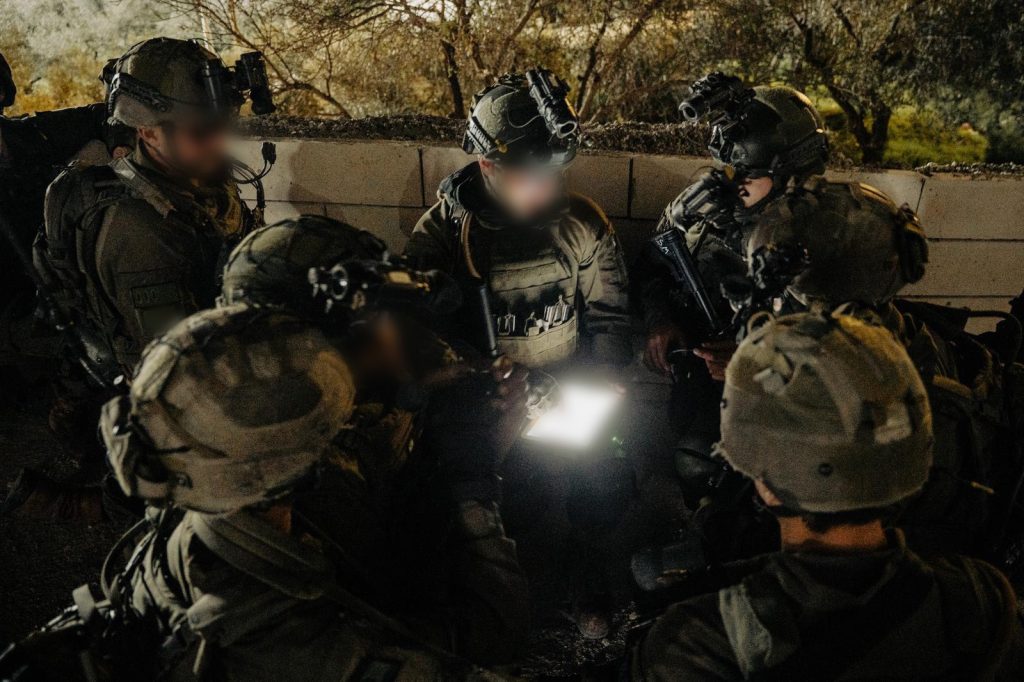
IDF soldiers. Photo credit: IDF

What’s happening: In Rafah, in the south of the Gaza Strip, four Hamas terrorists emerged from a tunnel and attacked IDF troops on the Israeli side of the Yellow Line. The soldiers returned fire and eliminated all four gunmen.

  • An IDF operation in Syria yesterday destroyed a weapons depot belonging to the al-Jama’a al-Islamiyya (Islamic Group) terror group. The IDF’s announcement of the operation noted that the depot was located thanks to precise intelligence on the group’s activities.
  • Earlier this week, an IDF operation in Lebanon resulted in the capture of a senior member of the terrorist organisation, known for its close links with both Hezbollah and the foreign operations of Hamas. When his capture was announced, he was described as a “high-quality intelligence target.”
  • Domestically, the Israeli political discussion is still dominated by reactions to the 55-page document released by the Prime Minister last week which spelled out his actions and statements in the lead-up to Hamas’s October 7 attack. The document included many quotes from Cabinet protocols that cast Netanyahu in a flattering light and portray him as alert to the Hamas threat while being stymied at every step by the security establishment.
  • Critics, including opposition politicians and former security officials, pushed back on the claims in the document and pointed to many places where context was missing that apparently changed the entire import of the quotes statements attributed both to the Prime Minister and senior security officials. Benny Gantz called it a “rewriting of history,” while Yair Lapid called it a “falsification of security protocols in an official document issued by the Prime Minister’s Office, in a way that must have been intentional.” 
  • The Israeli cabinet approved measures pushed by Finance Minister Bezalel Smotrich to broaden Israel’s civil powers in the West Bank, notably on property, planning, and the management of two holy sites. The measures are technical, but their impact could be broad, making it much easier for Israeli citizens to purchase property from Palestinians in the West Bank.
  • The Trump Administration did not directly condemn this move, but it did issue a statement reiterating that “President Trump has clearly stated that he does not support Israel annexing the West Bank.”

Context: Dozens of Hamas fighters are suspected to still be hiding out in tunnels on the Israeli side of the line, and incidents such as this one have become a regular occurrence since the ceasefire went into effect last October.

  • The al-Jama’a al-Islamiyya organisation has been operating in Lebanon and Syria since the 1980s in cooperation with other larger terrorist organisations. Its independent standing was not affected by the ceasefires agreed to by Hezbollah in 2024 and Hamas in 2025.
  • Al-Jama’a al-Islamiyya is, like Hamas, a Muslim Brotherhood affiliate. Following leadership changes in 2022, the Lebanese branch pursued a closer alliance with Hamas and Hezbollah, setting aside past differences to focus on fighting Israel.
  • The decisions made on the West Bank don’t change the legal status of any territory and don’t herald any dramatic demographic changes either. They are all minor legal changes that grant more civil powers to Israel, rather than leaving the territory to be governed as an occupied territory by the IDF.
  • The changes are technical and may not withstand challenges in Israeli courts. But taken together, they could dramatically alter the balance of power in the territory between the IDF, the Palestinian Authority, and the civilian aspects of the West Bank settler enterprise.
    • One notable change is to open up property registries. These have been mostly sealed for decades. Making them available to the public could make it easier to locate absentee property holders to offer to buy land from.
    • A second change repeals a Jordanian ban on land sales that made it effectively illegal for a Palestinian in the West Bank to sell any property to an Israeli.
    • A third change broadens the powers of Civil Administration planning authorities to parts of the West Bank that lie outside Israeli settlements.
    • A fourth change establishes new authorities under Israeli control for the management of two holy sites, Rachel’s Tomb on the outskirts of Bethlehem and the Tomb of the Patriarchs in Hebron.
  • In the background of this decision are two major political weaknesses. First, the party of Bezalel Smotrich, the Minister most associated with this decision, is polling at or below the electoral threshold. And secondly, the settler movement itself has not been able to bring more Israelis to move from Israel into the West Bank. Nearly all of the population growth of Israelis in the West Bank has been confined to three ultra-orthodox settlements right on the Green Line, with negative net migration for many of the remaining 120 or so settlements deeper in the territory.

Looking ahead: Prime Minister Netanyahu leaves for Washington today for private talks with President Trump about the Iran situation. Contrary to earlier reports, he will not be taking with him a delegation of senior military and security officials. Unlike previous trips to the White House, this one is designated as a closed meeting, and there are no scheduled public events or media availabilities.

  • While it is likely that Iran will be the main focus of talks, we might as well expect that Netanyahu and Trump will touch on other issues such as the situation in Lebanon and reconstruction of Gaza. 
  • There is still no date for the beginning of operations for Gaza “technocratic” governance committee, the National Committee for the Administration of Gaza (NCAG). This is despite reports that it might be entering the Strip this coming week.
  • It was reported yesterday that up to 8000 soldiers from Indonesia could be headed to Gaza as part of the International Stabilisation Force (ISF). This is the first major commitment of manpower to the ISF, though here too there was no date given for when the operation would be underway. Indonesia does not have diplomatic relations with Israel.

February 2, 2026

The Rafah Crossing opens

Humanitarian aid enters Gaza through the Rafah border crossing from Egypt, in Khan Yunis in the southern Gaza Strip, on February 1, 2026.
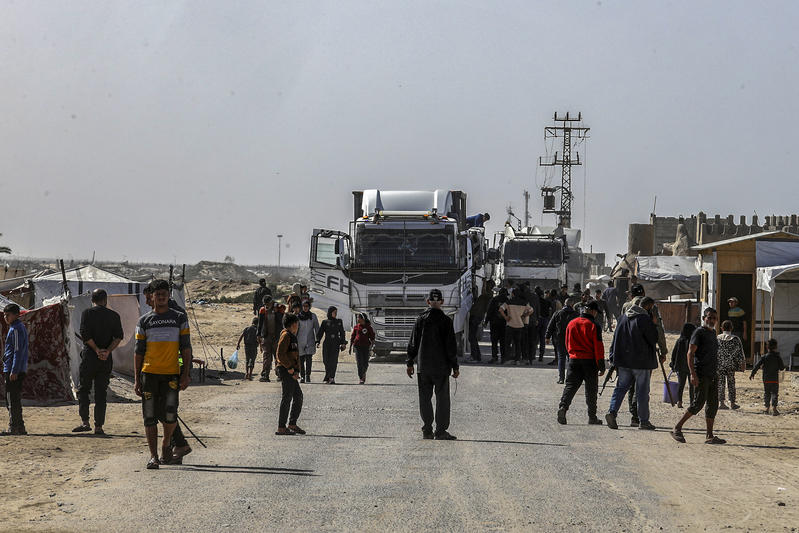
Humanitarian aid enters Gaza through the Rafah border crossing from Egypt, in Khan Yunis in the southern Gaza Strip, on February 1, 2026. Photo by Abed Rahim Khatib/Flash90

What’s happened: The Rafah Crossing opened on Sunday for a final set of technical tests and a limited number of pedestrians are expected to cross the border today.

  • The crossing will be operated by Egypt, with European Union oversight and approved Palestinian officials. According to the agreement, the Egyptians are expected to share details of those crossing in advance with Israel. Outgoing Gazans will not undergo Israeli security checks, but those entering the Strip will be required to pass through an IDF inspection point. Everyone who enters the Strip will be taken by bus to an Israeli inspection point, where they will undergo physical inspection and facial recognition software will be used to verify their identity.
  • At this initial stage 150 people will leave Gaza daily, 50 people who require medical treatment, plus two companions. 50 Gazans (who left during the war) will be allowed to return to Gaza daily. 
  • Over the weekend the Israeli Air Force carried out a series of air strikes against Hamas and Palestinian Islamic Jihad targets.
  • The strikes came in response to several incidents of ceasefire violations including an attempted attack by Hamas terrorists on IDF soldiers in the Rafah area and other incidents along the yellow line.
  • The upturn in violence began on Thursday evening when eight heavily armed Nukhba Force terrorists emerged from a tunnel in eastern Rafah into an area that is controlled by the IDF. IDF observers spotted the terrorists in real-time and called in a strike. At least three terrorists were eliminated, and others appear to have been wounded. Two Hamas commanders were captured. One was captured by the IDF and the other by members of the Abu Shabab militia. According to the IDF, the apprehended terrorist is a key commander in Hamas’ Eastern Rafah Battalion.
  • The targets that were struck included a Hamas police station in central Gaza and a Hamas outpost in Al-Mawasi. The IDF also attacked an arms storehouse, an arms production site and two rocket launching sites in the central Gaza Strip. Among the targets were four commanders from Hamas and Palestinian Islamic Jihad. Hamas sources in the Strip reported that at least 31 people were killed in the strikes.
  • The IDF released a statement noting, “The terrorist organisations in the Strip have been systematically violating international law amid the cruel exploitation of civilian institutions and by acting among the [civilian] population in the area.”

Context: The airstrikes over the week were the most intense since the ceasefire came into effect 3 months ago. The intensity is both a factor of continued Hamas violations and the IDF’s new found freedom of action in no longer having to factor in the status of any hostages.

  • Hamas has been using guerrilla tactics in a bid to challenge Israel and to inflict casualties among the IDF troops deployed in the area of the yellow line. The string of incidents in recent days appears to illustrate that Hamas has no intention of giving up its weapons and that its operatives remain motivated to fight and to attack the IDF.
  • The Hamas police station targeted represents a deliberate strike on a symbol of Hamas control over their side of the Strip, and points to a wider concern that whilst no disarmament is taking place, Hamas are in fact rehabilitating their forces and reinforcing their control.
  • There is domestic criticism in Israel that the opening of the Rafah Crossing before Hamas’ disarmament and the demilitarisation of the Strip is a failure of the Israeli Government policy. This adds to what is perceived as a wider failure – the internationalisation of the ‘day after’ – that might lead to a situation where Israel no longer has complete freedom of action.
  • The government argues that not only does it maintain complete freedom of action, but the new mechanism at the Civil Military Coordination Center allows Israel to share intel with the international partners and ensure a degree of transparency over Hamas violations and subsequent Israeli actions that has never happened before.
  • Longer term, Israel is insisting that the Philadelphi Corridor, that separates Gaza from Sinai, will remain in Israeli control even after further withdrawals from the yellow line. This is viewed by government supporters as a major achievement.
  • The opening of Rafah Crossing constitutes the first time since the 2005 Gaza Disengagement that Israel has formal oversight of the Gaza-Egypt border. Since then, the Rafah Crossing and the Philadelphi Corridor were the main source of Hamas income (through taxation) and smuggling of weapons both through the Egyptian border crossing and through their tunnels network.
  • Last week COGAT revealed the extent of aid entering Gaza over the last three months. This has included over 60,000 aid trucks, 900,000 tons of food, 9,600 tons of medical equipment and around 610,000 tents.

Looking ahead: With the reopening of Rafah, the Palestinian technocratic body, known as the National Committee for the Administration of Gaza (NCAG) led by Ali Shaath, is soon expected to enter Gaza.

  • If the monitoring mechanism at the Rafah Crossing will be successful, it will expand its operations.

January 27, 2026

Last hostage returned home

People pay their respects as a convoy carrying the body of slain hostage Ran Gvili drives near the Israeli border with the Gaza Strip, January 26, 2026.
People pay their respects as a convoy carrying the body of slain hostage Ran Gvili drives near the Israeli border with the Gaza Strip, January 26, 2026. Photo by Tsafrir Abayov/Flash90

What’s happened: The body of Ran Gvili, the 24-year-old police sergeant who set out on October 7 to protect Israel from the Hamas invaders and fell in the successful defence of Kibbutz Alumim, was returned to Israel yesterday.

  • Gvili’s was the last Israeli hostage remaining in Gaza out of 251 who were abducted on October 7, together with another four, two living and two dead, held there before the massacre. With Gvili’s return, there are officially no Israeli hostages in Gaza — the first time this has been the case in fourteen years.
  • The discovery and recovery of Gvili’s body was the culmination of a complicated intelligence and forensic operation. His abductors had moved and reburied his body. Ultimately, the IDF was able to focus on a Muslim cemetery in the northern Gaza Strip. In Operation Brave Heart, soldiers recovered remains and inspected dental findings until a possible match for Gvili was found and brought back to Israel where a positive identification was confirmed.
  • Speaking at the Second International Conference on Combating Antisemitism, Prime Minister Netanyahu hailed the formal end of the hostage crisis: “Rani Gvili, from the special unit in the police who fought not only with a broken arm, he was shot twice, and he kept fighting, and he killed fourteen terrorists alone. And then he died. And we said we’d bring him back. He was the first to come in. He’s the last to leave, a hero of Israel. Rani is back. There are no more hostages in Gaza. Tremendous achievement for our heroic forces, our soldiers, our commanders, none like them.”
  • President Herzog also described his relief at the news at an event at the President’s Residence in Jerusalem with US Ambassador Mike Huckabee. “Finally, 834 days later, Staff Sgt. Ran Gvili, who ran at first call to the front lines to save others, has come home: home to his country, home to his family, home at last. An entire nation is breathing an enormous sigh of relief tonight, as all of our hearts are with Ran’s family—especially his parents, Talik and Itzik—who fought heroically and with remarkable courage to bring their son home.”
  • Huckabee, too, spoke at the event, and referenced the ubiquitous yellow hostage pin which many Israelis and supporters of Israel had worn on their lapels since October 7. ““It is an extraordinary privilege to take this pin, to remove it from my lapel,” he said. “I have said on many occasions, since I was posted here as ambassador, that the happiest day of my tenure was going to be the day when I could remove this pin, because it meant that the last hostage would have been freed and home with his family.”

Context: The return of the last deceased hostage definitively puts an end to the first phase of the Gaza ceasefire, which has been in effect since last October.

  • The first major achievement of the second phase will be the partial reopening of the Rafah Crossing between Gaza and Egypt later this week. The crossing will be open to two-way traffic of people only (not vehicles). European and Palestinian officials will be on site, and those passing through will receive a Palestinian Authority stamp on their passports. Egyptian officials will pass to Israeli officials a complete list of all those passing through ahead of time, and only those approved by Israel will be allowed to cross into or out of Gaza. Israel will remotely inspect the crossing. The mix of Egyptian, European, Israeli, and Palestinian actors strongly resembles the Movement and Access arrangement that was briefly in place for the crossing’s operation between 2005 and 2007, following Israel’s withdrawal from the Strip and before the coup which put Hamas in control of territory enclave.
  • The second phase of the ceasefire stipulates not only the reopening of the Rafah Crossing, but also several other significant measures, including Hamas disarmament, a technocratic Palestinian transitional government in Gaza, the deployment of a multinational force inside the Strip, and a further Israeli territorial withdrawal.
  • Today, the IDF controls roughly 53% of the Gaza Strip, with the so-called Yellow Line separating the Israeli-held zone from the roughly half of the Strip still under Hamas control, where the overwhelming majority of Gaza’s civilians are concentrated. The second phase of the ceasefire, if fully implemented, would see the IDF leave much of the territory it currently hold, but not return to the pre-war border. Instead, the IDF would hold a perimeter zone inside the Strip with a depth of about 1 km.
  • Before that could happen, the disarmament of Hamas and the demilitarisation of the Gaza Strip would need to be effected. Israeli officials remain very pessimistic about the prospects of this happening peacefully, though US and other international actors in the region believe that with the right mix of pressures and incentives, the Strip’s technocratic governance committee can force Hamas to turn over its weapons.
  • A senior American official quoted anonymously in Israeli media yesterday said that the US would “make sure to enforce the agreement. Hamas has no choice but to disarm. They signed the agreement. We’ll work to see that happen, and if they decide to play games, Trump will take the necessary measures.”
  • Unspoken in these assessments is the assumption that what held the IDF back from fully conquering the Strip and destroying Hamas during two years of war was concern about the fate of the hostages Hamas was holding. With no more hostages of any kind in Hamas’ possession, there is nothing to stop the IDF from destroying what remains of Hamas military capabilities should the ceasefire collapse and combat resume.
  • Reconstruction is also supposed to begin in the second phase of the ceasefire, with initial efforts focused on the southernmost sections of the Strip in Rafah and Khan Younis. The US and Israel have agreed that Israel would be responsible for removing the rubble from these areas, reportedly so that unexploded ordnance could not fall into Hamas hands and be repurposed for offensive capabilities.

Looking ahead: The US and Egypt are expected to announce the formal appointment of a Reconstruction Committee sometime in the next two weeks. This is in line with US efforts to begin some limited reconstruction early in the second phase, especially in more peripheral areas of the Strip, including those parts currently on the Israeli side of the Yellow Line. Israel is opposed to any large scale reconstruction beginning before the full disarmament of Hamas is achieved.

  • Parallel to the US-Egypt understandings on reconstruction, the US is reportedly drafting a document to be submitted to Israel on the issue of disarmament.
  • According to Israeli media reports, the document will stipulate that Hamas will have a set number of weeks to disarm, and that if the terrorist organisation fails to meet the deadline, Israel have a free hand to act militarily.
  • A firm commitment from the US on disarmament and an explicit support for Israeli action to back it up is intended, from the US perspective, to secure Israeli flexibility on the issue of early reconstruction.

January 26, 2026

Israel’s security cabinet agrees to reopen the Rafah Crossing

Rafah border crossing with Egypt.
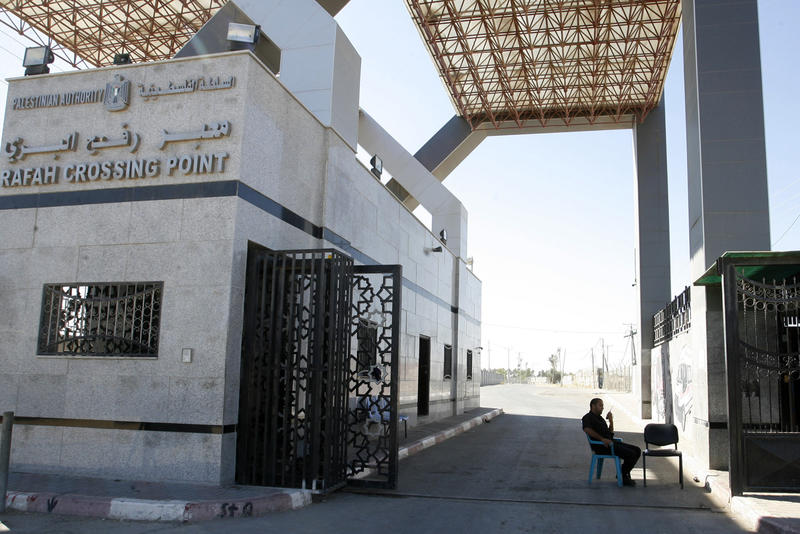
A Palestinian security officer sits at the gate under Palestinian control at the Rafah border crossing with Egypt in the southern Gaza Strip October 25, 2014.

What’s happened: The security cabinet convened on Sunday night and according to the Prime Minister’s Office agreed to a “limited reopening of the Rafah Crossing for pedestrian passage only, subject to a full Israeli inspection mechanism.”

  • The statement added that, “The reopening of the crossing was conditioned upon the return of all living hostages and a 100% effort by Hamas to locate and return all deceased hostages.”
  • “The IDF is currently conducting a focused operation to exhaust all of the intelligence that has been gathered in the effort to locate and return the fallen hostage, Master-Sgt. Ran Gvili… Upon completion of this operation, and in accordance with what has been agreed upon with the US, Israel will open the Rafah Crossing.”
  • Searches for Gvili’s body, dubbed Operation Brave Heart, began at the end of last week based on recently refined intelligence, and are focused on a cemetery in Gaza City. There are hundreds of bodies buried in the cemetery, and the troops are opening the graves one by one and reviewing their contents. The troops are conducting meticulous searches using mobile X-ray machines to check dental x-rays, as there are no available fingerprints. After that, DNA tests will be conducted.
  • Also over the weekend, US CENTCOM Commander Admiral Cooper met with Chief of Staff Zamir to discuss coordinating the defence for Israel in the event of an American attack on Iran that prompts Iranian missile fire.

Context: The decision to open the Rafah Crossing follows pressure by the US mediators Witkoff and Kushner who met with senior Israeli leaders over the weekend to push for the continued implementation of President Trump’s 20-point plan.

  • According to the Trump plan, Gvili’s body is supposed to be returned to Israel before proceeding to the second stage of the ceasefire agreement.
  • As it currently stands, it appears that even if Gvili’s body is not found, the Rafah crossing will be reopened as a result of strong US pressure in a bid to begin the second stage.
  • Despite pushback from the Egyptians, Israel insists on retaining the ability to remotely monitor the crossing via cameras. The border itself is expected to be supervised by a European team. In addition, due to Israel maintaining control of the yellow line, all the traffic will pass through an area under Israeli control.
  • Israel is most concerned over attempts to use the crossing to smuggle weapons as well as preventing Hamas terrorists who previously left Gaza from returning to the Strip.  Israel is willing to allow anyone to leave who has an invitation or a visa to a third country or for humanitarian and medical cases, and will only insist on inspecting those who enter Gaza from Egypt. The Egyptians are concerned that masses will try to leave and remain in Egypt, whilst they want unlimited access for those that want to return to Gaza.        
  • Only those whose names are submitted to Israel by the Egyptians and go through security vetting will be able to cross into Gaza. It is estimated that 42,000 Palestinians left Gaza since the start of the war although not all will want to return.
  • Despite optimism in some quarters following the grand unveiling of the Board of Peace at Davos last week, Israel remains concerned that Hamas will seek to integrate itself into the technocratic administrative committee led by Ali Shaath. Both Israel and the Palestinian Authority are wary of Hamas and are strongly opposed to this.
  • Israel believes that Hamas is trying to integrate into Gaza’s future security framework without truly disarming which would create a “Hezbollah model” in Gaza. Although politically unpopular within the right wing government, it may prefer concessions to the PA over Hamas rule or renewed war. The US denies agreeing to let Hamas retain political power or integrate into Gaza’s security forces, although Arab diplomats have suggested that in negotiations Hamas has vowed not to disarm without concessions.
  • The technocratic committee meant to govern Gaza lacks real authority and is largely staffed by former PA officials. They are wary of integrating Hamas officials following the harsh experience of 2007, when Hamas violently took full control of the Strip.
  • The decision to reopen Rafah was met with harsh criticism from right-wing coalition partners, although the decision ultimately passed.
  • Israel remains concerned over the role of Qatar and Turkey (as Hamas’s patrons) who also joined the Board of Peace. As such there was a question over whether Israel should also take a seat on the committee. In the end, Israeli officials argued that it’s better to participate than be excluded from decision-making.

Looking ahead: The search for Ran Gvili’s body in the cemetery in Gaza City is expected to continue for the next few days before moving onto other possible burial sites.  

  • The director of the Board of Peace Bulgarian diplomat Nickolay Mladenov is expected to visit Israel soon and finalise the details regarding the Rafah Crossing and the establishment of the multi-national force that is supposed to be tasked with disarming Hamas. The Rafah Crossing is expected to reopen towards the end of this week.  
  • The US military is due to deploy more troops to the Middle East in the next few days, but it remains unclear what Trump will decide to do vis-à-vis Iran.

January 21, 2026

Netanyahu to join Trump’s Board of Peace

Israeli Prime Minister Benjamin Netanyahu at a 40 signatures debate, at the plenum hall of the Knesset, the Israeli parliament in Jerusalem, on January 19, 2026.
Israeli Prime Minister Benjamin Netanyahu at a 40 signatures debate, at the plenum hall of the Knesset, the Israeli parliament in Jerusalem, on January 19, 2026. Photo by Chaim Goldberg/Flash90

What’s happened: Prime Minister Netanyahu announced this morning that Israel would accede to President Trump’s invitation to join his Board of Peace.

  • Argentina, Azerbaijan, Belarus, Hungary, Kazakhstan, Morocco, the United Arab Emirates, and Vietnam have also said they would join. It was not clear from the Prime Minister’s announcement if Israel would be paying $1 billion for a permanent membership.
  • President Trump told reporters yesterday that “we think we know” where the body of the last Israeli hostage in Gaza is. Referring to Ran Gvili, who was killed in the October 7 attacks and whose body has been held ever since in Gaza, the President said, “They have one left that we think we know where it is, amazing, it looked like we weren’t going to get anywhere near that, now they’ve gotten that almost.”
  • Egyptian President Abdel Fattah al-Sisi will meet President Trump today on the sidelines of the Davos. The two are due to discuss Phase 2 of the Gaza ceasefire and to coordinate their moves before a bruited American ultimatum on Hamas disarmament and the possible entry of Egyptian-trained Palestinian forces into Gaza.
  • In Jerusalem, the Israel Lands Authority took possession of a large UNRWA facility in Jerusalem and began demolishing parts of it. This was in accordance with the new law from last year which bans all UNRWA activity inside Israel and severely limits any official interaction between Israel and UNRWA in territories Israel controls.
  • UNRWA vacated the facility six months ago, and the ILA proceeded with the demolition yesterday to stop other illegal activities taking place at the site as well as to advance plans for its redevelopment.

Context: According to various media sources, President Trump is expected to deliver an ultimatum to Hamas regarding the terrorist organisation’s disarmament in the second phase of the Gaza ceasefire. Reports differ, however, on the content of the ultimatum, its timeline, its proposed methods of decommissioning, and the threats which back it up.

  • A Palestinian police force presently being trained in Egypt is reportedly ready to carry out the disarmament, should Hamas accept the conditions of Trump’s ultimatum. This force reports directly to the Palestinian committee of technocrats whose appointments were announced last week. They would be tasked not only with collecting rockets and IEDs, but also the rifles and small arms with which Hamas enforces its domestic rule.
  • Notably, this would mean that disarmament is an internal Palestinian affair, and not an endeavour achieved by the International Stabilisation Force, which has not yet come into being and does not have pledged commitments from enough countries to be viable.
  • The Egyptian-trained force would, if Hamas agrees to Trump’s ultimatum, hope to enter Gaza sometime in February or March and seek to complete its task rapidly. Despite whatever enthusiasm both Egyptian and US officials express (in anonymous leaks) regarding both the ultimatum and the police force, both Israeli and Palestinian officials remain sceptical about the entire plan.
  • Palestinian officials are concerned that an under-equipped police force seen, accurately or not, as aligned with the PA could quickly find itself a target of superior Hamas weapons (as happened in 2007). Israeli officials share that concern while also opposing any role for the PA in Gaza.
  • In the meantime, few in Israel believe Hamas will agree to Trump’s ultimatum anyway. As such, the IDF continues to prepare itself for a possible military offensive in February or March to disarm Hamas by force.
  • An Israeli operation following a Hamas refusal to carry out the conditions of the ceasefire, it is believed, would have a measure of international legitimacy. And a ground offensive into central Gaza unencumbered by the presence of Israeli hostages and the implied threat to their wellbeing, it is further believed, could be more effective than anything tried in two years of warfare following the October 7 attack.

Looking ahead: President Trump is scheduled to make a major prime time address tonight. In the background are at least four major international crises: the Gaza ceasefire and the formation of the new Board of Peace, the violent crackdown on anti-regime protesters in Iran and the possibility of US military action there, and the US threats on Greenland and the attendant tensions in the NATO alliance and the transition in Venezuela following the US capture of Nicolas Maduro.

  • With international attention focused on Venezuela and Greenland, US forces continue to move to the Persian Gulf region.
  • The eruption of violence in Iran in late December caught the US  Navy without a carrier group in the Gulf. As of yesterday, the USS Lincoln Carrier Strike Group transited through the Strait of Malacca and into the Bay of Bengal. It is expected to continue west to the Persian Gulf.
  • Circumventing the globe in the opposite direction were the F-15Es which had served to intercept drone attacks from Iran in previous rounds of fighting in 2024 and 2025. These reportedly left bases in the UK for bases in Jordan yesterday, accompanied by KC-135 Stratotanker aerial refuelling jets.

January 20, 2026

Israel–US tensions surface over Gaza’s future

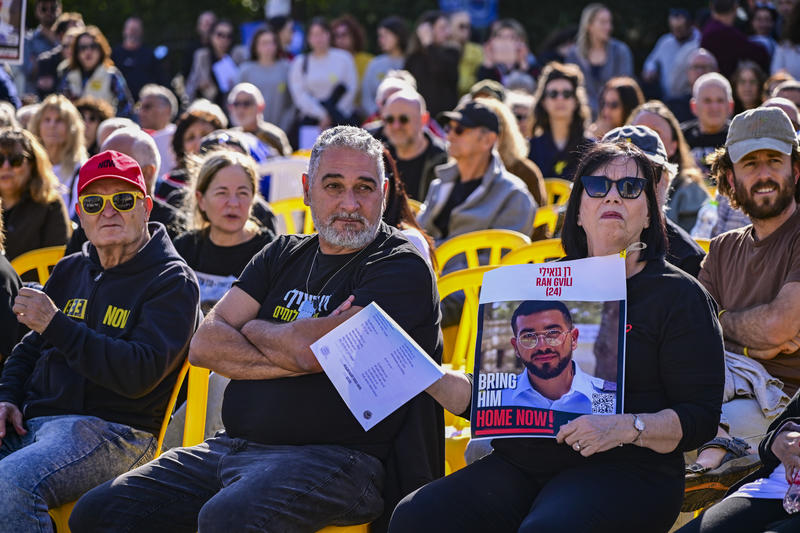
Relatives, friends and supporters of Master Sgt. Ran Gvili, whose body is held by Hamas, attend a Kabbalat Shabbat ceremony at Hostage Square in Tel Aviv, calling for the return of his body from Hamas captivity, on January 16, 2026.
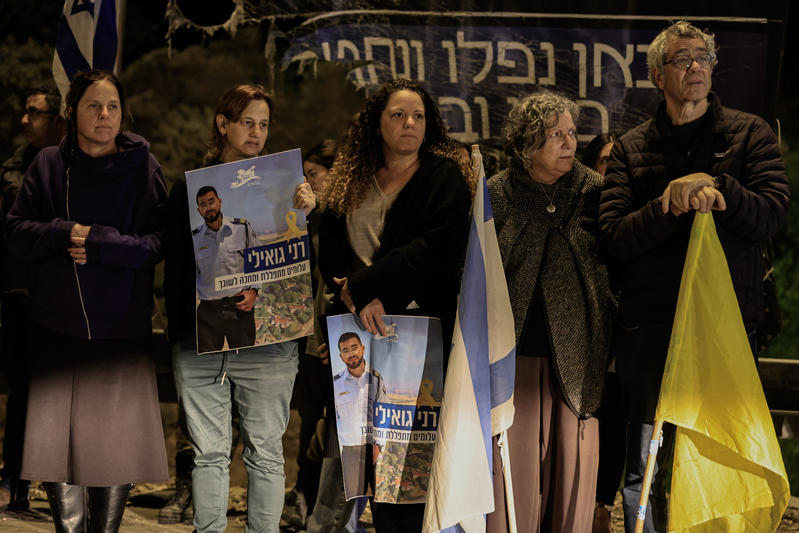
Relatives, friends and supporters of Master Sgt. Ran Gvili, whose body is held by Hamas, attend a Kabbalat Shabbat ceremony at Hostage Square in Tel Aviv, calling for the return of his body from Hamas captivity, on January 16, 2026. Photo by Avshalom Sassoni/Flash90 *** Local Caption *** רן גואילי שוטר חטוף כיכר החטופים קבלת שבת הפגנה אחרון

What’s happened: Amidst growing differences between the Israeli government and the Trump administration, the Israeli government decided yesterday to delay opening of the Rafah crossing between Gaza and Egypt.

  • The opening is one of many measures that are supposed to happen in line with Phase two of the ceasefire agreement, which the US administration announced was underway earlier this week.
  • Israel opposed moving on to phase 2 before the body of the last Israeli hostage, Ran Gvili, was recovered from Gaza, and Israeli officials were particularly unnerved by the inclusion of Qatar and Turkey not just in Trump’s Board of Peace, but also in the Gaza Executive Board which is designated for a direct role in supervising postwar Gaza reconstruction and governance.
  • The Gaze Executive Board is the body which oversees the National Committee for the Administration of Gaza (NCAG), the so-called “technocratic” committee of Palestinians responsible for transitional governance of Gaza.
  • Outside of Israel, growing attention has been focused on the charter of President Trump’s Board of Peace.
    • The establishment of the Board was explicitly set out in the Comprehensive Plan which brought the Gaza war to a ceasefire in October 2025 and was endorsed by a UN Security Council resolution. Over the past week, the US administration has been sending formal invitations to countries to join the Board together with a detailed charter. The charter indicates a much broader role for the Board than just overseeing transitional governance and reconstruction in Gaza.
    • The charter grants broad personal powers to President Trump, with the language unclear if these powers will last longer than his term in office. It offers countries a “permanent membership” if they contribute $1 billion dollars at the outset, though a three-year membership is free. Its mandate  includes securing “enduring peace in areas affected or threatened by conflict,” not just Gaza.
    • Among US allies, the only vocal scepticism about the Board registered so far has been from France, which has not definitively said whether it will join, and Israel, which is angered about the inclusion of Qatar and Turkey on the subcommittee explicitly tasked with overseeing governance in Gaza, the aforementioned Gaza Executive Board.

Context: The role of Qatar and Turkey in the future governance of Gaza continues to be a cause of concern for Israeli security officials, and a point of contention in domestic Israeli politics.

  • In Knesset, opposition leader Yair Lapid blasted Netanyahu for either failing to block Qatar and Turkey from gaining a foothold in Gaza. “Hamas’s hosts in Istanbul and Doha, Hamas’s ideological partners, have been invited to run Gaza,” he said from the rostrum. Turning to the Prime Minister, he said that Netanyahu either “agreed behind our backs that Turkey, Qatar, and the Palestinian Authority would be in Gaza,” or that he didn’t know that the US had included them, which means “Trump doesn’t give a damn about you.”
  • Netanyahu acknowledged that the US and Israel had “a certain argument” on the issue of Qatari and Turkish involvement, but emphasised that forces from the two countries would not set foot in the Strip.
  • Former Prime Minister Naftali Bennett, not currently a member of Knesset, took to social media to criticise the Prime Minister on the matter. “Erdogan and the despicable Qatar, the greatest haters of Israel, the most enthusiastic aides of Hamas, are being ushered in through the front door to run Gaza,” he tweeted. “What a terrible diplomatic failure by the Netanyahu-Ben-Gvir-Smotrich government. Soon we will fix this, too.”
  • Disagreement between the US and Israel  is another case of most recent ruptures between the Trump administration and US allies. These rifts are becoming interlinked, as Donald Trump clashed with French President Emmanuel Macron over the potential inclusion of Vladimir Putin in the Board of Peace. 
  • The question of the Rafah Crossing has long been a bone of contention internationally and internally in Israel.
    • When Israel withdrew all its soldiers and civilians from the Gaza Strip in 2005, it signed a multilateral agreement called the Movement and Access Accord which created a complicated mechanism for operating the crossing between Gaza and Egypt by Palestinian and European forces with a remote supervisory role by Israel.
    • The arrangement was abandoned when Hamas took over the Strip following its coup in 2007. Egypt shut the crossing down completely in May 2024 when Israeli forces retook the Philadelphi Corridor, and the ceasefire which ended the war a year and a half later called for the crossing to be reopened, implicitly under an arrangement that would resemble the 2005 Accord.
    • Initially, Israel announced it would reopen the crossing for one-way traffic — from Gaza to Egypt — but eventually under international pressure and despite strong opposition in the Cabinet, it agreed to open it for two-way traffic in Phase 2 of the ceasefire. The decision yesterday to delay the opening further was interpreted by all sides as an expression of Israeli frustration at both the incomplete return of deceased hostages and, most especially, at the last minute inclusion of both Qatar and Turkey in the Gaza Executive Board.

Looking ahead: Lurking behind all the disagreements about the Board of Peace, the Gaza Executive Board, the NCAG, and the ISF is the question of Hamas disarmament. No credible plan for the actually disarming the terrorist organisation has been put forward by any of the various committees and boards.

  • Netanyahu himself, speaking at yesterday’s stormy Knesset debate, alluded to the possibility that the IDF would be forced to carry out the task itself should international efforts to disarm Hamas fail to yield results. “Phase 2 says something simple: Hamas will be disarmed, and Gaza will be demilitarised,” he said in his speech before Parliament, before adding that this “will be achieved either the easy way or the hard way.”
  • Reports in the Israeli media based on leaks from the IDF suggest that such an operation would require four or five reserve divisions to be mobilised. The establishment of internationally backed governing and oversight bodies in the wake of the ceasefire would no doubt complicate such a ground offensive, especially in comparison to previous IDF incursions into Gaza over the past two years of war. But without concern over the fate of living hostages binding Israel’s hands, the IDF would be much freer to act than it was in previous rounds of fighting.

January 19, 2026

US announces makeup of new governance for Gaza

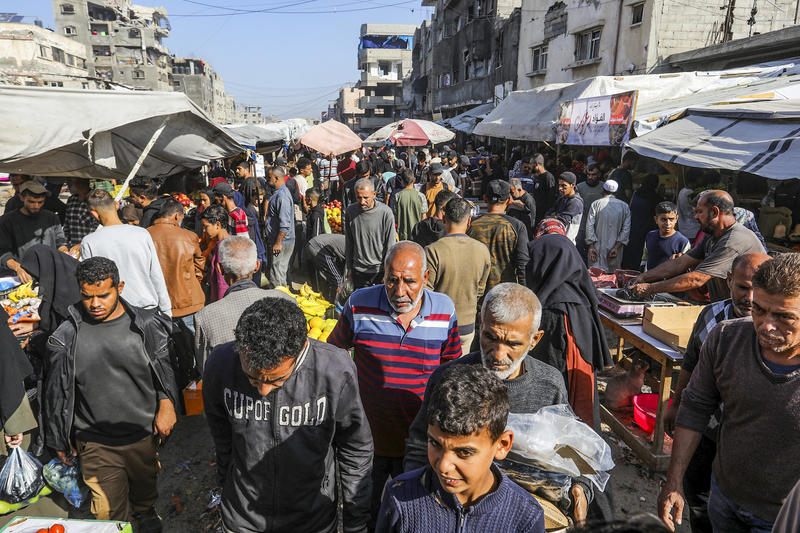
Palestinians shop at a market in Khan Yunis
Palestinians shop at a market in Khan Yunis, in the southern Gaza Strip, on November 21, 2025. Photo by Abed Rahim Khatib/Flash90 *** Local Caption *** הפסקת אש עזה פלסטיני פלשתיני שוק קניות חאן יונס

What’s happened: Over the weekend, the Trump administration announced the composition of the Gaza Board of Peace and an executive committee that will liaise between the board and the newly-formed government of Palestinian technocrats.

  • The Board of Peace will be led by President Trump and include Secretary of State Rubio, US envoys Witkoff and Kushner, Former Prime Minister Blair, Apollo Global Management CEO Marc Rowan, World Bank President Ajay Banga and deputy US National Security Adviser Robert Gabriel.  
  • The executive committee members will include the envoys Kushner and Witkoff, Blair, Rowan, Turkish Foreign Minister Hakan Fidan, Qatari diplomat Ali Thawadi, Egyptian General Intelligence Director Hassan Rashad, UAE Minister of International Cooperation Reem Al-Hashimy, former UN humanitarian coordinator Sigrid Kaag, Israeli-Cypriot businessman Yakir Gabay and former UN envoy to the Mideast Nickolay Mladenov.
  • Dr. Ali Shaath will be the Chairman of the National Committee for the Administration of Gaza (NCAG), the main Palestinian technocratic body on the ground. Committee members will include a range of Palestinian technocrats, some of whom were previously affiliated to the Palestinian Authority (PA).
  • The Israeli Prime Minister’s Office issued a statement noting that the US announcement “was not coordinated with Israel and runs contrary to its policy.” Israeli officials are concerned the board includes senior representatives from Turkey and Qatar.
  • Leader of the Opposition Lapid said, “For the past year I’ve been telling the government: ‘If you don’t advance the Egyptian solution with the United States and the world, you’ll end up with Turkey and Qatar in Gaza.’ Last night, the composition of the ‘Board of Peace’ was announced—Turkey is in, Qatar is in and, according to the IDF, Hamas has 30,000 armed men in Gaza. That is a complete political failure of the Netanyahu government after the courage and endless sacrifice made by IDF soldiers and commanders.”
  • Former Prime Minister Bennett commented, “Two years after it massacred us, Hamas is still alive, in control and growing stronger. The entry into Gaza by Qatar and Turkey, Hamas’s supporters and financiers, gives Hamas a reward for the October 7 massacre, endangers Israeli citizens’ security and sends a grave message to the peoples in the region that for massacring Jews one receives political and military achievements.”
  • Following the signing of committee’s mission statement Shaath said that the NCAG will act to entrench security, to repair vital infrastructure and to advance stability in the Gaza Strip. Shaath said that the top priority at present was to reopen the Rafah crossing in both directions.
  • Speaking at a rally on Saturday night, the parents of the last deceased hostage held in Gaza, Ran Gvili said, “While we are here, still waiting for Rani’s return, a Board of Peace for the second stage is being established. How can anyone think about a second stage, and what peace are they talking about at all? Peace with people who have refused to return our son, despite having consented to that in an agreement?”

Context: Israel has consistently stated that there can be no practical implementation of Phase 2 before the body of the final fallen hostage is returned and Hamas is disarmed.    

  • The decision to include Turkish and Qatari representatives on the Gaza executive committee has caused alarm across the political spectrum is Israel, though the decision is not a surprise. Those countries were key actors in persuading Hamas to agree to the ceasefire in October and are considered key allies by Trump. The major concern is that Hamas will receive a renewed influx of funds allowing it to pay fighters and consolidate its control.  
  • In parallel to the announcements, the US led Civil-Military Coordination Centre (CMCC) in Kiryat Gat continues to coordinate aid into Gaza and to develop plans to build new residential neighbourhoods for Gazans, (initially on the Israeli side of the yellow line).
  • Currently, around 800 trucks of supplies enter into Gaza every day, but once they pass the yellow line, Hamas is able to place a tax on every delivery which it then uses to replenish their accounts and rehabilitate their practical control over the Strip.  
  • Israel is further concerned that Hamas attacks on its troops along the yellow line have increased.
  • The announcement over the weekend is largely driven by Trump’s desire to showcase progress, even if concrete changes on the ground remain mostly symbolic for now.
  • Despite formal denials the NCAG appears closely connected to the PA, as is reflected in its leadership, composition, and Ramallah’s clear endorsement.
  • Hamas welcomes the committee because it poses no real threat to its power, serving as civilian cover while Hamas retains security control. This worryingly resembles the classic model of Hezbollah, operating as the main military force under a weak civilian leadership.
  • Although thousands of Hamas fighters were killed during the two year war, the latest assessment suggests every fighter killed has been replaced, (albeit younger, less experienced, less skilled) and that the combined forces of Hamas and Islamic Jihad once more stands at around 40,000.
  • The IDF significantly degraded their rocket arsenal, with about 90% of it destroyed, but military officials believe that hundreds of rockets still remain in the Strip, mostly short-range.

Looking ahead: In an effort to avoid a clash with the US administration Prime Minister Netanyahu has instructed Foreign Minister Saar to liaise with US Secretary of State Rubio.

  • According to Israel Hayom, Trump will use the platform of the World Economic Forum in Davos this week to condemn Hamas for its delay in handing over its weapons.
  • After Davos, all of the countries involved, including Turkey and Qatar, will present Hamas with a categorical demand to disarm. If Hamas rejects the demand to hand over its weapons, President Trump could give a green light to an Israeli military operation, as he said publicly in their last meeting with Netanyahu.
  • It’s understood that Donald Trump has invited other world leaders to join the Board of Peace, including Prime Minister Starmer. 

Newsletter sign-up

Please enter your information below to subscribe to our daily newsletter and stay updated and informed.

Donate to BICOM

At BICOM, we rely on the generosity of people like you to keep our website and services running. Your donation, no matter the size, makes a real difference. Please consider supporting us today. For further information please email: [email protected]