What’s happened: Emergency call up orders began to go into effect yesterday with 40,000 reservist soldiers mobilised. This is taking place as the IDF prepares to embark on a broad offensive operation into Gaza City.
- Most reservists are not likely to enter Gaza. They are, rather, relieving soldiers in the West Bank and on the northern border who are slated to be a part of the upcoming operation, which will involve five divisions.
- The Israeli government’s public position remains that only a comprehensive deal that would release all hostages could avert the operation. A stormy cabinet session was held on Sunday regarding the war in Gaza. Ministers did not vote on the ceasefire deal on the table, though Hamas appears to have accepted it. This deal would include a 60-day ceasefire and a partial release of the remaining hostages.
- Belgium announced that it would recognise a Palestinian state at the UN General Assembly later this month. Foreign Minister Maxime Prevot also announced 12 “firm sanctions” against Israel, including a ban on importing products from settlement. Prevot’s announcement stipulated that the “administrative formalisation of this recognition” would only take effect “when the last hostage is released.”
- Foreign Secretary David Lammy reiterated his commitment to recognise a Palestinian state “unless the Israeli Government takes substantive steps to end the appalling situation in Gaza and commits to a long-term sustainable peace.” He added, “To those who say recognition rewards Hamas or threatens Israeli security – it does neither,” without explaining how this was the case.
- Alluding to the humanitarian crisis in Gaza, Lammy said that “words of condemnation… are not enough. But be in no doubt: we have acted, as a country, where we can.” He went on to list actions taken by the Government: “We restored funding to UNRWA. We suspended arms exports that could be used in Gaza. We signed a landmark agreement with the Palestinian Authority. We stood up for the independence of international courts. We have delivered three sanctions packages, three, on violent settlers and far-right Israeli Ministers for incitement. We suspended trade negotiations with the Israeli Government. We are at the forefront of the international community’s work to plan for a stable, post-conflict peace. And we have provided nearly over £250m in development assistance over the past two years.”
- None of this actions mentioned by Lammy is putting any pressure on Hamas to release the hostages or exerting diplomatic pressure for the October 7 attacks. Nor did he mention any action relating to states, allied with Britain, that harbour leading Hamas figures, such as Qatar or Turkey.
- Lammy also announced the triggering of the “snapback” procedure for sanctions against Iran. These will go into effect in 30 days barring some diplomatic breakthrough with Iran.
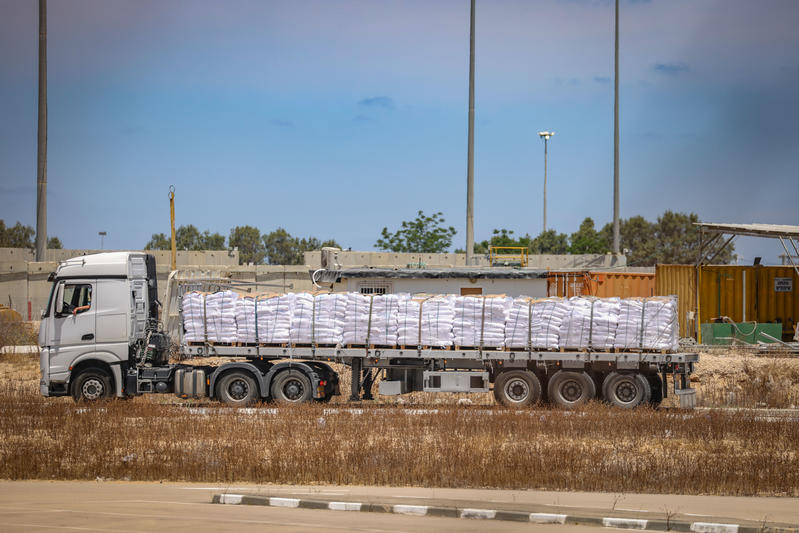
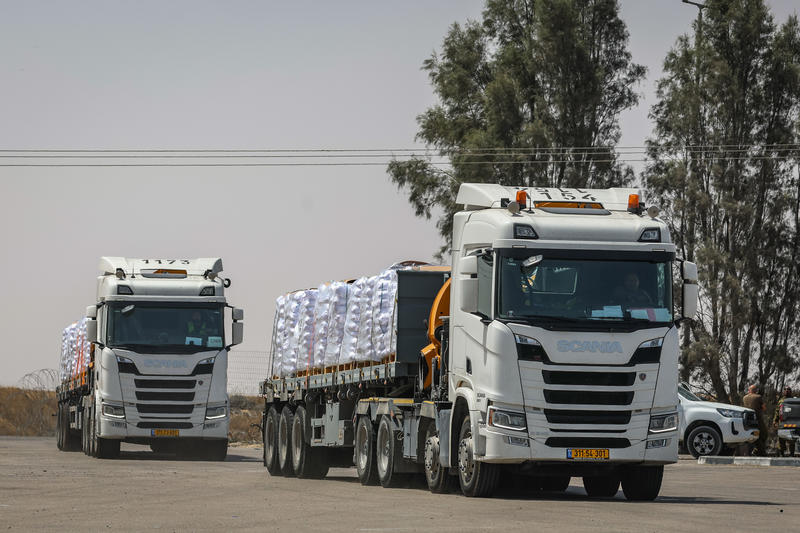
- 320 trucks of humanitarian aid crossed from Israel into Gaza yesterday through crossings at Kerem Shalom in the southern Gaza Strip and Zikim in the north. COGAT reports that 350 trucks were collected and distributed by aid organisations yesterday, as opposed to 170 the day before, with hundreds more still waiting on the Gaza side of the border for collection.
Cabinet leaks: Multiple Israeli media outlets gave detailed reports of a stormy cabinet meeting on Sunday evening, all based on anonymous leaks.
- It is understood that the heads of the IDF, National Security Council, Mossad, and Shin Bet strongly support accepting the ceasefire deal which would see the release of 10 out of 20 living Israeli hostages and a 60 day pause in fighting. The Prime Minister and most of the cabinet oppose this. All four men are Netanyahu appointees. The security chiefs all expressed severe doubts about the planned military offensive into Gaza City.
- The IDF estimates around 100 fatalities to its forces in an operation to conquer Gaza City in an operation that could take as long as a year to complete successfully. Chief of General Staff Eyal Zamir told the Government that such an operation would necessarily mean a military government in Gaza, with all the attendant legal and operational obligations that would entail. Israel would be directly responsible for the welfare of Gazans in territory its forces occupy in a way it has not been since 1994. And its soldiers would be constant targets of guerrilla attacks.
- Mossad Director David Barnea spoke out more forcefully than in the past in favour of the current ceasefire deal. He was quoted in television reports as saying, “That’s the proposal that is on the table, and we need to take it.”
- Most of the media attention, however, focused on Zamir, with many harsh and pointed statements attributed to him or to his critics. Orit Struck, one of the most far-right figures in the Cabinet, obliquely referred to Zamir with a Mishnaic reference to “the man who fears and is soft-hearted.” Zamir responded to her, “I came to carry out two of my life’s missions: to prevent nuclear [weapons] in Iran and to destroy Hamas. Every morning I approve attacks everywhere. No one is soft of heart. If you want blind obedience, get someone else.”
- Confronted by the Cabinet Secretary with Ministers’ demands to defeat Hamas, Zamir responded with a sarcastic Hebrew phrase that can be translated as “you don’t say?” or “good morning sunshine!” and added, “you were the security cabinet on October 7. Now you’ve remembered to talk about defeating Hamas?”
- Various reports in the Hebrew press referenced Cabinet ministers who dissented from the majority position and preferred taking the ceasefire deal and partial hostage release now rather than embarking on the new offensive into Gaza City. Most reports mentioned Foreign Minister Gidon Saar as one of the opponents of the new operation, with concerns about Israel’s diplomatic position at the upcoming UN General Assembly attributed to him.
Looking ahead: In preparing a response to the upcoming announcements of recognition of a Palestinian state by France, Britain, Canada, and others, Prime Minister Netanyahu will convene a consultation on annexing parts of the West Bank.
- The cabinet are expected to explore various proposals, including annexation of settlement blocs, of Areas C, or of the Jordan Valley. An initiative to annex the Jordan Valley was stopped in its tracks in 2020 by the announcement of normalisation agreements with Bahrain and the UAE.
- The Jordan Valley stretches from the Sea of Galilee to the Dead Sea, forming a natural border between the West Bank and Jordan. It is sparsely populated and serves as a vital buffer zone and holds strategic significance for Israel’s security.