
What’s happened: US Vice President JD Vance arrived in Israel yesterday. Echoing President Trump’s threat of a “fast, furious and brutal force” if Hamas does not abide by terms of the ceasefire. He said “If Hamas doesn’t cooperate, as the president of the United States has said, Hamas is going to be obliterated.”
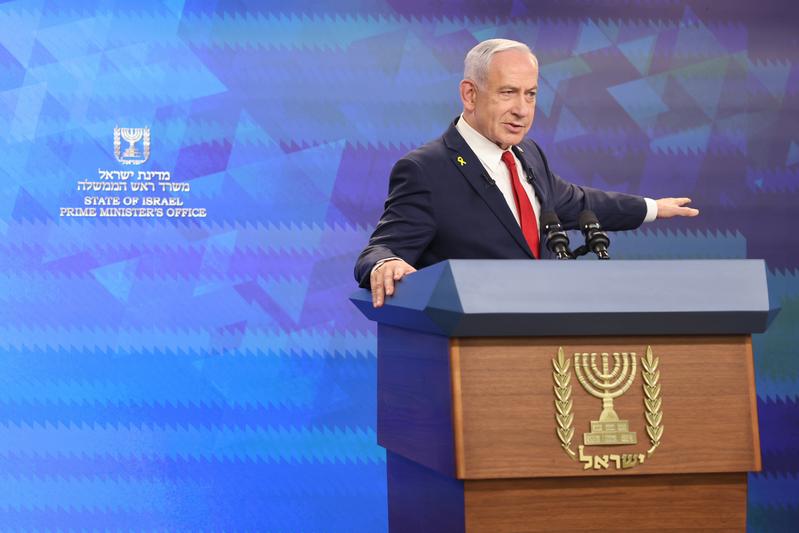
- He is due to meet with Prime Minister Netanyahu today to discuss next steps in the ceasefire.
- According to Arab media reports, Hamas has indicated to the US administration that it would halt public executions of its rivals. Videos of Hamas firing squads reasserting control over Gaza had been circulating on social media, provoking outrage, but also seen as an indicator that Hamas remained firmly in control of whatever territory lay beyond the presence of the IDF. Currently, the IDF holds about 53% of the Strip’s territory.
- Hamas handed over two more bodies of Israeli hostages. They were identified by the Israeli Institute for Forensic Medicine as Tamir Adar and Arie Zalmanowicz, both of Kibbutz Nir Oz.
- Adar was 38 when he was killed on October 7, 2023, while battling the terrorists who invaded the kibbutz, and his body was taken into Gaza. It was not at the time known that he had fallen defending the kibbutz, and for months his family held out hope that he might be alive. His 85-year-old grandmother, Yaffa Adar, was also abducted that morning. She was released in the first ceasefire.
- Arie Zalmanovicz was 85 years old when he was kidnapped alive during the October 7 attack. He was one of the founders of the kibbutz, along with Amiram Cooper and Oded Lifshitz who were also kidnapped that morning and murdered in captivity. Zalmanovicz is believed to have died in November 2023 due to malnutrition and a lack of treatment for his diabetes.
- The bodies of 13 hostages remain in Gaza.
- Prime Minister Netanyahu dismissed the National Security Council Director Tzachi Hanegbi following months of longstanding disagreements between the two. Hanegbi was known to have opposed the expanded military offensive in Gaza that began just before a ceasefire agreement was reached. In his announcement regarding his departure, Hanegbi wrote “The terrible failure of October 7, to which I was party, must be investigated thoroughly to ensure that the correct lessons are learned and in order to help restore the trust that cracked.”
Context: With Vance’s arrival in Israel, he joins Trump envoys Steve Witkoff and Jared Kushner who arrived earlier this week.
- The talks in Israel are focused on two issues. The first is stabilising the ceasefire and efforts to prevent it from collapsing, which emerged following the Hamas attack in southern Gaza on Sunday. The second is laying the groundwork for the second stage of the agreement.
- The Director of the General Intelligence Directorate of Egypt Hassan Rashad was also in Jerusalem yesterday, meeting Netanyahu in his office in Jerusalem. Rashad, who has been Egypt’s intelligence chief since 2024, played a key role in mediating the talks which led to a ceasefire. The meeting reportedly focused on the next stages of the ceasefire, with particular focus on the reopening of the Rafah crossing. Rashad’s visit marks the first visit of any senior Egyptian official in Israel since the war began on October 7, 2023.
- A crucial component of phase two will be deployment of a multinational force. There is grave concern that as signatories of the agreement Turkish soldiers could be deployed into Gaza, a move that Israel vehemently opposes.
- Similarly, both the UAE and Saudi Arabia are concerned about the outsized role that Qatar has been given in the future rehabilitation of the Strip.
- The two US envoys visited the Civil-Military Coordination Centre for implementing the ceasefire in Kiryat Gat in southern Israel. Israeli media noted the presence of flags from Denmark, German, and Jordan there, but not those of Turkey and Qatar.
- Military personnel at the site reportedly included soldiers from the US, UK, Jordan and the UAE. Regarding the participation of a “small number of British officers,” the a UK Ministry of Defence spokesperson said, “The UK continues to work with international partners to support the ceasefire in Gaza and identify where it can best contribute to the peace process.”
- The Coordination Centre is seen as testament to the seriousness of the US administration’s commitment to the implementation of Trump’s plan.
- It is still unclear when and how the International Stabilisation Force called for in the 20-point plan which ended the war in Gaza will be deployed. The New York Times reports that countries that were expected to contribute troops to the ISF are skittish about entering Gaza and being seen there as fighting Hamas or as a kind of foreign occupying force. Unnamed diplomatic sources refer to discussions involving Indonesia, Egypt, Turkey and Azerbaijan.
- Israeli security officials have also expressed misgivings about the international forces that are to be deployed in Gaza, whose presence will severely limit the IDF’s freedom of action. Far from disarming Hamas, they could, unwittingly or not, serve as a shield for the terrorist organisation.
- During his meeting with Netanyahu, Vance is expected to also discuss the expansion of the Abraham Accords, the anticipated economic impact of the expanded accords and policies regarding Iran.
Looking forward: Secretary of State Marco Rubio is also due to visit Israel in the next few days to oversee next steps in the implementation of the ceasefire.
- It was announced yesterday that Saudi Crown Prince Mohammed bin Salman will visit the White House on November 18. The agenda will likely include new US security guarantees for Saudi Arabia.
- The US is keen to advance an agreement that would lead a normalisation of ties between Israel and Saudi Arabia, something the Biden administration was pushing for in the months preceding the October 7 attack and which has been on hold as the ensuing war raged for the two years since.