LATEST

Israeli politics & society

Key background
  • The State of Israel was founded in 1948 with its foundational document being its Declaration of Independence. This declaration confirmed Israel’s nature as a Jewish and democratic state where all citizens were viewed as equals before the law, and freedom of conscience, worship, education, and culture were to be guaranteed.
  • Israel’s constitution is uncodified, but practically oriented towards a number of “Basic Laws” concerning state institutions and rights. They can only be overturned by a supermajority vote in the Knesset.
  • Similarly to the UK, Israeli government has three branches: the legislature (Knesset), judiciary, and executive (cabinet lead by the Prime Minister). The President is elected by members of the Knesset for a single seven-year term and acts as its head of state, but this role is almost entirely ceremonial.
  • Israel uses pure proportional representation to elect its MKs. As this functionally precludes any one party securing an outright majority, Israel is governed by coalitions formed by the leader of the party that generally wins the most seats.
  • The current President is Isaac Herzog, and the Prime Minister is Benjamin Netanyahu of the Likud. Other coalition partners include United Torah Judaism, Shas, the Religious Zionist Party, Otzma Yehudit, New Hope, and Noam.
Heavy winds and rain at the beach in the southern Israeli city of Ashdod, December 10, 2025.
Heavy winds and rain at the beach in the southern Israeli city of Ashdod, December 10, 2025. Photo by Flash90 *** Local Caption *** רוח חוף ים סערה סופה גשם חורף מזג אוויר

Updated December 10, 2025

Search for remains of last hostage on hold as storm hits coast

What’s happened: The ongoing search for the body of Ran Gvili, the last remaining hostage from the October 7 massacre not repatriated to Israel for burial, has been temporarily called off due to an impending large storm.

  • Storm Byron, named by the new Southeast Mediterranean convention instituted by Greece, Israel, and Cyprus five years ago, is expected to bring harsh weather to Israel and the Palestinian territories.
  • In preparation, COGAT has confirmed that almost 270,000 tents and tarpaulins have entered Gaza in recent weeks along with fuel, 5,600 tons of medical supplies and over 1,500 trucks of blankets and winter clothes.
  • In addition, since the ceasefire went into effect, over 18,000 food trucks have entered Gaza, with about 20% of those coming from the UN. According to the most updated figures, between 600 and 800 trucks carrying humanitarian goods enter every day.
  • The New York Post reported yesterday on a video that had surfaced on social media from the summer showing several tons of baby formula and nutritional shakes meant for kids being hidden in an underground Hamas facility. According to the report, the video was taken during the late summer weeks when global headlines were dominated by an alleged famine in Gaza. The video was distributed by a Ahmed Fouad Alkhatib, a Gaza native and anti-Hamas activist, who accused Hamas of attempting to starve its own populace in an attempt to put pressure on Israel.
  • Yesterday at Ben Gurion Airport, a small ceremony was held to mark the repatriation of the body of Sudthisak Rinthalak, a citizen of Thailand who was abducted and murdered in the October 7 attack and whose body was returned to Israel last week.
  • Israel is set to reopen the Allenby Crossing today. The crossing is one of only three crossings between territory under Israeli control and Jordan, and the only one connecting the West Bank to Jordan. Israel closed the crossing in September following a deadly attack in which a Jordanian citizen driving a truck with aid for Gaza opened fire on Israelis, killing two security personnel. Shortly after the incident, Israel had the crossing reopened for passenger traffic, but it has been closed for  trucks for the past three months.

Context: President Trump has indicated that he would like to announce the conclusion of Phase One of the ceasefire and the beginning of Phase Two.

  • Israeli officials are hesitant to accede to this without first achieving the return of the last hostage to Israel. There is fear in Israel that even a small compromise on this very clear and very measurable ceasefire condition will be a repeat of the mistakes made in previous ceasefires in Gaza and Lebanon, where global pressure on Israel not to insist on full implementation ended up allowing terrorist organisations to build up and thrive on its borders.
  • Israeli officials have speculated that Hamas is deliberately delaying the repatriation of Gvili’s body in order to drag out the first stage of the ceasefire, which has allowed Hamas to reestablish and consolidate its hold on half of the Gaza Strip, and avoid entering the second stage, which could see it forced to disarm.
  • Both the US and Israel would like to see a forceful mandate for the International Stabilisation Force, yet to be formed, which will enforce Phase Two of the ceasefire agreement. It remains unclear whether the mandate will fall under Chapter VI or VII of the UN Charter. Both Israel and the US are keen on the latter which provides the legitimate use of force for enforcement purposes. Israel is wary of repeating the failure of UNIFIL in Lebanon that is only mandated to carry arms for self defence under Chapter VI. Chapter VII is crucial if the mission is to include disarming Hamas. In any event there are still no countries prepared to send troops for such a mission, apart from Turkey that has been vetoed by Israel.
  • Parallel to that, Israel has acceded to a US request to map out several “green zones” inside the part of the Gaza Strip held by the IDF as places for temporary housing for Gazans. Preliminary infrastructure work has been done in these zones so that trailer homes and schools can be connected to water and sewage lines. Only families vetted to ensure that they have no arms and no connection to Hamas will be allowed to enter the green zones, and this will only begin once the second phase of the ceasefire has formally begun.
  • Israel Hayom reports that the Israeli Government, contrary to its publicly stated position, conveyed to the Palestinian Authority a limited willingness to accept the “pathway to a Palestinian state” mooted in Trump’s 20-point plan which was the basis of the Gaza ceasefire, but only if the Palestinian Authority accepted two conditions: a definitive end to the pay-for-slay programme for terrorists in Israeli prisons and an end to UNRWA activity in both the West Bank and Gaza. The Palestinians, according to the report, rejected both conditions.
  • Former head of the Shin Bet Ronen Bar has spoken publicly for the first time since leaving his role. He called once more for the formation of a State Commission of Inquiry to investigate the failures leading up to the October 7 attack. He made the statement, widely interpreted in Israeli media as a swipe at Prime Minister Netanyahu’s attempt to craft a bespoke inquiry outside the framework of the Commission of Inquiries Law. He noted, fifteen State Commissions of Inquiry have been convened under the rubric of this law, and they have investigated matters including Israel’s failure to prepare for the Yom Kippur War, the massacre of Palestinians in two Lebanese Refugee Camps during the First Lebanon War, the assassination of Prime Minister Rabin, and the October 2000 riots.
  • Prime Minister Netanyahu has sought to sidestep a State Commission of Inquiry by appointing a ministerial committee to convene a special governmental commission of inquiry, whose mandate would include investigating the role of the Supreme Court, the media, and anti-government protesters in the lead-up to the October 7 massacre.

Looking ahead: The US administration is determined to see diplomatic progress on Gaza, as well as with Syria and Egypt, and may be willing to apply moderate pressure to achieve this.

  • President Trump appears eager to announce some kind of positive development on at least one at his scheduled meeting with Prime Minister Netanyahu on December 29, and ideally all three.

December 9, 2025

Israeli cabinet approves state budget

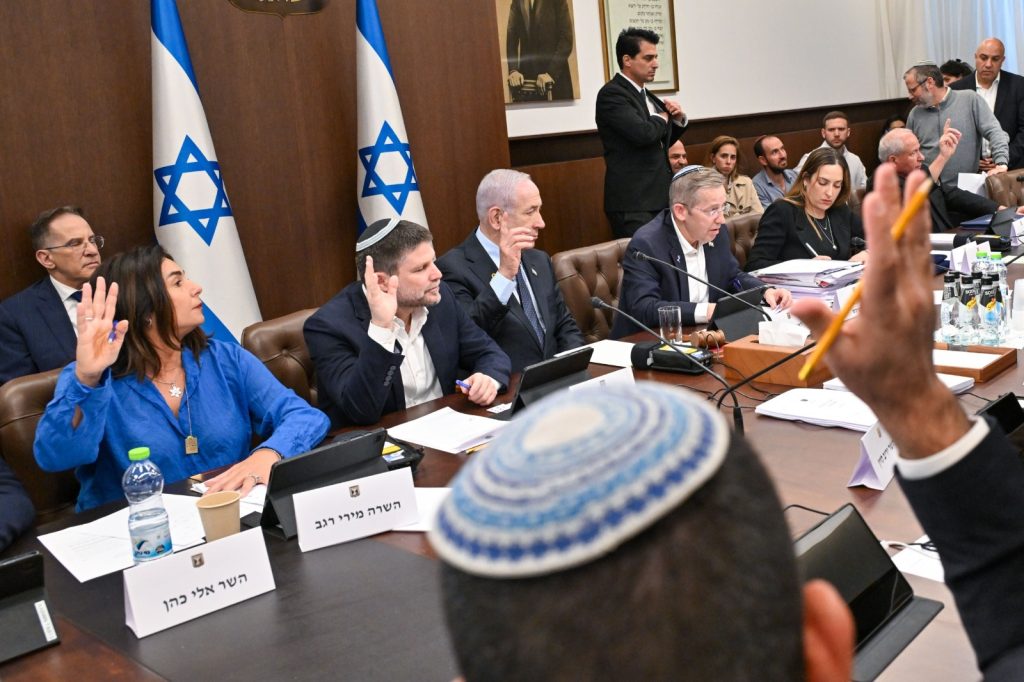
Israeli cabinet approves state budget, December 5, 2025.
Israeli cabinet approves state budget, December 5, 2025. Photo credit: Kobi Gideon (GPO)

What’s happened: On Friday the cabinet approved the state budget for the upcoming year.

  • Prime Minister Netanyahu described it as a “responsible, balanced budget,” that “meets all the security needs of the State of Israel.”
  • Beyond the military achievements over the last year, Netanyahu also highlighted the country’s economic strength, “Investments are flowing and will continue to flow. The stock market is breaking records. The shekel has strengthened. Interest rates have dropped and unemployment is at a low. And all this during a war. No one believed this either, but we believed, you believed, Minister of Finance, and we did it together.”
  • “In the current budget, we intend to lower taxes, including income tax. We also intend to reduce regulation and streamline our governmental systems.” According to Netanyahu, the “most important thing in this budget is aid and grants for IDF soldiers in the standing army and in the reserves, and for their families, because they deserve it. We will grant them all the support they need, a framework we have already built, and it will grow even larger. Together, we are presenting a good budget for the State of Israel, and I am certain that this budget will pass.”
  • The proposed budget amounts to 662 billion shekels (about £154 billion) and would leave the government with an operating deficit of 3.9 per cent of GDP.
  • On Monday, Netanyahu was forced to attend a Knesset session triggered by 40 signatures from the opposition. Addressing the plenary, Netanyahu said that the government was also on the verge of completing the first stage a bill which would regulate draft exemptions for the ultra-Orthodox public.
  • Leader of the Opposition Lapid blasted the Government for “approving a budget of corruption and draft-dodging.”
  • Naftali Bennett, widely seen as a leading contender to replace Netanyahu as prime minister in the next election derided the budget as a “protection” racket of a Government“extorted by draft-dodgers, and bankrupting those who serve.”

Context: The process of cabinet approval of a government budget proposal was, in comparison to most years in Israel, unusually late and remarkably drama-free.

  • Normally, the government finishes its proposal by July, and from there the budget moves to parliament. This year, Prime Minister Netanyahu preferred to hold off until after the fighting in Gaza (and elsewhere) ended before bringing a detailed proposal for the defence budget.
  • There was a political calculation too. The unresolved dispute over the ultra-Orthodox draft exemption legislation threatened to topple the government over the past year and trigger early elections, and as long as that threat hovered over the horizon, there was little to be gained publicising potentially unpopular tax increases and spending cuts that might never have been implemented anyway.
  • The draft dispute is also a principal reason why the budget resolution in cabinet was significantly less contentious than in previous years. The ultra-Orthodox representatives are currently not part of the cabinet as part of their pressure campaign on the draft issue, although they are not voting with the opposition.
  • Crucially in order to pass the budget in parliament the government needs the ultra-Orthodox MKs in order to have a majority. They will only support the budget if they also receive the legislation over military exemption that they are pursuing.
  • The biggest disagreement in the lead-up to Friday’s budget vote was regarding the defence budget. The initial gaps were enormous, with the Defence Ministry asking for 140 billion shekels (£33 billion) and the Treasury only granting 90 billion (around £21 billion). A revised downward estimate of reserve army service, a large drain on the defence budget since the October 7 war broke out, paved the way for a compromise on the figure of 112 billion shekels (£26 billion).
  • Overall, this year’s budget has less dramatic  reforms than last year’s. Income tax brackets are once more inflation-linked – after having been frozen last year which lead to higher tax rates for middle class families.
  • VAT exemptions on personal imports were raised, despite industry opposition to the measure. A dramatic reduction in dairy import tariffs was included in the budget proposal despite fierce opposition from local dairy farmers.
  • On the other hand, the Treasury proposal to end the VAT exemption on tourism-related services, especially hotels, was successfully blocked following pressure from hoteliers. This policy has featured in many budget proposals over the years and never passed, though this year it survived to a very late stage before being abandoned.
  • There are many sectors that face economic hardships due to the war, including reservists and those evacuated from their homes in the north and south. There is also an understanding that those who survived the attacks, as well as those wounded and bereaved, all require and deserve full rehabilitation.
  • The Treasury was expected to propose shutting down at least five and possibly more Government ministries seen as superfluous. Expectations were that such a proposal would ultimately be whittled down or dropped entirely, but in the end the Treasury did not even include this measure as a proposal at all.
  • The budget proposal also included what in Israel are indelicately referred to as “coalition funds,” last-minute earmarks for narrow sectoral interests. The total of these earmarks was 5.2 billion shekels, and they went almost entirely to religious institutions, with the majority of the money directed toward West Bank settlements.

Looking ahead: Historically, no Israeli government has ever successfully passed a budget in an election year.    

  • The budget now moves to its first plenary reading in the Knesset and then to parliamentary committee discussions. By law, the Knesset has until March 31 to pass a budget. Failure to do so would automatically dissolve parliament and lead to elections within three months.
  • Elections are currently scheduled for October 2026, so even in the event that a budget is not passed, this would only move the next election up by four months.
December 1, 2025

Prime Minister Netanyahu requests a pardon

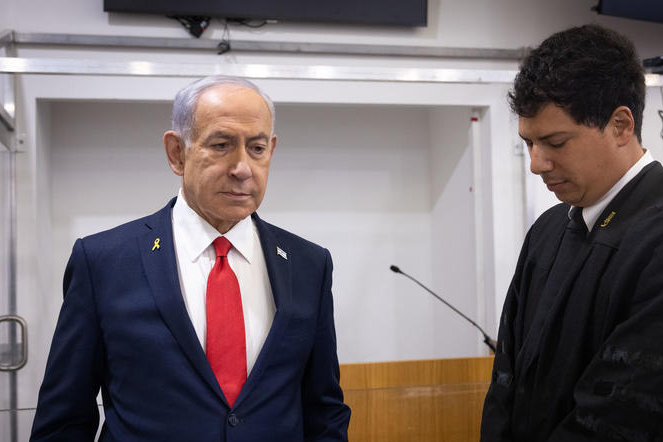
Israeli Prime Minister Benjamin Netanyahu arrives to the courtroom at the Distrcit court in Tel Aviv, before the start of his testimony in the trial against him, October 28, 2025.
Israeli Prime Minister Benjamin Netanyahu arrives to the courtroom at the Distrcit court in Tel Aviv, before the start of his testimony in the trial against him, October 28, 2025. Photo by Miriam Alster/Flash90

What’s happened: Prime Minister Netanyahu has submitted a formal request for a pardon to President Herzog.

  • The full 111 page document was submitted to the Legal Department of the Office of the President by the Prime Minister’s lawyer, Amit Hadad.
  • In parallel, Prime Minister Netanyahu released a video explaining the move. Addressing the citizens of Israel, Netanyahu argued that, “nearly a decade has passed since the investigations into my case  begun. My trial has been ongoing for nearly six years, and is expected to continue for many more years. As more exonerating testimony and evidence which have completely refuted the false allegations against me have come to light in court, and as it has become clearer that the evidentiary foundation against me was built amid the commission of serious crimes, my personal interest was and has remained to continue with this process until its end, until my full acquittal on all counts. But the security and political reality, the national interest, demand otherwise. The State of Israel faces tremendous challenges alongside tremendous opportunities. To repel the threats [and] to seize the opportunities, national unity is essential.”
  • “The ongoing trial has torn us apart from within, has inspired fierce disagreements [and] has deepened divisions. I am sure, like many other Israelis, that the immediate end of the trial will greatly help lower the flames and will promote the broad reconciliation that our country so badly needs. I deliberated extensively on this issue, but recent events have tipped the scales. Due to a decision made by the judicial panel that presides over the case, I am obliged to testify three times a week. Three times a week. That is an impossible demand that isn’t made of any other Israeli citizen.
  • “Furthermore, I also considered President Trump’s repeated requests to Israel’s president. President Trump called for an immediate end to the trial so that I might be able, alongside him, to advance with redoubled efforts the vital interests shared by Israel and the United States in a time window that is unlikely ever to reappear.
  • “Dear citizens of Israel, time after time, I have been elected in democratic elections and I have received your confidence to continue to serve as the prime minister of Israel, first and foremost so as to achieve these historic goals. For these reasons, my attorneys submitted a request for a pardon today to the president. I expect everyone who has the country’s best interests at heart to support this step.”

Context: Upon receiving the request the President noted that he is aware that this is “an extraordinary request which carries with it significant implications,” adding, “after receiving all of the relevant opinions, the President will responsibly and sincerely consider the request.”

  • Requesting a pardon before being sentenced and without admitting guilt is completely unprecedented in the Israeli system.
  • The trial began in May 2020 and could run on for several more years. It is focused on three separate cases:
    • In “Case 1,000” Netanyahu is charged with fraud and breach of trust and is alleged to have received illegal gifts from businessman Arnon Milchan, worth up to £300,000, in return for allegedly acting in Milchan’s interest in a deal to sell an Israeli TV Channel (Channel 10) as well as allegedly helping him get a US visa, after Milchan’s was rescinded. Netanyahu is also alleged to have pursued a deal linked to Indian businessman Ratan Tata, who was Milchan’s business partner, and allegedly supported a law to extend tax breaks given to Israelis returning to live in the country after ten years (such as Milchan).
    • In “Case 2,000” Netanyahu is charged with fraud and breach of trust and is alleged to have worked on a deal with Yediot Ahronot owner Arnon “Noni” Mozes to get better media coverage by offering to restrict circulation of rival newspaper Israel Hayom, which was financed by US-based Netanyahu supporter Sheldon Adelson. The indictment said that Netanyahu and Mozes “recognised that the one had the ability to promote the other’s interest” in the run-up to the 2015 elections and discussed such possibilities. Netanyahu claims he was not serious about the agreement and never intended to implement the deal.
    • In “Case 4,000” Netanyahu is charged with bribery, fraud and breach of trust and is alleged to have promoted regulatory decisions that benefited Shaul Elovitch, the controlling shareholder in the Bezeq telecom giant, in exchange for positive coverage from the Elovitch-owned Walla news site. The indictment says the relationship between Netanyahu and Elovitch was “based on give and take,” and the Prime Minister’s actions benefiting Elovitch netted the businessman benefits to the tune of some NIS 1.8 billion ($500 million) in the period 2012-2017. In exchange, Elovitch’s Walla news site “published your political messages that you wished to convey to the public.”
  • The responses to the appeal for a pardon were predictably partisan. Leader of the Opposition Lapid said, “I say to President Herzog: You can’t grant Netanyahu a pardon without him admitting guilt, expressing remorse and immediately retiring from political life.”
  • Former Prime Minister Naftali Bennett said, “In order to rescue Israel from the chaos, I will support a binding arrangement that includes a respectful retirement from political life alongside an end of the trial. That way, we can let it go, unite, and rebuild the country together.”  
  • Leader of the Democrats Yair Golan said, “Netanyahu wants a pardon? Admit guilt. Express remorse and resign. This is the only way for unity for the nation.”
  • Leader of Yisrael Beiteinu Avigdor Lieberman said, “Five minutes ago there was a war here, and the draft-dodging bill and two hostages who aren’t back and the economy is collapsing, and food prices are sky-high. And what about the whitewash commission of inquiry they’re setting up? Everything has fallen apart. We mustn’t allow him to control the public conversation. We have to keep our eye on the ball.”
  • Coalition Chairman MK Ofir Katz (Likud) said, “The prime minister’s decision to request a pardon is an act of great magnanimity. It’s clear to everyone that the most political trial is collapsing, and the prime minister could easily have proven his innocence in this corrupt witch hunt. But for the sake of healing the country and reconciliation, he is choosing this path. A true leader who always puts the good of the country before his personal interests.” He also received support from his coalition partners.
  • There is speculation that President Herzog could present several conditions in order to receive a pardon: To step down as prime minister, possibly with the option of being re-elected in new elections; and to call an end to all the legislation around judicial reform.
  • Veteran commentator Nahum Barnea writing in Yediot Ahronot lays out three possible responses by the President:
    • “The first is to say that a pardon is out of the question since the conditions stipulated by law haven’t been met.”
    • “The second is to give Netanyahu everything he has demanded and to pray that the High Court of Justice doesn’t strike down the pardon.”
    • “The third is to insist on Netanyahu’s retirement in return for a pardon; to insist that the defendant acknowledge his guilt.”
  • In the past there were discussions of a plea bargain that would see charges of bribery being dropped, an admission of guilt on the lesser charges, evading prison, but retiring from politics.    
  • The issue has long divided Israeli society. In the latest polling on Kan News, 38 per cent support a pardon, with 43 per cent opposed.

Looking ahead: The request has now been relayed to the Pardons Department in the Ministry of Justice which will gather the opinions of all the relevant authorities in the Ministry of Justice.

  • The next stage will include a review by the Legal Advisor in the Office of the President and her team to formulate an additional opinion for the President.
  • The President released a guide to explain for the full legal process ahead.
  • Prime Minister Netanyahu’s trial resumed this morning. None of the parties made any mention of his request for clemency from President Herzog. Netanyahu filed a motion asking the court to cancel his court appearance tomorrow, citing state needs. The judges have not yet ruled on his motion.

November 27, 2025

Fateful days ahead for the Israeli government

People react outside a court hearing on petitions against the appointment of retired judge Yosef Ben-Hamo, at the Supreme Court in Jerusalem, November 27, 2025.
People react outside a court hearing on petitions against the appointment of retired judge Yosef Ben-Hamo, at the Supreme Court in Jerusalem, November 27, 2025. Photo by Yonatan Sindel/Flash90 *** Local Caption *** טלי גוטליב יוסף בן חמו עתירות דיון בית משפט עליון

What’s happened: Three parallel dramas are unfolding in Israeli domestic politics, and all three function indirectly as holdovers of the bitter divisions that predate the October 7 massacre and subsequent war.

  • Reports suggest Prime Minister Netanyahu has decided to advance controversial legislation formalising draft exemptions for the ultra-Orthodox minority in Israel in the coming weeks. The logic being that this is the only way to prevent early elections (an option he was reportedly considering in recent weeks) from being called now, as well as the only way to hold onto his ultra-Orthodox partners after the next election.
  • Netanyahu could face opposition  within his own ruling Likud party, with suggestions that as many as five coalition MK’s oppose the bill being drafted by Netanyahu’s ally Boaz Bismuth, the MK who replaced Yuli Edelstein as chair of the Knesset’s Foreign and Defence Committee.
  • The issue of ultra-Orthodox induction into the army has been a long term challenge. For the prime minister it pits his commitment to his ultra-Orthodox allies to protect and perpetuate the religious studies of ultra-Orthodox men against the popular sentiment striving for a more equal sharing of the burden. The issue has been further exacerbated following the oversized sacrifices made by reservists over the last two years.
  • There is continued and unusual public tension between the IDF Chief OF Staff Zamir and Defence Minister Katz along with other senior government ministers.
  • Comments made yesterday by Zamir were widely interpreted as criticism of the Government. Speaking at the annual ceremony held in honour of Israel’s first Prime Minister David Ben Gurion (which, unusually, was not attended by the Prime Minister), Zamir said that “what is needed is courageous, purposeful, transformative leadership. Leadership that both recognises failure and dares to drive change. Not leadership that frightens and stifles, but leadership that uplifts — leadership with inspiration. Not leadership that evades, but one that looks truth in the eye and sets a new direction.”
  • Meanwhile this morning the Supreme Court ruled against Justice Minister Levin in his effort to handpick a retired judge of his liking to lead the investigation into malfeasance by the IDF Advocate General. The Court ruled that his choice did not meet the requirements stipulated for the investigation.
  • The entire affair, involving abuse of Hamas affiliated prisoners by IDF reservists, a leak of an incriminating video, the MAG lying to the Supreme Court about the source of the leak. The scandal pits coalition  politicians against the legal establishment along similar lines over the controversial judicial reform that was prevalent in the months before October 7, and has been the source of impassioned public disagreement in Israel.

November 26, 2025

Rift in Israel’s security establishment emerges as body of Dror Or is returned

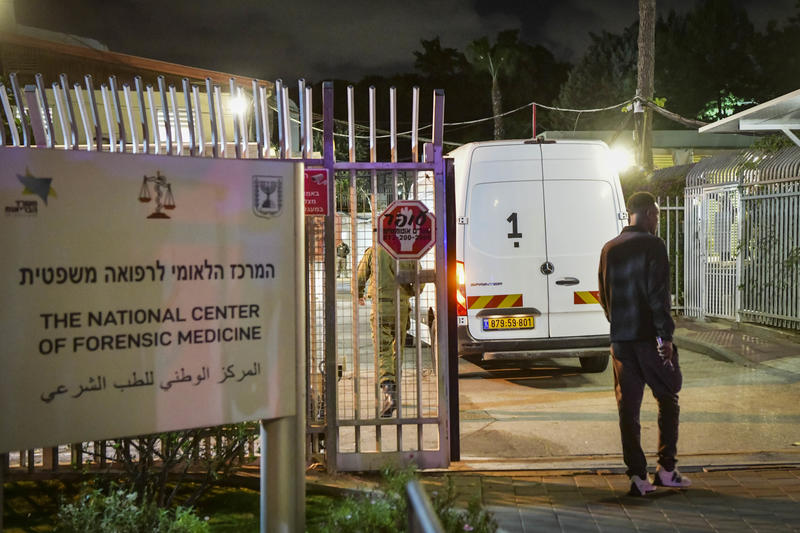
Convoy carrying the body of a hostage arrives at the Abu Kabir Forensic Institute in Tel Aviv, November 25, 2025.
Convoy carrying the body of a hostage arrives at the Abu Kabir Forensic Institute in Tel Aviv, November 25, 2025. Photo by Avshalom Sassoni/Flash90 *** Local Caption *** אבו כביר חרבות ברזל מלחמה שחרור חטופים עסקה חזרה

What’s happened: A body handed over to Israel by the Palestinian Islamic Jihad yesterday was confirmed this morning to be that of Israeli hostage Dror Or from Kibbutz Beeri.

  • Dror Or was a 48-year-old cheesemaker and yoga instructor living on the kibbutz with his wife Yonat and two of their young children. On October 7, 2023 terrorists from the Islamic Jihad set fire to their home. The four members of the Or family slipped out the window of their safe room as their house burned and scattered in different directions. Yonat was murdered on the spot. The two children were taken hostage and released later in a ceasefire. Dror’s fate was unknown until May of 2024, when authorities determined based on intelligence that he too had been killed and his body held in Gaza.
  • In a statement issued by Kibbutz Beeri, they described Dror Or as an “exemplary family man, a devoted friend, a calm, pleasant and kindhearted man with a gentle sense of humor and high sensitivity towards his surroundings. He loved good food, basketball, trips around the world, yoga exercises and even taught yoga himself.”
  • With this handover, there remain two deceased hostages held in Gaza. Sudthisak Rinthalak, a Thai agricultural worker, who was murdered on October 7, 2023 in Kibbutz Beeri. Ran Gvili, an Israeli police officer who rushed to the front lines on October 7 despite being on medical leave due to a surgery on his shoulder. He was abducted after being shot by Hamas terrorists. Before that, he reportedly eliminated 14 terrorists. In January 2024, Israeli authorities informed his family that he had been killed.
  • According to the ceasefire which went into effect six weeks ago, Hamas was supposed to hand over all hostages living and dead within 72 hours.
  • The IDF continues to clear out tunnels in Rafah. Yesterday six Hamas gunmen were eliminated in one encounter with the IDF.
  • In the West Bank, the IDF and the Shin Bet launched a major counterterrorism operation focused on the villages of Tamunn and Tubas, between Nablus and Jenin. Citing unnamed Israeli security officials, Ynet reports that the goal of the operation is “to prevent terrorists from regrouping and evolving into battalion-like formations, similar to the situation that existed in parts of the West Bank until about two years ago.”
  • Prime Minister Netanyahu met separately yesterday with both Defence Minister Katz and IDF Chief of General Staff Zamir in an attempt to bring to a close the public dispute the two have had over investigations into the failures on October 7.

Context: Conflicting reports emerged yesterday about Hamas’ grip on power in Gaza and its future plans as the first phase of the ceasefire nears its end.

  • The London-based, Saudi-backed Al-Sharq al-Awsat reported that Hamas leaders both inside the Gaza Strip and abroad are considering dissolving their armed wing and reconstituting themselves as a political party, possibly even under the umbrella of the PLO. According to the report, Hamas leaders have raised the possibility in discussions with Qatar, Turkey, and Egypt.
  • Israeli defence officials, meanwhile, presented the cabinet with worrying signs of Hamas reestablishing its prewar bases of power in the Strip. In the areas beyond the Yellow Line, there are reports, Hamas has gradually reestablished complete control, deploying police and checkpoints and collecting taxes. In total, 13 out of 25 municipalities have resumed full activity, all under Hamas control.
  • On the Israeli side of the Yellow Line, pockets of Hamas gunmen remain holed up in tunnels that the IDF is gradually dismantling. Estimates suggest security sources claiming that hundreds of metres of tunnels have been demolished, together with 15 tunnel shafts and 40 buildings that hid the shafts or served as terrorist bases. Troops quoted in the report say that Hamas gunmen found in the tunnels have two choices: “surrender or death.”
  • A feud has been raging at the apex of the Israeli security establishment about responsibility and lesson learning from the October 7, and the extent to which it should be limited to the military and intelligence services.
  • Following a military investigation written over the course of seven months by 12 major-generals and brigadier-generals – known as the Turjeman report – (itself an investigation of previous IDF investigations into combat and intelligence failures) Chief of Staff Zamir last week summoned senior officers implicated in the October 7 failures, including many long out of active duty. He informed them that they were being dismissed for their roles in the IDF’s failures to anticipate and properly repel the attack.
  • Together with the dismissals, Zamir also announced several new appointments and promotions. Defence Minister Katz intervened to freeze the appointments and asked to revisit the Turjeman report. Mutual leaks ensued, with associates of both men accusing the other of undermining each other’s authority and impugning the other’s motives.
  • Yediot Ahronot reported that in the Prime Minister’s orbit there were those who accused Katz of “primary-season tweeting.” Anonymous sources close to Netanyahu say that the Prime Minister regrets appointing Zamir, who has proven to be much more independent than was hoped for.

Looking ahead: With the public spat between Defence Minister Katz and IDF Chief of General Staff Zamir dominating headlines in Israel, Israel Hayom reports that the Prime Minister is considering a cabinet reshuffle that would, among other things, reassign Katz to the Energy Ministry.

  • In the reshuffle under consideration, Foreign Minster Gideon Saar would take over at Defence, and Eli Cohen would return to the Foreign Ministry. Katz and Cohen were originally slated to rotate at the Foreign and Energy Ministries, but the firing of Gallant and the rejoining of Saar to the coalition saw both men assume different posts.

November 17, 2025

Israel advances plan for inquiry commission

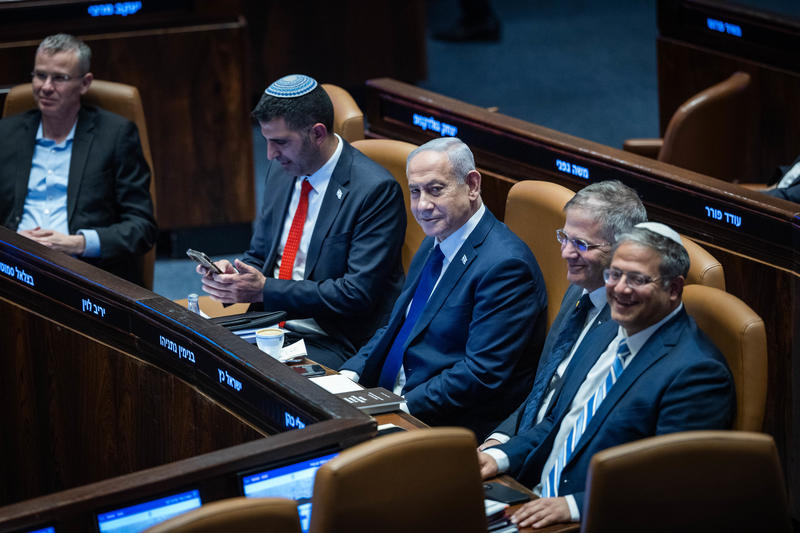
Israeli Prime Minister Benjamin Netanyahu, Ministers and Mk's at a 40 signatures debate, at the plenum hall of the Knesset
Israeli Prime Minister Benjamin Netanyahu, Ministers and Mk's at a 40 signatures debate, at the plenum hall of the Knesset, the Israeli parliament in Jerusalem, on November 10, 2025. Photo by Yonatan Sindel/Flash90 *** Local Caption *** 40 חתימות כנסת מליאה ראש הממשלה בנימין נתניהו

What’s happening: The Israeli government has decided to form a ministerial committee that will recommend what the mandate of the “independent inquiry commission” should be.

  • The committee will determine the remit of the inquiry and what time period it will cover.
  • Ministers did not reach an agreement on the composition of the commission, with one suggestion giving both the coalition and the opposition the right to veto any candidate for membership on the commission.
  • The government’s objective is to convince at least some members of the opposition to endorse forming a commission of inquiry in the proposed format.
  • However this move falls short of the widely held public demand for a fully independent state level commission of inquiry that will fully investigate the government’s role.  
  • The October Council, a forum of families of October 7 victims responded to the government’s decision saying, “After trying every cheap trick in the beginner politician’s book, the Prime Minister is trying to establish facts on the ground. We reiterate: The Prime Minister of Israel will be the first to be questioned in the state commission of inquiry that will be established, exactly as written in the laws of the State of Israel.”

November 6, 2025

UK government reports increase in Britain–Israel trade

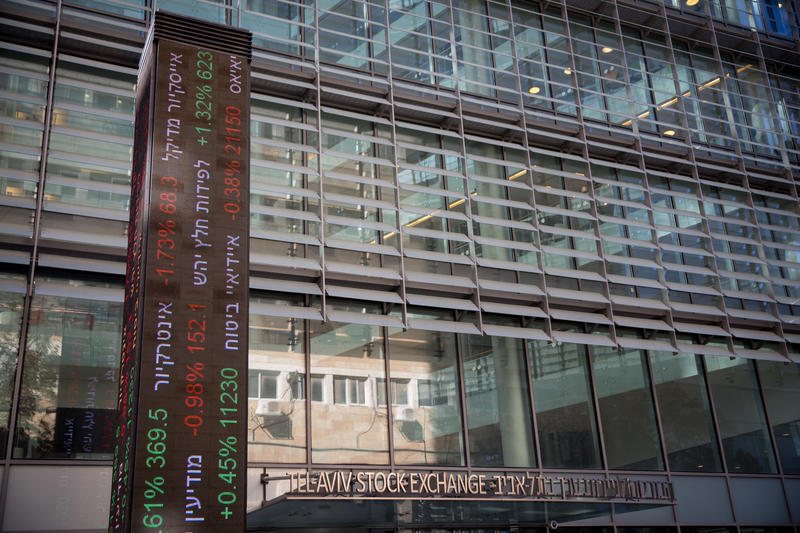
View of the Tel Aviv Stock Exchange, in the center of Tel Aviv
View of the Tel Aviv Stock Exchange, in the center of Tel Aviv, February 12, 2020. Photo by Miriam Alster/FLASH90 *** Local Caption *** בורסה תל אביב בניין כלכלה

What’s happened: The UK’s Department for Business and Trade (DBT) published its annual report on trade with Israel.

  • The report measured a volume of trade of £6.2 billion for the four quarters ending on June 30, 2025. This was an increase of 3.7 per cent, or  £218 million, from the equivalent period the previous year, despite including the month of June 2025 when, during the war with Iran, trade was largely halted.
  • According to the DBT report on trade with Israel, Israel was the UK’s 42nd largest trading partner (all of the UK’s top ten trading partners are in Europe except for the US and China which are the first and fifth largest, respectively).
  • The increase in trade was due more to UK exports to Israel, which increased 10.6 per cent, than UK imports from Israel, which actually decreased by 4.6 per cent.
  • The volume of trade between the two countries had been on a steady growth path for most of the last decade, interrupted only by the outbreak of war in 2023.

Context: According to the DBT report, trade between the UK and Israel stood at £3.6 billion in 2015 and grew each year until reaching a high in 2022 of £7.1 billion, before falling to £6.3 billion in 2023 when the Israeli economy experienced a severe contraction in the fourth quarter, and £6.0 billion in 2024.

  • The increase in trade this year brings the two countries closer to the prewar figures.
  • The top goods exported from the UK to Israel include medicinal and pharmaceutical products, cars, beverages, and railway equipment. Among the top goods imported to the UK from Israel are mineral manufactures, vegetables and fruit, plastics, and scientific instruments.
  • Even larger trade volumes are recorded in services, mostly financial, travel, and computer and information services in both directions.
  • The new data were hailed in the Jewish News as a failure of efforts to boycott Israel in Britain, which quoted Russell Langer, Director of Public Affairs at the Jewish Leadership Council, as saying, “These figures also highlight that those using the conflict in Gaza to sow divisions between communities here in the UK through boycotts have failed. The government should now resume free trade negotiations for the benefit of British businesses and consumers.”

Looking ahead: Two important developments on the Israeli economy are expected in the coming weeks.

  • The Finance Ministry is due to present its budget proposal for Government approval in the coming weeks, after presenting the “budget principles” earlier this week. The Cabinet is expected to approve the budget by December 4, and the Knesset is expected to approve it sometime in January 2026.
  • Under Israeli law, if no budget is approved by March 31, parliament automatically dissolves and early elections are called. Elections are scheduled anyway for October 2026 at the latest. The absence of an approved budget means that the Government keeps operating month to month according to prorated allocations from the previous year’s budget.
  • According to the budget principles presentation, the Finance Ministry will seek significant cuts in defence spending in the coming fiscal year as well as impose a new tax on bank profits. Another item mentioned in the principles proposal that is less likely to get approval from other ministers in cabinet is the partial privatisation of rail service in Israel.
  • On November 24, the Bank of Israel will announce its decision on interest rates. The BOI has not made any changes in Israel’s interest rates in more than two years. Historically, Israeli rates were considerably higher than those in Europe and North America, but that gap close after the global financial crisis in 2008. During the short burst of inflation at the end of the coronavirus pandemic, Israel raised its rates along with western countries, mostly in 2022.
  • Since the war which began in October 2023, Israel has consistently had slightly higher interest rates than western countries, reflecting a return of the risk premium. While rates have begun to fall elsewhere, in Israel they held steady. Lower than expected inflation figures published this week are expected to push the Bank of Israel to consider lowering rates.
  • A strong shekel, which adversely affects exports, is seen as another reason to reduce rates. Should there be another outbreak of fighting in Gaza or Lebanon, however, it is unlikely that the BOI will go forward with the expected rate cut.
  • The BOI’s interest rate stand currently at 4.5 per cent (compared to Bank of England’s 4 per cent) with the inflation rate at 2.5 per cent (compared to 3.8 per cent in the UK). 
  • The jump in interest rates in 2022 and 2023 has been a burden for Israeli homeowners with mortgages, as fully fixed-rate loans are comparatively rare in Israel. On the other hand, the total mortgage debt in Israel is significantly lower than in comparable countries (30 per cent of GDP in Israel, as opposed to 115 per cent in the UK, 131 per cent in Switzerland, 93 per cent in Australia, and 62 per cent in Canada).

November 4, 2025

Two high-profile investigations grip Israel

Rescue and police forces search for Military Advocate General Maj. Gen. Yifat Tomer-Yerushalmi at Hof HaTzuk Beach in Tel Aviv. Yerushalmi was later found alive and well, November 2, 2025.
Rescue and police forces search for Military Advocate General Maj. Gen. Yifat Tomer-Yerushalmi at Hof HaTzuk Beach in Tel Aviv. Yerushalmi was later found alive and well, November 2, 2025. Photo by Avshalom Sassoni/Flash90 *** Local Caption *** פצ"רית יפעת תומר ירושלמי חיפושים חוף הצוק מחפשים

What’s happened: Two unrelated domestic scandals have burst into public consciousness this week in Israel, sparking heated reactions across the political spectrum:

  • Senior officials in the Histadrut, Israel’s largest labour federation, were detained on Monday following a two-year undercover police investigation into corruption.
    • According to police, the probe uncovered links between the federation, several local authorities, prominent businessmen, state-owned enterprises, and, according to local media reports, possibly government ministers.
    • Among those detained was the Histadrut’s chairman, Arnon Bar-David.
  • The recently resigned military advocate general Yifat Tomer-Yerushalmi was also detained by police yesterday after having gone missing on Sunday.
    • Tomer-Yerushalmi resigned her post after admitting that she oversaw the leaking of footage showing soldiers allegedly abusing a Palestinian detainee, as well as misleading both the Supreme Court and the Ministry of Justice about the affair.
    • Five soldiers are being tried in the abuse case, and their cause has been adopted by leading figures on the far right in the Knesset.

October 30, 2025

Massive ultra-Orthodox demonstration scheduled for this afternoon

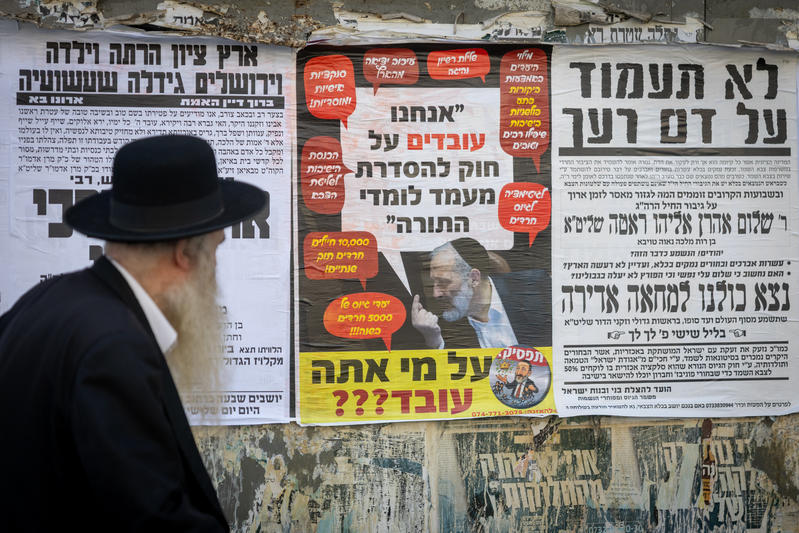
A poster showing Shas leader saying " We are working on a law to regulate the status of Torah students", and underneath reading "Who are you fooling", in the ultra orthodox Jewish neighborhood of Meah Shearim. October 28, 2025.
A poster showing Shas leader saying " We are working on a law to regulate the status of Torah students", and underneath reading "Who are you fooling", in the ultra orthodox Jewish neighborhood of Meah Shearim. October 28, 2025. Photo by Chaim Goldberg/FLASH90 *** Local Caption *** מאה שערים פוסטר ארייה דרעי גיוס שלט

What’s happening: Ultra-Orthodox (Haredi) communities are planning a huge demonstration in Jerusalem, dubbed the “million-man march” to protest against the military conscription of yeshiva students and the arrest of draft dodgers.

  • According to the organisers there will not be any political speeches but only a special prayer service.
  • The rally has the backing of both the Sephardi and Ashkenazi ultra-Orthodox political factions. Each community expected to gather in its own pre-determined area headed by its rabbis.
  • Students have been encouraged to attend, but to refrain from provocations.
  • Ahead of the rally, ultra-Orthodox journalist Aryeh Ehrlich wrote an op-ed in Yediot Ahronot, “Hundreds of thousands of Haredim from across the country, myself included, will flock to the gates of Israel’s eternal capital to cry out from our  hearts. Not a cry of protest, but a cry of affirmation. It won’t be anti-draft demonstration, but one of pro-Torah study in the Land of Israel; a cry of support for the sentiment that one cannot accept a reality in which in the world’s only Jewish country Torah students are arrested simply for continuing a centuries-old tradition, forced to endure sanctions, arrests, humiliation, and hostility; a cry in favour of the recognition that a Jewish state must value Torah study, honour those who devote their lives to it, and ensure the continuity of the glorious Torah world, which arose hundreds of years ago in Europe, which was destroyed by the Nazis and was reborn from the ashes in the Holy Land.”
  • In parallel to protest will be a (likely much smaller) counter demonstration led by former MK Yoaz Hendel and his newly formed Reservists Party. Their demonstration is framed as “Fighting for Home.”

Context: The rally was originally timed to coincide with the Knesset debate of the new military draft bill, and to represent a unified show of force of the ultra-Orthodox world.

  • MK Boaz Bismuth (Likud) the Chairman of the Foreign Affairs and Defence Committee, and the author of draft bill, has since announced that the latest iteration will not be presented today. This is reportedly at the request of Prime Minister Netanyahu, who wishes to review the document to avoid “unwanted surprises.”
  • Bismuth replaced MK Yuli Edelstein (also Likud) as the chairman of the committee and the lead on drafting the bill in the summer due to Edelstein insistence on harsher sanctions against ultra-Orthodox men that did not enlist. He was removed at the behest of the ultra-Orthodox political factions and in effort to maintain political stability within the coalition.
  • Although the final text is not yet in the public domain, the Netanyahu government argues that the overall objective is to reduce the longstanding exemption for ultra-Orthodox yeshiva students and apply more equal mandatory service for everyone. Moreover, it argues that it is aimed at finding middle ground that protects religious learning whilst meeting the country’s military needs. Crucially the army is also waiting to receive the latest iteration of the bill.
  • At the same time, the Likud Party appears divided on the bill and it remains unclear if any Likud MKs will participate in the rally. Likud’s Communications Minister Shlomo Karhi wrote on X, that the bill was “excellent….acknowledging Torah study and those for whom ‘Torah study is their profession,’ while fully drafting the rest in keeping with draft rate in the general population.” He added that the prayer rally “stands against everyone doing everything they can to sabotage, damage and divide. Lapid, Liberman, the fired attorney general, her gang of cohorts and the Supreme Court judges.”
  • Others in the Likud disagree, MK Moshe Saada (Likud) told Israel Hayom, “The bill, in its current format, will not pass. It needs to be amended. The principle of ‘if you don’t serve, you won’t receive’ must be inserted into the bill. Only then will it pass.”
  • Opposition figures are even more critical, with the Leader of Opposition MK Lapid writing on X, “Likud voters enlist, fight, get killed and injured to defend the homeland, while elected Likud representatives are encouraging corruption and draft evasion. The Likud has ceased to be a national party, and has become a branch of the Haredim and Ben Gvir. In the government we form, everyone will enlist, everyone will study core curriculum, everyone will work. Rights come with duties.”
  • In broad strokes, the bill will formally set recruitment targets for the coming years relating to approximately 50 per cent of eligible recruits, steadily rising in line with the demographics. For example the proposed targets are 4,800 in the first year, 5,760 in the second, 6,840 in the third and 7,920 in the fourth year.
  • However these figures fall short of the reported additional 12,000 recruits needed by the army to offset the huge burden placed on reservists over the last two years.

Looking ahead: The demonstrations are expected to cause widespread disruption in the capital. The Jerusalem-Tel Aviv highway will be closed from 12:00, and the Jerusalem light rail will not operate in the area. Buses will not be able to leave the central bus station along their regular routes.

  • The demonstration is scheduled to begin at 2:00 pm local time near the Knesset and is expected to last about two hours.
  • The police plan to set up a dividing fence between the two demonstrations to avoid friction.
  • MK Bismuth is now expected to present the bill to committee members next Monday.

October 21, 2025

Stormy debate marks the opening of the Knesset’s winter session

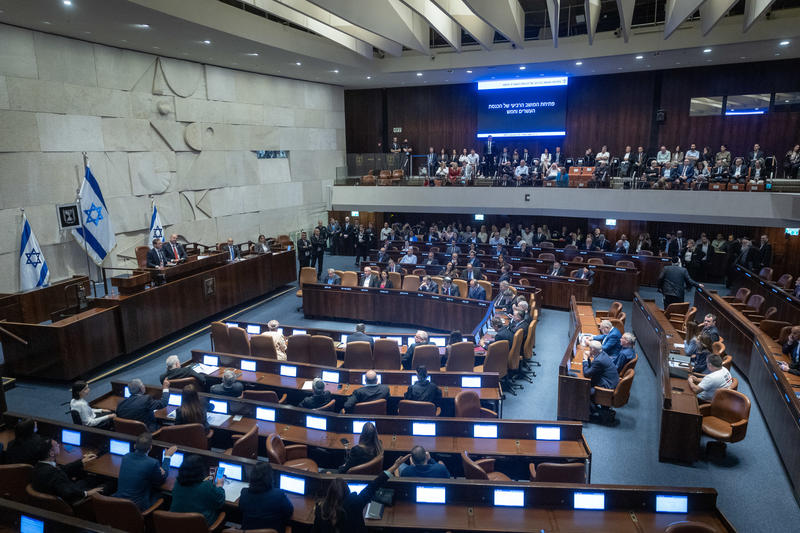
A plenary session of the opening day of the winter session at the Knesset, the Israeli parliament in Jerusalem
A plenary session of the opening day of the winter session at the Knesset, the Israeli parliament in Jerusalem, on October 20, 2025. Photo by Chaim Goldberg/Flash90 *** Local Caption *** כנסת מליאה ישיבה ישיבת פתיחת מושב חורף

What’s happened: The Knesset convened on Monday for the opening ceremony of the winter session following a three‑month recess, marking the fourth session of the 25th Knesset.

  • As usual the opening ceremony was led by Speaker Amir Ohana, and included speeches from President Herzog, Prime Minister Netanyahu and Leader of the Opposition Lapid.
  • At the start of the session, Ohana referred to the relatively new President of the Supreme Court Yitzhak Amit as simply “Supreme Court judge,” sparking an uproar in the plenum. MK Gilad Kariv of the opposition party The Democrats heckled the speaker calling him a “nobody” adding, “isn’t the incitement enough for you? Wasn’t October 7 enough? You bring disgrace to this house.”
  • During his speech Ohana continued his attack on the judiciary, accusing it of “trampling the Knesset and harming democracy” and warning that, “when the Basic Law: Reasonableness is struck down by the High Court during wartime, that is a severe precedent.” Ohana claimed that the judicial system is operating “without checks and balances” adding, “there is no longer anywhere in the democratic world an authority whose power is infinite and unlimited…except the Israeli judicial system.”
  • President Herzog began his speech by deliberately addressing Amit as “Supreme Court President” and was greeted with applause from the opposition. He announced he would skip his pre‑written speech to respond to Ohana. “I had a long and programmatic speech prepared, but this is a very important moment in our lives and the heart bleeds. There is a difference between a principled debate, which is legitimate, and lack of courtesy, harm to human dignity, harm to other authorities and to Israeli judges.”
  • Herzog affirmed, “I will stand up for the judges of Israel. When we today bury two heroic soldiers, when the body of another fallen hostage returns today, we cannot ignore where we are dragging ourselves as a nation…instead of dealing with what matters most, are busy with the question of whether the Supreme Court President will be invited and under what title. Supreme Court President, I welcome you.”
  • Prime Minister Netanyahu spoke next and also weighed in, recognising that “Amit is president of the Supreme Court. That is a fact.”
  • He then pivoted to discuss the hostages, saying, “We are committed to bringing everyone home, until the last one. These are not empty words.”
  • Last night the body of Tal Haimi, a 41-year-old resident of Kibbutz Nir Yitzhak, was returned to Israel. Haimi commanded the kibbutz’s civilian security squad and was killed in the fighting with Hamas terrorists in the kibbutz on October 7, 2023. He is survived by a wife and four children.
  • Netanyahu cited Israeli achievements across numerous fronts. He criticised those who demanded to end the war earlier, which would have given Hamas, “a crushing victory” and explained that an early end would have left Yahya Sinwar, Hezbollah and the Iranian axis very strong. According to Netanyahu, “Iran would continue to produce tens of thousands of ballistic missiles at an accelerated pace and within a few months it would develop atomic bombs with the aim of destroying us, including you and everyone, Jews, Arabs, right-wingers, leftists. Everyone would go up into the sky in atomic smoke.”
  • Netanyahu also called for domestic unity, “to lower the height of the flames. In a democracy, it is possible to reach decisions by a majority and a minority, it is also possible to reach compromises.”
  • He also said that the government would “pass the 2026 budget soon.”
  • Relating to the controversial anticipated legislation over ultra-Orthodox military service Netanyahu said, “we will submit for Knesset approval a draft law that will result in the draft of 10,000 yeshiva students within two years. This is a real revolution, something that has not happened since the establishment of the state.”
  • In his remarks, Leader of the Opposition Lapid took aim at the Knesset Speaker, saying “MK Ohana, this Knesset is not yours. It belongs to the people of Israel.”
  • He went on to address the Prime Minister, “I listened very attentively to your speech and wondered in what reality it was taking place. You said that we bombed Iran, who was the prime minister when Iran gained power? You said that Hezbollah had accumulated 150,000 missiles – who was the prime minister at that time?” He reminded the prime minister that it was he (Lapid) that had warned of an impending disaster shortly before October 7 2023.    

Context: The government begins this session as a minority as the two ultra-Orthodox parties quit the coalition in the summer, while committing not to bring down the government for the time being. Shas and UTJ are currently waiting to see the final version of the military draft bill that they hope will enshrine religious learning and allow thousands of ultra-Orthodox young men to avoid military conscription.

  • Earlier in the summer the government removed MK Yuli Edelstein (Likud) as head of Foreign Affairs and Defence Committee, replacing him with MK Boaz Bismuth (Likud) who is considered more sympathetic to the ultra-Orthodox position.    
  • The issue of the ultra-Orthodox military service is the most contentious domestic political issue. The government hopes to pass legislation on this during this Knesset session.
  • The government’s taunting of Amit, the President of the Supreme Court, is part of their contempt over being unable to change the composition of the court and determine a new method to choose the court’s president. This was considered an important component of the government’s mostly unsuccessful judicial reform agenda.
  • Notably yesterday, Ohana was wearing the hostage pin on his lapel having ceremoniously removed it during Trump’s Knesset visit. He had faced pushback being accused of forsaking the remaining dead hostages still held by Hamas.
  • There is ongoing speculation whether Netanyahu will call early elections and capitalise on the return of all the living hostages and the strong endorsement he has received from President Trump.    
  • For now it appears that he does not yet want elections. He is hopeful that there is still time to expand the Abraham Accords during this term and bring more diplomatic achievements to his record.
  • Netanyahu’s mention of passing a state budget is significant as he will need a majority (support from the ultra-Orthodox) which will only happen if they first pass the draft dodging legislation. The budget is expected to include significant cuts in government spending in order to pay for the war.
  • On one level none of Netanyahu’s partners, the hard right or the ultra-Orthodox, want early elections and there are also several disputes among them:
    • Whilst Netanyahu and the Likud support the Trump deal, Ben Gvir and Smotrich are against ending the fighting while Hamas remain in (even partial) control.
    • Whilst the ultra-Orthodox continue to refuse to perform military service, the religious Zionists’ sector enthusiastically enlists.  
    • Ben Gvir looks to abrogate the status quo agreement and pray on Temple Mount, Netanyahu consistently defends it, whilst the ultra-Orthodox are aghast at what they see as the desecration.
  • The end of the fighting and the ceasefire have reignited the public fight for a state commission of inquiry into the events of October 7. Netanyahu wants to establish either a governmental commission or at least a commission that he can appoint. The members of a state commission are traditionally appointed by the Supreme Court President. The prime minister would want to appoint a commission before new elections so not to risk having the next government appoint it.
  • Although Netanyahu may not want elections, the chances of the government surviving the almost six month winter session are low.

Looking ahead: Hamas has retuned 13 bodies in the last week but is still holding the remains of 15 deceased hostages in Gaza. It is expected to return more of them to Israel in response to pressure from the US.

  • Today, US Vice President JD Vance is scheduled to arrive in Israel. He will join Steve Witkoff and Jared Kushner meeting political and military leaders to discuss the implementation of the next phase of the Trump Plan. Israel has demanded that the US not allow reconstruction work in the Gaza Strip to begin unless Hamas first shows real willingness to disarm.
  • The coalition hopes to have a draft text for the military conscription bill in the next two weeks.
  • According to law, the government has until the end of March to pass a state budget, if it fails to do so, the Knesset will automatically be dissolved.

Newsletter sign-up

Please enter your information below to subscribe to our daily newsletter and stay updated and informed.

Donate to BICOM

At BICOM, we rely on the generosity of people like you to keep our website and services running. Your donation, no matter the size, makes a real difference. Please consider supporting us today. For further information please email: [email protected]