LATEST

Hezbollah and Lebanon

Key background
  • Hezbollah (‘Party of Allah’’) is the world’s most heavily armed non-state actor and was founded in Lebanon in 1982 with the help of Iran’s IRGC.
  • Prior to summer 2024, Hezbollah was thought to possess approximately 45,000 fighters, 5,000 of whom have completed advanced training in Iran and 20,000 of whom are organised in reserve units. It also possesses an estimated 130,000 – 150,000 missiles.
  • After proscribing its military wing in 2008, the UK proscribed the entire organisation as a terrorist group in 2019.
  • Hezbollah has built a $1bn-a-year global network and has operated on UK soil. In 2020, the US State Department estimated that Hezbollah received $700m a year from Iran.
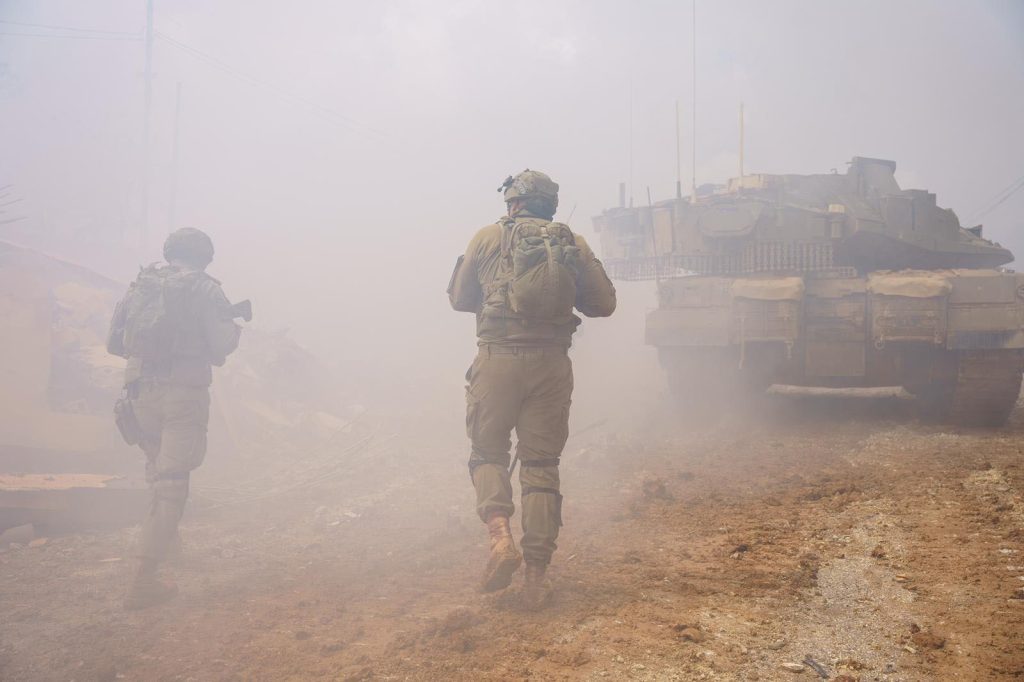
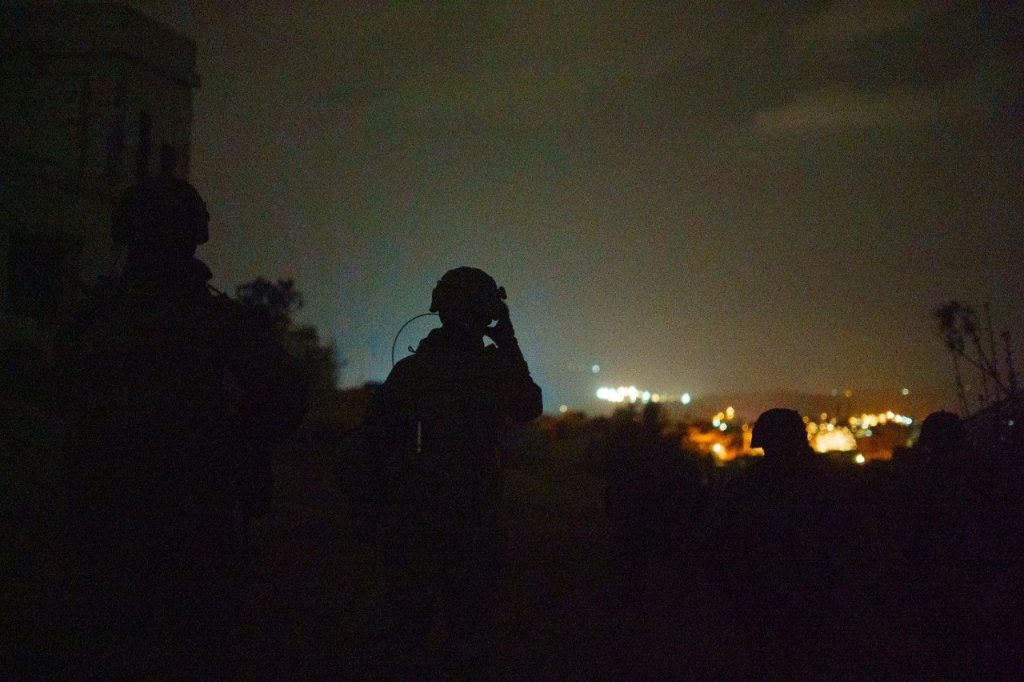
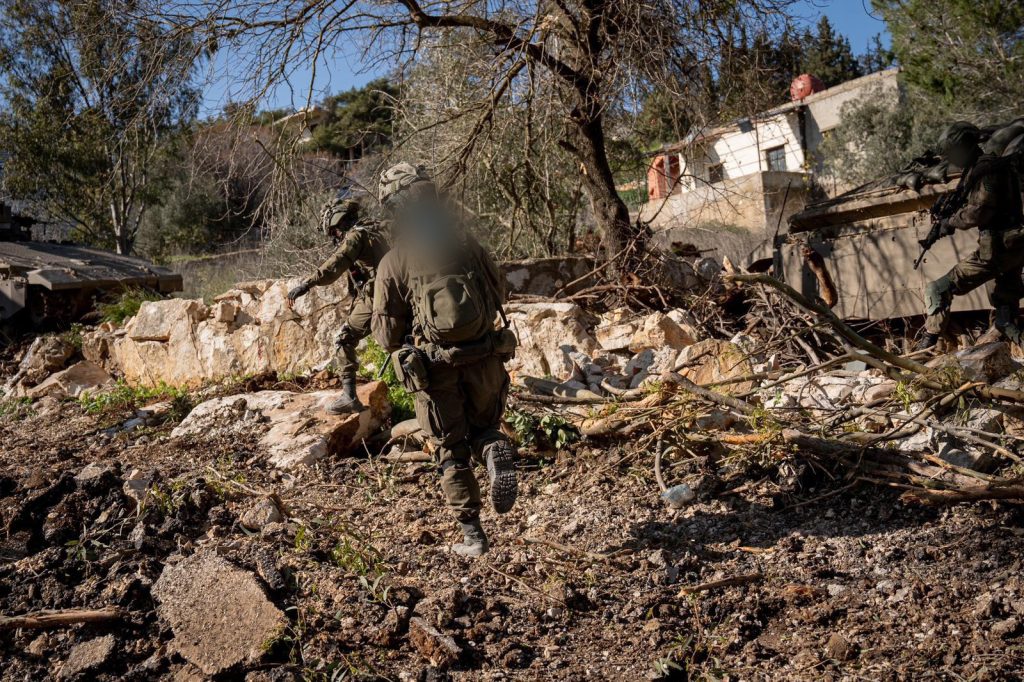
The Chief of Staff visits the 162nd Division in southern Lebanon, March 15, 2026.
The Chief of Staff visits the 162nd Division in southern Lebanon, March 15, 2026. Photo credit: IDF

Updated April 17, 2026

Trump declares ten day ceasefire in Lebanon

What’s happened: Following President Trump announcement on Thursday afternoon, the ceasefire between Israel and Hezbollah came into effect midnight local time.

  • The sides released a joint statement which stated how an understanding had been reached “in which both nations will work to create conditions conducive to lasting peace between the two countries, full recognition of each other’s sovereignty and territorial integrity, and establishing genuine security along their shared border, while preserving Israel’s inherent right to self-defence.”
  • The statement also confirms that “Israel and Lebanon request that the United States facilitate further direct negotiations between the two countries with the objective of resolving all remaining issues, including demarcation of the international land boundary, with a view to concluding a comprehensive agreement that ensures lasting security, stability, and peace between the two countries.”
  • In the final hours before the ceasefire Hezbollah fired dozens of missiles and rockets towards northern Israel. Most of them were intercepted and several landed in uninhabited territory. A 25-year-old motorcyclist and a 17-year-old girl sustained serious injuries from interceptor shrapnel near the city of Karmiel. A 40-year-old man in Nahariya sustained moderate injuries.
  • Inside Lebanon the IDF attacked the launchers that fired the rockets. IDF officials reported that more than 380 Hezbollah targets in southern Lebanon were attacked in the past 24 hours.
  • The IDF told residents of southern Lebanon that IDF troops would remain in the area despite the start of the ceasefire and residents are forbidden to travel south of the Litani River. However, as of this morning it appears many Lebanese are ignoring this warning.    Earlier in the day Lebanese President Aoun rebuffed US efforts to hold a telephone conversation with Prime Minister Netanyahu, contrary to President Trump’s declaration the day before.

Context: Prime Minister Netanyahu had informed government ministers at the security cabinet meeting on Wednesday that in the event that Trump were to ask Israel to hold its fire in Lebanon, he would agree. Nevertheless, the timing came as a surprise to the Israeli public and government ministers.

  • There is grave concern that behind the scenes it was Iran that demanded the linkage to their own  ceasefire, reinforcing the perception that their influence in Lebanon remains intact. This was a situation that Israel had categorically rejected when the US and Iran agreed to the broader  ceasefire.
  • Marom Hagalil Regional Council Chairman Amit Sofer told Israeli media, “It’s unreasonable for Trump to link the Lebanese theatre to the Iranian theatre. By so doing, he’s sentencing the residents of northern Israel to more years of an ongoing threat. The IDF must be allowed to win and to achieve the objective that the political leadership gave it: disarming Hezbollah…. Hezbollah must be isolated from its Iranian big brother, that’s part of cutting off the terrorist lifeline and breaking the axis of evil, which is why a ceasefire is currently a worse possibility for the north than continuing the war is.”
  • The ceasefire is expected to follow the same format of the agreement that was concluded by the Biden administration in November 2024, whereby Israel will be allowed to take action against Hezbollah violations. There is hope (but limited confidence) that this time the Lebanese government will also act to enforce the agreement. However, even though the IDF continued to operate in Lebanon and to strike Hezbollah since November 2024, it is now self-evident that Hezbollah was still able to rebuild and threaten the residents of northern Israel.  
  • In an encouraging sign the statement including mutual “full recognition of each other’s sovereignty.” This is particularly significant as it marks the first time that Lebanon and Israel have recognised each other in a normalised fashion rather than as enemy states.
  • Following Trumps announcement, Prime Minister Netanyahu declared, “We have two fundamental demands for these peace talks: First, the disarmament of Hezbollah. Second, a sustainable peace agreement, peace through strength. To achieve this ceasefire, Hezbollah insisted on two conditions: First, that Israel must withdraw from all Lebanese territory, back to the international border. Second, a ceasefire based on the ‘quiet for quiet’ model. I agreed to neither of these, and indeed, those two conditions are not being met.”
  • He further clarified, “We are remaining in Lebanon in a reinforced security buffer zone…. This is a security strip ten km deep, which is much stronger, more intense, more continuous, and more solid than what we had previously. That is where we are and we are not leaving. This allows us, first and foremost, to block the danger of an invasion into our communities, and secondly, it allows us to prevent direct anti-tank fire into the communities. The residents are now protected from these two dangers. Of course, there are still problems; They still have rockets left. We will have to deal with that as well, as part of the progress toward a security agreement and a continuous peace treaty.”
  • Earlier this week, Israel and Lebanon’s ambassadors to the US met for direct talks under Secretary of State Rubio’s supervision in Washington DC. These were Israel and Lebanon’s first direct talks since 1993, and shortly afterwards a joint statement was released proclaiming how they had held “productive discussions” on steps “toward launching direct negotiations between Israel and Lebanon.”
  • This comes as the US and Iran also move towards extending their own ceasefire with further Pakistani mediated negotiations taking place in Islamabad.

Looking ahead: According to Netanyahu, he is anticipating another invitation to the White House, this time along with Lebanese President Aoun, for an opportunity “to forge a historic peace agreement with Lebanon.”  

April 16, 2026

Trump announces Netanyahu and Aoun due to speak directly

View of the United States Capitol in Washington, D.C., April 14, 2026.
View of the United States Capitol in Washington, D.C., April 14, 2026. Photo by Arie Leib Abrams/Flash90

What’s happened: President Trump announced that leaders of Israel and Lebanon are due to speak to each other directly today.

  • Prime Minister Netanyahu and Lebanese President Joseph Aoun are expected to discuss efforts to reach a ceasefire in the Israeli-Lebanese war raging since Hezbollah launched rocket attacks on northern Israel on March 2, violating a ceasefire that had been in place since November 2024.
  • Direct talks were held yesterday in Washington between Israel’s ambassador to the US Yehiel Leiter and his Lebanese counterpart Nada Hamadeh Moawad, together with US Secretary of State  Rubio. A joint statement issued by the three parties said only that they had held “productive discussions toward launching direct negotiations.”
  • The war was still ongoing this morning, despite reports in Lebanese media that a ceasefire might go into effect overnight. Israeli operations have been limited to southern Lebanon, apparently in line with a US demand not to launch further strikes on Beirut following a large air strike on April 8.
  • Hezbollah rocket fire and drone strikes on  towns and villages in northern Israel continued as well both last night and this morning, with no fatalities reported and one injury in the Arab town of Tamra.
  • In southern Lebanon, one IDF soldier was seriously wounded and four other lightly wounded in a Hezbollah rocket attack.
  • On the ground, the IDF continues to operate in and around the Hezbollah stronghold of Bint Jbeil. Commenting on that battle and the larger war, Netanyahu said last night, “We are about to decisively defeat Bint Jbeil, to eliminate this large Hezbollah stronghold. Meanwhile, yesterday I instructed the IDF to continue to reinforce the security zone, and to expand it eastward to the slopes of Mount Hermon so that we might be able to help even better our Druze brothers during their time of need.”
  • Chief of General Staff Eyal Zamir visited IDF troops in southern Lebanon yesterday. Speaking with soldiers, he reported that the IDF estimates it has eliminated 1,700 Hezbollah fighters since the war broke out in March. He also said that he had already approved operational plans for further combat in both Lebanon and Iran, to be implemented should ceasefire talks fail.
  • Regarding the competing blockades around the Strait of Hormuz, CENTCOM reported that ten ships had been turned around by the US naval blockade. At the same time, it appears at least two US-sanctioned supertankers made it into the Gulf despite the US blockade. Some media reports have indicated that Iran might consider letting ships pass through the Omani side of the Straits of Hormuz without hindrance, but it was unclear if this proposal was relating to a comprehensive settlement or a confidence-building measure while talks were ongoing.

Context: Direct talks between a Lebanese and Israeli leader, much less publicly known direct talks, would be highly unusual, as Lebanese law technically still forbids any kind of communication of any Lebanese citizen with any Israeli.

  • Israel’s demands for a ceasefire with Lebanon are a revised and improved version of the ceasefire that ended the previous round of fighting in November 2024. As in the 2024 ceasefire, Israel insists on full freedom of action for the IDF to operate in Lebanon to enforce provisions of the ceasefire, both north and south of the Litani River. Also in line with the earlier ceasefire, Israel insists on a Lebanese commitment to disarm Hezbollah. But in the new ceasefire, Israel would like to see this actually carried out, and is therefore insisting on some form of US oversight for the disarmament.
  • A more dramatic departure from previous ceasefire regards territory. In the previous ceasefire, Israel held on to five strongpoints in southern Lebanon, with a long-term commitment to withdraw. In current discussions, Israel is asking for a buffer zone to be established which would be completely clear of Hezbollah presence (it is unclear if in the immediate term civilians evacuated from these areas would be allowed to return, especially those in areas that would place Israelis in range of anti-tank fire).
  • The implication of such a buffer zone would be a longer-term IDF presence until some kind of more stable diplomatic arrangement can be negotiated. Notably, according to reports in Israeli media at least, Lebanon itself has not insisted on an immediate or full withdrawal of Israeli forces from its territory.
  • Another minor taboo that was broken in the initial talks between Israel and Lebanon was the discussion of economic issues. A weakening of Hezbollah by Israel followed by a full disarmament by the Lebanese state under US supervision is expected to open the door to massive investment and reconstruction by two large US allies in the region, Saudi Arabia and the UAE.
  • This has introduced a new incentive for Lebanon to do what it has been unable or unwilling to do until now. Especially it has been in a deep economic crisis now for over a decade.
  • All sides agree that the war in Lebanon is a secondary front to the larger war between Iran on one side and the US and Israel on the other.  

Looking ahead: Based on leaks to the media, the initial round of US-Iran talks last week was not the complete failure it had been largely reported to have been and negotiations are set to continue, even after Vice President Vance’s departure from Islamabad.

  • Pakistani efforts to mediate between the sides, along with parallel efforts from Turkey and Egypt, have yielded a few areas of possible consensus.
  • According to media reports, the US is prepared to establish a $250 billion aid fund for Iran in the event of an agreed conclusion to the war that meets its demands.
  • It is willing to recognise Iran’s right to a civilian nuclear programme, while insisting on a 20-year ban on enrichment. It is also demanding that Iran turn over its stockpile of highly enriched uranium.
  • The Iranians, for their part, have proposed depleting the highly enriched uranium they still have on Iranian soil with international supervision, which would also make it unusable for weapons purposes.
  • Negotiations between the US and Iran are also reported to cover both the fighting in Lebanon and the position of the Houthis in Yemen. At the same time, there are no public reports that the talks have touched upon an issue that was central to both the US and Israeli war effort, namely the Iranian ballistic missile programme.

April 15, 2026

Lebanese and Israeli representatives meet in Washington

Israeli and Lebanese delegations meet in Washington, DC.
Israeli and Lebanese delegations meet in Washington, DC, March 14, 2026. Photo credit: Shmulik Almany via Ambassador Yechiel Leiter / X

What’s happened: The two ambassadors met yesterday with the goal of reaching a peace agreement between the two countries.

  • Ahead of the meeting, US Secretary of State Rubio referred to a “historic opportunity” rather than a ceasefire. He spoke of how the talks were about “bringing a permanent end to 20 or 30 years of Hezbollah’s influence in this part of the world and the – not just the damage that it’s inflicted on Israel, the damage that it’s inflicted on the Lebanese people. We have to remember the Lebanese people are victims of Hezbollah. The Lebanese people are victims of Iranian aggression. And this needs to stop.”
  • He cautioned that it would take time. “This is a process, not an event.” He spoke of the hope that “we can outline the framework upon which a permanent and lasting peace can be developed so that, as I said, the people of Israel can live in peace, and the people of Lebanon can live not just in peace but the prosperity and security that they deserve.”
  • Following the meeting, the three sides issued a joint statement noting that the participants held “productive discussions” on steps “toward launching direct negotiations between Israel and Lebanon.” The United States congratulated the two countries on this historic milestone and expressed its support for further talks, and for the Government of Lebanon’s plans to restore the monopoly of force and to end Iran’s overbearing influence.” The US also “underscored that these negotiations have the potential to unlock significant reconstruction assistance and economic recovery for Lebanon and expand investment opportunities for both countries.”
  • After the meeting, Israeli Ambassador to the US Yechiel Leiter said, “The Lebanese government made it very clear that they will no longer be occupied by Hezbollah,” adding, “We are both united in liberating Lebanon from an occupation power dominated by Iran called Hezbollah.”
  • Ambassador Leiter revealed that the sides discussed “the long-term vision, where there will be a clearly delineated border between our countries, and where the only reason we’ll need to cross each other’s territory will be in business suits to conduct business, or in bathing suits to go on vacation.”
  • At the same time, rocket fire from Hezbollah continues. This morning about 40 rockets were fired into northern Israel.

Context: This symbolic but significant meeting was the first time Israel and Lebanon have held direct talks since 1993.

  • For Israel, the talks reflect the doctrine of ‘peace through strength,’ Ambassador Leiter committed to “work tirelessly for tranquility and prosperity for all. Today, we pursue those values for ourselves and especially for our Lebanese neighbours of all ethnic denominations. I commend President Joseph Aoun and his government for not allowing itself to be held hostage to the threats of Hezbollah’s leader. Naim Qassem and Hezbollah belong to the past. We are here for the future. I believe that we can, in good faith, accomplish the following interrelated goals: the complete dismantlement of Hezbollah, the freeing of Lebanon from Iran’s terror proxy, and the achievement of a real, lasting and mutually-celebrated peace for the benefit of our peoples.”
  • It is understood that at this point the US aspire to reach a ‘shelf agreement’ that will be ready for implementation once Hezbollah is disarmed. 
  • It is also notable that France has so far been absent from the process. Given Paris’s historic role in Lebanon and its longstanding political and cultural ties there, this underlines how firmly the talks are currently being driven by Washington.
  • Despite the optimism emanating from Washington, fighting in southern Lebanon continued, whist Hezbollah missiles and drone continue to target communities in northern Israel. A security official revealed that still over 50 per cent of Hezbollah attacks are being launched from south of the Litani River, signifying that despite IDF advances on the ground it will take much more work to fully demilitarise southern Lebanon.
  • Whilst IDF manoeuvres in southern Lebanon continue, Israeli troops have not advanced further north and have held back from any further escalation. The IDF has not targeted Hezbollah positions in Beirut for almost a week. This is thought to have been done at the request of the US.
  • Meanwhile, Hezbollah continue to attack northern Israel. Sirens were sounded throughout the day yesterday in Kiryat Shmona and other northern communities. A drone struck the main entrance to Nahariya.
  • The negotiations are a result of US pressure on both sides, aiming to create a political horizon for Lebanon and, mainly, to create conditions to allow for US-Iranian negotiations.The Israeli approach is to negotiate with Lebanon as if there is no Hezbollah, and to fight Hezbollah as if there are no peace negotiations.
  • Whilst Iran continues to exercise influence over Lebanon it will be impossible to reach a deal. As an example, despite Lebanon declaring the Iranian ambassador to Lebanon as persona non grata, they have been unable to expel him and he remains holed up in the embassy.  

Looking ahead: Despite Israel’s desire to sever the ties between Iran and Lebanon, most analysts believe there can only be progress with Lebanon once the US has resolved their conflict with Iran.

  • After this initial meeting the sides are expected to meet again in the next few weeks. It will be noteworthy whether the talks remain at the level of ambassadors or if more senior figures agree to meet.  A second indicator of progress will be the inclusion of military officials, cartographers, and national security experts.

April 14, 2026

IDF continues to operate against Hezbollah in southern Lebanon

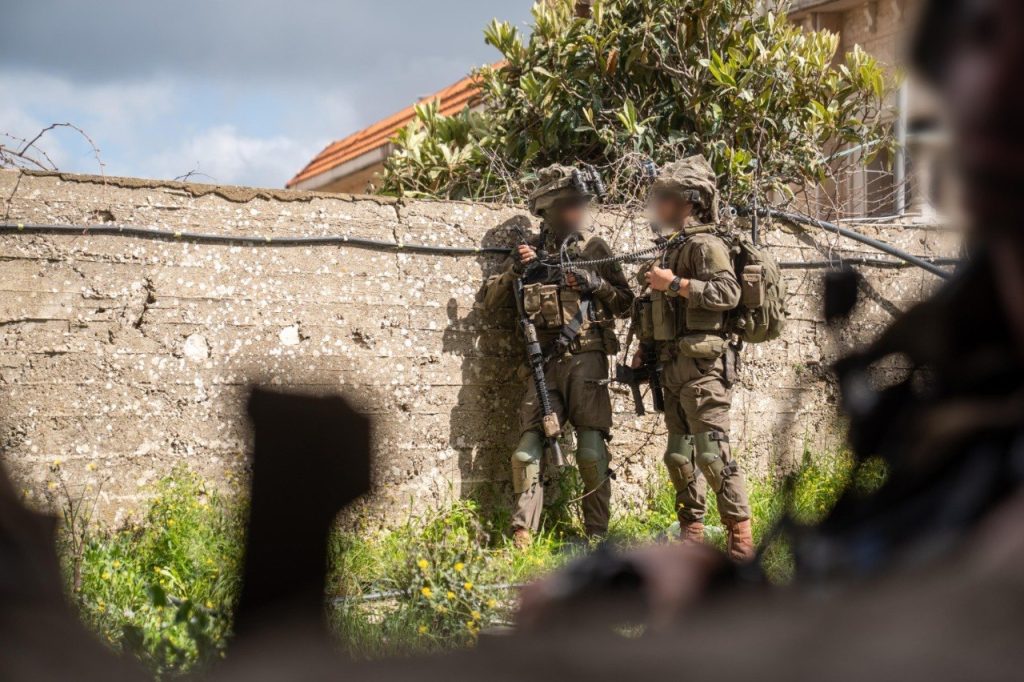
IDF continue operations in the Bint Jbeil area to expand the security zone.
IDF continue operations in the Bint Jbeil area to expand the security zone. March 12, 2026. Photo credit: IDF

What’s happened: In Bint Jbeil, one of Hezbollah’s key strongholds, Israeli forces are continuing operations to expand the security zone.

  • The IDF has now reached the main centre of Hezbollah operations in the town. So far, the IDF says it has eliminated more than 100 terrorists, but its thought there are dozens more, including members of the Radwan Force still holding out.
  • The IDF revealed yesterday that more than 250 terrorists and Hezbollah commanders were eliminated in the large-scale strikes in Lebanon on April 8.
  • According to a senior intelligence official, “Within a single minute, the IDF struck dozens of Hezbollah command centres and eliminated hundreds of terrorists. The elimination of these commanders delivered a broad, strategic blow that affected all dimensions of the organisation’s capabilities. These were commanders with extensive experience and knowledge that has now been cut short. We have not yet completed assessing the full impact of the strike, and we continue to identify additional terrorists who were eliminated each day.”
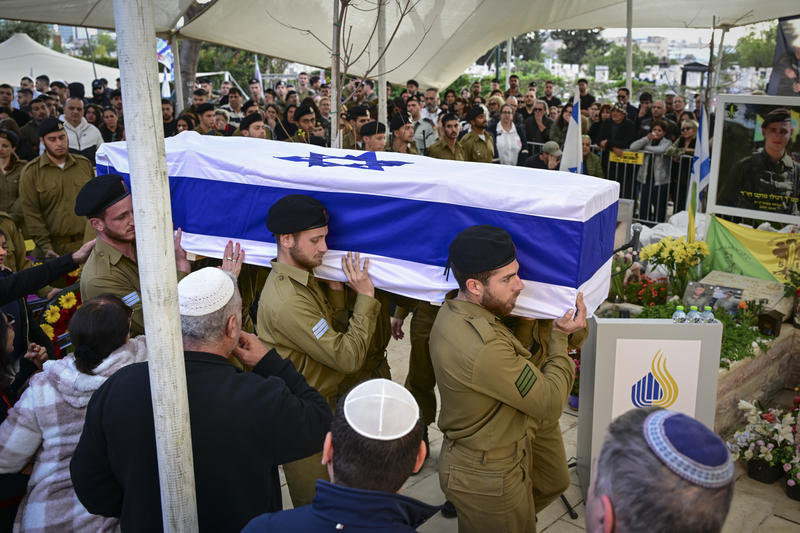
  • Also yesterday, another IDF soldier Sergeant-Major (res.) Eyal Uriel Bianco, a 30-year-old resident of Katzrin, was killed in southern Lebanon when a Humvee overturned.
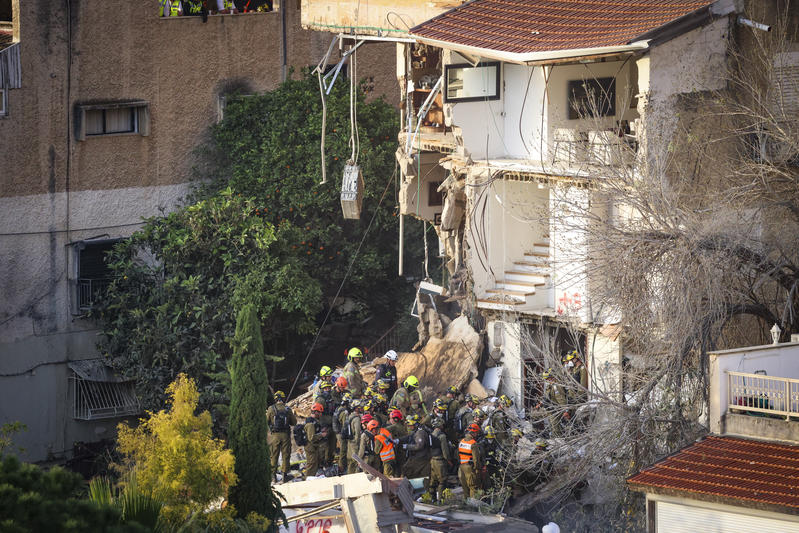
  • Meanwhile, rocket fire towards northern Israel continued yesterday with sirens throughout the day. A three-story residential building in Nahariya was hit directly yesterday afternoon by a rocket that was not intercepted.
April 10, 2026

Israel to begin direct negotiations with Lebanon

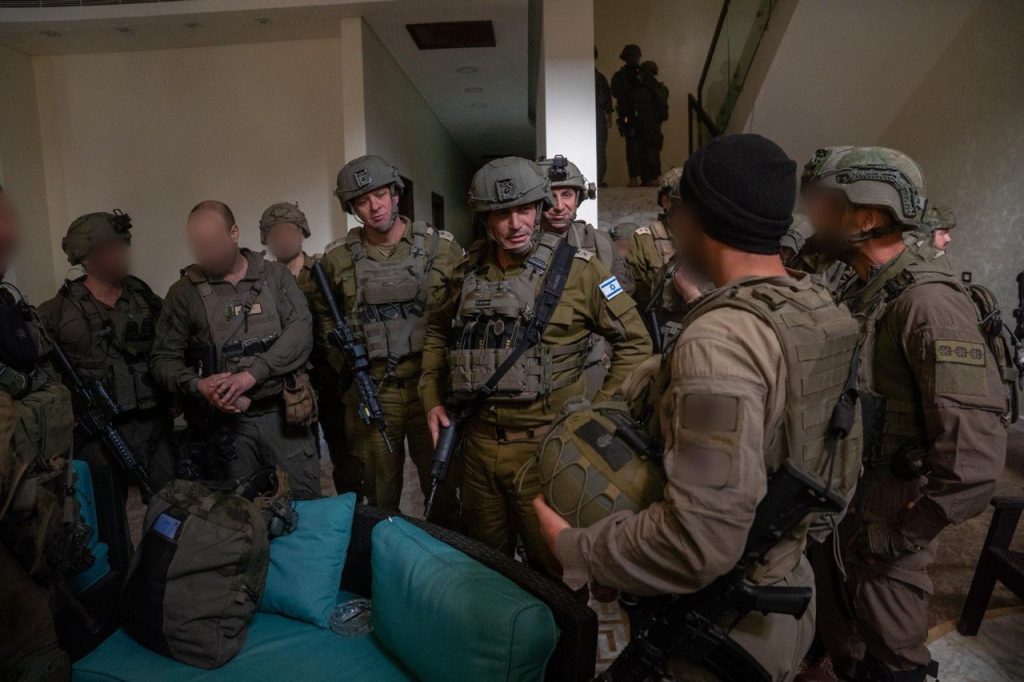
The IDF Chief of Staff, Eyal Zamir, during a situational assessment on the outskirts of Bint Jbeil in southern Lebanon.
The IDF Chief of Staff, Eyal Zamir, during a situational assessment on the outskirts of Bint Jbeil in southern Lebanon. April 9, 2026.

What’s happened:  On Thursday night Prime Minister Netanyahu announced that, “Following repeated requests from the Lebanese government to open peace negotiations with us, last night I instructed the Cabinet to begin direct negotiations with Lebanon.”

  • He added that the talks would have two goals: “First, the disarming of Hezbollah. Second, a historic, sustainable peace agreement between Israel and Lebanon.”
  • At the same time he sought to reassure the residents of the north that currently, “there is no ceasefire in Lebanon. We are continuing to strike Hezbollah with full force, and we will not stop until we restore your security.”
  • Late Thursday night, a single missile fired by Hezbollah at central Israel was intercepted. Nobody was injured and no damage was caused. Earlier, missiles were fired at Haifa and Haifa Bay. Some were intercepted and others fell in uninhabited areas. Hezbollah also continued to fire rockets at border communities throughout the night. Nobody was injured and no damage was caused.
  • Earlier this week the IDF conducted the largest coordinated strike across Lebanon since the start of the war. According to the IDF, “within 10 minutes and across multiple areas simultaneously,” the IDF targeted “more than 100 Hezbollah command centres and military sites.”
  • The IDF added that most of the infrastructure struck “was located within the heart of the civilian population, as part of Hezbollah’s cynical exploitation of Lebanese civilians as human shields in order to safeguard its operations. Prior to the strikes, steps were taken to mitigate harm to uninvolved individuals as much as possible.”
  • Lebanese officials are divided over the prospects of talks with Israel, with some trying to condition them on first reaching a ceasefire, whilst others who oppose Hezbollah think negotiations should be held even under fire.  

Context: As the fragile, temporary ceasefire with Iran holds, Israel continues to insist that Lebanon is not included in the ceasefire.

  • Despite Iranian and Pakistani claims to the contrary, various senior US officials have backed Israel’s position, including Vice President JD Vance who told reporters yesterday that, “the Iranians thought that the ceasefire included Lebanon, and it just didn’t. We never made that promise. We never indicated that was going to be the case. What we said is that the ceasefire would be focused on Iran, and the ceasefire would be focused on America’s allies, both Israel and the Gulf Arab states.” White House Press Secretary Leavitt added that, “Lebanon is not part of the ceasefire. That has been related to all parties involved in the ceasefire.”
  • Israel sees this as a favourable position that poses a dilemma to Iran. If Iran continues to hold its fire, it will have abandoned Hezbollah, whilst if Iran opens fire, it will cause Israel and the US to resume strikes with greater intensity.
  • Pakistan, the new intermediaries in the ceasefire, drew international criticism, as their Defence Minister, Khawaja Asif stated In  now-deleted post on X (formerly Twitter) that “Israel is evil and a curse for humanity” going on to say “I hope and pray people who created this cancerous state on Palestinian land to get rid of European jews burn in hell.”
  • Within Israel there are mixed views over the successes garnered throughout the war. IDF Chief of Staff Zamir declared on Thursday the achievements in the war against Iran are “unprecedented and historic. The Iran from before this war is not the same Iran; it is much weaker. We are prepared to return to intense fighting at any given moment if required.” Nevertheless there is concern over how to translate the military achievements into a strategic victory, particularly regarding Iran’s remaining stockpile of highly enriched uranium.        
  • In the background, the US has also encouraged the Israeli government to pursue the direct talks with Lebanon. This followed significant comments from Lebanese President Joseph Aoun from the beginning of the war when he explicitly blamed Hezbollah for dragging Lebanon into the conflict and even called for efforts to reach normalisation with Israel.
  • This was a significant positive development that reflects the domestic anger toward Hezbollah for importing a conflict at the behest of Iran against the interests of the Lebanese population. Israel did not formally respond to Aoun’s proposal until last night.
  • Despite Israel’s public commitment to continue striking Hezbollah, it is expected that the intensity will now be reduced. However the IDF’s ground operation is expected to continue with efforts focused at removing Hezbollah’s military infrastructure in southern Lebanon. The IDF are also expected to retaliate against Hezbollah for any attacks on Israel’s home front.  
  • According to the Lebanese Health Ministry, 1,888 Lebanese have been killed although they do not distinguish between Hezbollah operatives and civilians. According to the Israeli military over 1,400 Hezbollah members have so far been eliminated during the war.          
  • The starting point for the talks is expected to be based on UN Resolution 1701 from 2006, that never fully implemented  the removal of all terrorist infrastructure south of the Litani River. In addition Lebanon is expected to reaffirm its commitment to the agreement signed in November, 2024. Significantly, this authorised Israel to continue to target Hezbollah fighters  and in general prevent their efforts to rearm.
  • In response to the latest developments, the UK government has taken a position questioning Israel’s ongoing actions against Hezbollah. Asked about the Israeli strikes on Hezbollah, Prime Minister Keir Starmer said, “That shouldn’t be happening. That should stop. That’s my strong view,” adding that “it’s not a technical matter, but a matter of principle.” Starmer made the remarks in Bahrain during his trip to the Middle East. The same position was also shared by the Foreign and Defence Secretaries, in a development that appears to further strain the special relationship between the UK and the US.
  • Behind the scenes it is thought that Israel and Lebanon have been exchanging messages for more than a year. Both governments have a shared interest in limiting Hezbollah outsized influence, with the efforts thought to include intelligence sharing of the movements of Hezbollah members and the locations of its hidden weapons storehouses.  
  • There remains residual concern over whether the Lebanese Armed Forces are either unwilling or unable to confront Hezbollah, which is also why Israel insists on retaining its freedom of operation.

Looking ahead: Direct negotiations are expected to begin next week in Washington.

  • Prime Minister Benjamin Netanyahu has tasked Israel’s ambassador to the US Yechiel Leiter to represent Israel.
  • The US Ambassador to Lebanon Michel Issa will facilitate the talks. The Lebanese delegation will be headed by Simon Karam, a former Lebanese ambassador to the US and Parliament Speaker Nabih Berri, leader of the Shiite Amal Party.

April 7, 2026

Family of four killed in Haifa as IDF deepens campaign in Iran and Lebanon

Israeli rescue forces search the scene where a missile fired from Iran struck a building in Haifa, northern Israel, causing extensive damage, April 6, 2026.
Israeli rescue forces search the scene where a missile fired from Iran struck a building in Haifa, northern Israel, causing extensive damage, April 6, 2026. Photo by David Cohen/Flash90

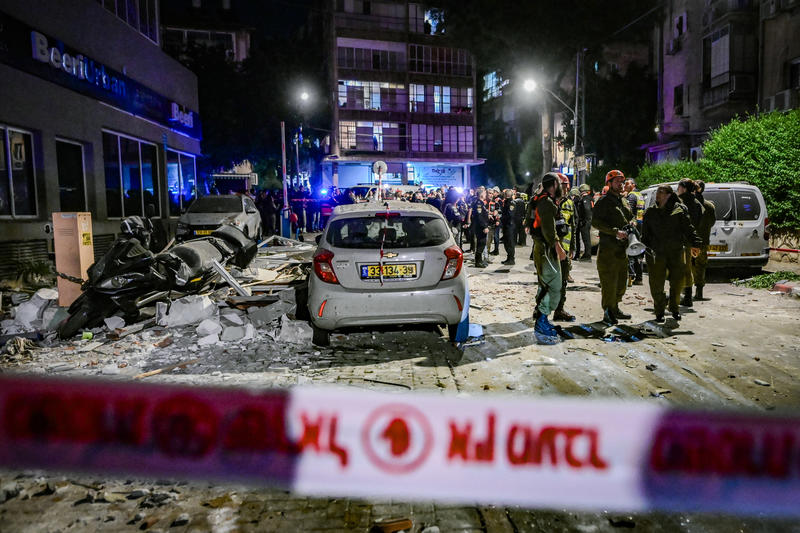
What’s happened: In Haifa, a family of four were killed in their apartment on Sunday by an Iranian missile. It was the second deadliest incident of the war so far, behind only the attack on the synagogue in Beit Shemesh which killed nine people on the second day of the war.

  • Nearly all missiles are intercepted, but a small percentage get through, including illegal cluster munitions, which spread bomblets over a wide ares. Such was the case yesterday with a cluster munitions which hit homes around the Tel Aviv area, causing injuries but no fatalities.
  • The Israeli home front continues to face barrages of missiles and rocket fire from Iran, Lebanon, and occasionally Yemen. Along Israel’s northern border, constant rocket fire has made normal life impossible for the last four weeks. In the rest of the country, missile alerts send citizens into shelters multiple times a day, but most routines are otherwise unaffected.
  • In nearly forty days of fighting so far, 27 Israelis have been killed by Iranian missile fire. 30 were killed in the Twelve Day War last June.
  • Sgt. First Class Guy Ludar, 21 of Yuvalim in northern Israel, was killed in combat in southern Lebanon over the weekend. Ludar was accidentally killed by friendly fire during an engagement with Hezbollah terrorists in Shebaa just across the border. Another IDF soldier was wounded in the incident, and a wanted Hezbollah terrorist was captured.
  • Meanwhile the IDF continues its offensive in two theatres of operation.
  • Over the weekend, the IDF successfully targeted more leading figures in Iran’s Islamic Revolutionary Guard Corps, including Majid Khademi, the IRGC’s chief of intelligence, and Yazdan Mir, the head of the IRGC’s Unit 840, its clandestine force charged with attacks and assassinations outside Iran.
  • The IDF also struck key economic and infrastructure targets in Iran over the weekend. In the city of Mahshahr, Iran’s largest petrochemical industrial complex was taken completely offline as a result of an Israeli air strike. Iran’s two largest steel factories were also shut down due to extensive damage from Israeli air strikes.
  • Overnight, the IDF also struck several military airports in and around Tehran, destroying the IRGC’s Air Force headquarters.
  • Media reports in the US, including in The New York Times, indicated some Israeli involvement in the successful US operation to rescue both crew members of the F-15 which was downed by Iranian fire deep in Iranian territory.
  • The IDF also reported striking 140 targets in Lebanon connected to Hezbollah and the Iranian regime. This morning the IDF reported having completed its takeover of the first line of mountain ridges beyond the northern border.
  • In terms of territory, this amounts to only a few kilometres, but it is intended to eliminate the threat of anti-tank missiles being fired at Israeli homes in front-line communities. This tactic, used by Hezbollah from October 2023 when it first launched a war on Israel following Hamas’s October 7 massacre, led to extensive destruction and made agricultural and communal life in Israeli border communities impossible.  

Context: After five weeks of nonstop aerial strikes agains Iran, the IDF announced that it finished strikes against “vital” targets, those connected to Iran’s nuclear and missile programmes, and had moved to “secondary” targets, those connected to the regime’s economic viability.

  • Negotiations between Iran and the US are liable to consign Israeli concerns to a lower priority, so for Israel it is crucial now that if the regime does survive and, especially, if it still retains the 450 kg of enriched uranium which is believed to be buried deeply under the rubble of facilities damaged in last June’s Twelve Day War, then its ability to recover should be as limited and protracted as possible.
  • A ceasefire will leave  Iran in a much weakened state, with any threat from it to Israel pushed off into the future. But, by universal consensus in Israel, it will not succeed in fundamentally reorienting that threat unless the regime itself falls, something Israeli officials hope will happen in short order once the war ends, but cannot guarantee one way or another.
  • Israeli assessments regarding Hezbollah’s current capabilities are mixed. This is true both tactically and strategically.
    • Tactically, even a decapitated and isolated Hezbollah, routed by the IDF in September-November 2024 and cut off from its weapons land bridge by the fall of the Assad regime in December 2024, was still able to regroup and rearm beyond some of Israel’s earlier assessments.
    • Strategically, no independent source of power in Lebanon and no international coalition of diplomatic partners has assembled the kind of incentive structure that would cause the Lebanese on their own to firmly move outside the orbit of Iranian dominance by means of Hezbollah’s weapons and infrastructure.
  • Pronouncements about the “banning” of Hezbollah or international efforts to “strengthen” the supposedly independent Lebanese Armed Forces have not fundamentally changed the fact that Lebanon is a country that enters wars with its southern neighbour based on the security needs and ideological and theological commitments of the Islamic Republic of Iran.
  • Regarding the ongoing war there are competing assessments and directives as well. Multiple leaks from senior IDF officers indicate that fully disarming Hezbollah is not considered a realistic goal of the current offensive. Leading ministers in Government are widely quoted as insisting that the war in Lebanon will continue even if a ceasefire is reached in Iran.
  • The IDF’s territorial advance reflects  the limited strategic goals. Israeli forces have cleared a buffer zone of six to ten kilometres from the border, taking frontline villages and towns out of range of anti-tank and sniper fire. But they have not reached the Litani River and do not, for now, appear to be moving in that direction.
  • IDF assessments are that at least 1,000 Hezbollah fighters have been killed in the last five weeks of hostilities. While Israeli officials acknowledge being surprised by Hezbollah’s ability to rearm after the November 2024 ceasefire, they also speak openly about being surprised in the other direction by its poor performance in battle in each tactical encounter with advancing IDF regiments. In particular, the “elite” Radwan force has proven far less effective than feared, and captured fighters interrogated by the IDF reveal a decidedly low motivation among its troops.

Looking ahead: The deadline for Trump’s ultimatum expires later today. The President has demanded Iran reopen the Strait of Hormuz. If not, he has threatened strikes Iranian power plants and bridges. “Every power plant in Iran will be out of business, burning, exploding and never to be used again,” he again warned last night, adding that “it will take them 100 years to rebuild.”

  • Israel too has issued a threat today to target significant Iranian infrastructure, warning Iranian citizens to stay away from all trains and rail lines until at least 9:00pm tonight.With Trump’s deadline looming, various initiatives for partial or temporary ceasefires have been floated, all involving some kind of opening of the vital Strait while negotiations begin on other outstanding issues.
  • Pakistan has put forward a proposal for a 45-day ceasefire that would immediately open the Strait to shipping traffic. Neither the US nor Iran have shown any public enthusiasm for the Pakistani proposal, with the Iranians putting forward an alternative ten-point plan whose details have not been made public. The Iranian proposal is believed to include a guarantee that the war would not restart following the ceasefire, a stipulation unlikely to be accepted by the Americans.
  • Oman too is involved in mediation, and the Omanis have floated the idea of a (possibly temporary) joint administration of the Strait of Hormuz by Oman and Iran.
  • Vice President JD Vance is en route to Hungary. American officials told reporters that his schedule could be readjusted if needed to meet Iranian officials or conduct indirect talks with them.

March 31, 2026

Four Israeli soldiers killed in southern Lebanon

Family and friends of Israeli soldier Sergeant Liran Ben Zion attend his funeral at the Holon Military Cemetery on March 30, 2026.
Family and friends of Israeli soldier Sergeant Liran Ben Zion attend his funeral at the Holon Military Cemetery on March 30, 2026. He was killed during Israel’s ground offensive in southern Lebanon. Photo by Avshalom Sassoni/Flash90

What’s happened: Four Israeli soldiers from the Nahal Reconnaissance Unit were killed in combat in southern Lebanon yesterday.

  • Three more soldiers were wounded in the incident which killed Cap. Noam Madmoni, 22 from Sderot, Staff Sgt. Ben Cohen, 21 from Lehavim, Staff Sgt. Maxim Antis, 21 from Bat Yam. The name of the fourth soldier has not yet been released for publication. The battle took place in in the western sector of southern Lebanon yesterday evening, in an area where Hezbollah sent hundreds of fighters from its elite Radwan unit in the weeks before the war started in early March. Prior to that the Lebanese Armed Forces had evacuated the sector.
  • Ten IDF soldiers have fallen in southern Lebanon in the last month, whilst the IDF claims over 850 Hezbollah operatives have been killed so far.    
  • Three people were injured from a cluster munition in an Iranian missile fired on central Israel this morning. Earlier today, another Iranian missile was fired at Jerusalem. There were no injuries from that attack.
  • IDF air strikes on Iran continued yesterday and overnight, with a focus on “economic” targets such as steel plants, which are designed to further weaken the Islamic regime, particularly after the war ends. This is in line with the IDF statement from earlier this week that it had nearly completed hitting all the “critical assets” connected to Iranian weapons production.
  • US CENTCOM Commander Admiral Brad Cooper completed a visit to Israel where he met with IDF Chief of Staff Eyal Zamir to coordinate the next steps in the campaign.        
  • Pakistan hosted a four-way summit of foreign ministers from Saudi Arabia, Turkey, Egypt, and Pakistan itself in Islamabad to discuss the ongoing crisis. No major development were reported from there except for an Iranian agreement to allow two Pakistani-flagged vessels to transit the Strait of Hormuz per day. Following private discussions, the Pakistani foreign minister Ishaq Dar flew to Beijing to update his Chinese counterpart.

March 30, 2026

Houthis join war as IDF advances against Hezbollah

Reserve forces of the 769th Brigade Combat Team under the command of the 91st Division are conducting targeted ground operations to expand the security area in southern Lebanon.
Reserve forces of the 769th Brigade Combat Team under the command of the 91st Division are conducting targeted ground operations to expand the security area in southern Lebanon. Photo credit: IDF.

What’s happened: The Houthis, an Iran-backed jihadist militia that has controlled parts of Yemen for much of the last decade, launched at least two ballistic missiles at Israel over the weekend, joining the war after waiting on the sidelines for four weeks. Both missiles were intercepted.

  • The Houthis began attacking Israel on October 19, 2023, twelve days after the Hamas invasion and massacre in southern Israel, and continued firing missiles on Israel until the ceasefire which ended the Gaza war came into effect in October 2025.
  • Earlier in 2025 there was a short US-led bombing campaign against the Houthis that ended in a ceasefire which did not include Israel, which has been in effect since May 2025. This ceasefire resulted in the reopening of the Red Sea to most shipping traffic.
  • There is growing concern that the Houthis will once more endeavour to block shipping in the Red Sea and through to the Suez Canal by blockading the Bab al Mandab Strait.
  • President Trump’s ceasefire with the Houthis in May 2025 left Israel alone in fighting them for the next five months. Similarly, the regional effort to contain the Houthis led to a fierce division between Saudi Arabia and the UAE, who backed different factions inside Yemen that were fighting the Iran-backed militia.
  • The IDF continued to operate in both Iran and Lebanon over the weekend. Overnight, the IDF  conducted 140 air strikes in Iran on targets connected to weapons production. These included facilities used for the production of anti-aircraft missiles, anti-tank missiles, and ballistic missile engines.
  • The IDF also struck targets in Lebanon, including Hezbollah positions in Beirut. An air strike eliminated Ali Hassan Shaib, a senior operative in Hezbollah’s elite Radwan force. Three Israeli soldiers were seriously wounded in combat with Hezbollah in southern Lebanon.
  • Foreign Minister Saar informed this morning that he spoke with Foreign Secretary Yvette Cooper. They’ve discussed:
    • The latest incidents in the UK, including the arson attacks on Hatzalah ambulance.
    • The rise of antisemitism in the West and the delegitimisation of the State of Israel. 
    • The situation in Lebanon, where according Saar “the Lebanese Foreign Ministry’s decision to expel the Iranian ambassador has remained on paper only. Just as the Lebanese government’s decision to disarm Hezbollah has also remained on paper only. Just as the Lebanese army’s statement three months ago claiming it had achieved ‘operational control’ in southern Lebanon up to the Litani River – was baseless.”
  • Over the weekend Sgt. Moshe Yitzchak Hacohen Katz, a 22-year-old from New Haven, Connecticut, was killed in action in southern Lebanon. Three other soldiers were moderately wounded in the same incident, in which the soldiers came under rocket fire.
  • This morning the army announced that Sgt, Litan Ben Zion, 19 from Holon, from the 401st Armoured Brigade was also killed by an anti-tank missile fired at his tank. An officer was seriously wounded in the same incident.    
  • In Tel Aviv, Viacheslav Vidment, a 52-year-old resident of Ashdod, was killed by an Iranian missile. Vidment worked as a security guard at a site that had been struck early in the war by an Iranian missile. Vidment did not enter a bomb shelter in response to the air raid siren, and was killed by missile debris that struck him in the head.
  • Yesterday, Knesset passed the budget bill for the current fiscal year in a 62 to 55 vote. Failure to pass a budget by March 31 would have led to automatic dissolving of parliament and early elections. Elections are currently scheduled for October of this year. The 850 billion shekel (£203bn)  budget includes 30 billion shekels (£7bn) in supplementary funding for defence, bringing the total defence budget to 142 billion shekels (£34bn).
    • Finance Minister Bezalel Smotrich boasted yesterday that “for the first time since 1988, the government will complete its term and has passed four annual budgets, and all that while at war.”
    • Opposition leader Yair Lapid blasted the roughly 6 billion shekels (£1.4bn) of “coalition funds,” mostly sectoral earmarks, in the budget. As an example, he pointed to 49 million shekels (£11.7m) set aside ostensibly to prevent dropouts from yeshiva programmes. “We aren’t stupid,” he said. “We know what a program to prevent dropouts from yeshivas is. It’s a program designed to prevent young Haredi men from enlisting in the IDF.  This isn’t money for security. This is 49 million shekels to damage security (£11.7m).”

Context: Gulf diplomacy had, in the years immediately before the current war, been seen to be moving away from a dependence only on the United States. China and Russia had made inroads, and the Saudis had even concluded a bilateral defence pact with a nearby declared nuclear power, Pakistan. But so far in the current war, that pact hasn’t had any material impact, and in fact Pakistan has positioned itself as a neutral mediator between the US and Iran.

  • The UAE is in a particularly tight spot between Israel, Saudi Arabia, the US, and Iran.
  • According to the Saudi newspaper Asharq Al-Awsat, only 17 percent of Iranian missiles and drones have been aimed at Israel in the current war, with the rest targeting Gulf countries. And of the 4,391 targeting the Gulf, 2,156 (nearly half) have targeted the UAE.The Emiratis  have quietly frozen Iranian assets in their country. More than 8,000 Iranian firms have operations in the UAE, something which until the current war effectively helped Iran circumvent sanctions.
  • In the months leading up to the war, the UAE was involved in a bitter clash with Saudi Arabia over the war in Yemen, with the two countries backing different forces in the effort to contain the Iran-backed Houthis.
  • As far as the Pakistani-sponsored mediation, little is known publicly about the progress of diplomatic negotiations.
    • Multiple media reports suggest that the Iranian position, to the extent there is a coherent Iranian position, is more open to compromise than what was suggested by the Iranian proposal for ending the war last week, which was an effective rejection of the US 15-point plan.
    • Internal divisions between Iranian President Masoud Pezeshkian and Foreign Minister Abbas Araghchi on the one hand, and more radical figures from the Islamic Revolutionary Guard Corps on the other, are widely seen as contributing to the delayed Iranian response.
    • Reportedly, Iran conveyed a willingness for a significant, but not full, reopening of the Strait of Hormuz in exchange for an immediate US-Israeli ceasefire while negotiations were conducted on other outstanding issues. This proposal was rejected by the Trump administration.
  • US officials believe that the mounting economic damage to Iran will exert a pressure on Tehran far greater than the accumulating economic damage Iran has been able to impose on the rest of the world.
  • In Iran itself, civil servants have not been paid since the war began, ATM’s have run out of cash, and inflation has risen to 120% on an annualised basis. Even Iran’s much hyped ability to sell oil to neutral countries at imported prices has only yielded about $2 billion in revenue, significantly less than what Iran was able to make from selling oil beforehand at the lower prewar prices.

Looking ahead: The various diplomatic initiatives are taking place on the backdrop of a new US deadline for an agreement and an implied threat for a limited ground operation. The latest extension of President Trump’s ultimatum runs to April 6.

  • But the gradual buildup of US marine and airborne forces in the region has led analysts to speculate that an entirely different operation is under consideration.
  • The four possibilities most discussed include:
    • Invading and occupying Kharg Island, from which nearly all of Iran’s oil is exported. This would cripple the Iranian economy even further, but it is not clear if this would actually force Tehran to back down. Facilities on the island could be destroyed either in battle or by retreating Iranian forces themselves.
    • Reopening by force the Strait of Hormuz, possibly including a small littoral offensive on the Iranian coast.
    • Taking several disputed islands in the Gulf that have been occupied by Iran since the 1970s, possibly in cooperation with Gulf countries who claim them, most notably the UAE.
    • A complex operation to seize the estimated 450 kg of highly enriched uranium believed to still be in Iran’s possession. The HEU is believed to be buried under two Iranian nuclear facilities in Isfahan and Natanz that were heavily damaged by US air strikes in last June’s war.

March 26, 2026

Iranian attacks persist as Israel escalates strikes on key military targets

Israeli security and rescue forces inspect the damage at the scene where a missile fired from Iran toward Israel caused damage in Kiryat Ata, northern Israel, March 26, 2026.
Israeli security and rescue forces inspect the damage at the scene where a missile fired from Iran toward Israel caused damage in Kiryat Ata, northern Israel, March 26, 2026. Photo by Michael Giladi/Flash90

What’s happened: Missile attacks from Iran and rocket attacks from Lebanon continued to strike Israeli cities and towns overnight and this morning. Injuries were reported in Kafr Qassem, a large Arab town in central Israel northeast of Tel Aviv, as well as in Shaar Shomron, a small West Bank settlement, and Kiryat Bialik, a suburb of Haifa, from Iranian illegal cluster munitions.

  • In the past 24 hours  Hezbollah launched approximately 600 rockets, drones, and mortars toward Israel and IDF soldiers operating  in southern Lebanon.
  • Israel’s offensive in Lebanon and Iran continued, even as diplomatic developments lead to changing target priorities on both fronts.
    • An IDF soldier was killed and another was wounded in a firefight in southern Lebanon. Staff Sgt. Ori Greenberg, 21, of the Golani Brigade’s Reconnaissance Unit was killed in an exchange of fire with Hezbollah guerrillas in southern Lebanon early this morning.
    • The IDF reports that several Hezbollah fighters were killed in the operation without giving an exact number. The IDF also released footage this morning of the demolition of a Hezbollah command centre as well as a weapons depot that were both destroyed in an operation by carried out by the Golani Brigade.
    • The IDF also reported this morning that it had successfully eliminated the commander of the Islamic Revolutionary Guard Corps Navy, Alireza Tangsiri in Bandar Abbas, the Iranian port on the northern side of the Strait of Hormuz. Tangsiri was the man responsible for the closure of the Strait, which has been the one significant Iranian tactical success in the war so far.
    • The IDF also struck major naval and aerial weapons development sites in Iran yesterday, with particular emphasis on sites in Isfahan. The strikes included Iran’s Underwater Research Centre in Isfahan, the only facility in Iran for the design and development of submarines and support systems for the Iranian Navy.
  • The US reported that as of yesterday it had hit 10,000 targets in Iran so far. The number did not include targets hit by Israel.
  • Iran publicly rejected the US 15-point plan for ending the war. The proposal was conveyed to Iran by Pakistan, and was believed to offer sanctions relief in exchange for major Iranian concessions on its nuclear programme, ballistic missile programme, support for regional proxies, and the ongoing Iranian blockade of the Strait of Hormuz.
  • In anticipation of a possible US invasion of its strategically important Kharg Island, Iran made several dramatic threats yesterday against the US and its allies. Military officials threatened to target shipping in the Red Sea — something that Iran would be unlikely to pull off on its own, but would indicate the entry into the conflict of its proxy militia in Yemen, the Houthis.
  • Iran also claimed that an unnamed Gulf state was planning on joining the US in an invasion of Kharg, and threatened to attack vital infrastructure in that unnamed country if such an invasion were to be launched.
  • In Kuwait, six men were arrested over an alleged Hezbollah plot to assassinate Kuwaiti leaders. According to Kuwaiti reports, fourteen more members of the terror cell managed to flee the country before arrest.

Context: Though the positions of the US and Iran are still miles apart, Israeli officials take very seriously the possibility that the US will declare a ceasefire as early as this weekend. This possibility has several implications for how Israel conducts its offensive in the coming days.

  • The choice of targets in Iran being hit by the Israeli Air Force has shifted this week to largely military targets, with much less emphasis on regime targets. What this means practically is that Israel is using what might be a limited and closing window of opportunity to degrade as much as possible Iran’s capacity to store, manufacture, or develop weapons that would serve it in future rounds of fighting.
  • At the same time, the Israel has scaled back the strikes against Basij and other targets that would weaken the regime and making cracking down on a new uprising after a ceasefire harder. This could either be because of an assessment that the regime is now stable, or that the effort expended on each Basij strike — for example, taking out one checkpoint — is far too high relative to the benefit. If it is really the case that the war could be ending before a decisive blow is delivered to the regime, Israeli decision makers might calculate that it is best to use the time remaining to weaken Iran’s capacity to attack Israel in the future.
  • The possibility of a ceasefire also affects Israel’s calculations in Lebanon. Israel has thus far refrained from a large land operation in Lebanon, though it has moved limited forces in and established strongpoints beyond those that were left from the 2024 ceasefire. With most of the Lebanon offensive thus far having been an Air Force operation, and the Air Force needed to put in the final blows in Iran, the Lebanon offensive has been, in the last two days at least, pushed down the priority list.
  • There is also a debate in Israel about striking major infrastructure targets in Iran, with serious consideration being given to pushing that before a ceasefire is implemented. The perception in Iran that the Islamic regime has won the war is not just propaganda, but appears to reflect how Iranian officials genuinely believe events have unfolded. To this end, Israeli decision makers, together with many in the Gulf countries too, believe that only significant damage to Iranian energy infrastructure can change that perception, with all the anticipated effects both regionally and domestically.

Looking ahead: Major diplomatic efforts are underway to reach an agreement between Iran and the United States that would bring an end to the current war.

  • Egypt, Turkey, and Pakistan have positioned themselves as mediators between the two warring parties. Oman, which had mediated talks before the war broke out, has faded somewhat.
  • Pakistani efforts have received the most public attention. There were conflicting reports yesterday that US Vice President JD Vance could be headed to Islamabad for indirect talks with the Iranians.
  • Meanwhile, Pakistani officials claimed that they conveyed a request to Israel not to eliminate Iran’s Foreign Minister Abbas Araghchi and its parliament speaker Mohammad Bagher Qalibaf, so that the two men could conduct indirect talks with the US under Pakistani mediation. According to the same Pakistani officials, Israel acceded to the request.

March 25, 2026

Lebanon expels Iranian ambassador as US pushes 15-point Iran plan

Zaka personnel work at the scene where a woman was killed by missile shrapnel following a rocket fired toward Israel near Rosh Pina, northern Israel, March 24, 2026.
Zaka personnel work at the scene where a woman was killed by missile shrapnel following a rocket fired toward Israel near Rosh Pina, northern Israel, March 24, 2026. Photo by David Cohen/Flash90

What’s happened: A Hezbollah rocket killed an Israeli woman in northern Israel yesterday. Nuriel Dubin, aged 27, was in her car when a rocket struck the Mahanayim Junction. Her fiancé was injured in the attack. The two had met in the immediate aftermath of the October 7 attack when he was evacuated from his home to a hotel in the Kinneret area where she worked as a teacher.

  • Since Hezbollah entered the war on March 2, the Iran-backed terrorist group in Lebanon has been launching an average of 150 rockets a day. Some of its barrages have been timed with Iranian missile attacks on Israel’s north as well. Over the same period, according to official Israeli figures, the IDF has killed 600 Hezbollah combatants, including 220 of the group’s elite Radwan Force.
  • In the most significant diplomatic development on Israeli northern border, Lebanon has expelled the Iranian ambassador yesterday and withdrawn their own ambassador from Tehran. This a further escalation of tensions between the two countries, following the expulsion of Iranian military personnel last week.
  • Following on the dramatic announcement by President Trump the day before to defer planned attacks on Iran’s energy infrastructure, the US yesterday conveyed to Iran a 15-point plan for ending the current war. The text of the plan has not been made public, but according to media reports, it goes far beyond a simple ceasefire and includes details regarding most of the outstanding issues that were being negotiated by the two sides in the weeks prior to the Israeli attacks on Iran in June 2025 and February 2026. These include not just the Iranian nuclear programme, but also the ballistic missile programme and Iran’s support for regional proxies.
  • The plan was conveyed through Pakistan, which has emerged as a possible mediator between Iran and the United States, along with Oman, Egypt and Turkey. Notably, there has been no reported mediation role for Qatar, which has found itself on the receiving end of Iranian missile and drone attacks since the current war began.
  • President Trump struck an optimistic note regarding the diplomatic process, noting that “we’re talking to the right people,” without revealing who those people were. He alluded cryptically to a significant Iranian concession, without saying what it was. “They gave us a present, and the present arrived today,” Trump said to reporters in the Oval Office. “I’m not going to tell you what that present is, but it was a very significant prize.” Pressed for more details, he would only say that it was “oil- and gas-related.” Other reports during the day indicated that Iran was considering opening the passage through the Straits of Hormuz to non-belligerent countries, something that if implemented would remove a major looming threat to global energy markets.
  • With the US threat to attack energy infrastructure off the table until the end of trading this week, oil prices have fallen again to around $90 a barrel on global markets.
  • More details were reported today regarding Israel’s air strike on Iran’s Caspian port Bandar Anzali last Wednesday. Satellite images show significant damage to Iran’s naval headquarters and numerous destroyed naval vessels. The IAF hit dozens of targets including warships, a port, a command centre and a shipyard used to repair and maintain vessels. The attack hobbled a smuggling route that was crucial for both Iranian and Russian war efforts and sanctions evasion.
  • Meanwhile, the UK has offered to host a security summit about opening the Strait of Hormuz.

Context: The exact text of the American 15-point proposal is unknown.

  • However, it  is believed to contain some of the following conditions:
    • Three main nuclear sites in Iran would be dismantled.
    • All enrichment activities in Iran would be banned.
    • The ballistic missile programme would be suspended.
    • Support for regional proxies would be curbed.
    • The Strait of Hormuz would be fully reopened.
    • Sanctions related to Iran’s nuclear programme would be lifted. Sanctions connected to human rights abuses would stay in place.
    • The United States would provide direct assistance for Iran’s civilian nuclear programme, while also monitoring it.
  • It is unclear what the US propose to do with the 450kg of highly enriched uranium (HEU), and whether they will seek to remove it or dilute it.
  • The Iranians have also made a list of demands for an agreement with the US. Some of them would be extraordinary gains for Iran even if the war had been characterised by stunning Iranian military successes, which it decidedly has not been. These demands include:
    • Turning the Strait of Hormuz into an Iranian-managed passageway where Iran would collect fees, similar to the Suez Canal — though of course, the Suez Canal artificial and located inside Egypt and the Strait of Hormuz in an international waterway.
    • Guarantees that neither Israel nor the US could attack Iran again, together with a guarantee that Israel could not attack Lebanon.
    • The lifting of all sanctions on Iran, not just those related to the nuclear programme.
    • Permitting Iran to keep and develop ballistic missiles with no limitations.
  • Israeli officials remain sceptical regarding the prospects of an agreement along the lines of either proposal. To the extent one can be reached, Israel is concerned that the implementation will run along the lines of ceasefires with Hamas and Hezbollah, with the major steps called for in the beginning carried out in full, but with the provisions regarding disarmament dragging on to the point where attention lags, urgency fades, and the threat to renew hostilities in light of violations becomes ineffective.

Looking ahead: In the meantime, US continues to move Marines and airborne forces into the theatre of conflict, raising the possibility of a limited land manoeuvre either on Kharg Island or on shore of the Hormuz Strait. 3,000 troops are reported to have arrived already. 2,200 more Marines are due on Friday.

  • Even a successful agreement on Iran won’t necessarily end the current fighting in Lebanon where Israel has yet to embark on a large land offensive. Israel destroyed five more bridges of the Litani River over the past 48 hours, and according to Defence Minister Katz, “the IDF will control the remaining bridges and the security zone up to the Litani.”

Newsletter sign-up

Please enter your information below to subscribe to our daily newsletter and stay updated and informed.

Donate to BICOM

At BICOM, we rely on the generosity of people like you to keep our website and services running. Your donation, no matter the size, makes a real difference. Please consider supporting us today. For further information please email: [email protected]