LATEST

Hamas and the Muslim Brotherhood

Key background
  • Hamas is an Islamist Palestinian nationalist movement which currently governs the Gaza Strip. It is proscribed by the UK and in the majority of western countries.
  • Its primary state backers are Iran, Turkey, and Qatar. It is also active in the West Bank, East Jerusalem, Syria, and Lebanon.
  • Since seizing control of the Gaza Strip in 2007, it has continuously launched attacks against Israel and weaponised civilian infrastructure by embedding itself into schools, mosques, and hospitals.
  • Hamas’s 7th October attacks on southern Israel killed 1200, and over 250 hostages were subsequently taken to the Gaza Strip.
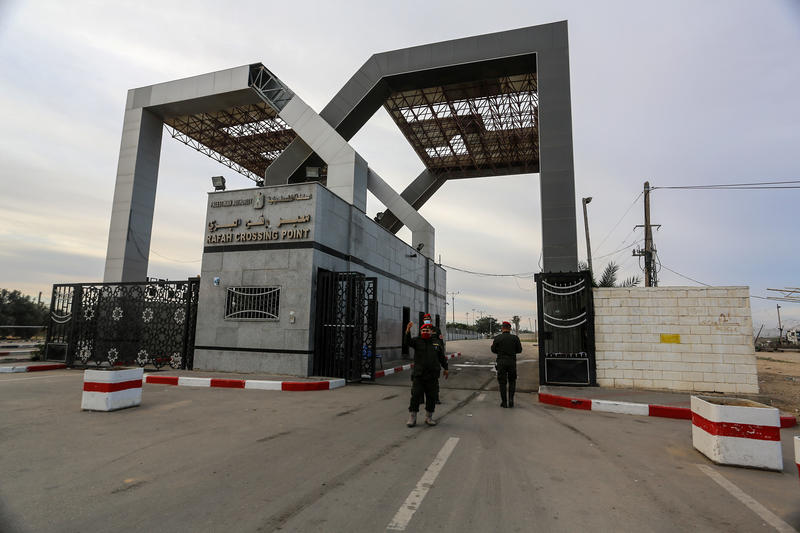
People seen before crossing to Egypt through the Rafah border crossing in the southern Gaza Strip
People seen before crossing to Egypt through the Rafah border crossing in the southern Gaza Strip, on November 24, 2020. Photo by Abed Rahim Khatib/Flash90

Updated December 3, 2025

Rafah border crossing to reopen

What’s happening: Despite the ongoing failure of Hamas to release the remains of all hostages, Israel announced today that it will allow the reopening of the Rafah crossing for Palestinians leaving Gaza into Egypt.

  • The crossing will operate under the coordination of Israel, Egypt, and a small contingent of officials from the European Union.
  • According to Israeli media there are suggestions that the Israeli decision to open the crossing even before the last hostages are recovered came as a result of a request from President Trump in phone call with Prime Minister Netanyahu on Monday.
  • The human remains transferred to Israeli by Hamas on Tuesday are not those of deceased hostages, according to the Israeli National Institute of Forensic Medicine, which examined the remains.
  • Today, Palestinian Islamic Jihad said that it is working with the Red Cross to locate the remains of one deceased hostage whom it had abducted.
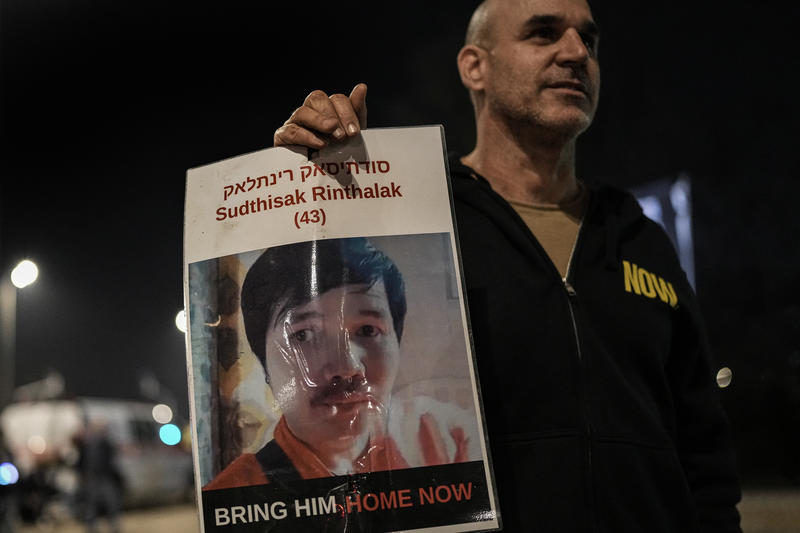
  • The bodies of two hostages taken in the October 7 attack, one Israeli, Ran Gvili, and one Thai citizen, Sudthisak Rinthalak, have yet to be handed over.
  • This morning Palestinian sources are claiming that the body of a deceased hostage has been found in northern Gaza, but there has not yet been a formal statement.
  • Prime Minister Netanyahu met yesterday with Trump’s Deputy Special Envoy to the Middle East Morgan Ortagus. Israeli officials reportedly shared with Ortagus intelligence showing both that Hezbollah are rearming and that the Lebanese Armed Forces were either unwilling or unable to do much about it.

Context: The latest phone call between Netanyahu and Trump once more highlighted the president’s direct engagement in the Middle East and across the various fronts including Gaza, Lebanon, Syria and Iran.    

  • Not only is Trump’s influence seen in Israel’s decision to open the Rafah crossing, but also in the de-escalation in Syria, following the Beit Jinn incident late last week in which six Israeli soldiers were wounded and 13 Syrians were killed.
  • It has since been reported that some of the armed men weren’t just militants, but rather part of the new regime’s security forces. The US administration is keen to reach understandings with Syria and Israel on a number of issues before the expected Netanyahu-Trump meeting. These include restrictions on IDF operations in areas in which al-Sharaa’s troops operate, cooperation in dealing with Sunni terrorist organisations, and guaranteeing the wellbeing of the Druze population in the As-Suwayda enclave.
  • On Lebanon, tensions are ratcheting up as the sides approach the unofficial US deadline of December 31 for the disarmament of Hezbollah. Foreign Minister Gidon Saar, who also met yesterday with US Envoy Ortagus, told reporters, “The terrorist organisation is rearming at a far quicker pace that it is being disarmed. The responsibility resides with the Lebanese government. There have also been money transfers from Iran to Hezbollah via Turkey. That needs to be curtailed.”
  • In a rare positive diplomatic development Lebanon has agreed to send a civilian government  representative to the ceasefire monitoring committee meeting with Israel. Simon Karam, their former Ambassador to the US  will head Lebanon’s delegation to review the ceasefire mechanism. Until now Lebanon has always sent military representatives so as not to legitimise engagement with the State of Israel. Israel’s Prime Minister’s office will also send a representative.
  • However, with the Pope’s visit in Lebanon now over, the perceived immunity from Israeli strikes has been lifted. Israel has reportedly conveyed to the Lebanese government that it is “very likely to begin to take harsher measures” against Hezbollah if the disarmament conditions of the November 2024 ceasefire are not fully implemented.
  • US diplomacy is making its presence felt here too. The US will not provide aid to Lebanon unless it fulfils its commitments on disarming Hezbollah. Where American statements regarding Israel and Syria on the one hand and Israel and Gaza on the other have largely pushed in a de-escalatory direction, this has not been the case regarding Israel and Lebanon.
  • The UN General Assembly approved by a majority of 123 votes a resolution calling on Israel to withdraw from the Golan Heights.  7 countries voted against and 41 abstained, including the UK.
  • The resolution is presented to the General Assembly every year, at the initiative of Syria and receives an automatic majority. The resolution  calls for Israel to withdraw to the June 4, 1967 lines.
  • In Gaza, Israel is concerned that Iran has been encouraging Hamas to refuse any kind of disarmament. In parallel,  the US is seeking to begin reconstruction in Gaza even without disarmament, but focused only on the area under Israel’s control. This measure is strongly opposed by Egypt.

Looking ahead: Ortgaus’ next stop after Israel will be  Lebanon, where she is expected to take part in the Mechanism meeting. She is expected to demand strict enforcement of the disarmament clauses, including a measure the Lebanese Armed Forces have refused thus far to implement: searches in private homes where Hezbollah caches are stored.

  • The latest reports suggest that Netanyahu and Trump will meet on December 28 in Mar-a-Lago, and not the White House. Netanyahu is expected to fly directly to Florida, and to return to Israel within 48 hours, without a stop in Washington.

November 26, 2025

Rift in Israel’s security establishment emerges as body of Dror Or is returned

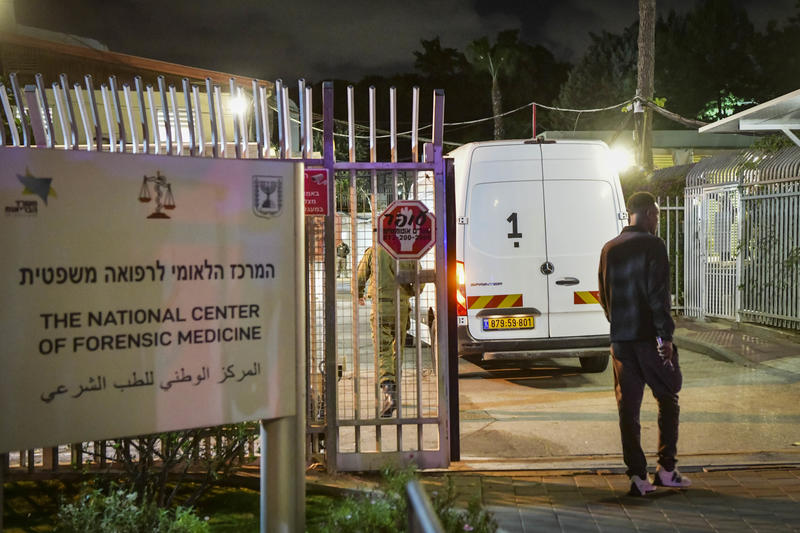
Convoy carrying the body of a hostage arrives at the Abu Kabir Forensic Institute in Tel Aviv, November 25, 2025.
Convoy carrying the body of a hostage arrives at the Abu Kabir Forensic Institute in Tel Aviv, November 25, 2025. Photo by Avshalom Sassoni/Flash90 *** Local Caption *** אבו כביר חרבות ברזל מלחמה שחרור חטופים עסקה חזרה

What’s happened: A body handed over to Israel by the Palestinian Islamic Jihad yesterday was confirmed this morning to be that of Israeli hostage Dror Or from Kibbutz Beeri.

  • Dror Or was a 48-year-old cheesemaker and yoga instructor living on the kibbutz with his wife Yonat and two of their young children. On October 7, 2023 terrorists from the Islamic Jihad set fire to their home. The four members of the Or family slipped out the window of their safe room as their house burned and scattered in different directions. Yonat was murdered on the spot. The two children were taken hostage and released later in a ceasefire. Dror’s fate was unknown until May of 2024, when authorities determined based on intelligence that he too had been killed and his body held in Gaza.
  • In a statement issued by Kibbutz Beeri, they described Dror Or as an “exemplary family man, a devoted friend, a calm, pleasant and kindhearted man with a gentle sense of humor and high sensitivity towards his surroundings. He loved good food, basketball, trips around the world, yoga exercises and even taught yoga himself.”
  • With this handover, there remain two deceased hostages held in Gaza. Sudthisak Rinthalak, a Thai agricultural worker, who was murdered on October 7, 2023 in Kibbutz Beeri. Ran Gvili, an Israeli police officer who rushed to the front lines on October 7 despite being on medical leave due to a surgery on his shoulder. He was abducted after being shot by Hamas terrorists. Before that, he reportedly eliminated 14 terrorists. In January 2024, Israeli authorities informed his family that he had been killed.
  • According to the ceasefire which went into effect six weeks ago, Hamas was supposed to hand over all hostages living and dead within 72 hours.
  • The IDF continues to clear out tunnels in Rafah. Yesterday six Hamas gunmen were eliminated in one encounter with the IDF.
  • In the West Bank, the IDF and the Shin Bet launched a major counterterrorism operation focused on the villages of Tamunn and Tubas, between Nablus and Jenin. Citing unnamed Israeli security officials, Ynet reports that the goal of the operation is “to prevent terrorists from regrouping and evolving into battalion-like formations, similar to the situation that existed in parts of the West Bank until about two years ago.”
  • Prime Minister Netanyahu met separately yesterday with both Defence Minister Katz and IDF Chief of General Staff Zamir in an attempt to bring to a close the public dispute the two have had over investigations into the failures on October 7.

Context: Conflicting reports emerged yesterday about Hamas’ grip on power in Gaza and its future plans as the first phase of the ceasefire nears its end.

  • The London-based, Saudi-backed Al-Sharq al-Awsat reported that Hamas leaders both inside the Gaza Strip and abroad are considering dissolving their armed wing and reconstituting themselves as a political party, possibly even under the umbrella of the PLO. According to the report, Hamas leaders have raised the possibility in discussions with Qatar, Turkey, and Egypt.
  • Israeli defence officials, meanwhile, presented the cabinet with worrying signs of Hamas reestablishing its prewar bases of power in the Strip. In the areas beyond the Yellow Line, there are reports, Hamas has gradually reestablished complete control, deploying police and checkpoints and collecting taxes. In total, 13 out of 25 municipalities have resumed full activity, all under Hamas control.
  • On the Israeli side of the Yellow Line, pockets of Hamas gunmen remain holed up in tunnels that the IDF is gradually dismantling. Estimates suggest security sources claiming that hundreds of metres of tunnels have been demolished, together with 15 tunnel shafts and 40 buildings that hid the shafts or served as terrorist bases. Troops quoted in the report say that Hamas gunmen found in the tunnels have two choices: “surrender or death.”
  • A feud has been raging at the apex of the Israeli security establishment about responsibility and lesson learning from the October 7, and the extent to which it should be limited to the military and intelligence services.
  • Following a military investigation written over the course of seven months by 12 major-generals and brigadier-generals – known as the Turjeman report – (itself an investigation of previous IDF investigations into combat and intelligence failures) Chief of Staff Zamir last week summoned senior officers implicated in the October 7 failures, including many long out of active duty. He informed them that they were being dismissed for their roles in the IDF’s failures to anticipate and properly repel the attack.
  • Together with the dismissals, Zamir also announced several new appointments and promotions. Defence Minister Katz intervened to freeze the appointments and asked to revisit the Turjeman report. Mutual leaks ensued, with associates of both men accusing the other of undermining each other’s authority and impugning the other’s motives.
  • Yediot Ahronot reported that in the Prime Minister’s orbit there were those who accused Katz of “primary-season tweeting.” Anonymous sources close to Netanyahu say that the Prime Minister regrets appointing Zamir, who has proven to be much more independent than was hoped for.

Looking ahead: With the public spat between Defence Minister Katz and IDF Chief of General Staff Zamir dominating headlines in Israel, Israel Hayom reports that the Prime Minister is considering a cabinet reshuffle that would, among other things, reassign Katz to the Energy Ministry.

  • In the reshuffle under consideration, Foreign Minster Gideon Saar would take over at Defence, and Eli Cohen would return to the Foreign Ministry. Katz and Cohen were originally slated to rotate at the Foreign and Energy Ministries, but the firing of Gallant and the rejoining of Saar to the coalition saw both men assume different posts.

November 25, 2025

Palestinian Islamic Jihad claim to have found another deceased hostage

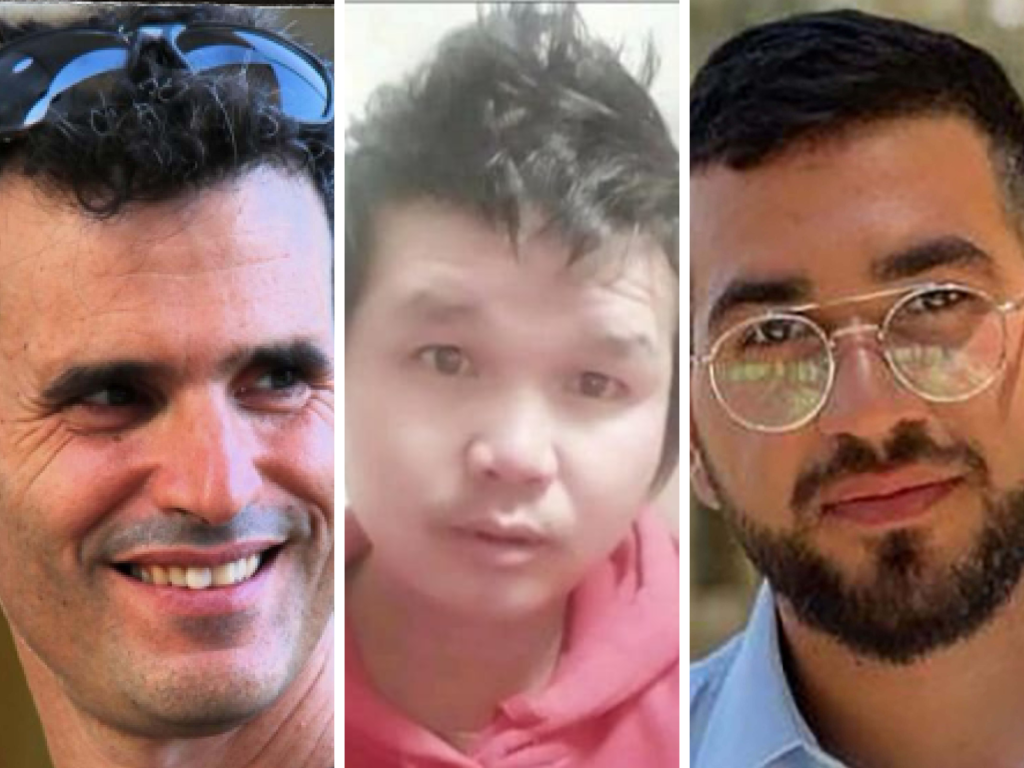
Ran Gvili, Dror Or and Sudthisak Rinthalak.
Ran Gvili, Dror Or and Sudthisak Rinthalak. Photo credit: Hostages nad Missing Families Forum (Collage by BICOM)

Hostage body: Palestinian Islamic Jihad (PIJ) has claimed that it has located the body of one of the remaining hostages following a search in central Gaza.

  • So far there has been no announcement of when the body will be handed over to Israel.
  • The discovery was made following five days of searches by PIJ operatives alongside representatives from Egypt and the Red Cross in the Nuseirat area in the centre of the Strip.
  • The last hostage returned was the body of Meny Goddard two weeks ago.
  • Three deceased hostages remain in Gaza. These include two Israeli citizens, Ran Gvili and Dror Or, as well as one Thai citizen Sudthisak Rinthalak.
    • Ran Gvili (24) was an Israeli Border Policeman who reportedly eliminated 14 terrorists before he was killed and his body taken to Gaza (the IDF declared his death in January 2024).
    • Dror Or (49) and his wife, Yonat, were murdered from their home in Beeri. His body taken to Gaza, along with their two children, Noam and Alma, who were released in the November 2023 deal.
    • Sudthisak Rienthalak (43) was a Thai agricultural worker, who was kidnapped while working in the orchards of Kibbutz Beeri. It is noteworthy that the Hamas attack on October 7 attack did not only target Israeli Jews, but also Muslims and Christians from around the world who happened to be in southern Israel on that fateful morning.
  • Palestinian Islamic Jihad is the second-largest Palestinian terrorist group, responsible for numerous atrocities and the murder of Israeli hostages. They are closely aligned with, and backed by, Iran.
  • Prime Minister Netanyahu condemned the delays in handing over the deceased hostages: “In light of the Islamic Jihad’s announcement regarding the location of findings related to a deceased hostage, Israel views with severity the delay in their immediate transfer into its hands. This constitutes a further violation of the agreement. Israel demands the immediate return of the three deceased hostages still being held in the Gaza Strip.”

Ongoing IDF operations: The IDF continues to operate in the designated Green Zone, in the Israeli controlled side of the Yellow Line.

  • In the Rafah area in the south troops continue to dismantle the remaining terror tunnels in the area. According to the IDF “Over the weekend, 17 terrorists emerged from an underground tunnel route in the area. Following significant combat…11 of the terrorists inside the route were eliminated.” A further six were arrested and taken for questioning.
  • The IDF Spokesperson’s Unit confirmed, “As part of the activity over the past week, hundreds of meters of underground tunnel routes were dismantled, and more than 60 targets were struck, including approximately 15 tunnel shafts and around 40 structures used by the terrorist organisations in the Gaza Strip. Additionally, a Hamas flag, military gear, and weapons were located in the Rafah area along the yellow line, including: firearms, rifles, explosive devices, magazines, and other weapons.”
  • In a separate incident on Monday, several terrorists were identified crossing the yellow line and approaching IDF troops in the northern Gaza Strip, which according to the IDF posed, “an immediate threat,” two terrorists were eliminated.
  • These type of engagements have reoccurred several times in the last month. According to the terms of the ceasefire agreement, they constitute breaches by Hamas, and Israel has freedom of action to respond and defend their forces.  
  • In the West Bank, counter terror commandos eliminated a Palestinian who had been on the run for the last 18 months, after killing two IDF soldiers in a car ramming attack outside Nablus in May 2024. Following the attack he had turned himself in to the Palestinian police, but they released him after he claimed the incident was a traffic accident rather than a nationalistically motivated attack. Since then, he had been considered a wanted terrorist.

Advancing towards the ‘Day After’: For Israel, the return of the remaining three hostages – as agreed upon in the Trump Plan – remains the first condition that needs to be met. After that the disarming of Hamas and the decommissioning of their weapons remain the priority.

  • Israel is able to do this in the areas under its control – those that are closest to the border and the civilian communities, (although the work is painstakingly difficult and slow).
  • The planning and coordination for the International Stabilisation Force (ISF) continues to be led by the US in the CMCC (Civil Military Coordination Center) based in Kiryat Gat, and includes representatives from 21 countries, although not Turkey, Qatar or the Palestinian Authority.  
  • Despite the received UN mandate last week, there remain many unanswered questions for the ISF. These include: what weapons will they have? What will be their rules of engagement? How will they be coordinated with the IDF? How are they expected to locate and destroy tunnels, confiscating weapons – by consent or by force? There is scepticism if this force will even be formed and deployed. So far there have been no countries willing to send troops for this mission.
  • At this point the IDF sees the advantage in being able to share monitoring with the international representatives at the CMCC. For example they share how Hamas commandeers the majority of the 600+ aid trucks that enter Gaza every day. Similarly the IDF are sharing their intelligence on Hamas efforts to reassert control and reorganise their military structure.
  • Earlier this week, Palestinian Authority deputy chairman Hussein al-Sheikh met with former Prime Minister Tony Blair in Ramallah. According to Sheikh’s post on X, the pair discussed issues related to the “day after” the war in Gaza, as well as issues related to the West Bank and Palestinian statehood.
  • According to COGAT, Israel assisted close to 300 Gazans in need of medical treatment this week, enabling them and their escorts to leave Gaza overland into Jordan on their way to unspecified third countries.


Designating Muslim Brotherhood: President Trump announced that he has commissioned a report to ascertain if  “certain chapters” of the Muslim Brotherhood can be designated Foreign Terrorist Organisations (FTOs) and Specially Designated Global Terrorists (SDGTs).

  • The US will now begin the process of labelling Muslim Brotherhood chapters as terrorist organisations which would bring sanctions against the movements.
  • Trump signed an executive order directing Secretary of State Rubio and Treasury Secretary Bessent to submit a report within 45 days on whether to designate any Muslim Brotherhood chapters, such as those in Lebanon, Egypt, and Jordan. The order notably omitted to mention Turkey or Qatar.  
  • Prime Minister Netanyahu commended President Trump, “on his decision to outlaw and designate the ‘Muslim Brotherhood’ organisation as a terrorist organisation.” Netanyahu added that the Muslim Brotherhood “endangers stability throughout the Middle East and also beyond the Middle East.
  • In the UK, Reform announced at their conference last month that, if they form the next government, they would proscribe the Muslim Brotherhood.

November 20, 2025

Mossad foils Hamas plot in Europe

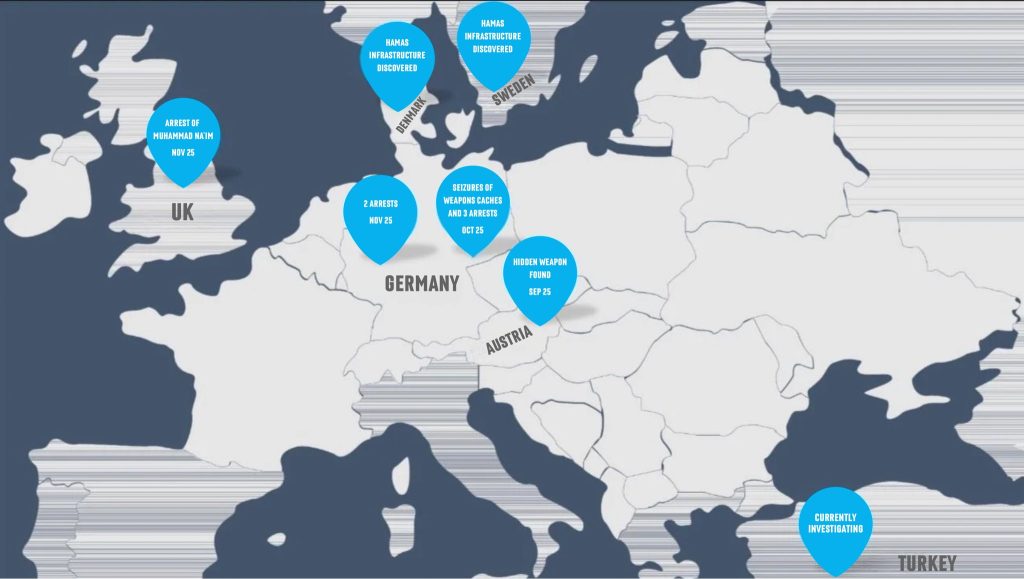
Mossad operation infographic
Mossad operation infographic. Photo credit: Israel in the UK/X

What’s happened: The Prime Minister’s Office announced yesterday the conclusion of a complex antiterrorist operation conducted by the Mossad in cooperation with law enforcing authorities across Europe that led to the disruption of a massive Hamas network that was preparing terrorist attacks in Europe.

  • According to the announcement, arrests were made in Germany, Austria, and the UK, and large weapons caches were discovered in Austria and possibly elsewhere as well.
  • The terrorists involved coordinated with Hamas operatives in Turkey and Qatar. The announcement sparked some media interest in Israel yesterday, but was little noted abroad, though the discovery of a weapons cache in Austria was reported abroad two weeks ago.
  • According to the PMO, Hamas operative Mahmoud Nayim was arrested in the UK in November 2025.
  • In its statement the Austrian Directorate for State Security and Intelligence (DSN) specified that “Among the seized items were tens of thousands of euros in cash, numerous data storage devices and mobile phones, gas pistols, firearms, ammunition, knives, and related literature.”
  • The Prime Minister’‘s office warned that: “Since the October 7 massacre, the Hamas terrorist organisation has been working with renewed vigour to build infrastructure and recruit terrorist cells in Europe and other arenas, similar to the Iranian regime and its proxies.” Reiterating Mossad’s commitment  to countering terrorism “The Mossad, together with its partners in the Israeli and global intelligence and security communities, is leading extensive efforts to thwart terrorism against Israeli, Jewish, and innocent targets worldwide.”

November 20, 2025

IDF operations across Gaza, Lebanon and Syria

Forces of the Kfir Brigade under the command of the Gaza Division are operating in the Yellow Line area in accordance with the ceasefire agreement
Forces of the Kfir Brigade under the command of the Gaza Division are operating in the Yellow Line area in accordance with the ceasefire agreement and the directives of the political echelon. Photo credit: IDF

What’s happened: Hamas terrorists opened fire on an IDF position in Khan Yunis on the Israeli side of the Yellow Line.

  • In response, the IDF carried out a wave of strikes on Hamas positions including in Gaza City and al-Muwasi area. Israel’s Kan radio reported this morning that the commander of Hamas’ Zeitoun battalion, who also served as the organisation’s chief of naval forces, was eliminated in the IDF operation.
  • The IDF also carried out extensive operations in Lebanon yesterday. A weapons storage facility in southern Lebanon was destroyed by the Israeli Air Force hours after the IDF Spokesperson called on civilians to evacuate the site. Other Hezbollah targets were struck throughout the day yesterday, especially around Beit Lif, where, according to Israeli officials, Hezbollah was reestablishing terrorist infrastructure and where the Lebanese Armed Forces were refusing to operate.
  • Prime Minister Netanyahu toured the buffer zone in Syria held by the IDF since the fall of the Assad regime in December 2024. Speaking to Israeli soldiers, he said, “We attach immense importance to our capability here, both defensive and offensive, safeguarding our Druze allies, and especially safeguarding the State of Israel and its northern border opposite the Golan Heights. This is a mission that can develop at any moment, but we are counting on you.”

Context: IDF operations yesterday in both Gaza and Lebanon are potent reminders of how different the current ceasefires are from those which ended previous rounds of fighting — and how different Israel’s approach to forward defence is in a post-October 7 world.

  • The IDF’s overwhelming response to a shooting attack in which no Israelis were injured is an indication that as far as Israel is concerned the containment policies of previous ceasefires no longer holds. Not only will the IDF respond to any provocation, but Israel will prefer not to move on to the next stage of the ceasefire without all the terms of the first stage being met, namely the return of all hostages, including deceased hostages.
  • The bodies of three Israeli hostages are still in Gaza and have not been returned. This may yet turn into a point of contention with the Trump administration, which is likely to want to move forward even if all the terms of the first phase are not met entirely.
  • Israeli officials continue to brief local media that they do not believe that the Lebanese Armed Forces will successfully disarm Hezbollah. The IDF has conducted attacks on targets affiliated with both Hezbollah and Hamas in Lebanese territory. An unnamed Israeli official told Israel Hayom that “the Lebanese Armed Forces are not doing enough. The truth of the matter is that I don’t see the Lebanese Armed Forces disarming Hezbollah. Only the IDF will disarm Hezbollah.”

Looking ahead: The Supreme Court ordered the Government to produce an explanation within 45 days of why it has not yet formed a State Commission of Inquiry to investigate the Hamas attack of October 7, 2023.

  • This court order came in response to a petition from several Israeli civil society groups demanding such a Commission of Inquiry.
  • The Government has refused to approve such a commission, arguing that the role of the President of the Supreme Court in choosing the composition of the commission, as called for by the relevant Israeli laws, would bias it against the Government.
  • Instead, it announced earlier this week a ministerial panel — all of whose members save one were in ministerial posts on October 7 — that will organise a special investigative committee that will not be an official State Commission of Inquiry and whose membership “will reflect as broad a public consensus as possible.”
  • The latter commitment is widely interpreted as ensuring that any committee includes right-wing backers of the governing coalition.

November 18, 2025

Netanyahu welcomes UN vote on Gaza

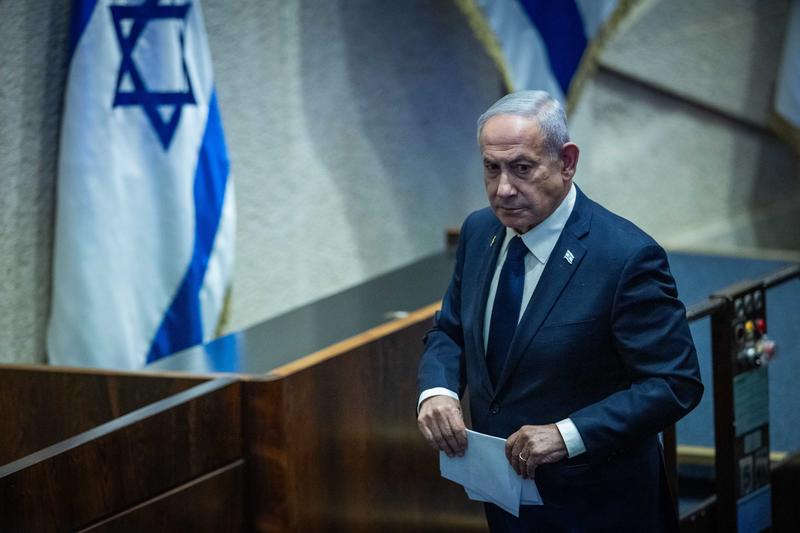
Israeli Prime Minister Benjamin Netanyahu at a 40 signatures debate, at the plenum hall of the Knesset
Israeli Prime Minister Benjamin Netanyahu at a 40 signatures debate, at the plenum hall of the Knesset, the Israeli parliament in Jerusalem, on November 10, 2025. Photo by Yonatan Sindel/Flash90 *** Local Caption *** 40 חתימות כנסת מליאה ראש הממשלה בנימין נתניהו

What’s happened: The United Nations Security Council approved Resolution 2803, endorsing President Trump’s Comprehensive Plan and granting an international mandate for the creation of an International Stabilisation Force to operate in Gaza for the next two years.

  • The resolution explicitly references both the Board of Peace, a body to be managed by the Trump Administration and a “path to a Palestinian state.”
  • The UNSC resolution authorises Trump’s Board of Peace to oversee governance of the strip until December 31, 2027. The Board of Peace will be empowered to appoint a “technocratic, apolitical committee of competent Palestinians from the Strip” to manage the day-to-day affairs of the Gaza Strip.
  • The resolution also authorises the World Bank to allocate financial resources for the reconstruction of Gaza and calls for the establishment of an international trust fund for Gaza reconstruction.
  • The Board of Peace will oversee the International Stabilisation Force, a multination armed force operating with a UN mandate that will “coordinate” with Israel and Egypt for security missions in the Gaza Strip, including training and support Palestinian police personnel, securing humanitarian corridors, and securing border areas.
  • PM Netanyahu reacted to the vote by praising the Trump plan. In a post on X, he wrote that “The State of Israel and PM Netanyahu applaud President @realDonaldTrump and his tireless and devoted team. The courage and sacrifice of our brave soldiers, along with President Trump’s diplomatic efforts, helped bring home all of the living hostages and most of the deceased ones. and saying it “will lead to peace.”
  • Before the vote, at the start of the Government meeting on Sunday, Netanyahu reiterated that his “opposition to a Palestinian state in any territory has not changed one bit.”
  • Israel’s UN Ambassador Danny Danon also praised the adoption of the resolution, emphasising that Israel would not compromise on the implementation of the resolution’s demands for full Hamas disarmament. “As we are determined to bring back all the hostages, we will display the same determination and ensure that Hamas is disarmed,” he said. “We will not stop and will not rest until Hamas is not a threat to the State of Israel.”
  • The Palestinian Authority’s Foreign Minister Varsen Aghabekian Shahin also praised the resolution’s adoption, calling it a “first step in a long road towards peace.” Speaking to reporters in the Philippines, she said that “we could not embark on anything else before we had a ceasefire.”
  • Hamas issued a statement rejecting the UN Security Council resolution, saying that it did not address the Palestinians’ rights and demands. It further indicated that it would not cooperate with any attempt to disarm the organisation.
  • UN Secretary General Antonio Guterres hailed the resolution’s adoption and said that it was “essential now to translate the diplomatic momentum into concrete and urgently needed steps on the ground.”

Context: Despite reservations about some of the language – specifically relating to a pathway to a Palestinian state – Israel accepted the resolution as it sees it as a natural progression towards the next stage of the Trump 20 Point Plan.  

  • According to Israel Hayom, Israel was opposed to the changes in the text’s wording, but later dropped its opposition after receiving private commitments from the Trump administration that the state envisioned in the resolution, as far as the US administration is concerned, is in line with the 2020 “Deal of the Century” proposal of the first Trump administration, and not one that see the entirety of the West Bank and Gaza handed over to a fully sovereign Palestinian state.
  • China and Russia abstained in the vote on the resolution’s adoption. Either country could have vetoed the resolution had they been so inclined. Both expressed serious reservations about the outsized role of the US, particularly the implied mandate of President Trump’s Board of Peace to govern Gaza.
  • In an earlier Russian draft, the Board of Peace was unmentioned entirely. The Chinese and Russians were concerned that the ISF would essentially be reporting to the Board of Peace and through it to Washington. Ultimately, in the approved text, the Board of Peace retains the powers Trump had sought for it, but the ISF has to report back to the Security Council every six months.
  • Algeria, the only member of the UN Arab Group currently on the Security Council voted in favour of the resolution, but only after securing language on Palestinian statehood that went beyond the wording in Trump’s 20-point plan or the original American draft of the resolution.
  • Algeria’s ambassador told the Council that “genuine peace in the Middle East cannot be achieved without justice, justice for the Palestinian people, who have waited for decades for the creation of their independent state.”
  • Algeria was not alone on insisting on these changes to the resolution’s text. The New York Times reports that other countries on the Security Council, including France, Guyana, Pakistan, Slovenia, and Somalia, pushed for more forceful language on Palestinian statehood.
  • The resolution stipulates that after the Palestinian Authority reforms itself and reconstruction of Gaza progresses, “conditions may finally be in place for a credible pathway to Palestinian self-determination and statehood.”

Looking ahead: The mandate of the ISF goes far beyond mere peacekeeping and includes disarmament.

  • The question of when the ISF could begin operating remains open.
  • Though the Security Council resolution gives it a mandate to disarm Hamas, no country presently seems willing to take on the task.
  • It can’t be effective in the parts of Gaza under Hamas control while Hamas forces still operate there as quasi-sovereign military and police force. It could conceivably operate in areas the IDF vacates, but Israel won’t vacate these areas until some kind of Hamas disarmament is achieved.
  • President Trump is due to meet with Saudi Crown Prince Mohammed bin Salman today in the White House. Their discussions could have far-reaching implications for the entire regional alliance structure following both the Gaza War and the Twelve Day War with Iran.
  • Trump announced yesterday his intention to sell the Saudis F-35 fighter jets, a move that could put Israel’s qualitative military edge at risk.
  • Previous US administration’s (including Trump’s) had conditioned any such sale on Saudi commitments to scale back relations with China and to normalise relations with Israel. It is not yet clear what Trump will be expecting from the Saudis in return for the sale announced yesterday.

November 17, 2025

UN Security Council set to vote on Gaza resolution

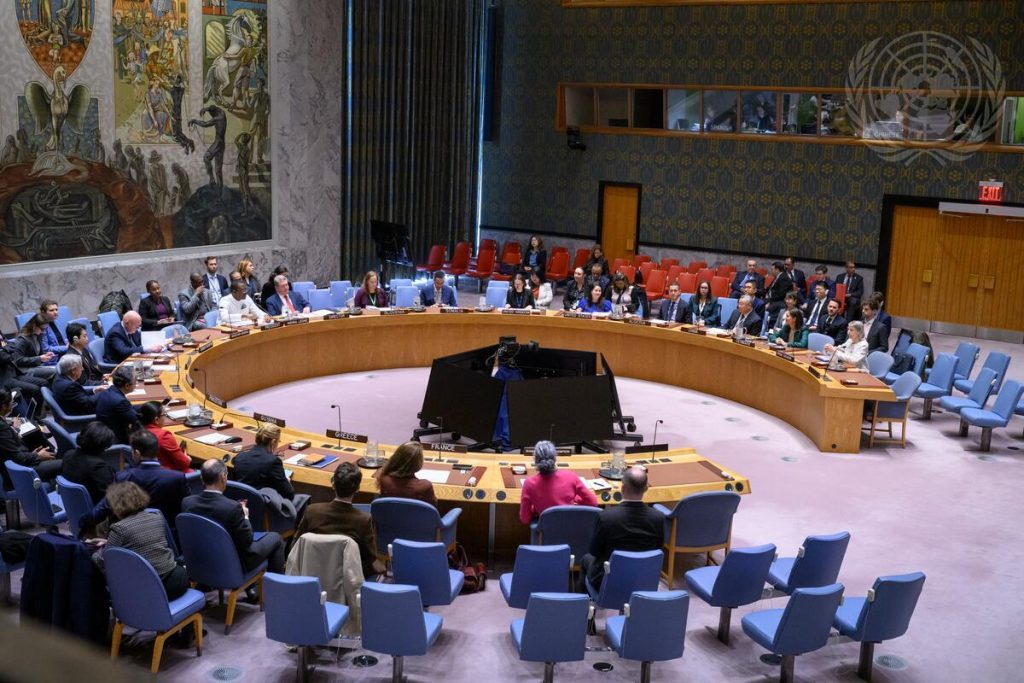
United Nations Security Council, November 14, 2025
United Nations Security Council, November 14, 2025. Photo credit: UN Photo/Loey Felipe

What’s happening: The UN Security Council is scheduled to vote tonight on the US proposal for the day after the war in Gaza.

  • On Friday evening the US announced a consensual text reached alongside Qatar, Egypt, UAE, Saudi Arabia, Indonesia, Pakistan, Jordan and Turkey. Their joint statement endorsed “a pathway to Palestinian self-determination and statehood” emphasising that “the Plan provides a viable path towards peace and stability, not only between the Israelis and the Palestinians, but for the entire region.”
  • The resolution which will endorse the twenty point Trump plan is also expected to outline the mandate of the International Stabilisation Force.
  • In anticipation of the approval of the resolution, Indonesia’s Defence Minister confirmed that 20,000 troops have been trained to take on health and construction-related tasks for a peacekeeping operation in Gaza.
  • Speaking at the start of the Government meeting on Sunday, Prime Minister Netanyahu reiterated that “Hamas will be disarmed. Either this will happen the easy way or it will happen the hard way.”
  • Regarding a Palestinian state, Netanyahu said, “Our opposition to a Palestinian state in any territory west of the Jordan [River], this opposition is existing, valid, and has not changed one bit.”
  • He also addressed the recent spike in settler violence saying, it was carried out by “a minority that enters Judea and Samaria, and does not represent the large public of settlers, who are law-abiding and loyal to the state.” Netanyahu added that the government would take action against these disturbances.  

Context: Israel’s top priority will be for the disarming of Hamas and the demilitarisation of the Strip.

  • Israel had hoped it would be given veto power to prevent the deployment of troops from Turkey or Qatar, but according to the draft text, only “close consultations” will be held with Israel.
  • There is also concern that any presence of international forces will restrict the IDF’s freedom of action.
  • However, even with the approval of a UN resolution it seems unlikely that any force composition will be able to disarm Hamas. Moreover, most countries have refused to send troops to Gaza as long as Hamas remains armed.
  • Hamas continues to reject any efforts to disarm.
  • A disturbing report on Kan News revealed that Hamas has in recent weeks begun to stockpile advanced weapons in Africa, Yemen and other supportive countries for it to use in a time of need in the Gaza Strip and elsewhere.
  • The UN Security Council’s endorsement of a Palestinian state – via its approved wording of ‘pathway to Palestinian self-determination and statehood’ at this moment is also a cause of great concern for the Israeli government, which believes that in the aftermath of the October 7 massacre it would be perceived as a reward for terrorism. The UN move follows unilateral recognition by UK, France, Canada and others, (but this time is being led by the US).    
  • Some in Israel highlight that the resolution will reference Trump’s 2020 peace plan, which includes many favourable conditions for Israel, but the text could also reference other initiatives (perceived as less favourable to Israel) like the French-Saudi plan too.
  • There appears to be no reference to the key reforms incumbent on the Palestinians, for example refraining and condemning terrorism, incitement, and the pay-to-slay incentivised payments programme.  
  • Meanwhile, on Friday the body of hostage Meny Godard was returned to Israel. Godard was 73 years old when he was murdered on October 7 along with this wife, with his body taken from his home in Kibbutz Beeri to Gaza. Three deceased hostages remain in Gaza: Ran Gvili, Dror Or and Sudthisak Rinthalak with their fate currently unknown.  

Looking ahead: The UN Security Council is expected to convene and vote on the resolution this evening.

  • On Tuesday President Trump is due to host Saudi Crown Prince Mohammed bin Salman in Washington. The proposed security agreement they are expected to agree includes concerning for Israeli security, chiefly the potential sale of F-35 fighter jets, that could significantly degrade Israel’s qualitative military edge in the region.
  • Separately, US envoy Witkoff, is set to meet once more with the head of Hamas’ politburo, Khalil al-Hayya.

November 13, 2025

Ceasefires in Gaza and Lebanon under pressure

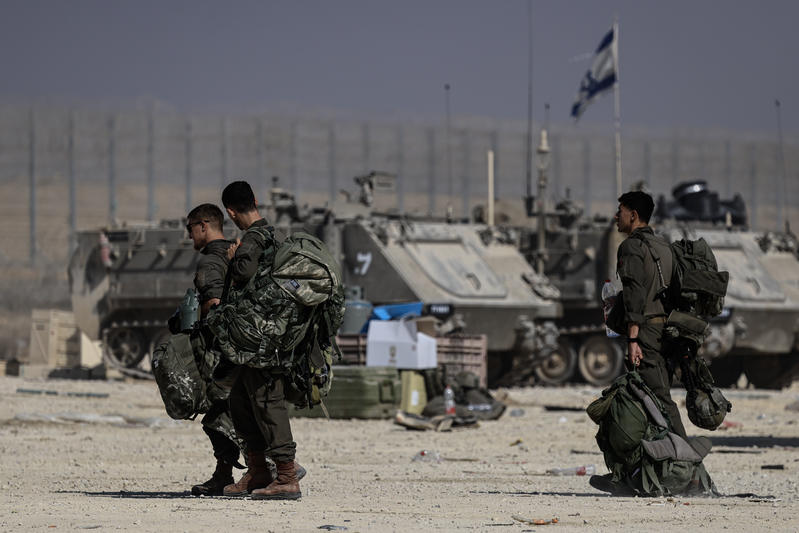
Israeli soldiers seen near the Israeli border with the Gaza Strip
Israeli soldiers seen near the Israeli border with the Gaza Strip, November 10, 2025. Photo by Tsafrir Abayov/Flash90 *** Local Caption *** עזה ישראל חמאס צבא גבול מלחמה חרבות ברזל

What’s happened: At a meeting yesterday of the so-called “Mechanism,” the multilateral monitoring committee for the implementation of the November 2024 ceasefire which ended the Israel-Hezbollah war, no agreement was reached on further weapons decommissioning.

  • The Lebanese newspaper Al-Akhbar, generally aligned with Hezbollah, reports that the meeting was “not positive” and that the Lebanese Armed Forces (LAF) refused a demand to carry out inspections in private homes, where Hezbollah is believed to be storing weapons.
  • Reports in Palestinian media this morning indicated that the IDF carried out limited strikes at targets in Khan Yunis and Beit Lahia in the Gaza Strip. Since the ceasefire went into effect in October 10, the IDF has occasionally carried out such strikes against Hamas ceasefire violations.
  • At a meeting of foreign ministers in Canada, the G7 nations reiterated their “strong support” for President Trump’s Comprehensive Plan for Gaza. The statement also called on Iran to “resume full cooperation with the International Atomic Energy Agency, including enabling inspections of all nuclear facilities and materials.”
  • A spate of violence by radical West Bank settlers captured the attention of Israeli and foreign media. Settlers were filmed setting fire to a factory and olive grove, as well as attacking IDF soldiers. Secretary of State Marco Rubio was asked at the G7 meeting if the outbreak of settler violence in the West Bank could endanger the ceasefire in Gaza. “We’ll do everything we can to make sure it doesn’t happen,” he told reporters.
  • A new corruption scandal burst into public consciousness in Israel yesterday. A senior police official was briefly detained yesterday for interrogation under suspicions that he had intervened in a very sensitive corruption investigation in order to benefit an associate of his. A court injunction prevents the publication of the identity of the police officer in question (though his rank of Deputy Commissioner is known) or any other details regarding the investigation. Last week the Israel Police announced the completion of a two-year undercover investigation into corruption at Israel’s largest trade union. The Police force is also involved in the unfolding scandal around the former military Advocate General.
  • At the same time, the Israel Police and the Minister responsible for the police force, Itamar Ben-Gvir, had a public spat over Ben Gvir’s efforts to block the promotion of a high-ranking police superintendent, allegedly, as a punishment for her involvement in the investigations which led to indictments against Prime Minister Netanyahu.
  • Netanyahu’s ongoing trial was thrown into a turmoil yesterday by the very public intervention of President Trump, who released a letter he sent to Israeli President Isaac Herzog asking him to pardon the Prime Minister.

Context: The “Mechanism” meeting in Lebanon comes against a backdrop of major diplomatic initiatives from the United States to stabilise the post-Assad regional order. Ambassador Tom Barrack, the Trump administration official most closely associated with these efforts, issued a long statement yesterday summarising US positions and hailing some of the recent developments. “This was a week to remember,” Barrack wrote.

  • In the statement, he praised the Syrian President’s decision to join the US-led coalition against ISIS. “Damascus will now actively assist us in confronting and dismantling the remnants of ISIS, the IRGC, Hamas, Hezbollah, and other terrorist networks, and will stand as a committed partner in the global effort to secure peace.”
  • Called on Congress to repeal the Caesar Act, the 2019 law that placed severe sanctions on Syria. Last week, the administration announced a suspension of some of the Act’s provisions.
  • Referenced efforts at “redefining Turkish-Syrian-Israeli relations and advancing the alignment that underpins the Israel-Hamas ceasefire, as well as various Lebanese border issues.”
  • Praised the roles of Qatar and Saudi Arabia, but was particularly effusive in his praise of Turkey.
  • Described President’s Trump’s regional strategy as “security first, prosperity next.”
  • The violence in the West Bank was criticised by both President Herzog and Major General Bluth, who currently heads the Central Command that covers the West Bank. 
  • Herzog called the events severe, shocking and serious. “Such violence against civilians and against IDF soldiers crosses a red line, and I strongly condemn it. All state authorities must act decisively to eradicate this phenomenon and to strengthen the IDF soldiers and security forces who guard us day and night.”
  • Bluth criticised the “reality in which anarchist fringe youth act violently against innocent civilians and against security forces” adding that it must be “dealt with firmly” which requires “the combined efforts of all branches of the State of Israel: education, welfare, law enforcement, and disciplinary measures.” He added that the directive to IDF soldiers is clear: “do not stand idly by, and do everything in your power to prevent any act of nationalist crime.”

Looking ahead: Israel Hayom reports that both the US and Israel are making preparations for a “Plan B” for Gaza should the ceasefire plan fail and not progress to the second stage. These are different plans addressing different problems.

  • The American effort, led by Jared Kushner, seeks a diplomatic alternative to the implementation of the second stage of the ceasefire.
    • The second stage calls for Hamas disarmament, an Israeli withdrawal, and an International Stabilisation Force (ISF). But so far Hamas has not disarmed, and no country has expressed any willingness to join an ISF that might be tasked with disarming it.
    • In practice, this means that the first phase of the ceasefire, with Gaza partitioned into a zone under Israeli control and a zone under Hamas control, could last much longer than originally intended in the ceasefire agreement.
    • According to the report in Israel Hayom, Kushner is keen to advance some reconstruction efforts even in a situation in which the two sides are stuck in the first phase.
  • On the Israeli side, the discussion of a “Plan B” is focused on military efforts.
    • Chief of General Staff Eyal Zamir reportedly told the cabinet that the IDF is preparing a contingency plan if the ceasefire fails.
    • Presumably this comprises both a plan of action if the first phase lasts longer than intended as well as a plan for the resumption of combat should the ceasefire fall apart entirely.

November 12, 2025

Standoff in Gaza continues as al-Sharaa visits Washington

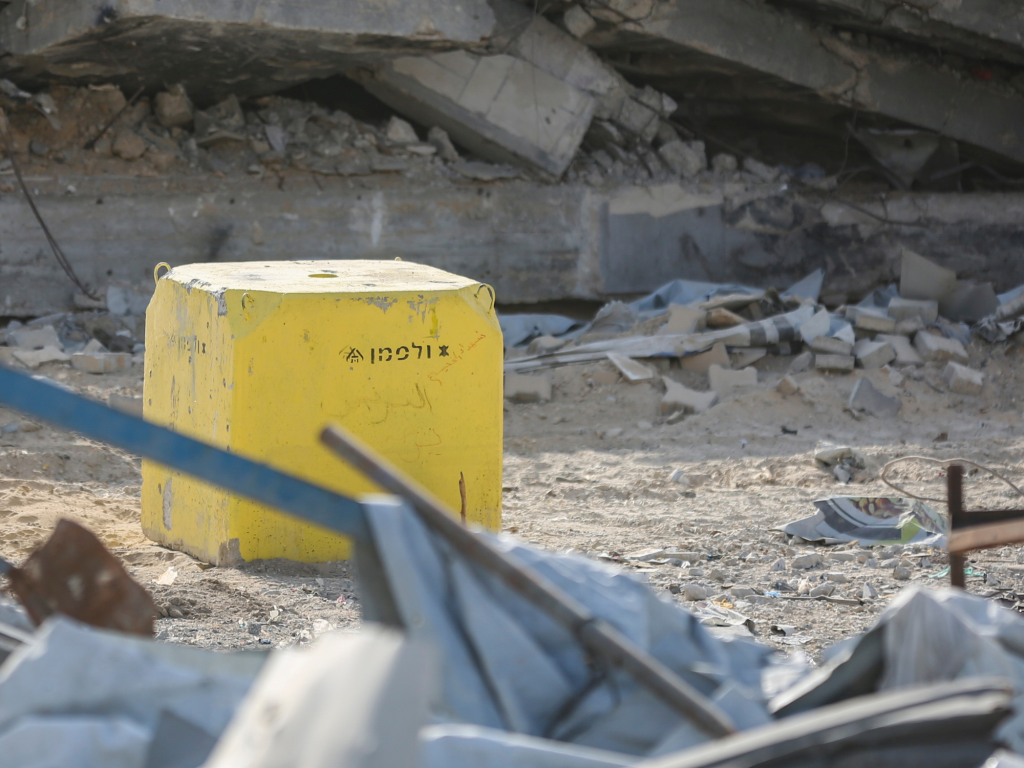
A yellow concrete block placed by the Israeli army is seen in the buffer zone east of Jabalia in the northern Gaza Strip
A yellow concrete block placed by the Israeli army is seen in the buffer zone east of Jabalia in the northern Gaza Strip, November 2, 2025. Photo by Fathi Ibrahim/Flash90

What’s happened: Israel and the US are staking out positions on the future of Gaza, as concerns mount in the US that the first stage of the ceasefire might be turning into a stable status quo, rather than a temporary measure leading to a more comprehensive political agreement.

  • According to reports, both Israel and the US are examining various modes of cooperation with informal militias in Gaza that are not aligned with Hamas.
  • The standoff over the one hundred or so Hamas fighters holed up in tunnels on the Israeli side of the Yellow Line near Rafah also continues.
  • Syria too has emerged as an issue where Israel and the US have partially overlapping positions and priorities. This week, Syrian President Ahmed al-Sharaa became the first Syrian President to be hosted at the White House since 1946. The US announced a partial suspension of sanctions against Syria.
  • While in Washington, al-Sharaa said to the US media that Syria was “engaged in direct negotiations with Israel, and we have gone a good distance on the way to reach an agreement.” But he stressed that “to reach a final agreement, Israel should withdraw to their pre-December 8 borders.” Al-Sharaa added that “Mr. Trump supports our perspective as well, and he will push as quickly as possible in order to reach a solution for this.”
  • By referencing the pre-December 8 borders, al-Sharaa is referring to the situation prior to the fall of Assad’s regime in Syria. Following that, Israel expanded the Golan perimeter and intervened to protect Syrian Druze, particularly in the al-Suwayda region. Al-Sharaa’s phrasing, however, may imply an acceptance of Israel’s control over the Golan Heights.
  • Israel’s Minister of Strategic Affairs Ron Dermer, who served as the main point man in Israel’s relationship with the Trump administration, has resigned his post in Cabinet. Dermer had long indicated his desire to quit, but stayed in his post in order to see through the completion of the ceasefire deal which ended the war in Gaza. In his resignation letter, he wrote, “This government will be remembered both for the October 7 attack and for its management of the two-year, seven-front war that followed.”

Context: While US officials are also those most enthusiastically pushing for an expansion of the Abraham Accords to include the new Syrian regime. The Syrian President himself is much less enthusiastic. In an interview with the Washington Post, he rejected the possibility of a full normalisation of relations with Israel in the near future, though he indicated that his country is in direct contact with Israel on a number of issues.

  • Al-Sharaa claimed in the interview that the Trump administration supported his position that Israel should withdraw to the positions it held on December 8, 2024, the day the Assad regime fell. He also rejected Israel’s demand for the demilitarisation of the region of Syria south of Damascus, something Israel has been de facto enforcing since a spate of violence targeted the Druze minority in the region earlier this year.
  • Regarding the Hamas terrorists trapped in the tunels behind the Yellow line, there were conflicting media reports about Israel’s position on the issue amidst the US efforts to resolve the crisis as quickly as possible. The US is keen for the fighters to receive safe passage on condition that they surrender their weapons. Israel reportedly objects to this arrangement, as some of the besieged terrorists are believed to be members of Hamas Nukhba forces that carried out the October 7 massacre. An unnamed Israeli official quoted on Kan, the Israeli public broadcaster, called the proposal to have them leave the tunnels without their weapons “naïve,” since, according to the same official, “weapons will be waiting for them at home.”
  • One option reportedly being considered according the Israel’s Channel 12 News was exile to a third country.
  • Advancing to the next phase of the agreement requires the full handover of the remaining deceased hostages as well as the establishment of an International Stabilisation Force (ISF). But four deceased hostages remain in Gaza, and few countries have expressed any interest in joining the ISF without a clear mandate from the UN. Of the countries that have indicated that they could join, most are only willing to take on peacekeeping roles and do not wish to be a part of any effort to actively disarm Hamas or remove it from power. A report in Reuters datelined in Manama, Bahrain cited “ten diplomats” as saying that governments “remain hesitant to commit troops.”
  • The result for now is that the status quo of the first phase, rather than leading to the next phases, appears to be settling into something longer and more stable. The Yellow Line is clearly demarcated by the IDF with yellow concrete blocks. Moreover, a resolution of the tunnel standoff in Rafah will only further the distinction between the two zones – on one side of the line will be only Israeli forces, and on the other Hamas will have nearly completely reasserted its control.
  • The Reuters report also cited “six European officials with direct knowledge of the efforts to implement the next phase” of the Gaza ceasefire, as well as a Jordanian Minister details growing concerns that the Gaza Strip is being partitioned for the long term into two roughly equally sized zones, one under Israel’s control and under Hamas’s. According to the ceasefire agreement, Israel withdrew its forces to the so-called Yellow Line, leaving the IDF in control of 53% of the Strip. Most of Gaza’s population is in the remaining 47%.
  • The de facto partition casts a shadow over reconstruction efforts too. A report in Maariv claims that US reconstruction efforts could, in the immediate term, be focused only on the Israeli-controlled sector of the Strip. The pledges of Arab money for reconstruction in the rest of the Strip are on hold as long as Hamas’s role remains unclear.

Looking ahead: The US continues its efforts to get a UN Security Council resolution that would authorise an international force to implement the agreement. But the text won’t change the basic conundrum:

  • there is a consensus that Hamas should disarm and a willingness to contribute to Gaza’s reconstruction and governance once Hamas is disarmed;
  • the international community does not want the IDF to do the disarming;
  • no other countries want to do it either.

November 10, 2025

Fallen IDF officer’s body returned home after 11 years

A team of reserve fighters consisting of members of Lieutenant Hadar Goldin's company, who accompanied him on his final journey across Israeli territory.
A team of reserve fighters consisting of members of Lieutenant Hadar Goldin's company, who accompanied him on his final journey across Israeli territory. Photo credit: IDF.

What’s happened: The body of Lt. Hadar Goldin who was killed 11 years ago in Gaza during Operation Protective Edge was returned to Israel yesterday.

  • Goldin was 23 at the time of his death, and his body was abducted by Hamas and held in a tunnel in Rafah.
  • After the Red Cross handed over the coffin to the IDF on Sunday, the military held a poignant ceremony which included Goldin’s former comrades as well as the former deputy commander of his unit, Eitan Fund, who had led the pursuit of Hadar’s abductors into the tunnels, and the then commander of the Givati Brigade, Ofer Winter.
  • On Sunday night, his parents Simcha and Leah Goldin made brief statements outside their home, exactly as they had done the day after his capture. Simcha Goldin said, “We have brought Lt. Hadar Goldin from Sayeret Givati, our son, a warrior, to Jewish burial. The IDF brought Hadar to Jewish burial. Not anyone else. The IDF. And that’s why we are taking the IDF’s values, in the name of which we have been walking for more than 11 years, because that is what Hadar bequeathed to us, values that say that we don’t abandon soldiers on the battlefield, because that’s a value and we don’t compromise on values in order to secure interests, and we fight for fighters.”
  • His mother Leah said, “It took us 11 years to get him back with the help of the IDF and the security forces. I was forced to go world-over just to realise that we have values that are shared by everyone regardless of race, gender or creed. The value of our camaraderie and mutual responsibility. Bringing the deceased to Jewish burial. And the third is called human dignity. Those are the values that we truly fought for.”
  • Prime Minister Netanyahu issued a statement noting, “I always had in my room two pictures – of Oron Shaul and of Hadar Goldin, may they rest in peace. And I knew that we would bring them home… I know the agonies that his family endured. I also know the longing for his return, which united the entire Israeli people. And today we are united in the fact that we have finally returned him to his parents and family for Jewish burial.”

Context: Goldin fell in battle on August 1, 2014 in Rafah, when Hamas violated the ceasefire at the end of Operation Protective Edge. His body had been held for 4,177 days.  

  • He was part of an elite reconnaissance unit of the Givati Brigade  that had been trying to locate tunnels when terrorists emerged from a shaft, attacked the IDF force and killed three soldiers: Goldin, Maj. Benaya Sarel and Staff Sgt. Liel Gidoni.
  • His return brings closure for the family and more broadly for Israeli society. On Sunday night, his parents spoke at entrance of their home, exactly as they had done the day after his capture.  
  • Over the weekend, the body of Lior Rudaeff was also returned. Rudaeff, a Sgt Major in reserves served as deputy security coordinator and a member of the Nir Yitzhak rapid response team. He fell in battle defending the Kibbutz on October 7th, and his body was taken captive by Islamic Jihad. Lior was 61 years old at the time of his death, and his death was officially determined on May 7th, 2024. He leaves behind his wife, four children, three grandchildren, father, sister, and brother.
  • According to Israeli media reports the IDF had intelligence on the location of Lt. Goldin body and had IDF troops operating in the area, trying to locate him. Hamas apparently realised that Israel had learned where his body was buried and so could not hold off on releasing it any longer. The intelligence was based on information garnered from a small group of senior Hamas commanders that were privy to the information. Following the elimination of the most senior commanders (including Dief and Sinwar) during the war, it was assessed that only five people alive knew the location, they were granted immunity from attack so the secret would not die with them.
  • Over the last few days, Turkey had encouraged Hamas to hold onto the body and only release it in return for safe passage for the estimated 200 Hamas fighters thought to be in underground tunnels within the zone under Israeli control. Hadar’s body was ultimately returned in the context of the ceasefire deal – thanks to the US backing Israel’s position.    
  • IDF Chief of Staff Zamir had told the security cabinet last week that there was no deal for safe passage for the trapped terrorists, and that they would either surrender or be eliminated.
  • Israel has continued to encourage the mediators to keep the pressure on Hamas and Islamic Jihad to release the rest. However it may be case that Hamas will struggle in returning the remaining four bodies of hostages still buried in Gaza. The latest assessment is that Islamic Jihad is holding one deceased hostage whom it can return immediately to Israel, while the location of the final three is unclear.  
  • In parallel the IDF continues to focus on the decommissioning of Hamas tunnels within the area under its control and remain vigilant in thwarting any attempts by Hamas to breach the Yellow Line. On Saturday there were at least two recorded incidents of attempted infiltrations.  

Looking ahead: The funeral for Hadar Goldin will take place tomorrow morning in the military cemetery in Kfar Saba.

  • The next stage of the deal will include turning over responsibility for civilian control inside Gaza Strip to the US led Civil-Military Coordination Center (CMCC).
  • There are still four bodies being held in Gaza. They include three Israelis: Meny Godard, Ran Gvili and Dror Or, and Thai farmer Sudthisak Rinthalak.
  • However, the future of the agreement will depend on the Israeli intelligence assessment concurring that every effort has been made to locate the remaining bodies.

Newsletter sign-up

Please enter your information below to subscribe to our daily newsletter and stay updated and informed.

Donate to BICOM

At BICOM, we rely on the generosity of people like you to keep our website and services running. Your donation, no matter the size, makes a real difference. Please consider supporting us today. For further information please email: [email protected]