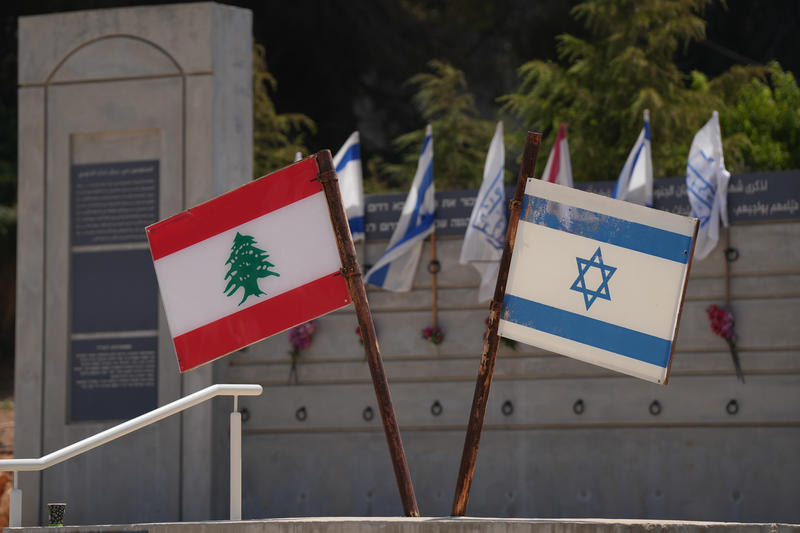

What’s happened: Israel celebrated 78 years of statehood yesterday. It was the first Independence Day Israel has marked since the October 7 invasion and massacre without any hostages being held in Gaza.
- The State of Israel’s population stands at 10.2 million people, more than twelvefold since the state was founded in 1948. This includes 7.8 million Jews, roughly 45% of the world’s total.
- Celebrations of Israel’s independence took place throughout the country yesterday without incident, as ceasefires in wars in Gaza, Lebanon, and Iran mostly held. An exception to that was a Hezbollah rocket attack on IDF positions in southern Lebanon and several nearby Israeli communities inside northern Israel on Tuesday evening.
- Today, ambassadors to the United States from both Israel and Lebanon will renew talks begun at the beginning of the ceasefire last week. They will be joined by Secretary of State Marco Rubio and, for the first time, by the US ambassador to Israel Mike Huckabee.
- The White House outlined its public positions on the Iran conflict yesterday, with White House Press Secretary Karoline Leavitt emphasising the US position on the nuclear issue, rather than on other issues which had been raised earlier such as Iran’s ballistic missile programme or its network of regional proxies. “Iran can never obtain a nuclear bomb to threaten the United States and our allies,” she told reporters, “and they must turn over the enriched uranium that’s in their possession.”
- Both the US and Iran released videos of their forces enforcing their respective blockades. US videos showed a forced boarding of a ship near the Strait of Hormuz and of another unflagged ship, linked to Iran, in the Indo-Pacific, which was carrying 2 million barrels of Iranian oil that had been loaded at Kharg Island.
- The US blockade operation has been called Operation Economic Fury, following on the kinetic campaign which was known as Operation Epic Fury. Iranian forces fired on and disabled at least three ships attempting to transit into the Gulf of Oman through the Straits.
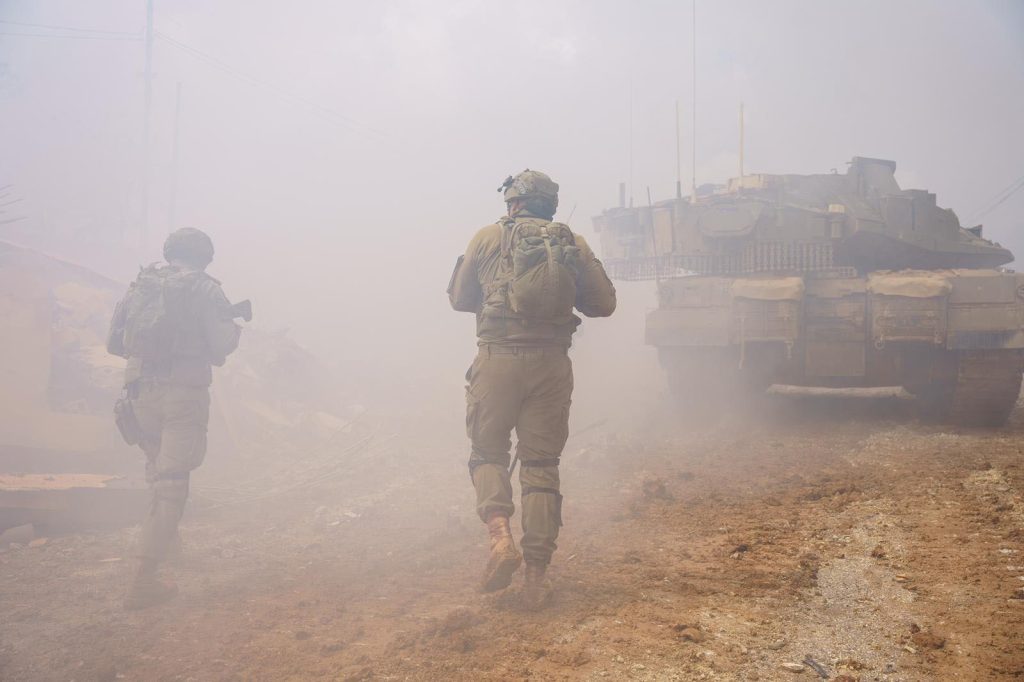
Context: The ceasefire between Israel and Hezbollah declared on April 16 was due to last ten days. It did not stipulate any territorial changes, but rather kept positions frozen in place, leaving the IDF in control of swathe of Lebanese territory a few kilometres deep.
- The Lebanese proposal to extend the ceasefire by one month (ten days in some media reports) would maintain these positions, and not require any withdrawals by the IDF. But the Lebanese proposal includes a demand that Israel stop demolitions inside the zone of southern Lebanon that it holds and would presumably continue to hold for the additional month of a ceasefire extension.
- Israeli media report that some 20 Lebanese villages abutting the Israeli border are in the process of being demolished by Israeli bulldozers, many of which have been moved up from Gaza to complete the mission as quickly as possible.
- In previous rounds of fighting, the IDF has watched as Hezbollah accessed weapons caches stored in residences in these villages and used them to conduct attacks on Israeli border communities. Particularly problematic from the Israeli perspective was the use of anti-tank fire on homes in Israeli communities along the border.
- The present demolitions are intended to ensure that this pattern is not repeated, even in the event of a full Israeli withdrawal at some future point.
- This fits into a larger Israeli lesson learned since the October 7 attacks. At the time, Israel made the decision to evacuate frontline communities on the northern border at the same time that a similar evacuation was necessary along the Gaza envelope.
- For more than a year, tens of thousands (well over 100,000 at one point) of Israelis from both north and south were in temporary housing and hotels. Israeli officials have largely come to see the northern evacuation as a mistake that handed Hezbollah an unjustified victory.
- While the US waits to see if Iran will moderate its position on any of the issues under negotiation, its naval blockade continues. So too do preparations for a renewed aerial assault on Iran to begin immediately with the end of the ceasefire. The US has now positioned a third aircraft carrier in the vicinity. Israeli officials anticipate that a renewed US air operation would last several days and would target Iran’s energy infrastructure.
- Recent days have also seen repeated reports of another global power’s increasing involvement in efforts to hammer out a deal — China. Beijing is reportedly pressuring Iran to reach a compromise with the United States that would reopen the Straits of Hormuz, whose closure threatens China’s economy far more than it does those of the US and its Western allies.
Looking ahead: The ceasefire in Lebanon is due to expire on April 26. Efforts are underway in Washington to mediate a durable agreement between Israel and Lebanon, or, failing that, to extend the ceasefire so that negotiations can continue. The Lebanese have requested a one-month extension on the ceasefire. Israel’s position on this possibility is not publicly known.
- The ceasefire declared in Iran on April 8 was originally due to last only two weeks. According to multiple US media reports, all sides have agreed to extend it until at least this coming Sunday. This would put the expiration of the Iran ceasefire on the same day as the expiration of the Lebanon ceasefire.
- The parallel blockades have hurt all sides in the conflict, but don’t appear to be driving anyone to moderate their positions. The IMF warned this week that in a “severe scenario” of long-term blockade, global GDP could decline by 2% in 2026.